The drill is screaming!
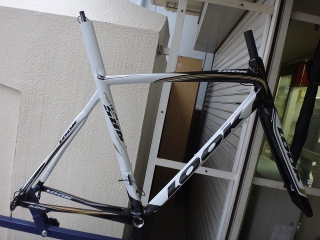
A customer dropped off a LOOK 586 with us.
They wanted holes drilled for electric components.
Even though they brought it from far away,
the wiring is actually more difficult than drilling the holes,
so we got their approval to purchase a lower junction box, seatpost battery, and cable sets.
I do this "drill screaming" type of work pretty regularly,
but writing up the posts is such a pain that I just end up with a stockpile of images.
This one was supposed to be the same way,
but by settling for rough sketches I made while explaining to the customer,
I'm going to post it easily.
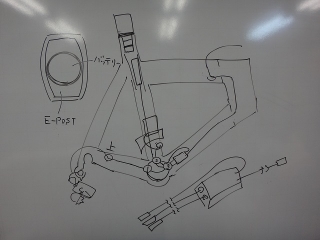
↑It's like this. The BB is completely sealed,
and the downtube, seat tube, and chainstay aren't connected to each other,
so wiring will remain in the BB.
It's difficult to make a hole from the BB to the downtube for the internal junction box,
but when you pull out the fork,
the head tube connects widely to the top tube and downtube, so we'll feed the lower JC in from the head tube.
The internal battery will be hidden under the E-POST,
which is LOOK's proprietary seatpost,
but whether the seat tube actually has that much space
can only be determined by fitting it to the actual frame.
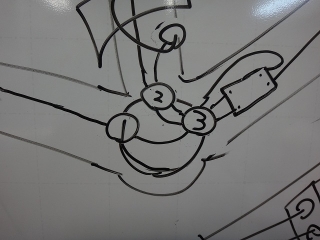
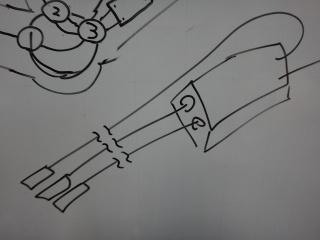
We feed the lower JC in from the head tube, and we have to attach guide wires to all three cables
and pull them one at a time so they exit through the BB.

I pulled out the cables from the lower JC on the downtube through the BB.
The hole is only big enough for the connector plus about two cables,
so we can't pull all three cables out together.
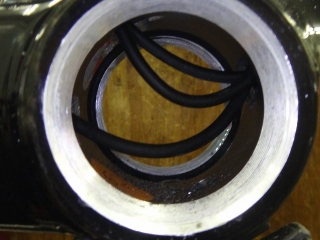
From there, we split them between the chainstay and seat tube.
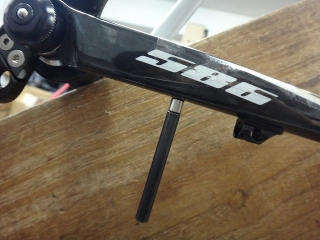
This isn't my first time drilling holes in a 586,
but the trickiest part is drilling a hole big enough to feed the connector from the BB through the right chainstay.
In the image above, a magnet is attached to the probe wire.
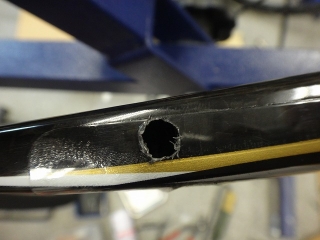
I drilled the hole on top of the chainstay. We could drill it on the bottom as well,
but I explained to the customer the pros and cons—like chain interference
and how easily it catches on the stand—and decided on this location.
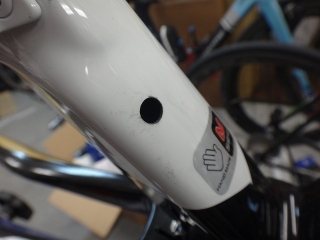
I placed the front derailleur here.
The best location varies slightly between the 6770, 6870, 9070, and 9150 models,
so I took that into consideration as well.
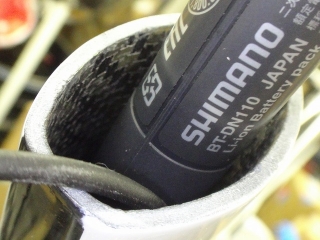
There's plenty of clearance for the internal battery diameter.
We can figure out how to secure it any number of ways.

I put the hole for the upper JC on the top tube.
This too is at a position that follows the customer's preferences among the feasible options.

↑Front derailleur
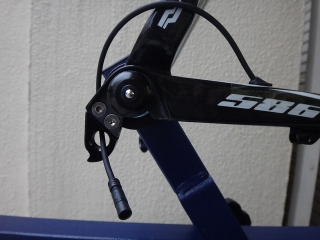
↑Rear derailleur
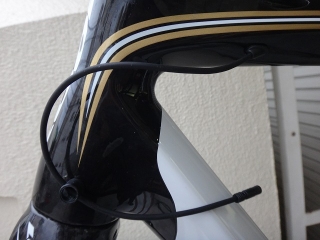
↑Upper JC
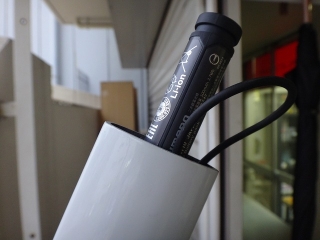
↑Battery
We'll need to cut the seat tube to match the saddle height,
but it requires a somewhat tricky cutting technique.
I asked the customer to handle this part.
There should be a saw guide included in the frame's accessories.
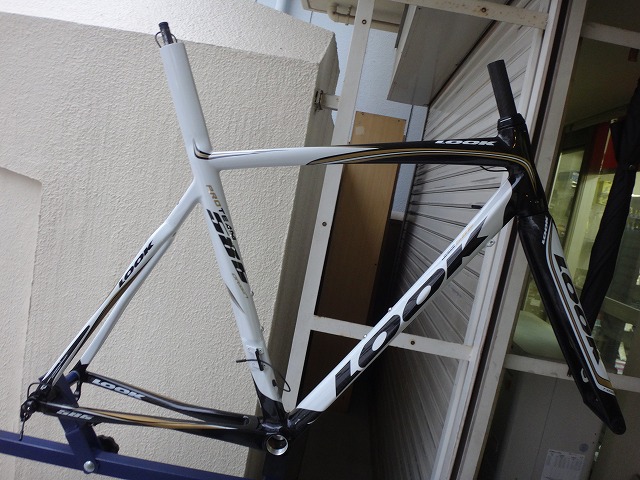
A customer dropped off a LOOK 586 with us.
They wanted holes drilled for electric components.
Even though they brought it from far away,
the wiring is actually more difficult than drilling the holes,
so we got their approval to purchase a lower junction box, seatpost battery, and cable sets.
I do this "drill screaming" type of work pretty regularly,
but writing up the posts is such a pain that I just end up with a stockpile of images.
This one was supposed to be the same way,
but by settling for rough sketches I made while explaining to the customer,
I'm going to post it easily.
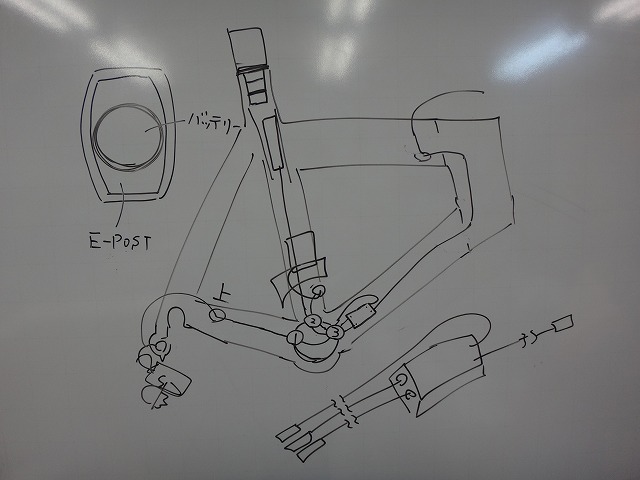
↑It's like this. The BB is completely sealed,
and the downtube, seat tube, and chainstay aren't connected to each other,
so wiring will remain in the BB.
It's difficult to make a hole from the BB to the downtube for the internal junction box,
but when you pull out the fork,
the head tube connects widely to the top tube and downtube, so we'll feed the lower JC in from the head tube.
The internal battery will be hidden under the E-POST,
which is LOOK's proprietary seatpost,
but whether the seat tube actually has that much space
can only be determined by fitting it to the actual frame.
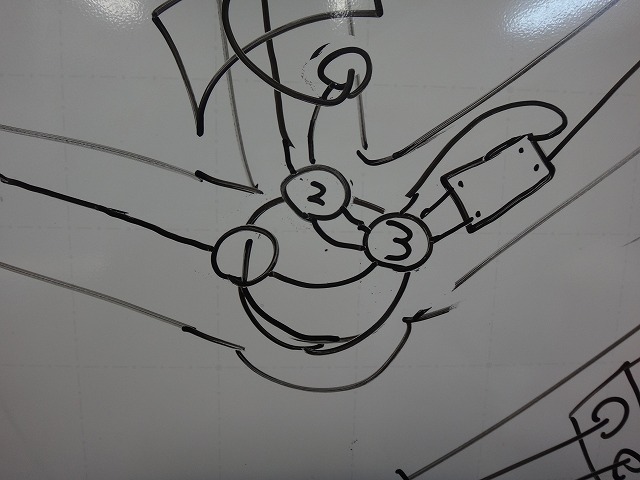
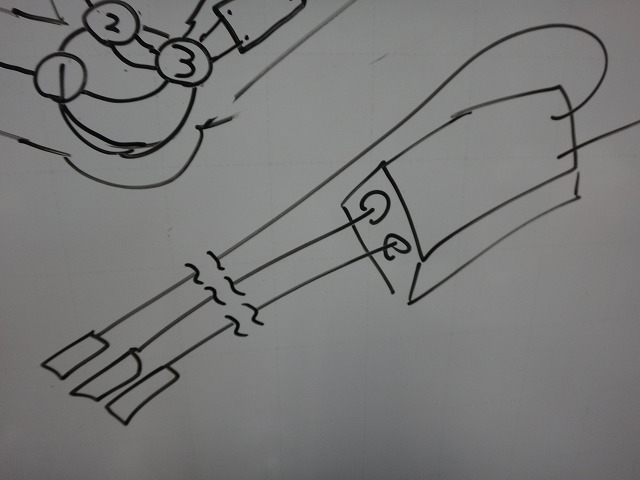
We feed the lower JC in from the head tube, and we have to attach guide wires to all three cables
and pull them one at a time so they exit through the BB.

I pulled out the cables from the lower JC on the downtube through the BB.
The hole is only big enough for the connector plus about two cables,
so we can't pull all three cables out together.
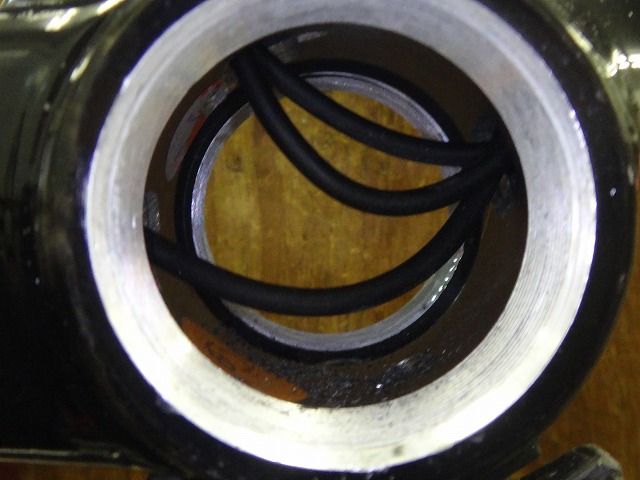
From there, we split them between the chainstay and seat tube.
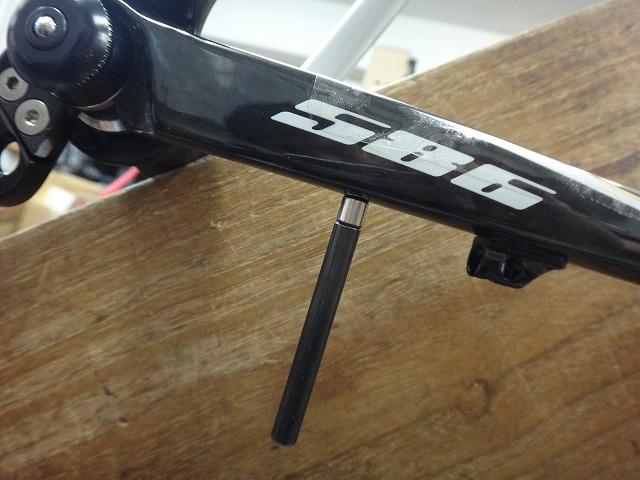
This isn't my first time drilling holes in a 586,
but the trickiest part is drilling a hole big enough to feed the connector from the BB through the right chainstay.
In the image above, a magnet is attached to the probe wire.
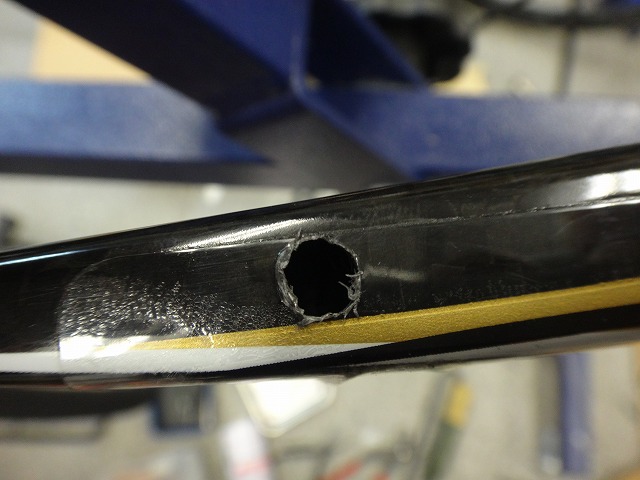
I drilled the hole on top of the chainstay. We could drill it on the bottom as well,
but I explained to the customer the pros and cons—like chain interference
and how easily it catches on the stand—and decided on this location.

I placed the front derailleur here.
The best location varies slightly between the 6770, 6870, 9070, and 9150 models,
so I took that into consideration as well.

There's plenty of clearance for the internal battery diameter.
We can figure out how to secure it any number of ways.

I put the hole for the upper JC on the top tube.
This too is at a position that follows the customer's preferences among the feasible options.
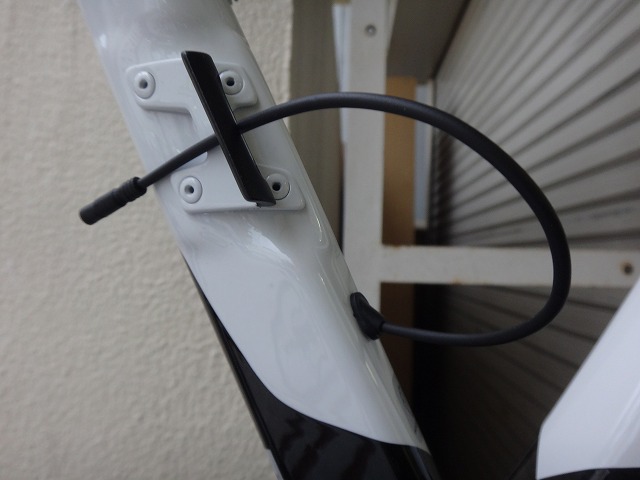
↑Front derailleur
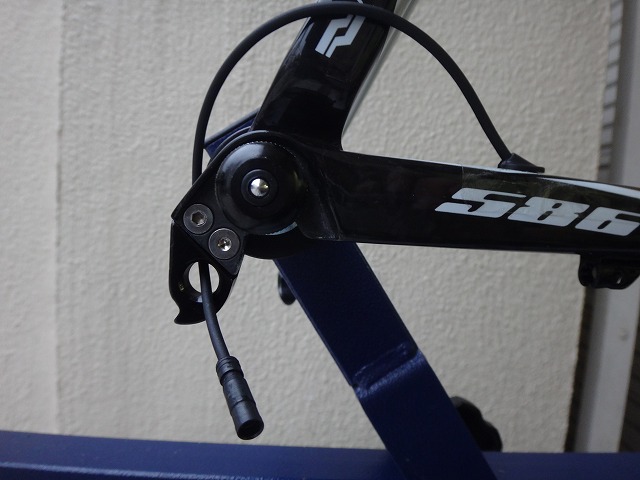
↑Rear derailleur
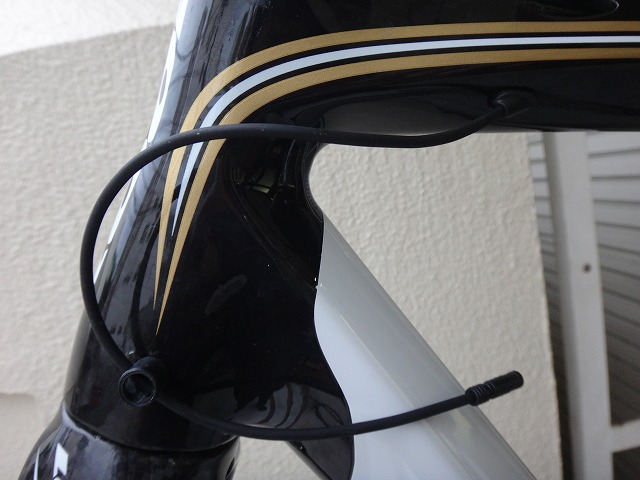
↑Upper JC
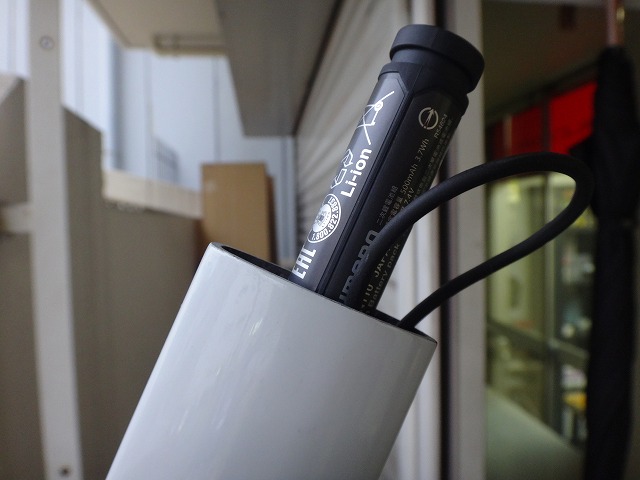
↑Battery
We'll need to cut the seat tube to match the saddle height,
but it requires a somewhat tricky cutting technique.
I asked the customer to handle this part.
There should be a saw guide included in the frame's accessories.