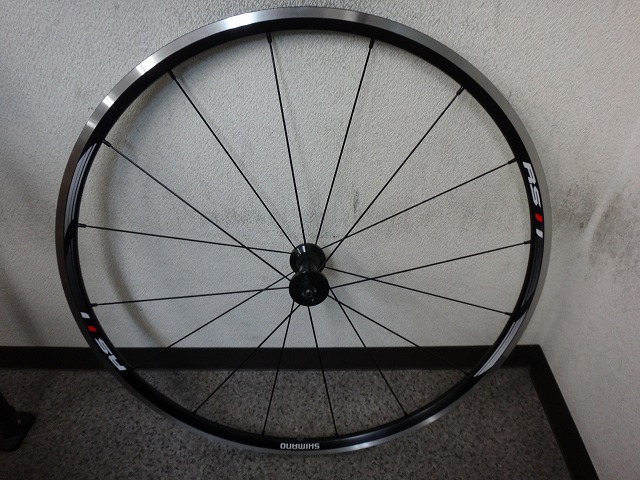
This is a wheel that came standard on complete bikes we sell.
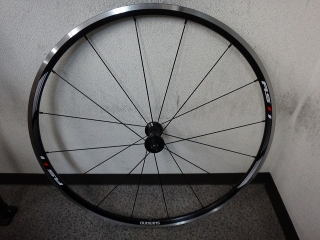
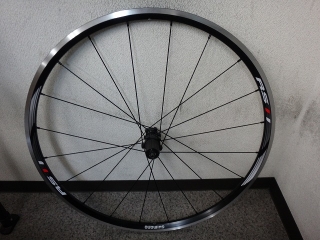
You might know about the RS21, but what the heck is an RS11? Some of you might be wondering that.
It's a wheel distributed exclusively to complete bike manufacturers,
and it's not sold as a standalone product.
Which means all those things floating around on auction sites
are salvage parts from complete bikes!
All Shimano wheels since the original model have been built at their Malaysia factory,
but only assemblers at the highest of four skill grades are allowed
to build Dura-Ace grade wheels.
Conversely, all other wheels are training wheels for less experienced assemblers.
You might say they're "practice wheels" for the builder as well as the rider.
If the final quality inspection standards are the same,
you'd think lower-grade wheels wouldn't have terrible precision,
but for some reason that's not how it works in practice.
Some properly built RS11s exist, and some Dura-Ace wheels have precision flaws,
but overall, the assembly precision of non-Dura-Ace wheels tends to be lower.
It's not because of the materials (especially the rim) making clean wheels impossible to build.
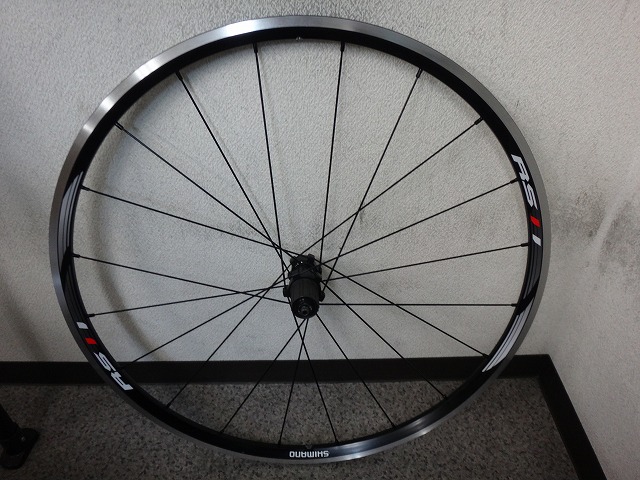
Both wheels had runout, especially the rear wheel pretty badly.
Depending on the phase, the provisional center was judged to be either perfect
or tilted toward the non-freewheel side.
Overall it seems to be leaning toward the non-freewheel side.
I was able to dial it in far better than a random out-of-the-box Dura-Ace wheel.
Not just Shimano wheels—
if you think of "complete wheels as about 90% assembled semi-finished products," it doesn't bother you so much.
You just have to sort it out before it reaches the customer.
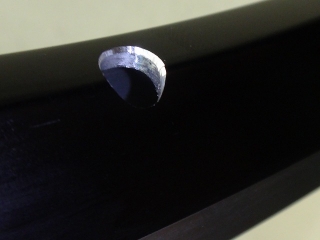
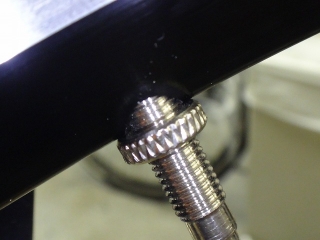
The rear rim is an offset rim, with the valve hole cut at an angle.
There's a flat surface at the apex on the inner side of the rim, so
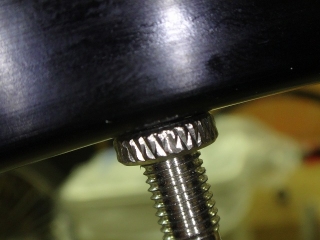
when you tighten the valve nut, it contacts on a surface rather than a line,
but this is the view from the non-freewheel side, and
the freewheel side looks like this.
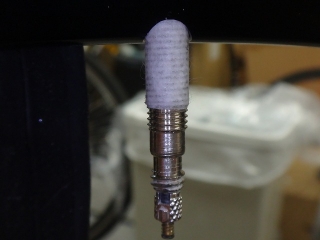
I applied valve rattle prevention tape.
You might know about the RS21, but what the heck is an RS11? Some of you might be wondering that.
It's a wheel distributed exclusively to complete bike manufacturers,
and it's not sold as a standalone product.
are salvage parts from complete bikes!
All Shimano wheels since the original model have been built at their Malaysia factory,
but only assemblers at the highest of four skill grades are allowed
to build Dura-Ace grade wheels.
Conversely, all other wheels are training wheels for less experienced assemblers.
You might say they're "practice wheels" for the builder as well as the rider.
If the final quality inspection standards are the same,
you'd think lower-grade wheels wouldn't have terrible precision,
but for some reason that's not how it works in practice.
Some properly built RS11s exist, and some Dura-Ace wheels have precision flaws,
but overall, the assembly precision of non-Dura-Ace wheels tends to be lower.
It's not because of the materials (especially the rim) making clean wheels impossible to build.
Both wheels had runout, especially the rear wheel pretty badly.
Depending on the phase, the provisional center was judged to be either perfect
or tilted toward the non-freewheel side.
Overall it seems to be leaning toward the non-freewheel side.
I was able to dial it in far better than a random out-of-the-box Dura-Ace wheel.
Not just Shimano wheels—
if you think of "complete wheels as about 90% assembled semi-finished products," it doesn't bother you so much.
You just have to sort it out before it reaches the customer.
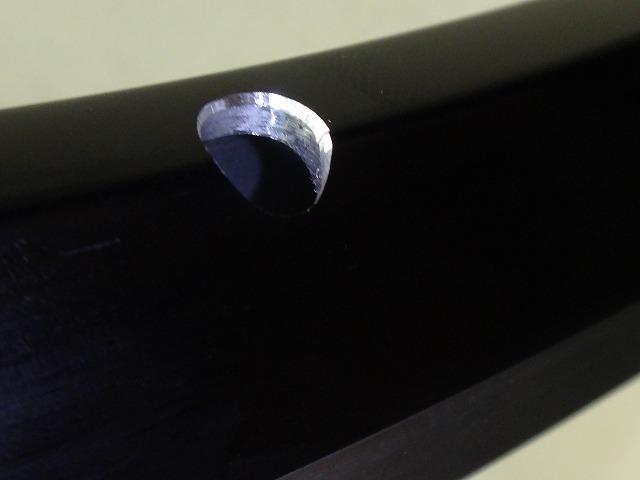
The rear rim is an offset rim, with the valve hole cut at an angle.
There's a flat surface at the apex on the inner side of the rim, so
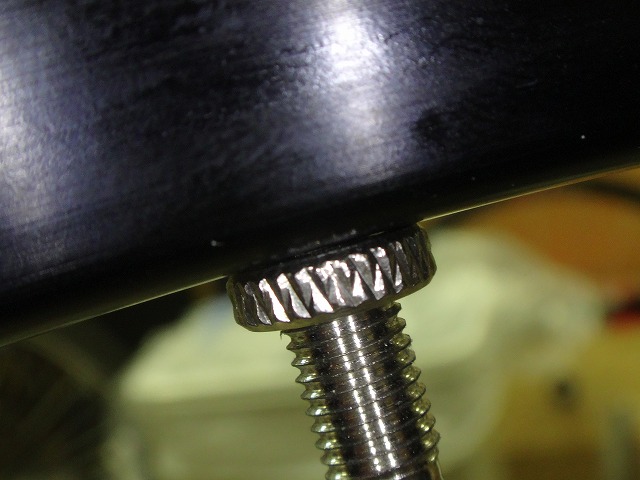
when you tighten the valve nut, it contacts on a surface rather than a line,
but this is the view from the non-freewheel side, and
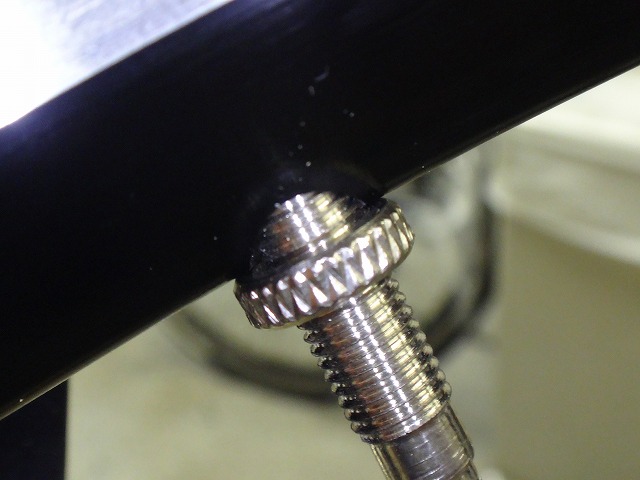
the freewheel side looks like this.
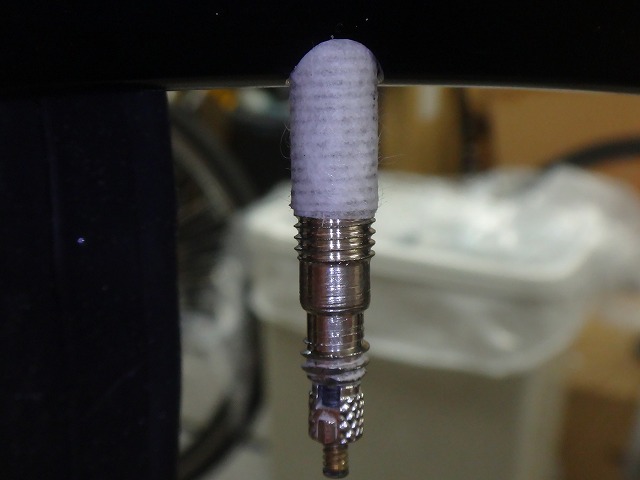
I applied valve rattle prevention tape.