A customer brought in an HED disc wheel for me to work on.

They want to upgrade the Shimano 10-speed freehub body to 11-speed.
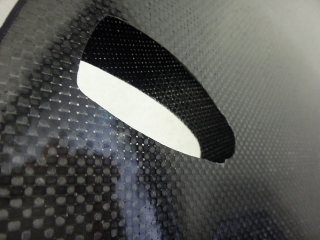
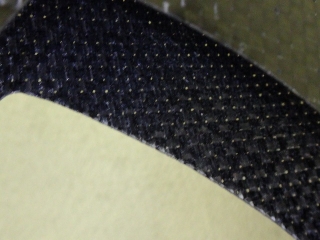
The disc portion on this wheel is incredibly thin and flimsy. It doesn't have that tension structure like a Campagnolo Giubli does—you know, where you can tap it like a drum and it resonates. This one just feels kind of limp and mushy.
I'll explain later why there's no structural issue with this.
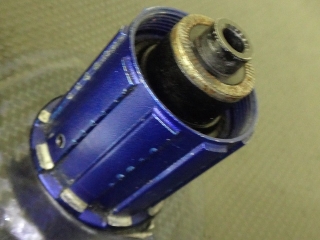
Looking at how the freehub body is secured with a set screw on the bearing side and the splined end profile, this is definitely a Novatec freehub body. The end isn't a hex socket, so it uses the same press-fit design as PowerTap hubs—meaning a PowerTap freehub body would fit right on, for example.
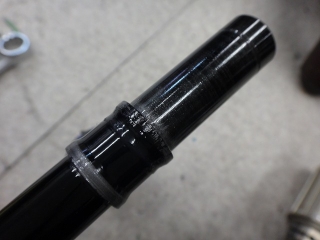
On Evelite hubs and PowerTap hubs, the end-bump spacer is a separate component from the shaft, but on this hub it's integrated into one piece.
This is where we run into a problem.
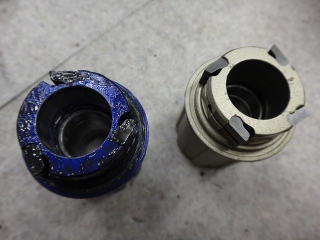
If the original 10-speed freehub body has 3 pawls and we're swapping in a 4-pawl version, the spacer specs on the 4-pawl freehub body have changed (→here), which can cause the shaft and freehub body to rub against each other.
In fact, when I measured the hole diameter on the 3-pawl freehub body with calipers, it wouldn't fit into the 4-pawl freehub body's hole.
The dimensions are subtly but definitely different.
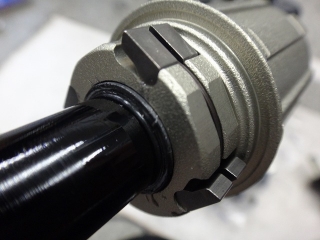
I inserted the 4-pawl body onto the hub shaft.
When I rotate it by hand, there's no rubbing sensation and it spins cleanly, but I can't know how it'll behave under actual riding conditions.
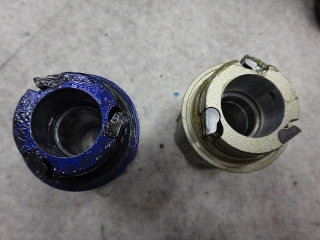
So I grabbed a 3-pawl freehub body from our shop stock instead.
The hole dimensions on this one measure perfectly with the calipers.
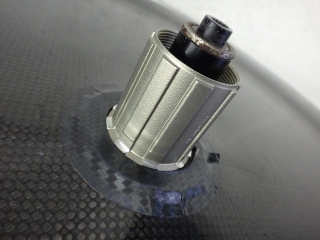
I did the swap. I'll talk about that carbon-pattern sticker around the freehub body later.
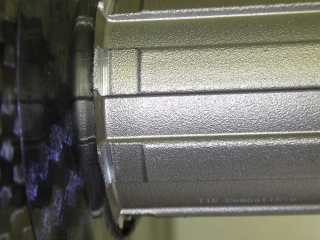
↑The spline runout and disc look dangerously close, but when I installed the sprocket and spun it, there was no contact.
That said, I can't guarantee the rear derailleur cage won't rub when shifting to the smallest cog.
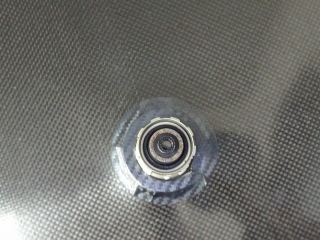
When that happens, you'd get circular abrasion marks on the disc, but this wheel doesn't have any.
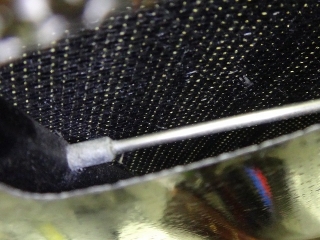
This disc wheel is actually built as a spoke wheel with a thin carbon film laminated over it.
That's why it needs rim tape on the outer edge and why you can true it. The carbon film doesn't need tension and the rim doesn't need to be a rigid structure—that's why it can work fine.
That sticker around the freehub body is there to cover the spoke holes. If a spoke breaks, the wheel would develop runout like a regular spoke wheel, but I think you could still replace spokes even with the disc film attached.
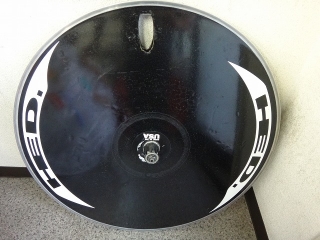
Next, the same customer brought in another HED disc wheel.
They want this one upgraded to 11-speed too.
This one does have those abrasion marks from the rear derailleur cage I mentioned earlier.
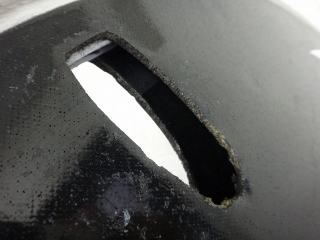
The carbon is thick, comparable to a Mavic Comet (→here), and because it's a rigid structure on its own, this isn't a spoke wheel at all.
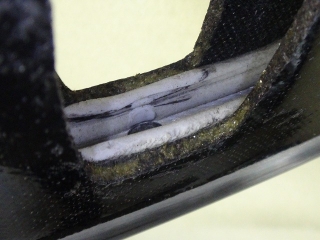
The aluminum rim section is quite narrow. The gluing is rough and crude.
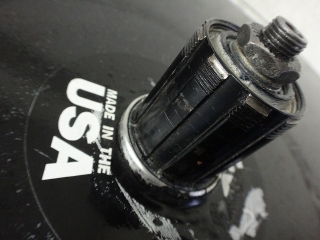
Unfortunately, freehub body replacement isn't possible on this one.
The manufacturer seems to have sourced a Shimano 8-speed freehub body and reused it.
A similar situation with Spinergy is covered here (→here), and why 11-speed conversion isn't possible is explained here (→here).
Man, this entry has a lot of citations in it.

They want to upgrade the Shimano 10-speed freehub body to 11-speed.
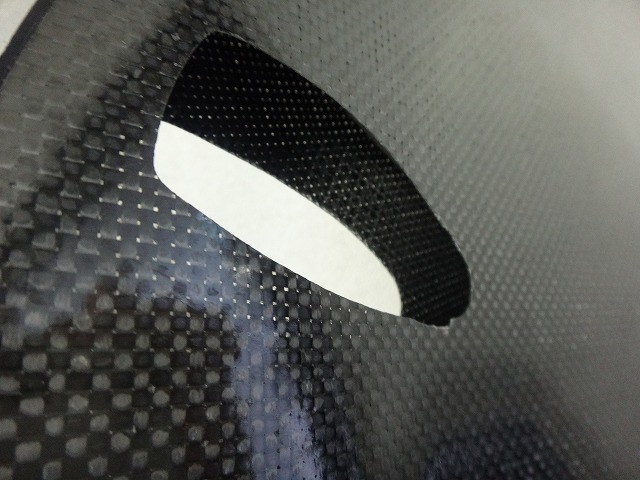
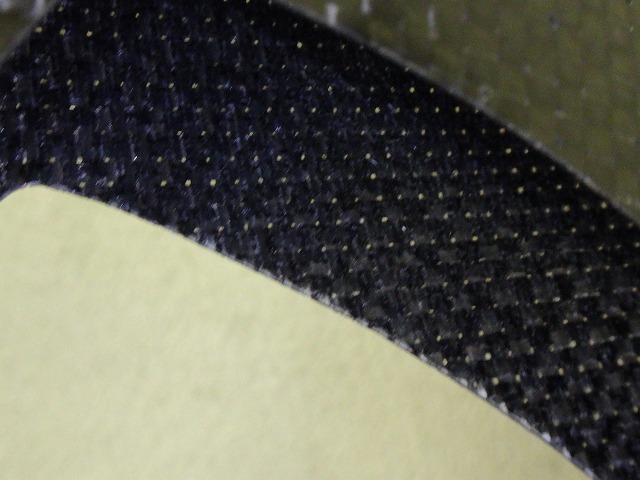
The disc portion on this wheel is incredibly thin and flimsy. It doesn't have that tension structure like a Campagnolo Giubli does—you know, where you can tap it like a drum and it resonates. This one just feels kind of limp and mushy.
I'll explain later why there's no structural issue with this.
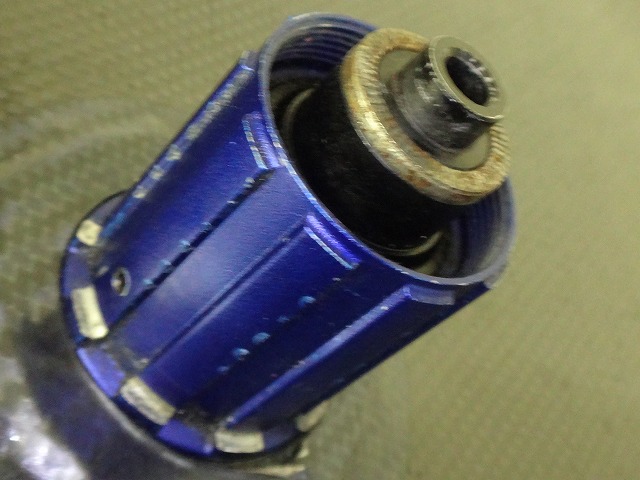
Looking at how the freehub body is secured with a set screw on the bearing side and the splined end profile, this is definitely a Novatec freehub body. The end isn't a hex socket, so it uses the same press-fit design as PowerTap hubs—meaning a PowerTap freehub body would fit right on, for example.
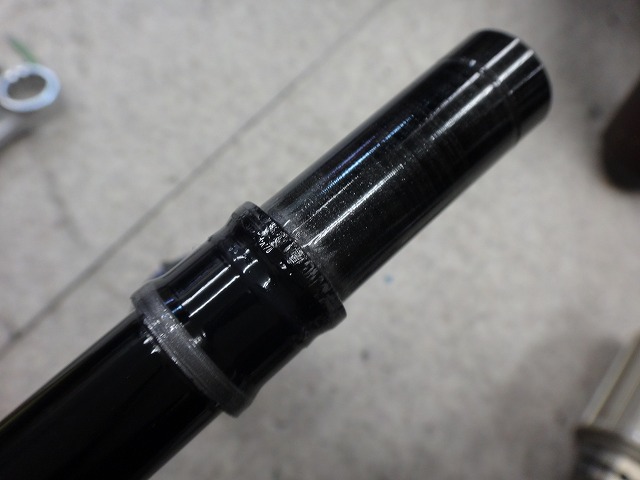
On Evelite hubs and PowerTap hubs, the end-bump spacer is a separate component from the shaft, but on this hub it's integrated into one piece.
This is where we run into a problem.

If the original 10-speed freehub body has 3 pawls and we're swapping in a 4-pawl version, the spacer specs on the 4-pawl freehub body have changed (→here), which can cause the shaft and freehub body to rub against each other.
In fact, when I measured the hole diameter on the 3-pawl freehub body with calipers, it wouldn't fit into the 4-pawl freehub body's hole.
The dimensions are subtly but definitely different.
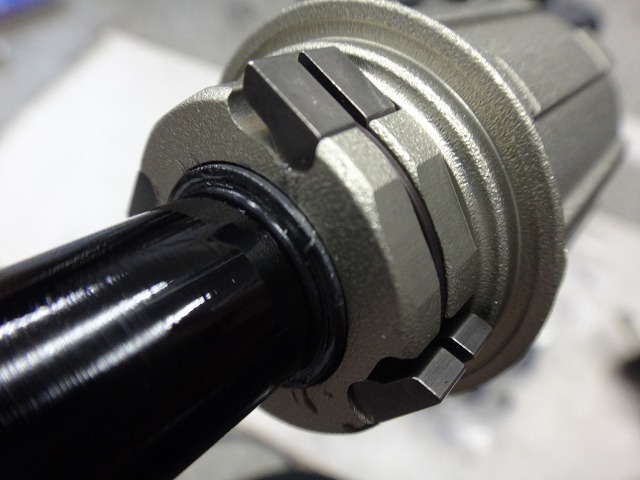
I inserted the 4-pawl body onto the hub shaft.
When I rotate it by hand, there's no rubbing sensation and it spins cleanly, but I can't know how it'll behave under actual riding conditions.
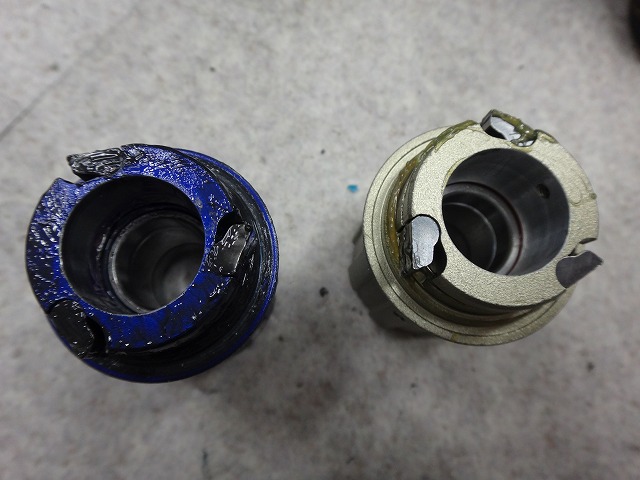
So I grabbed a 3-pawl freehub body from our shop stock instead.
The hole dimensions on this one measure perfectly with the calipers.

I did the swap. I'll talk about that carbon-pattern sticker around the freehub body later.
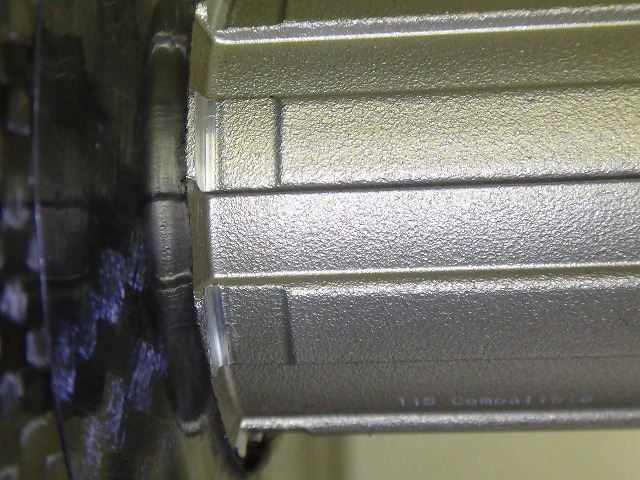
↑The spline runout and disc look dangerously close, but when I installed the sprocket and spun it, there was no contact.
That said, I can't guarantee the rear derailleur cage won't rub when shifting to the smallest cog.
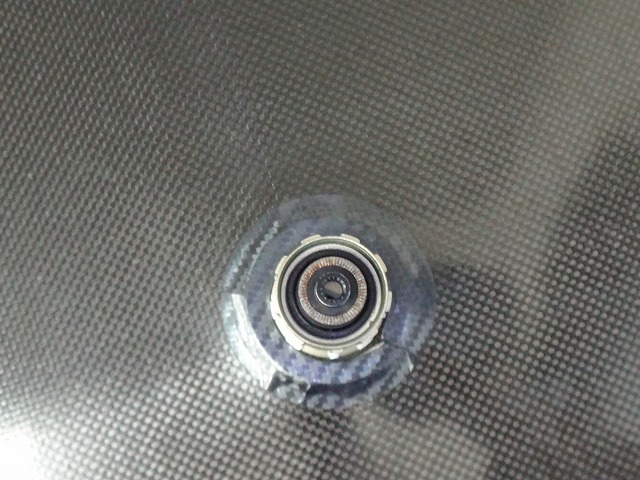
When that happens, you'd get circular abrasion marks on the disc, but this wheel doesn't have any.
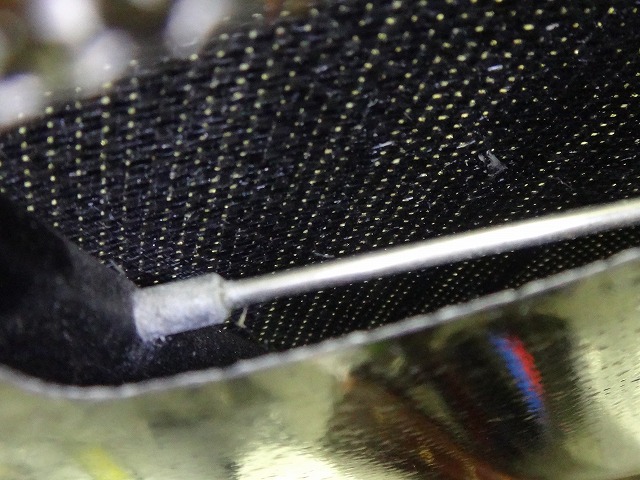
This disc wheel is actually built as a spoke wheel with a thin carbon film laminated over it.
That's why it needs rim tape on the outer edge and why you can true it. The carbon film doesn't need tension and the rim doesn't need to be a rigid structure—that's why it can work fine.
That sticker around the freehub body is there to cover the spoke holes. If a spoke breaks, the wheel would develop runout like a regular spoke wheel, but I think you could still replace spokes even with the disc film attached.

Next, the same customer brought in another HED disc wheel.
They want this one upgraded to 11-speed too.
This one does have those abrasion marks from the rear derailleur cage I mentioned earlier.
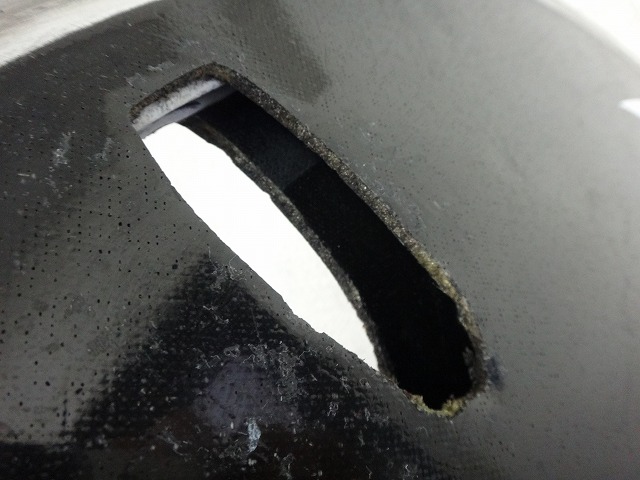
The carbon is thick, comparable to a Mavic Comet (→here), and because it's a rigid structure on its own, this isn't a spoke wheel at all.
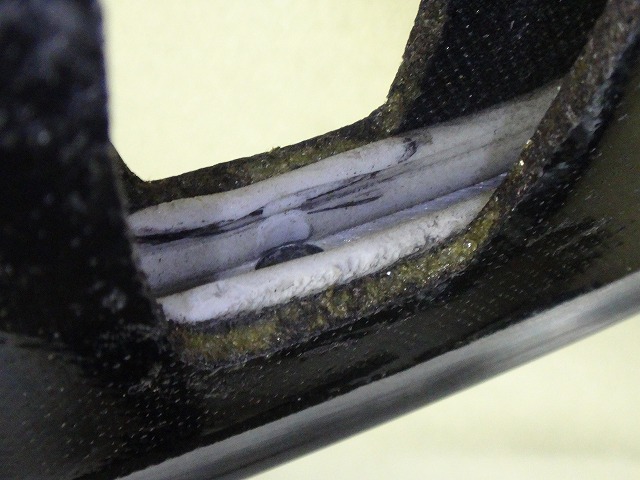
The aluminum rim section is quite narrow. The gluing is rough and crude.
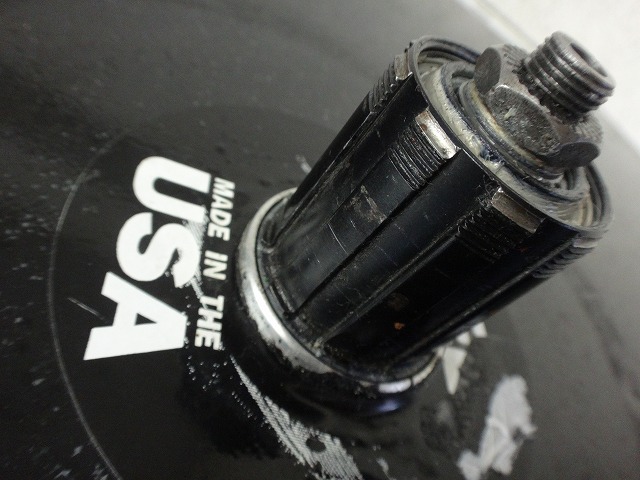
Unfortunately, freehub body replacement isn't possible on this one.
The manufacturer seems to have sourced a Shimano 8-speed freehub body and reused it.
A similar situation with Spinergy is covered here (→here), and why 11-speed conversion isn't possible is explained here (→here).
Man, this entry has a lot of citations in it.