The other day, I wrote that the bearings on Novatec freehubs were
15267, and I received this comment:
"Regarding the bearings on Novatec freehubs, the ones that come stock on the F291SB-SL
are 15267, but the freehubs with anti-bite guards
use 6902, which is different."
Apparently, I (the crab-ray) have some things to say about this.

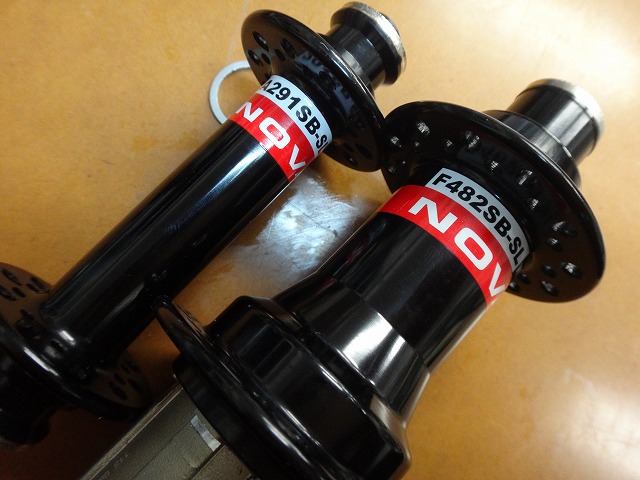
↑Please take a look at this image!

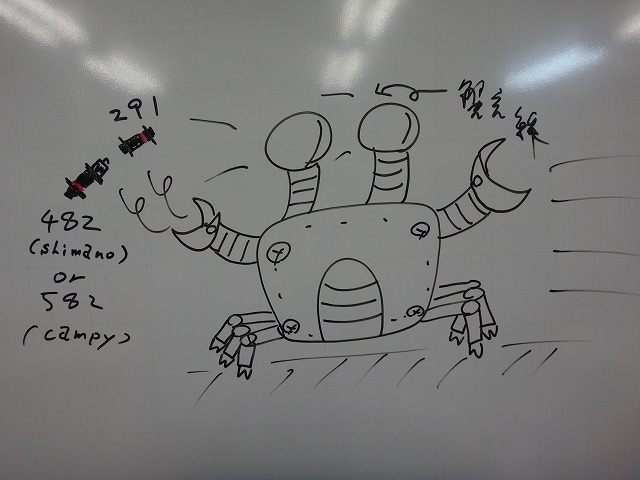
The 291 is a front hub!
The rear hub is a 482, so I was mistaken!

I apologize for nitpicking!
So thank you for the comment.
This is extremely valuable information when it comes to bearing replacement.
As for me, I find 6902 easier to source, so this is helpful...
While I'm at it,
I'll write about some cautions when replacing the freehub body on
Tni Evolitе hubs, which are 482-series hubs.

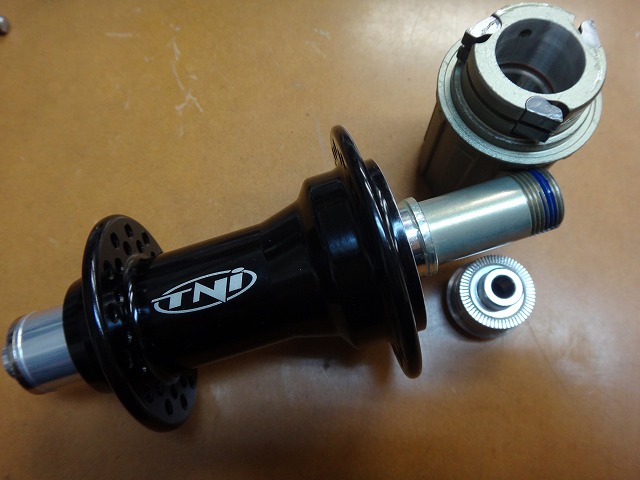
This is an older Evolite hub.
The hub shell is marked only "Tni" and the freehub body has 3 pawls.

The spacer that prevents the freehub body from bottoming out is

made of aluminum with a butted design.
Previously (with the Evo hub), it was steel, but
the outer diameter of the non-butted section is the same as that.
For convenience in future discussion, I'll call the steel from the Evo hub era the "thick steel,"
and the aluminum with the same dimensions (the one in the image above) the "thick aluminum."

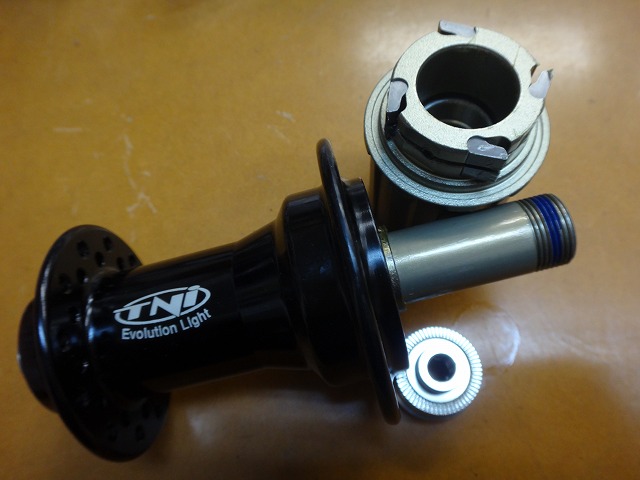
This is a more recent Evolite hub.
The hub shell is marked both "Tni" and "Evolution Lite."
As I'll explain later, this hub shell also has version differences,
and the shape of the left dust cap has changed slightly.
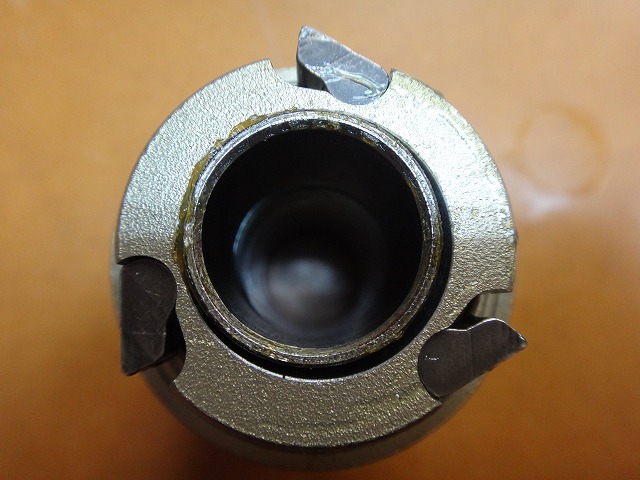
The freehub body has 4 pawls,
but currently this is only the specification for Shimano 11-speed freehub bodies.
The Campagnolo version has 3 pawls, but it's supposed to switch over eventually—
it just hasn't yet.
The hub marked only "Tni" from earlier was also sourced at the same time,
but since 28H is an uncommon spoke count (at least not as common as 24H),
the spec change might just be delayed.

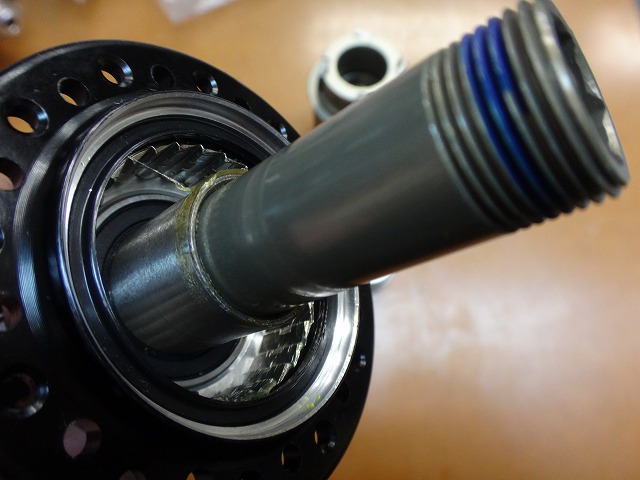
The spacer for the 4-pawl freehub body is made of steel, but

the inner diameter of the hole where the spacer sits on the freehub body side is different,
so this spacer's dimensions are also different.
This steel spacer is clearly thinner compared to the earlier steel version, so I'll call this one the "thin steel."

I put thin steel in the 3-pawl body and shifted them to emphasize the dimension difference.
This combination works.
When threaded onto the hub axle, the spacer sits in the middle and
makes just the right contact with the bearing's inner race. When the freehub idles,
a gap forms between the spacer and the bearing.

I put thick aluminum in the 4-pawl body.
As you can see, there's no gap, and it's more like a light press fit to install.
The same applies with thick steel.

The spacer length is the same across all types, so it does its job of preventing bottoming out,
but when the freehub idles, it feels like a fixed gear and
creates significant resistance inside the hub.
So thick spacers can't be used with 4-pawl bodies.
The problem comes when you buy a freehub body as a standalone item—
the spacer doesn't come with it (more on this later).
Hubs that come stock with Campagnolo freehub bodies are
currently almost all thick aluminum,
and Shimano 10-speed Evo hubs use thick steel. So when upgrading from those to a Shimano 11-speed freehub body,
you need to somehow get your hands on thin steel.
It's very common to get a wheel from someone else or buy one used
with a Campagnolo freehub body and want to switch to Shimano 11-speed,
or to upgrade from Shimano 10-speed to 11-speed.
The reverse almost never happens.
I was thinking about reporting this issue to the importer, but

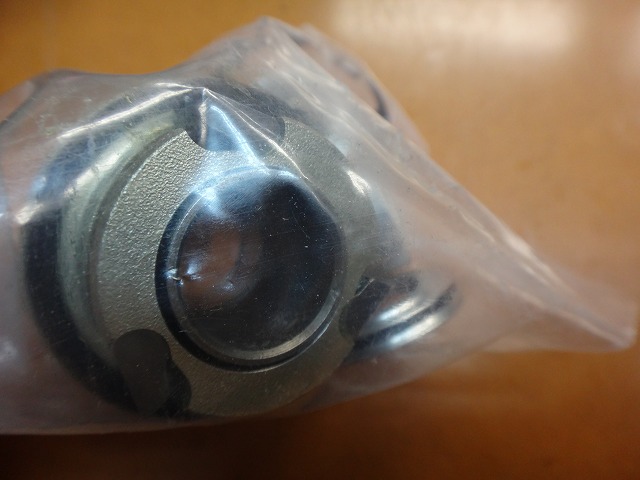
very recently, freehub bodies as standalone items started coming with spacers included.
If you replace everything including the spacer that comes with it, there's no problem.
For now, even Shimano 11-speed units still arrive with 3-pawl bodies,
but if a spacer is included, there's no issue.
The period when spacers weren't included was about a year, I think.

↑From left: 3-pawl Campagnolo, 3-pawl Shimano 11-speed, and 4-pawl Shimano 11-speed.
The 3-pawl is designed for thick spacers and can also use thin spacers,
while the 4-pawl only works with thin spacers.
Aside from the number of pawls, there are other ways to tell them apart:

The freehub body for thick spacers has the inside of the hole finish-machined,

whereas the thin spacer version has Novatec's distinctive anodize color
carried all the way to the inside.
But that's not just the difference in anodize thickness—
the dimensions are clearly different.

Here I lined up thick steel and thin steel side by side.

When aligned this way,

they're offset by this much on the other end.

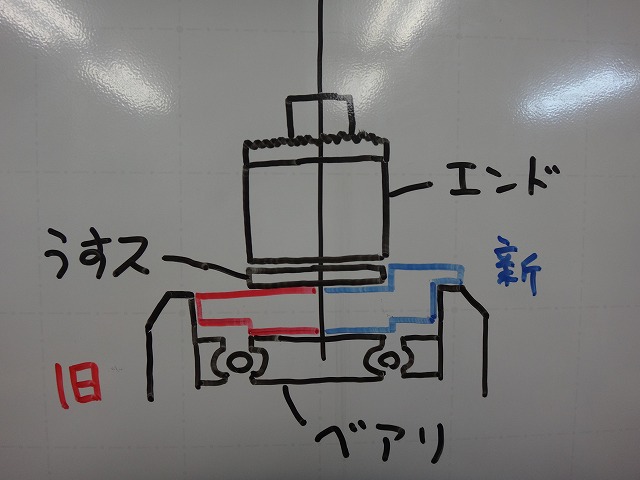
About the left end of the Evolite hub.
This is the older type, with dust cap, thin spacer, and end nut arranged from the inside.
The inside of the dust cap is stepped to press only on the bearing's inner race,
but the outside is flat.

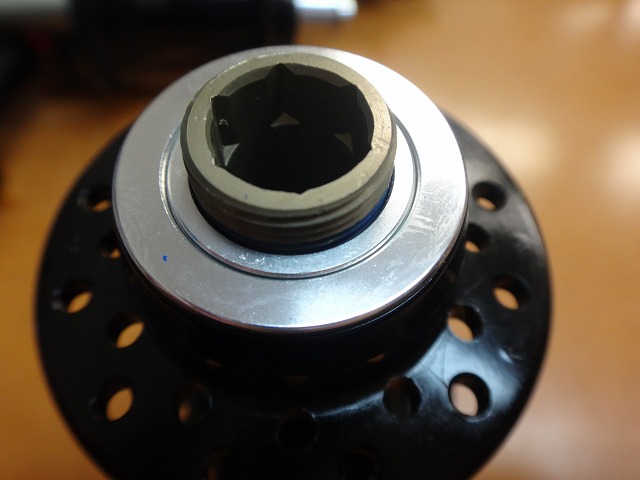
On more recent hubs, the dust cap now has a shape that covers the hub shell,

and the outside, which was once flat, now has a recess where the thin spacer sits flush.

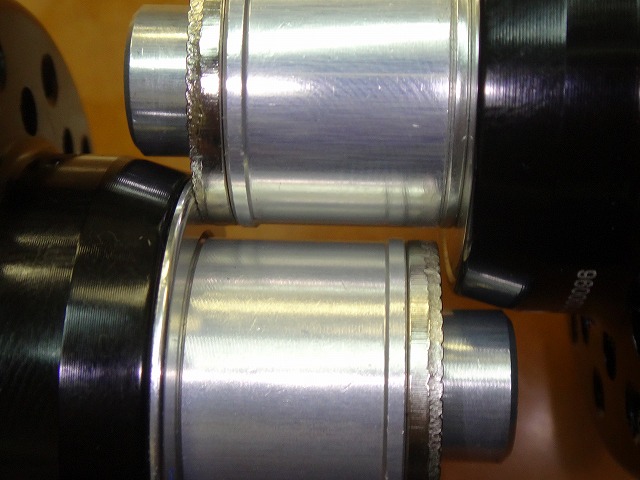
The end nut dimensions haven't changed.
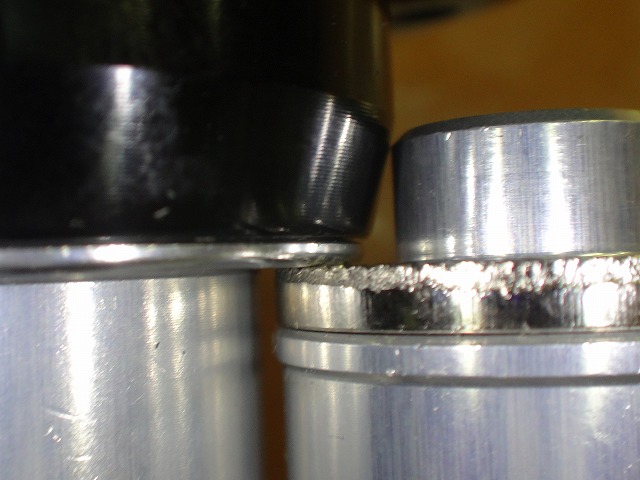
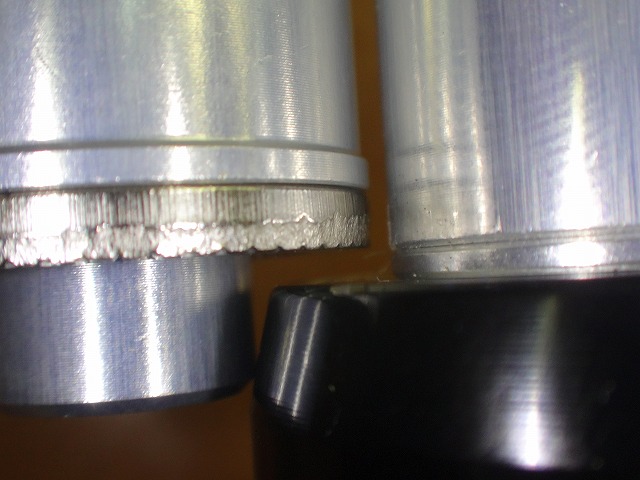
When I line up a new end with an old one,

the old end meets the new end's thin spacer, and

the new end aligns perfectly with the old end's thin spacer position.

In other words, it's like this.
The dimensions haven't changed at all.
I don't think it'll happen much going forward, but
if you get a rear hub with a thick spacer and buy a Shimano 11-speed 4-pawl freehub body separately,
only to find it didn't come with a thin spacer—please feel free to reach out. I'll figure something out.
15267, and I received this comment:
"Regarding the bearings on Novatec freehubs, the ones that come stock on the F291SB-SL
are 15267, but the freehubs with anti-bite guards
use 6902, which is different."
Apparently, I (the crab-ray) have some things to say about this.
↑Please take a look at this image!
The 291 is a front hub!
The rear hub is a 482, so I was mistaken!
I apologize for nitpicking!
So thank you for the comment.
This is extremely valuable information when it comes to bearing replacement.
As for me, I find 6902 easier to source, so this is helpful...
While I'm at it,
I'll write about some cautions when replacing the freehub body on
Tni Evolitе hubs, which are 482-series hubs.
This is an older Evolite hub.
The hub shell is marked only "Tni" and the freehub body has 3 pawls.

The spacer that prevents the freehub body from bottoming out is

made of aluminum with a butted design.
Previously (with the Evo hub), it was steel, but
the outer diameter of the non-butted section is the same as that.
For convenience in future discussion, I'll call the steel from the Evo hub era the "thick steel,"
and the aluminum with the same dimensions (the one in the image above) the "thick aluminum."
This is a more recent Evolite hub.
The hub shell is marked both "Tni" and "Evolution Lite."
As I'll explain later, this hub shell also has version differences,
and the shape of the left dust cap has changed slightly.
The freehub body has 4 pawls,
but currently this is only the specification for Shimano 11-speed freehub bodies.
The Campagnolo version has 3 pawls, but it's supposed to switch over eventually—
it just hasn't yet.
The hub marked only "Tni" from earlier was also sourced at the same time,
but since 28H is an uncommon spoke count (at least not as common as 24H),
the spec change might just be delayed.
The spacer for the 4-pawl freehub body is made of steel, but

the inner diameter of the hole where the spacer sits on the freehub body side is different,
so this spacer's dimensions are also different.
This steel spacer is clearly thinner compared to the earlier steel version, so I'll call this one the "thin steel."
I put thin steel in the 3-pawl body and shifted them to emphasize the dimension difference.
This combination works.
When threaded onto the hub axle, the spacer sits in the middle and
makes just the right contact with the bearing's inner race. When the freehub idles,
a gap forms between the spacer and the bearing.

I put thick aluminum in the 4-pawl body.
As you can see, there's no gap, and it's more like a light press fit to install.
The same applies with thick steel.

The spacer length is the same across all types, so it does its job of preventing bottoming out,
but when the freehub idles, it feels like a fixed gear and
creates significant resistance inside the hub.
So thick spacers can't be used with 4-pawl bodies.
The problem comes when you buy a freehub body as a standalone item—
the spacer doesn't come with it (more on this later).
Hubs that come stock with Campagnolo freehub bodies are
currently almost all thick aluminum,
and Shimano 10-speed Evo hubs use thick steel. So when upgrading from those to a Shimano 11-speed freehub body,
you need to somehow get your hands on thin steel.
It's very common to get a wheel from someone else or buy one used
with a Campagnolo freehub body and want to switch to Shimano 11-speed,
or to upgrade from Shimano 10-speed to 11-speed.
The reverse almost never happens.
I was thinking about reporting this issue to the importer, but
very recently, freehub bodies as standalone items started coming with spacers included.
If you replace everything including the spacer that comes with it, there's no problem.
For now, even Shimano 11-speed units still arrive with 3-pawl bodies,
but if a spacer is included, there's no issue.
The period when spacers weren't included was about a year, I think.
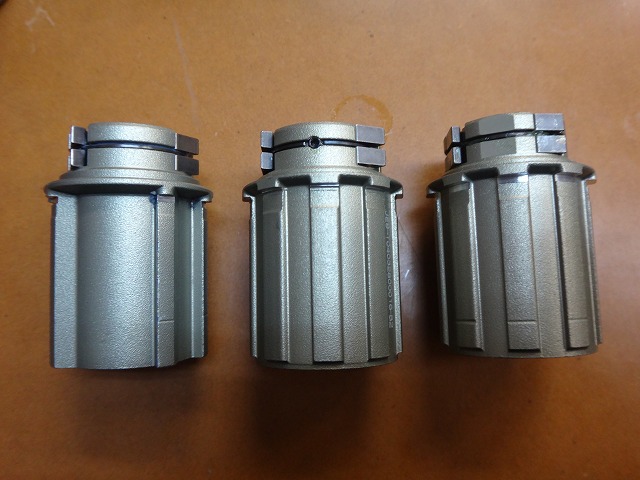
↑From left: 3-pawl Campagnolo, 3-pawl Shimano 11-speed, and 4-pawl Shimano 11-speed.
The 3-pawl is designed for thick spacers and can also use thin spacers,
while the 4-pawl only works with thin spacers.
Aside from the number of pawls, there are other ways to tell them apart:

The freehub body for thick spacers has the inside of the hole finish-machined,
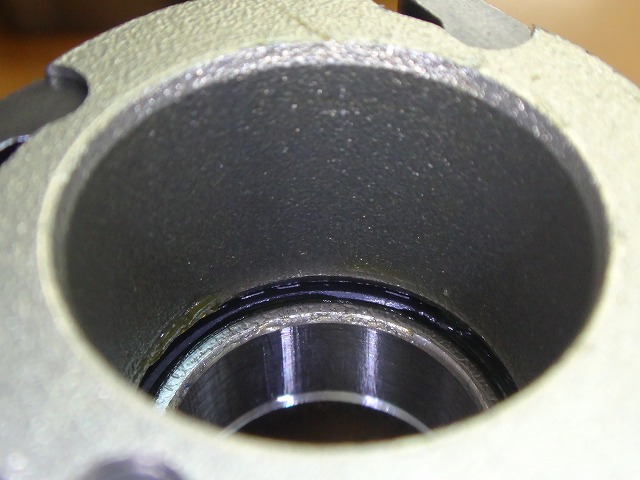
whereas the thin spacer version has Novatec's distinctive anodize color
carried all the way to the inside.
But that's not just the difference in anodize thickness—
the dimensions are clearly different.

Here I lined up thick steel and thin steel side by side.

When aligned this way,

they're offset by this much on the other end.
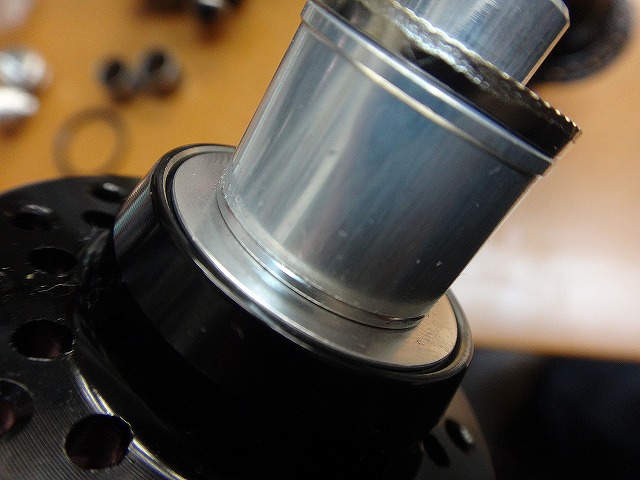
About the left end of the Evolite hub.
This is the older type, with dust cap, thin spacer, and end nut arranged from the inside.
The inside of the dust cap is stepped to press only on the bearing's inner race,
but the outside is flat.
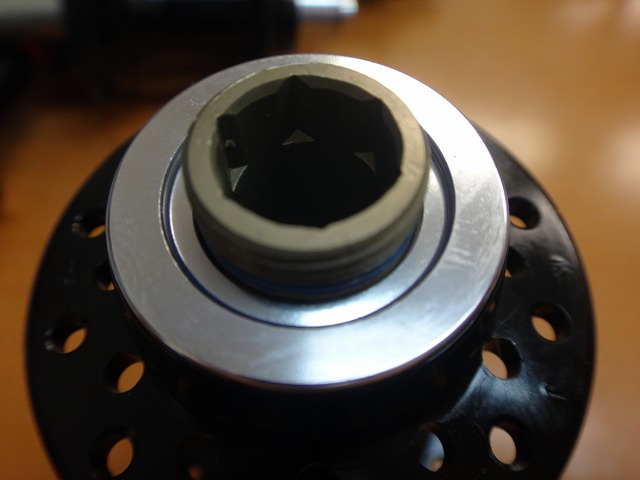
On more recent hubs, the dust cap now has a shape that covers the hub shell,
and the outside, which was once flat, now has a recess where the thin spacer sits flush.
The end nut dimensions haven't changed.
When I line up a new end with an old one,
the old end meets the new end's thin spacer, and
the new end aligns perfectly with the old end's thin spacer position.
In other words, it's like this.
The dimensions haven't changed at all.
I don't think it'll happen much going forward, but
if you get a rear hub with a thick spacer and buy a Shimano 11-speed 4-pawl freehub body separately,
only to find it didn't come with a thin spacer—please feel free to reach out. I'll figure something out.