Today, wheels again (and so on).
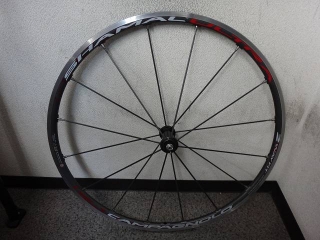
I received a customer's Shamal Ultra 2WAY-FIT in titanium gray for service.
First up: the front wheel.

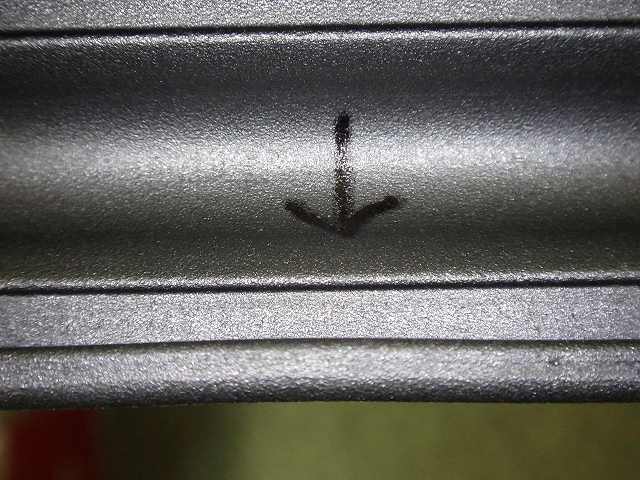
The customer had marked some reference points,
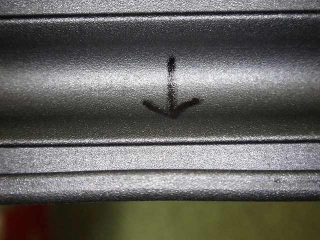
but the rim's bead hook is dented.
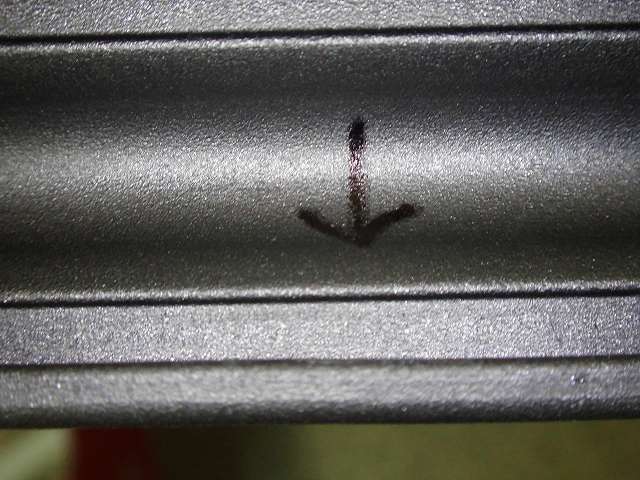
The arrow was drawn by me for the sake of the work.
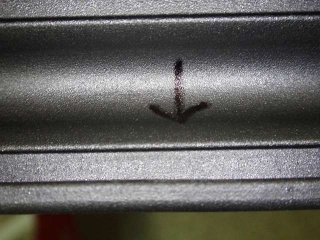
Since it wasn't bent too severely, I was able to correct it.
If the front rim needed replacement, the cost would spike,
so I really wanted to handle it with a correction if possible.
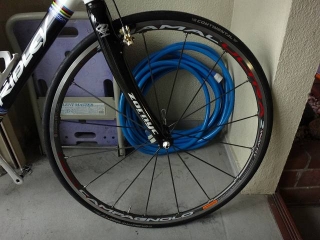
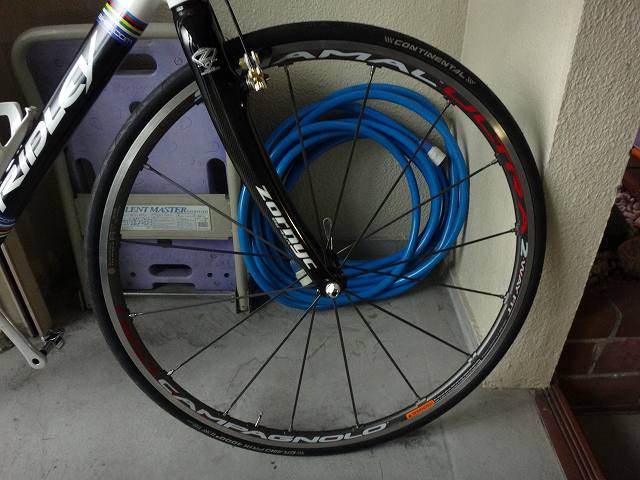
Just to be safe, I mounted a tire and took it for a short test ride.
I rode while feathering the brake and
also braked continuously on a downhill,
and there was absolutely no abnormality in the brake feel, so there's no problem.
But man, this thing is light. The front wheel that normally goes on this bike
is around 1200g just the wheel itself (not the pair),
so there's no way I can't tell the difference.
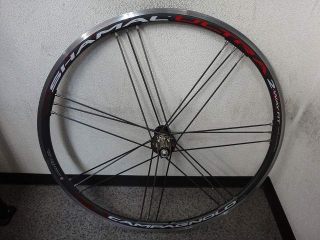
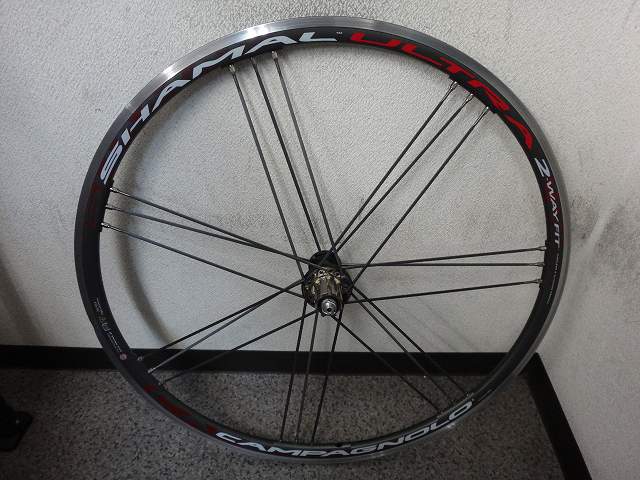
Next: the rear wheel.
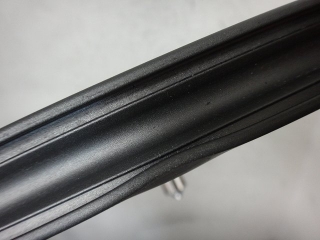
The bead hook deformation here is more severe, and the rim needs replacement.
The bead hook deformation alone might not be impossible to correct,
but the rim side is bulged out, so there's nothing to be done.
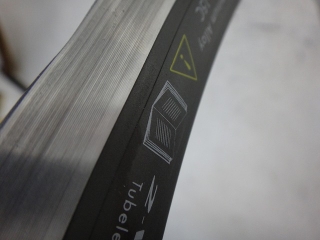
↑The area around where there's a manual-reading book mark is quite bulged.
It's hard to tell from the image, though.
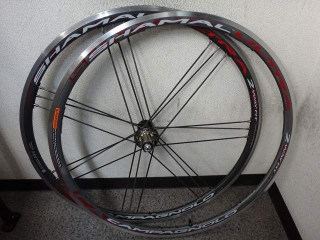
I got in a replacement rim.
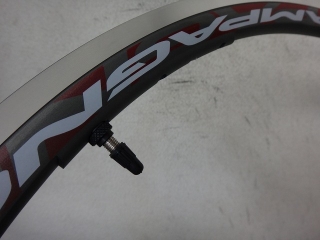
Since it's 2WAY-FIT, it comes with a tubeless valve.
The Racing Zero red rim, Shamal Ultra gold rim,
and this titanium gray, for example, all come with rim stickers pre-applied.
For rims where stickers are sold separately,
it's because the rim is shared with some other model.
For example, the black Shamal Ultra and black Eurus have the same rim from a certain period onward,
so they're distinguished using separately-sold stickers.
The titanium gray rim is a unique color that doesn't exist on Eurus or Racing Zero,
so it comes with the sticker pre-applied.
In the current Fulcrum lineup, the Racing 1 is discontinued,
so for aluminum-spoked rims there's only the Racing Zero,
and the reason it comes without a sticker is
because the front rim is the same as the Shamal Ultra's.
Strictly speaking, the non-machined section (island) near the valve hole should be different,
but with spare front rims, sometimes
we receive Shamal Ultra or Eurus rims with Fulcrum's "island" design.
Regarding the "island" (→here),
and for the Shamal Ultra 2WAY-FIT which has the valve hole island on the Racing Zero 2WAY-FIT (→here).
For rims with stickers pre-applied, compared to rims sold separately,
the price doesn't increase by the sticker amount—
it's basically the same, so it's actually a bit of a bargain.
When replacing rims that have stickers sold separately,
I sometimes get customers saying "then just give it to me without a sticker,"
so there's that.
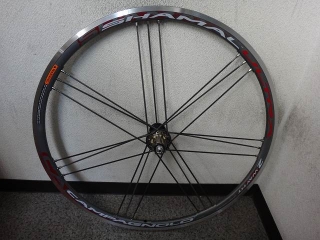
Built it up.
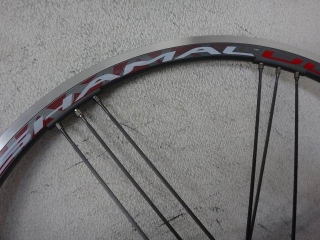
For a pre-Mega G3 rear rim,
once I've finished a provisional build at low tension,
you can clearly see the rim dancing vertically when the wheel spins.
But there's a property related to this that goes against intuition.
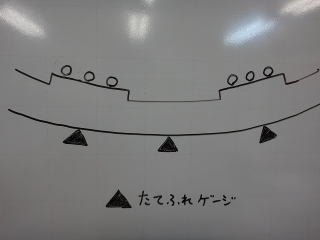
Let's say the edge of a tensionless rim traces a perfectly circular path.
The apex of the triangle on the runout gauge
that contacts the rim is at the same distance from the wheel center,
so it just touches the rim's edge.
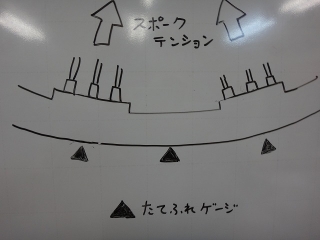
When spoke tension is applied, the rim distorts inward
only in the phase around the G3 rim holes.
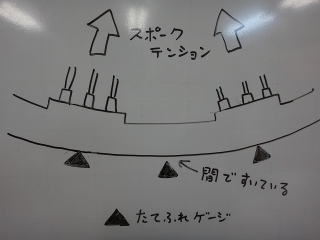
So it's impossible to make the runout exactly the same
between the spoke base and the areas between them.
The best we can do is make sure the seven dips below the G3 are equally depressed.
Just to be clear, in the diagram above,
the runout gauge is the fixed absolute reference,
and it's actually the rim edge that's changing.
For the sake of convenience in drawing,
I've redrawn the runout gauge instead, so please understand.
Now, even though I call it a "provisional build," it's not at low tension—
the spokes are under enough tension that you can't wobble them by hand.
When I aligned the vertical position directly below the G3,
I ended up in a state where
"the seven spaces between G3s don't rub the gauge, but the seven positions directly below G3 always rub."
Wait, that's weird, isn't it?
I could get it to a point where the G3-directly-below area is actually dipped more
if I tensioned it much higher (though still near the specified upper limit),
but the fact that there's even a moment when the G3 gaps are clearance is strange.
Could it be that...the edge of a brand new rim isn't nearly circular at all,
but is actually shaped slightly like a heptagon with the G3-direct-below area
biased slightly outward, accounting for spoke tension distortion?
That's the feeling I'm getting.
This tendency is not clearly observable with
older Fulcrums with uniform rim hole spacing,
newer Fulcrums with rest phases (right-left-right-rest),
or Mega G3 with rim hole positions changed to be more like new Fulcrum
(equivalent to a rear wheel radial build on the non-freewheel side with
every other non-freewheel spoke removed on a 28H wheel).
So I suspect they're doing it intentionally.
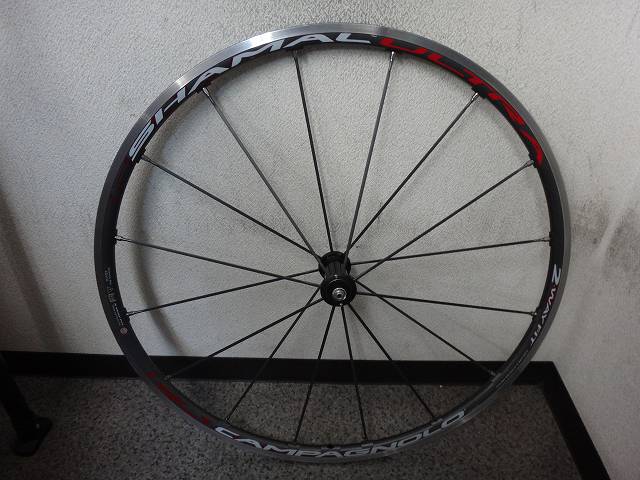
I received a customer's Shamal Ultra 2WAY-FIT in titanium gray for service.
First up: the front wheel.
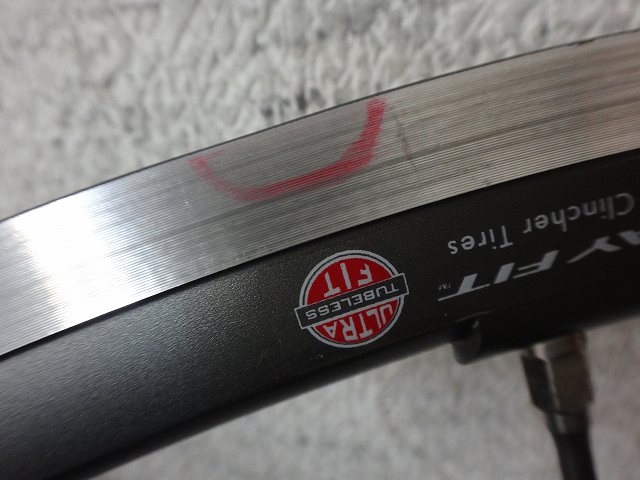
The customer had marked some reference points,
but the rim's bead hook is dented.
The arrow was drawn by me for the sake of the work.
Since it wasn't bent too severely, I was able to correct it.
If the front rim needed replacement, the cost would spike,
so I really wanted to handle it with a correction if possible.
Just to be safe, I mounted a tire and took it for a short test ride.
I rode while feathering the brake and
also braked continuously on a downhill,
and there was absolutely no abnormality in the brake feel, so there's no problem.
But man, this thing is light. The front wheel that normally goes on this bike
is around 1200g just the wheel itself (not the pair),
so there's no way I can't tell the difference.
Next: the rear wheel.

The bead hook deformation here is more severe, and the rim needs replacement.
The bead hook deformation alone might not be impossible to correct,
but the rim side is bulged out, so there's nothing to be done.
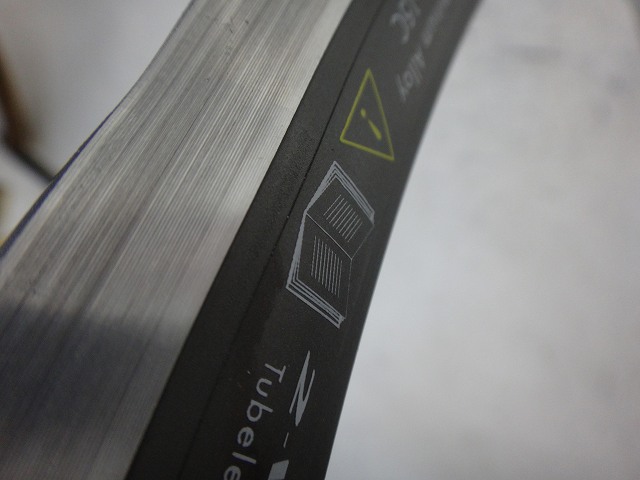
↑The area around where there's a manual-reading book mark is quite bulged.
It's hard to tell from the image, though.
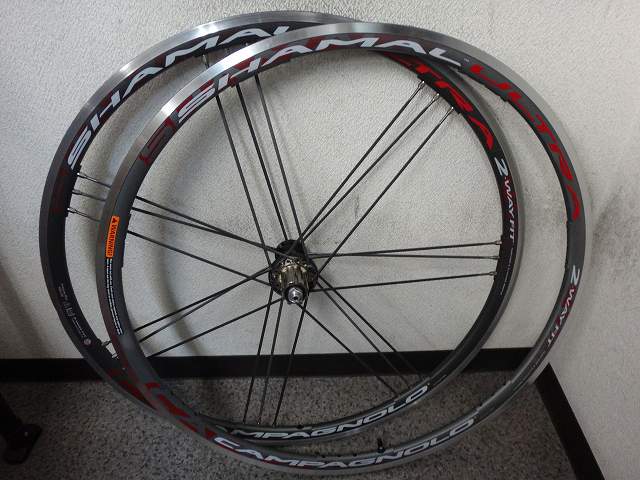
I got in a replacement rim.
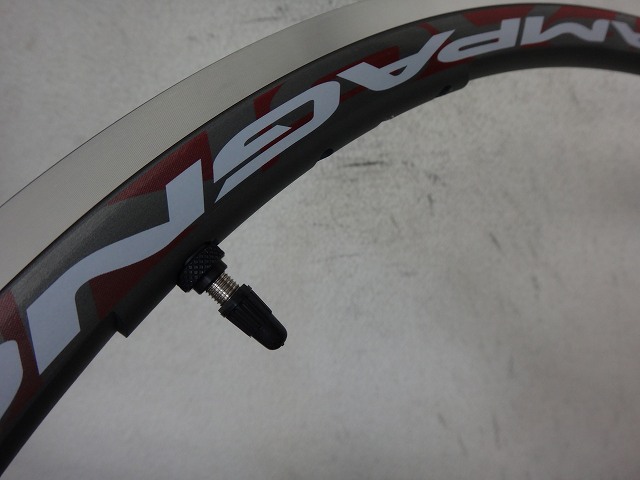
Since it's 2WAY-FIT, it comes with a tubeless valve.
The Racing Zero red rim, Shamal Ultra gold rim,
and this titanium gray, for example, all come with rim stickers pre-applied.
For rims where stickers are sold separately,
it's because the rim is shared with some other model.
For example, the black Shamal Ultra and black Eurus have the same rim from a certain period onward,
so they're distinguished using separately-sold stickers.
The titanium gray rim is a unique color that doesn't exist on Eurus or Racing Zero,
so it comes with the sticker pre-applied.
In the current Fulcrum lineup, the Racing 1 is discontinued,
so for aluminum-spoked rims there's only the Racing Zero,
and the reason it comes without a sticker is
because the front rim is the same as the Shamal Ultra's.
Strictly speaking, the non-machined section (island) near the valve hole should be different,
but with spare front rims, sometimes
we receive Shamal Ultra or Eurus rims with Fulcrum's "island" design.
Regarding the "island" (→here),
and for the Shamal Ultra 2WAY-FIT which has the valve hole island on the Racing Zero 2WAY-FIT (→here).
For rims with stickers pre-applied, compared to rims sold separately,
the price doesn't increase by the sticker amount—
it's basically the same, so it's actually a bit of a bargain.
When replacing rims that have stickers sold separately,
I sometimes get customers saying "then just give it to me without a sticker,"
so there's that.
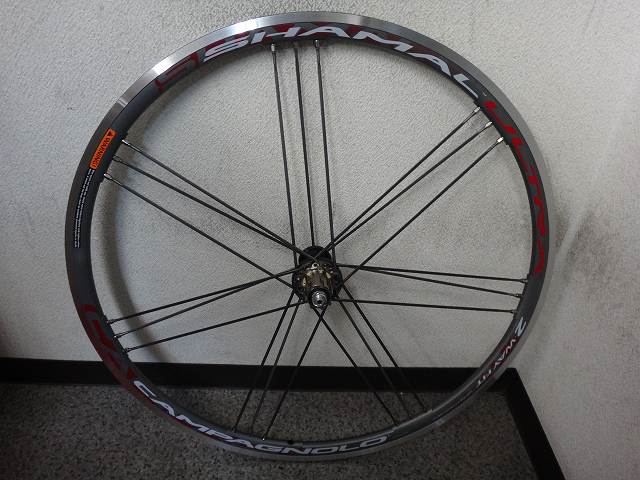
Built it up.
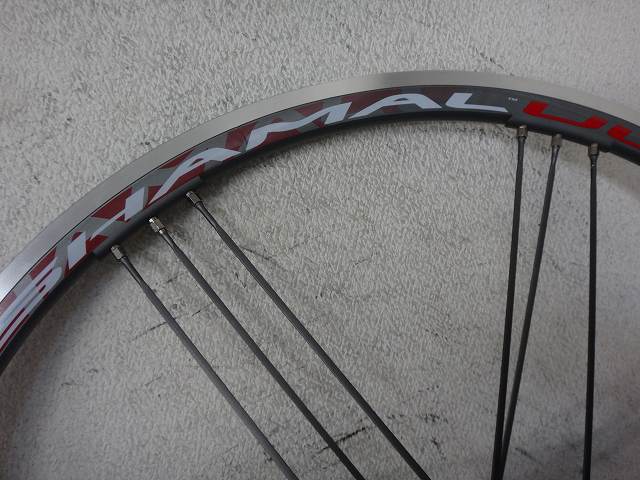
For a pre-Mega G3 rear rim,
once I've finished a provisional build at low tension,
you can clearly see the rim dancing vertically when the wheel spins.
But there's a property related to this that goes against intuition.
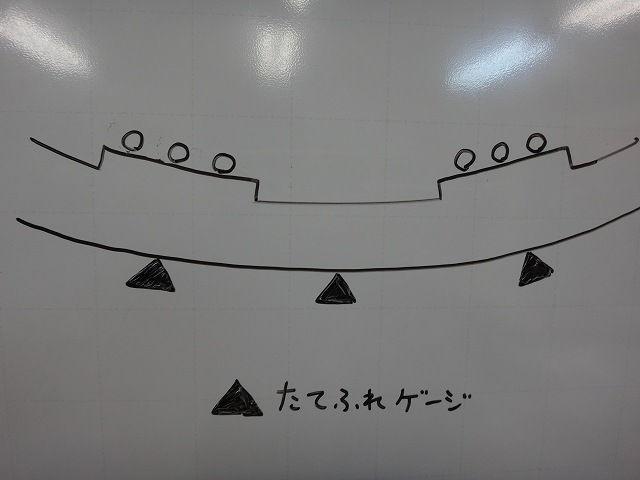
Let's say the edge of a tensionless rim traces a perfectly circular path.
The apex of the triangle on the runout gauge
that contacts the rim is at the same distance from the wheel center,
so it just touches the rim's edge.

When spoke tension is applied, the rim distorts inward
only in the phase around the G3 rim holes.
So it's impossible to make the runout exactly the same
between the spoke base and the areas between them.
The best we can do is make sure the seven dips below the G3 are equally depressed.
Just to be clear, in the diagram above,
the runout gauge is the fixed absolute reference,
and it's actually the rim edge that's changing.
For the sake of convenience in drawing,
I've redrawn the runout gauge instead, so please understand.

Now, even though I call it a "provisional build," it's not at low tension—
the spokes are under enough tension that you can't wobble them by hand.
When I aligned the vertical position directly below the G3,
I ended up in a state where
"the seven spaces between G3s don't rub the gauge, but the seven positions directly below G3 always rub."
Wait, that's weird, isn't it?
I could get it to a point where the G3-directly-below area is actually dipped more
if I tensioned it much higher (though still near the specified upper limit),
but the fact that there's even a moment when the G3 gaps are clearance is strange.
Could it be that...the edge of a brand new rim isn't nearly circular at all,
but is actually shaped slightly like a heptagon with the G3-direct-below area
biased slightly outward, accounting for spoke tension distortion?
That's the feeling I'm getting.
This tendency is not clearly observable with
older Fulcrums with uniform rim hole spacing,
newer Fulcrums with rest phases (right-left-right-rest),
or Mega G3 with rim hole positions changed to be more like new Fulcrum
(equivalent to a rear wheel radial build on the non-freewheel side with
every other non-freewheel spoke removed on a 28H wheel).
So I suspect they're doing it intentionally.