A customer brought in a Crossmax SLR Disc for service.

It's a 2007–2011 model.
It's the MTB flagship model that matched the appearance of the red hub Kyserium ES (limited edition) from 2006, which was made into a regular model as the 2007 Kyserium SL.
The Crossmax SLR for rim brakes—without disc brake mounts—that was released at the same time has a ceramic-finished brake zone, but this disc brake-specific version has the rim side machined away.
The Kyserium K1 for road wheels does something similar, but it's a later model than this one, so it's in the form of MTB technology being inherited by road bikes.
Maybe this is the strength of manufacturers that handle both MTB and road—with Shimano components, things like Hollowtech II cranksets and Shadow rear derailleurs were passed from MTB to road in the same way.
The next generation Crossmax SLR is internally distinguished by having MY12 (model year 2012) added after the model name, but the rim brake version was discontinued.
Now, about the service request:
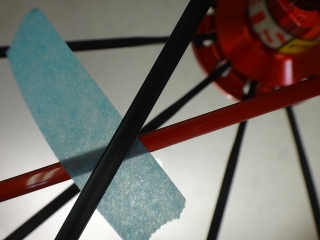
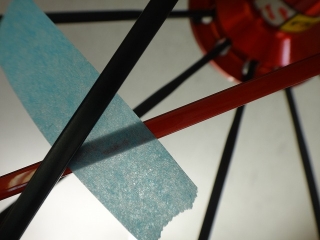
The spoke tension is completely slack, and it's not rideable in its current condition. The customer is not the first owner of this wheel, so the detailed history is unclear. Since the customer has already done a hub overhaul, I'm just doing some retensioning along with truing. I marked the last crossing point with tape and gave it a squeeze—it's definitely abnormally slack.
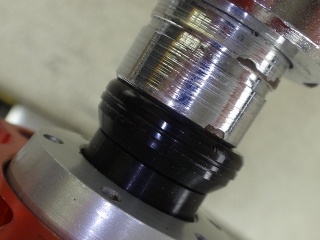
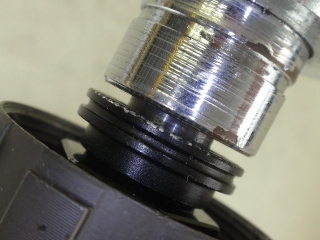
The rim is biased toward the freewheel side, so if I tension the non-freewheel side enough to bring it to center while truing, I can get it into shape, but I decided that alone wouldn't be enough.
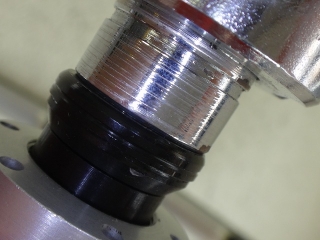
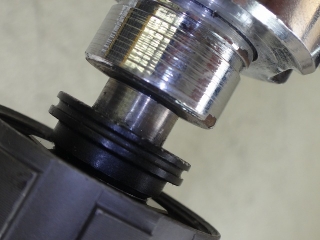
First, I tensioned the freewheel side as much as possible. The center offset actually got worse.
Even though I tensioned as much as I could, the non-freewheel side retensioning will cause the freewheel side tension to increase slightly, and I haven't exceeded the hanging limit.
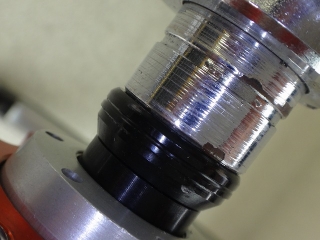
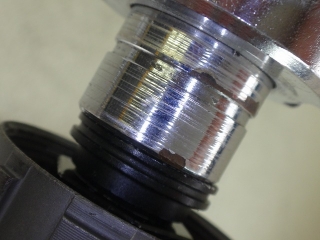
Then, centering with the non-freewheel side retensioning.
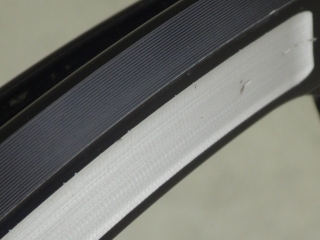
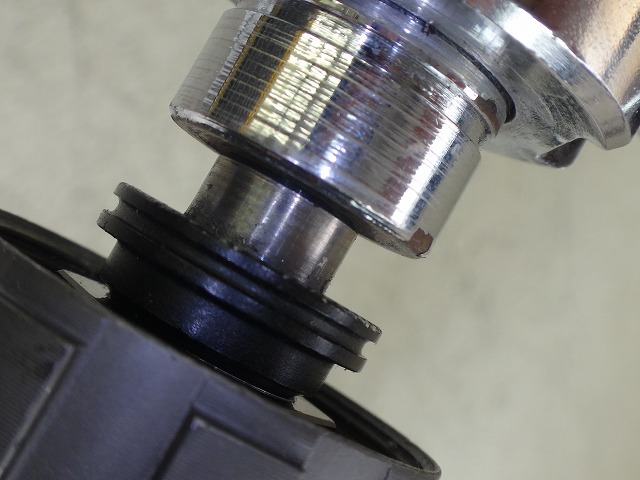
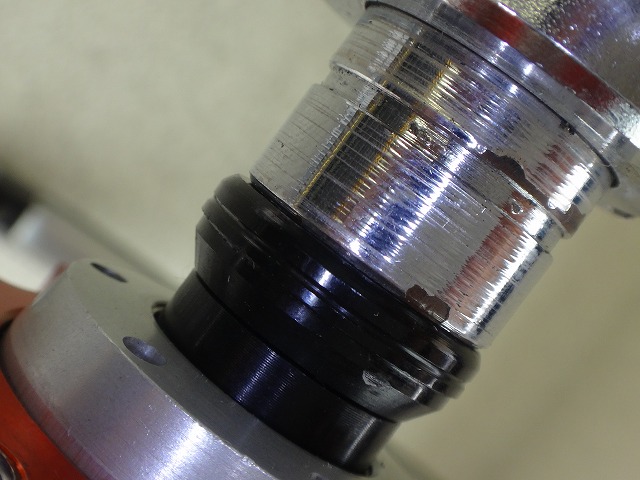
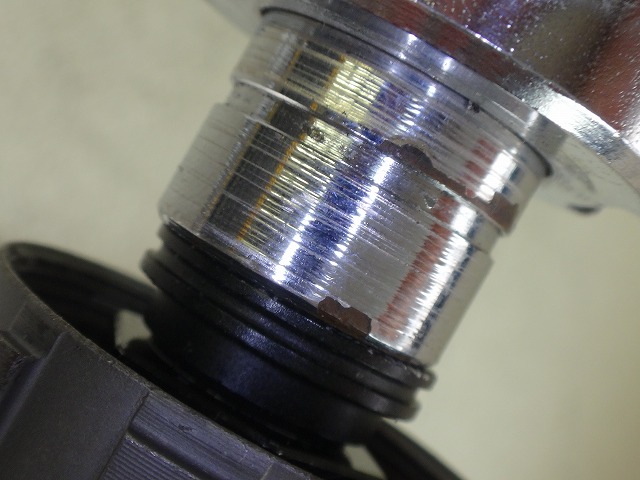
There's machining on the rim side as if it were meant to be a brake zone, but the vertical width is too narrow to be usable for rim brakes. Even if I set a V-brake shoe at the top edge, the bottom sticks out.
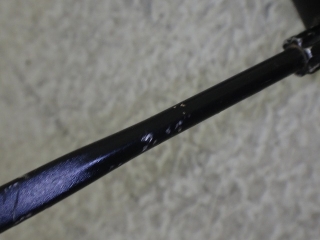
↑Freewheel side spoke (the ribs near the butted section look like a tail fin)
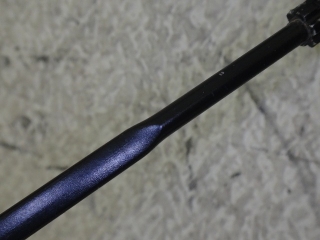
↑Non-freewheel side spoke
This rear wheel uses different diameter spokes on each side. In my terminology, the freewheel side is Mavic's fourth spoke type, and the non-freewheel side is the second spoke type. For details, see (here).
I don't think Kyserium wheels from this period used the fourth spoke type, so this might also be MTB-derived specification.
I didn't photograph it, but the front wheel is also in the shop, with a slight center offset, no spoke tension sag (the wear difference between front and rear is so pronounced I suspect the rear was the only one being ridden), and both sides used the second spoke type. The front wheel is also a disc hub, so there is dish, but with the amount of dish in this case, the left-right different diameter spokes seemed unnecessary, so it has same-diameter spokes on both sides.
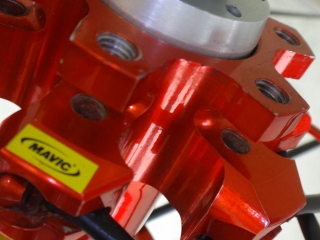
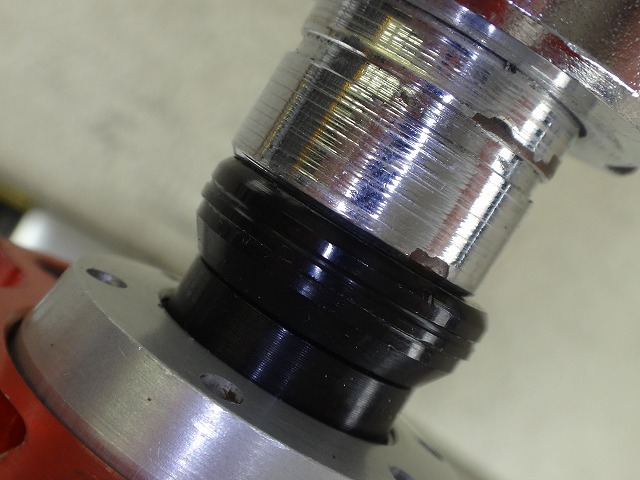
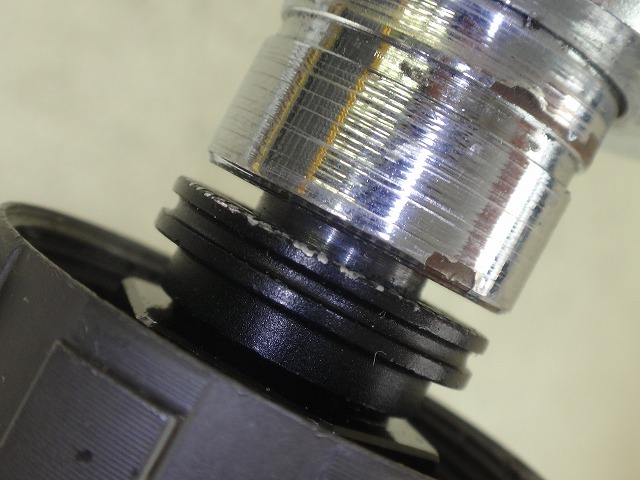
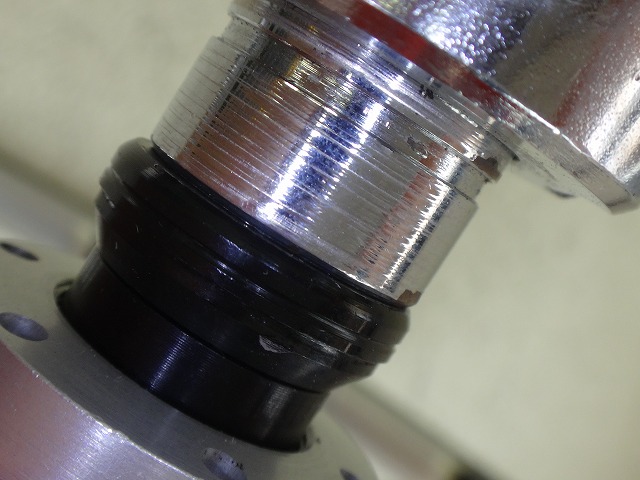
This wheel's disc rotor mounting interface comes in two specs: six-bolt and center-lock. This one is six-bolt. With Mavic's six-bolt mounts, if you don't use short rotor-fixing bolts, the mount can warp—sometimes irreversibly—if the bolt contacts the hub body. In this hub's case, there's a hole where the bolt would contact the hub body,
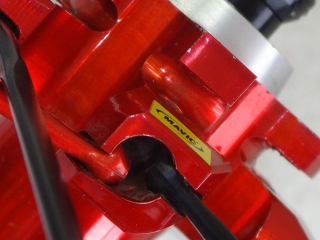
and it's designed to pass through the catch portion on the hub flange.

Since there's no hole on the inside of the hub, I thought this might be a foolproof design for people using longer bolts, so I investigated.
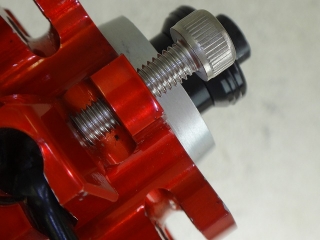
I was wrong. The bolt doesn't go into the hole. It's just a lightening hole. With this M5 bolt, I hand-turned it smoothly until it hit the hole, then stopped. I didn't tighten it with any tools.
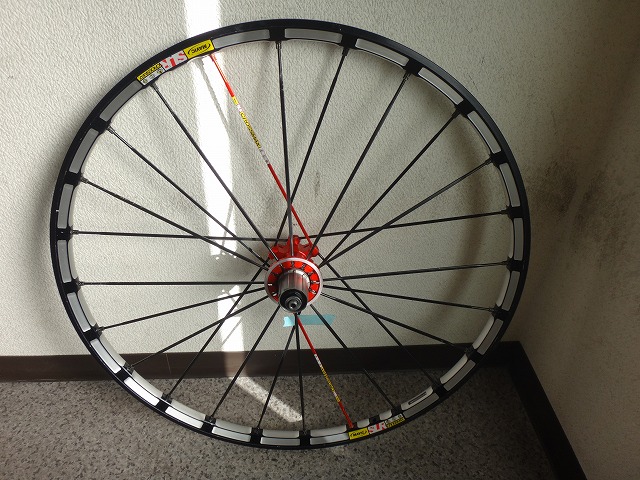
It's a 2007–2011 model.
It's the MTB flagship model that matched the appearance of the red hub Kyserium ES (limited edition) from 2006, which was made into a regular model as the 2007 Kyserium SL.
The Crossmax SLR for rim brakes—without disc brake mounts—that was released at the same time has a ceramic-finished brake zone, but this disc brake-specific version has the rim side machined away.
The Kyserium K1 for road wheels does something similar, but it's a later model than this one, so it's in the form of MTB technology being inherited by road bikes.
Maybe this is the strength of manufacturers that handle both MTB and road—with Shimano components, things like Hollowtech II cranksets and Shadow rear derailleurs were passed from MTB to road in the same way.
The next generation Crossmax SLR is internally distinguished by having MY12 (model year 2012) added after the model name, but the rim brake version was discontinued.
Now, about the service request:
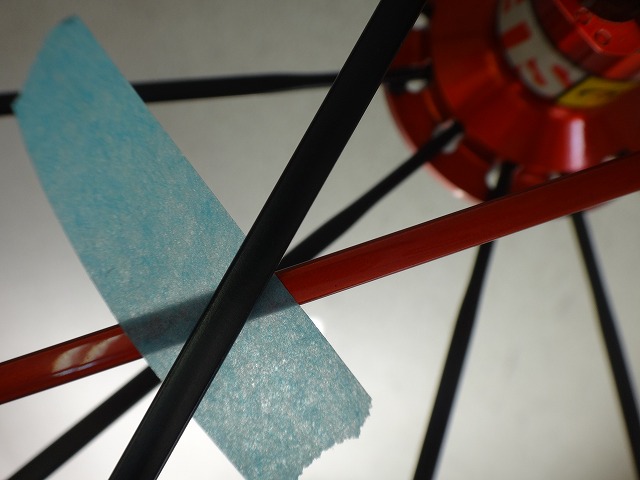
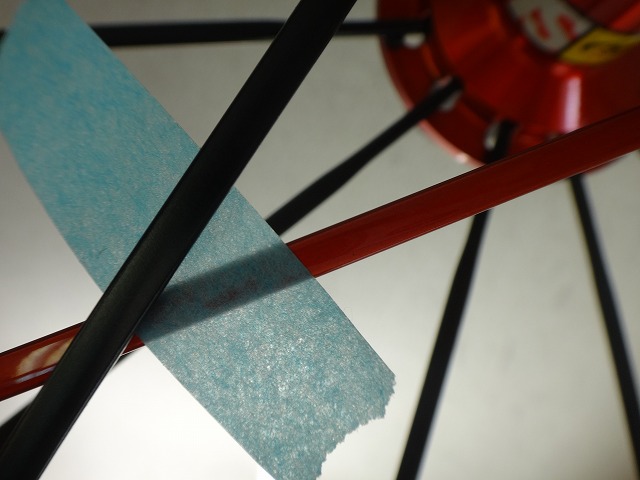
The spoke tension is completely slack, and it's not rideable in its current condition. The customer is not the first owner of this wheel, so the detailed history is unclear. Since the customer has already done a hub overhaul, I'm just doing some retensioning along with truing. I marked the last crossing point with tape and gave it a squeeze—it's definitely abnormally slack.
The rim is biased toward the freewheel side, so if I tension the non-freewheel side enough to bring it to center while truing, I can get it into shape, but I decided that alone wouldn't be enough.
First, I tensioned the freewheel side as much as possible. The center offset actually got worse.
Even though I tensioned as much as I could, the non-freewheel side retensioning will cause the freewheel side tension to increase slightly, and I haven't exceeded the hanging limit.
Then, centering with the non-freewheel side retensioning.

There's machining on the rim side as if it were meant to be a brake zone, but the vertical width is too narrow to be usable for rim brakes. Even if I set a V-brake shoe at the top edge, the bottom sticks out.
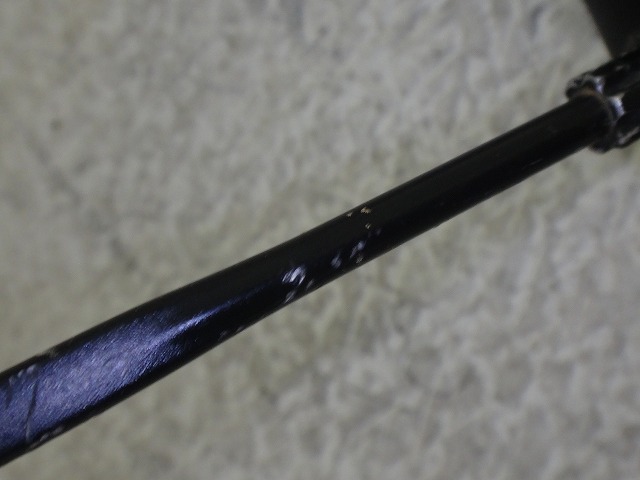
↑Freewheel side spoke (the ribs near the butted section look like a tail fin)
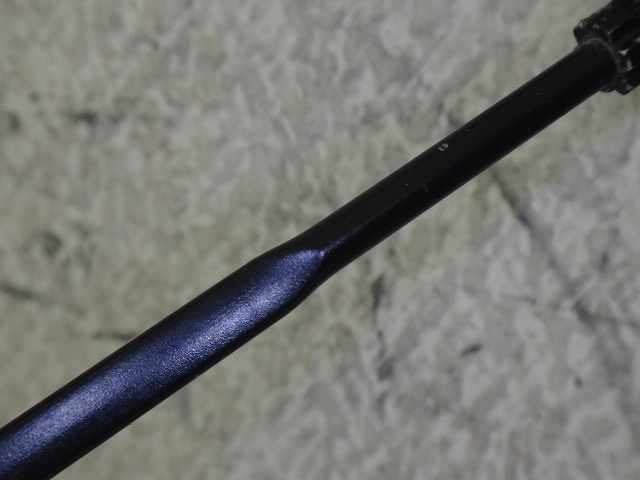
↑Non-freewheel side spoke
This rear wheel uses different diameter spokes on each side. In my terminology, the freewheel side is Mavic's fourth spoke type, and the non-freewheel side is the second spoke type. For details, see (here).
I don't think Kyserium wheels from this period used the fourth spoke type, so this might also be MTB-derived specification.
I didn't photograph it, but the front wheel is also in the shop, with a slight center offset, no spoke tension sag (the wear difference between front and rear is so pronounced I suspect the rear was the only one being ridden), and both sides used the second spoke type. The front wheel is also a disc hub, so there is dish, but with the amount of dish in this case, the left-right different diameter spokes seemed unnecessary, so it has same-diameter spokes on both sides.
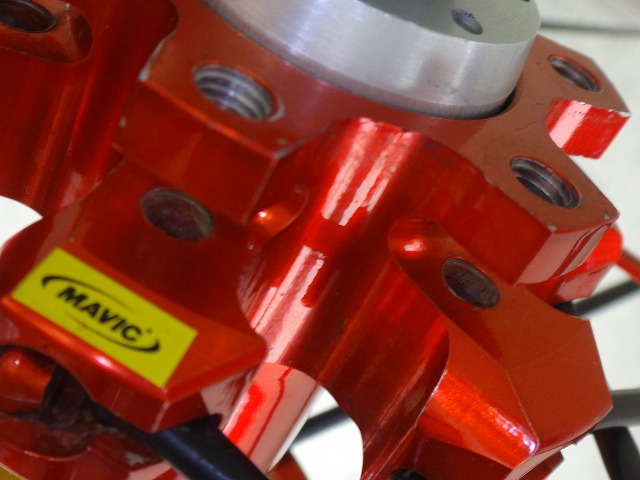
This wheel's disc rotor mounting interface comes in two specs: six-bolt and center-lock. This one is six-bolt. With Mavic's six-bolt mounts, if you don't use short rotor-fixing bolts, the mount can warp—sometimes irreversibly—if the bolt contacts the hub body. In this hub's case, there's a hole where the bolt would contact the hub body,
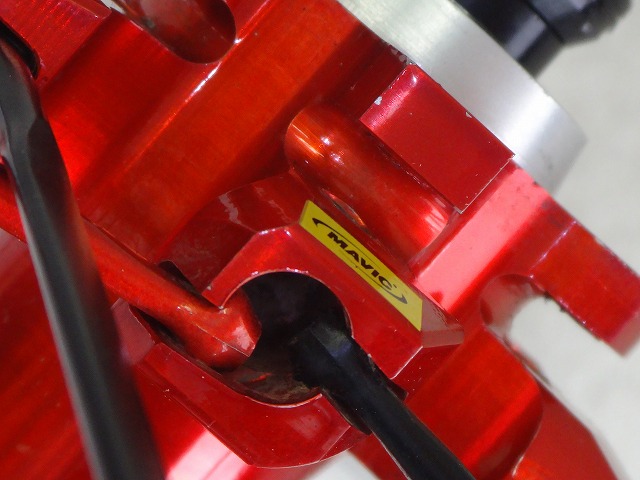
and it's designed to pass through the catch portion on the hub flange.
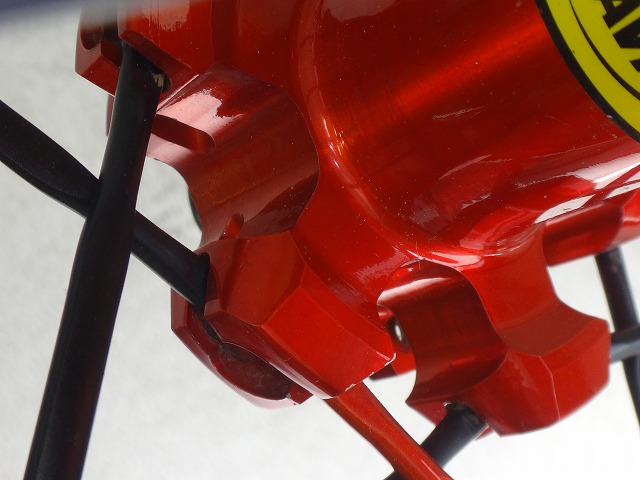
Since there's no hole on the inside of the hub, I thought this might be a foolproof design for people using longer bolts, so I investigated.

I was wrong. The bolt doesn't go into the hole. It's just a lightening hole. With this M5 bolt, I hand-turned it smoothly until it hit the hole, then stopped. I didn't tighten it with any tools.