Another day of wheel work (and so on).
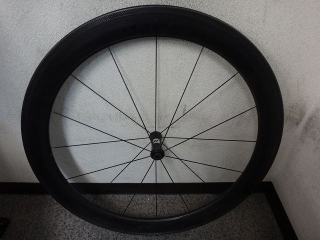
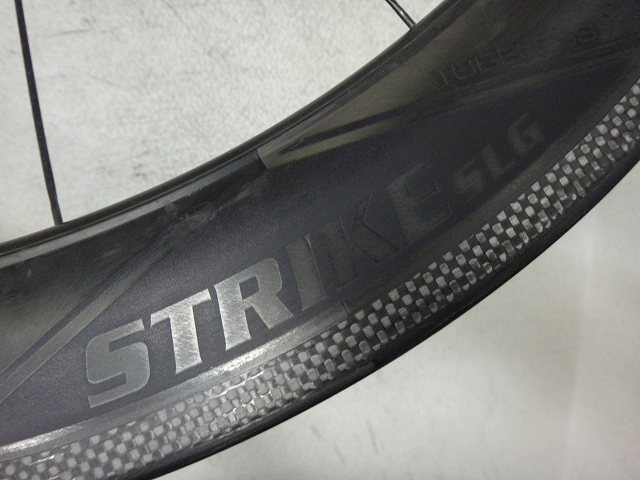
A customer brought in a Reynolds Strike SLG front wheel.
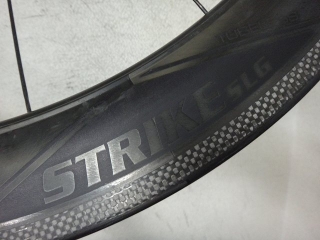
The bead hook got bent from buckling and became unusable,
so they wanted to replace the rim.
As for how they managed to get a Reynolds rim as a spare part,
the wheel originally came as a stock component on a complete bike from some online retailer,
butthat brand's rather than going through that complete bike brand's distributor,
a Reynolds wholesaler here in Japan actually stepped in
and got warranty coverage directly from Reynolds headquarters.
This is actually pretty remarkable, because normally you get the runaround—
"We sell Reynolds wheels, but for one that came with a complete bike,
you need to contact that bike brand,"
and then when you contact the bike distributor,
they tell you the same thing about the wheel component,
and you end up playing catch with nobody actually helping.
This level of service might be Reynolds headquarters policy rather than the local distributor's.
Incidentally, the customer thought the person who helped—Zack Reynolds—was a Reynolds company person,
but he's actually a seriously strong competitive cyclist who works at the Reynolds wholesaler.
The name match was just a coincidence.
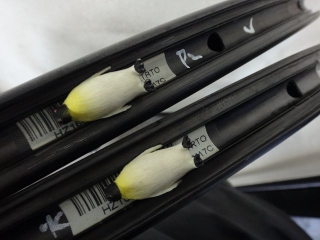
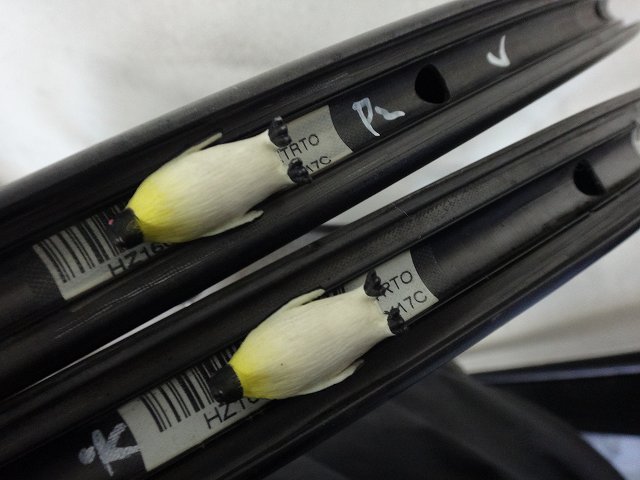
Anyway, once you have a rim, the swap itself is straightforward work.
In the image above, these aren't the before-and-after rims—
the bottom one is the original Strike rim,
and the top one is a Nomo Lab Wheel No. 7 rim.
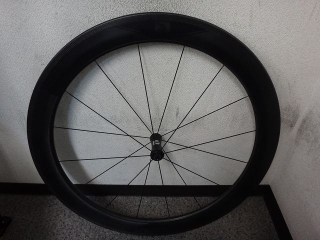
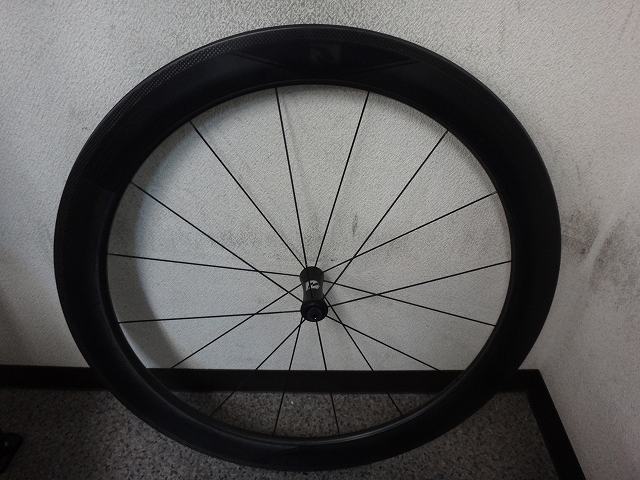
Built it up.
One more important thing the customer mentioned:
Reynolds' tubeless rim bead hooks fall outside ETRTO specifications,
so IRC has asked people not to use their tires on them
(→here)—
and sure enough, when they put Specialized tubeless tires on this Strike SLG,
they tore exactly the way IRC warned about.
Moving on to another case... but first.
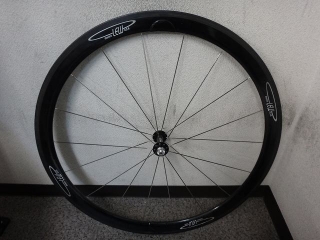
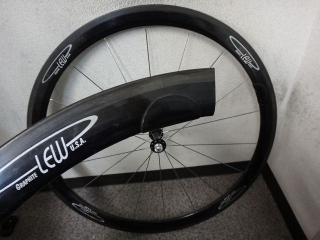
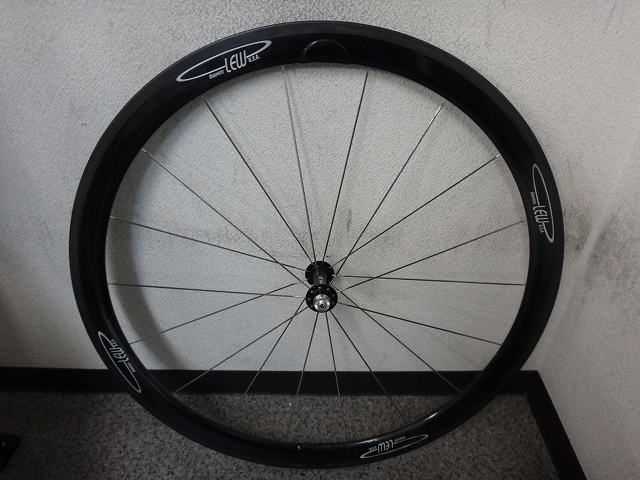
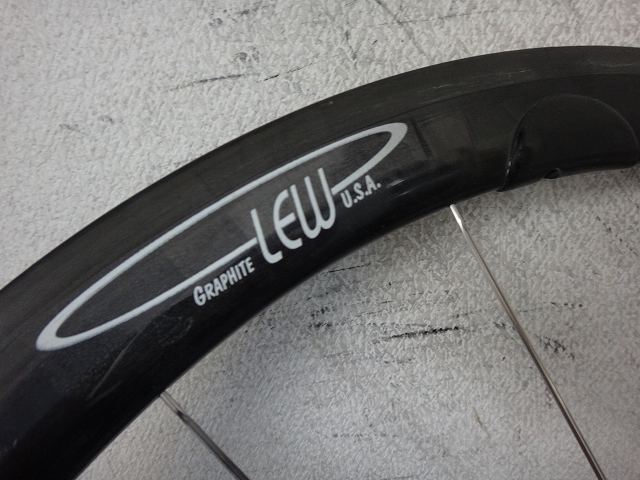
This is a LEW carbon wheel.
Wing hub 18H CX-RAY outpoke radial laced—I built this one.
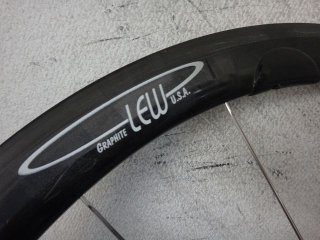
At that point, "LEW carbon rim" meant this was the only option,
so it had no particular model name. Before that,
there was something called XNG!, which was either a brand or model name (unclear which).
XNG! is pronounced "Zan"—not "X-N-G exclamation point."
A characteristic of XNG! or early LEW rims is
their "two-panel construction."
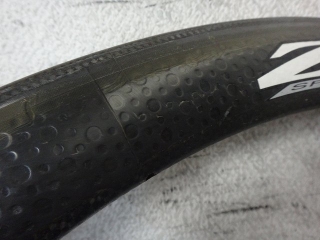
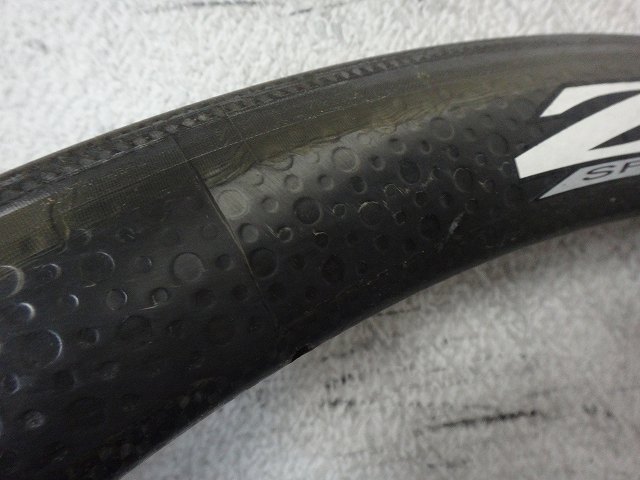
↑Carbon rims are made by joining multiple panels.
The image above shows a ZIPP seam—if you cut the rim right at the seam edge,
you can see how the inner tube wrinkles at that seam.
Even when cosmetic carbon is glued to the outermost rim sidewall layer, hiding the seams,
you can still see them from the outer circumference.
The number of panels varies by rim, but usually it's 4, 6, or 8 pieces.
LEW rims are made by joining two semicircular panels (180° each)
and they're reinforced with carbon spliced over the joint.
One of the two reinforcements has the valve hole drilled through it,
and polyurethane foam is only filled in the reinforced section—
since the weight balance has two extremely heavy spots,
I won't go into it here, but there's an interesting phenomenon you can observe.
Customers interested can see it in person.
The extreme heaviness is relative; the panels themselves are so light
that the reinforcements stand out. The total rim weight is around 280g.
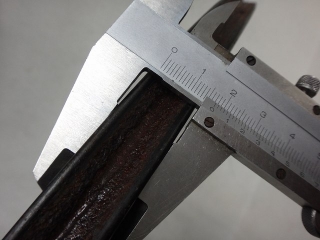
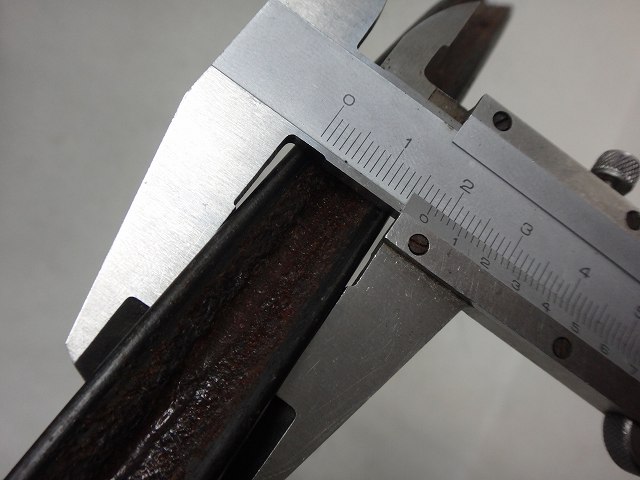
The rim width measures 17.2mm, and the profile is tight,
so compatible tires are limited to
Veloflex Servizio Corsa (branded 20C but actually closer to 19C—discontinued),
Continental's branded-19C Competition or Podium TT (measures closer to 20C),
and about 19C or 20C models from TUFO.
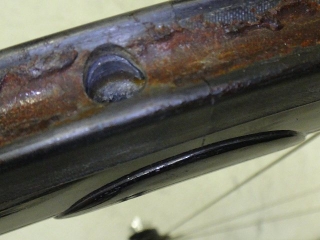
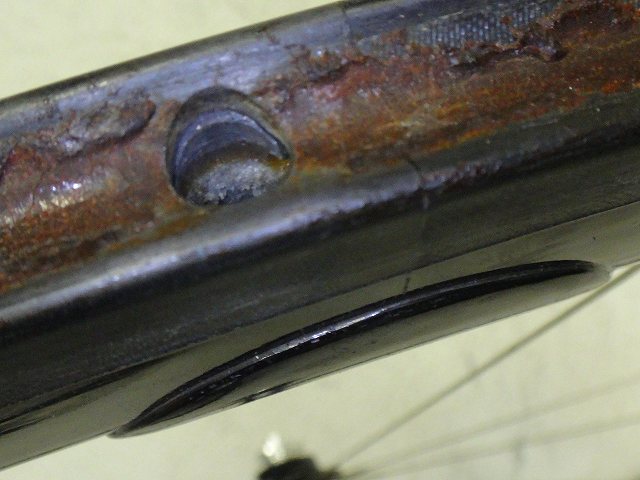
The reinforcement has quite thick carbon laminated on it.
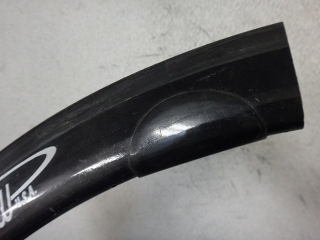
I cut it to examine more closely.
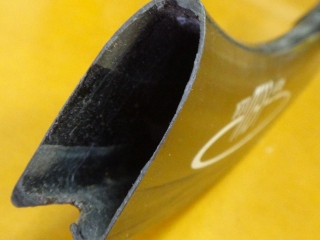
↑Section not directly under the reinforcement
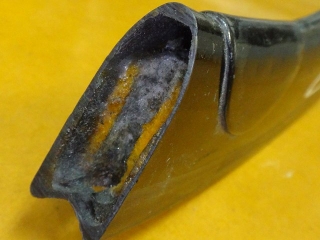
↑Section directly under the reinforcement
By "cut," I don't mean I destroyed the wheel—I have a separate cutaway model.
As for LEW, the manufacturer went under, and the president was
hired by Reynolds,
so now it's structured as Reynolds' wheel division.I'm glossing over this, but the full story gets messy and long, so I'll skip it.
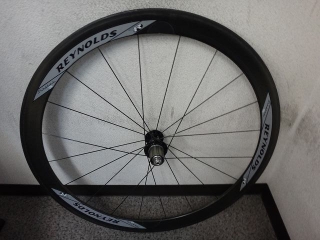
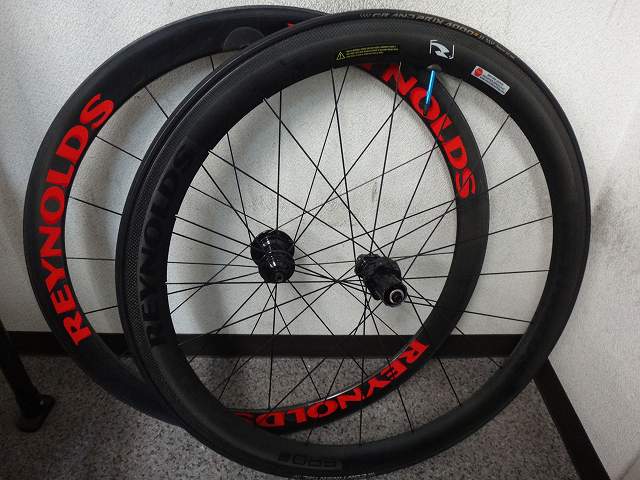
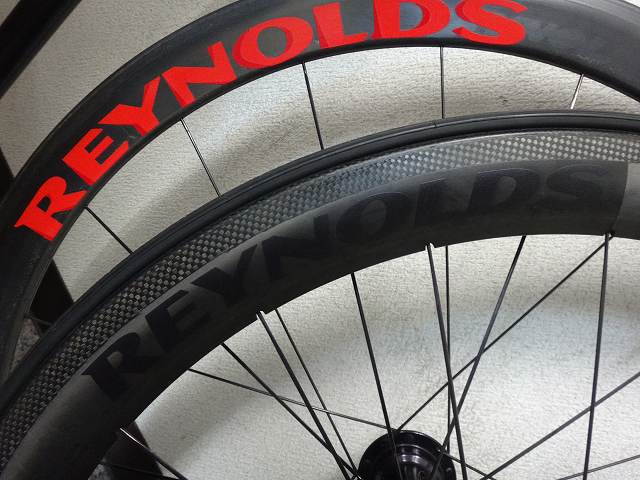
A customer brought in a Reynolds Stratos.
It's an early Reynolds rim from when they still had that LEW-like construction.
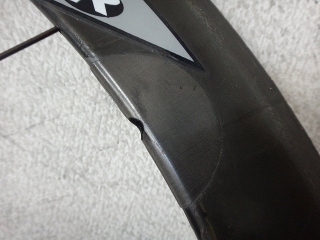
The valve hole and
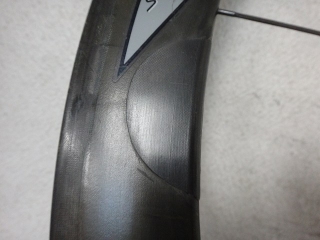
across from it, the reinforcement—

but it's much thinner than LEW's, more of a weight-balancing patch than structural reinforcement.
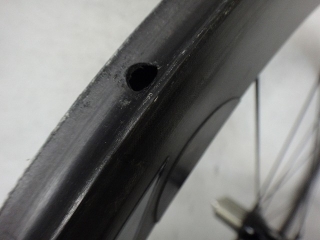
There's no seam directly under the reinforcement, and
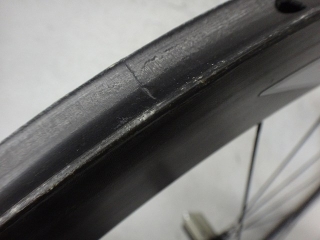
the seams are elsewhere, plus it's not even a two-panel design,
so it's really a different beast that only borrowed the early LEW look.
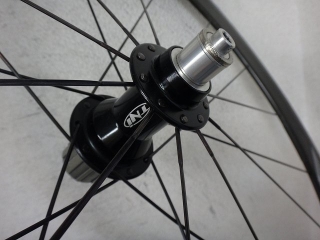
Evolite hub 20H, black half leader 40 lacing.
The left-right different-diameter lacing is maxed out at 100/65%,
but the non-drive side is still loose, so they want me to reuse the drive-side spokes
and rebuild the non-drive side with CX-RAY 4-cross laced and tied-and-soldered.
The drive-side spoke tension is at the limit, nearly centered,
so under these conditions my build would come out the same.
In fact, the drive-side tension after the rebuild matched what it was before.
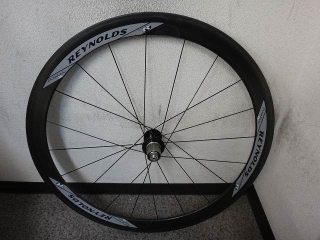
Built it up.
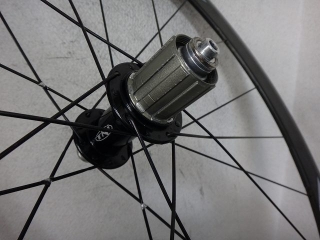
Black half leader 44 lacing, tied-and-soldered.
The drive-side spokes were reused, but I trimmed about 2mm
because they were long.
I made sure that original inpokes stayed inpoke and original outpokes stayed outpoke after the rebuild—
the reason being that the bend pattern that forms at the spoke elbow differs between inpoke and outpoke.
In the original build, nipples were split silver on the drive side and black on the non-drive side,
but they were both brass.
I thought they were being fancy by using aluminum on the non-drive side only, but no.
After the rebuild, all nipples are silver aluminum.
So yeah, I'm pretty much Reynolds'd out at this point,
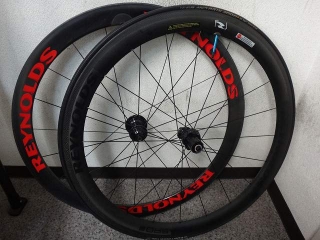
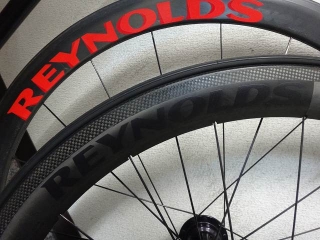
But there's still more! (Get building already)
To be continued
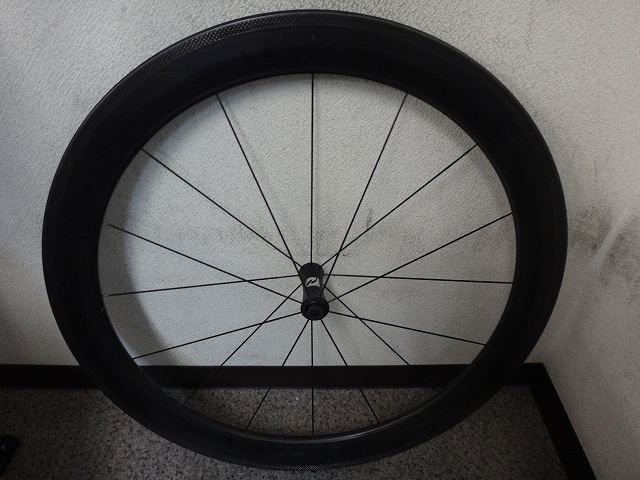
A customer brought in a Reynolds Strike SLG front wheel.
The bead hook got bent from buckling and became unusable,
so they wanted to replace the rim.
As for how they managed to get a Reynolds rim as a spare part,
the wheel originally came as a stock component on a complete bike from some online retailer,
but
a Reynolds wholesaler here in Japan actually stepped in
and got warranty coverage directly from Reynolds headquarters.
This is actually pretty remarkable, because normally you get the runaround—
"We sell Reynolds wheels, but for one that came with a complete bike,
you need to contact that bike brand,"
and then when you contact the bike distributor,
they tell you the same thing about the wheel component,
and you end up playing catch with nobody actually helping.
This level of service might be Reynolds headquarters policy rather than the local distributor's.
Incidentally, the customer thought the person who helped—Zack Reynolds—was a Reynolds company person,
but he's actually a seriously strong competitive cyclist who works at the Reynolds wholesaler.
The name match was just a coincidence.
Anyway, once you have a rim, the swap itself is straightforward work.
In the image above, these aren't the before-and-after rims—
the bottom one is the original Strike rim,
and the top one is a Nomo Lab Wheel No. 7 rim.
Built it up.
One more important thing the customer mentioned:
Reynolds' tubeless rim bead hooks fall outside ETRTO specifications,
so IRC has asked people not to use their tires on them
(→here)—
and sure enough, when they put Specialized tubeless tires on this Strike SLG,
they tore exactly the way IRC warned about.
Moving on to another case... but first.
This is a LEW carbon wheel.
Wing hub 18H CX-RAY outpoke radial laced—I built this one.
At that point, "LEW carbon rim" meant this was the only option,
so it had no particular model name. Before that,
there was something called XNG!, which was either a brand or model name (unclear which).
XNG! is pronounced "Zan"—not "X-N-G exclamation point."
A characteristic of XNG! or early LEW rims is
their "two-panel construction."
↑Carbon rims are made by joining multiple panels.
The image above shows a ZIPP seam—if you cut the rim right at the seam edge,
you can see how the inner tube wrinkles at that seam.
Even when cosmetic carbon is glued to the outermost rim sidewall layer, hiding the seams,
you can still see them from the outer circumference.
The number of panels varies by rim, but usually it's 4, 6, or 8 pieces.
LEW rims are made by joining two semicircular panels (180° each)
and they're reinforced with carbon spliced over the joint.
One of the two reinforcements has the valve hole drilled through it,
and polyurethane foam is only filled in the reinforced section—
since the weight balance has two extremely heavy spots,
I won't go into it here, but there's an interesting phenomenon you can observe.
Customers interested can see it in person.
The extreme heaviness is relative; the panels themselves are so light
that the reinforcements stand out. The total rim weight is around 280g.
The rim width measures 17.2mm, and the profile is tight,
so compatible tires are limited to
Veloflex Servizio Corsa (branded 20C but actually closer to 19C—discontinued),
Continental's branded-19C Competition or Podium TT (measures closer to 20C),
and about 19C or 20C models from TUFO.
The reinforcement has quite thick carbon laminated on it.
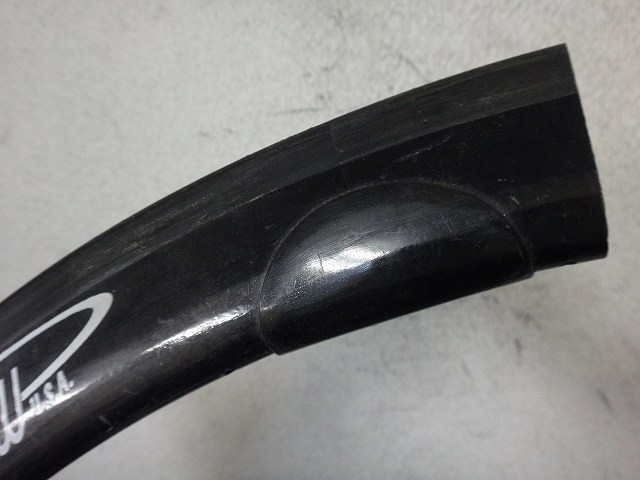
I cut it to examine more closely.
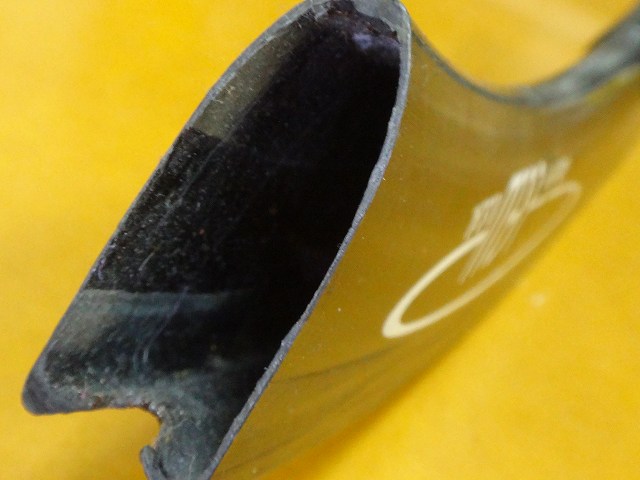
↑Section not directly under the reinforcement
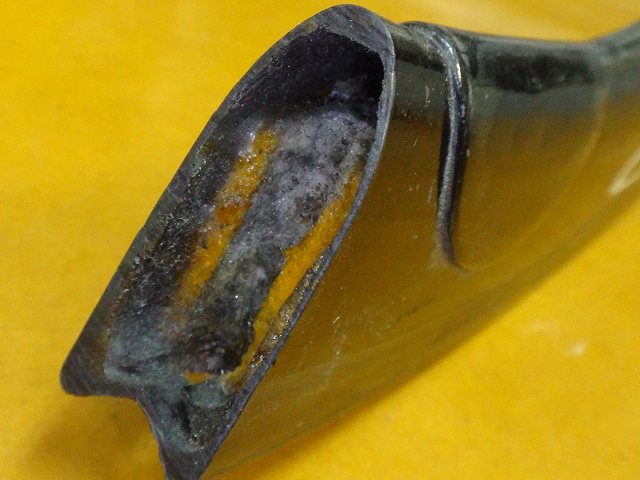
↑Section directly under the reinforcement

By "cut," I don't mean I destroyed the wheel—I have a separate cutaway model.
As for LEW, the manufacturer went under, and the president was
hired by Reynolds,
so now it's structured as Reynolds' wheel division.
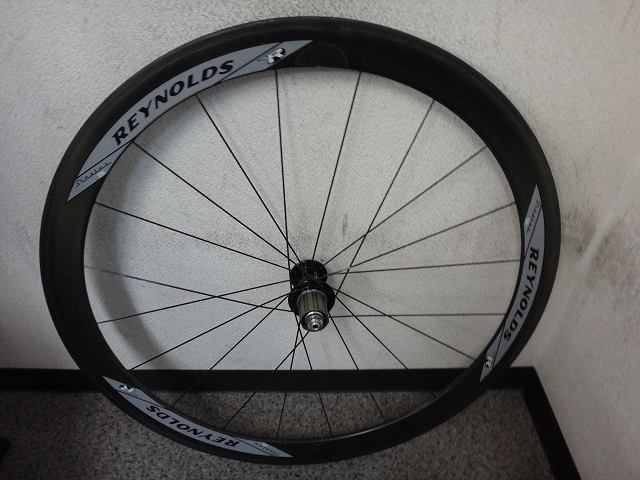
A customer brought in a Reynolds Stratos.
It's an early Reynolds rim from when they still had that LEW-like construction.
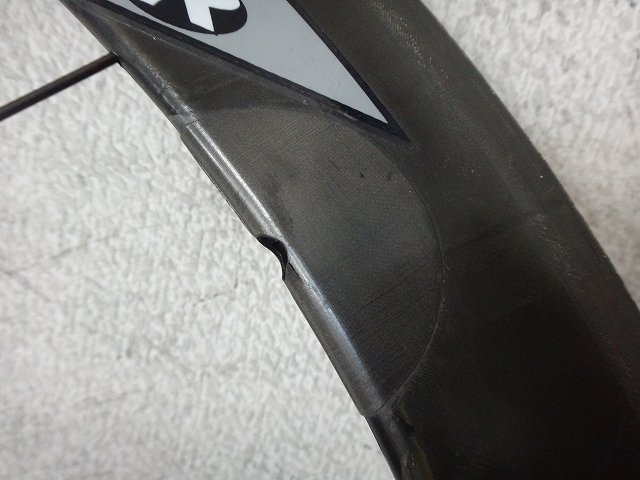
The valve hole and

across from it, the reinforcement—

but it's much thinner than LEW's, more of a weight-balancing patch than structural reinforcement.

There's no seam directly under the reinforcement, and
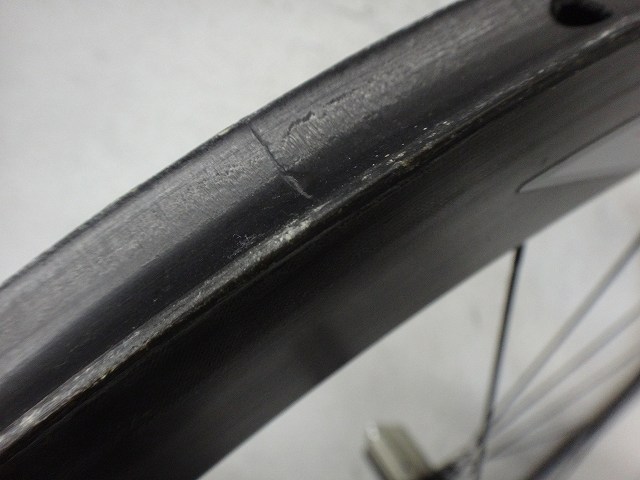
the seams are elsewhere, plus it's not even a two-panel design,
so it's really a different beast that only borrowed the early LEW look.
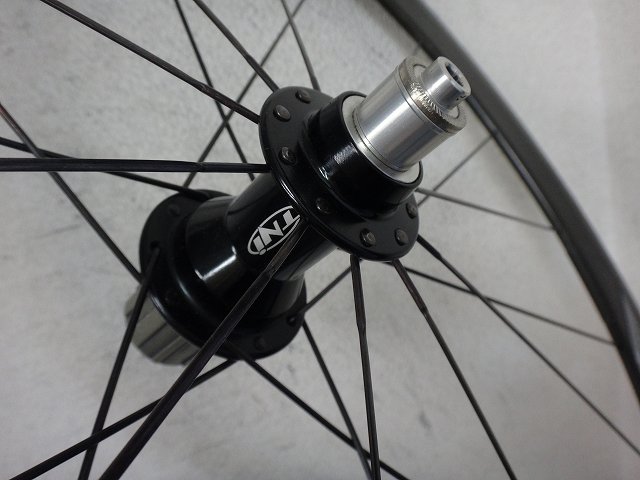
Evolite hub 20H, black half leader 40 lacing.
The left-right different-diameter lacing is maxed out at 100/65%,
but the non-drive side is still loose, so they want me to reuse the drive-side spokes
and rebuild the non-drive side with CX-RAY 4-cross laced and tied-and-soldered.
The drive-side spoke tension is at the limit, nearly centered,
so under these conditions my build would come out the same.
In fact, the drive-side tension after the rebuild matched what it was before.

Built it up.
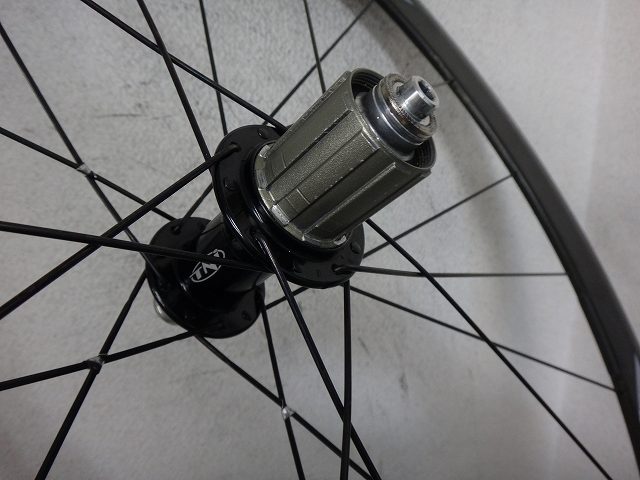
Black half leader 44 lacing, tied-and-soldered.
The drive-side spokes were reused, but I trimmed about 2mm
because they were long.
I made sure that original inpokes stayed inpoke and original outpokes stayed outpoke after the rebuild—
the reason being that the bend pattern that forms at the spoke elbow differs between inpoke and outpoke.
In the original build, nipples were split silver on the drive side and black on the non-drive side,
but they were both brass.
I thought they were being fancy by using aluminum on the non-drive side only, but no.
After the rebuild, all nipples are silver aluminum.
So yeah, I'm pretty much Reynolds'd out at this point,
But there's still more! (Get building already)
To be continued