Another day, another wheel (etc.).

A customer entrusted me with a rear wheel built with a Tni ROAD50 carbon rim.
The rim is the same one used on the Nomulab Wheel 2.5.
There's a marker tape on one of the spokes,
but that spoke alone had lost tension—
when I pinched and wiggled it with my fingers, it moved loosely.
This comes later in the timeline, but I did check
the rim alone against a glass surface plate
and confirmed it wasn't dished.
It's rare for a carbon rim to develop a potato-chip condition like a metal rim,
but it does happen.
The customer wanted it tightened up more,
and said rebuilding was an option on the table. Leave it to me!
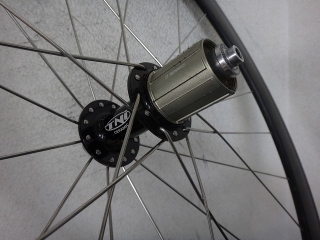
Wing Hub 24H, fully competé 4x4 lacing—
the non-freewheel side is all inpoke.
Of course I'm switching to half-competé 4x6,
but I'll try to reuse the freewheel side spokes if possible.
"If possible" means the spoke has no deformation
and is either the correct length (by my standards, FYI) or longer.
If they're too short there's nothing to be done,
but if they're long I can cut them.
I checked and found them about 2mm too long, so I cut them down.
The nipples—aluminum both before and after—I completely replaced,
but given how slack the tension was, they showed signs of cross-threading,
so in some spots the spokes may have been fully seated bottom-out.
My rule when reusing spokes:
"Inpokes go back in as inpokes,
outpokes go back in as outpokes."
I followed that this time too.
I don't have sufficient statistical data to say whether breaking this rule
actually increases spoke nipple failure,
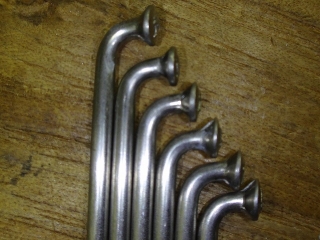
↑former outpoke

↑former inpoke
but not distinguishing between these two
seems clearly problematic, doesn't it?

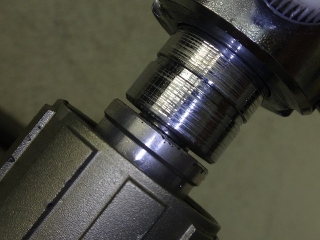
Going back in the timeline, here's the centering check before disassembly.
The rim was dished toward the freewheel side, but at that point
the freewheel side tension was about 85% of what I'd typically
aim for on a competé, using a Hozan tension meter's First Spoke Tension (H1ST) reading.
Increasing 1ST by 15% versus increasing 2ST by 15% don't mean the same thing—
that's explainable with "beaker theory," something I should write about soon.
Probably take a full day.
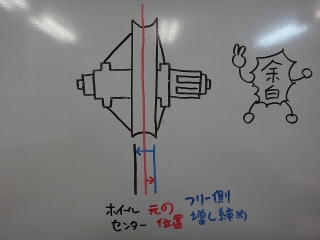
In other words, from a dished-freewheel-side condition,
I can further tighten the freewheel side to increase the dish
while tensioning up to near the limit,
then dial in centering with increased tension on the non-freewheel side—
achieving centered tensioning on both sides.
Done skillfully, that gives a pretty decent wheel,
but I wanted an even better wheel, so
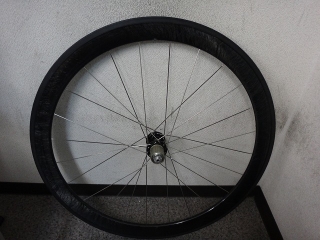
I rebuilt it.
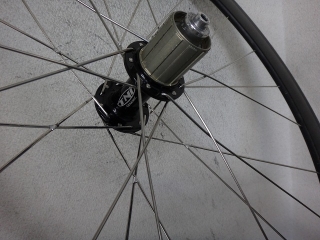
Wing Hub 24H, half-competé 4x6 with cross-lacing.
The only parts I replaced were the non-freewheel side spokes
and the nipples with identical new ones; everything else was reused.
The original wheel had the tire glued on with rim cement,
so it was actually in service, but to my eye
it was like mounting a tire on a half-built wheel.
If the customer had thought "hand-built wheels don't ride that great"
based on that original setup, I'm confident that misconception is now cleared.

This ROAD50 rim is 2014 manufacture, and
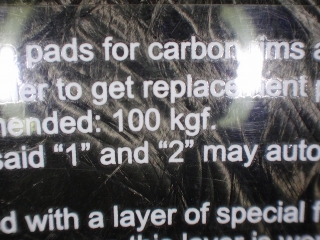
the label says maximum tension is 100 kgf.
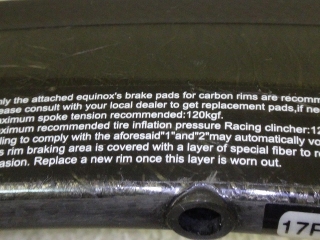
In the current model (the rim in the image is 2017),
it's been revised to 120 kgf, but honestly I can't tell what changed.
The ROAD38 rim from Nomulab Wheel 2 used to say
130 kgf, but the current version is 120 kgf.
Rather, what was scattered across 100, 120, and 130 kgf
has been standardized to 120 kgf.
The ROAD38 rim—build feel doesn't vary by year.
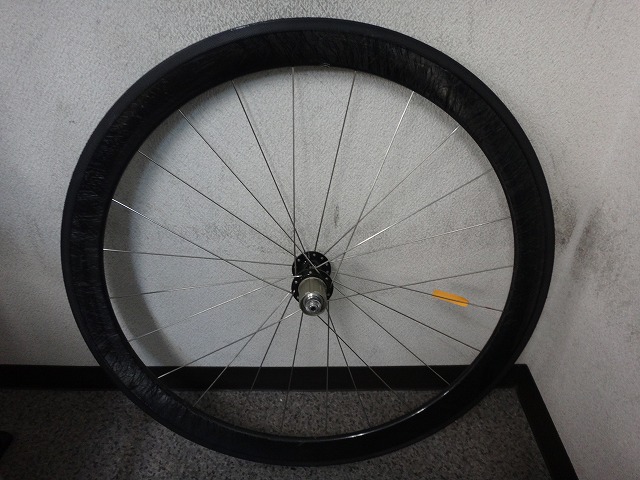
A customer entrusted me with a rear wheel built with a Tni ROAD50 carbon rim.
The rim is the same one used on the Nomulab Wheel 2.5.
There's a marker tape on one of the spokes,
but that spoke alone had lost tension—
when I pinched and wiggled it with my fingers, it moved loosely.
This comes later in the timeline, but I did check
the rim alone against a glass surface plate
and confirmed it wasn't dished.
It's rare for a carbon rim to develop a potato-chip condition like a metal rim,
but it does happen.
The customer wanted it tightened up more,
and said rebuilding was an option on the table. Leave it to me!
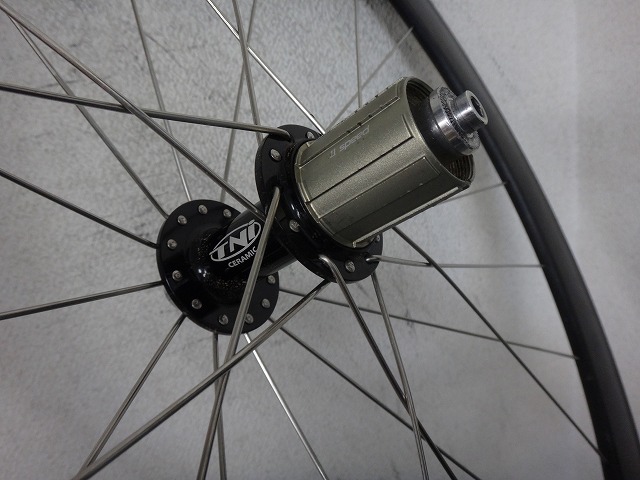
Wing Hub 24H, fully competé 4x4 lacing—
the non-freewheel side is all inpoke.
Of course I'm switching to half-competé 4x6,
but I'll try to reuse the freewheel side spokes if possible.
"If possible" means the spoke has no deformation
and is either the correct length (by my standards, FYI) or longer.
If they're too short there's nothing to be done,
but if they're long I can cut them.
I checked and found them about 2mm too long, so I cut them down.
The nipples—aluminum both before and after—I completely replaced,
but given how slack the tension was, they showed signs of cross-threading,
so in some spots the spokes may have been fully seated bottom-out.
My rule when reusing spokes:
"Inpokes go back in as inpokes,
outpokes go back in as outpokes."
I followed that this time too.
I don't have sufficient statistical data to say whether breaking this rule
actually increases spoke nipple failure,

↑former outpoke

↑former inpoke
but not distinguishing between these two
seems clearly problematic, doesn't it?
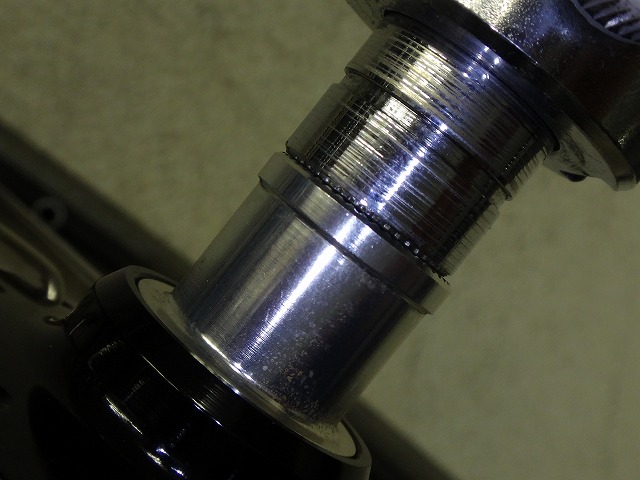

Going back in the timeline, here's the centering check before disassembly.
The rim was dished toward the freewheel side, but at that point
the freewheel side tension was about 85% of what I'd typically
aim for on a competé, using a Hozan tension meter's First Spoke Tension (H1ST) reading.
Increasing 1ST by 15% versus increasing 2ST by 15% don't mean the same thing—
that's explainable with "beaker theory," something I should write about soon.
Probably take a full day.
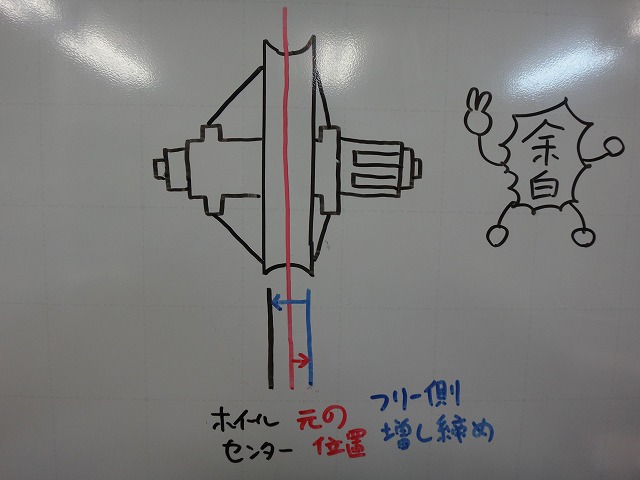
In other words, from a dished-freewheel-side condition,
I can further tighten the freewheel side to increase the dish
while tensioning up to near the limit,
then dial in centering with increased tension on the non-freewheel side—
achieving centered tensioning on both sides.
Done skillfully, that gives a pretty decent wheel,
but I wanted an even better wheel, so

I rebuilt it.
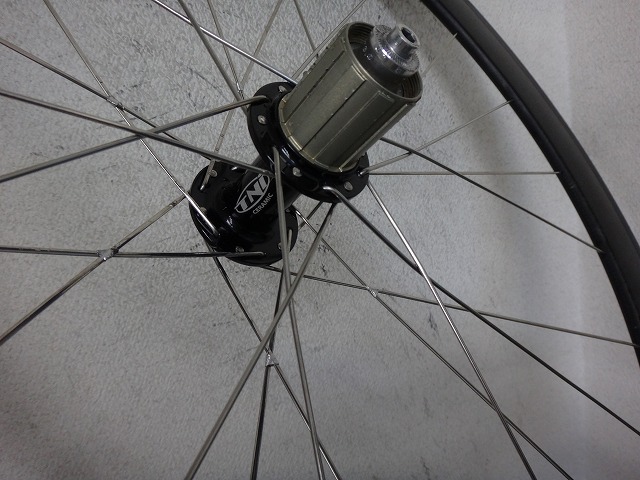
Wing Hub 24H, half-competé 4x6 with cross-lacing.
The only parts I replaced were the non-freewheel side spokes
and the nipples with identical new ones; everything else was reused.
The original wheel had the tire glued on with rim cement,
so it was actually in service, but to my eye
it was like mounting a tire on a half-built wheel.
If the customer had thought "hand-built wheels don't ride that great"
based on that original setup, I'm confident that misconception is now cleared.

This ROAD50 rim is 2014 manufacture, and
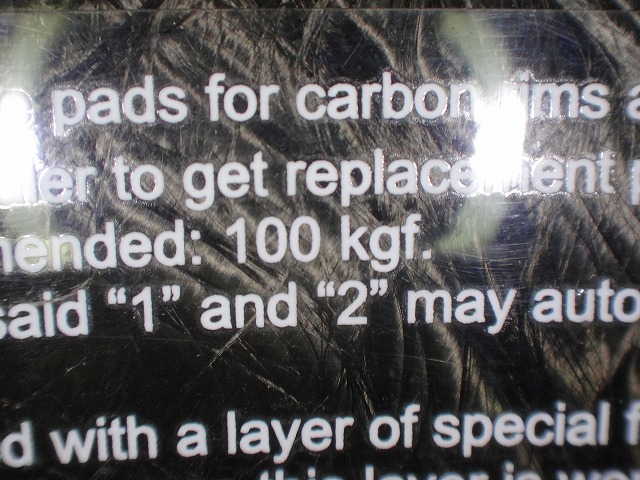
the label says maximum tension is 100 kgf.
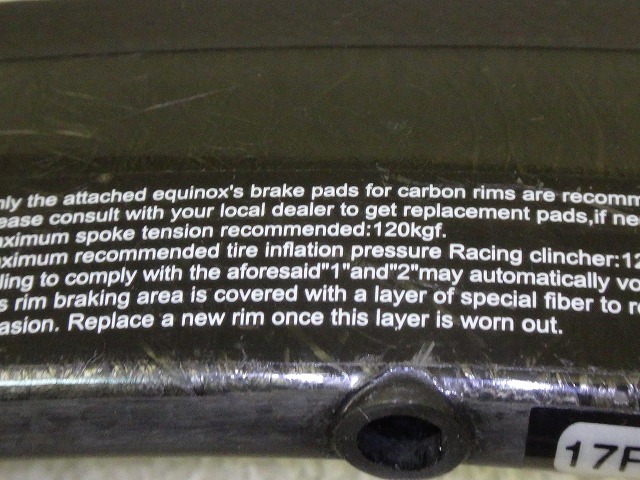
In the current model (the rim in the image is 2017),
it's been revised to 120 kgf, but honestly I can't tell what changed.
The ROAD38 rim from Nomulab Wheel 2 used to say
130 kgf, but the current version is 120 kgf.
Rather, what was scattered across 100, 120, and 130 kgf
has been standardized to 120 kgf.
The ROAD38 rim—build feel doesn't vary by year.