A customer brought in a Bontrager Aeolos Comp 5 for service.
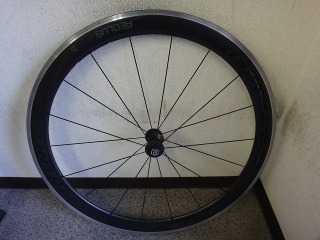
It's Aeolos Comp 5, not Aeolos 5 Comp.

When "COMP" is appended to a name, it generally indicates a lower-tier model—that's just industry convention.
SL or PRO denotes a higher-tier model, while ELITE is somewhere in the mid-to-lower range.
Bontrager is different though—their top-tier models get XXX designation.
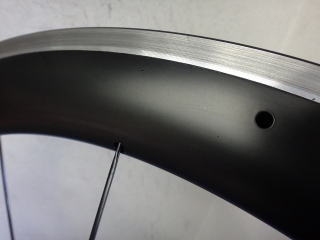
The rim, which appears to be HED manufacture, has a carbon fairing bonded to an aluminum rim.
The nipples make contact with the aluminum rim.
The carbon fairing is flimsy when pressed—they're minimizing weight while pursuing aerodynamic performance.
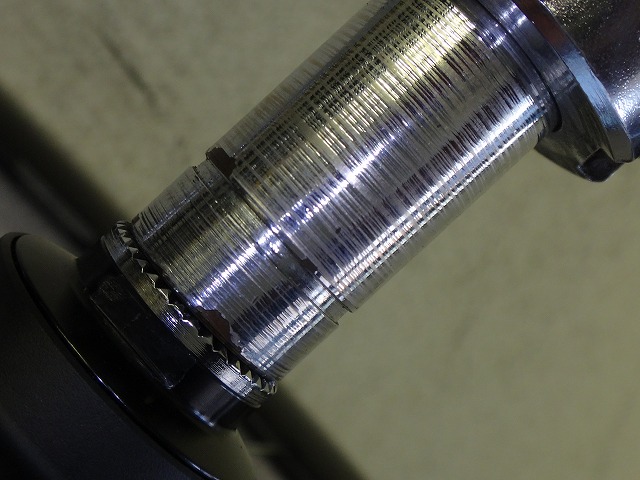
It's the same construction as the old Cosmic Carbon, but this rim has noticeably larger drainage holes.
On the old Cosmic Carbon rims, the drainage holes on the rim sidewall are small diameter, so water doesn't drain cleanly.
With a personal wheel I owned back then, I enlarged the holes to about this same degree.
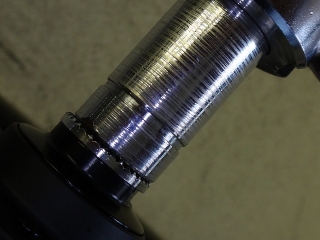
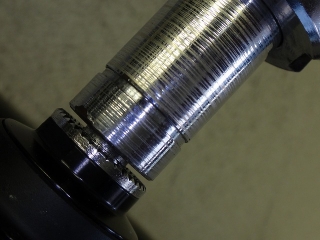
The front wheel's center is significantly off, but the real problem with this wheel is radial runout.
The customer saw the condition before I started work, and the bouncing was so severe you could see it without even putting it on a truing stand.
This wheel was only six months old with no maintenance history since purchase, so it's obvious the shop that sold it never did an initial inspection.
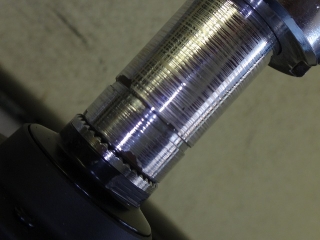

I trued the lateral centering. That's not difficult.
But the radial runout was truly terrible.
There were no issues with the rim or hub components themselves, but in terms of factory build precision, this is the worst I've seen so far this year.
Time-wise, it took longer than building a new front wheel from scratch for a Nomu Lab wheel.
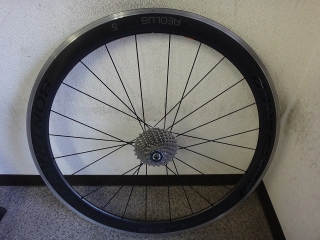
Now the rear wheel.
Unlike the front, it was almost perfectly centered with virtually no runout.
What's with this variation?
Probably because they weren't assembled by the same builder.
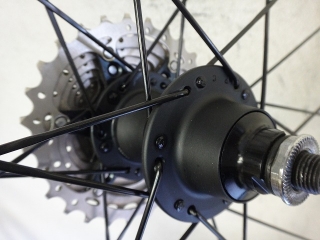
24H, left-right 2-cross, with evenly spaced rim holes (not paired spokes), but
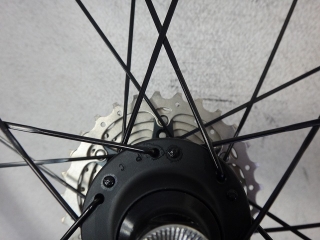
the hub hole phasing is offset so the final crossing leans outward.
While the crossing reads as 2-cross, the spoke behavior is actually closer to a standard 4-cross pattern.
This is an example of what happens when you're forced to build a wheel with a 36H hub and 24H rim—you're not trying to do this, but it ends up this way (here).
They're doing the incredibly tedious job of hole-skipping plus asymmetrical left-right lacing.

It's Aeolos Comp 5, not Aeolos 5 Comp.

When "COMP" is appended to a name, it generally indicates a lower-tier model—that's just industry convention.
SL or PRO denotes a higher-tier model, while ELITE is somewhere in the mid-to-lower range.
Bontrager is different though—their top-tier models get XXX designation.
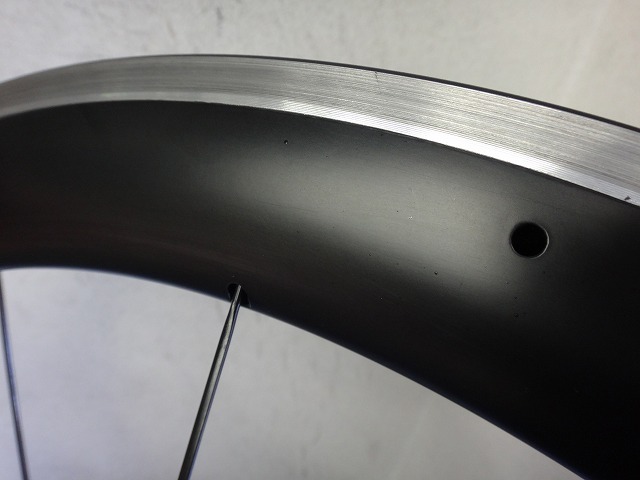
The rim, which appears to be HED manufacture, has a carbon fairing bonded to an aluminum rim.
The nipples make contact with the aluminum rim.
The carbon fairing is flimsy when pressed—they're minimizing weight while pursuing aerodynamic performance.
It's the same construction as the old Cosmic Carbon, but this rim has noticeably larger drainage holes.
On the old Cosmic Carbon rims, the drainage holes on the rim sidewall are small diameter, so water doesn't drain cleanly.
With a personal wheel I owned back then, I enlarged the holes to about this same degree.
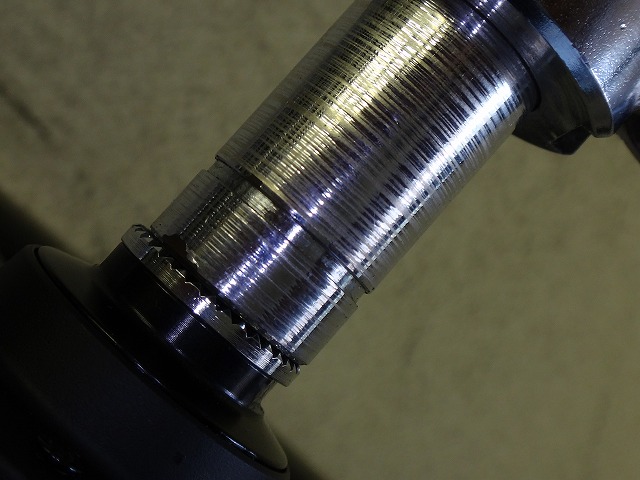
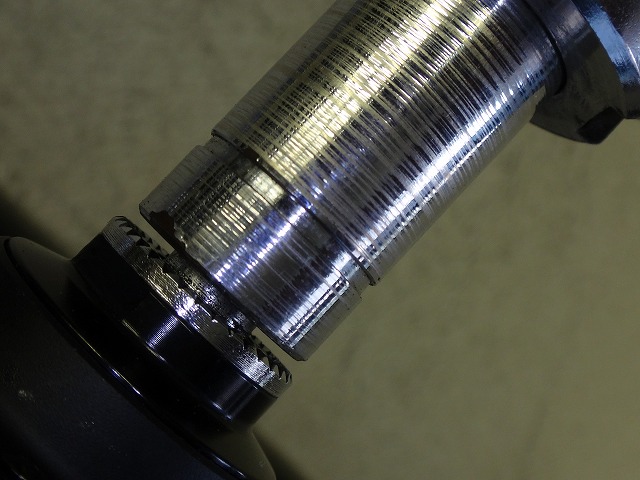
The front wheel's center is significantly off, but the real problem with this wheel is radial runout.
The customer saw the condition before I started work, and the bouncing was so severe you could see it without even putting it on a truing stand.
This wheel was only six months old with no maintenance history since purchase, so it's obvious the shop that sold it never did an initial inspection.
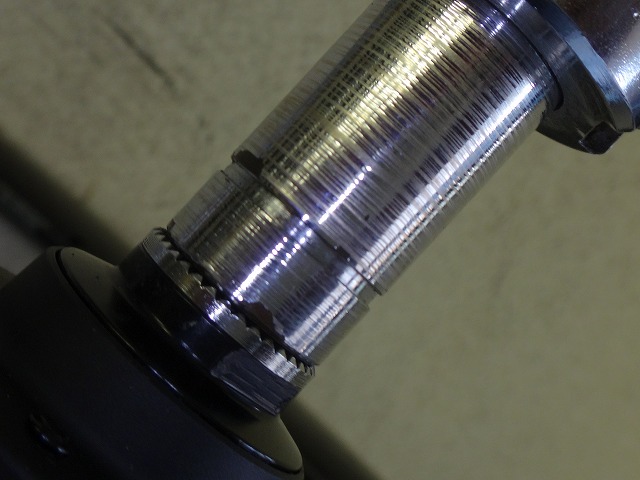
I trued the lateral centering. That's not difficult.
But the radial runout was truly terrible.
There were no issues with the rim or hub components themselves, but in terms of factory build precision, this is the worst I've seen so far this year.
Time-wise, it took longer than building a new front wheel from scratch for a Nomu Lab wheel.

Now the rear wheel.
Unlike the front, it was almost perfectly centered with virtually no runout.
What's with this variation?
Probably because they weren't assembled by the same builder.
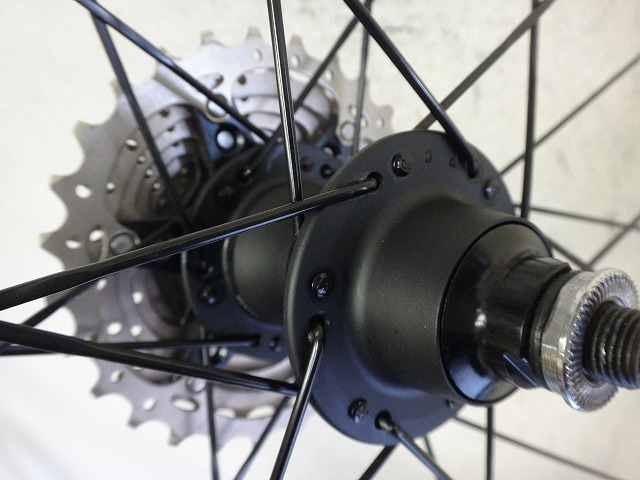
24H, left-right 2-cross, with evenly spaced rim holes (not paired spokes), but
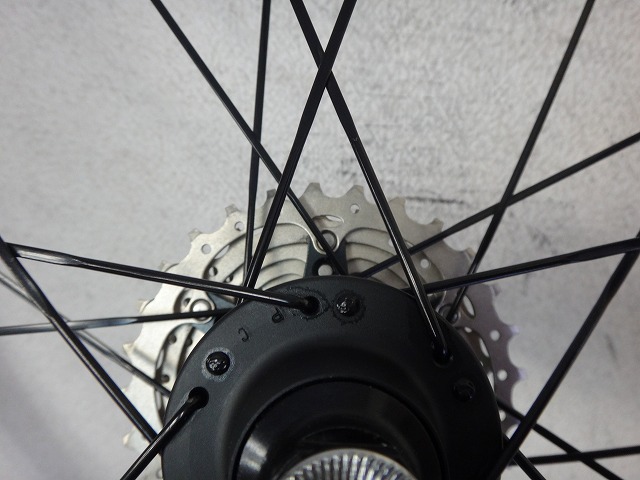
the hub hole phasing is offset so the final crossing leans outward.
While the crossing reads as 2-cross, the spoke behavior is actually closer to a standard 4-cross pattern.
This is an example of what happens when you're forced to build a wheel with a 36H hub and 24H rim—you're not trying to do this, but it ends up this way (here).
They're doing the incredibly tedious job of hole-skipping plus asymmetrical left-right lacing.