Up until now, I've been using the phrase "left-right different-diameter lacing corrects spoke tension differences," but I received a comment about that.
"I think it's completely wrong to say that tension changes when you do different-diameter lacing. Since tension is balanced on both sides, there's no way one side alone could change."
Yes, actually that statement itself is correct.
Separately from that, there was also: "Please stop using arbitrary definitions like 'the umpteenth tension.'"
But I can't really do that.
Today I'm writing about that sort of thing.
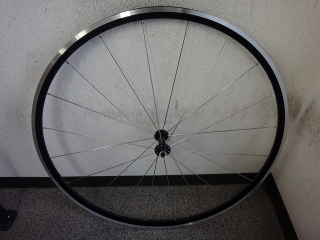
Today too, I built the front wheel for Nomu Lab Wheel #5, which doesn't count toward the wheel (hereinafter omitted).

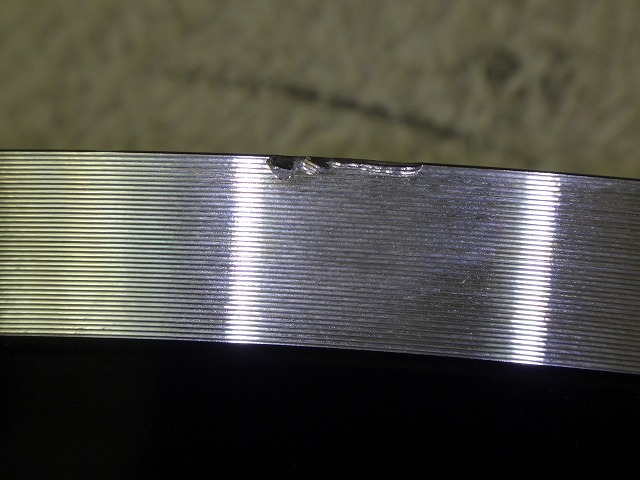
The rim has damage from the start, so it can't be sold. I plan to clean it up nicely later and rebuild it into a non-saleable wheel.
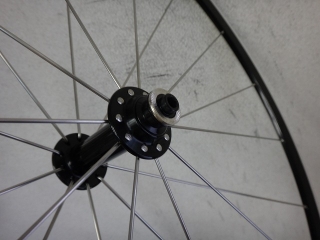
Black hub, 20H, all-Campagnolo outpoke radial lacing. It's not really worth mentioning separately, but I tightened down the radial and lateral runout and got it dead center.
That said, while it is all-Campagnolo,
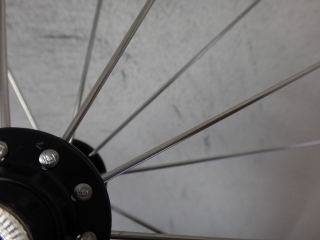
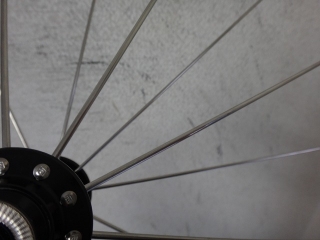
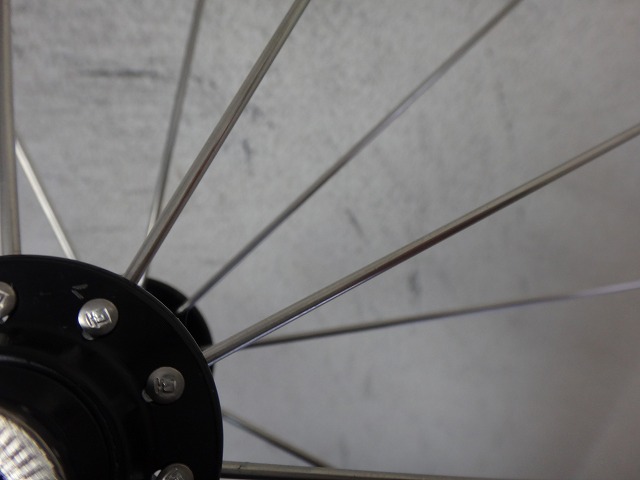
I laced one side with 14-gauge plain and the other side with 15-gauge plain.
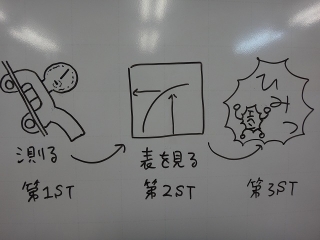
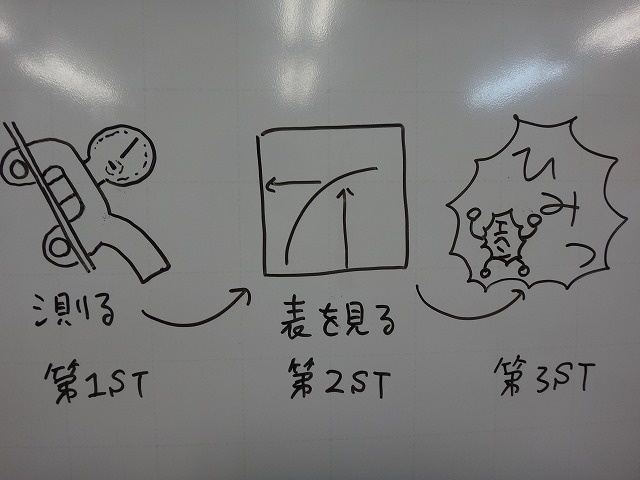
I call the numerical value that appears on the tension meter "First Spoke Tension," and the spoke tension in the conventional sense that I get by plugging that into a conversion table "Second Spoke Tension."
Since I'm not forcing this on anyone else, if someone doesn't like it, they can just call my "Second ST" simply "spoke tension" and evaluate and build wheels within whatever range they can grasp that way.
There's no reason anyone can tell me to stop.
First ST is also a value that changes with the amount of spoke tension, so I treat it as a type of spoke tension. Since I can determine Second ST based on it (Second ST comes second), I put the conventional spoke tension as the second one.
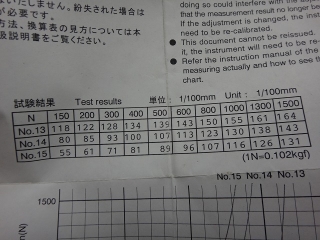
For the wheel I just mentioned, I built it so the Second ST would be around 1000N.
The reason I used 14-gauge plain and 15-gauge plain is so I could use Hozan's tension meter conversion table directly as-is.
At 1000N, Hozan's First ST (H1ST) is 130 for 14-gauge and 116 for 15-gauge.
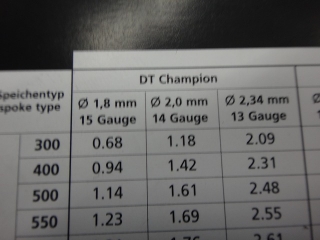
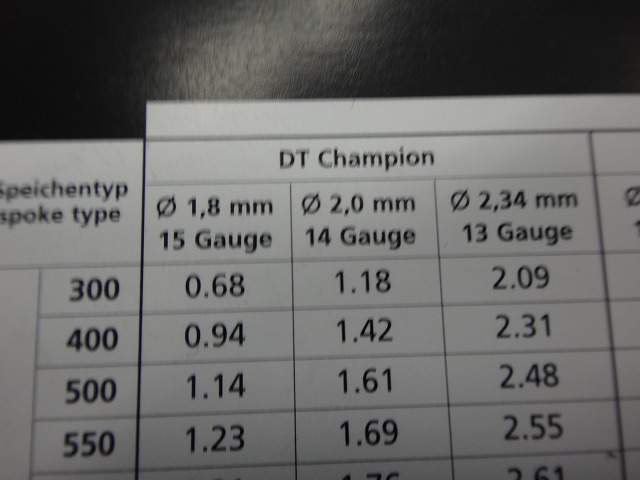
Similarly, I also look up the First ST on the DT tension meter (D1ST).
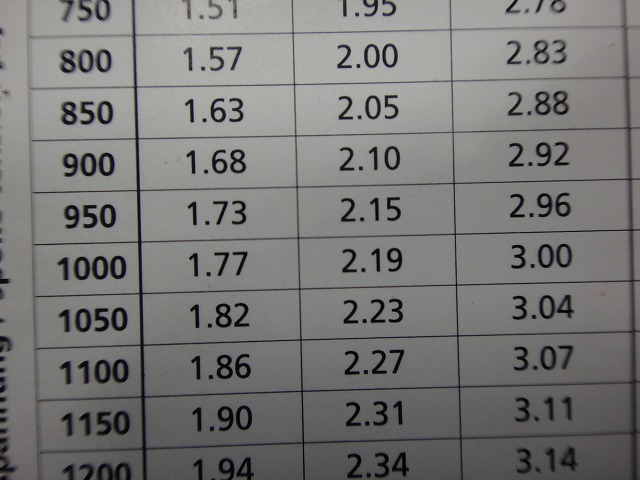
Among the three rows horizontally, the left is 15-gauge and the middle is 14-gauge, but
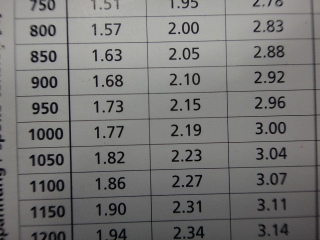
The Second ST values around 1000N look like this.
Hozan's conversion table jumps from 1000N directly to 1300N, which is wide enough to be problematic in practical terms, so I've separately researched the H1ST values that correspond to when D1ST is around 1100N or 1200N.
For me, the DT tension meter is the "primary standard," and Hozan is what I use daily.
DT has individual conversion tables for all sorts of butted spokes (since they're a spoke maker after all), but as a tool, Hozan is more straightforward to use.
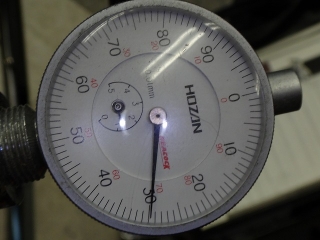
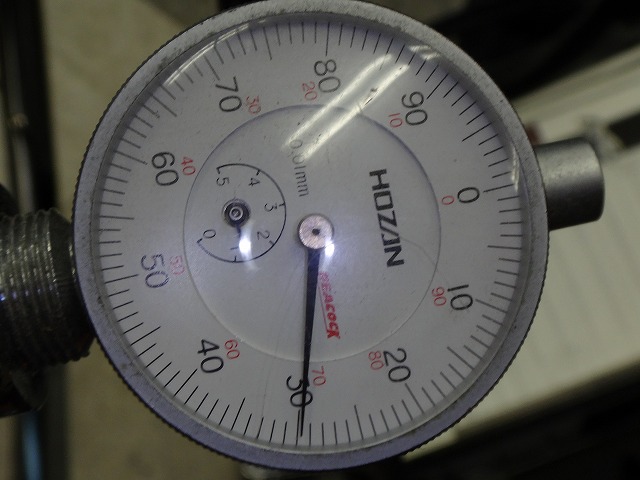
Despite some variation in spoke tension (and I mean both First and Second here), I found a spoke on the 14-gauge side where H1ST was nearly 130.
Its D1ST should be 2.19, but
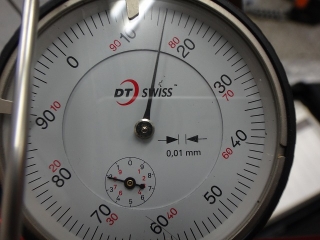
it was 2.16. That's within error margin.
With Hozan's conversion table, the conversion from First ST to Second ST is limited to only three types: 13-, 14-, and 15-gauge plain spokes. So for Competition, CX-RAY (regarded as the same as Aero Lite), and that sort of thing, I need to create a conversion table in terms of H1ST derived from those D1ST values.
The fact that the 14-gauge side judges out to 1000N in both H1ST and D1ST means the 15-gauge side should come out around 116 in H1ST and around 1.77 in D1ST, but
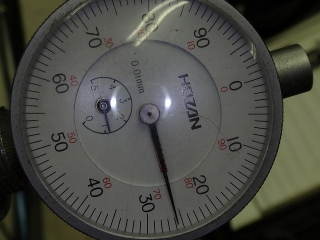
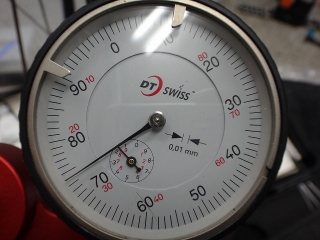
I deliberately found a spoke that comes out somewhere around there from within the variation.
What we learn from this is that when you do left-right different-diameter lacing,
the Second ST doesn't change.
But since the spokes have different cross-sectional areas, their resistance to deformation differs.
The resistance to deformation of a spoke isn't determined by Second ST alone—cross-sectional area (gauge and spoke density) also matter.
In order to try to quantify and grasp that as much as possible, I came up with
Third ST, and that's proprietary info so I won't go into detail.
My actual evaluation standard for spokes built into wheels is Third ST, and
the Third ST values align reasonably well with the public perception of hand-built wheels and complete wheels built by me or others, so
based on that, I decide the gauge and lacing method for spokes in hubs with offset (ochoko).
So when I said that left-right spoke tension differences are corrected with left-right different-diameter lacing on offset hubs,
I was talking about Third ST, not Second ST. I apologize for that.
Actually, there are past instances where I've used the term "spoke tension" to mean Third ST.
The maximum tension limit specified by the rim is Second ST, but
if you only think about wheels in terms of Second ST,
you might end up with the misconception that
"a front wheel with radial lacing at 1000N spoke tension, one laced with Champion and another with Revolution,
would be equally stiff since the spoke tension is the same." Of course, that's not the case at all.
Now about "Please stop using arbitrary definitions like 'the umpteenth tension.'"
Who cares. If you don't use it yourself, that's all that matters.
But to say more than just that, let me give an example of a wheel that can't be built without understanding First ST.
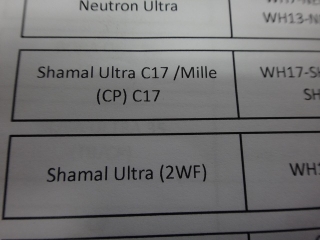
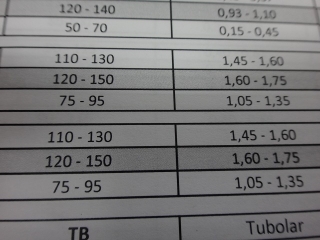
This is a Campagnolo aluminum spoke wheel, but
initially I didn't have documentation like what's shown above, so
all I knew was that "H1ST rarely reaches 240 on the freewheel side of off-the-shelf rear wheels,
and at the loaded phase of a taut specimen it's around 235"—that's all.
So when replacing rims or retensioning, I used that as my reference.
Now I understand that I can build the rear right with D1ST up to a maximum of 1.75 (though I still use the H1ST of about 235).
By the way, aluminum spokes get a very high rating in Third ST.
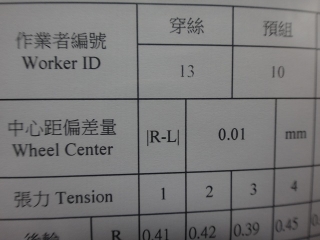
↑This is an inspection sheet for a Roval wheel, and the 0.41 etc. at the very bottom of the image is the spoke tension for the rear wheel.
And that's not Second ST—it's D1ST.
True, if you're building large quantities of wheels with the same spec,
it's simpler to use First ST as your reference without needing to compare to a conversion table
(and this applies to Nomu Lab wheels too).
Also, I think a lot of amateur wheel builders use Park Tool's tension meter,
and once you get some experience building a few wheels, a lot of people probably end up
using P1ST (the Park Tool tension meter's First ST) as their reference
without even looking at the conversion table.
When I receive comments like the one at the beginning,
people sometimes say things like
"You don't even understand the basics of physics"
and "Anyone who understands physics will just laugh at you."
But when it comes to actually building and releasing wheels that meet
those supposed physical basics, as far as I know,
there aren't any (and I mean it—there really aren't).
Without practice backing you up, it's nothing but "armchair scholar nonsense."
If you say you can do it, please go ahead and build a wheel and tell me
it's a better wheel than one built by this fool at Nomu Lab.
I've rebuilt rear wheels from ZIPP, Reynolds, and Shimano using the Nomu Lab method, and
I've never been told "it's worse than before,"
and in many cases the rebuild eliminated issues like spoke rub.
But the question is whether you could rebuild, say, that Reynolds rear wheel I rebuilt
and achieve a difference so significant it's perceptible at the feel level—
can you build wheels at that level?
Also, ZIPP, Reynolds, and Shimano rear wheels are designed to be inferior to
even my supposedly physics-incompetent thinking.
That's been proven by practice.
I'm not without ideas for surpassing the current Nomu Lab wheel standard,
but what I'd mainly want to do with it is
"freely determine hub dimensions"—the part only manufacturers can handle.
But Campagnolo and Fulcrum Lightweight have already practiced those things (in different forms),
and they're putting out wheels that push into territory hand-built wheels can't reach.
(Next tier: Mavic Cosmic and others. Most other manufacturers are pretty much the same as hand-built wheels except for being laced with straight spokes.
This is about wheel mechanics, and ENVE, ZIPP, Reynolds, etc. are rim companies, so their rims are excellent.)
If you could get a Bora One for about 50,000 yen,
you might not need to build a Nomu Lab wheel.
Also, while I don't write specifics here, I often ask customers
"Between Nomu Lab Wheel #○ and that complete wheel you already have, say, ××—which rides better on flats? On climbs? Which has snappier acceleration?"
That's data collection for Third ST. Heh heh heh.
"I think it's completely wrong to say that tension changes when you do different-diameter lacing. Since tension is balanced on both sides, there's no way one side alone could change."
Yes, actually that statement itself is correct.
Separately from that, there was also: "Please stop using arbitrary definitions like 'the umpteenth tension.'"
But I can't really do that.
Today I'm writing about that sort of thing.
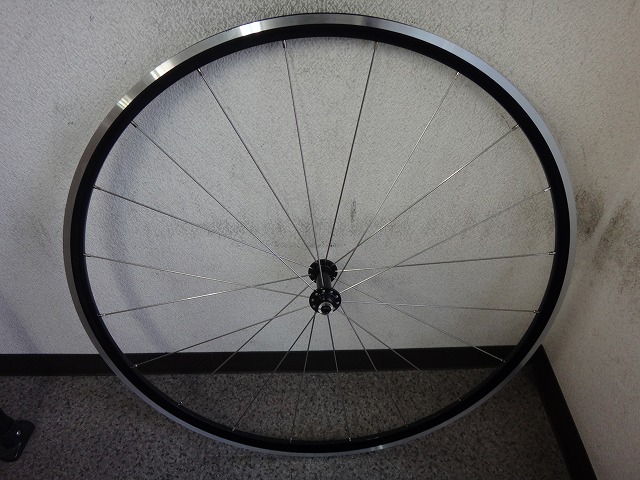
Today too, I built the front wheel for Nomu Lab Wheel #5, which doesn't count toward the wheel (hereinafter omitted).
The rim has damage from the start, so it can't be sold. I plan to clean it up nicely later and rebuild it into a non-saleable wheel.

Black hub, 20H, all-Campagnolo outpoke radial lacing. It's not really worth mentioning separately, but I tightened down the radial and lateral runout and got it dead center.
That said, while it is all-Campagnolo,

I laced one side with 14-gauge plain and the other side with 15-gauge plain.
I call the numerical value that appears on the tension meter "First Spoke Tension," and the spoke tension in the conventional sense that I get by plugging that into a conversion table "Second Spoke Tension."
Since I'm not forcing this on anyone else, if someone doesn't like it, they can just call my "Second ST" simply "spoke tension" and evaluate and build wheels within whatever range they can grasp that way.
There's no reason anyone can tell me to stop.
First ST is also a value that changes with the amount of spoke tension, so I treat it as a type of spoke tension. Since I can determine Second ST based on it (Second ST comes second), I put the conventional spoke tension as the second one.

For the wheel I just mentioned, I built it so the Second ST would be around 1000N.
The reason I used 14-gauge plain and 15-gauge plain is so I could use Hozan's tension meter conversion table directly as-is.
At 1000N, Hozan's First ST (H1ST) is 130 for 14-gauge and 116 for 15-gauge.
Similarly, I also look up the First ST on the DT tension meter (D1ST).
Among the three rows horizontally, the left is 15-gauge and the middle is 14-gauge, but
The Second ST values around 1000N look like this.
Hozan's conversion table jumps from 1000N directly to 1300N, which is wide enough to be problematic in practical terms, so I've separately researched the H1ST values that correspond to when D1ST is around 1100N or 1200N.
For me, the DT tension meter is the "primary standard," and Hozan is what I use daily.
DT has individual conversion tables for all sorts of butted spokes (since they're a spoke maker after all), but as a tool, Hozan is more straightforward to use.
Despite some variation in spoke tension (and I mean both First and Second here), I found a spoke on the 14-gauge side where H1ST was nearly 130.
Its D1ST should be 2.19, but

it was 2.16. That's within error margin.
With Hozan's conversion table, the conversion from First ST to Second ST is limited to only three types: 13-, 14-, and 15-gauge plain spokes. So for Competition, CX-RAY (regarded as the same as Aero Lite), and that sort of thing, I need to create a conversion table in terms of H1ST derived from those D1ST values.
The fact that the 14-gauge side judges out to 1000N in both H1ST and D1ST means the 15-gauge side should come out around 116 in H1ST and around 1.77 in D1ST, but


I deliberately found a spoke that comes out somewhere around there from within the variation.
What we learn from this is that when you do left-right different-diameter lacing,
the Second ST doesn't change.
But since the spokes have different cross-sectional areas, their resistance to deformation differs.
The resistance to deformation of a spoke isn't determined by Second ST alone—cross-sectional area (gauge and spoke density) also matter.
In order to try to quantify and grasp that as much as possible, I came up with
Third ST, and that's proprietary info so I won't go into detail.
My actual evaluation standard for spokes built into wheels is Third ST, and
the Third ST values align reasonably well with the public perception of hand-built wheels and complete wheels built by me or others, so
based on that, I decide the gauge and lacing method for spokes in hubs with offset (ochoko).
So when I said that left-right spoke tension differences are corrected with left-right different-diameter lacing on offset hubs,
I was talking about Third ST, not Second ST. I apologize for that.
Actually, there are past instances where I've used the term "spoke tension" to mean Third ST.
The maximum tension limit specified by the rim is Second ST, but
if you only think about wheels in terms of Second ST,
you might end up with the misconception that
"a front wheel with radial lacing at 1000N spoke tension, one laced with Champion and another with Revolution,
would be equally stiff since the spoke tension is the same." Of course, that's not the case at all.
Now about "Please stop using arbitrary definitions like 'the umpteenth tension.'"
Who cares. If you don't use it yourself, that's all that matters.
But to say more than just that, let me give an example of a wheel that can't be built without understanding First ST.

This is a Campagnolo aluminum spoke wheel, but
initially I didn't have documentation like what's shown above, so
all I knew was that "H1ST rarely reaches 240 on the freewheel side of off-the-shelf rear wheels,
and at the loaded phase of a taut specimen it's around 235"—that's all.
So when replacing rims or retensioning, I used that as my reference.
Now I understand that I can build the rear right with D1ST up to a maximum of 1.75 (though I still use the H1ST of about 235).
By the way, aluminum spokes get a very high rating in Third ST.

↑This is an inspection sheet for a Roval wheel, and the 0.41 etc. at the very bottom of the image is the spoke tension for the rear wheel.
And that's not Second ST—it's D1ST.
True, if you're building large quantities of wheels with the same spec,
it's simpler to use First ST as your reference without needing to compare to a conversion table
(and this applies to Nomu Lab wheels too).
Also, I think a lot of amateur wheel builders use Park Tool's tension meter,
and once you get some experience building a few wheels, a lot of people probably end up
using P1ST (the Park Tool tension meter's First ST) as their reference
without even looking at the conversion table.
When I receive comments like the one at the beginning,
people sometimes say things like
"You don't even understand the basics of physics"
and "Anyone who understands physics will just laugh at you."
But when it comes to actually building and releasing wheels that meet
those supposed physical basics, as far as I know,
there aren't any (and I mean it—there really aren't).
Without practice backing you up, it's nothing but "armchair scholar nonsense."
If you say you can do it, please go ahead and build a wheel and tell me
it's a better wheel than one built by this fool at Nomu Lab.
I've rebuilt rear wheels from ZIPP, Reynolds, and Shimano using the Nomu Lab method, and
I've never been told "it's worse than before,"
and in many cases the rebuild eliminated issues like spoke rub.
But the question is whether you could rebuild, say, that Reynolds rear wheel I rebuilt
and achieve a difference so significant it's perceptible at the feel level—
can you build wheels at that level?
Also, ZIPP, Reynolds, and Shimano rear wheels are designed to be inferior to
even my supposedly physics-incompetent thinking.
That's been proven by practice.
I'm not without ideas for surpassing the current Nomu Lab wheel standard,
but what I'd mainly want to do with it is
"freely determine hub dimensions"—the part only manufacturers can handle.
But Campagnolo and Fulcrum Lightweight have already practiced those things (in different forms),
and they're putting out wheels that push into territory hand-built wheels can't reach.
(Next tier: Mavic Cosmic and others. Most other manufacturers are pretty much the same as hand-built wheels except for being laced with straight spokes.
This is about wheel mechanics, and ENVE, ZIPP, Reynolds, etc. are rim companies, so their rims are excellent.)
If you could get a Bora One for about 50,000 yen,
you might not need to build a Nomu Lab wheel.
Also, while I don't write specifics here, I often ask customers
"Between Nomu Lab Wheel #○ and that complete wheel you already have, say, ××—which rides better on flats? On climbs? Which has snappier acceleration?"
That's data collection for Third ST. Heh heh heh.