Another day of wheels (and so on).
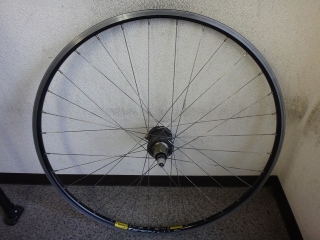
A customer brought in a PowerTap hub rear wheel with an Open Pro rim.
It wasn't that they had any complaints about using it,
but rather an acquaintance of theirs had a wheel I'd built,
and after seeing it, they decided to bring their wheel to my shop.
Beyond just rebuilding the wheel, there were quite a few other problems,
so I fixed them one after another.

32-hole, 88-spoke reverse JIS lacing. Reverse JIS lacing!
My own W-freehub rear wheel is also reverse JIS laced for a reason,
but apart from that, there's no reason to use this lacing pattern
except for fixed-gear track bikes (or BMX) with
sprockets and chain on the left side—"left drive"—
For BMX, left drive might be necessary due to rider habits and competition characteristics,
but for track bikes it's purely a fashion choice.
The spokes are 15-gauge DT Competition,
which measures 1.8–1.6–1.8mm in dimension.
14-gauge Competition is 2.0–1.8–2.0mm,
and there's also a newer Competition Race that just came out,
which comes in 14-gauge only at 2.0–1.6–2.0mm.
When considering deformation resistance and weight differences by gauge,
plus spoke weight distribution differences in left-right asymmetric builds,
I don't think there's any merit to adopting Competition Race on the half-driveside freehub.
For a rim-brake front wheel, full Competition Race would be slightly advantageous
just from being a bit lighter than full Competition.
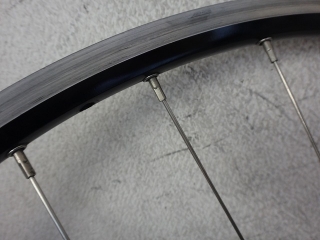
Why long nipples (16mm) on the Open Pro? Well...
I suspect it's to hide unusually short spokes.
With 12mm nipples, the spoke threads would be visible.
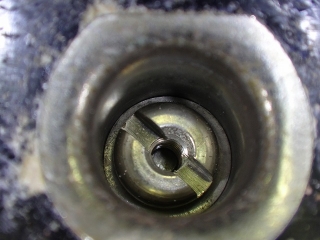
↑Freehub side
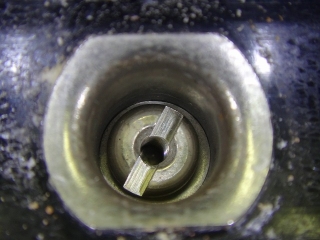
↑Non-freehub side
Just to be clear, the nipples were not loosened at all.
They also seem to have cut corners by using spokes of the same length on both sides.
Using rare 15-gauge Competition spokes doesn't look amateurish,
but the workmanship is below that of a competent amateur (it's almost embarrassing to compare),
so I had to ask the customer if this was actually a shop's work.
...It turns out it's a well-known shop in the neighborhood—or rather, the only one around.
I didn't ask for the shop name, but since this prefecture doesn't have many pro shops,
naming the prefecture could reveal their identity.

The rim tape width doesn't match either, but compared to everything else, that's a minor issue.
After rebuilding, I replaced it with one that fits properly.
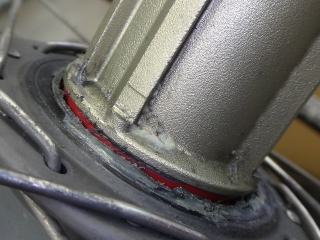
For some reason, the freehub body wasn't seated properly.
I can see an orange seal,
and gray paste-like grease—looks like molybdenum grease—is leaking out.
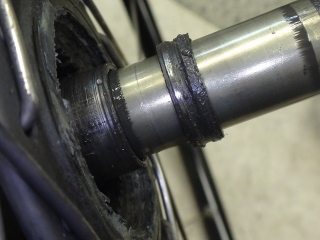
When I pulled out the freehub body, the inner race of the bearing inside came out.
That's bad.
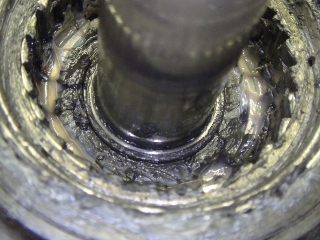
The steel balls inside the bearing have been ground up rough,
and the iron powder mixed with grease has become a paste.
Rather than molybdenum grease, it's more like coarse-grain steel grease.

I cleaned it.
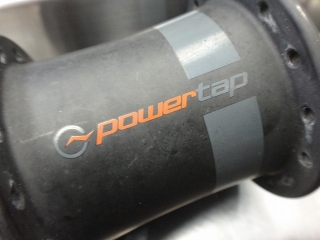
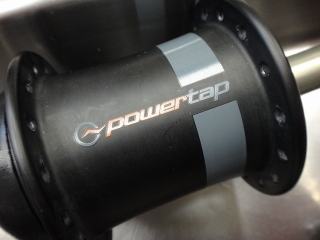
I cleaned the dirty hub shell as thoroughly as I could.

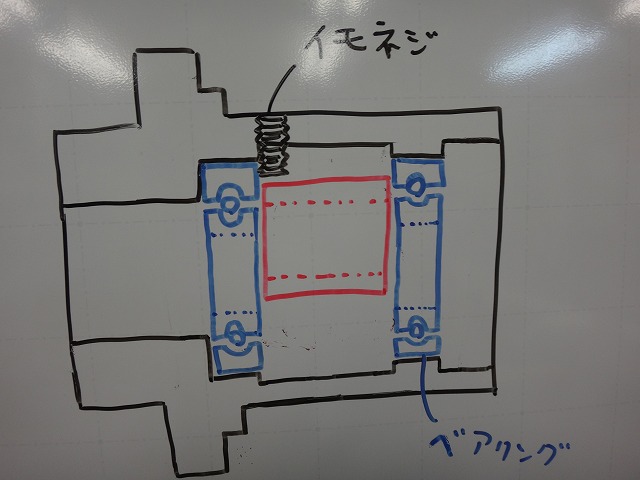
↑This is how Novatec's freehub bodies are constructed.
Campagnolo uses a snap ring to prevent the inner bearing from falling out,
but Novatec uses a set screw instead.
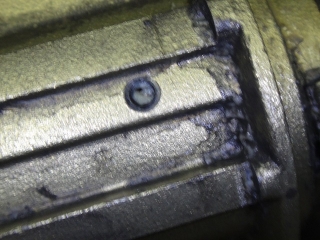
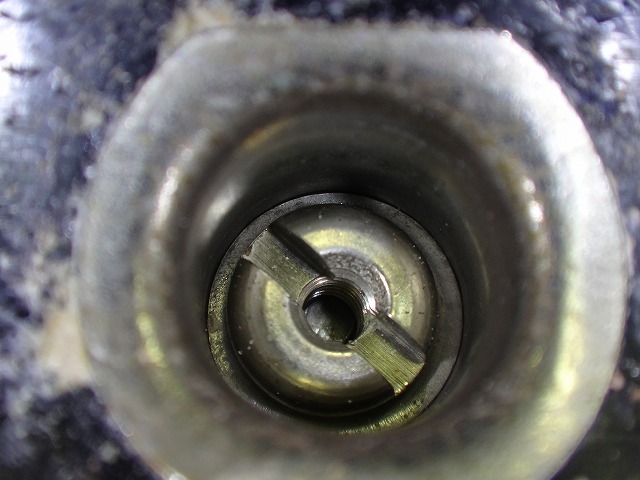
↑This one. It's not a grease hole.
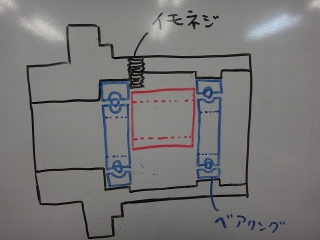
With the set screw removed, you can easily pull the inner bearing by tapping the inner race.
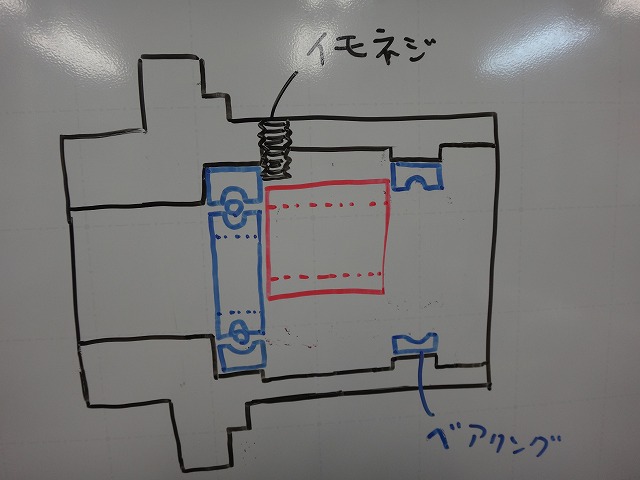
Or, if you're replacing just the outer bearing,
you can fit your finger in the freehub body and shift the spacer inside,
allowing you to drive out just the outer bearing.
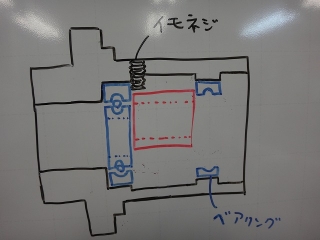
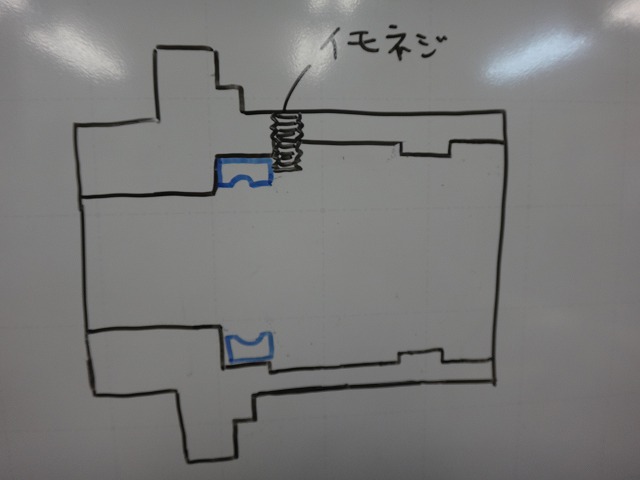
Next, if the outer bearing collapses,
you can drive that out too.
In the diagram above the spacer is left in place, but in this case you remove it.
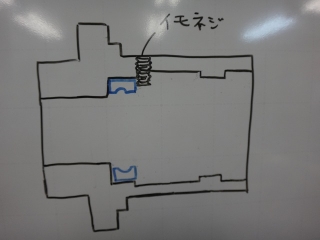
But if the inner bearing collapses and only the outer race stays press-fit,
there's no way to remove it. There's nowhere to grab it with a tool.
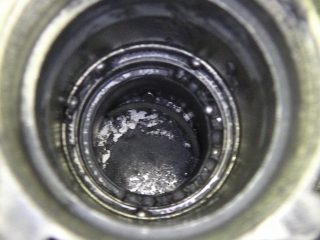
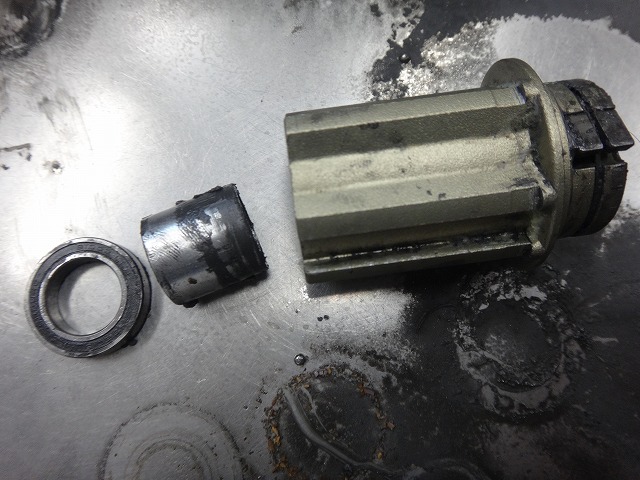
↑Impossible.
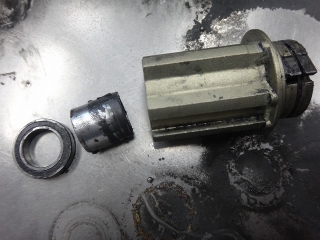
↑With the outer bearing and spacer removed
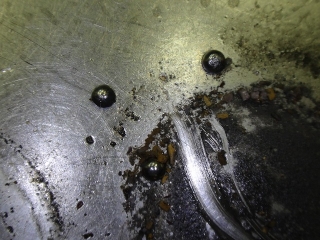
The steel balls that fell out of the freehub body's inner bearing
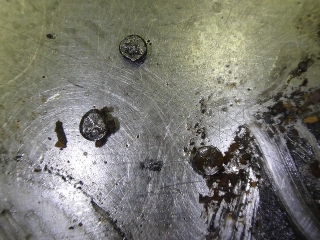
have become hemispherical.
So I replaced the freehub body with a new one.

Done building.
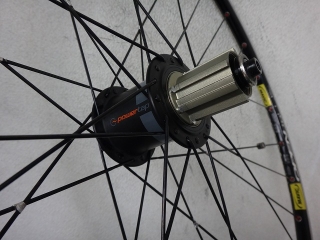
G3 hub, 32-hole, black, half-comp, 46-spoke lacing with bracing, red aluminum nipples.
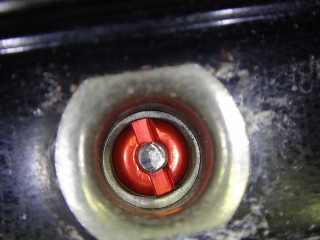
Freehub side
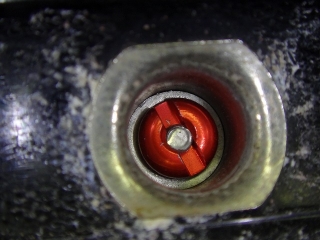
Non-freehub side
The spoke length sits roughly flush with the nipple end face.
With the Open Pro rim, I checked it against a glass surface plate before building to confirm
no warping and minimal brake zone wear, then reused it.
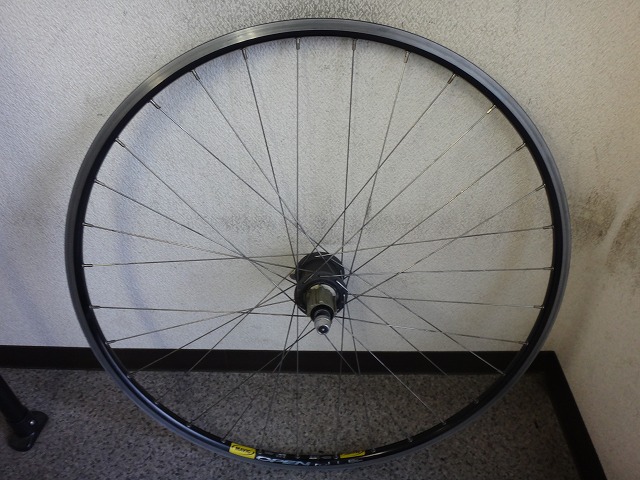
A customer brought in a PowerTap hub rear wheel with an Open Pro rim.
It wasn't that they had any complaints about using it,
but rather an acquaintance of theirs had a wheel I'd built,
and after seeing it, they decided to bring their wheel to my shop.
Beyond just rebuilding the wheel, there were quite a few other problems,
so I fixed them one after another.
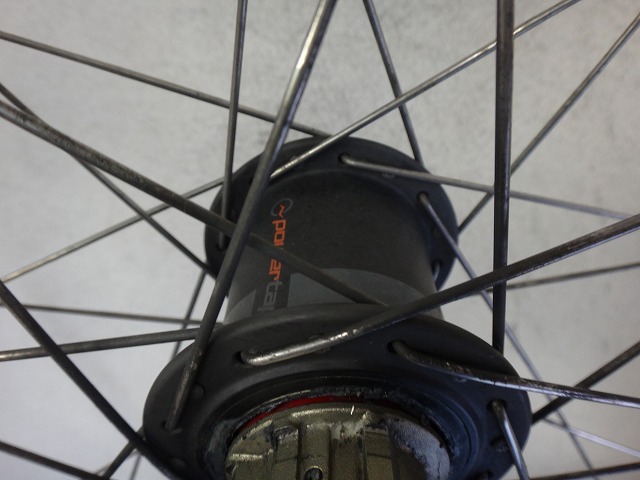
32-hole, 88-spoke reverse JIS lacing. Reverse JIS lacing!
My own W-freehub rear wheel is also reverse JIS laced for a reason,
but apart from that, there's no reason to use this lacing pattern
except for fixed-gear track bikes (or BMX) with
sprockets and chain on the left side—"left drive"—
For BMX, left drive might be necessary due to rider habits and competition characteristics,
but for track bikes it's purely a fashion choice.
The spokes are 15-gauge DT Competition,
which measures 1.8–1.6–1.8mm in dimension.
14-gauge Competition is 2.0–1.8–2.0mm,
and there's also a newer Competition Race that just came out,
which comes in 14-gauge only at 2.0–1.6–2.0mm.
When considering deformation resistance and weight differences by gauge,
plus spoke weight distribution differences in left-right asymmetric builds,
I don't think there's any merit to adopting Competition Race on the half-driveside freehub.
For a rim-brake front wheel, full Competition Race would be slightly advantageous
just from being a bit lighter than full Competition.
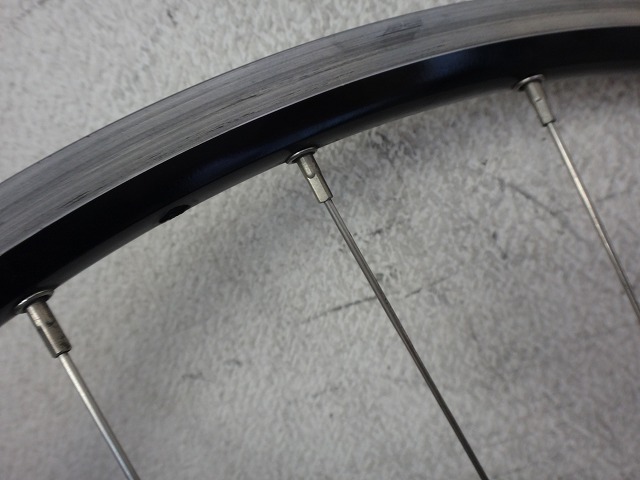
Why long nipples (16mm) on the Open Pro? Well...
I suspect it's to hide unusually short spokes.
With 12mm nipples, the spoke threads would be visible.
↑Freehub side
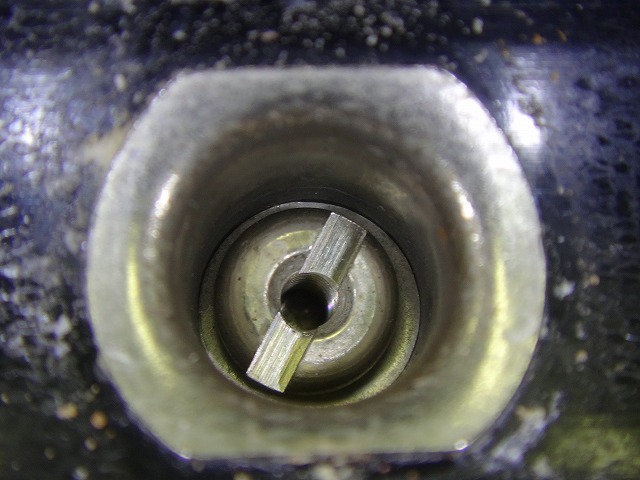
↑Non-freehub side
Just to be clear, the nipples were not loosened at all.
They also seem to have cut corners by using spokes of the same length on both sides.
Using rare 15-gauge Competition spokes doesn't look amateurish,
but the workmanship is below that of a competent amateur (it's almost embarrassing to compare),
so I had to ask the customer if this was actually a shop's work.
...It turns out it's a well-known shop in the neighborhood—or rather, the only one around.
I didn't ask for the shop name, but since this prefecture doesn't have many pro shops,
naming the prefecture could reveal their identity.
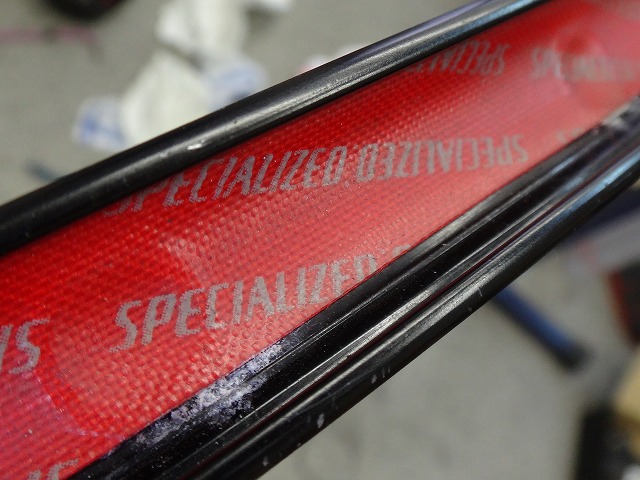
The rim tape width doesn't match either, but compared to everything else, that's a minor issue.
After rebuilding, I replaced it with one that fits properly.

For some reason, the freehub body wasn't seated properly.
I can see an orange seal,
and gray paste-like grease—looks like molybdenum grease—is leaking out.
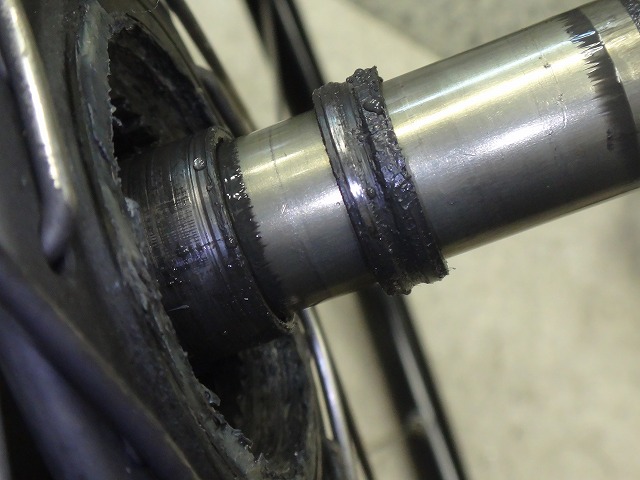
When I pulled out the freehub body, the inner race of the bearing inside came out.
That's bad.
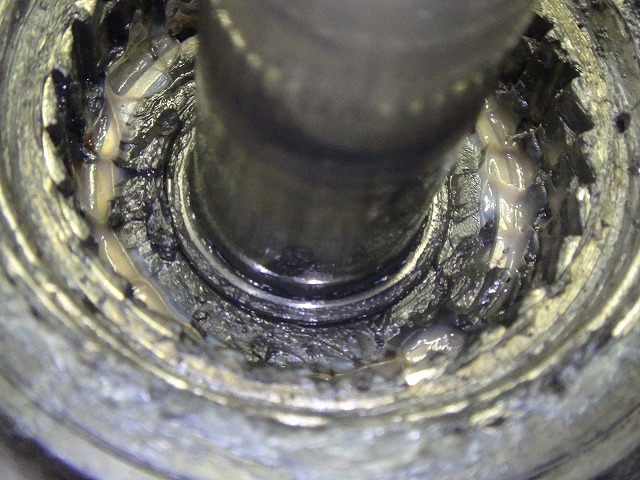
The steel balls inside the bearing have been ground up rough,
and the iron powder mixed with grease has become a paste.
Rather than molybdenum grease, it's more like coarse-grain steel grease.
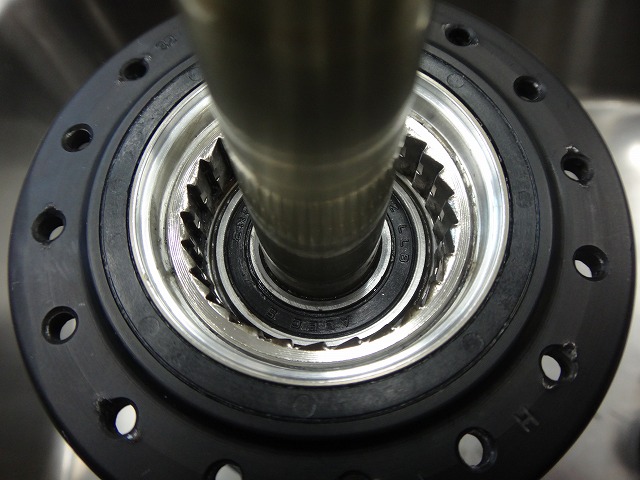
I cleaned it.
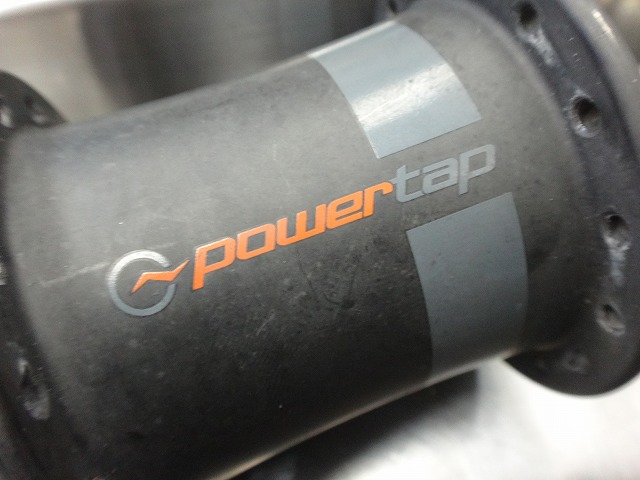
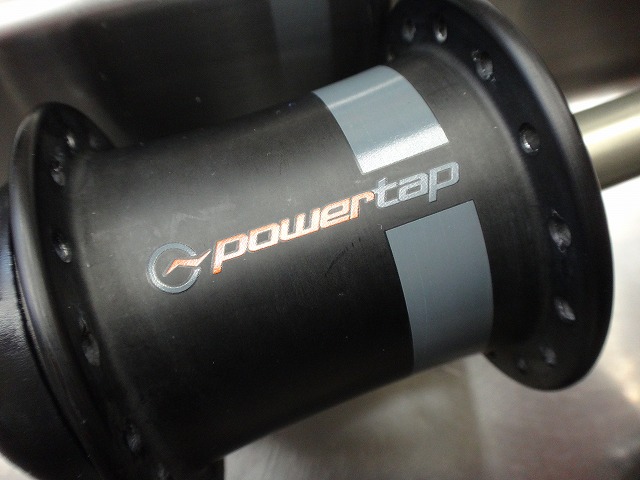
I cleaned the dirty hub shell as thoroughly as I could.

↑This is how Novatec's freehub bodies are constructed.
Campagnolo uses a snap ring to prevent the inner bearing from falling out,
but Novatec uses a set screw instead.
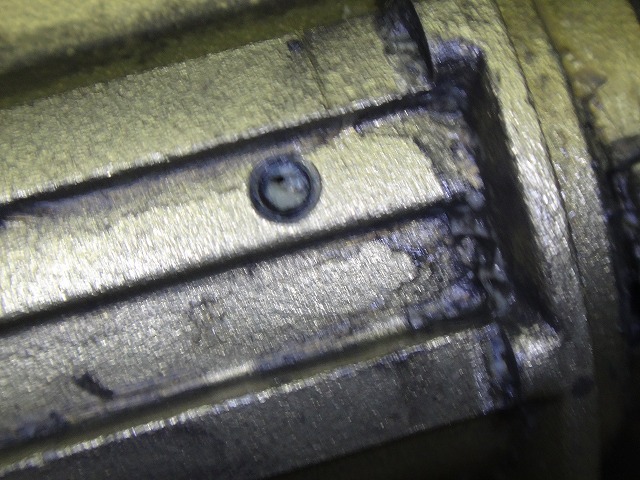
↑This one. It's not a grease hole.
With the set screw removed, you can easily pull the inner bearing by tapping the inner race.
Or, if you're replacing just the outer bearing,
you can fit your finger in the freehub body and shift the spacer inside,
allowing you to drive out just the outer bearing.
Next, if the outer bearing collapses,
you can drive that out too.
In the diagram above the spacer is left in place, but in this case you remove it.
But if the inner bearing collapses and only the outer race stays press-fit,
there's no way to remove it. There's nowhere to grab it with a tool.

↑Impossible.
↑With the outer bearing and spacer removed
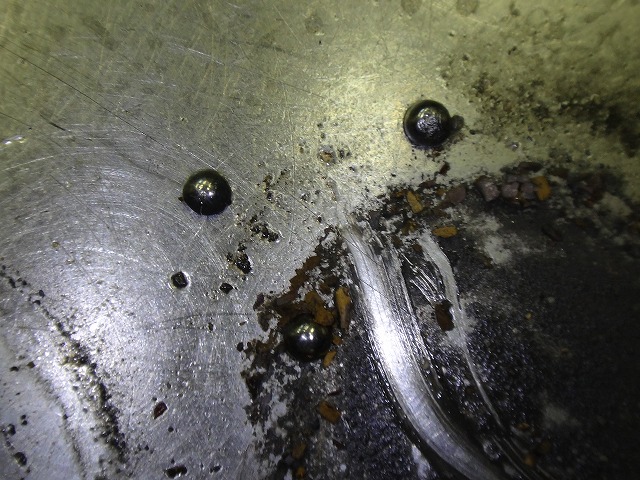
The steel balls that fell out of the freehub body's inner bearing
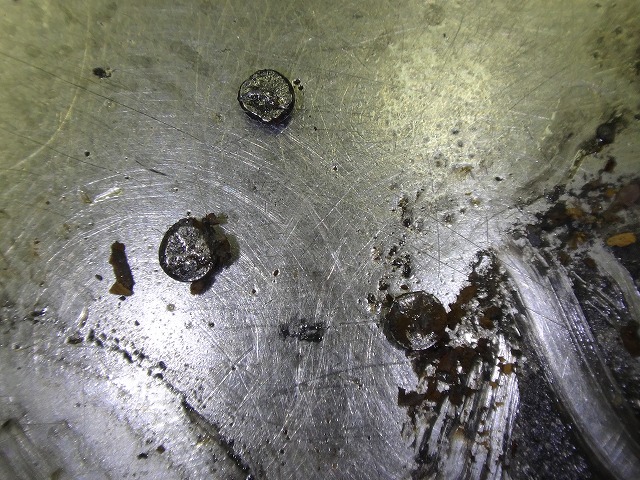
have become hemispherical.
So I replaced the freehub body with a new one.
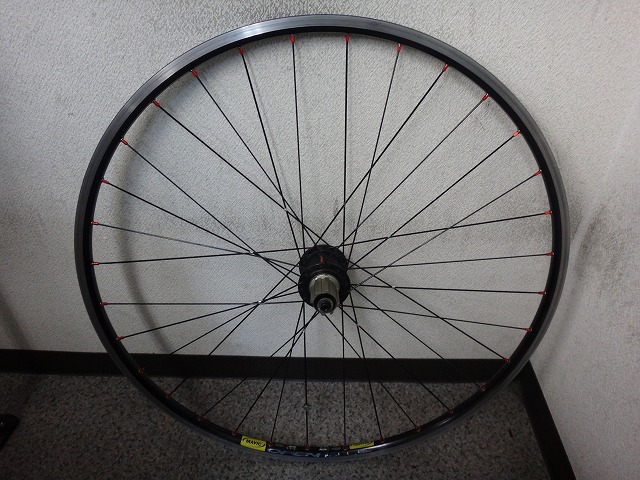
Done building.

G3 hub, 32-hole, black, half-comp, 46-spoke lacing with bracing, red aluminum nipples.

Freehub side
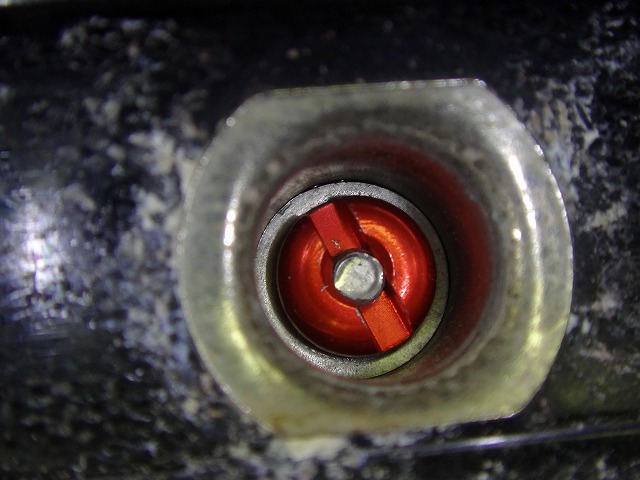
Non-freehub side
The spoke length sits roughly flush with the nipple end face.
With the Open Pro rim, I checked it against a glass surface plate before building to confirm
no warping and minimal brake zone wear, then reused it.