Another day, another wheel build (and so on).
Wait, I'm allowed to build wheels other than Nomu Lab Wheel No. 5?
Yes!
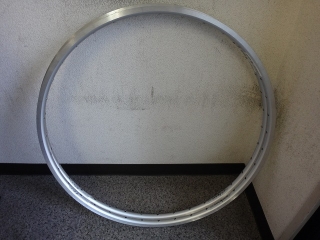
A customer brought in a Campagnolo Berlin 36 rim for a build.
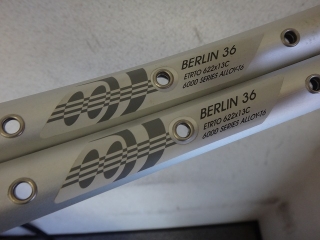
It's a 36-hole rim, but the "36" in the model name isn't about spoke count at all—
it refers to "Summer Olympic host city + year,"
so this means the Berlin Olympics of 1936.
Campagnolo rim stickers on some models are positioned opposite each other at roughly 180 degrees, with the lettering reversed, but
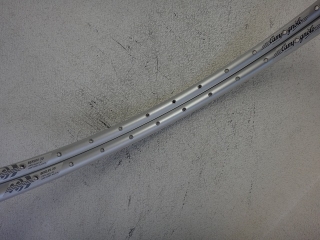
on this rim that's not the case, so there's no need to worry about left/right orientation.
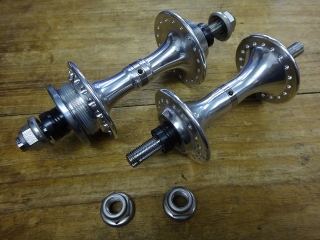
I'm using current-production Record Pista hubs.
When I say "current-production," I mean that among the component groups—crankset, BB, headset, and front/rear hubs—the hubs haven't appeared in paper catalogs since the 2015 model year. The manufacturer's website only lists the front hub.
The end nuts feature that matte finish (→here), and the thread pitch of the hub shaft and nuts differs from other manufacturers. Back in the day, there was an Italian maker called OMAS that made headsets, BBs, hubs, and such. They produced Campagnolo-compatible titanium BB shafts, hub shafts, and brake pivot bolts. For a long time, that was essentially the only way to get titanium Campagnolo hub shafts. Or rather... (more on that later).
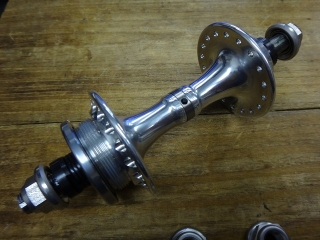
The rear hub has a single-thread cut with a cup. Since this hub's design is based on the C Record hub, its detail work follows that standard as well.
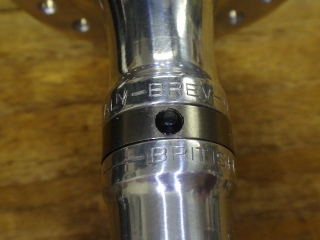
There's marking on the raised portion of the grease hole at the center of the hub shell that indicates its orientation. Though really, with a single-thread cut hub, orientation is determined anyway.
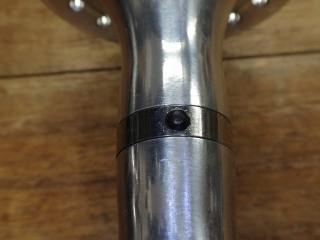
Unlike the rear hub, the front hub is based on a 9-speed-era Record hub and has no left/right indicators on the shell, nor any marking on the grease hole cap. The customer can read tangent lacing, so even if I laced it Italian-style, they wouldn't install it backwards. But this time they requested radial lacing, which the manufacturer forbids, so left/right orientation is determined solely by the rim label.
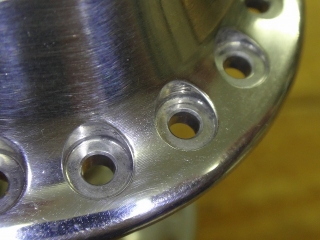
The rear hub's flange holes use the same machining as C Record and later hubs, but
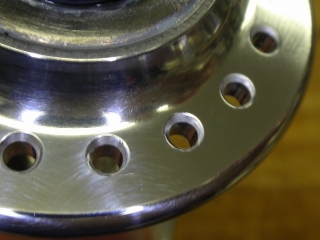
the front hub is different for some reason. The flange holes are noticeably offset inward relative to the flange itself, which suggests they were thinking ahead to radial lacing.
Some people might think the front and rear hubs are from different eras, but they're correct as-is.
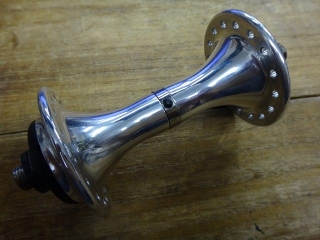
↑ This is a Record front hub from the 9-speed era, which served as the base for the Record Pista front hub.
Heh heh, look at that slightly pinched hub shell... this thing's tempting me

On this hub, the flange holes are finished to "Record hub standards." So I'd like to say the Record Pista front hub is cutting corners, but the spoke nipple seating on the #14 spokes is actually better than the rear hub, and the building feel was snappier. This era of hub came in steel shaft spec, but this is the titanium shaft variant with a different box color.
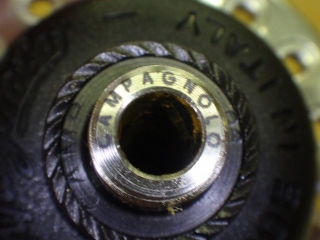
And on one end only, there's Campagnolo laser engraving. Other than OMAS, the way to get a titanium shaft Record hub was to "just buy a titanium hub from the start."
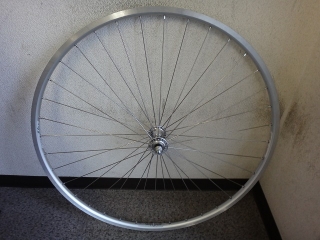
Built.
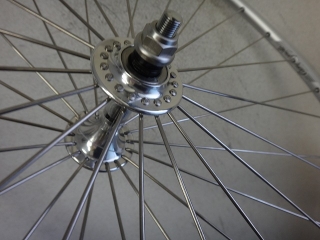
Front wheel: Record Pista 36H, all-competition outpoke radial lacing,
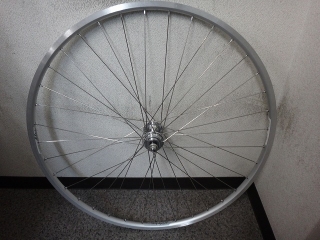
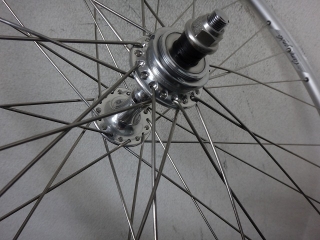
Rear wheel: Record Pista 36H, all-competition 4/6 Italian lacing. With a single-thread pista rear hub having only this much cup depth, unequal-diameter or unequal-spoke lacing isn't normally necessary, but given this hub's geometry I felt it was needed and went with it. Also, with a 32H hub, I probably wouldn't have done it. I considered the ultra-rare 6/8 lacing but went with 4/6.
Since both sides use the same spoke, if the 1st ST is free-side > non-free-side, then the 2nd ST will also be free-side > non-free-side. The relationship between 1st ST and 2nd ST isn't a simple proportion, so if the free-side 1st ST were, say, 1.1 times the non-free-side, that doesn't mean the 2nd ST difference is also 1.1 times. But we can compare the magnitudes.
When wheel center is achieved, if the 1st ST shows free-side >> non-free-side, then the 2nd ST will show free-side >>>>> non-free-side—different magnitudes, but the relationship doesn't reverse. On this rear wheel, even with 4/6 lacing, the non-free-side ended up at lower tension, but it should have been better than equal-spoke lacing on both sides.
Wait, I'm allowed to build wheels other than Nomu Lab Wheel No. 5?
Yes!

A customer brought in a Campagnolo Berlin 36 rim for a build.
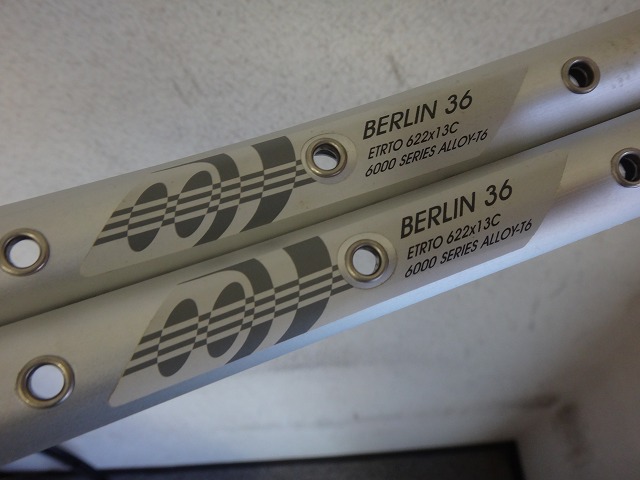
It's a 36-hole rim, but the "36" in the model name isn't about spoke count at all—
it refers to "Summer Olympic host city + year,"
so this means the Berlin Olympics of 1936.
Campagnolo rim stickers on some models are positioned opposite each other at roughly 180 degrees, with the lettering reversed, but

on this rim that's not the case, so there's no need to worry about left/right orientation.

I'm using current-production Record Pista hubs.
When I say "current-production," I mean that among the component groups—crankset, BB, headset, and front/rear hubs—the hubs haven't appeared in paper catalogs since the 2015 model year. The manufacturer's website only lists the front hub.
The end nuts feature that matte finish (→here), and the thread pitch of the hub shaft and nuts differs from other manufacturers. Back in the day, there was an Italian maker called OMAS that made headsets, BBs, hubs, and such. They produced Campagnolo-compatible titanium BB shafts, hub shafts, and brake pivot bolts. For a long time, that was essentially the only way to get titanium Campagnolo hub shafts. Or rather... (more on that later).

The rear hub has a single-thread cut with a cup. Since this hub's design is based on the C Record hub, its detail work follows that standard as well.
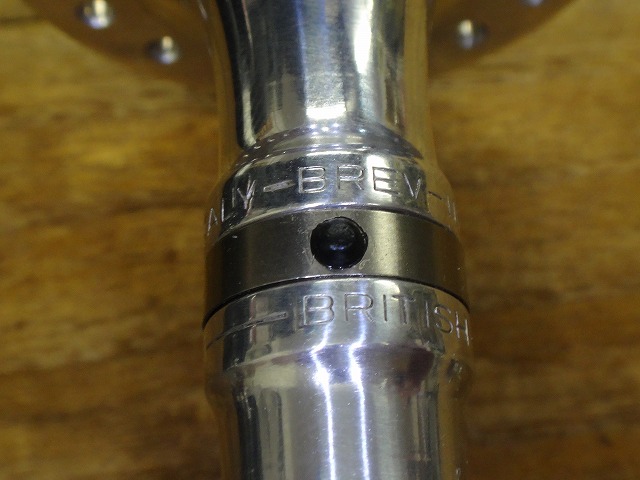
There's marking on the raised portion of the grease hole at the center of the hub shell that indicates its orientation. Though really, with a single-thread cut hub, orientation is determined anyway.
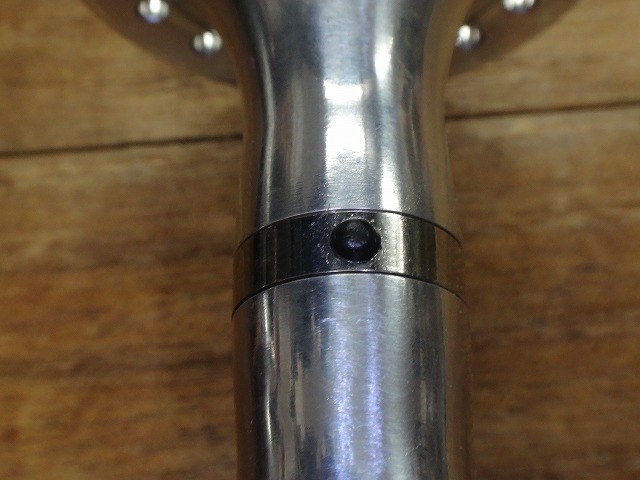
Unlike the rear hub, the front hub is based on a 9-speed-era Record hub and has no left/right indicators on the shell, nor any marking on the grease hole cap. The customer can read tangent lacing, so even if I laced it Italian-style, they wouldn't install it backwards. But this time they requested radial lacing, which the manufacturer forbids, so left/right orientation is determined solely by the rim label.

The rear hub's flange holes use the same machining as C Record and later hubs, but
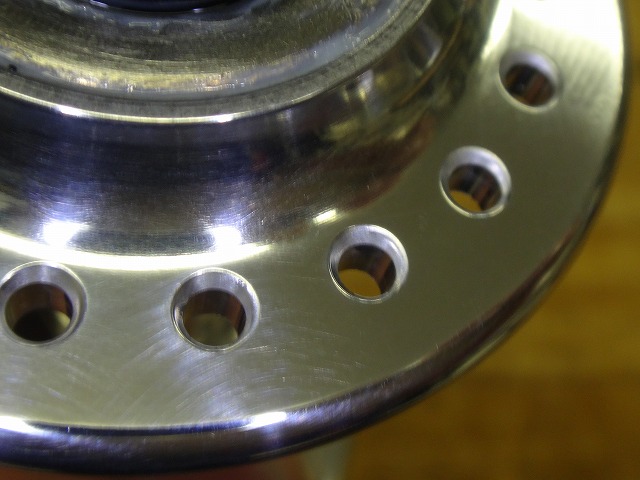
the front hub is different for some reason. The flange holes are noticeably offset inward relative to the flange itself, which suggests they were thinking ahead to radial lacing.
Some people might think the front and rear hubs are from different eras, but they're correct as-is.

↑ This is a Record front hub from the 9-speed era, which served as the base for the Record Pista front hub.
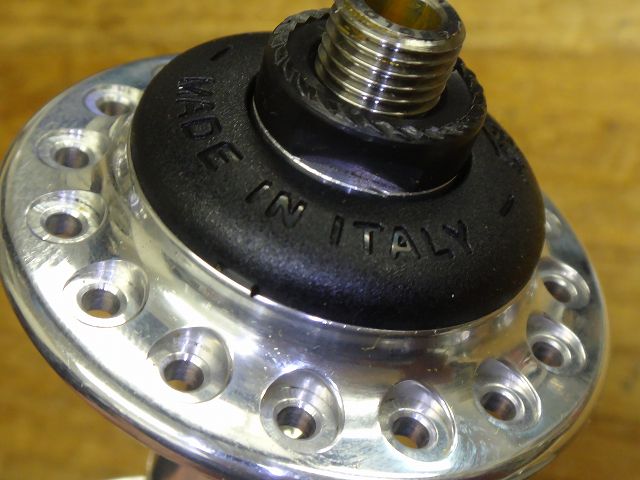
On this hub, the flange holes are finished to "Record hub standards." So I'd like to say the Record Pista front hub is cutting corners, but the spoke nipple seating on the #14 spokes is actually better than the rear hub, and the building feel was snappier. This era of hub came in steel shaft spec, but this is the titanium shaft variant with a different box color.

And on one end only, there's Campagnolo laser engraving. Other than OMAS, the way to get a titanium shaft Record hub was to "just buy a titanium hub from the start."
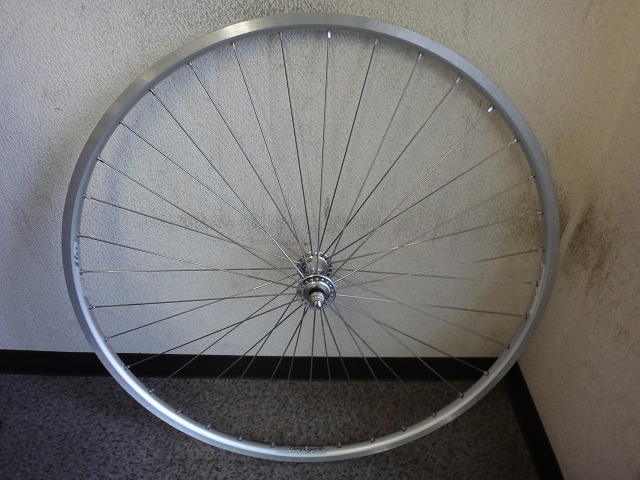
Built.
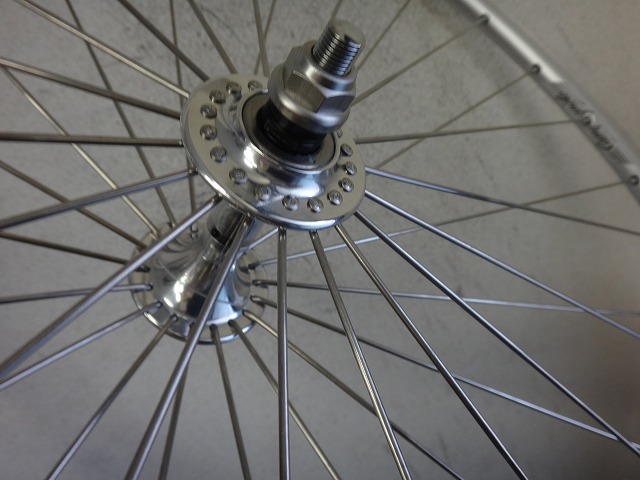
Front wheel: Record Pista 36H, all-competition outpoke radial lacing,
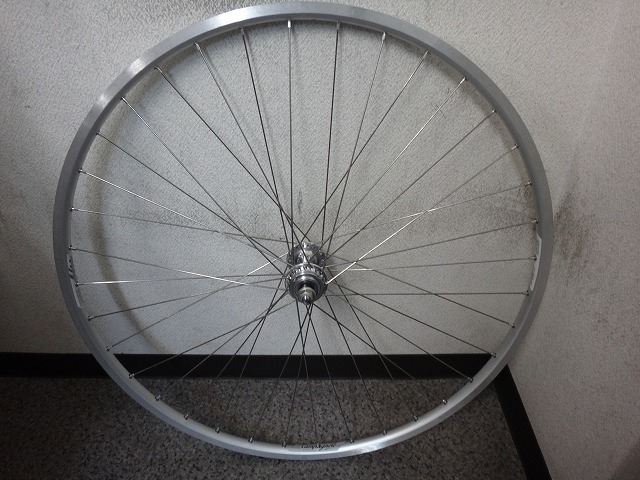
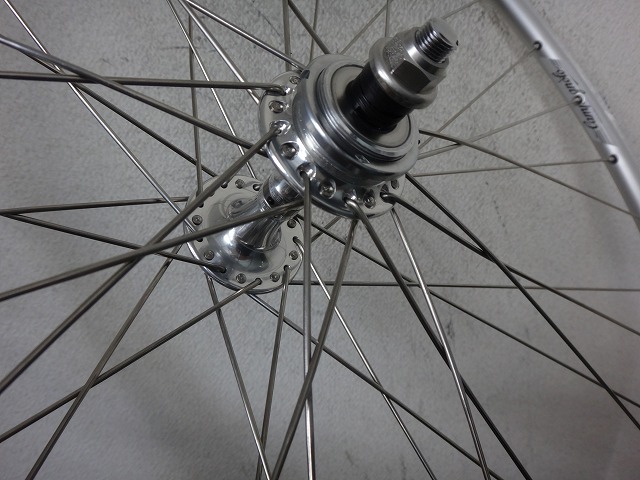
Rear wheel: Record Pista 36H, all-competition 4/6 Italian lacing. With a single-thread pista rear hub having only this much cup depth, unequal-diameter or unequal-spoke lacing isn't normally necessary, but given this hub's geometry I felt it was needed and went with it. Also, with a 32H hub, I probably wouldn't have done it. I considered the ultra-rare 6/8 lacing but went with 4/6.
Since both sides use the same spoke, if the 1st ST is free-side > non-free-side, then the 2nd ST will also be free-side > non-free-side. The relationship between 1st ST and 2nd ST isn't a simple proportion, so if the free-side 1st ST were, say, 1.1 times the non-free-side, that doesn't mean the 2nd ST difference is also 1.1 times. But we can compare the magnitudes.
When wheel center is achieved, if the 1st ST shows free-side >> non-free-side, then the 2nd ST will show free-side >>>>> non-free-side—different magnitudes, but the relationship doesn't reverse. On this rear wheel, even with 4/6 lacing, the non-free-side ended up at lower tension, but it should have been better than equal-spoke lacing on both sides.