Another day, another wheel (and so on).
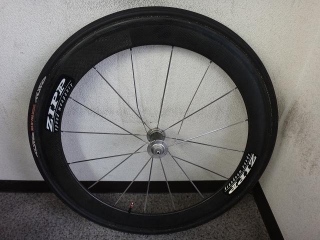
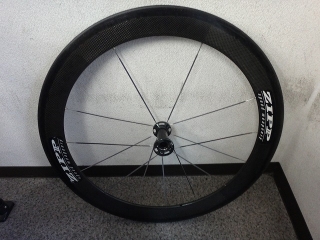
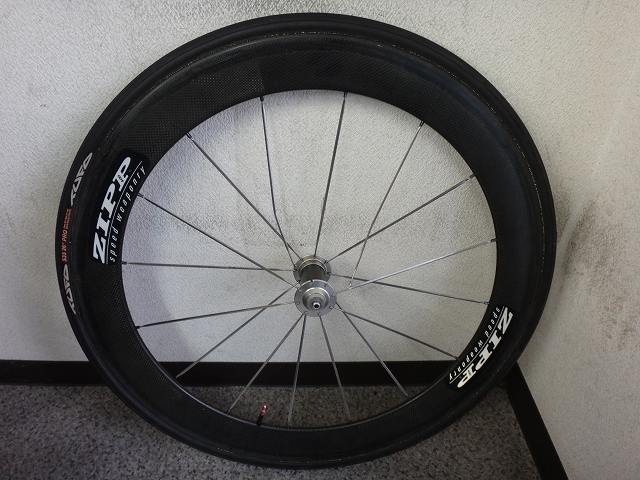
A customer brought in a front wheel built with a ZIPP 400 rim.
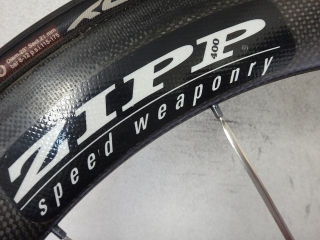
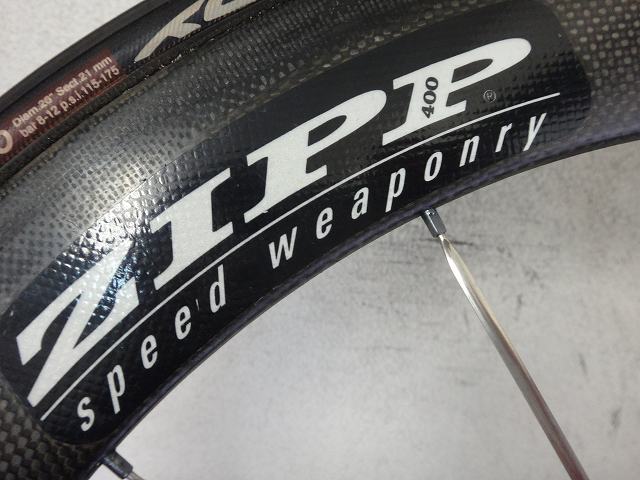
Based on the rim logo (late 90s) and rim height, I'd thought it was a 440, but it's a 400.
That said, I can't entirely rule out my initial impression either.
The 400 is the 650C version of the 440, which is a 700C rim.
Since full-carbon clincher rims didn't exist in this era,
of course it's a tubular rim.
※ (Note: the author includes a humorous aside about the word "あながち" that doesn't translate meaningfully, so I'm omitting it.)
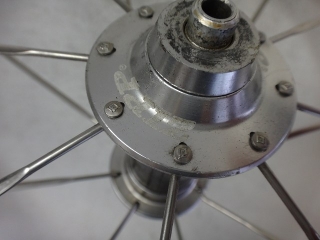
The hub is ZIPP-branded

with a carbon hub shell, 16-hole,
and the spokes are DT aero flats with slotted holes—they're laced outpoke radial.
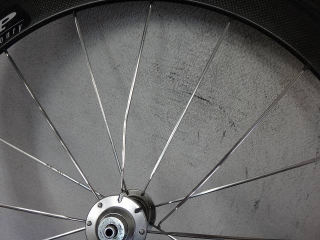
The problem the customer brought it in for wasn't a spoke break, but
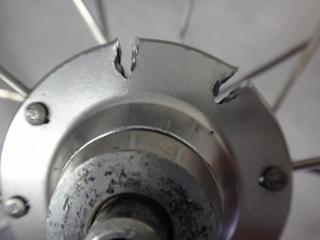
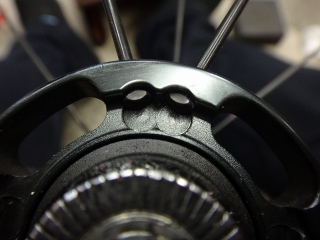
a broken hub flange.
The impact of the break has deformed the spokes, but neither has bent at the nipple.
Hub alloys and forging technology weren't as advanced back then,
so flange breakage occasionally occurred with radial lacing.
Also, flange holes were drilled on the outside back then
(or rather, modern hubs started drilling them slightly inboard),
so when radially laced, the load is applied in the thinner direction,
which makes breakage more likely.
As far as I know, this happened frequently with TNT hubs.
So I'm going to rebuild this with a 16-hole hub,
but there aren't many slotted-hole hubs out there in 16-hole.
Dura-Ace (9000 series) slotted-hole version is 18-hole.
When building with a round-hole hub, a CX-RAY 16-hole front wheel is,
from a lateral stiffness perspective, frankly sketchy.
Shimano's C24 is a low-profile rim that does exactly that.
You could build it with #14 plain spokes and get decent stiffness,
but round spokes on a 16-hole front wheel just feels wrong.
Since it's 650C, not 700C, I don't need to be as nervous about fewer spokes, true.
So I decided to use a Dura-Ace 9000 series 16-hole hub.
I know that contradicts what I just said, but I'm not lying.
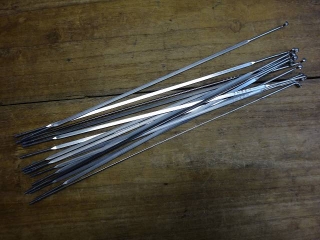
The Dura-Ace hub, despite appearances, has a small flange,
so the new spoke length is significantly shorter, and I couldn't reuse the original spokes.
I tried finding Sapim CX and similar in usable lengths,
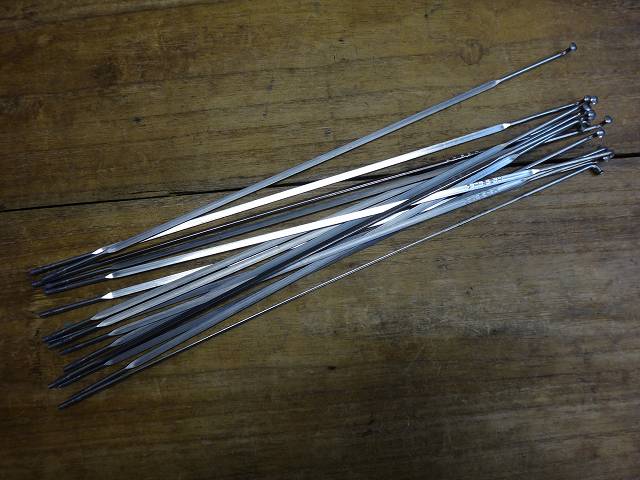
but came up empty, so
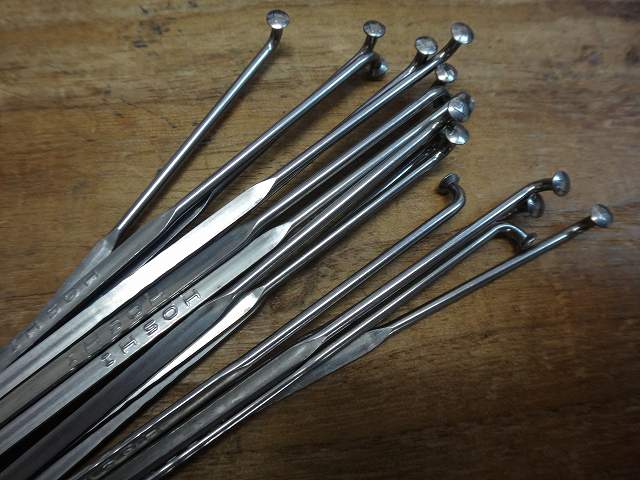
I'm using my secret stash: Aero Star Bright Type II star spokes.
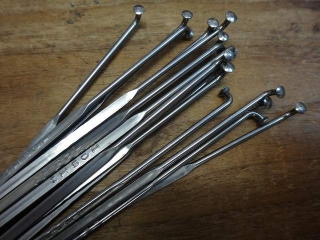
The unnecessarily long non-butted section at the head end came in handy.
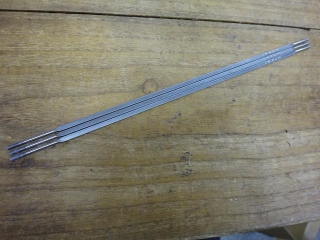
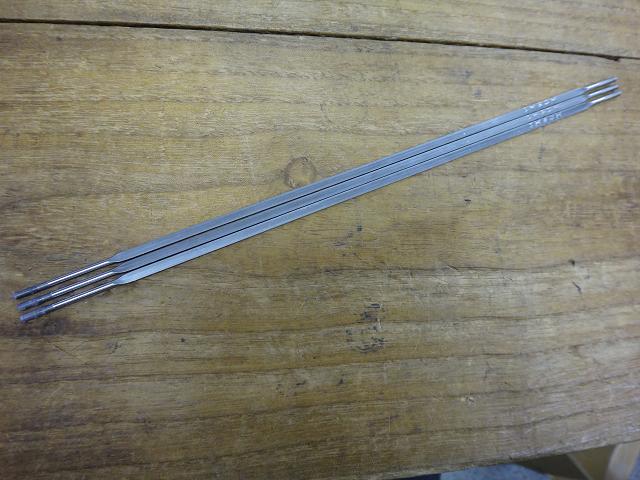
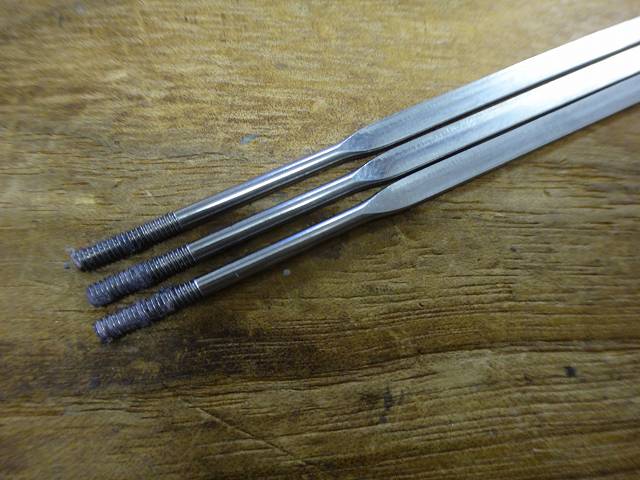
I cut the head end and threaded it to make a double-threaded spoke.
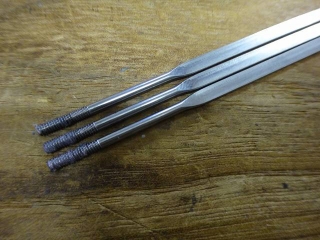
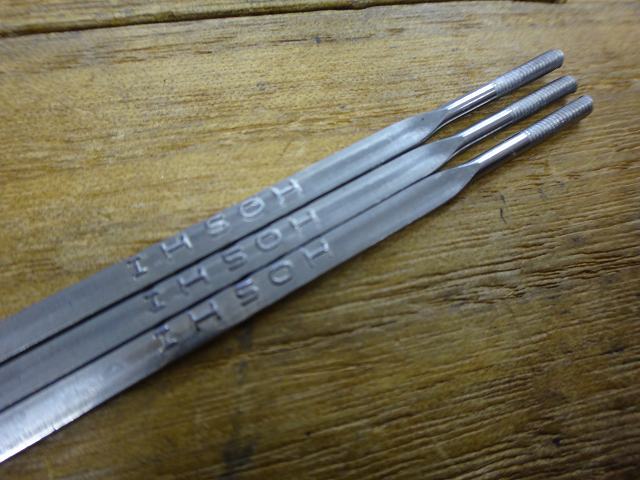
Original threading (rim side)
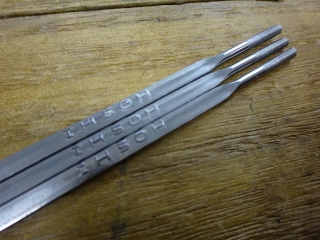
New threading (hub side)
Perfect length.
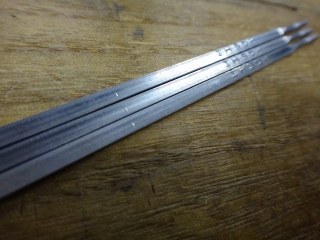
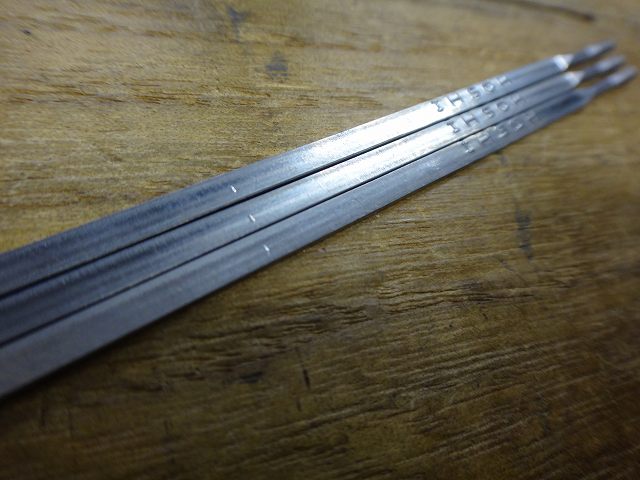
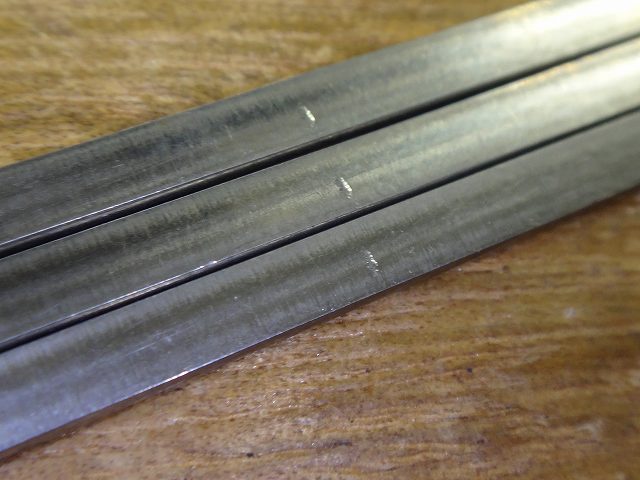
Unrelated trivia, but these spokes have
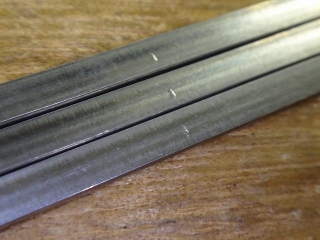
marks at the same position from the end.
Might be a mark from the holding fixture during HOSHI's embossing process.
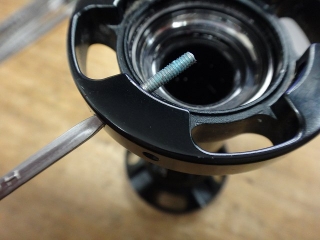
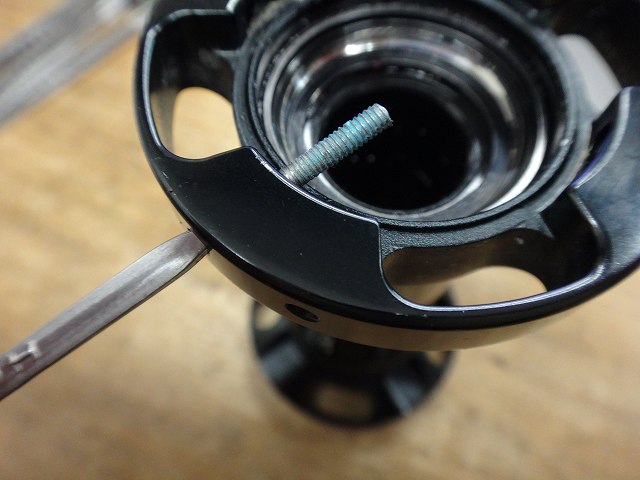
Threading these spokes through the WH-9000-TL front hub,
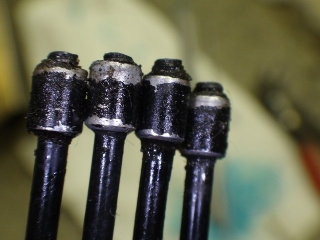
installing the hub nut on the hub-side threading,
then pulling—
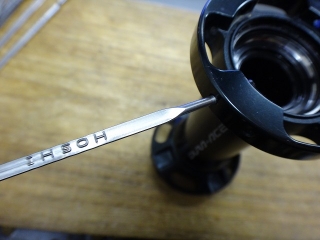
you get this.
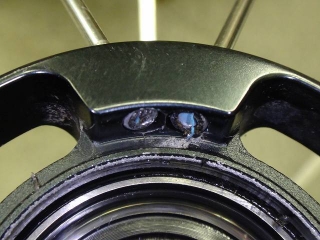
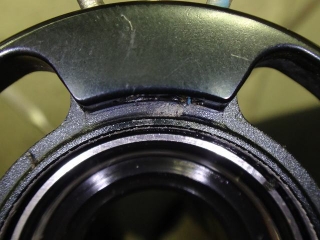
The hub nut for this wheel is part number Y4G3080000,
but when I needed three more for this build and ordered them,
the distributor's website had a trap:
typing in Y4G3080000 actually ordered Y4G3081000 instead—a different length.
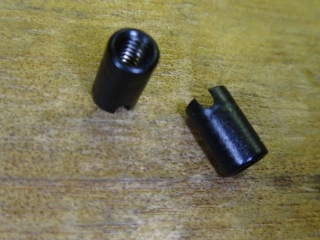
This is Y4G3081000.
It was originally made for MTB wheel WH-M988.
And we actually had these in stock already.

Installing the longer one makes the hub nut protrude past the flange.
It doesn't interfere with hub shaft rotation, so that alone wouldn't matter, but...
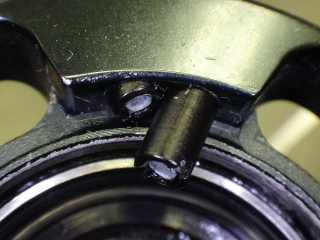
because I'm using phase-offset non-radial zero-cross lacing on the hub side,
the hub nut going in later interferes with the one installed earlier,
so I can't seat the spokes.
Three nuts short, and while long nuts interfere with each other,
long and short don't interfere,
so technically I could build it with three mixed pairs out of eight,
but I'm not doing anything that ugly unless I have to.
I considered grinding down the long nut's length,
but given the difficulty and labor involved,
it's smarter to just order the correct short ones.
I called the distributor to order short hub nuts—I ordered 16 to be safe when I only needed 3—
only to learn that the manufacturer (Shimano) has just 14 in stock.
They probably won't stop production altogether,
but if they do, WH-9000-TL repairs could become impossible.
I bought all 14, but that's not hoarding.
If I'd bought 100 or 200, maybe, but the distributor's stock is just that thin,
and I ended up buying everything they had.
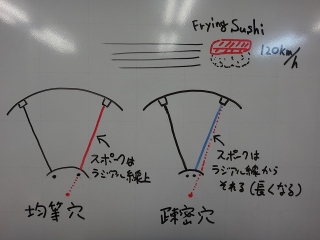
↑The phase offset adds to spoke length compared to radial lacing, but
with 13 of the 16 spokes installed,
I got that feeling of "spoke length calculation is probably right."
↑By the way, this only works with TL (tubeless) hubs, not
CL (clincher) hubs.
CL hubs are "through" design, not hook-type, so you can't thread the spoke's flattened section through.
TL hubs are also "through" design, but the spoke head attachment (the hub nut) can be added afterward,
so you can thread spokes from the outside.
Since that front wheel couldn't be built today,
next up would be the Nomlab wheel #5 with a PowerTap hub,
but that's short on spokes (and the shortage is because of the RR411db trial wheel),
and after that—
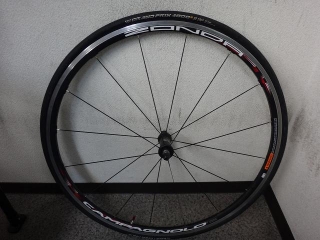
I replaced the Zonda front wheel rim.
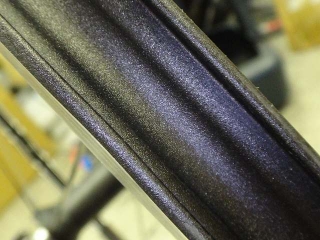
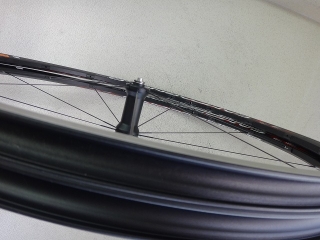
↑The bead hook deformation is only here, but
when spinning the wheel, it has the kind of potato-chip runout
that you can tell at a glance won't respond to truing.
Just looking at the removed rim without a glass plate
showed it's warped.
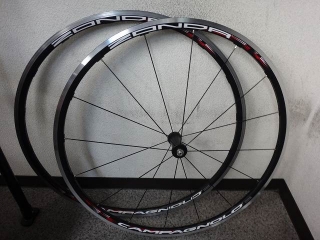
Done.
Reused all the spokes.
Any shop employee who's ever told a customer "Campagnolo and Fulcrum rim replacements require spoke replacement too"
deserves divine judgment in the afterlife. ←seems pretty common actually
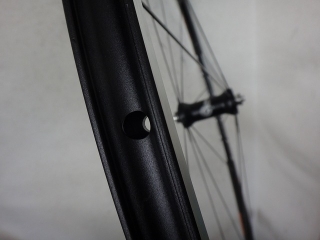
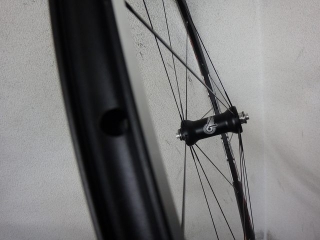
I also aligned the hub shell logo phase visible through the valve hole as much as possible.
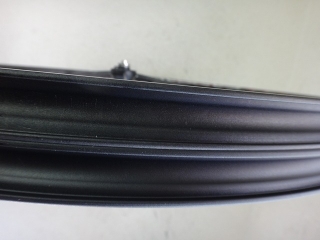
Comparing the old and new rims side by side...
at the far side,
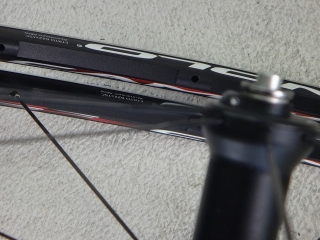
there's about this much gap.
A customer brought in a front wheel built with a ZIPP 400 rim.
Based on the rim logo (late 90s) and rim height, I'd thought it was a 440, but it's a 400.
That said, I can't entirely rule out my initial impression either.
The 400 is the 650C version of the 440, which is a 700C rim.
Since full-carbon clincher rims didn't exist in this era,
of course it's a tubular rim.
※ (Note: the author includes a humorous aside about the word "あながち" that doesn't translate meaningfully, so I'm omitting it.)
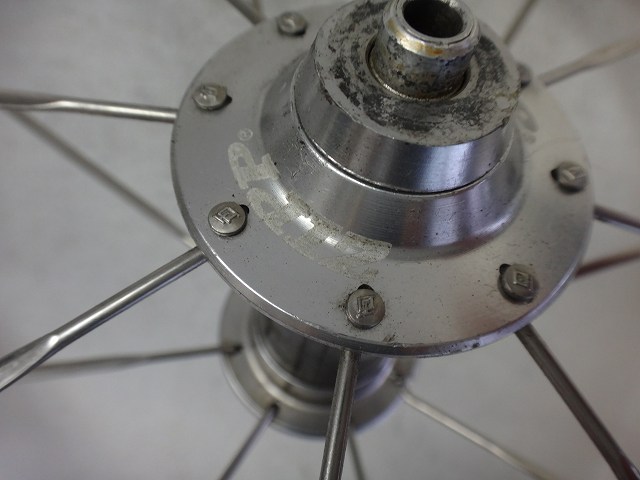
The hub is ZIPP-branded
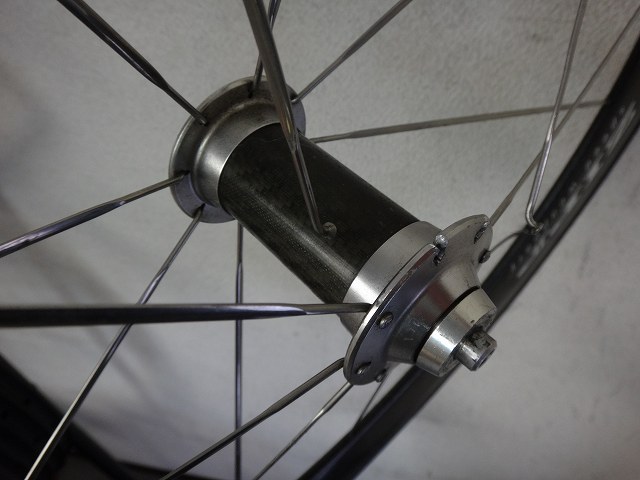
with a carbon hub shell, 16-hole,
and the spokes are DT aero flats with slotted holes—they're laced outpoke radial.
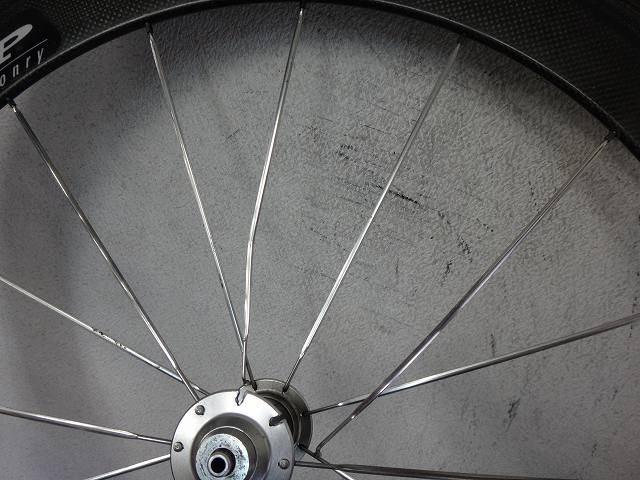
The problem the customer brought it in for wasn't a spoke break, but
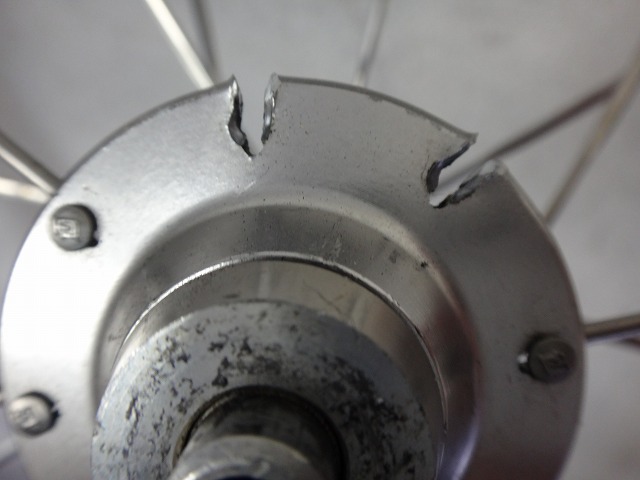
a broken hub flange.
The impact of the break has deformed the spokes, but neither has bent at the nipple.
Hub alloys and forging technology weren't as advanced back then,
so flange breakage occasionally occurred with radial lacing.
Also, flange holes were drilled on the outside back then
(or rather, modern hubs started drilling them slightly inboard),
so when radially laced, the load is applied in the thinner direction,
which makes breakage more likely.
As far as I know, this happened frequently with TNT hubs.
So I'm going to rebuild this with a 16-hole hub,
but there aren't many slotted-hole hubs out there in 16-hole.
Dura-Ace (9000 series) slotted-hole version is 18-hole.
When building with a round-hole hub, a CX-RAY 16-hole front wheel is,
from a lateral stiffness perspective, frankly sketchy.
You could build it with #14 plain spokes and get decent stiffness,
but round spokes on a 16-hole front wheel just feels wrong.
Since it's 650C, not 700C, I don't need to be as nervous about fewer spokes, true.
So I decided to use a Dura-Ace 9000 series 16-hole hub.
I know that contradicts what I just said, but I'm not lying.
The Dura-Ace hub, despite appearances, has a small flange,
so the new spoke length is significantly shorter, and I couldn't reuse the original spokes.
I tried finding Sapim CX and similar in usable lengths,
but came up empty, so
I'm using my secret stash: Aero Star Bright Type II star spokes.
The unnecessarily long non-butted section at the head end came in handy.
I cut the head end and threaded it to make a double-threaded spoke.
Original threading (rim side)
New threading (hub side)
Perfect length.
Unrelated trivia, but these spokes have
marks at the same position from the end.
Might be a mark from the holding fixture during HOSHI's embossing process.
Threading these spokes through the WH-9000-TL front hub,

installing the hub nut on the hub-side threading,
then pulling—

you get this.
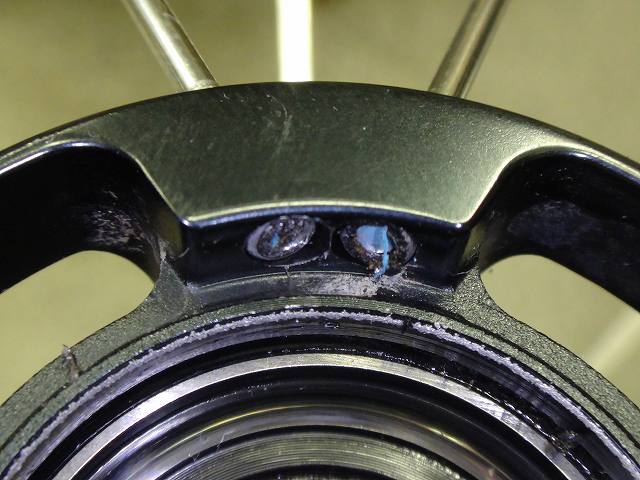
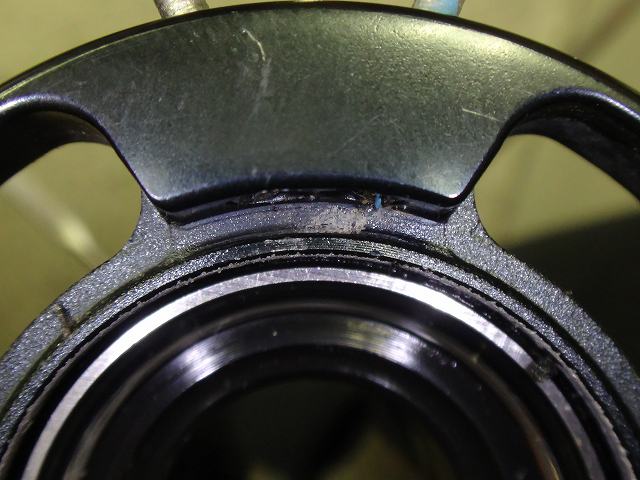
The hub nut for this wheel is part number Y4G3080000,
but when I needed three more for this build and ordered them,
the distributor's website had a trap:
typing in Y4G3080000 actually ordered Y4G3081000 instead—a different length.
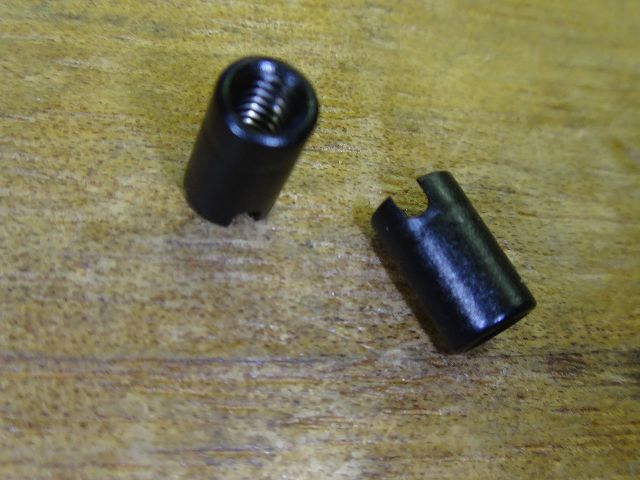
This is Y4G3081000.
It was originally made for MTB wheel WH-M988.
And we actually had these in stock already.
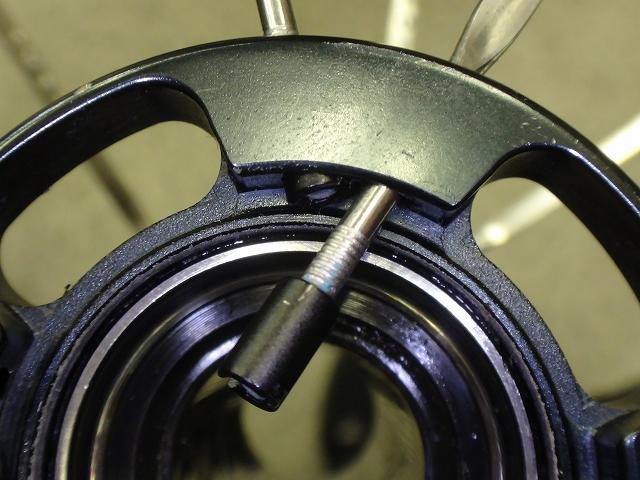
Installing the longer one makes the hub nut protrude past the flange.
It doesn't interfere with hub shaft rotation, so that alone wouldn't matter, but...
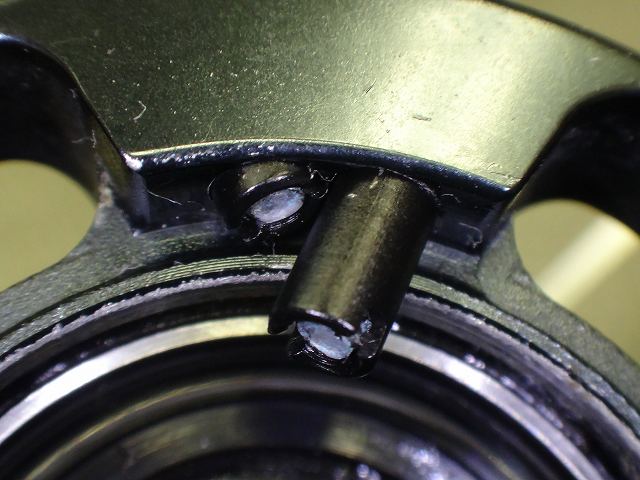
because I'm using phase-offset non-radial zero-cross lacing on the hub side,
the hub nut going in later interferes with the one installed earlier,
so I can't seat the spokes.
Three nuts short, and while long nuts interfere with each other,
long and short don't interfere,
so technically I could build it with three mixed pairs out of eight,
but I'm not doing anything that ugly unless I have to.
I considered grinding down the long nut's length,
but given the difficulty and labor involved,
it's smarter to just order the correct short ones.
I called the distributor to order short hub nuts—I ordered 16 to be safe when I only needed 3—
only to learn that the manufacturer (Shimano) has just 14 in stock.
They probably won't stop production altogether,
but if they do, WH-9000-TL repairs could become impossible.
I bought all 14, but that's not hoarding.
If I'd bought 100 or 200, maybe, but the distributor's stock is just that thin,
and I ended up buying everything they had.
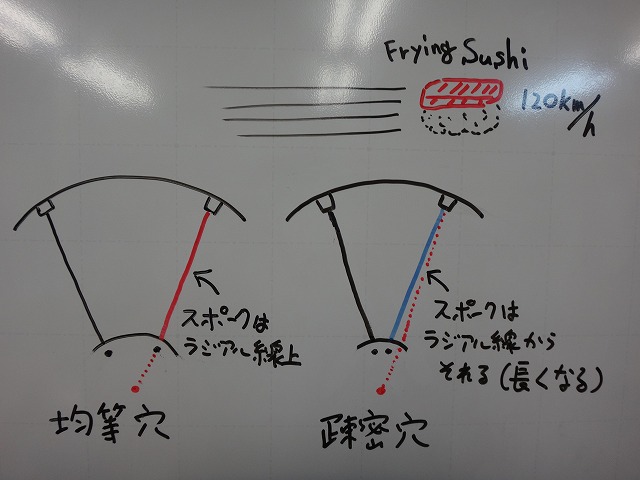
↑The phase offset adds to spoke length compared to radial lacing, but
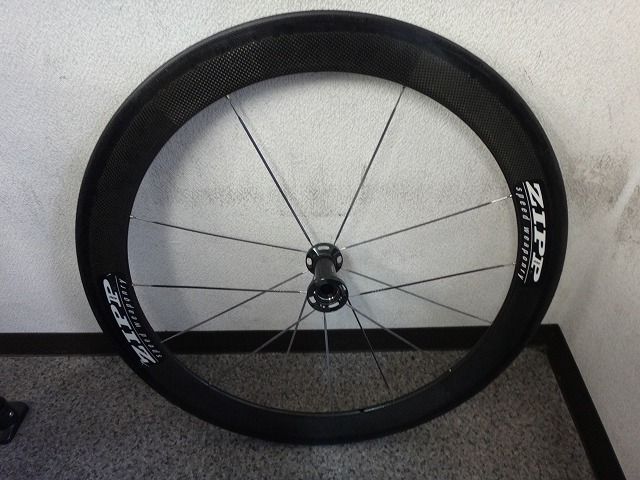
with 13 of the 16 spokes installed,
I got that feeling of "spoke length calculation is probably right."
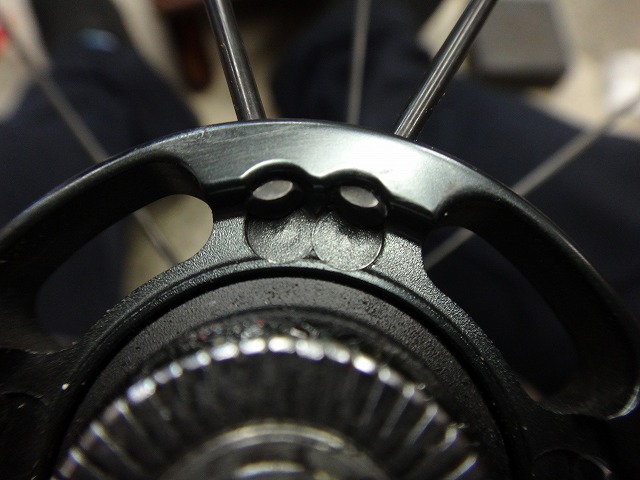
↑By the way, this only works with TL (tubeless) hubs, not
CL (clincher) hubs.
CL hubs are "through" design, not hook-type, so you can't thread the spoke's flattened section through.
TL hubs are also "through" design, but the spoke head attachment (the hub nut) can be added afterward,
so you can thread spokes from the outside.
Since that front wheel couldn't be built today,
next up would be the Nomlab wheel #5 with a PowerTap hub,
but that's short on spokes (
and after that—
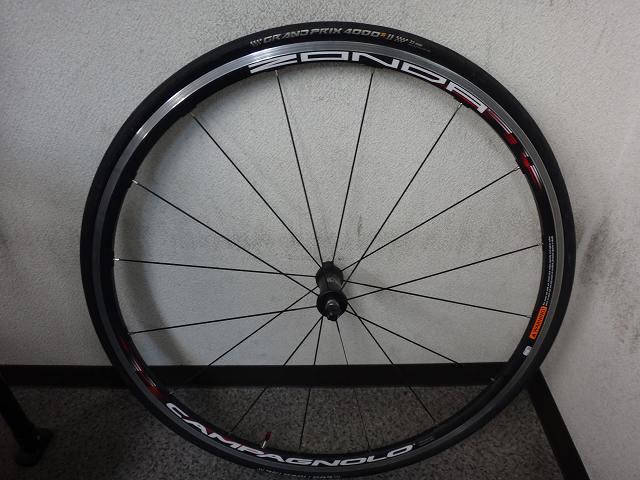
I replaced the Zonda front wheel rim.

↑The bead hook deformation is only here, but
when spinning the wheel, it has the kind of potato-chip runout
that you can tell at a glance won't respond to truing.
Just looking at the removed rim without a glass plate
showed it's warped.
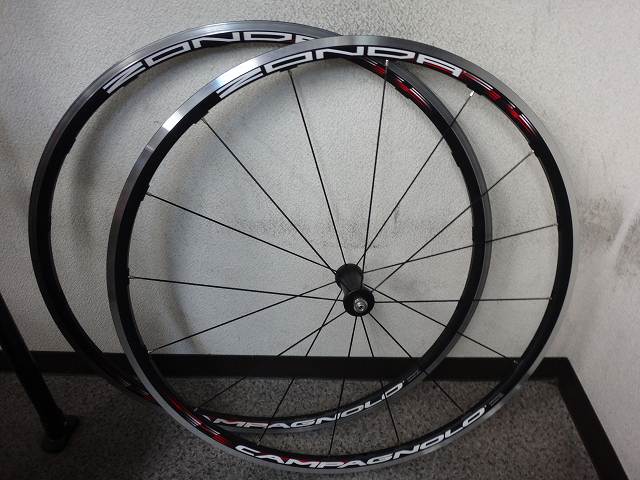
Done.
Reused all the spokes.
Any shop employee who's ever told a customer "Campagnolo and Fulcrum rim replacements require spoke replacement too"
deserves divine judgment in the afterlife. ←seems pretty common actually
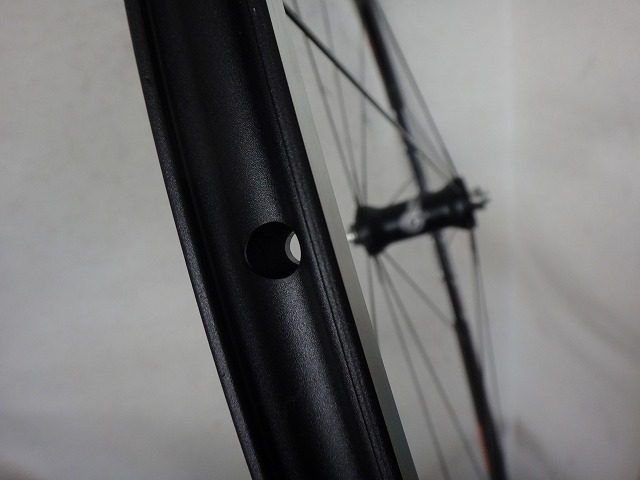

I also aligned the hub shell logo phase visible through the valve hole as much as possible.
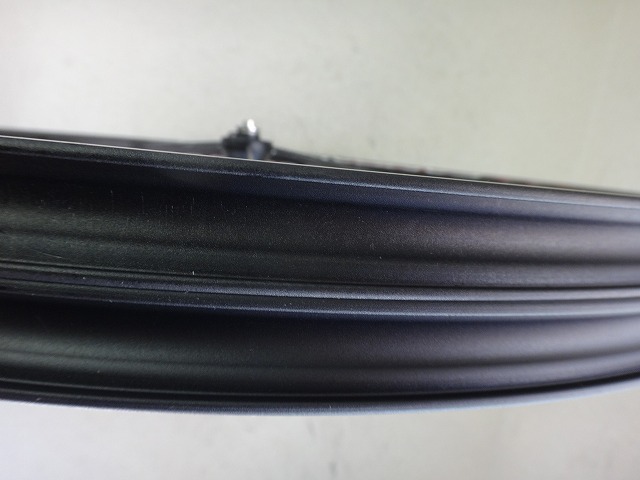
Comparing the old and new rims side by side...
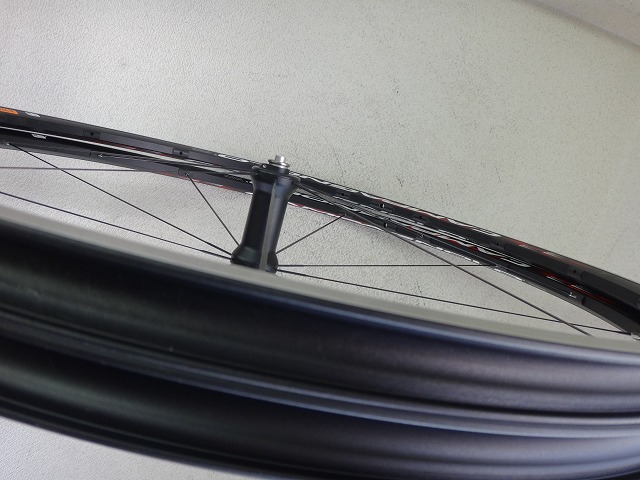
at the far side,
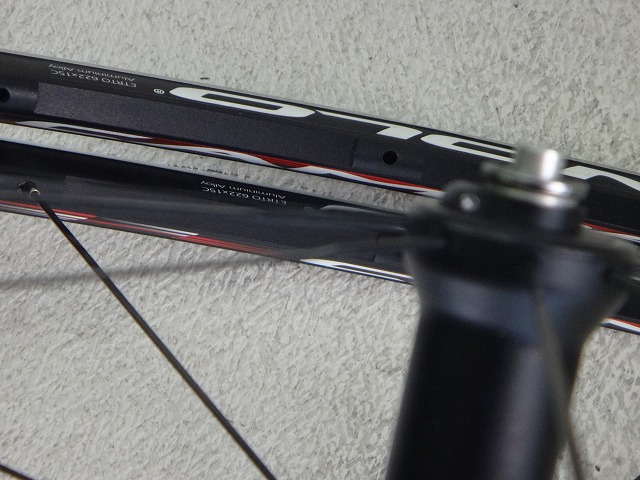
there's about this much gap.