I'm going to write about front single-speed chainring bolts.
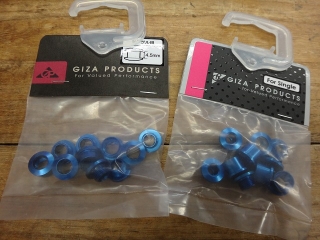
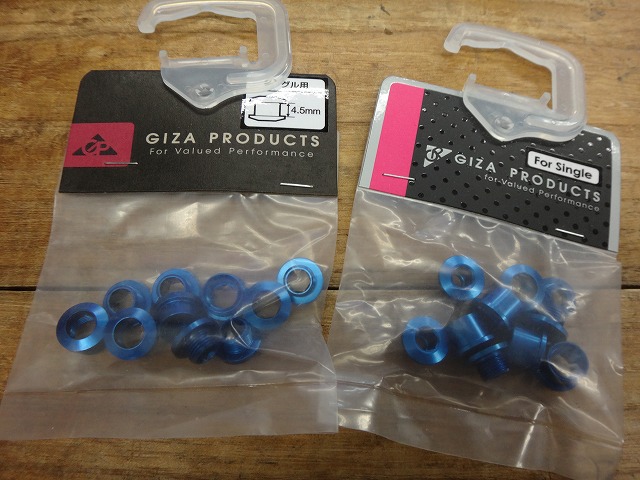
The image above shows front single-speed chainring bolts from the same manufacturer, but
these are different parts with different part numbers.
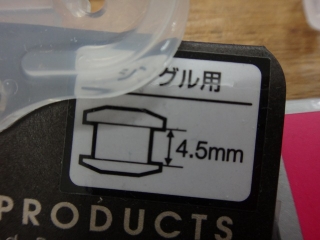
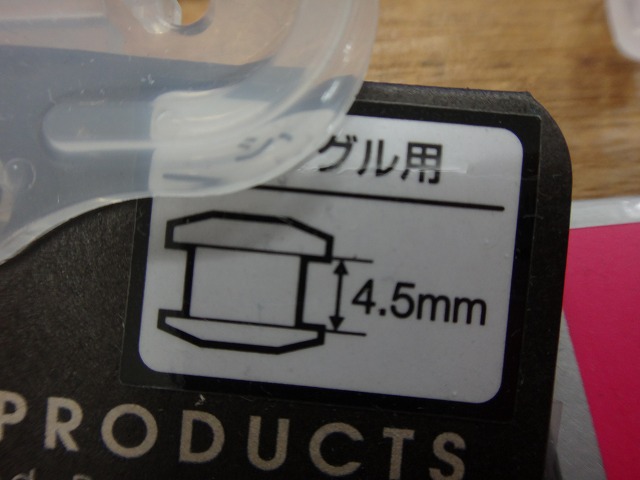
One is for single-speed and the cylindrical portion on the nut side is listed as 4.5mm long, and
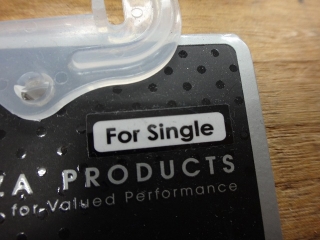
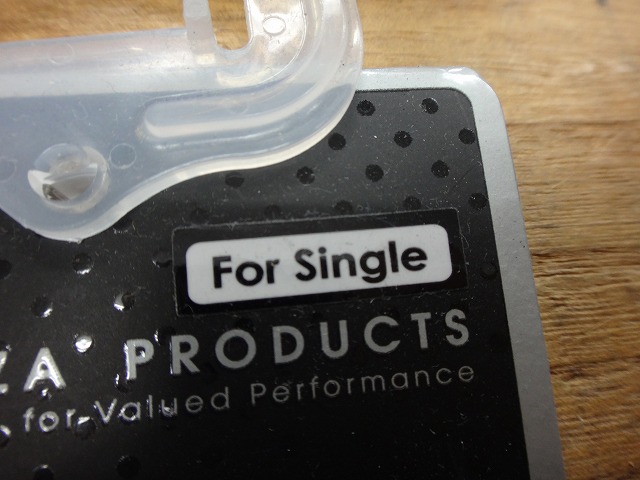
the other just says it's for single-speed.
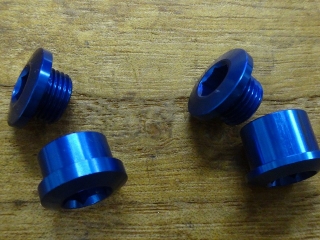
↑The image on the left is 4.5mm, and the one on the right has a longer nut, so if we call the left one 4.5mm, it would be 6.5mm.
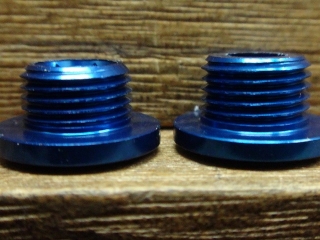
The bolt itself is also different. The 6.5mm one has a longer threaded section,
and there's a faint zone at the base where no threads are cut.
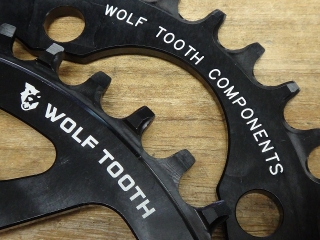
Here's a Wolf Tooth chainring, but
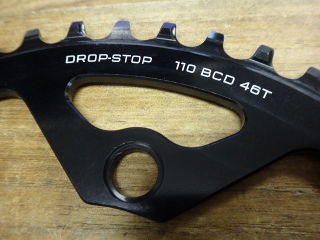
Looking at my collection of 34T, 36T, 44T, 46T, and 48T chainrings,
from the 46T onward, the holes on the outer side of the chainring are stepped and countersunk.
So it seems that from 46T onward is Wolf Tooth's premise for mounting on the outer gear side of the crank.
Update: I received a comment that there's also a countersunk 38T chainring for 4-arm cranks.
The boundary of whether or not it's countersunk might differ depending on the PCD and the intended use (road, MTB, or cyclocross). Thank you for the comment.
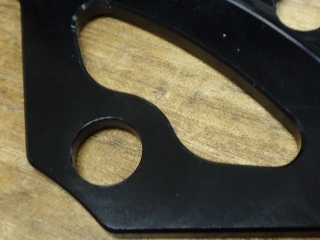
The back side doesn't have a stepped hole.
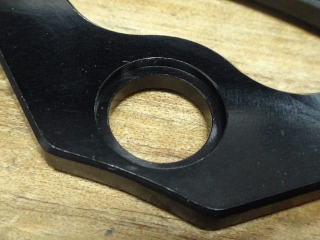
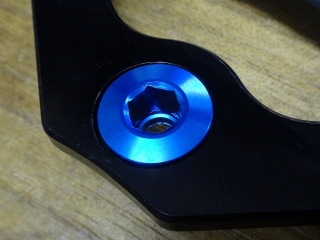
In the stepped hole, the chainring bolt mounts flush, so the bolt head and chainring are essentially flush with each other.
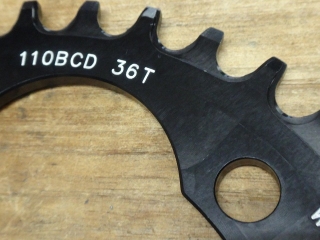
In the case of 44T and below (the image is a 36T), the outer side doesn't have a stepped hole, but
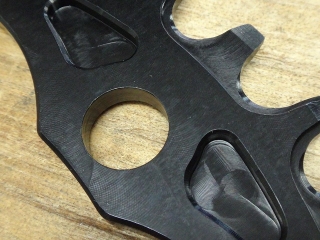
the back side doesn't have a stepped hole either. And yet, Wolf Tooth chainrings are unusually thick,
so the shorter chainring bolt (the 4.5mm one mentioned earlier) isn't long enough to use.
So what do you do? You need to match it up with the actual parts, using a double-speed nut on one side and a single-speed bolt on the other, etc.
The reverse won't work (more on that later).
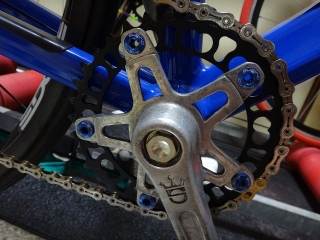
This is my bike in the 4kg range. Currently it has a non-circular chainring from Rotor.
I don't have any particular preference for non-circular designs, so I could switch to Wolf Tooth, but...
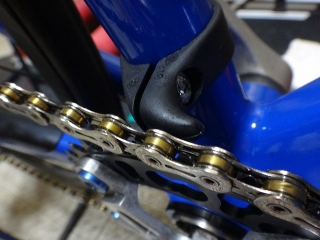
If I switch to Wolf Tooth, I could also remove this chain watcher.
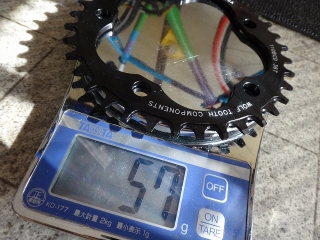
As I mentioned before, Wolf Tooth chainrings are unusually thick, so they're not particularly light.
I suppose that's the price you pay for a single-speed setup with virtually no chain drops.
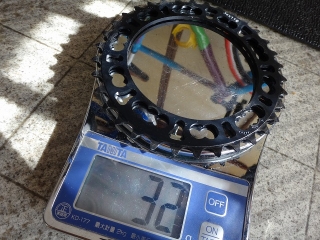
The Rotor chainring is extremely light, with weight relief holes for adjustable phase angle positioning.
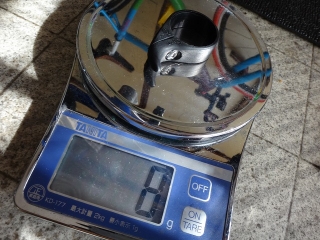
Even after accounting for the weight of the chain watcher, the Rotor is still lighter.
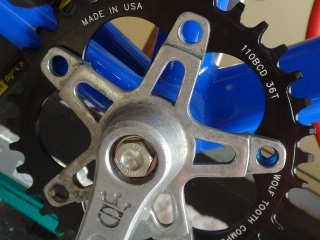
I installed the Wolf Tooth 36T on the inner gear side of the crank.
When mounting it on the 5-arm, shifting the phase slightly more counterclockwise would look better for the gear marking.
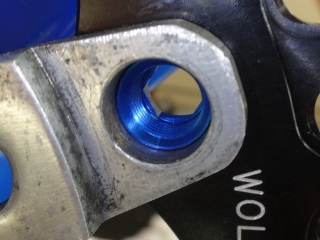
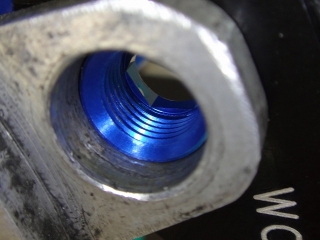
When I attach a 4.5mm nut, the nut barely contacts the crank.
I measured the Wolf Tooth chainring thickness at 3.7mm.
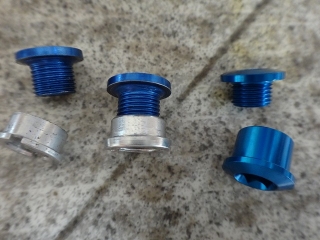
The Rotor chainring has a stepped hole on the back side where it's countersunk.
The chainring nuts used with it (left and center in the image above) have a cylindrical portion 3.6mm long,
so in these cases the nut doesn't contact the crank.
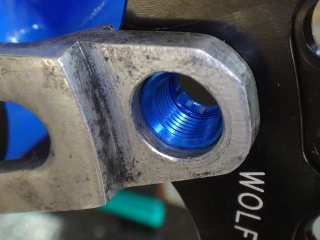
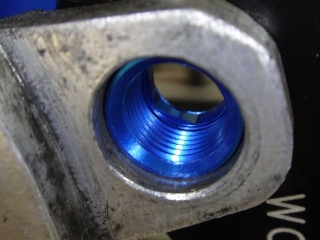
With 6.5mm, the nut contacts the crank just right.
I mentioned using a double-speed nut here earlier, but double-speed nuts also come in different lengths.
The longer ones can protrude slightly beyond flush with the crank.

Here's a diagram of how to install a chainring on a 5-arm crank (nowadays 4-arm is more common).
In this diagram, the chainring is mounted on the outer side.
Also, some manufacturers install the nut from the outside, but as long as the nut contacts both the chainring and the crank, there's no problem.
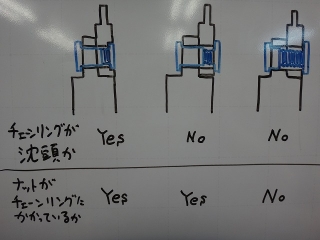
So if you use a 6.5mm nut with a Wolf Tooth of 44T or below, that corresponds to the middle diagram above.
If the nut is too short and there's only bolt threads directly under the chainring,
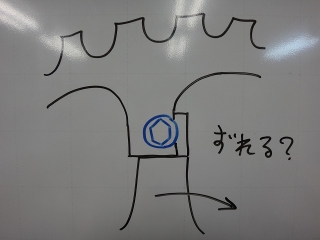
the chainring will shift like this, I believe.
※I had drawn the shifting direction backwards, but I've corrected it.
Whether to mount a single chainring on the outer gear or inner gear side depends on
whether interference with the right chainstay occurs. If it doesn't, mounting it on the inner gear side is better for chainline geometry.
If mounted on the outer gear side and you're in big chainring-small cog, the specially shaped tooth profile that prevents chain drop gets scraped away at an angle,
so again, the inner gear side is preferable when possible. However, mounting on the outer side does look better aesthetically (←subjective opinion),
and in cyclocross, if a chain drop happens, mounting on the outer side won't cause a chain suck, making it easier to recover.

I've positioned the gear marking as described earlier and mounted it on the outer position.

I've only swapped out the bolt to a Sugino Torx-head one.
Since neither chainring has stepped holes, neither will be countersunk regardless of which side it's on.
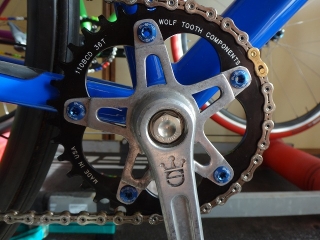
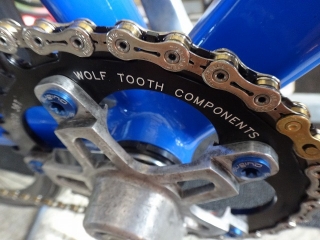
I ended up switching it to the inside anyway. On this one, I prioritized chainline over looks.
The reason I was mounting the Rotor non-circular chainring on the inner gear side was that it was originally a double-speed inner gear,
and I also wanted to install a chain watcher, among other reasons. But if I mounted it on the outer gear side to make it countersunk,
since it's a non-circular chainring, the gear shape would be inverted.
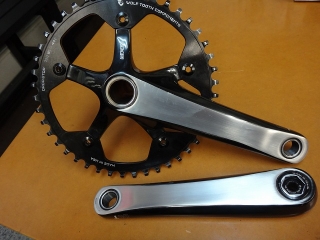
This is my personal SRAM Rival crankset, but
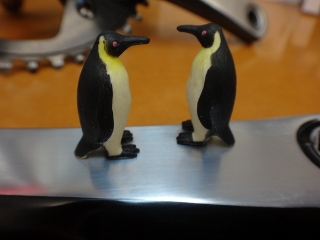
the fact that I've polished the side of the crank arm a bit is neither here nor there, but
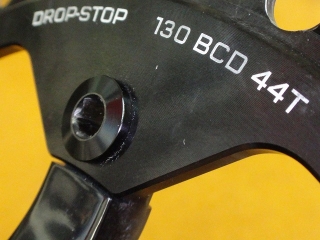
it's a Wolf Tooth 44T, so it's not countersunk. I mounted it on the outer gear side for aesthetic reasons.

Wolf Tooth chainrings are designed so that by shaping the tooth profile to alternately match outer and inner link pins,
the chainring alone prevents the chain from falling off. Naturally, they only come in even tooth counts.
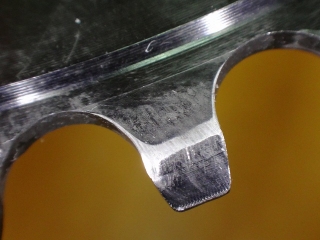
Inner link tooth
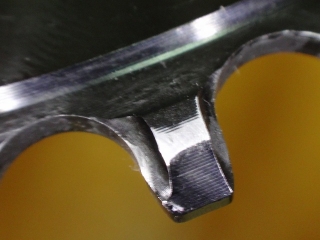
Outer link tooth
The protrusions on the side of the teeth seem to do the work of preventing drop-off.
So why am I not using the crankset with this chainring now? It's because
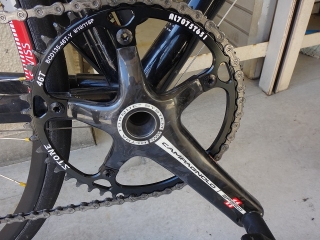
I've acquired a narrow/wide chainring for front single-speed that fits a Campagnolo 165mm crank (PCD 135mm).
By the way, the Rival from earlier is also 165mm. And I went from 44T to 46T while I was at it.
The chainring with teeth alternating between narrow and wide is called wide/narrow in Wolf Tooth naming,
and narrow/wide in RaceFace naming. As long as you understand what's meant, either one is fine.
On this crankset I'm mounting it on the outer gear side, but
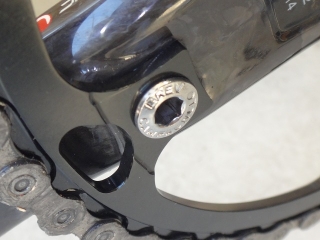
it's because otherwise the chainring won't fit flush against the crank arm.
SRAM RED also comes with a 4-arm crank plus a hidden bolt on the back of the crank,
and with hill climb-specific bikes, if you install a single-speed chainring on the inner gear position,
there will be a gap between the back of the crank and the chainring.
You can just use the already long bolt on the back of the crank as-is, but to fill the gap between the chainring and the crank back by trial-fitting,
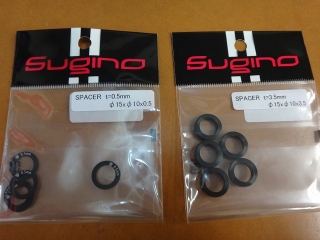
Sugino makes (not originally intended for this purpose) a chainring spacer kit,
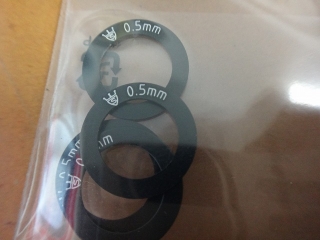
which comes in 0.5mm thick and
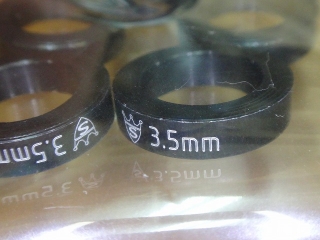
3.5mm thick, and you can solve it that way in some cases.
The image above shows front single-speed chainring bolts from the same manufacturer, but
these are different parts with different part numbers.
One is for single-speed and the cylindrical portion on the nut side is listed as 4.5mm long, and
the other just says it's for single-speed.
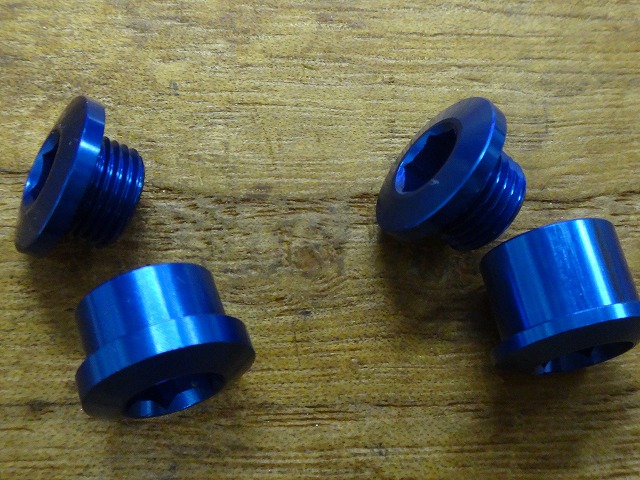
↑The image on the left is 4.5mm, and the one on the right has a longer nut, so if we call the left one 4.5mm, it would be 6.5mm.
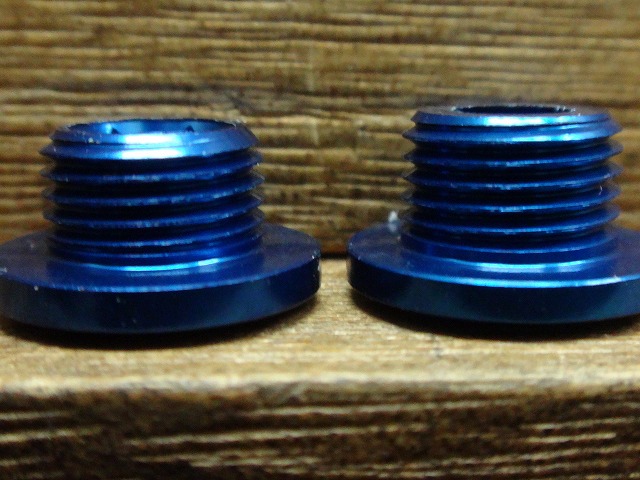
The bolt itself is also different. The 6.5mm one has a longer threaded section,
and there's a faint zone at the base where no threads are cut.
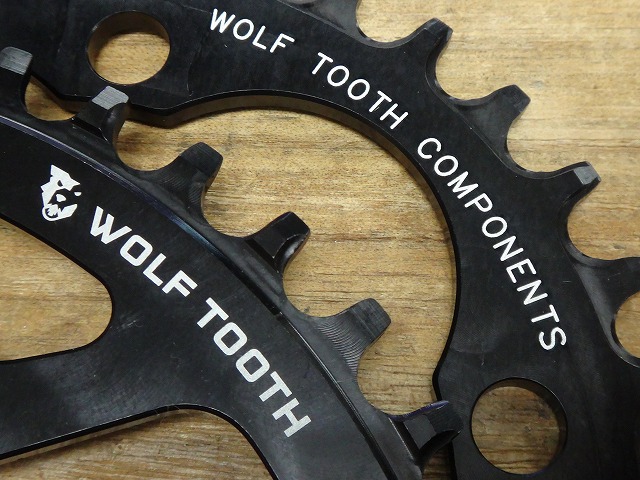
Here's a Wolf Tooth chainring, but
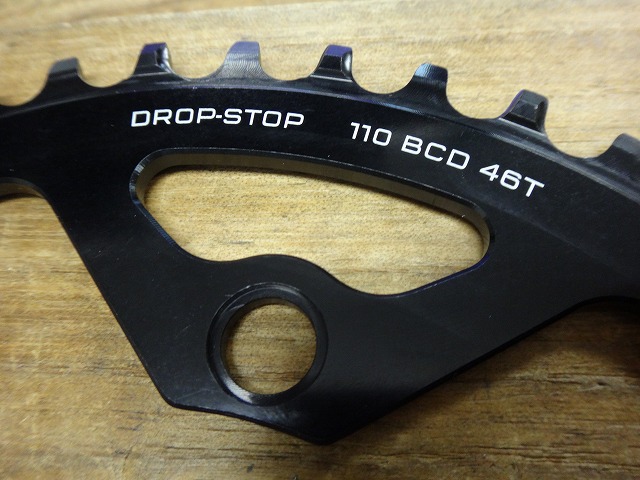
Looking at my collection of 34T, 36T, 44T, 46T, and 48T chainrings,
from the 46T onward, the holes on the outer side of the chainring are stepped and countersunk.
So it seems that from 46T onward is Wolf Tooth's premise for mounting on the outer gear side of the crank.
Update: I received a comment that there's also a countersunk 38T chainring for 4-arm cranks.
The boundary of whether or not it's countersunk might differ depending on the PCD and the intended use (road, MTB, or cyclocross). Thank you for the comment.
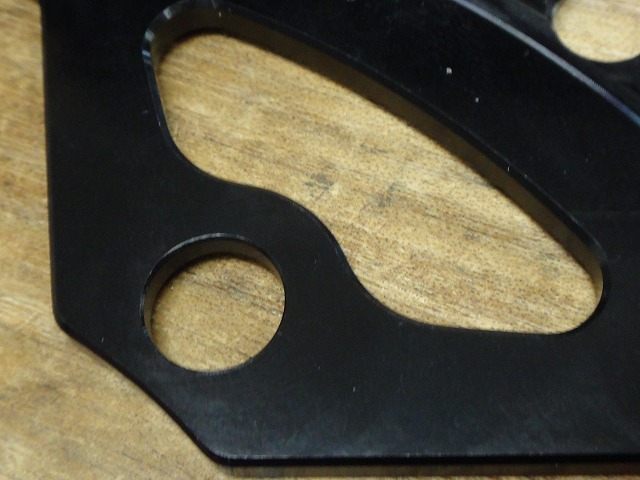
The back side doesn't have a stepped hole.

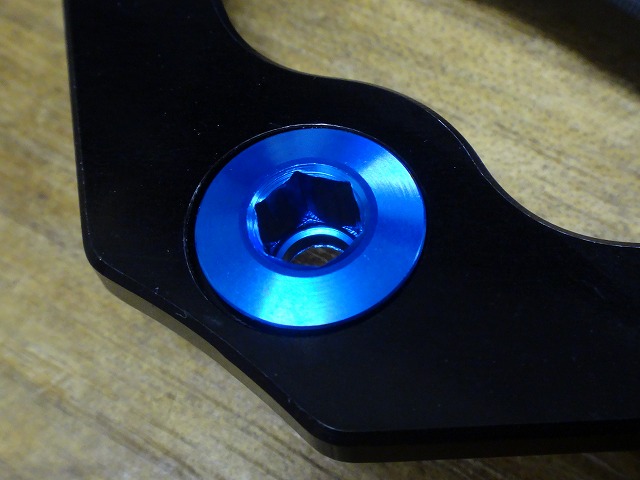
In the stepped hole, the chainring bolt mounts flush, so the bolt head and chainring are essentially flush with each other.
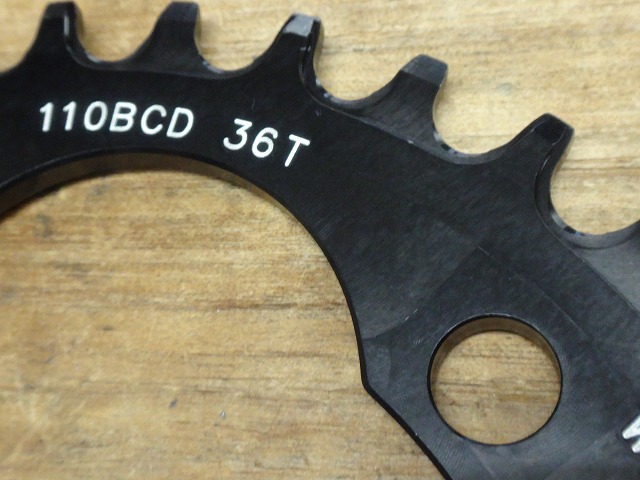
In the case of 44T and below (the image is a 36T), the outer side doesn't have a stepped hole, but
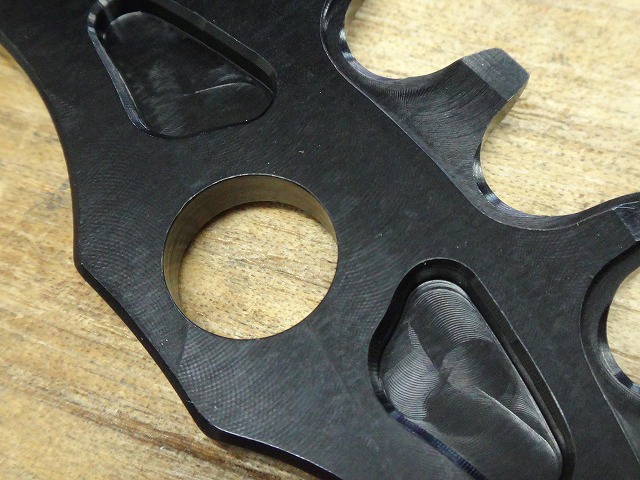
the back side doesn't have a stepped hole either. And yet, Wolf Tooth chainrings are unusually thick,
so the shorter chainring bolt (the 4.5mm one mentioned earlier) isn't long enough to use.
So what do you do? You need to match it up with the actual parts, using a double-speed nut on one side and a single-speed bolt on the other, etc.
The reverse won't work (more on that later).
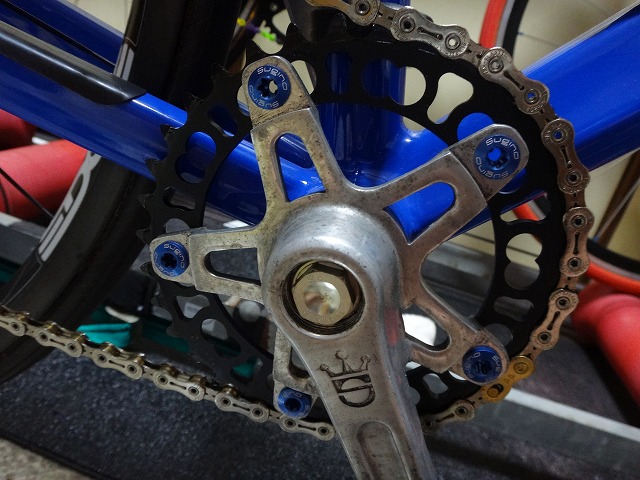
This is my bike in the 4kg range. Currently it has a non-circular chainring from Rotor.
I don't have any particular preference for non-circular designs, so I could switch to Wolf Tooth, but...

If I switch to Wolf Tooth, I could also remove this chain watcher.
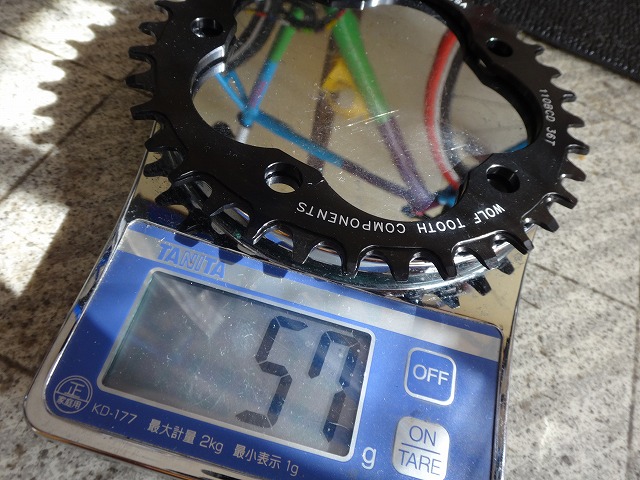
As I mentioned before, Wolf Tooth chainrings are unusually thick, so they're not particularly light.
I suppose that's the price you pay for a single-speed setup with virtually no chain drops.
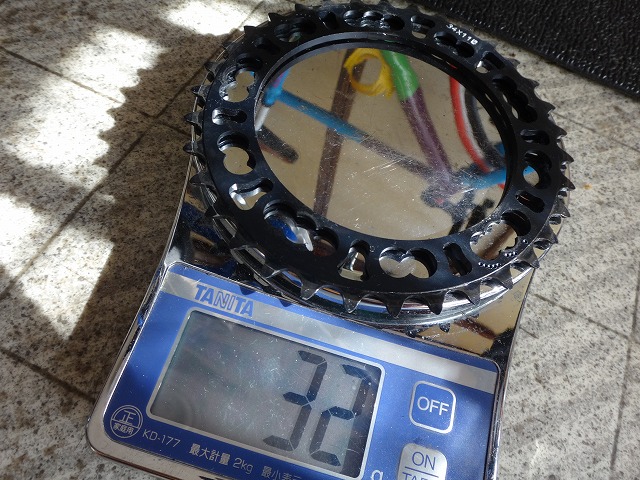
The Rotor chainring is extremely light, with weight relief holes for adjustable phase angle positioning.
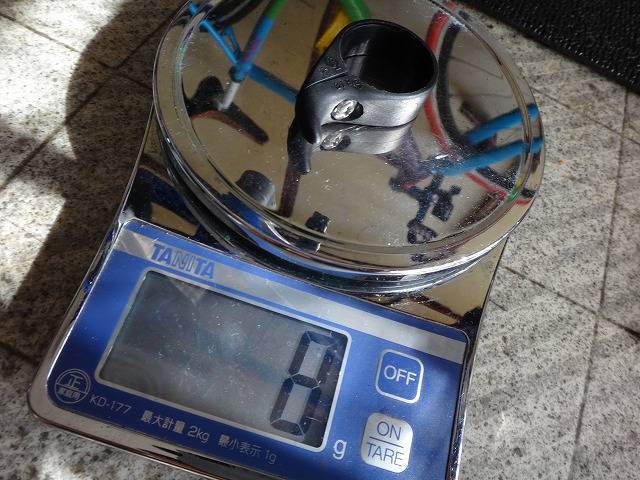
Even after accounting for the weight of the chain watcher, the Rotor is still lighter.
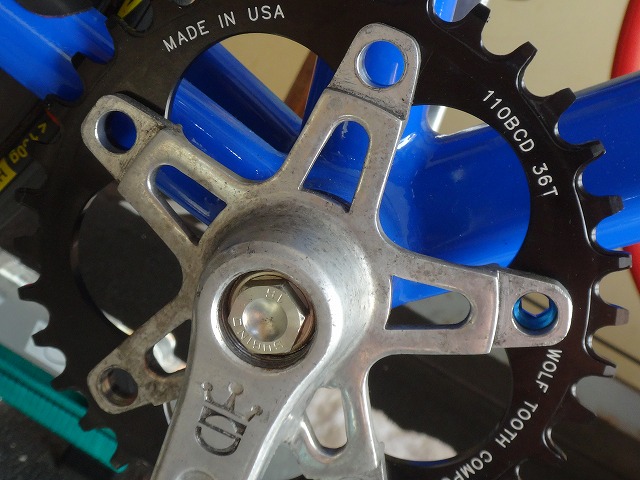
I installed the Wolf Tooth 36T on the inner gear side of the crank.
When mounting it on the 5-arm, shifting the phase slightly more counterclockwise would look better for the gear marking.
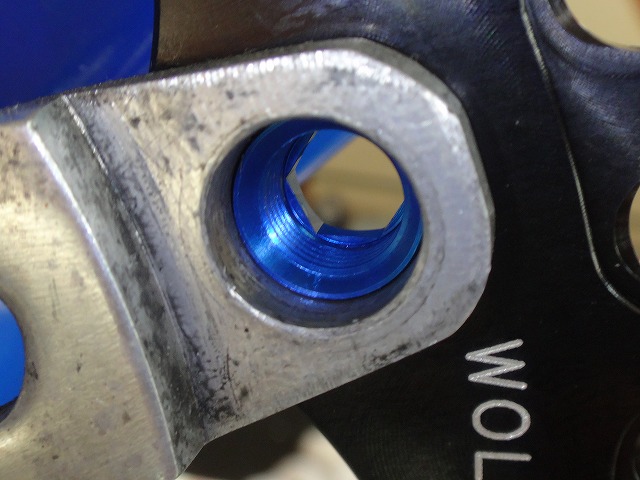
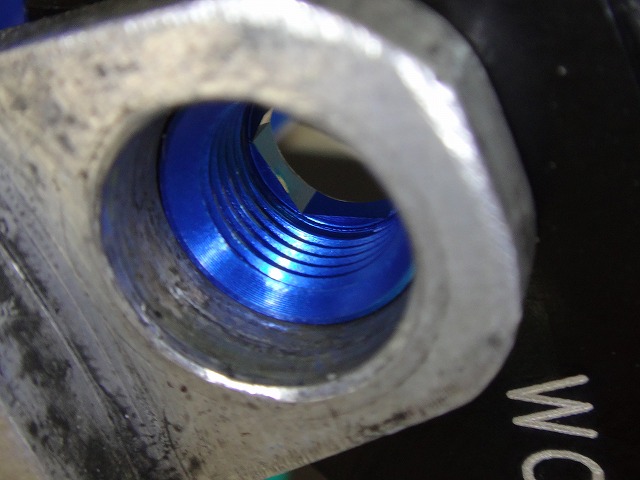
When I attach a 4.5mm nut, the nut barely contacts the crank.
I measured the Wolf Tooth chainring thickness at 3.7mm.

The Rotor chainring has a stepped hole on the back side where it's countersunk.
The chainring nuts used with it (left and center in the image above) have a cylindrical portion 3.6mm long,
so in these cases the nut doesn't contact the crank.
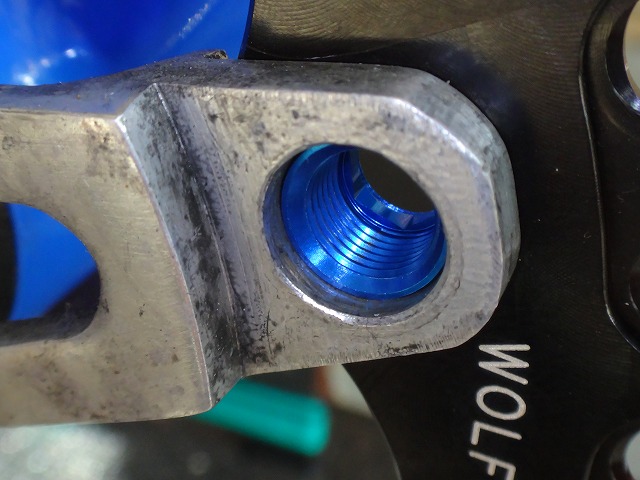
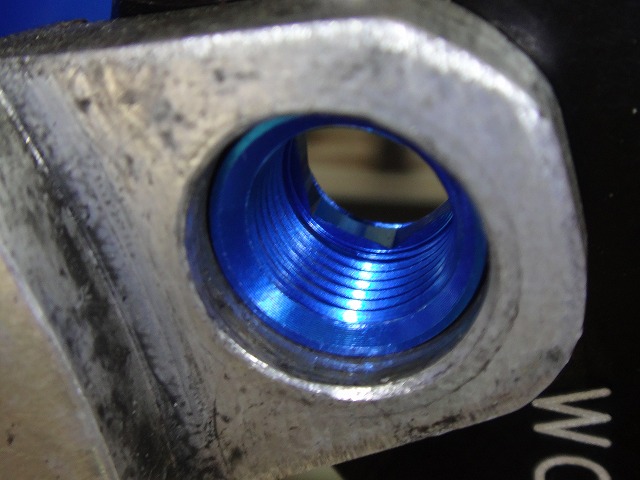
With 6.5mm, the nut contacts the crank just right.
I mentioned using a double-speed nut here earlier, but double-speed nuts also come in different lengths.
The longer ones can protrude slightly beyond flush with the crank.
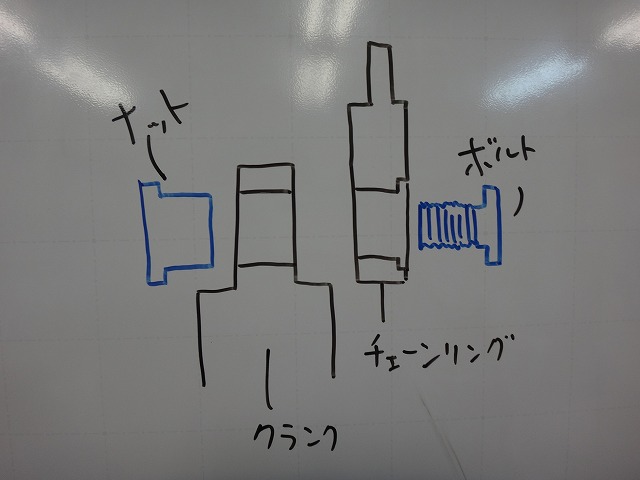
Here's a diagram of how to install a chainring on a 5-arm crank (nowadays 4-arm is more common).
In this diagram, the chainring is mounted on the outer side.
Also, some manufacturers install the nut from the outside, but as long as the nut contacts both the chainring and the crank, there's no problem.
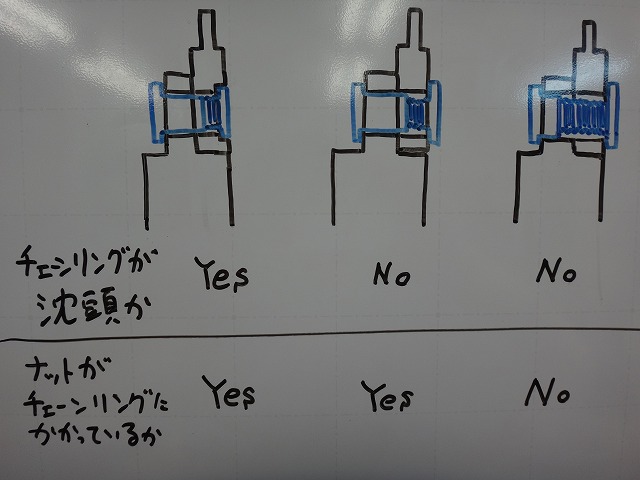
So if you use a 6.5mm nut with a Wolf Tooth of 44T or below, that corresponds to the middle diagram above.
If the nut is too short and there's only bolt threads directly under the chainring,
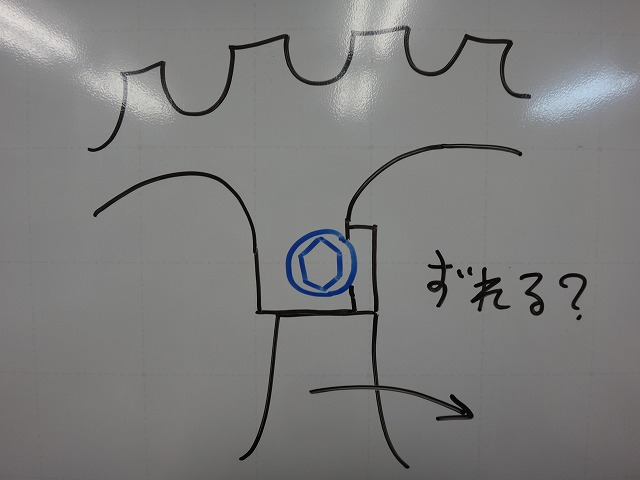
the chainring will shift like this, I believe.
※I had drawn the shifting direction backwards, but I've corrected it.
Whether to mount a single chainring on the outer gear or inner gear side depends on
whether interference with the right chainstay occurs. If it doesn't, mounting it on the inner gear side is better for chainline geometry.
If mounted on the outer gear side and you're in big chainring-small cog, the specially shaped tooth profile that prevents chain drop gets scraped away at an angle,
so again, the inner gear side is preferable when possible. However, mounting on the outer side does look better aesthetically (←subjective opinion),
and in cyclocross, if a chain drop happens, mounting on the outer side won't cause a chain suck, making it easier to recover.
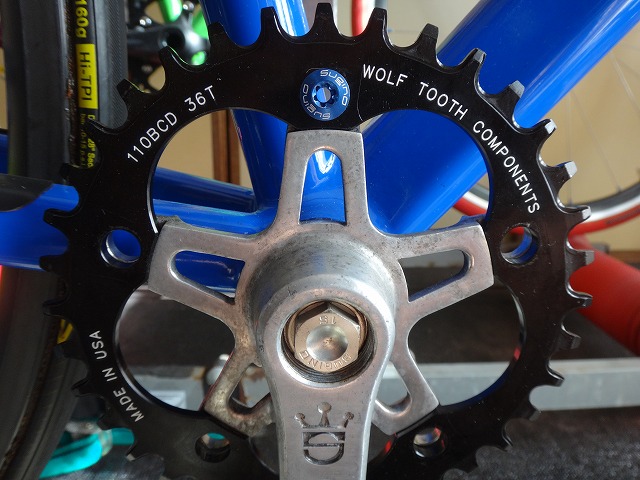
I've positioned the gear marking as described earlier and mounted it on the outer position.

I've only swapped out the bolt to a Sugino Torx-head one.
Since neither chainring has stepped holes, neither will be countersunk regardless of which side it's on.
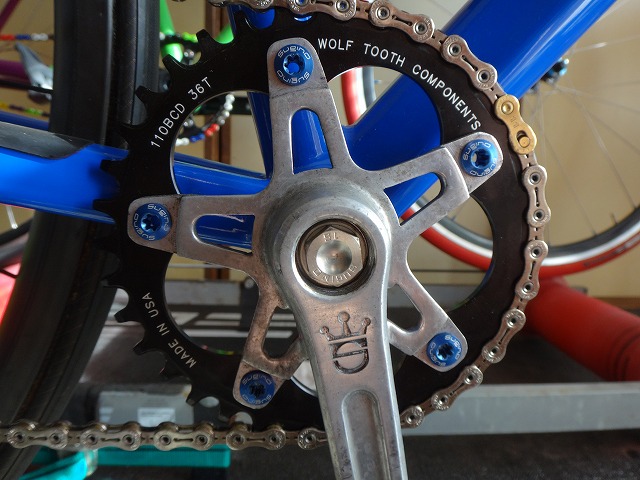
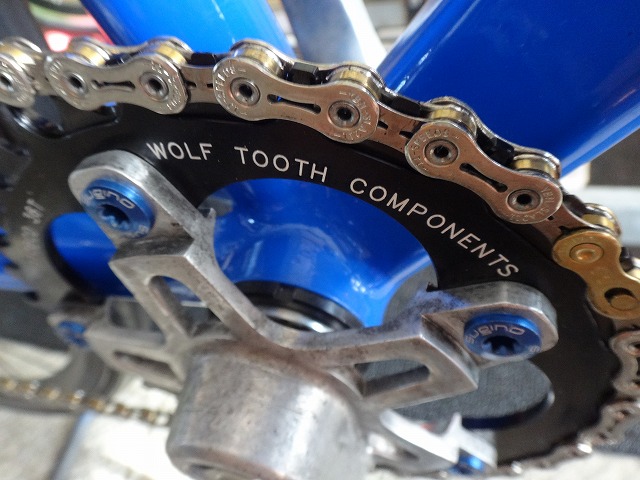
I ended up switching it to the inside anyway. On this one, I prioritized chainline over looks.
The reason I was mounting the Rotor non-circular chainring on the inner gear side was that it was originally a double-speed inner gear,
and I also wanted to install a chain watcher, among other reasons. But if I mounted it on the outer gear side to make it countersunk,
since it's a non-circular chainring, the gear shape would be inverted.

This is my personal SRAM Rival crankset, but
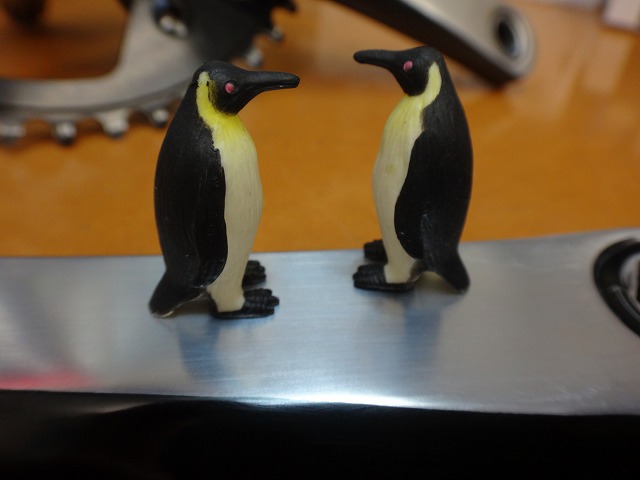
the fact that I've polished the side of the crank arm a bit is neither here nor there, but
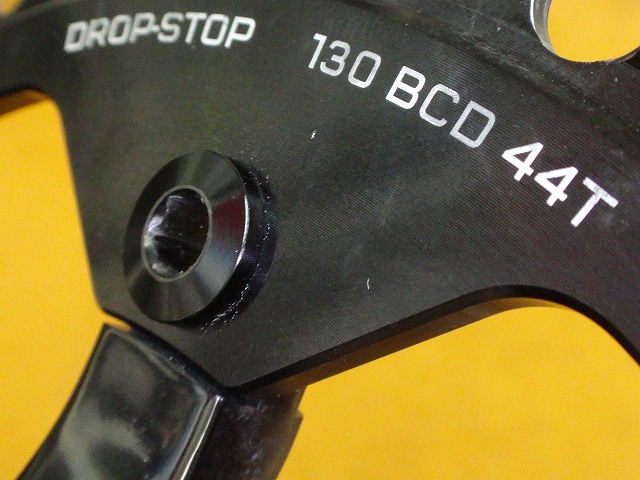
it's a Wolf Tooth 44T, so it's not countersunk. I mounted it on the outer gear side for aesthetic reasons.

Wolf Tooth chainrings are designed so that by shaping the tooth profile to alternately match outer and inner link pins,
the chainring alone prevents the chain from falling off. Naturally, they only come in even tooth counts.
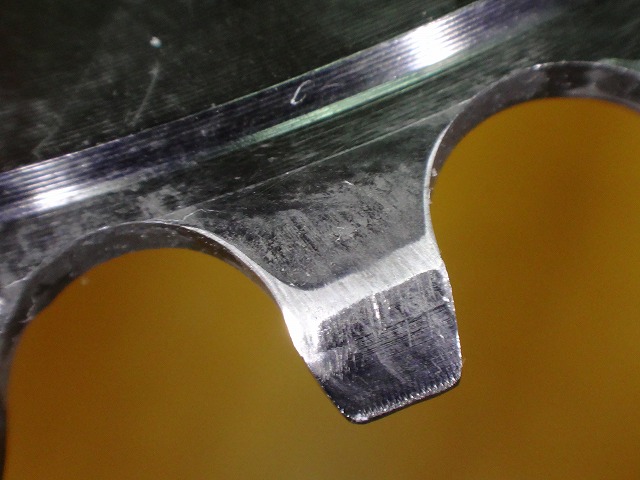
Inner link tooth

Outer link tooth
The protrusions on the side of the teeth seem to do the work of preventing drop-off.
So why am I not using the crankset with this chainring now? It's because
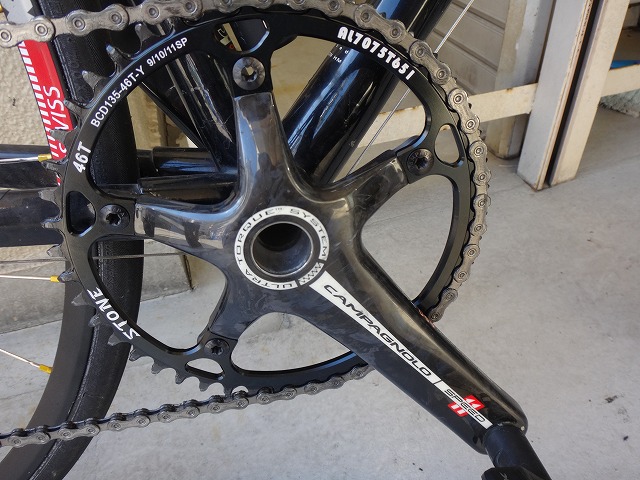
I've acquired a narrow/wide chainring for front single-speed that fits a Campagnolo 165mm crank (PCD 135mm).
By the way, the Rival from earlier is also 165mm. And I went from 44T to 46T while I was at it.
The chainring with teeth alternating between narrow and wide is called wide/narrow in Wolf Tooth naming,
and narrow/wide in RaceFace naming. As long as you understand what's meant, either one is fine.
On this crankset I'm mounting it on the outer gear side, but
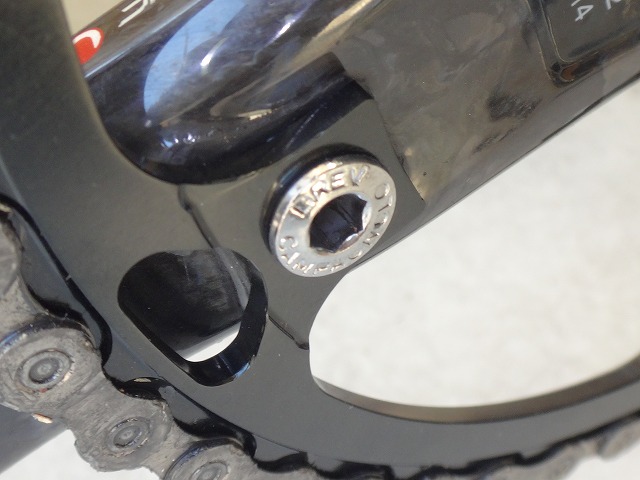
it's because otherwise the chainring won't fit flush against the crank arm.
SRAM RED also comes with a 4-arm crank plus a hidden bolt on the back of the crank,
and with hill climb-specific bikes, if you install a single-speed chainring on the inner gear position,
there will be a gap between the back of the crank and the chainring.
You can just use the already long bolt on the back of the crank as-is, but to fill the gap between the chainring and the crank back by trial-fitting,
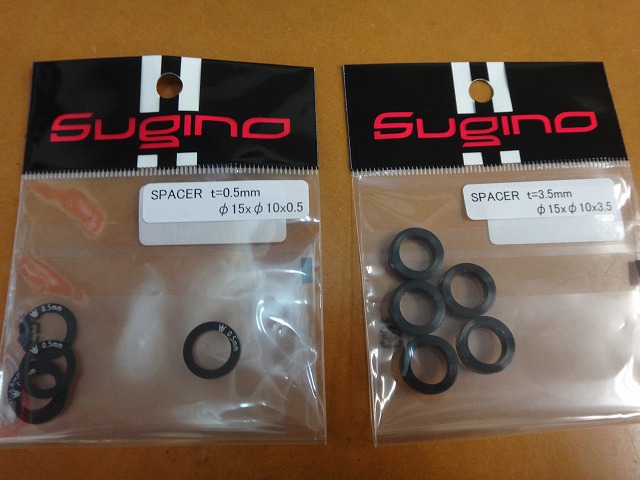
Sugino makes (not originally intended for this purpose) a chainring spacer kit,

which comes in 0.5mm thick and

3.5mm thick, and you can solve it that way in some cases.