I received a Ksyrium SL and a Ksyrium SL Premium from a customer.
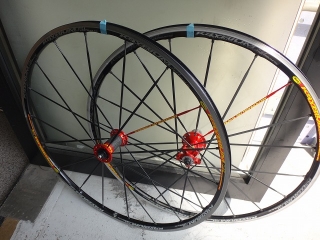
There are various Ksyrium SL models out there, but
this one is the 2007 and onward model that generalized
the Ksyrium ES (Edition Special) released in 2006
as a 10th anniversary special for Helium,
rather than as a limited edition.
From a distance, it's hard to tell the difference from the ES.

The Ksyrium SL Premium came out in 2008.
It wasn't supplied to pro teams, had only WO rim specifications, featured black cosmetics,
and was the "Premium" series Ksyrium SL with titanium used
on the rear hub right end and the quick release axle shafts front and rear.
In the same year, a Cosmic Carbone SL Premium was also released.
2008 was the year the original R-SYS with silver rims and silver hubs debuted, but
in 2009, an R-SYS Premium appeared.
Being premium, it had black cosmetics and titanium right end and front/rear quick release shafts.
In 2009, the Cosmic Carbone SL had black-themed rim stickers,
giving it a look almost identical to the Premium,
so the Premium version was discontinued.
In other words, the Cosmic Carbone SL Premium was only available as a 2008 model.
The Ksyrium SL Premium continued in 2009 and
was sold alongside the red SL from the previous image.
These two pairs of Ksyrium SL both belong to the same customer, but
they wanted a hub overhaul and (if necessary) bearing replacement,
truing, and centering.
By the way, the Racing Zero Carbon from the previous article
is also a wheel from the same customer.
Before touching the wheels, I cleaned them thoroughly.
The tape on the valve hole is to prevent water intrusion.
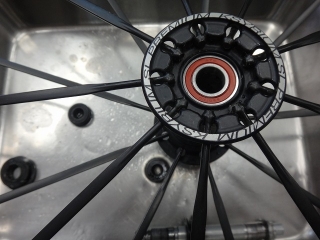
Starting with the Premium's front wheel.
The Premium supposedly has a bearing replacement history,
but I found no damage warranting replacement.
It has OEM or contact-seal type universal bearings installed.
As I've mentioned before,
Mavic ensures dust and water resistance by using contact-seal bearings,
so the hub's dust seal performance isn't particularly high.
There are many examples where this bearing gets replaced with
non-contact seal steel ball bearings or
ceramic bearings (to my knowledge, 100% non-contact seal types only)
for the reason that "rotation feels sluggish,"
which actually represents a major downgrade in longevity.
Shops recommending such modifications is fine in itself,
as long as they explain the risks involved.
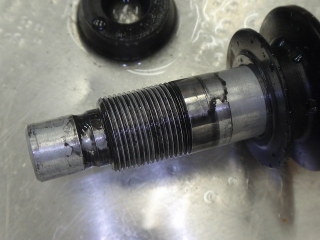
Cleaning the hub axle dirt
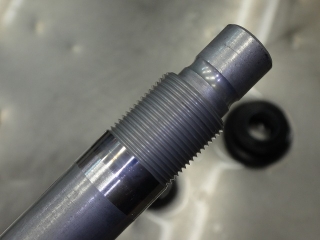
and applying a thin coat of grease before reassembly
is all that needs to be done to the hub.
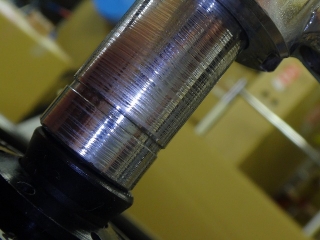
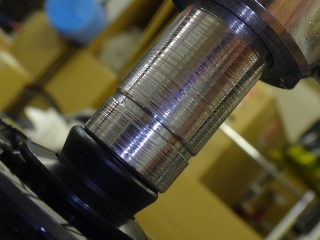
The preliminary centering in this image was spot-on,
but as I eliminated various small runouts, a slight offset appeared temporarily,
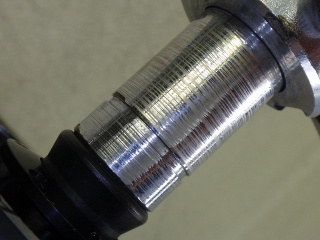
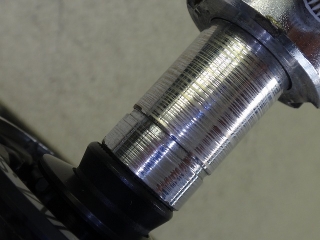
so I trued the wheel and then re-centered it.
Next, the rear wheel.
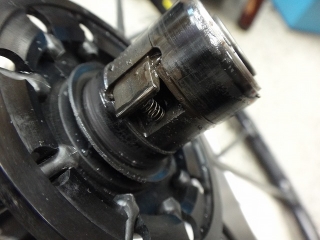
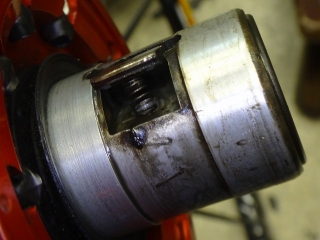
When I spun the freewheel body by hand on both Ksyriums,
there was considerable resistance, so the ratchet area needed cleaning and application of specialized oil.
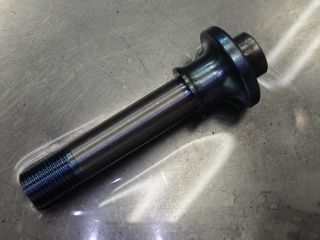
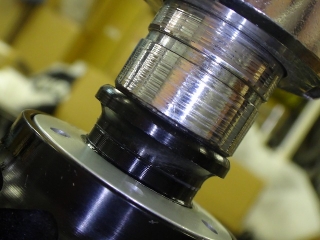
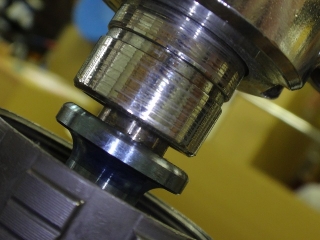
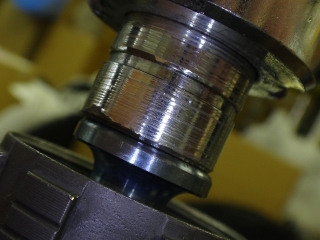
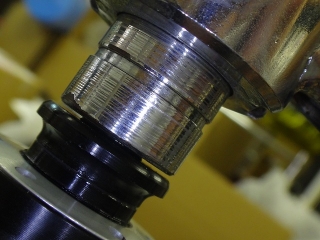
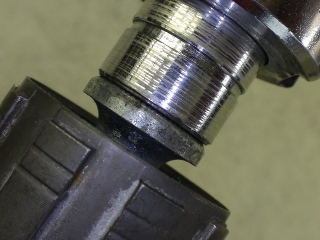
↑This is one of the unique specifications of the Premium series: the titanium right end.
For some reason it's colored blue,
which is the same color used on Mavic's titanium quick release axles.
This right end has no spare parts number,
and there's no way to obtain it except by buying a Premium rear wheel.
So you can't effectively convert a non-Premium rear wheel to Premium status.
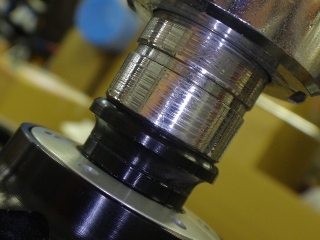
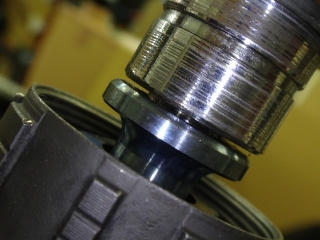
The rim had shifted toward the freewheel side.
However, the spoke tension on the non-freewheel side had clearly loosened,
so I needed to tighten the freewheel side further
The optimal solution is to create maximum centering offset and then
tighten the non-freewheel side until the wheel center comes into alignment.
Even with the same amount of nipple tightening, the rim moves more on the non-freewheel side,
so even if I work hard to tighten the freewheel side as much as possible,
the center comes out with just slight tightening on the non-freewheel side.
In fact, without tightening that much, the centering offset reversed direction.
Since the freewheel side was tensioned almost to its limit,
I had no choice but to slightly loosen the non-freewheel side.
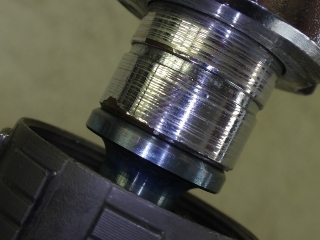
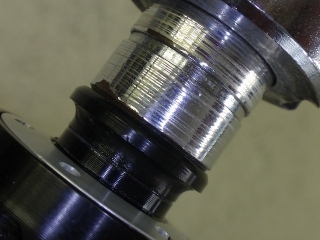
I've centered it.
Next, the rear wheel of the red Ksyrium.

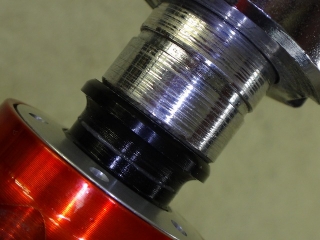
The rotation of the rear hub's left-side bearing was rough,
so I determined replacement was necessary
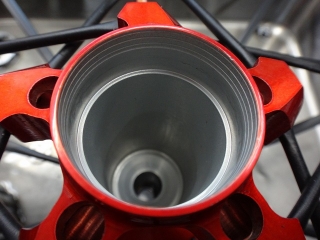
and removed the bearing to clean the hub.
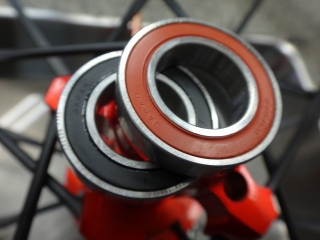
Mavic's rear left bearing size is usually 6903.
The front bearings are most often 6901.
So I make an effort to keep both of those types with contact seals (orange) on hand.
The black seal bearing shown in the image above is non-contact type.
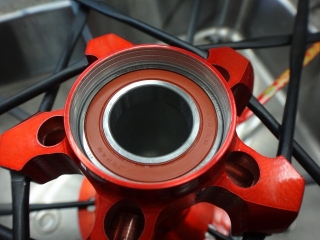
I installed a new contact-seal bearing.
While this is a universal bearing, with Mavic OEM bearings,
one side typically has a contact seal (orange),
while the other side has a metal seal (non-contact and gapped all over),
quite often.
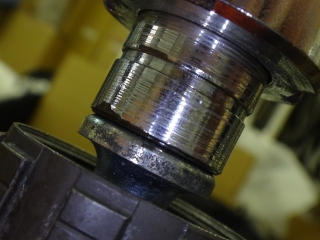
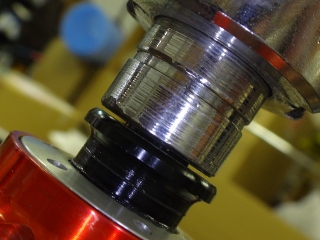
The rim was shifted toward the non-freewheel side.
Unlike the Premium's rear wheel, there was almost no tension sag,
so I didn't do any intentional tightening
beyond the freewheel-side tightening required for centering.
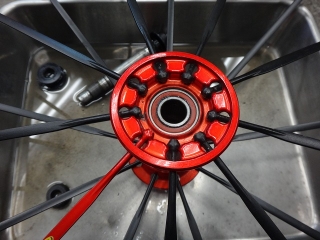
Finally, the front wheel of the red Ksyrium.
The bearings showed no signs of damage.
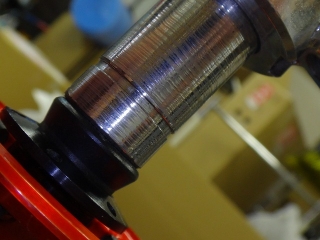
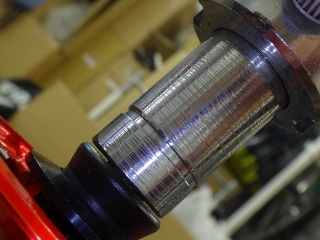
Depending on the phase, there was no centering offset,
but there was a position where the runout was quite pronounced, and when I checked there, offset was detected.
The large lateral runout phase made me suspect spoke deformation,
but careful inspection found no bent spokes.
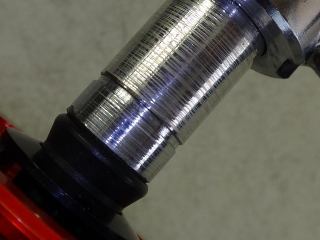
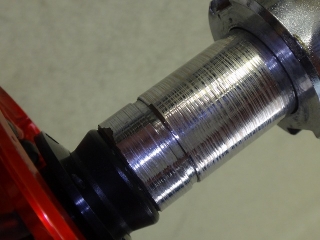
I trued and centered the wheel.
This one gave me the most trouble during the truing work.

There are various Ksyrium SL models out there, but
this one is the 2007 and onward model that generalized
the Ksyrium ES (Edition Special) released in 2006
as a 10th anniversary special for Helium,
rather than as a limited edition.
From a distance, it's hard to tell the difference from the ES.
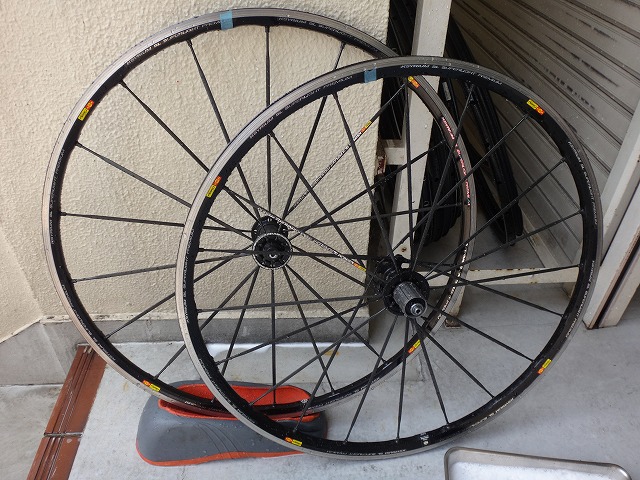
The Ksyrium SL Premium came out in 2008.
It wasn't supplied to pro teams, had only WO rim specifications, featured black cosmetics,
and was the "Premium" series Ksyrium SL with titanium used
on the rear hub right end and the quick release axle shafts front and rear.
In the same year, a Cosmic Carbone SL Premium was also released.
2008 was the year the original R-SYS with silver rims and silver hubs debuted, but
in 2009, an R-SYS Premium appeared.
Being premium, it had black cosmetics and titanium right end and front/rear quick release shafts.
In 2009, the Cosmic Carbone SL had black-themed rim stickers,
giving it a look almost identical to the Premium,
so the Premium version was discontinued.
In other words, the Cosmic Carbone SL Premium was only available as a 2008 model.
The Ksyrium SL Premium continued in 2009 and
was sold alongside the red SL from the previous image.
These two pairs of Ksyrium SL both belong to the same customer, but
they wanted a hub overhaul and (if necessary) bearing replacement,
truing, and centering.
By the way, the Racing Zero Carbon from the previous article
is also a wheel from the same customer.
Before touching the wheels, I cleaned them thoroughly.
The tape on the valve hole is to prevent water intrusion.

Starting with the Premium's front wheel.
The Premium supposedly has a bearing replacement history,
but I found no damage warranting replacement.
It has OEM or contact-seal type universal bearings installed.
As I've mentioned before,
Mavic ensures dust and water resistance by using contact-seal bearings,
so the hub's dust seal performance isn't particularly high.
There are many examples where this bearing gets replaced with
non-contact seal steel ball bearings or
ceramic bearings (to my knowledge, 100% non-contact seal types only)
for the reason that "rotation feels sluggish,"
which actually represents a major downgrade in longevity.
Shops recommending such modifications is fine in itself,
as long as they explain the risks involved.

Cleaning the hub axle dirt

and applying a thin coat of grease before reassembly
is all that needs to be done to the hub.


The preliminary centering in this image was spot-on,
but as I eliminated various small runouts, a slight offset appeared temporarily,


so I trued the wheel and then re-centered it.

Next, the rear wheel.
When I spun the freewheel body by hand on both Ksyriums,
there was considerable resistance, so the ratchet area needed cleaning and application of specialized oil.

↑This is one of the unique specifications of the Premium series: the titanium right end.
For some reason it's colored blue,
which is the same color used on Mavic's titanium quick release axles.
This right end has no spare parts number,
and there's no way to obtain it except by buying a Premium rear wheel.
So you can't effectively convert a non-Premium rear wheel to Premium status.


The rim had shifted toward the freewheel side.
However, the spoke tension on the non-freewheel side had clearly loosened,
so I needed to tighten the freewheel side further


The optimal solution is to create maximum centering offset and then
tighten the non-freewheel side until the wheel center comes into alignment.
Even with the same amount of nipple tightening, the rim moves more on the non-freewheel side,
so even if I work hard to tighten the freewheel side as much as possible,
the center comes out with just slight tightening on the non-freewheel side.


In fact, without tightening that much, the centering offset reversed direction.
Since the freewheel side was tensioned almost to its limit,
I had no choice but to slightly loosen the non-freewheel side.


I've centered it.

Next, the rear wheel of the red Ksyrium.

The rotation of the rear hub's left-side bearing was rough,
so I determined replacement was necessary

and removed the bearing to clean the hub.

Mavic's rear left bearing size is usually 6903.
The front bearings are most often 6901.
So I make an effort to keep both of those types with contact seals (orange) on hand.
The black seal bearing shown in the image above is non-contact type.

I installed a new contact-seal bearing.
While this is a universal bearing, with Mavic OEM bearings,
one side typically has a contact seal (orange),
while the other side has a metal seal (non-contact and gapped all over),
quite often.


The rim was shifted toward the non-freewheel side.


Unlike the Premium's rear wheel, there was almost no tension sag,
so I didn't do any intentional tightening
beyond the freewheel-side tightening required for centering.

Finally, the front wheel of the red Ksyrium.
The bearings showed no signs of damage.


Depending on the phase, there was no centering offset,
but there was a position where the runout was quite pronounced, and when I checked there, offset was detected.
The large lateral runout phase made me suspect spoke deformation,
but careful inspection found no bent spokes.


I trued and centered the wheel.
This one gave me the most trouble during the truing work.