I wrote something the other day about whether to accept wheel center offset,
and I received the following comment:
You say wheel center offset isn't something you can feel while riding,
but in cases where the freewheel side is a dead-end with non-serviceable radial spoking,
is there merit in offsetting the center somewhat to increase tension on the freewheel side?
It seems like increasing freewheel-side tension would be the greater factor.
And I'm not sure it's fair to dismiss wheels adjusted with such thinking as "wheel truing play-acting."
I'd appreciate your thoughts.
That's the comment. I won't quibble over the term "half-freewheel."
If you want me to spell it out that clearly, then I will:
an equal-spoke-count radial-spoking rear wheel on the non-freewheel side is,
within any realistic range you can imagine, nearly the worst possible build method,
and in response to that idiotic build method,
using the expedient measure of prioritizing non-freewheel-side tension over wheel center—saying the offset doesn't matter as long as it's tensioned—
is nothing more than foolish half-wit thinking.
Let me spell it out clearly once more: that's foolish half-wit thinking, wheel truing play-acting, and wheel-building play-acting.
How many millimeters exactly would you have to offset it
to make it better than a wheel with proper center?
Ah, don't bother answering—I'm about to explain it in detail.
With brands like Zentrisch and some earlier Reynolds models,
there are rear wheels with straight-spoke hubs and 40-spoke builds—
meaning 40-spoke radial spoking on the non-freewheel side
with no option to change the rear hub.
People often say things like "it's loose, tension it more."
But there's nothing we can do about it.
A rear wheel that has "proper wheel center" and "dead-end freewheel-side tension"
cannot have its tension increased while maintaining proper wheel center.
I did write the other day that wheel center offset isn't perceptible while riding,
but I also wrote "unless it's considerably offset."
When I say "considerably," there's no set definition,
but I'd say about 1mm, or at most 2mm.
If the wheel were offset that much,
it would interfere with brake setup before the question of whether you'd notice it while riding comes up—
you'd notice the offset and try to correct it.
Alternatively, with the rear wheel installed on the frame,
if you look at the gap between the chainstay and the tire sidewall visually,
with a wheel whose center is "considerably" offset
you can actually determine the offset just by looking
(except on frames with asymmetrical chainstays).
When looking at the gap between the seatstay or fork blade and the rim or tire,
suppose the gap between a properly-centered wheel and the frame is
10mm on each side (left and right),
and the rim shifts 1mm to the left—
then the left-side gap becomes 9mm (10mm minus 1mm),
and the right-side gap becomes 11mm (10mm plus 1mm),
a difference of 2mm, which you can actually spot visually.
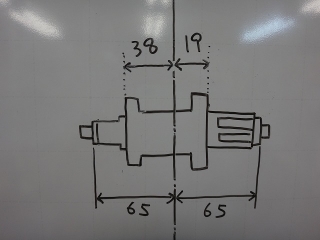
The standard flange dimensions for current 11-speed freewheel bodies
are 19mm on the freewheel side and 38mm on the non-freewheel side,
measuring from the hub center to the outer edge of the flange.
When you measure the flange with calipers, it comes to 57mm.
Aside from DT (which has a slightly narrower left flange) and brands like American Classic or Gokiso with extreme dimensions,
Shimano, Campagnolo, Chris King, and Novatec all stay pretty close to these figures.
The Evo Lite hub's nominal flange widths are 16.35mm on the freewheel side
and 36.93mm on the non-freewheel side,
which add up to 53.28mm,
but when you set calipers to 53.3mm and place them on the hub flange,
you find this is the flange-center-to-flange-center dimension.
For outer-edge-to-outer-edge measurement, it comes to about 56.5mm,
so the Evo Lite hub also falls into the "approximately 57mm flange-width hub" category.
Unrelated to this discussion,
the Evo Lite hub's nominal over-locknut dimension is 130mm.
You might think that's obvious, but I doubt there's a single specimen that actually measures 130mm.
They all measure around 130.5mm or so.
According to inspection sheets from several frame manufacturers,
rear end width is specified as 130mm with a tolerance of +2mm/-0mm,
meaning 130–132mm is acceptable,
and when actually measured, many frames are around 131mm,
so I've never heard of trouble getting an Evo Lite hub rear wheel into a frame without widening the dropouts.
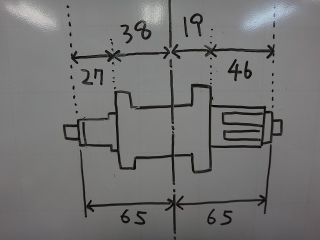
So if this rear hub had equal-diameter flanges on both sides
instead of high-low flanges,
and you built it with equal-diameter spokes in equal numbers,
the point where left and right spoke tensions balance
is where the rim sits at the center of the flange width.
In that state, if you place a centering gauge on the freewheel side, note the dimension,
then place it on the non-freewheel side,
the gap between the centering gauge and the left dropout would be—
to give the answer first, 19mm—but let me work through the roundabout addition:
The distance from the flange's outer edge to the hub's end is
46mm on the freewheel side and 27mm on the non-freewheel side.
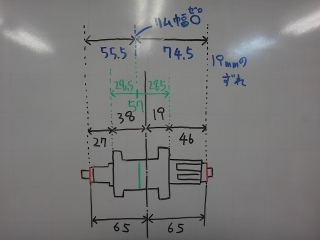
If you divide the 57mm hub flange width equally into 28.5mm on each side,
and position the rim directly above (or below) that center,
with rim width assumed as zero, the distance from the right dropout to the rim is 74.5mm,
and from the left dropout to the rim is 55.5mm,
a difference of 19mm.
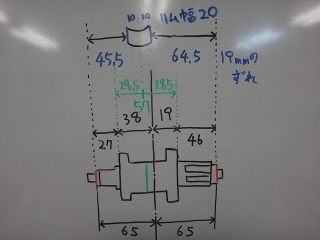
Let's say rim width is 20mm.
In that case, the distances from left and right dropouts to the rim
each get 10mm closer, but the difference remains 19mm.
What I'm getting at is: with a rear wheel built on a hub with standard dimensions,
using equal-diameter spokes in a 44 or 66 build,
when the gap between the left dropout and the centering gauge reaches about 19mm,
the spoke tension difference between left and right disappears.
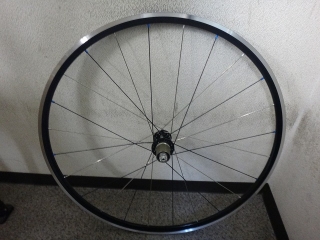
Two posts back, while building the rear wheel for Nomu Lab Wheel #5,
I did a little experiment.
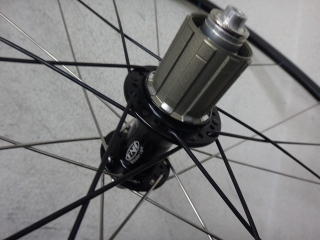
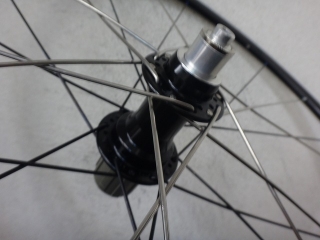
Evo Lite hub, all Campagnolo spokes, 46-spoke build.
The hub has high-low flanges, and I'm using unequal spoke counts (asymmetrical),
so the conditions are actually better than in that diagram above.
In theory, before this rear wheel reaches 19mm center offset,
the left and right spoke tensions should either equalize or reverse.
I went with all Campagnolo spokes because with identical spokes,
I can reliably compare the relative magnitudes of first and second spoke tensions.
With identical spokes,
if first spoke tension is freewheel side > non-freewheel side,
then second spoke tension will also be freewheel side > non-freewheel side,
and if first spoke tension is equal left-right, second will also be equal.
If I use Campagnolo/Shimano or Shimano/CX-RAY (half-Campagnolo) combinations,
I can't make that comparison.
Importantly, the relationship between first and second spoke tension isn't linear,
so even if first spoke tension is "freewheel side at 120% of non-freewheel side,"
that doesn't mean second spoke tension will also be 120%.


I offset the gap between the gauge and dropout to about 2.5mm.
I'm not setting a specific number of millimeters to aim for.
I'm just gradually tightening the non-freewheel side
while keeping the wheel true (both radially and laterally).
As I mentioned, this is "considerable" offset,
it interferes with brake setup, and
with the rear wheel installed on the frame, you can see the offset with your eyes.
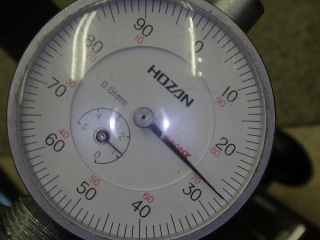
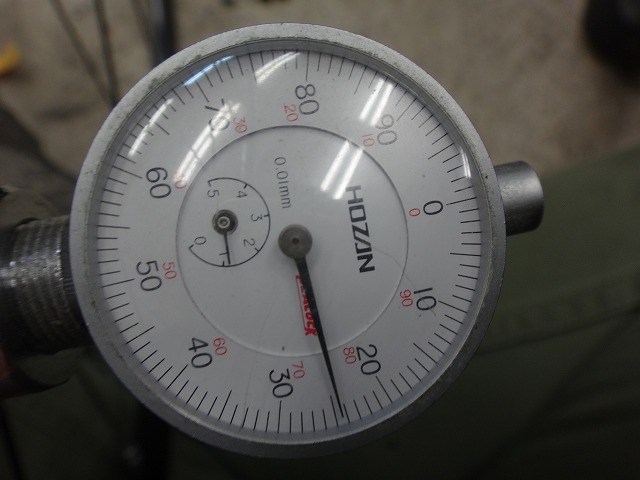
Using a Hozan tension meter, first spoke tension on the freewheel side: 127

and non-freewheel side just under 99,
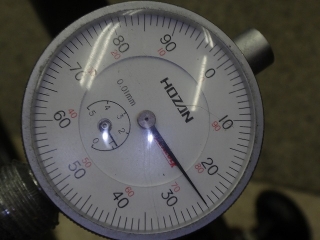
freewheel side 125,
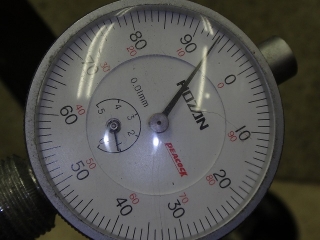
non-freewheel side just under 94.
If you've built wheels before, you know that's reasonably well-tensioned—not bad—
but at low tension, the non-freewheel-side readings become much more scattered.
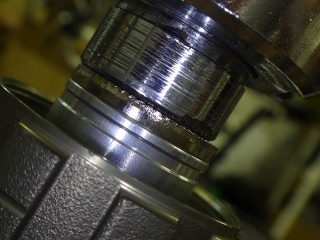
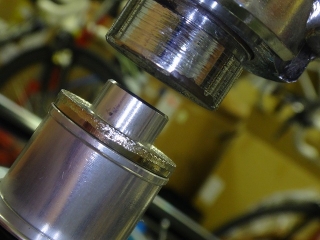
I tensioned the non-freewheel side further.
The gap between gauge and dropout is now about 8.5mm.
At this point, it's unusable as a wheel, the offset is that severe.
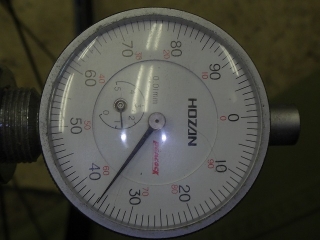
Freewheel side just over 135.
Since the 2.5mm offset point, I haven't tensioned the freewheel side at all.
When you tension the non-freewheel side, the freewheel side tension increases a bit too.
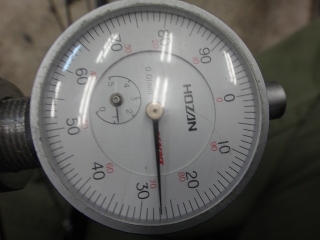
Non-freewheel side just under 127.
But that's one spoke that happened to be particularly tense in the scatter,
and the other 11 spokes are hovering around 120 or so.
Since the freewheel side is a dead-end, from here I'll loosen the freewheel side. I loosened it by three-quarters turn.
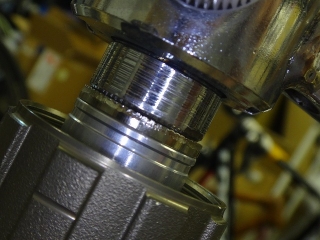
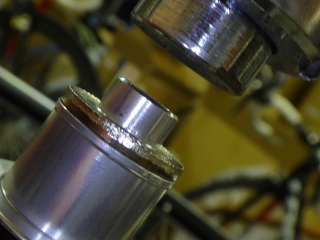
The gap between left dropout and gauge is now about 11.5mm.
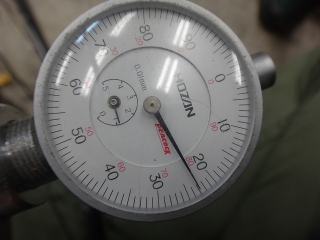
Minimum on the freewheel side
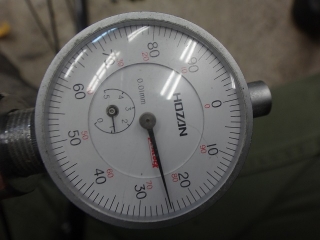
and maximum on the non-freewheel side
On average, it's still freewheel side > non-freewheel side, but
between the minimum freewheel value and maximum non-freewheel value, we finally see a reversal.
If I tensioned a bit more, the average would probably reverse too,
but to go further and bring the freewheel maximum to below the non-freewheel minimum
seemed like it would probably be impossible,
so I disassembled the wheel at that point.
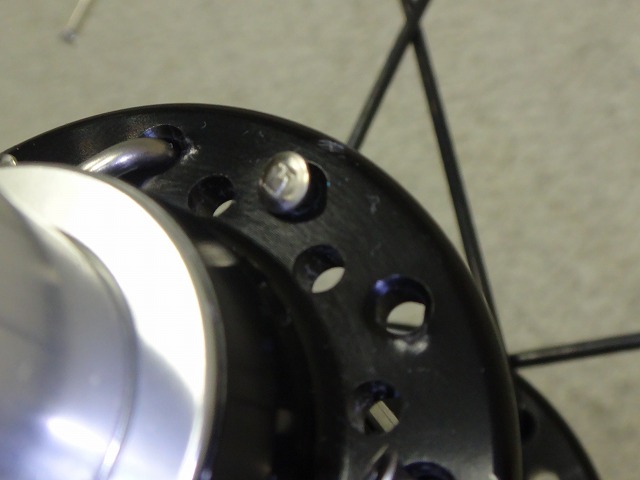
Thanks to the high-low flanges and 46-spoke build,
it's certain that balanced left-right tension will be reached
before the dropout-to-gauge gap reaches the theoretical 19mm.
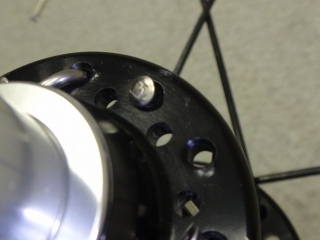
I did the 46-build instead of 40-build because
I'll be converting to a half-Campagnolo 46-build later.
I didn't want to unnecessarily multiply the spoke marks on the hub flanges of finished wheels.
Now, with a 40-spoke build, even if the hub dimensions were slightly better,
achieving 19mm dropout-to-gauge gap wouldn't bring balanced tension,
and offsetting the rim left by 1mm—which shouldn't interfere with brake setup—
wouldn't allow you to feel the difference in non-freewheel-side tension,
and considering the relative factors, tensioning the non-freewheel side more
isn't a smart move.
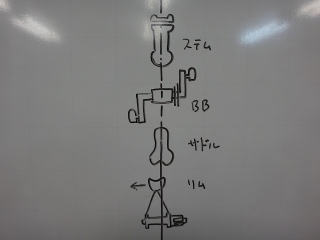
This does depend on frame and fork accuracy as well,
but I can't understand the mindset of saying it's fine if the rim is offset
as long as it gains a marginal amount of tension,
while all the other components are centered.
Is it really so wrong to call it "wheel truing play-acting"
if someone insists on offsetting despite knowing this?
This person has always given me petty nitpicks and pointless complaints,
but I didn't expect them to be this intellectually dishonest.
It occurred to me that cutting into sleep time like this to write articles
while nearly pulling all-nighters might not be the best idea,
but I'm writing with the aim of making readable content nonetheless.
This isn't cherry-picked; it's just how it is, but
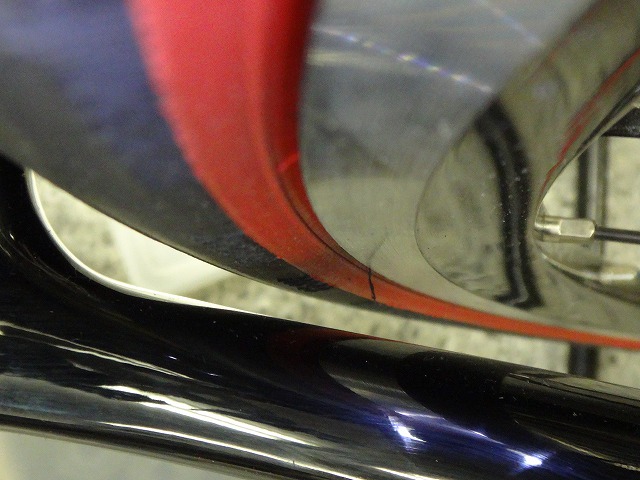
I'm currently building up a LOOK 785 Huez frame,
fitted with the rear wheel from Nomu Lab Wheel #5 (dead-center),
shod with Continental 23C tires,
and the gap between the widest part of the tire and the chainstay is about 6mm.
In other words, depending on the frame,
intentional rear-wheel offset isn't really feasible on any significant scale anyway,
so it makes more sense to think about how to tension the non-freewheel side more
while maintaining proper wheel center.
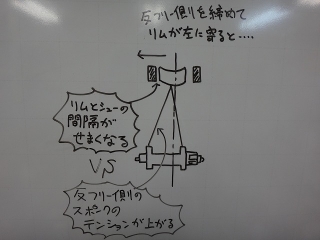
"Tightening only the non-freewheel side even if it means offsetting wheel center"
was discussed in the comment from the standpoint of increasing non-freewheel spoke tension,
but comparing the relative magnitude of
"brake pads getting closer to the rim from the offset, making them more prone to rub"
versus
"increased non-freewheel tension making rubbing less likely,"
the gap-narrowing effect is the larger factor when it comes to brake rub.
In other words, the wheel becomes more prone to brake rub.
If it's not direct-mount and you can just bend the brake caliper a bit by hand, sure?
To borrow words from the original comment,
well, if you can be "satisfied" with that, fine.
If you think marginal non-freewheel tension gains are more important than wheel center,
and if that's what gives you greater "satisfaction," that's your business,
but I'll say outright: you're underestimating the relative importance of the factors.
If the person who left the comment is a hobbyist,
the matter ends with "wheel-building play-acting" (knock yourself out offsetting),
but if they're in the same business as me, I'd have to justify
rear-wheel offsetting to my customers with some explanation.
Actually, I suspect this person would snap back at me
even if I wrote something like:
"Nomu Lab considers increased non-freewheel tension the primary factor,
so we intentionally offset the rear rim to the left."
As an aside,
there are wheels out there that are dead-center,
have dead-end freewheel-side tension,
and then experience not just brake rub but actual frame rub
(→ here),
so problems that can't be solved by spoke tension
require changing the build method itself.
Oh right, the rear wheel at that link was non-freewheel-side radial,
but it was a 2:1 build, not equal-spoke-count.
I follow up where I can, and I've confirmed that after I rebuilt it,
both brake rub and frame rub disappeared.
Now I'll write about intentional wheel center offset
for reasons other than "to tension the non-freewheel side even a bit."
The ideal state is
"the exact center of the front and rear wheels align perfectly
with the centerline of the frame,"
but taking the frame and fork as a given,
I center my wheels as standalone units.
Strictly speaking, frame and fork accuracy is often far more questionable
than most people realize, and I'm probably more aware of this than most,
but I'm not going into that here.
If you worry about every detail, you can't ride off-the-rack frames.
If you mount a frame or fork on a surface plate,
discern the centerline deviation in 0.1mm increments,
and deliberately offset front or rear wheels based on that data—
well, if it were feasible, I'd say it could work.
Of course, a wheel offset for a specific frame can't be used with another frame,
and with a rim-brake front wheel, you also can't flip it and install it on the paired fork.
But this isn't a practical scenario.
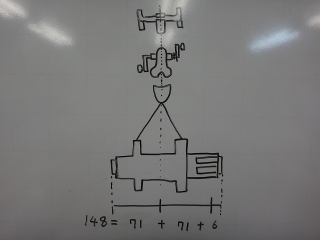
Some Cannondale frames have
12mm thru-axle rear dropouts nominally at 148mm,
but not actually following 12×148mm BOOST spec—
rather, "extending only the right side by 6mm from 12×142mm"
to reduce or nearly eliminate rear wheel dish.
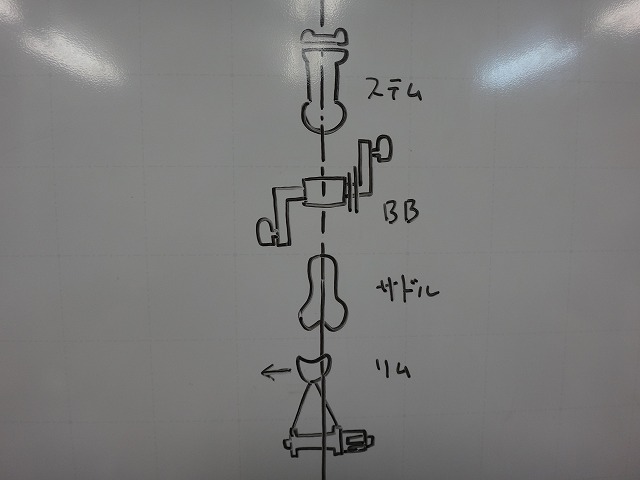
In this case, the frame's centerline—the center of the saddle, stem, and BB—
is at the center of the 142mm span, excluding the 6mm extension.
This is "the way it is," so you need to build
a rear wheel that's offset as a standalone unit.
Also, when I build my personal rear wheels,
I often offset the rim leftward by about the thickness of a sheet of paper
(less than "considerable," well within the undetectable range),
but that's for tracking long-term lateral rim position drift,
not in any way expecting increased non-freewheel-side tension.
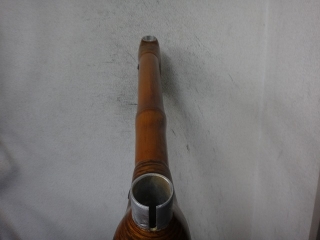
Which brings me to the Dansco frame from my previous post.
This frame—

—visually, by any standard, has its head tube shifted to the right.

↑Front view of frame and fork
So if I center the wheel as a standalone unit,
the rim center will be offset to the right of the frame's centerline.
That will probably be visually detectable, so even without measuring on a surface plate,
whether by visual assessment or another appropriate method,
I'm thinking of offsetting the rim leftward to a degree
that the offset becomes undetectable or imperceptible.
I'm planning a disc-brake front wheel,
so there's no possibility of reversing it and installing it on a different fork.
With this frame, actually bringing the rim to the frame centerline
would worsen the left-right spoke tension difference,
but I consider the front wheel's center aligning
with the center of the saddle, crankset, and handlebar
to be the more important primary factor,
so I'll build a front wheel that's not centered as a standalone unit.
I mean, if wheel center is less important than non-freewheel-side tension increases,
then shouldn't you also offset front wheel rims to the right a bit
on disc hubs, which have less dish than freewheel hubs?
If I actually built it that way, with the rim and tire visibly shifted to the right,
would customers really be "satisfied"
with a front wheel that's clearly offset?
"I'm only discussing intentional center offset
for 'rear wheels with no choice but non-freewheel-side radial spoking'!
Don't extrapolate to wheels in general!"
I can already hear that objection, so let me address that too:
When completed wheels use straight spokes in 40-spoke builds,
the freewheel-side spoke percentage is hardly ever near 100%.
So if I tension the freewheel side to 14-gauge plain
and center it properly, I can build a fully-CX-RAY
(or slightly higher-spoke-ratio square-aero)
40-spoke rear wheel that's far more solid
than an intentionally-offset rear
and I received the following comment:
You say wheel center offset isn't something you can feel while riding,
but in cases where the freewheel side is a dead-end with non-serviceable radial spoking,
is there merit in offsetting the center somewhat to increase tension on the freewheel side?
It seems like increasing freewheel-side tension would be the greater factor.
And I'm not sure it's fair to dismiss wheels adjusted with such thinking as "wheel truing play-acting."
I'd appreciate your thoughts.
That's the comment. I won't quibble over the term "half-freewheel."
If you want me to spell it out that clearly, then I will:
an equal-spoke-count radial-spoking rear wheel on the non-freewheel side is,
within any realistic range you can imagine, nearly the worst possible build method,
and in response to that idiotic build method,
using the expedient measure of prioritizing non-freewheel-side tension over wheel center—saying the offset doesn't matter as long as it's tensioned—
is nothing more than foolish half-wit thinking.
Let me spell it out clearly once more: that's foolish half-wit thinking, wheel truing play-acting, and wheel-building play-acting.
How many millimeters exactly would you have to offset it
to make it better than a wheel with proper center?
Ah, don't bother answering—I'm about to explain it in detail.
With brands like Zentrisch and some earlier Reynolds models,
there are rear wheels with straight-spoke hubs and 40-spoke builds—
meaning 40-spoke radial spoking on the non-freewheel side
with no option to change the rear hub.
People often say things like "it's loose, tension it more."
But there's nothing we can do about it.
A rear wheel that has "proper wheel center" and "dead-end freewheel-side tension"
cannot have its tension increased while maintaining proper wheel center.
I did write the other day that wheel center offset isn't perceptible while riding,
but I also wrote "unless it's considerably offset."
When I say "considerably," there's no set definition,
but I'd say about 1mm, or at most 2mm.
If the wheel were offset that much,
it would interfere with brake setup before the question of whether you'd notice it while riding comes up—
you'd notice the offset and try to correct it.
Alternatively, with the rear wheel installed on the frame,
if you look at the gap between the chainstay and the tire sidewall visually,
with a wheel whose center is "considerably" offset
you can actually determine the offset just by looking
(except on frames with asymmetrical chainstays).
When looking at the gap between the seatstay or fork blade and the rim or tire,
suppose the gap between a properly-centered wheel and the frame is
10mm on each side (left and right),
and the rim shifts 1mm to the left—
then the left-side gap becomes 9mm (10mm minus 1mm),
and the right-side gap becomes 11mm (10mm plus 1mm),
a difference of 2mm, which you can actually spot visually.
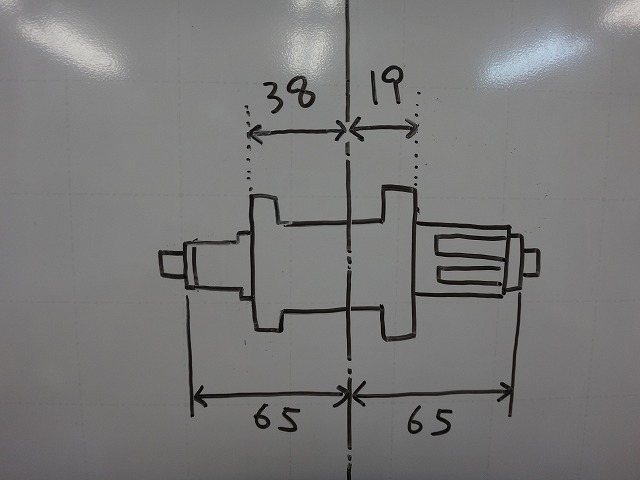
The standard flange dimensions for current 11-speed freewheel bodies
are 19mm on the freewheel side and 38mm on the non-freewheel side,
measuring from the hub center to the outer edge of the flange.
When you measure the flange with calipers, it comes to 57mm.
Aside from DT (which has a slightly narrower left flange) and brands like American Classic or Gokiso with extreme dimensions,
Shimano, Campagnolo, Chris King, and Novatec all stay pretty close to these figures.
The Evo Lite hub's nominal flange widths are 16.35mm on the freewheel side
and 36.93mm on the non-freewheel side,
which add up to 53.28mm,
but when you set calipers to 53.3mm and place them on the hub flange,
you find this is the flange-center-to-flange-center dimension.
For outer-edge-to-outer-edge measurement, it comes to about 56.5mm,
so the Evo Lite hub also falls into the "approximately 57mm flange-width hub" category.
Unrelated to this discussion,
the Evo Lite hub's nominal over-locknut dimension is 130mm.
You might think that's obvious, but I doubt there's a single specimen that actually measures 130mm.
They all measure around 130.5mm or so.
According to inspection sheets from several frame manufacturers,
rear end width is specified as 130mm with a tolerance of +2mm/-0mm,
meaning 130–132mm is acceptable,
and when actually measured, many frames are around 131mm,
so I've never heard of trouble getting an Evo Lite hub rear wheel into a frame without widening the dropouts.
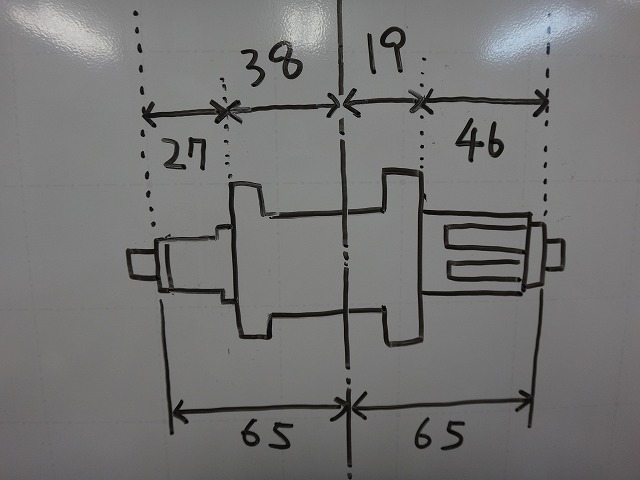
So if this rear hub had equal-diameter flanges on both sides
instead of high-low flanges,
and you built it with equal-diameter spokes in equal numbers,
the point where left and right spoke tensions balance
is where the rim sits at the center of the flange width.
In that state, if you place a centering gauge on the freewheel side, note the dimension,
then place it on the non-freewheel side,
the gap between the centering gauge and the left dropout would be—
to give the answer first, 19mm—but let me work through the roundabout addition:
The distance from the flange's outer edge to the hub's end is
46mm on the freewheel side and 27mm on the non-freewheel side.
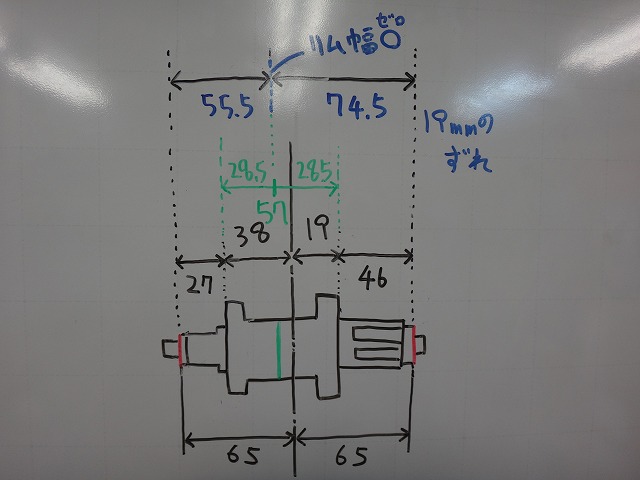
If you divide the 57mm hub flange width equally into 28.5mm on each side,
and position the rim directly above (or below) that center,
with rim width assumed as zero, the distance from the right dropout to the rim is 74.5mm,
and from the left dropout to the rim is 55.5mm,
a difference of 19mm.
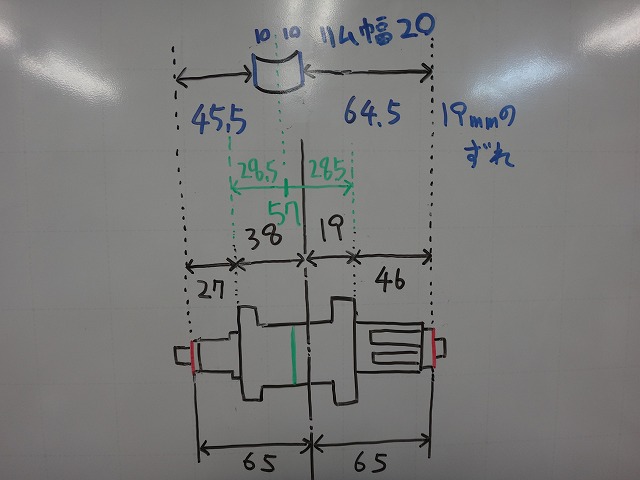
Let's say rim width is 20mm.
In that case, the distances from left and right dropouts to the rim
each get 10mm closer, but the difference remains 19mm.
What I'm getting at is: with a rear wheel built on a hub with standard dimensions,
using equal-diameter spokes in a 44 or 66 build,
when the gap between the left dropout and the centering gauge reaches about 19mm,
the spoke tension difference between left and right disappears.
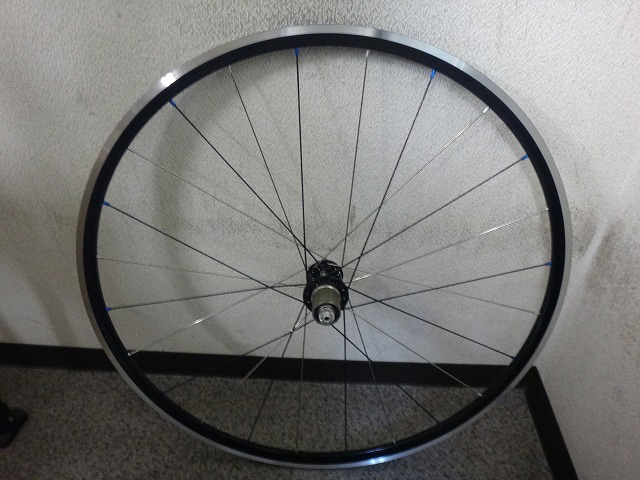
Two posts back, while building the rear wheel for Nomu Lab Wheel #5,
I did a little experiment.
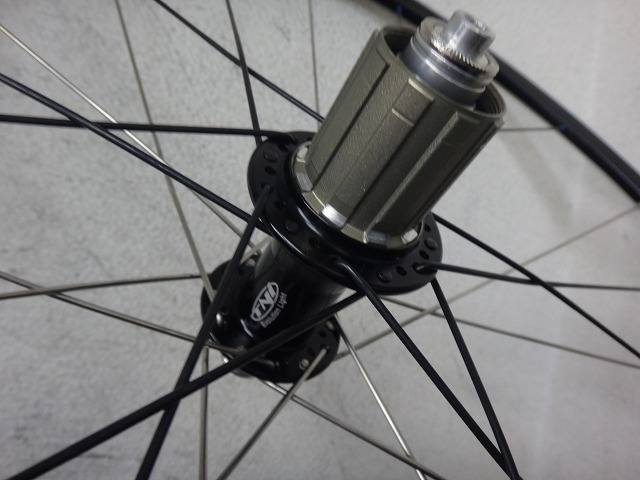
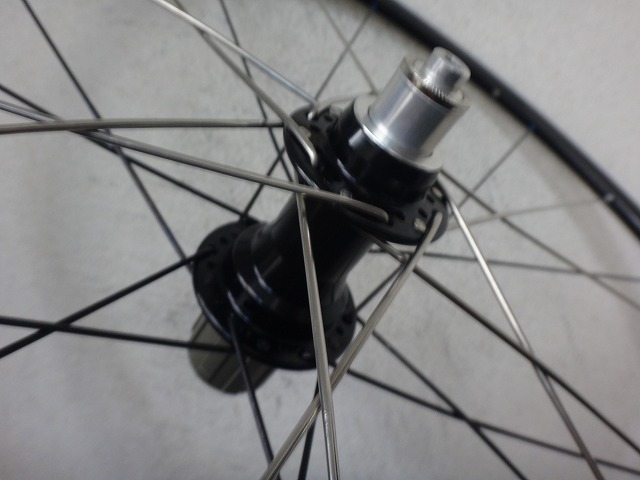
Evo Lite hub, all Campagnolo spokes, 46-spoke build.
The hub has high-low flanges, and I'm using unequal spoke counts (asymmetrical),
so the conditions are actually better than in that diagram above.
In theory, before this rear wheel reaches 19mm center offset,
the left and right spoke tensions should either equalize or reverse.
I went with all Campagnolo spokes because with identical spokes,
I can reliably compare the relative magnitudes of first and second spoke tensions.
With identical spokes,
if first spoke tension is freewheel side > non-freewheel side,
then second spoke tension will also be freewheel side > non-freewheel side,
and if first spoke tension is equal left-right, second will also be equal.
If I use Campagnolo/Shimano or Shimano/CX-RAY (half-Campagnolo) combinations,
I can't make that comparison.
Importantly, the relationship between first and second spoke tension isn't linear,
so even if first spoke tension is "freewheel side at 120% of non-freewheel side,"
that doesn't mean second spoke tension will also be 120%.
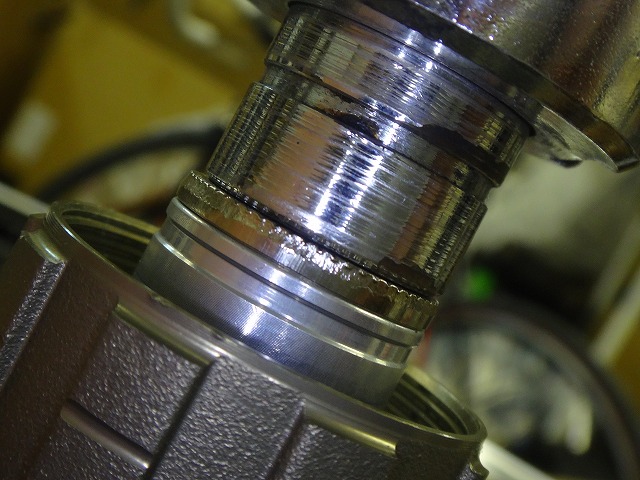
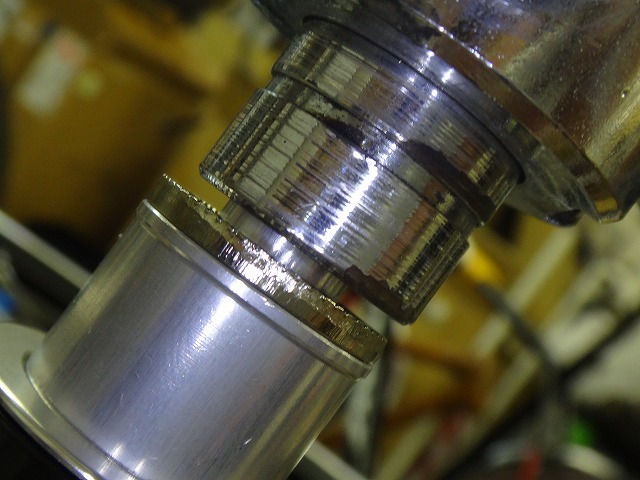
I offset the gap between the gauge and dropout to about 2.5mm.
I'm not setting a specific number of millimeters to aim for.
I'm just gradually tightening the non-freewheel side
while keeping the wheel true (both radially and laterally).
As I mentioned, this is "considerable" offset,
it interferes with brake setup, and
with the rear wheel installed on the frame, you can see the offset with your eyes.
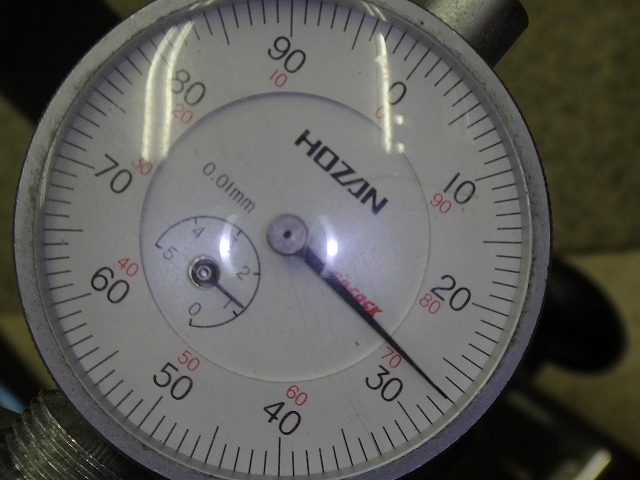
Using a Hozan tension meter, first spoke tension on the freewheel side: 127
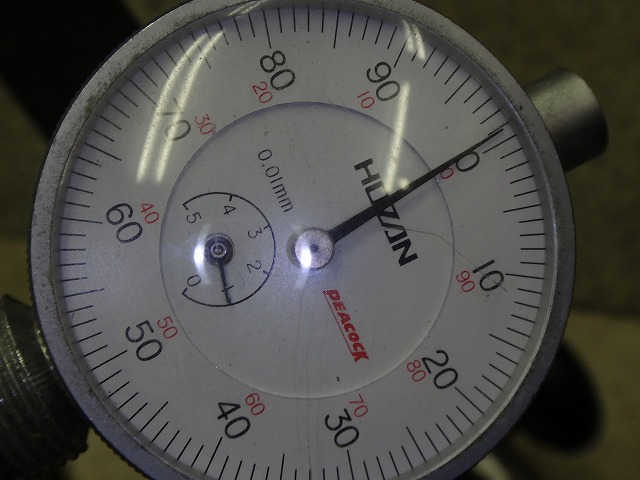
and non-freewheel side just under 99,
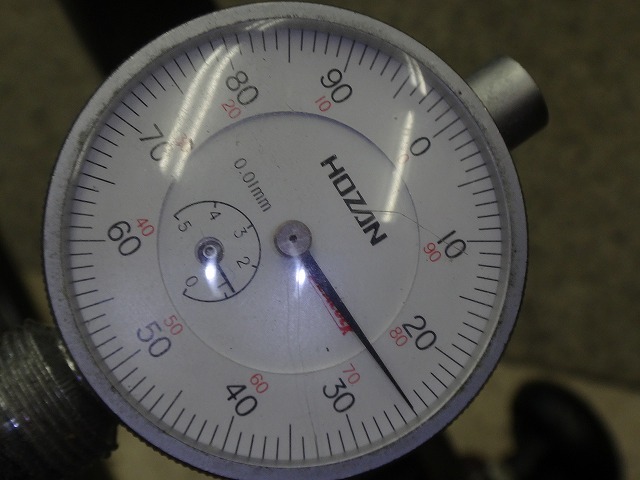
freewheel side 125,
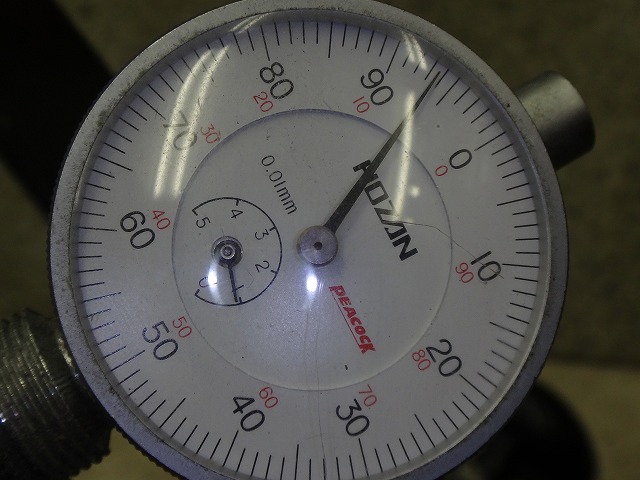
non-freewheel side just under 94.
If you've built wheels before, you know that's reasonably well-tensioned—not bad—
but at low tension, the non-freewheel-side readings become much more scattered.
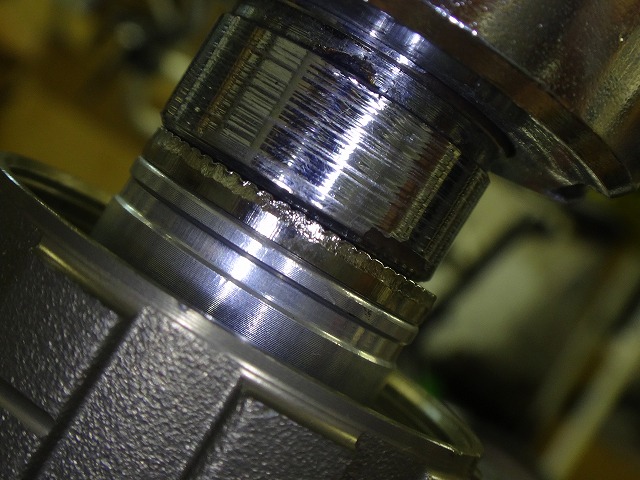
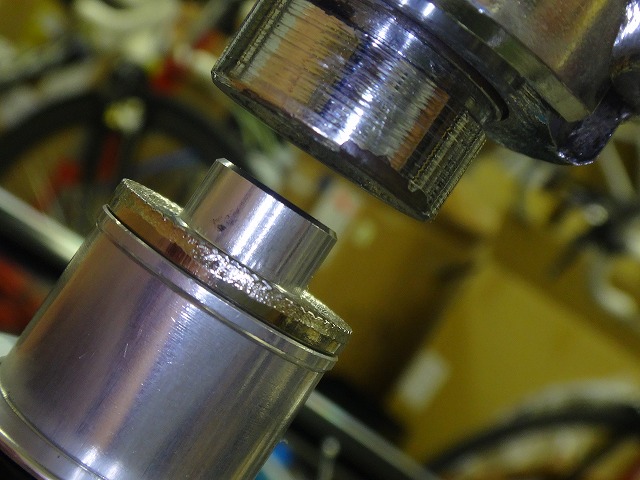
I tensioned the non-freewheel side further.
The gap between gauge and dropout is now about 8.5mm.
At this point, it's unusable as a wheel, the offset is that severe.
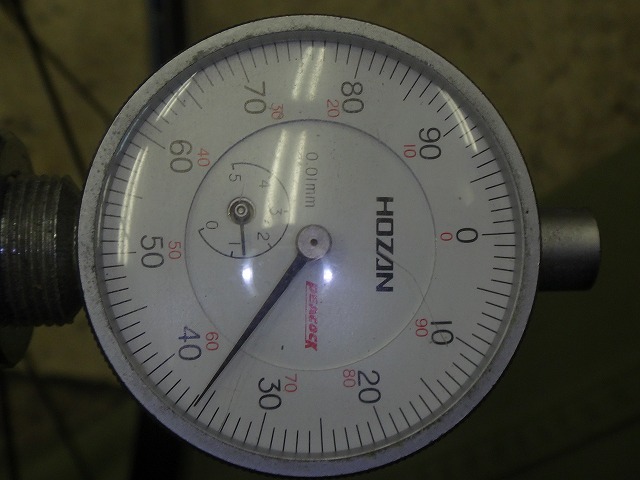
Freewheel side just over 135.
Since the 2.5mm offset point, I haven't tensioned the freewheel side at all.
When you tension the non-freewheel side, the freewheel side tension increases a bit too.
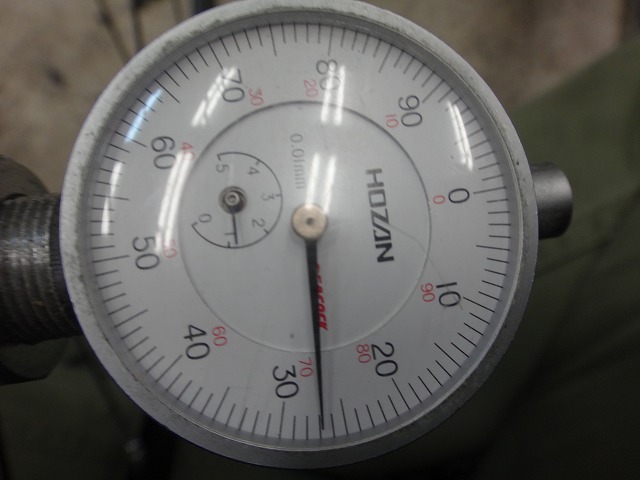
Non-freewheel side just under 127.
But that's one spoke that happened to be particularly tense in the scatter,
and the other 11 spokes are hovering around 120 or so.
Since the freewheel side is a dead-end, from here I'll loosen the freewheel side. I loosened it by three-quarters turn.
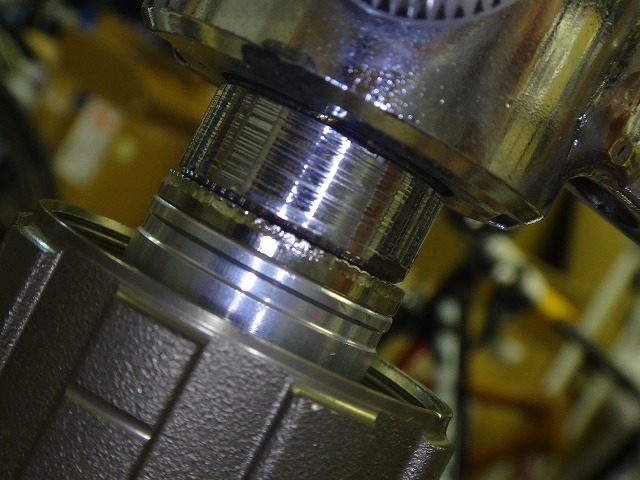
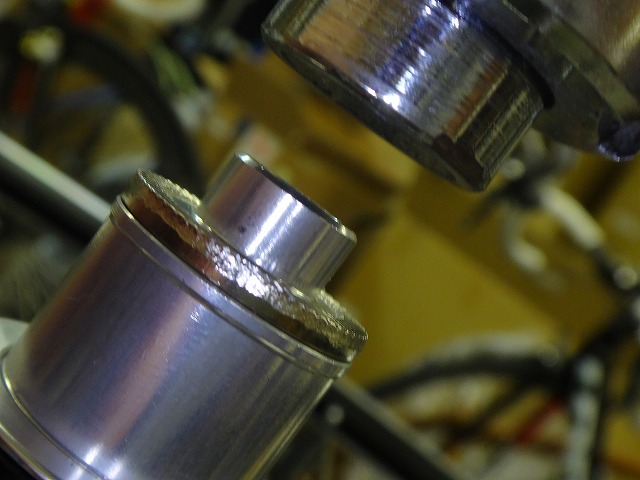
The gap between left dropout and gauge is now about 11.5mm.
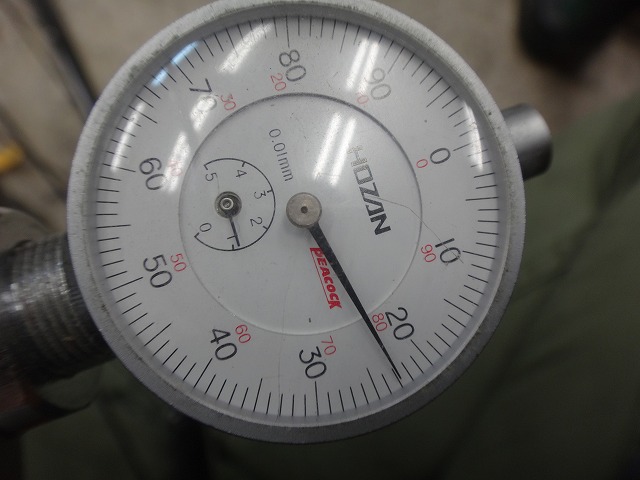
Minimum on the freewheel side
and maximum on the non-freewheel side
On average, it's still freewheel side > non-freewheel side, but
between the minimum freewheel value and maximum non-freewheel value, we finally see a reversal.
If I tensioned a bit more, the average would probably reverse too,
but to go further and bring the freewheel maximum to below the non-freewheel minimum
seemed like it would probably be impossible,
so I disassembled the wheel at that point.
Thanks to the high-low flanges and 46-spoke build,
it's certain that balanced left-right tension will be reached
before the dropout-to-gauge gap reaches the theoretical 19mm.
I did the 46-build instead of 40-build because
I'll be converting to a half-Campagnolo 46-build later.
I didn't want to unnecessarily multiply the spoke marks on the hub flanges of finished wheels.
Now, with a 40-spoke build, even if the hub dimensions were slightly better,
achieving 19mm dropout-to-gauge gap wouldn't bring balanced tension,
and offsetting the rim left by 1mm—which shouldn't interfere with brake setup—
wouldn't allow you to feel the difference in non-freewheel-side tension,
and considering the relative factors, tensioning the non-freewheel side more
isn't a smart move.
This does depend on frame and fork accuracy as well,
but I can't understand the mindset of saying it's fine if the rim is offset
as long as it gains a marginal amount of tension,
while all the other components are centered.
Is it really so wrong to call it "wheel truing play-acting"
if someone insists on offsetting despite knowing this?
This person has always given me petty nitpicks and pointless complaints,
but I didn't expect them to be this intellectually dishonest.
It occurred to me that cutting into sleep time like this to write articles
while nearly pulling all-nighters might not be the best idea,
but I'm writing with the aim of making readable content nonetheless.
This isn't cherry-picked; it's just how it is, but
I'm currently building up a LOOK 785 Huez frame,
fitted with the rear wheel from Nomu Lab Wheel #5 (dead-center),
shod with Continental 23C tires,
and the gap between the widest part of the tire and the chainstay is about 6mm.
In other words, depending on the frame,
intentional rear-wheel offset isn't really feasible on any significant scale anyway,
so it makes more sense to think about how to tension the non-freewheel side more
while maintaining proper wheel center.
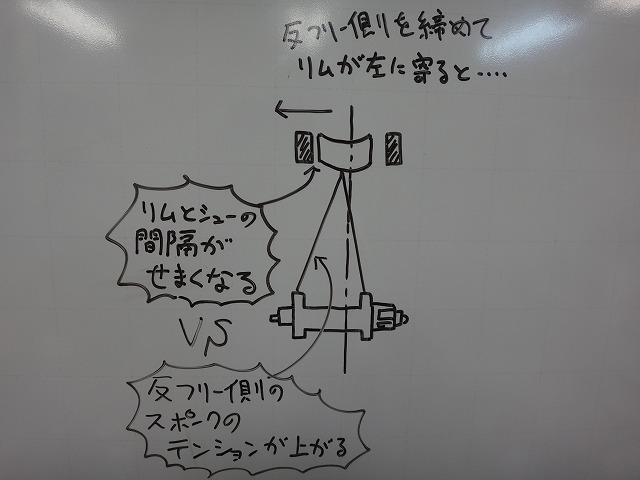
"Tightening only the non-freewheel side even if it means offsetting wheel center"
was discussed in the comment from the standpoint of increasing non-freewheel spoke tension,
but comparing the relative magnitude of
"brake pads getting closer to the rim from the offset, making them more prone to rub"
versus
"increased non-freewheel tension making rubbing less likely,"
the gap-narrowing effect is the larger factor when it comes to brake rub.
In other words, the wheel becomes more prone to brake rub.
If it's not direct-mount and you can just bend the brake caliper a bit by hand, sure?
To borrow words from the original comment,
well, if you can be "satisfied" with that, fine.
If you think marginal non-freewheel tension gains are more important than wheel center,
and if that's what gives you greater "satisfaction," that's your business,
but I'll say outright: you're underestimating the relative importance of the factors.
If the person who left the comment is a hobbyist,
the matter ends with "wheel-building play-acting" (knock yourself out offsetting),
but if they're in the same business as me, I'd have to justify
rear-wheel offsetting to my customers with some explanation.
Actually, I suspect this person would snap back at me
even if I wrote something like:
"Nomu Lab considers increased non-freewheel tension the primary factor,
so we intentionally offset the rear rim to the left."
As an aside,
there are wheels out there that are dead-center,
have dead-end freewheel-side tension,
and then experience not just brake rub but actual frame rub
(→ here),
so problems that can't be solved by spoke tension
require changing the build method itself.
Oh right, the rear wheel at that link was non-freewheel-side radial,
but it was a 2:1 build, not equal-spoke-count.
I follow up where I can, and I've confirmed that after I rebuilt it,
both brake rub and frame rub disappeared.
Now I'll write about intentional wheel center offset
for reasons other than "to tension the non-freewheel side even a bit."
The ideal state is
"the exact center of the front and rear wheels align perfectly
with the centerline of the frame,"
but taking the frame and fork as a given,
I center my wheels as standalone units.
Strictly speaking, frame and fork accuracy is often far more questionable
than most people realize, and I'm probably more aware of this than most,
but I'm not going into that here.
If you worry about every detail, you can't ride off-the-rack frames.
If you mount a frame or fork on a surface plate,
discern the centerline deviation in 0.1mm increments,
and deliberately offset front or rear wheels based on that data—
well, if it were feasible, I'd say it could work.
Of course, a wheel offset for a specific frame can't be used with another frame,
and with a rim-brake front wheel, you also can't flip it and install it on the paired fork.
But this isn't a practical scenario.
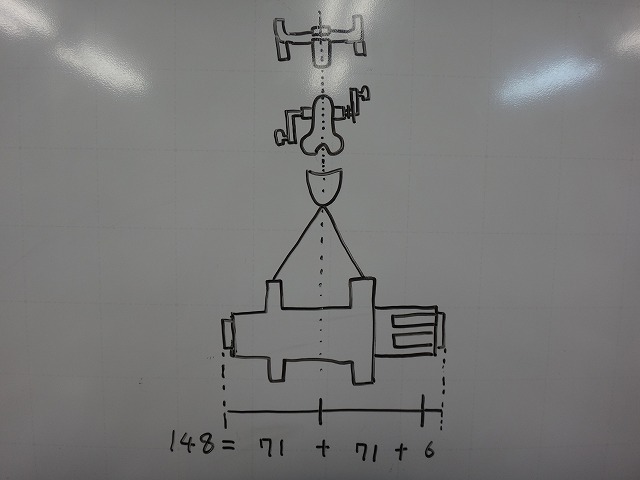
Some Cannondale frames have
12mm thru-axle rear dropouts nominally at 148mm,
but not actually following 12×148mm BOOST spec—
rather, "extending only the right side by 6mm from 12×142mm"
to reduce or nearly eliminate rear wheel dish.
In this case, the frame's centerline—the center of the saddle, stem, and BB—
is at the center of the 142mm span, excluding the 6mm extension.
This is "the way it is," so you need to build
a rear wheel that's offset as a standalone unit.
Also, when I build my personal rear wheels,
I often offset the rim leftward by about the thickness of a sheet of paper
(less than "considerable," well within the undetectable range),
but that's for tracking long-term lateral rim position drift,
not in any way expecting increased non-freewheel-side tension.
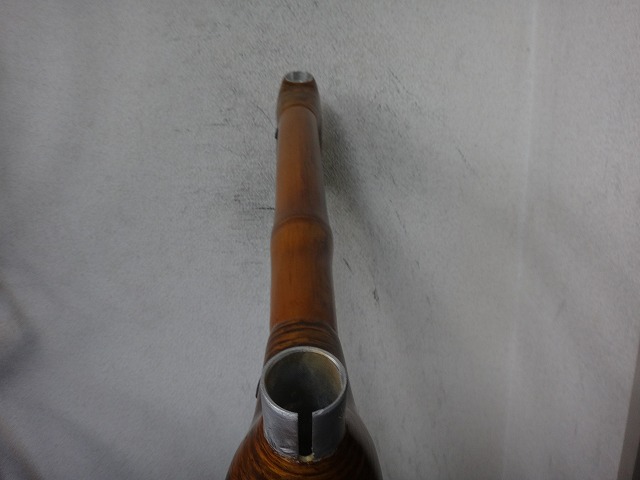
Which brings me to the Dansco frame from my previous post.
This frame—

—visually, by any standard, has its head tube shifted to the right.

↑Front view of frame and fork
So if I center the wheel as a standalone unit,
the rim center will be offset to the right of the frame's centerline.
That will probably be visually detectable, so even without measuring on a surface plate,
whether by visual assessment or another appropriate method,
I'm thinking of offsetting the rim leftward to a degree
that the offset becomes undetectable or imperceptible.
I'm planning a disc-brake front wheel,
so there's no possibility of reversing it and installing it on a different fork.
With this frame, actually bringing the rim to the frame centerline
would worsen the left-right spoke tension difference,
but I consider the front wheel's center aligning
with the center of the saddle, crankset, and handlebar
to be the more important primary factor,
so I'll build a front wheel that's not centered as a standalone unit.
I mean, if wheel center is less important than non-freewheel-side tension increases,
then shouldn't you also offset front wheel rims to the right a bit
on disc hubs, which have less dish than freewheel hubs?
If I actually built it that way, with the rim and tire visibly shifted to the right,
would customers really be "satisfied"
with a front wheel that's clearly offset?
"I'm only discussing intentional center offset
for 'rear wheels with no choice but non-freewheel-side radial spoking'!
Don't extrapolate to wheels in general!"
I can already hear that objection, so let me address that too:
When completed wheels use straight spokes in 40-spoke builds,
the freewheel-side spoke percentage is hardly ever near 100%.
So if I tension the freewheel side to 14-gauge plain
and center it properly, I can build a fully-CX-RAY
(or slightly higher-spoke-ratio square-aero)
40-spoke rear wheel that's far more solid
than an intentionally-offset rear
Products Mentioned in This Article
* Amazon affiliate links — prices may vary
Original Japanese post: のむラボ日記 #4658