Apology and Correction
Regarding the assembly method of this wheel
The article states "spoke phasing twist does not occur"
but this was an error. I sincerely apologize.
I have written a correction article (→here),
but I am leaving the main text of this article as-is.
Before today's wheel (abbreviation omitted)...
The R7000, which is the new 105, comes in two hub configurations:
the standard quick-release type and the 12mm thru-axle type.
The quick-release is HB/FH-R7000, and the thru-axle is HB/FH-R7070.
This is neither here nor there, but it feels very strange that the 7000 series is not Dura-Ace.
I think it would make more sense if the next Dura-Ace after the 7900 series were designated R7000,
Ultegra as R6000, and 105 as R5000,
since Ultegra originally followed the 600 → 600 Ultegra → Ultegra progression (※)
which would maintain consistency.
※This has no particular connection to the progression of Space Monkey Gori → Space Monkey Gori vs. Spectraman → Spectraman.
So I immediately sourced that thru-axle hub.
Since it's positioned as something like the little brother of the RS770 hub,
the dimensional specifications are pretty much identical.
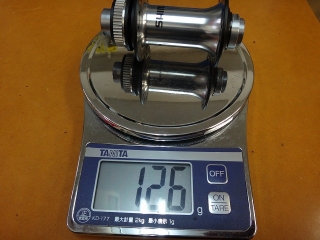

↑RS770 hub
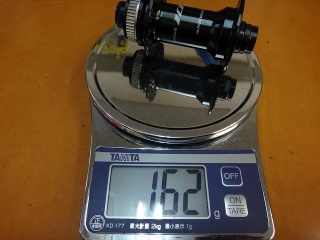
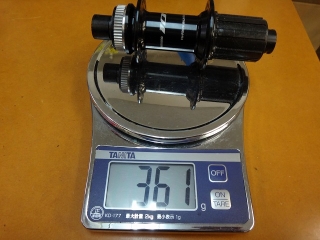
↑R7070 hub
The bulk of the weight difference is the shaft material.
The specification differences are things like ball race polishing treatment and
the structure of waterproof seals, but nothing dramatically different.
The front hub dimensions are identical; the rear hub's flange width differs by 0.05mm but
can be treated as the same without issue.
What surprised me wasn't that, but rather
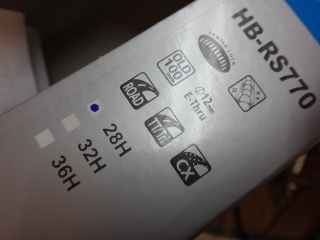
the RS770 hub comes in 28, 32, and 36H spoke hole counts, whereas
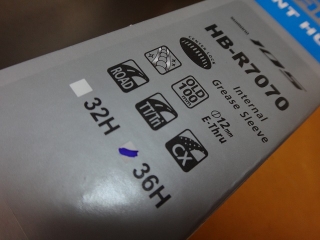
the R7070 hub only comes in 32H and 36H—a totally apathetic, zero-sales-intent specification
that shows no concession to the times.
Where the hell would you find a 36H disc brake rim?
At least for lightweight rims aimed at racing, there's basically none.
If you're only going to offer 32H and 36H,
it would be far more useful to go 28H only, the way they did with the CX75.
It's hard to imagine that completed bikes with the 105 groupset would
be assembled with a hand-built wheel using this 32H hub;
more likely they'll use a hand-built wheel assembled with a cheap disc hub from Joytech or Formula
(a Taiwanese hub brand, separate from the Formula disc brake brand)
or an affordable complete wheel from the lower price tier.
So why did I source the 36H hub this time?
Because it can be used as a sparse-dense flange hole 24H hub.

When the flange hole positions are sparse-dense rather than evenly spaced,
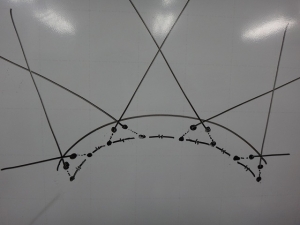
if you extend the spoke lines inward,
you can obtain evenly-spaced holes at a smaller diameter position (→here),
so by taking 2 out of every 3 from one side's 18H of the 36H, you get sparse-dense holes.
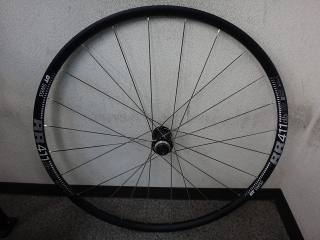
Built it.
The rim is a DT RR411db in 24H.
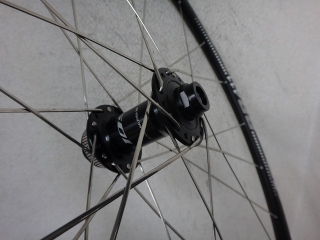
HB-R7070, 36H, CX-RAY. By hole count it's an 8-6 lace pattern,
but by crossing count it's 3-cross/2-cross, equivalent to a 6-4 pattern,
so it's a reverse Italian lace. I'll do the wire tie later.
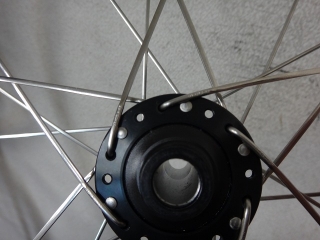
Right side (non-rotor side)

Left side (rotor side)
The line connecting the hub center and the final crossing aligns with the radial line.
In other words, spoke phasing twist does not occur.
I've also written a similar practical example article on this topic (→here),
but since there's a possibility I may use this assembly method frequently going forward,
I wanted to establish various things about it, so I built this as a practice piece.
By the way, after completion I plan to sell it as a shelf wheel for a change.
I built it with silver spokes and silver nipples, so
technically I should use Squorx nipples for this rim, but
I intentionally used regular silver aluminum nipples instead.
One reason is that I don't like how Squorx nipples have greater sliding resistance
against the washer compared to regular nipples, but
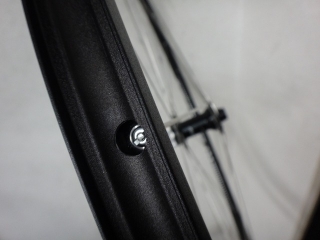
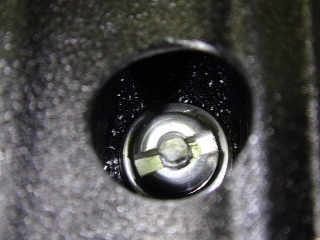
↑Non-rotor side
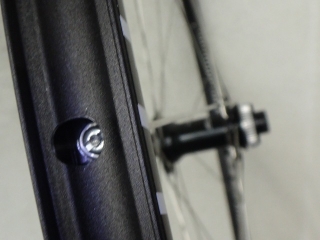
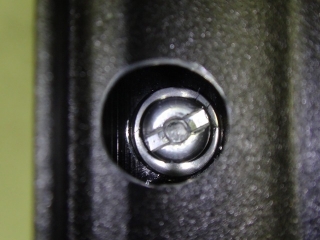
↑Rotor side
I wanted to verify whether the spoke length calculations were correct
when building with a 24H rim and 36H hub.
The washers don't have dots marking front-to-back direction because
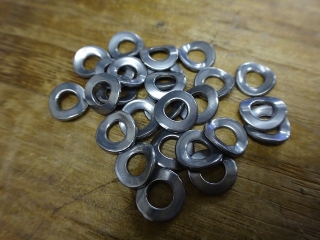
24H rims don't sell that well, apparently,
and the kit came with dot-less washers.
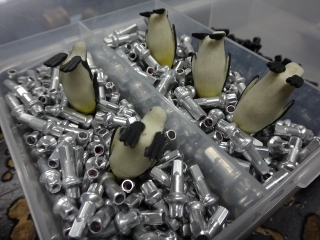
Squorx nipples always have leftovers anyway (34 per rim)
and I don't use them at all when building with colored nipples,
so I've accumulated enough to plant a modest crop of little yellow radishes.
This time I'm using the 105 hub to keep costs down (also the reason for silver spokes),
but since the RS770 also comes in 36H, the same assembly method is possible.
Since this wheel is 24H, it's not a semi-competizione but full CX-RAY,
and I decided to make it geared more toward disc road bikes than cyclocross.
Of course, it'll work for cyclocross too.
People will probably call me out for doing something unseemly instead of using a proper 24H hub,
but the Tni hub is difficult because the rotor uses a 6-bolt mount and
the rear hub has a low-flange design,
and DT and Chris King have the drawback that using them
makes my wallet experience rapid weight reduction,
so it's hard to find a really good hub.
Also, I received an inquiry asking about
the Nomulab Wheel No. 7 in a front-and-rear 24H disc brake configuration,
so this is also a proposal using an RS770 hub for something like that.
Regarding the assembly method of this wheel
The article states "spoke phasing twist does not occur"
but this was an error. I sincerely apologize.
I have written a correction article (→here),
but I am leaving the main text of this article as-is.
Before today's wheel (abbreviation omitted)...
The R7000, which is the new 105, comes in two hub configurations:
the standard quick-release type and the 12mm thru-axle type.
The quick-release is HB/FH-R7000, and the thru-axle is HB/FH-R7070.
This is neither here nor there, but it feels very strange that the 7000 series is not Dura-Ace.
I think it would make more sense if the next Dura-Ace after the 7900 series were designated R7000,
Ultegra as R6000, and 105 as R5000,
since Ultegra originally followed the 600 → 600 Ultegra → Ultegra progression (※)
which would maintain consistency.
※This has no particular connection to the progression of Space Monkey Gori → Space Monkey Gori vs. Spectraman → Spectraman.
So I immediately sourced that thru-axle hub.
Since it's positioned as something like the little brother of the RS770 hub,
the dimensional specifications are pretty much identical.
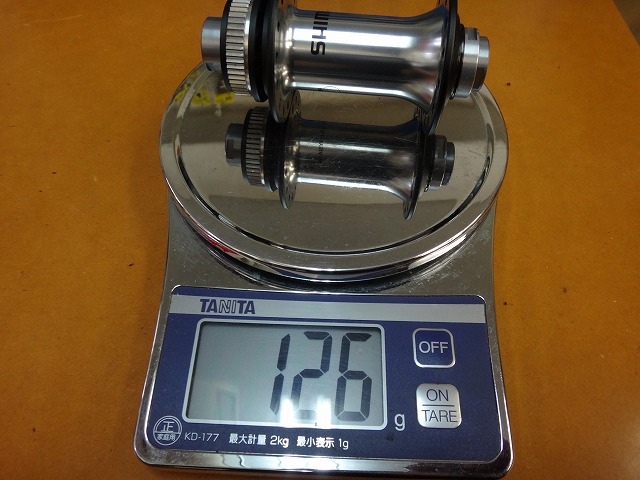

↑RS770 hub
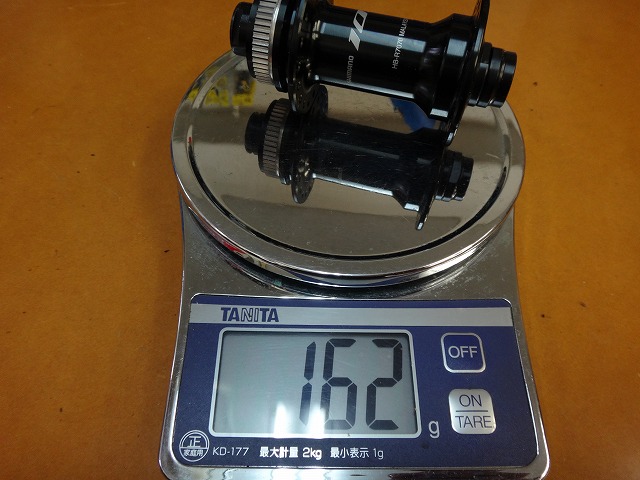

↑R7070 hub
The bulk of the weight difference is the shaft material.
The specification differences are things like ball race polishing treatment and
the structure of waterproof seals, but nothing dramatically different.
The front hub dimensions are identical; the rear hub's flange width differs by 0.05mm but
can be treated as the same without issue.
What surprised me wasn't that, but rather
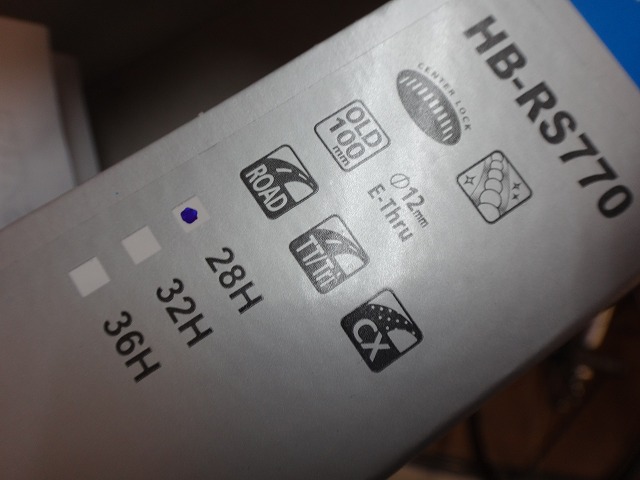
the RS770 hub comes in 28, 32, and 36H spoke hole counts, whereas
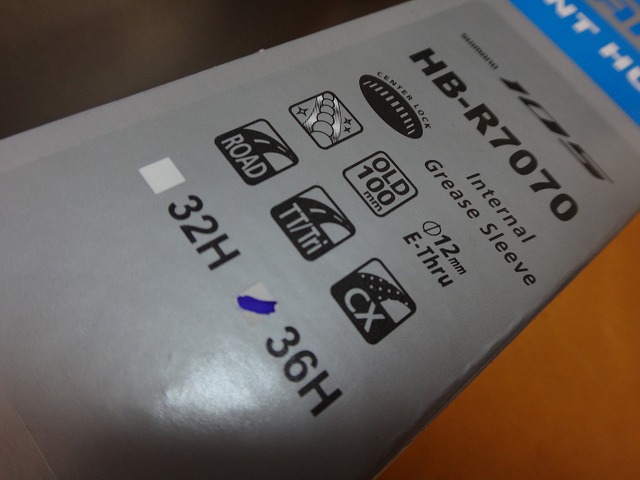
the R7070 hub only comes in 32H and 36H—a totally apathetic, zero-sales-intent specification
that shows no concession to the times.
Where the hell would you find a 36H disc brake rim?
At least for lightweight rims aimed at racing, there's basically none.
If you're only going to offer 32H and 36H,
it would be far more useful to go 28H only, the way they did with the CX75.
It's hard to imagine that completed bikes with the 105 groupset would
be assembled with a hand-built wheel using this 32H hub;
more likely they'll use a hand-built wheel assembled with a cheap disc hub from Joytech or Formula
(a Taiwanese hub brand, separate from the Formula disc brake brand)
or an affordable complete wheel from the lower price tier.
So why did I source the 36H hub this time?
Because it can be used as a sparse-dense flange hole 24H hub.
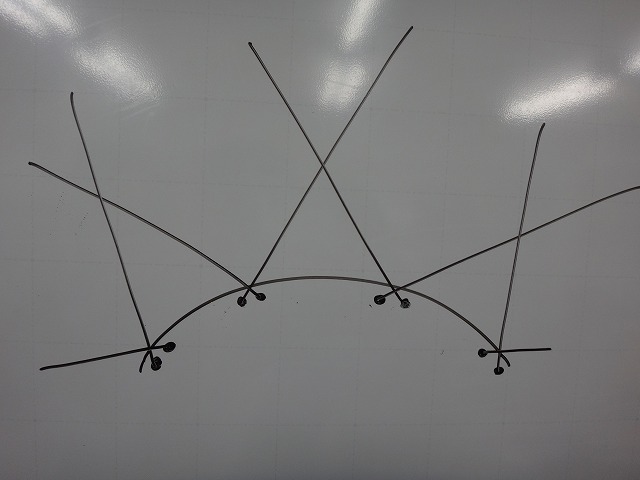
When the flange hole positions are sparse-dense rather than evenly spaced,
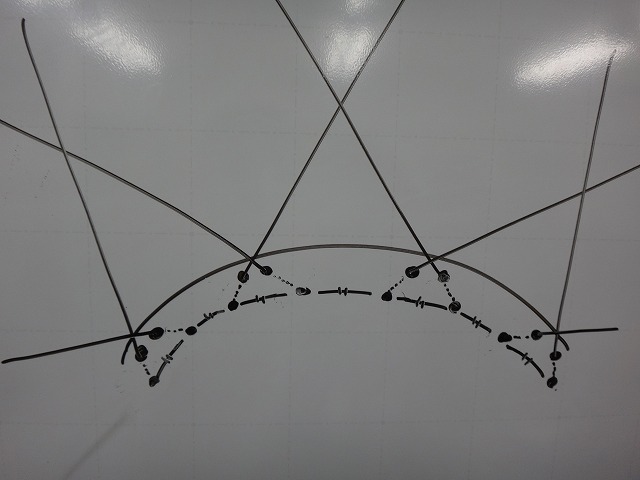
if you extend the spoke lines inward,
you can obtain evenly-spaced holes at a smaller diameter position (→here),
so by taking 2 out of every 3 from one side's 18H of the 36H, you get sparse-dense holes.
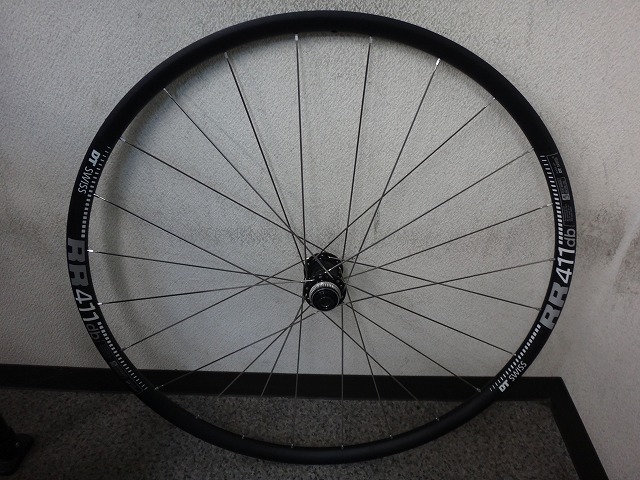
Built it.
The rim is a DT RR411db in 24H.

HB-R7070, 36H, CX-RAY. By hole count it's an 8-6 lace pattern,
but by crossing count it's 3-cross/2-cross, equivalent to a 6-4 pattern,
so it's a reverse Italian lace. I'll do the wire tie later.

Right side (non-rotor side)

Left side (rotor side)
The line connecting the hub center and the final crossing aligns with the radial line.
In other words, spoke phasing twist does not occur.
I've also written a similar practical example article on this topic (→here),
but since there's a possibility I may use this assembly method frequently going forward,
I wanted to establish various things about it, so I built this as a practice piece.
By the way, after completion I plan to sell it as a shelf wheel for a change.
I built it with silver spokes and silver nipples, so
technically I should use Squorx nipples for this rim, but
I intentionally used regular silver aluminum nipples instead.
One reason is that I don't like how Squorx nipples have greater sliding resistance
against the washer compared to regular nipples, but
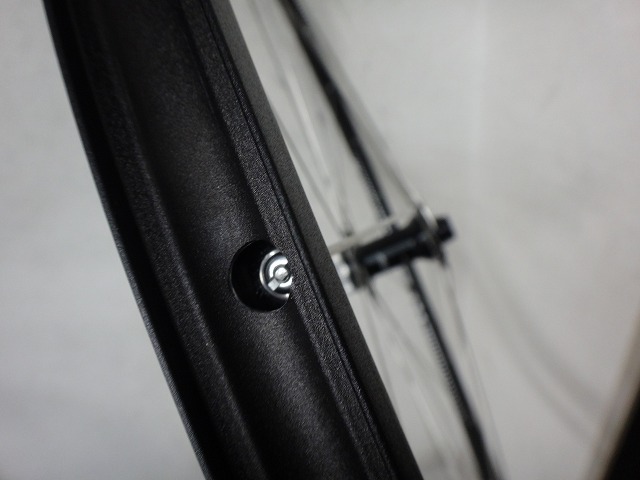
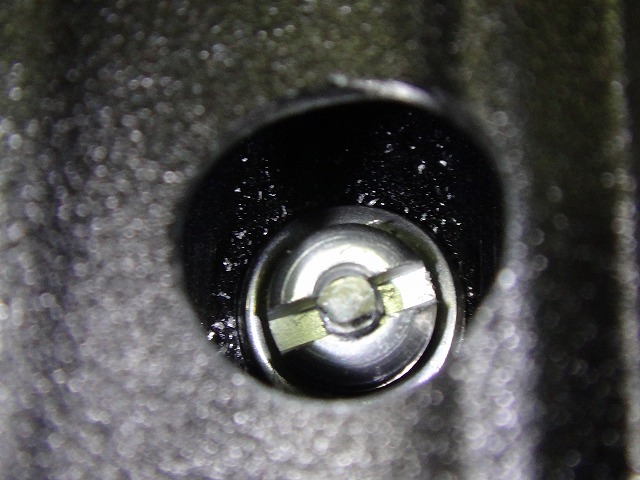
↑Non-rotor side

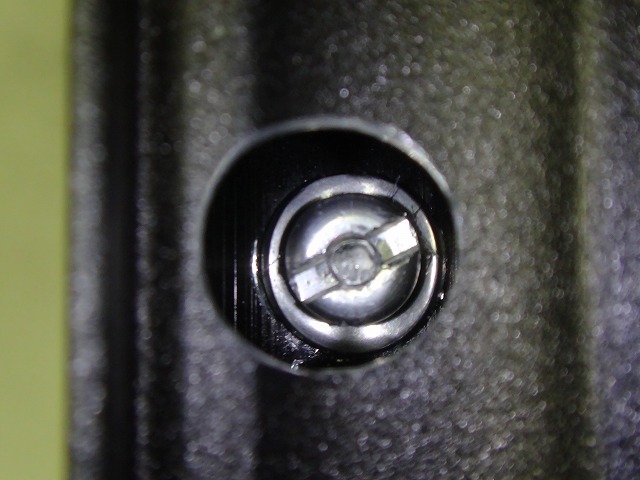
↑Rotor side
I wanted to verify whether the spoke length calculations were correct
when building with a 24H rim and 36H hub.
The washers don't have dots marking front-to-back direction because
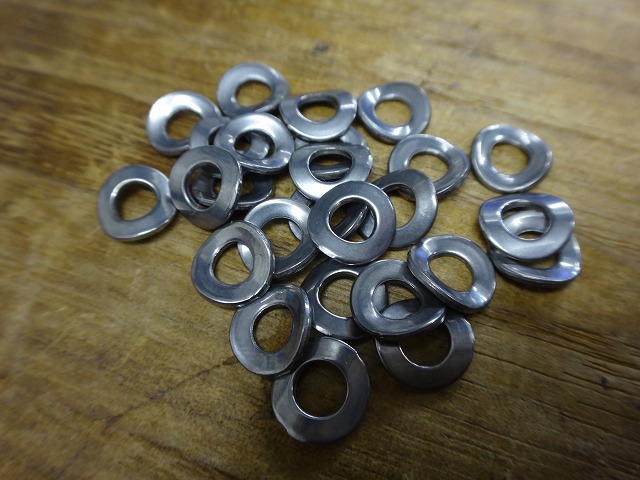
24H rims don't sell that well, apparently,
and the kit came with dot-less washers.

Squorx nipples always have leftovers anyway (34 per rim)
and I don't use them at all when building with colored nipples,
so I've accumulated enough to plant a modest crop of little yellow radishes.
This time I'm using the 105 hub to keep costs down (also the reason for silver spokes),
but since the RS770 also comes in 36H, the same assembly method is possible.
Since this wheel is 24H, it's not a semi-competizione but full CX-RAY,
and I decided to make it geared more toward disc road bikes than cyclocross.
Of course, it'll work for cyclocross too.
People will probably call me out for doing something unseemly instead of using a proper 24H hub,
but the Tni hub is difficult because the rotor uses a 6-bolt mount and
the rear hub has a low-flange design,
and DT and Chris King have the drawback that using them
makes my wallet experience rapid weight reduction,
so it's hard to find a really good hub.
Also, I received an inquiry asking about
the Nomulab Wheel No. 7 in a front-and-rear 24H disc brake configuration,
so this is also a proposal using an RS770 hub for something like that.