I took in an F4R from FF Yamaguchi (presumably from a customer).

The brakes feel loose—even when I open the quick release and pull the brake lever until it touches the bar tape, increasing the distance between the pads and rim, the brake shoes still touch during standing climbs.
The rim is a carbon WO rim, which is somewhat wide by older standards, but according to the customer (presumably), this model from FF Yamaguchi is the only one that still runs on the narrower side, and other models can't use thin tires.
Actually, I did an inspection a while back (though I didn't write about it) and did some re-tightening along with centering the wheel, but
it seems that didn't work either. Though I kind of knew it wouldn't.

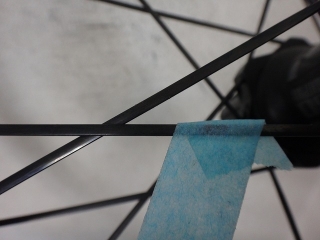
The non-freewheel side is way too loose.
I could tighten it a bit more, but it's like trying to fix a problem with a stone in boiling water—it won't help much.
The spokes are DT Aerolite straight-gauge on both sides, and the hub is a DT 350 with forced two-cross lacing on both sides—a 24-hole hub for straight spokes.
DT's Shimano 11-speed freewheel body positions the sprockets noticeably further outboard than genuine Shimano, so when swapping the rear wheel with a non-DT freewheel body, you need to readjust the derailleur.
With rear wheels using DT freewheel bodies—like some models from companies like Louvré and Bontrager, as well as Lightweight and some older Reynolds wheels—no derailleur adjustment is needed.
Because of that situation, I decided to do some stubborn troubleshooting with the current hub.
I'm going to set the freewheel side to a 14-gauge plain spoke, but in terms of how easily the brake shoes avoid touching and how well the brakes engage, by my assessment, it's slightly inferior to an Aerolite hub 24-hole with a semi-competition four-cross lacing.
It's clearly worse than a semi-champion four-cross lacing.
Generally, the effect hierarchy is different-diameter lacing both sides > different gauge lacing both sides, but since hub dimensions also play a role, a DT 350 straight hub with semi-champion four-cross equivalent won't beat a Novatech 482SL hub with semi-competition four-cross lacing.
Of course, the original state doesn't even warrant discussion.

The nipples were DT Squorx brass nipples.
I didn't even know such a thing existed.
Since they're using just the nipple without a washer, turning the nipple makes a "squeak squeak squeak..." sound.
What are you, Barefoot Gen or something.
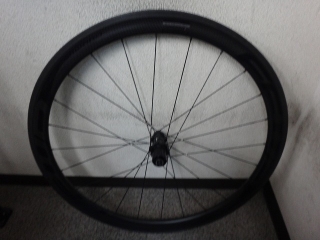
I got it built.
I set the freewheel side to black Sapim Leader straight 14-gauge plain spokes.
To make the freewheel side easier to tension, even when replacing just the freewheel-side spokes, I normally loosen the non-freewheel side somewhat, but this time I carefully disassembled only the freewheel side, replaced the spokes, and brought just the freewheel side up to tension toward the dead end first. This let me see how the rim shifts toward the freewheel side, and then the amount I can tension the non-freewheel side for centering is the effect of different-diameter lacing.
After building the wheel, though, even with the shifting adjustment and cost considerations, it turned out I should have built it with an Aerolite hub instead.
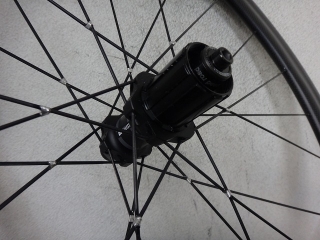
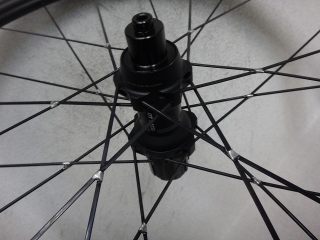
I laced all the final crosses on both sides together.
With a rear hub that has no flange gap, or even with a fixed-gear rear hub that has some flange gap, I do cross-lace both sides, but doing it on a road wheel is unusual.
This wasn't something the customer (presumably) asked for—it's something I decided had to be done because I thought "it won't be tight enough otherwise."
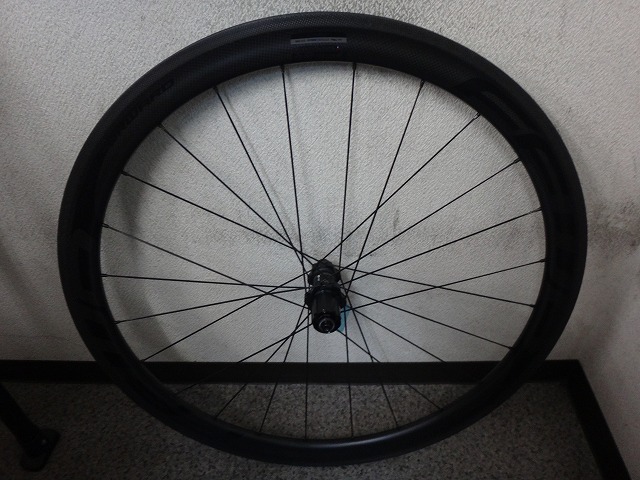
The brakes feel loose—even when I open the quick release and pull the brake lever until it touches the bar tape, increasing the distance between the pads and rim, the brake shoes still touch during standing climbs.
The rim is a carbon WO rim, which is somewhat wide by older standards, but according to the customer (presumably), this model from FF Yamaguchi is the only one that still runs on the narrower side, and other models can't use thin tires.
Actually, I did an inspection a while back (though I didn't write about it) and did some re-tightening along with centering the wheel, but
it seems that didn't work either. Though I kind of knew it wouldn't.
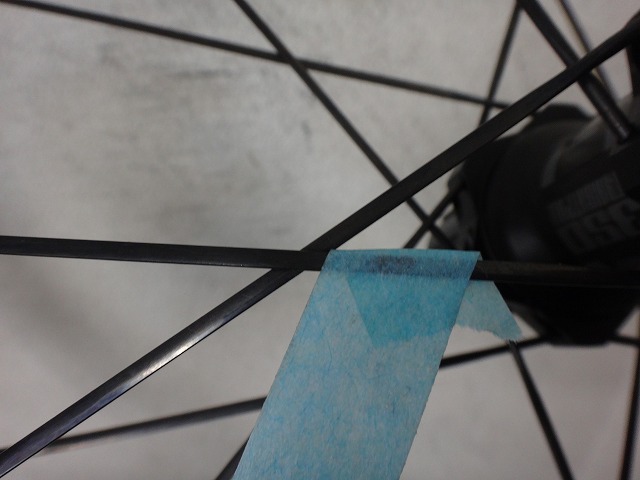

The non-freewheel side is way too loose.
I could tighten it a bit more, but it's like trying to fix a problem with a stone in boiling water—it won't help much.
The spokes are DT Aerolite straight-gauge on both sides, and the hub is a DT 350 with forced two-cross lacing on both sides—a 24-hole hub for straight spokes.
DT's Shimano 11-speed freewheel body positions the sprockets noticeably further outboard than genuine Shimano, so when swapping the rear wheel with a non-DT freewheel body, you need to readjust the derailleur.
With rear wheels using DT freewheel bodies—like some models from companies like Louvré and Bontrager, as well as Lightweight and some older Reynolds wheels—no derailleur adjustment is needed.
Because of that situation, I decided to do some stubborn troubleshooting with the current hub.
I'm going to set the freewheel side to a 14-gauge plain spoke, but in terms of how easily the brake shoes avoid touching and how well the brakes engage, by my assessment, it's slightly inferior to an Aerolite hub 24-hole with a semi-competition four-cross lacing.
It's clearly worse than a semi-champion four-cross lacing.
Generally, the effect hierarchy is different-diameter lacing both sides > different gauge lacing both sides, but since hub dimensions also play a role, a DT 350 straight hub with semi-champion four-cross equivalent won't beat a Novatech 482SL hub with semi-competition four-cross lacing.
Of course, the original state doesn't even warrant discussion.
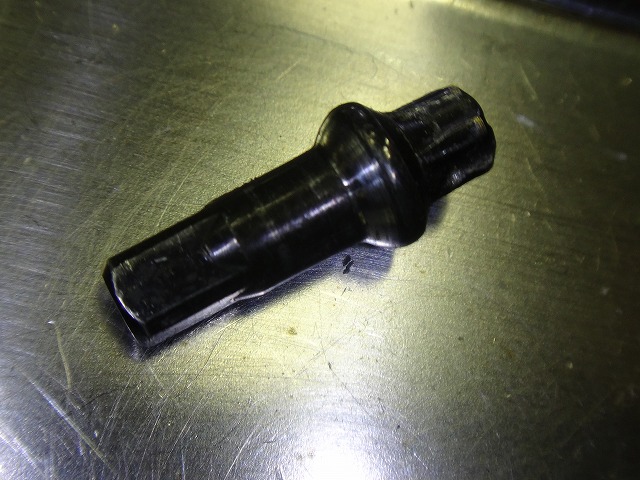
The nipples were DT Squorx brass nipples.
I didn't even know such a thing existed.
Since they're using just the nipple without a washer, turning the nipple makes a "squeak squeak squeak..." sound.
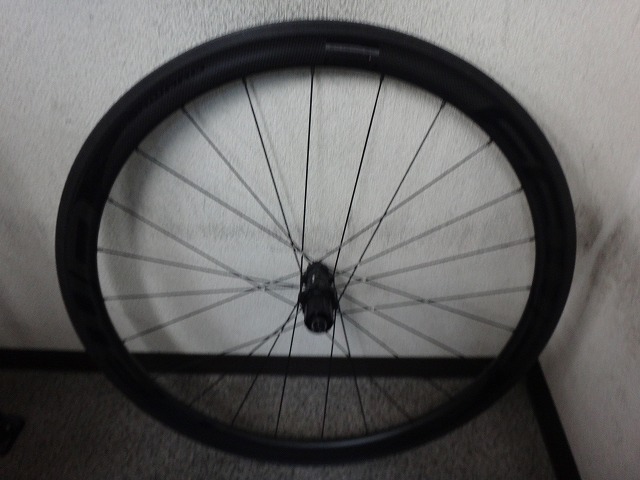
I got it built.
I set the freewheel side to black Sapim Leader straight 14-gauge plain spokes.
To make the freewheel side easier to tension, even when replacing just the freewheel-side spokes, I normally loosen the non-freewheel side somewhat, but this time I carefully disassembled only the freewheel side, replaced the spokes, and brought just the freewheel side up to tension toward the dead end first. This let me see how the rim shifts toward the freewheel side, and then the amount I can tension the non-freewheel side for centering is the effect of different-diameter lacing.
After building the wheel, though, even with the shifting adjustment and cost considerations, it turned out I should have built it with an Aerolite hub instead.
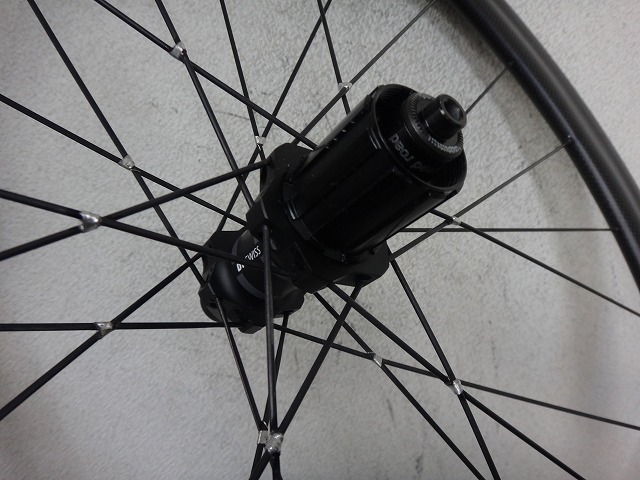

I laced all the final crosses on both sides together.
With a rear hub that has no flange gap, or even with a fixed-gear rear hub that has some flange gap, I do cross-lace both sides, but doing it on a road wheel is unusual.
This wasn't something the customer (presumably) asked for—it's something I decided had to be done because I thought "it won't be tight enough otherwise."