A customer brought in a Bora WTO (World Trade Organization) 45 for service.
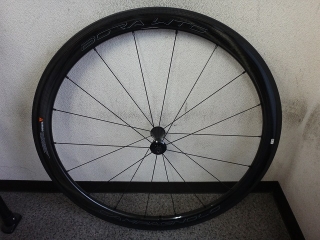
First, the front wheel.
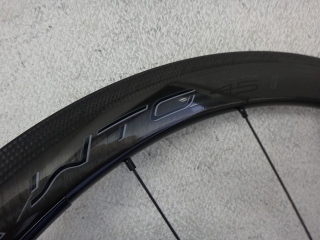
It says WTO 45, but
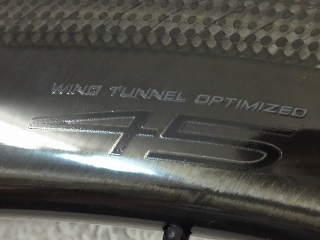
the naming with WTO (World Trade Organization) shows no room for half-hearted jokes—a flawless attention to detail.
The customer wanted the front wheel inspected, but it's built so precisely that lateral runout is completely corrected, to a degree that's almost excessive.
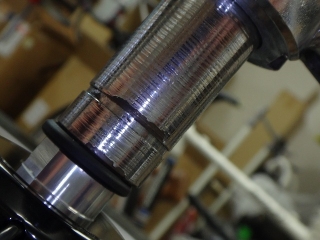
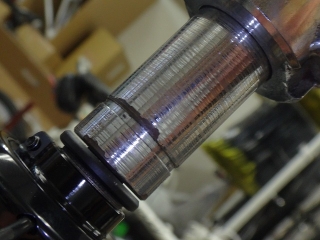
If there hadn't been any centering issues, I might not have needed to touch the nipples at all.
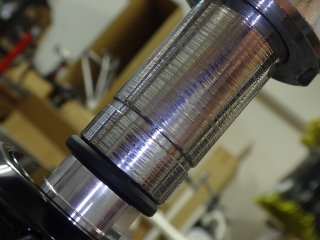
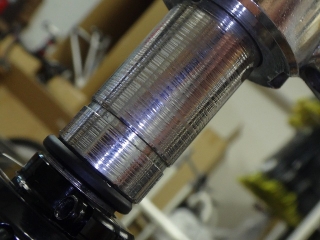
Fixed.
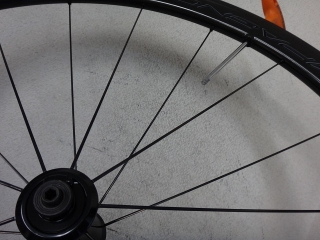
Most Campagnolo and Fulcrum rear wheels use asymmetric spoke lacing, but for symmetric lacing rear wheels and radially laced front wheels, the hole drilling is reversed from the standard. This is difficult to correct on aluminum-rimmed rims, so it remains as-is, but some recent steel-spoke models have corrected hole drilling. Front wheels from the external-nipple Bora and Spyder onwards have correct drilling, but the Bora WTO reverted to reversed drilling once again.
Back when European carbon rims from Campagnolo, Ambrosio, Gipiemme and others were almost entirely Corima OEM products, Corima's reversed drilling became the standard. Yet oddly, Campagnolo's early complete wheelsets had reversed drilling even on aluminum rims. Generic rims have correct drilling, though.

Anyway, now for the rear wheel. This is the main issue.
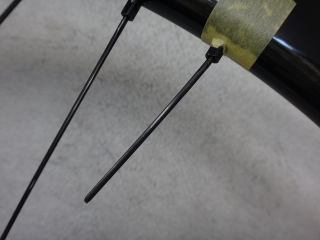
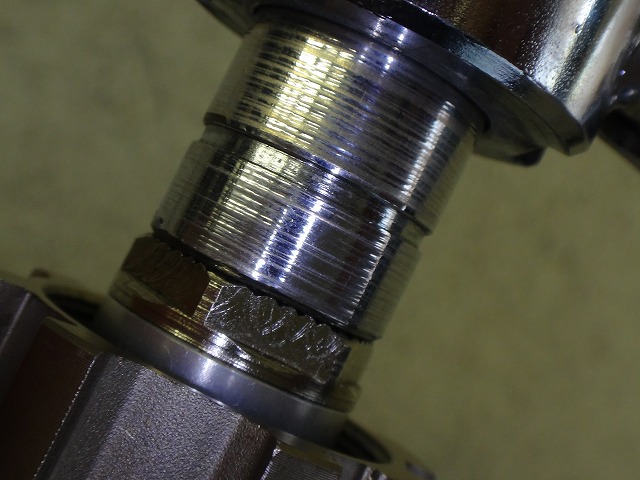
As you can see, a spoke is broken, but there's almost no trace of the sprockets on the freehub body. The customer said it was nearly brand new when they crashed.
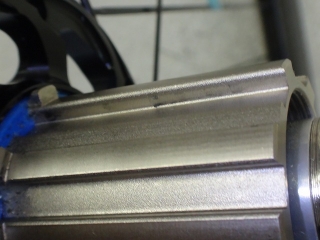
There are only faint traces on the freehub splines. It can't possibly be unused if a spoke broke, but it really looks brand new at first glance.
The Bora WTO appeared in the 2019 product catalog in two models: the Bora WTO 60 and Bora WTO 77, with the 77mm depth available only as a front wheel.
The Bora WTO 45 was an additional model announced mid-year, so its first catalog listing would be in 2020 models.
Looking at the 2019 spare parts catalog, the Bora WTO—not just the 45, but the 60 and 77 as well—has no spare parts listing page. It seems they were too new to make the deadline.
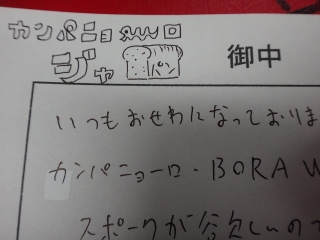
I contacted a distributor who knows Campagnolo better than anyone in Japan, and they said they haven't even started production yet.
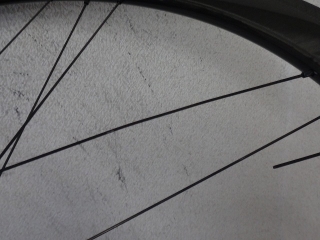
While measuring spoke length, I loosened the opposing spoke on the G3 pattern from the broken spoke, and found it bent as well. Actually, I had a feeling about this, which is why I loosened it.
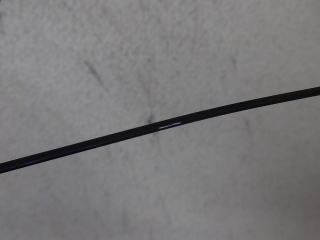
Looking closely...
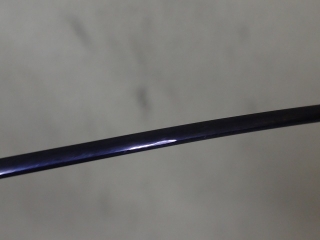
There's an impact mark.
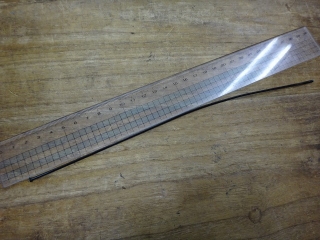
I removed the spoke.

It's bent starting from the impact mark.
This spoke here—
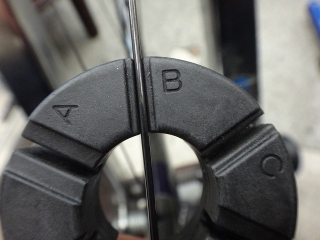
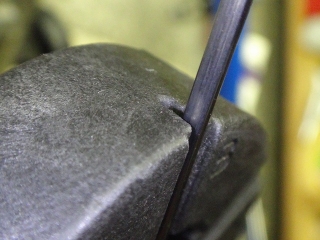
has a somewhat squat cross-sectional shape that won't fit into the B-groove of the Campagnolo/Fulcrum spoke nipple holder tool.
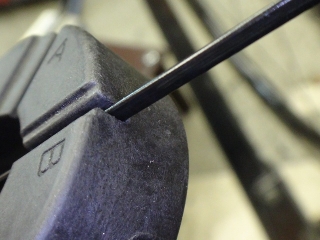
The Elliptic Aero CX-RAY, on the other hand, fits deep into the B-groove (upper image). The clearly square traditional Bora and Zonda spokes also fit deep into the B-groove. The Bora WTO pursued aerodynamics so aggressively that every component—rim, hub, and spoke—differs from the traditional models, and this became a problem.
I had to resort to a makeshift repair, sourcing spokes of the same or machined length, but mixing spokes of very different mass properties on the same flange causes issues (I'd like to write more about this, but I'm short on time). So I needed spokes with roughly similar mass properties despite their shape differences.

The removed spoke is bent, but bent spokes still show their pre-bend length within reasonable accuracy. The Bora WTO freehub-side spokes measured 265.5mm and weighed 4.5g. Spoke lengths used to be listed in catalogs, but now they aren't.
According to resources listing nominal values, the Bora 50 freehub-side spokes are 261.5mm, confirming that spoke lengths aren't determined to the nearest millimeter.
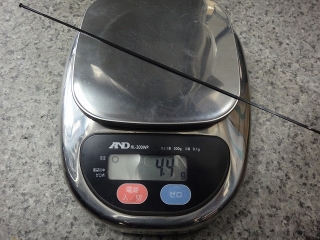
The Spyder 40 front spokes measured 270mm and weighed 4.4g.
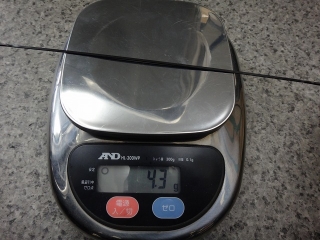
After machining them to 265.5mm, they came to 4.3g. This is acceptable as a temporary fix until proper original spokes are sourced. Spokes that differ by 1g or more at the same length won't work. I wouldn't even use a 0.5g difference.
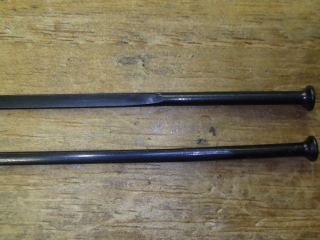
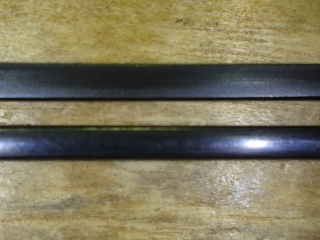
↑Both images: the upper spoke is from a traditional Bora, the lower is from the Bora WTO. The traditional Bora's square-aero design is wider and thinner, almost purely square in profile.
I don't think anyone would criticize my makeshift approach, but currently original spokes are unobtainable. The premise is that it will definitely be repaired with genuine parts eventually. We prepare it to work properly until then, sourcing and machining appropriate spokes—but honestly, I think there are almost no people capable of this kind of work. I'm certainly not obligated to accept criticism from those who can't do it. By the way, I didn't charge for the spokes this time.

It's fixed now.
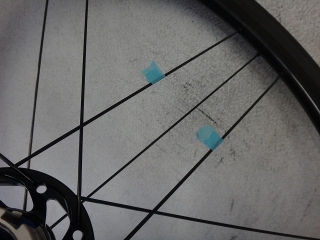
I've left a marking tape on it. The shape difference is noticeable when you touch the spokes. Please remove it before riding.
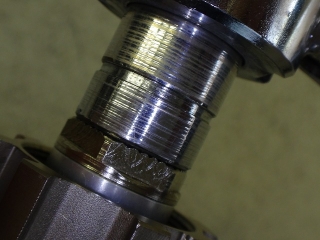
With just nipple adjustment on the replaced spoke, it came out virtually runout-free. Since the original spoke was broken and severely out of true, I started work without using a temporary center reference. When I first applied the centering gauge after truing, it was spot-on.
With G3-pattern rear wheels, the rim is compressed inward directly below the G3 phase compared to the rest phase. With 21-hole wheels, this creates seven radial runout points. You can't see this without a truing stand—but it definitely catches if you use one, and it can't be corrected. However, it's far less than tire deformation at contact, so you won't feel it while riding.
On the section I repaired with two traditional Bora spokes, I didn't see any radial runout that seemed to come from spoke mass difference. There's a possibility that such runout exists but is masked by the larger G3-derived radial runout, but it's not apparent.
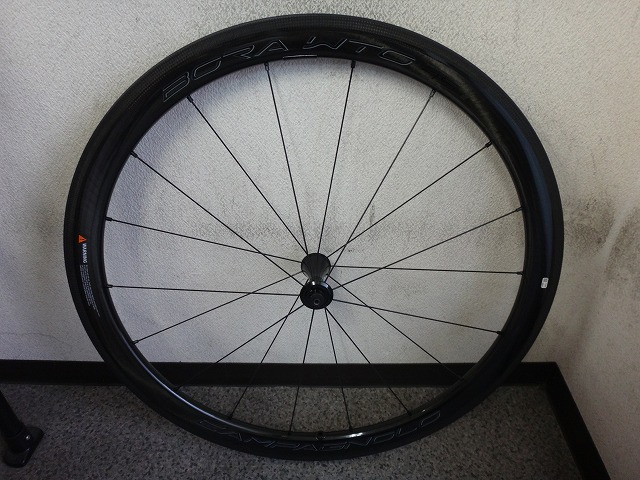
First, the front wheel.
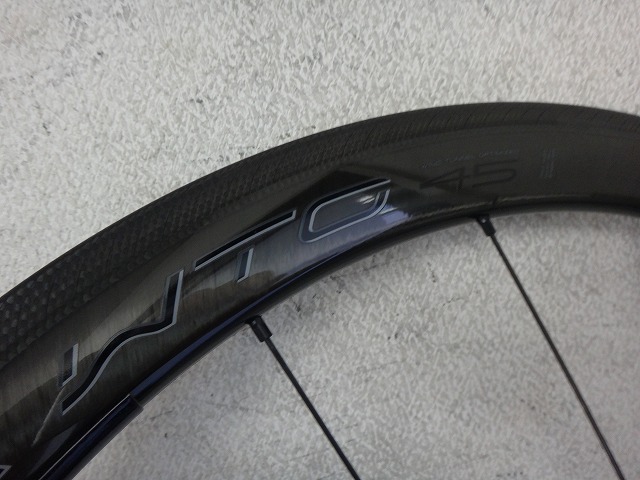
It says WTO 45, but
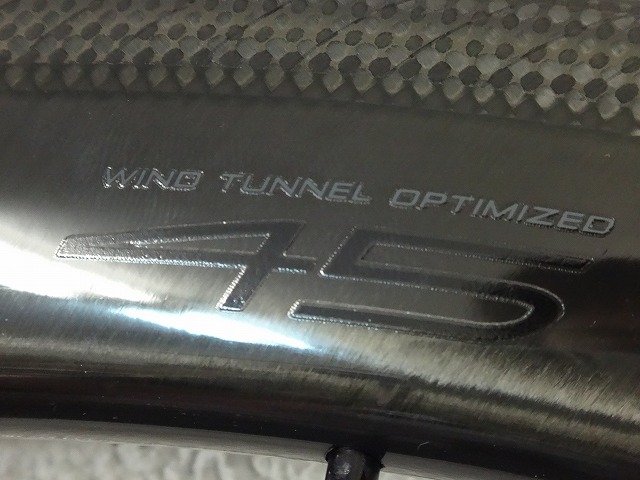
the naming with WTO (World Trade Organization) shows no room for half-hearted jokes—a flawless attention to detail.
The customer wanted the front wheel inspected, but it's built so precisely that lateral runout is completely corrected, to a degree that's almost excessive.
If there hadn't been any centering issues, I might not have needed to touch the nipples at all.
Fixed.

Most Campagnolo and Fulcrum rear wheels use asymmetric spoke lacing, but for symmetric lacing rear wheels and radially laced front wheels, the hole drilling is reversed from the standard. This is difficult to correct on aluminum-rimmed rims, so it remains as-is, but some recent steel-spoke models have corrected hole drilling. Front wheels from the external-nipple Bora and Spyder onwards have correct drilling, but the Bora WTO reverted to reversed drilling once again.
Back when European carbon rims from Campagnolo, Ambrosio, Gipiemme and others were almost entirely Corima OEM products, Corima's reversed drilling became the standard. Yet oddly, Campagnolo's early complete wheelsets had reversed drilling even on aluminum rims. Generic rims have correct drilling, though.

Anyway, now for the rear wheel. This is the main issue.
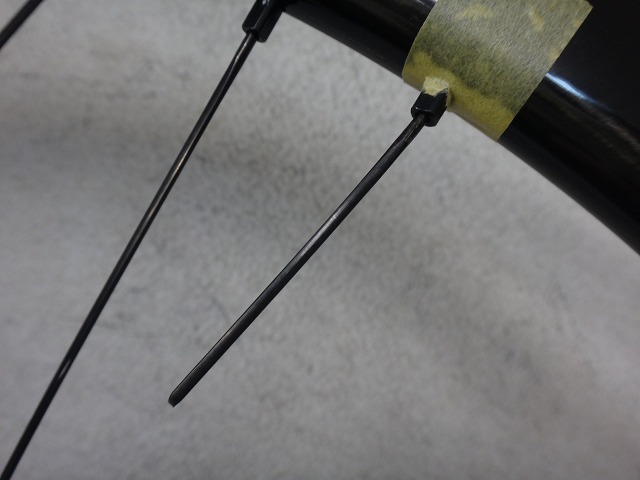
As you can see, a spoke is broken, but there's almost no trace of the sprockets on the freehub body. The customer said it was nearly brand new when they crashed.

There are only faint traces on the freehub splines. It can't possibly be unused if a spoke broke, but it really looks brand new at first glance.
The Bora WTO appeared in the 2019 product catalog in two models: the Bora WTO 60 and Bora WTO 77, with the 77mm depth available only as a front wheel.
The Bora WTO 45 was an additional model announced mid-year, so its first catalog listing would be in 2020 models.
Looking at the 2019 spare parts catalog, the Bora WTO—not just the 45, but the 60 and 77 as well—has no spare parts listing page. It seems they were too new to make the deadline.
I contacted a distributor who knows Campagnolo better than anyone in Japan, and they said they haven't even started production yet.
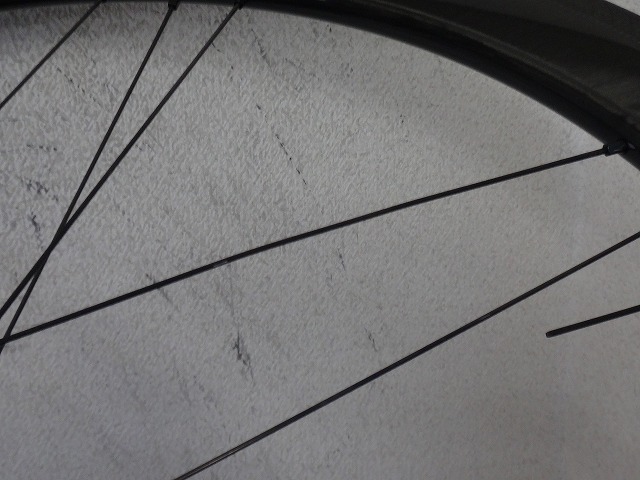
While measuring spoke length, I loosened the opposing spoke on the G3 pattern from the broken spoke, and found it bent as well. Actually, I had a feeling about this, which is why I loosened it.
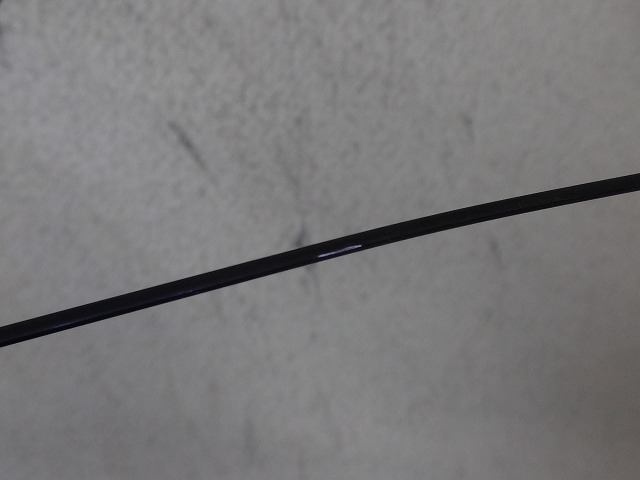
Looking closely...
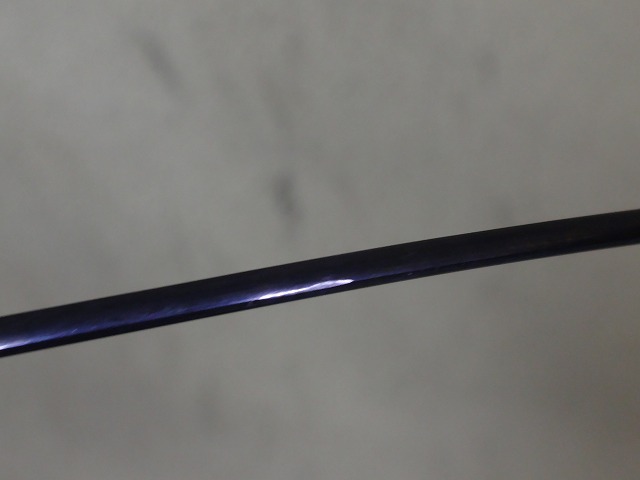
There's an impact mark.

I removed the spoke.
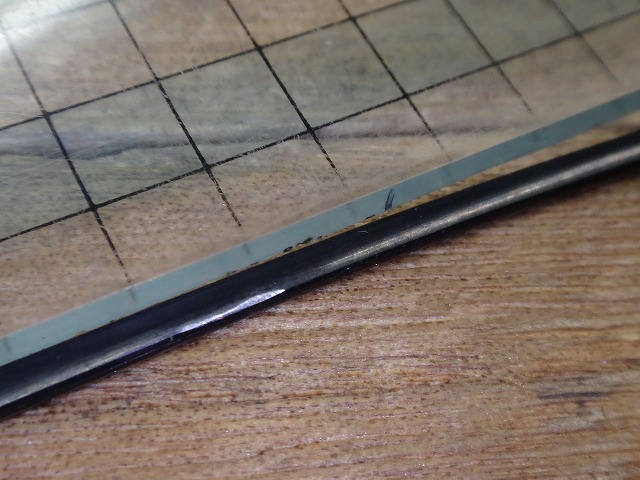
It's bent starting from the impact mark.
This spoke here—
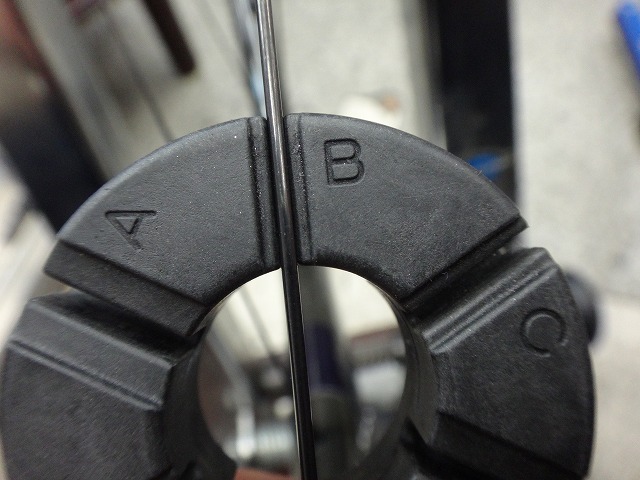
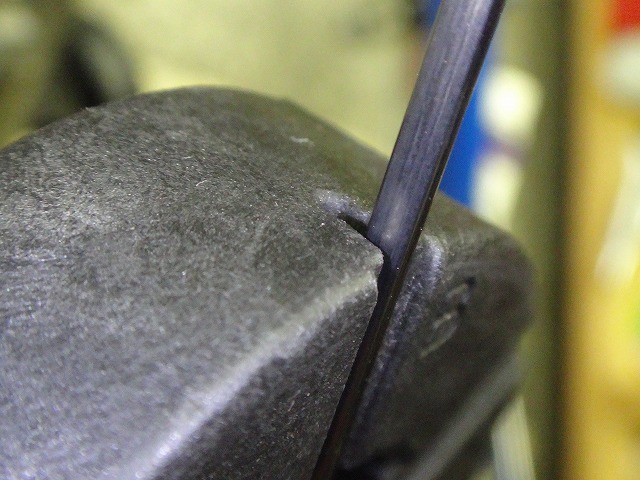
has a somewhat squat cross-sectional shape that won't fit into the B-groove of the Campagnolo/Fulcrum spoke nipple holder tool.
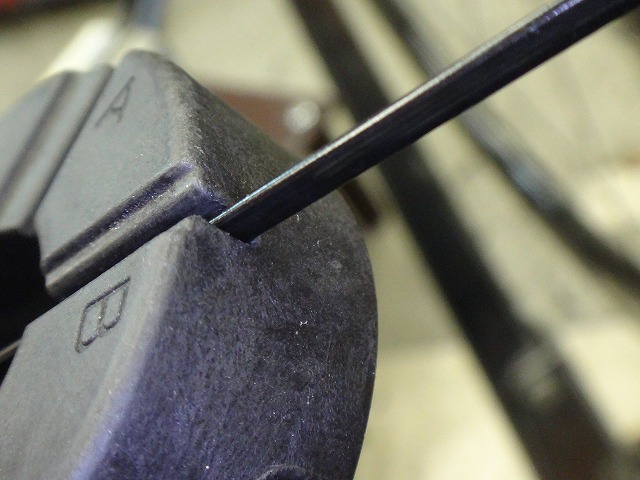
The Elliptic Aero CX-RAY, on the other hand, fits deep into the B-groove (upper image). The clearly square traditional Bora and Zonda spokes also fit deep into the B-groove. The Bora WTO pursued aerodynamics so aggressively that every component—rim, hub, and spoke—differs from the traditional models, and this became a problem.
I had to resort to a makeshift repair, sourcing spokes of the same or machined length, but mixing spokes of very different mass properties on the same flange causes issues (I'd like to write more about this, but I'm short on time). So I needed spokes with roughly similar mass properties despite their shape differences.
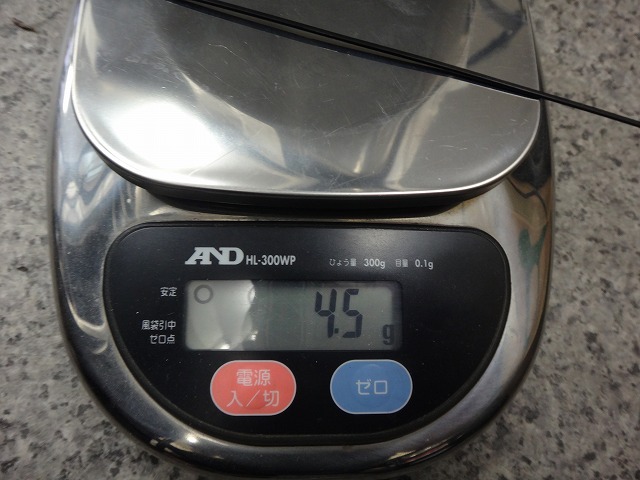
The removed spoke is bent, but bent spokes still show their pre-bend length within reasonable accuracy. The Bora WTO freehub-side spokes measured 265.5mm and weighed 4.5g. Spoke lengths used to be listed in catalogs, but now they aren't.
According to resources listing nominal values, the Bora 50 freehub-side spokes are 261.5mm, confirming that spoke lengths aren't determined to the nearest millimeter.
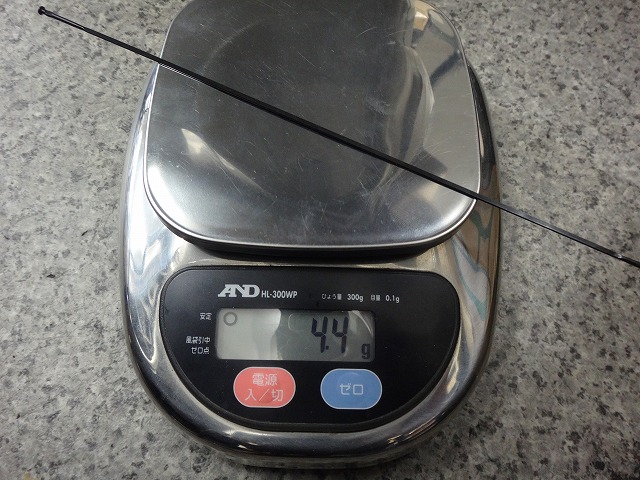
The Spyder 40 front spokes measured 270mm and weighed 4.4g.

After machining them to 265.5mm, they came to 4.3g. This is acceptable as a temporary fix until proper original spokes are sourced. Spokes that differ by 1g or more at the same length won't work. I wouldn't even use a 0.5g difference.
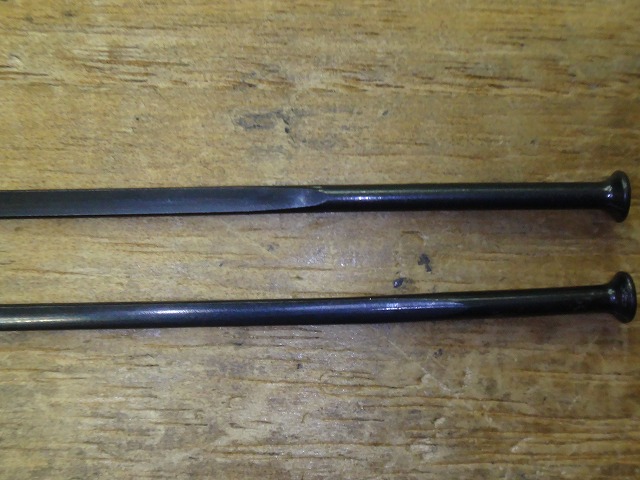
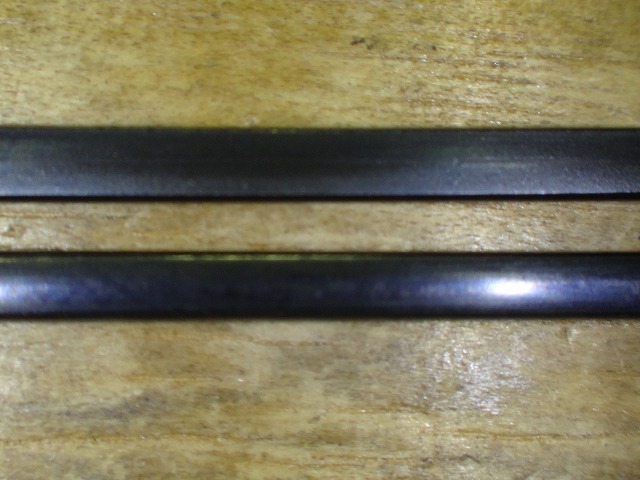
↑Both images: the upper spoke is from a traditional Bora, the lower is from the Bora WTO. The traditional Bora's square-aero design is wider and thinner, almost purely square in profile.
I don't think anyone would criticize my makeshift approach, but currently original spokes are unobtainable. The premise is that it will definitely be repaired with genuine parts eventually. We prepare it to work properly until then, sourcing and machining appropriate spokes—but honestly, I think there are almost no people capable of this kind of work. I'm certainly not obligated to accept criticism from those who can't do it. By the way, I didn't charge for the spokes this time.
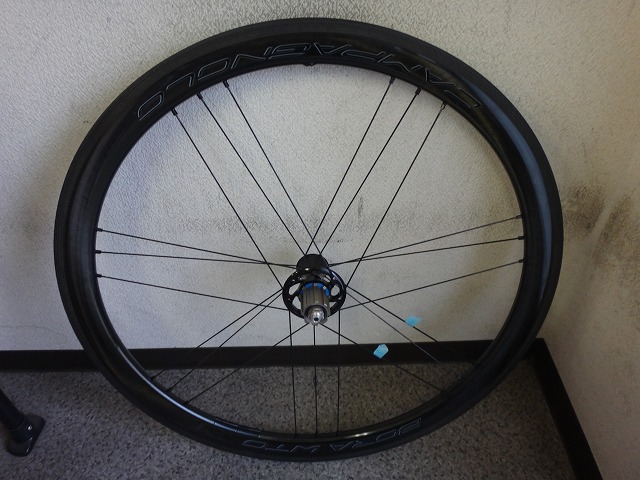
It's fixed now.
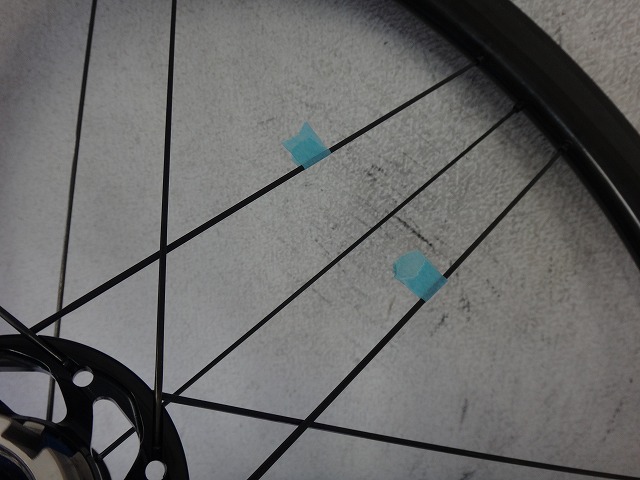
I've left a marking tape on it. The shape difference is noticeable when you touch the spokes. Please remove it before riding.

With just nipple adjustment on the replaced spoke, it came out virtually runout-free. Since the original spoke was broken and severely out of true, I started work without using a temporary center reference. When I first applied the centering gauge after truing, it was spot-on.
With G3-pattern rear wheels, the rim is compressed inward directly below the G3 phase compared to the rest phase. With 21-hole wheels, this creates seven radial runout points. You can't see this without a truing stand—but it definitely catches if you use one, and it can't be corrected. However, it's far less than tire deformation at contact, so you won't feel it while riding.
On the section I repaired with two traditional Bora spokes, I didn't see any radial runout that seemed to come from spoke mass difference. There's a possibility that such runout exists but is masked by the larger G3-derived radial runout, but it's not apparent.