The rear wheel of the Racing Zero, whose front wheel I disassembled and repaired the other day.
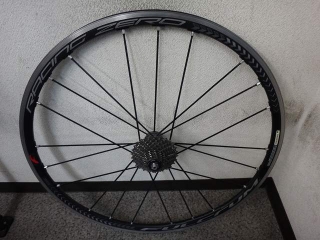
Unlike the front wheel, there are no twisted spokes, but
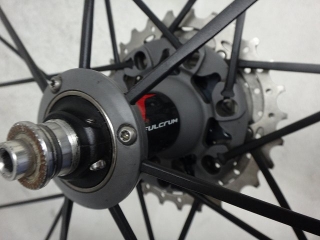
this is bad news.
I can rotate the hub axle backward by hand, but I can't rotate it forward.
Examples of this symptom include a Shimano rear hub where the seal on the right side is installed backwards causing abnormally high resistance, or in this rear hub, the bearing in the freebody is rusted and has seized with the hub axle.
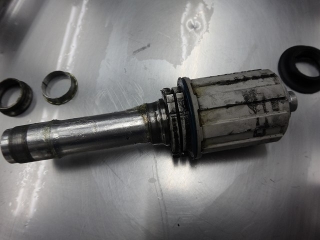
I disassembled it.
When the freebody doesn't rotate relative to the hub axle and these parts become fused into one unit, the hub axle will only rotate in the direction where the ratchet engages
(it's still somewhat possible to rotate it with a tool by inserting an Allen key into the hex hole at the end of the hub axle).
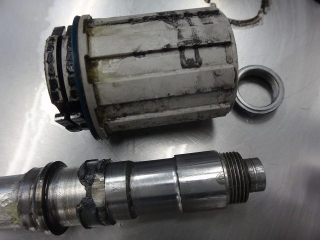
The freebody came out without much resistance.
There's no secondary rust damage at the position directly under the bearing.
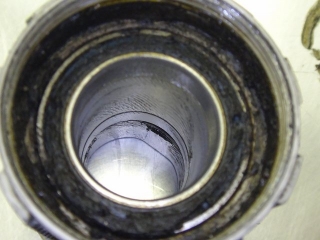
The bearing inner race cannot be moved by hand—it has become a solid bushing.
This is the reason for the abnormal resistance.
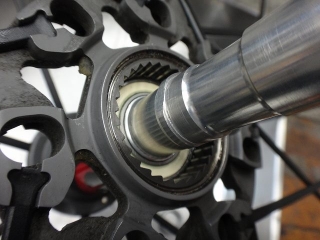
The hub bearing side had no particular issues, so I assembled it first.
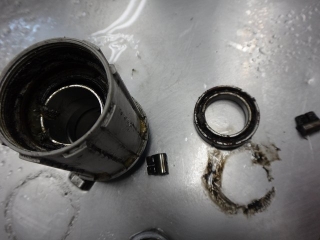
The bearing had seized not just on the outside but on the inside as well, so I removed the outer bearing first.

The grease inside the freebody looks dirty
(and it actually is dirty), but
that's only the surface. When I blew it away with parts cleaner, the areas beneath the surface retained their original white color.
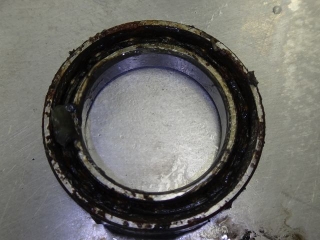
When a bearing is severely rusted on the inside, spraying it with parts cleaner causes a muddy stream of rust liquid to gush out, but
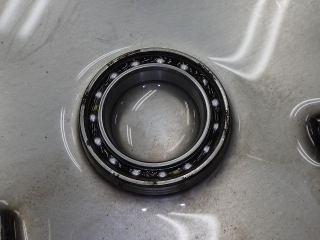
...that's not happening here at all.
Yet even in this state, the bearing remains seized.
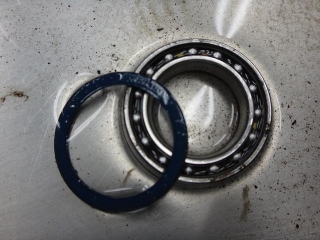
I even peeled back the seal on one side and cleaned it further, but it still wouldn't rotate.
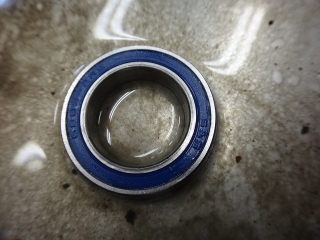
The inner bearing moves slightly.
I don't mean it rotates heavily—I mean it has some range of motion.
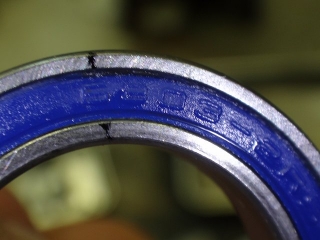
I made a mark.
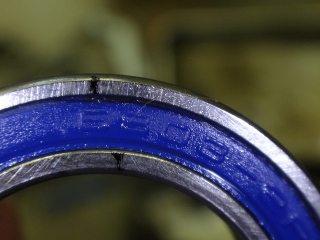
It moves within this range.
According to the customer,
"The hub might have gotten heavy because I over-tightened the quick release,"
and if by "quick release" they mean a skewer like those from DT Swiss, then it's possible for the bearing to fail from compression force.
This rear hub doesn't use a press-fit design—both the right end (nut) and left end (hollow bolt) are threaded, so the compression force shouldn't directly load the bearing inner race.
Yet the failure pattern clearly suggests that's exactly what happened.
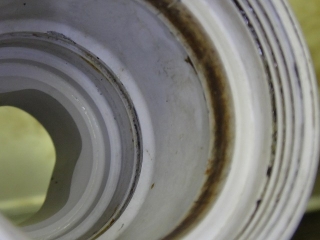
I cleaned the freebody as well.
There's secondary rust damage at the outer bearing press-fit location, but no rust marks on the outer circumference of the outer bearing itself.

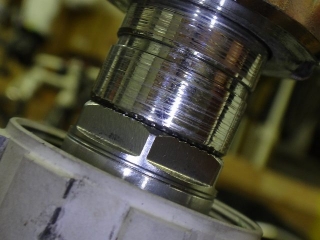
I assembled the freebody.
There's center offset with the rim shifted to the left.
This isn't a direction it would shift from normal use, so either it was off from the start or it shifted during spoke tension adjustment work.
The offset seems larger than what you'd expect from a stock Racing Zero, so I'm inclined to think it's the latter.
Unlike the front wheel, there were almost no nipples at risk of seizing
(and even if there were a few, there are methods to get them turning),
so truing and centering were straightforward.
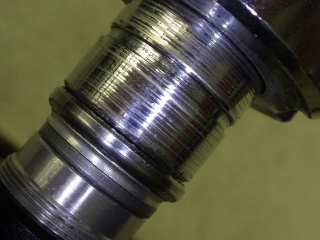
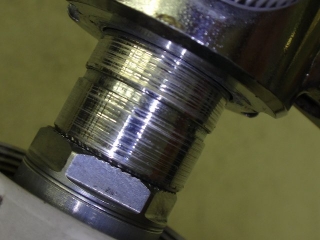
I did the centering and truing.
Also, there was a slight dent in the rim bead hook at one spot, but it wasn't noticeable enough to affect brake setup or feel.
I forgot to take a photo of that.

Unlike the front wheel, there are no twisted spokes, but
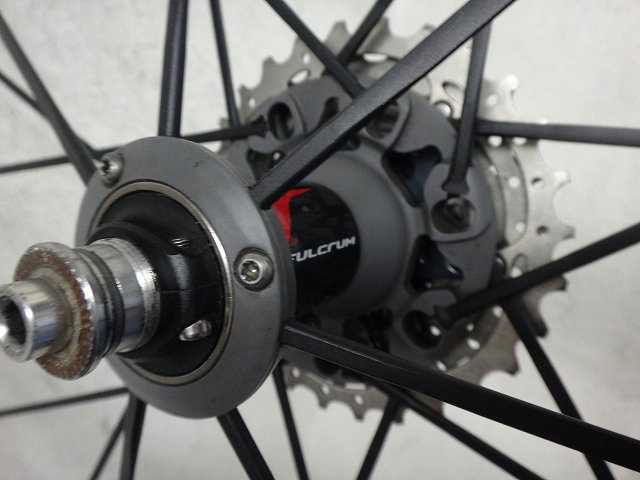
this is bad news.
I can rotate the hub axle backward by hand, but I can't rotate it forward.
Examples of this symptom include a Shimano rear hub where the seal on the right side is installed backwards causing abnormally high resistance, or in this rear hub, the bearing in the freebody is rusted and has seized with the hub axle.
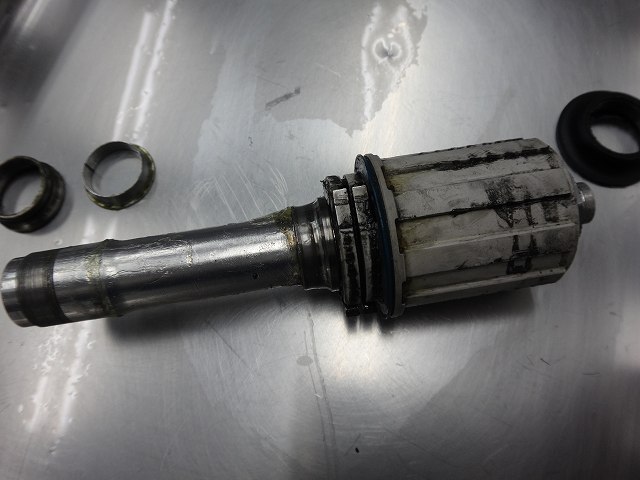
I disassembled it.
When the freebody doesn't rotate relative to the hub axle and these parts become fused into one unit, the hub axle will only rotate in the direction where the ratchet engages
(it's still somewhat possible to rotate it with a tool by inserting an Allen key into the hex hole at the end of the hub axle).
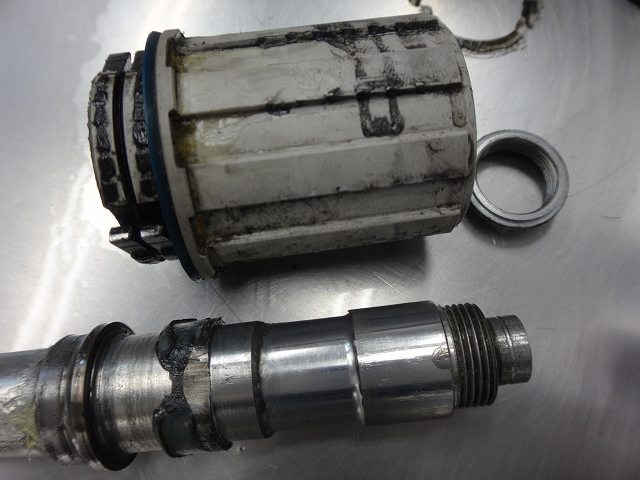
The freebody came out without much resistance.
There's no secondary rust damage at the position directly under the bearing.
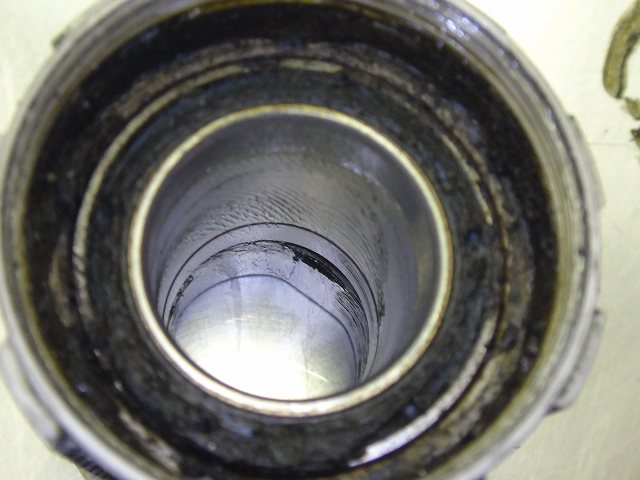
The bearing inner race cannot be moved by hand—it has become a solid bushing.
This is the reason for the abnormal resistance.
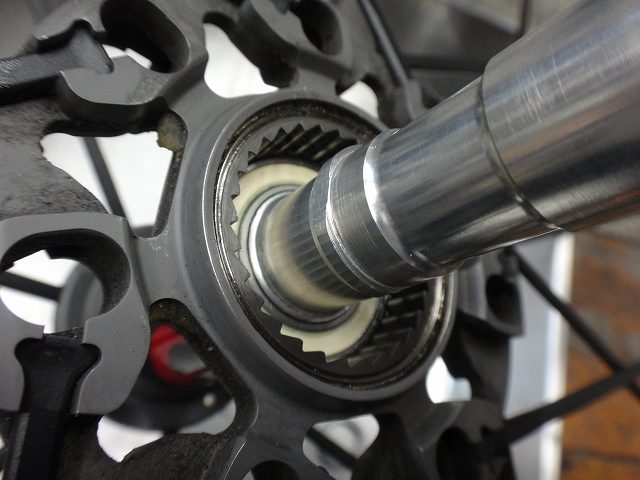
The hub bearing side had no particular issues, so I assembled it first.
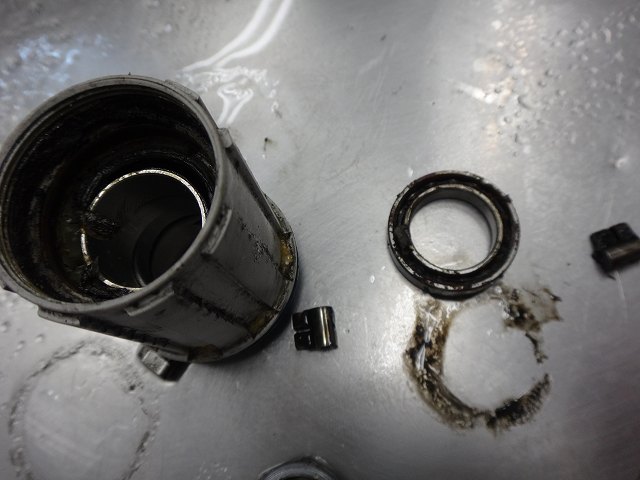
The bearing had seized not just on the outside but on the inside as well, so I removed the outer bearing first.
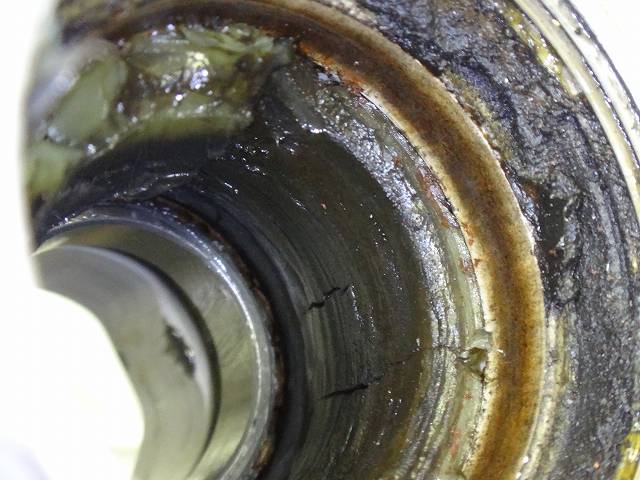
The grease inside the freebody looks dirty
(and it actually is dirty), but
that's only the surface. When I blew it away with parts cleaner, the areas beneath the surface retained their original white color.

When a bearing is severely rusted on the inside, spraying it with parts cleaner causes a muddy stream of rust liquid to gush out, but

...that's not happening here at all.
Yet even in this state, the bearing remains seized.
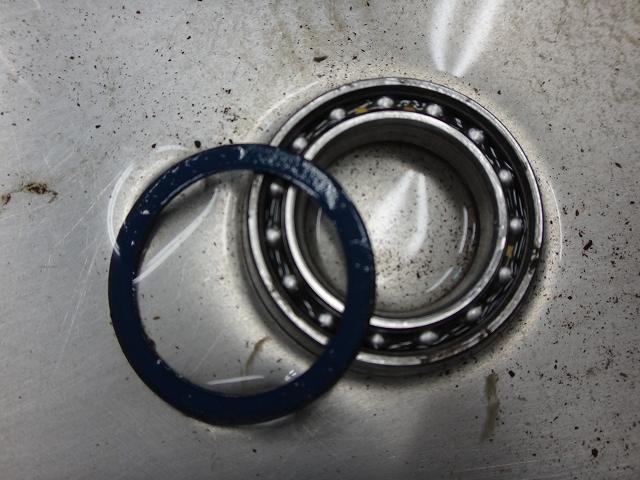
I even peeled back the seal on one side and cleaned it further, but it still wouldn't rotate.
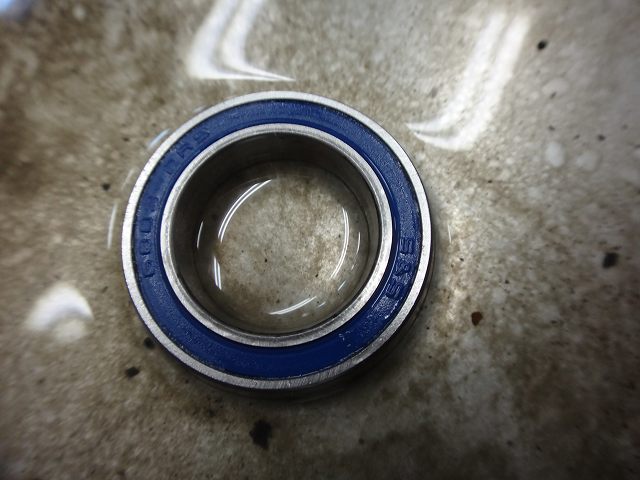
The inner bearing moves slightly.
I don't mean it rotates heavily—I mean it has some range of motion.
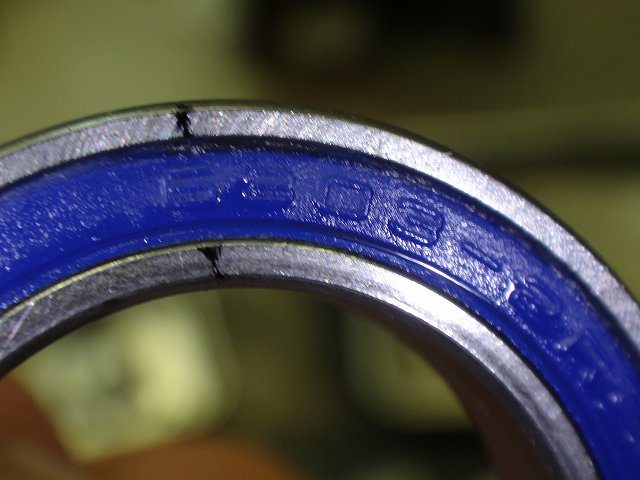
I made a mark.
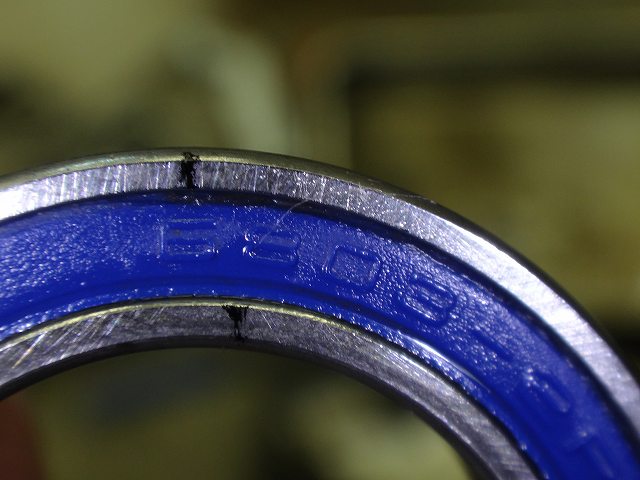
It moves within this range.
According to the customer,
"The hub might have gotten heavy because I over-tightened the quick release,"
and if by "quick release" they mean a skewer like those from DT Swiss, then it's possible for the bearing to fail from compression force.
This rear hub doesn't use a press-fit design—both the right end (nut) and left end (hollow bolt) are threaded, so the compression force shouldn't directly load the bearing inner race.
Yet the failure pattern clearly suggests that's exactly what happened.

I cleaned the freebody as well.
There's secondary rust damage at the outer bearing press-fit location, but no rust marks on the outer circumference of the outer bearing itself.
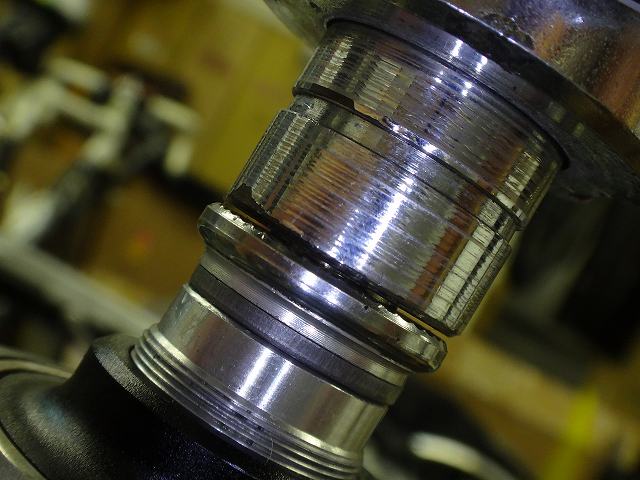
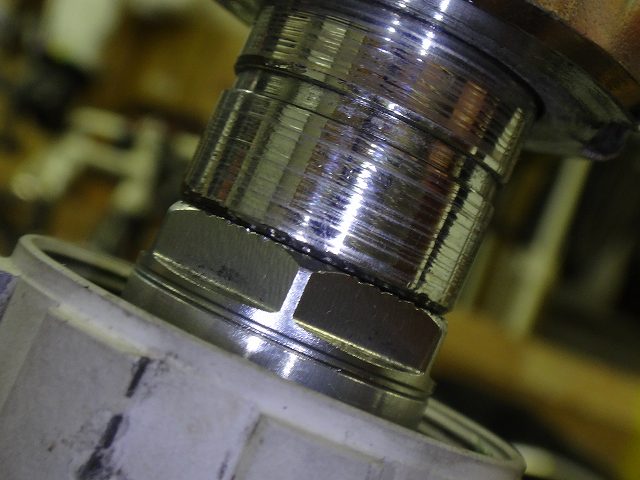
I assembled the freebody.
There's center offset with the rim shifted to the left.
This isn't a direction it would shift from normal use, so either it was off from the start or it shifted during spoke tension adjustment work.
The offset seems larger than what you'd expect from a stock Racing Zero, so I'm inclined to think it's the latter.
Unlike the front wheel, there were almost no nipples at risk of seizing
(and even if there were a few, there are methods to get them turning),
so truing and centering were straightforward.
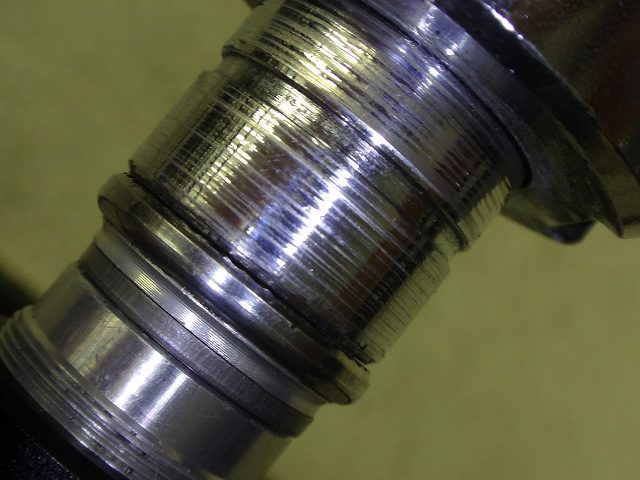

I did the centering and truing.
Also, there was a slight dent in the rim bead hook at one spot, but it wasn't noticeable enough to affect brake setup or feel.
I forgot to take a photo of that.