Another wheel day (and so on).

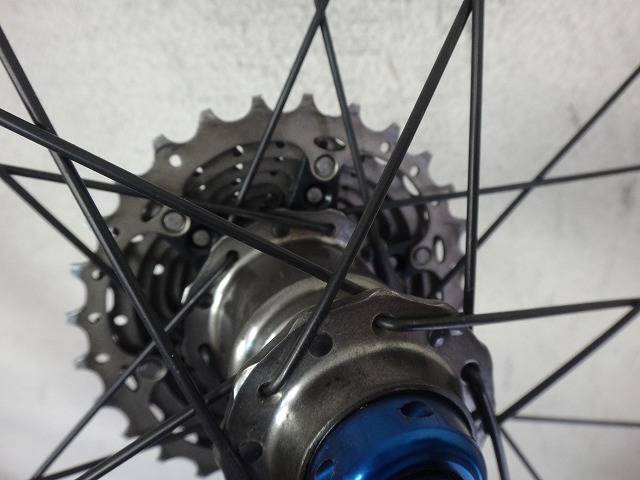
A customer brought in a rear wheel built with a hub from ONYX Racing Products.
I've written about this before, but ONYX is definitely pronounced "onyx" in English,
however in Japan's bicycle wholesale system it's referred to as O-N-Y-X.
Apparently they do this because there's an overlapping trademark in the bicycle industry.
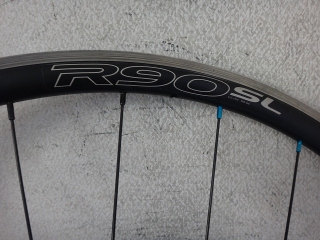
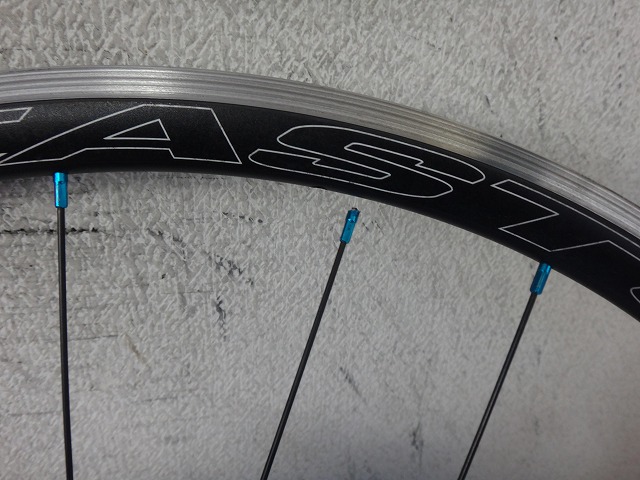
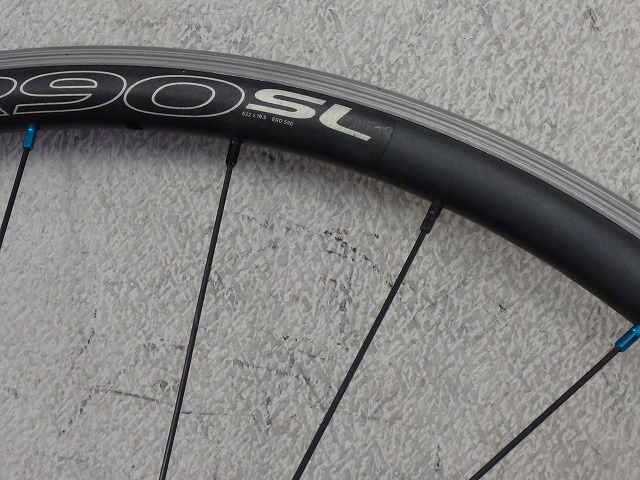
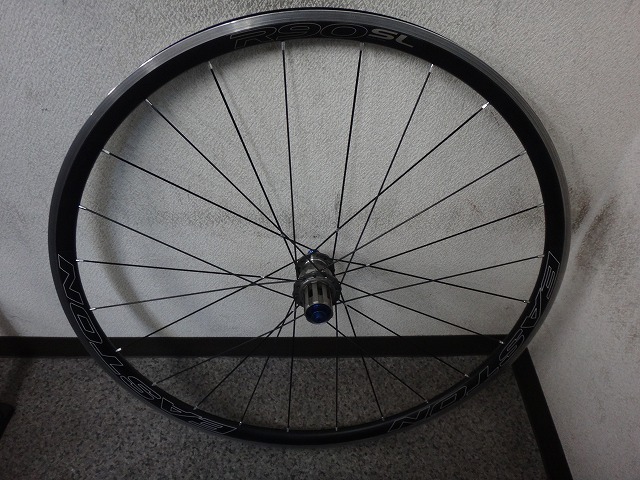
The rim is an Easton R90SL
(the reason for the different nipple colors will be explained later),

with Sapim black Leader 14mm spokes in plain 4-6 lacing.
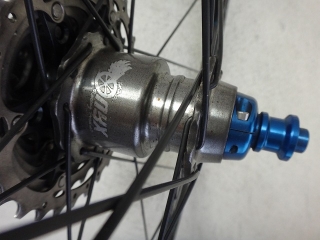
According to the current ONYX manufacturer website,
the number of model variations for ONYX hubs beyond just hole count is:
113 types for MTB, 36 types for fat bikes, 35 types for BMX,
11 types for cyclocross, and 4 types for road.
Of those 4 road types, 2 are front hubs:
the Road Front Hub (that's the actual model name, not a generic term) with no lightening holes in the hub shell,
and the Road Helix Front Hub with spiral helix-pattern lightening on the hub shell.
The rear hub comes as only the Road DS Rear Hub model,
and the 2 variations refer only to whether the freebody is Shimano-compatible or Campagnolo-compatible.
So ONYX's road rear hub is
really just this one model.
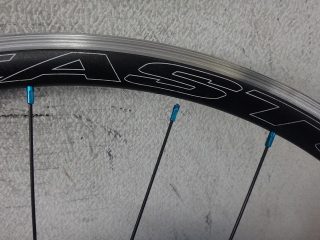
The reason it was brought in was that nipples kept breaking repeatedly,
and the customer wanted something done about it.
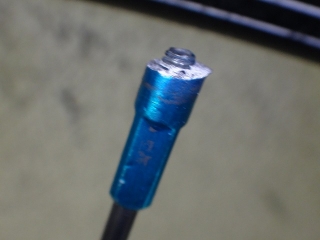
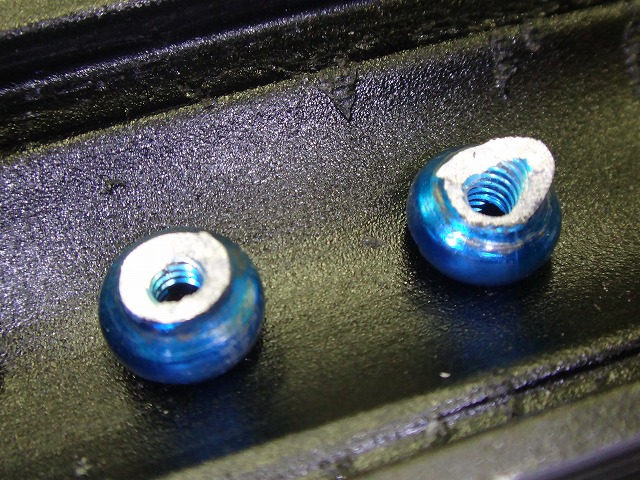
The only nipple that was actually broken at the time of drop-off
was split diagonally.
As for why the breakages were so frequent—as I've written many times before—
you can't trust Sapim's 14mm aluminum nipples.
Each CX-RAY comes with a matching silver or black nipple depending on spoke color,
but I don't use them.
The only time I'm forced to use Sapim aluminum nipples is when I need orange,
which DT doesn't make, and then I only use the 12mm length.
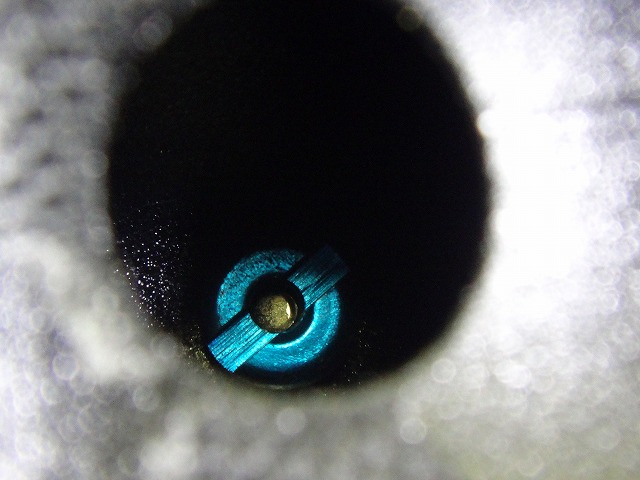
But the main cause of this wheel's repeated nipple breakage
isn't really Sapim's 14mm nipples, but rather
↑Drive side

↑Non-drive side
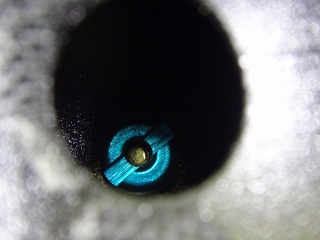
it appears to be that the spokes are too short, below thread creep length.
The thinking is that the more threads bearing spoke tension load, the better.
So longer spokes are preferable to shorter ones, within reason of course.
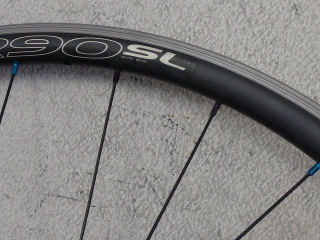
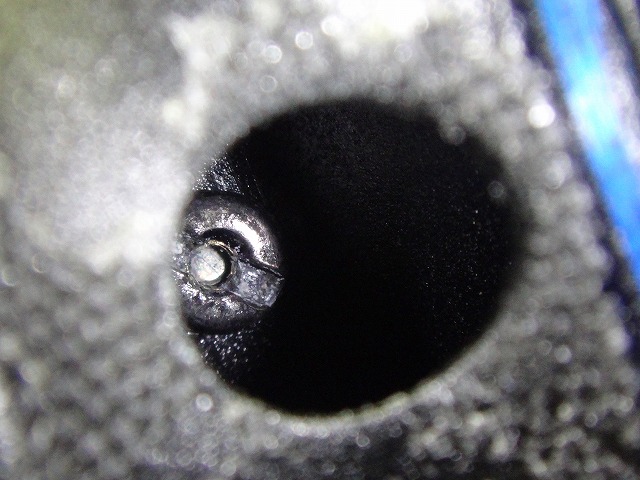
The two rim holes adjacent to the valve hole being black nipples indicate
where a previous breakage was repaired,
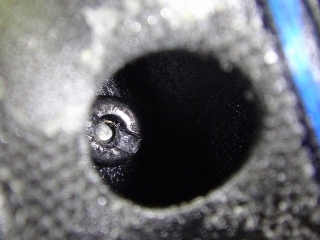
but changing nipple length doesn't change the outer face dimension,
so the spokes are still short.
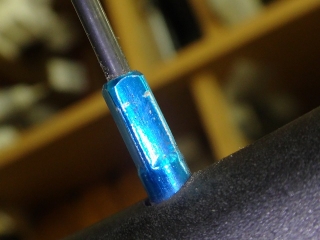
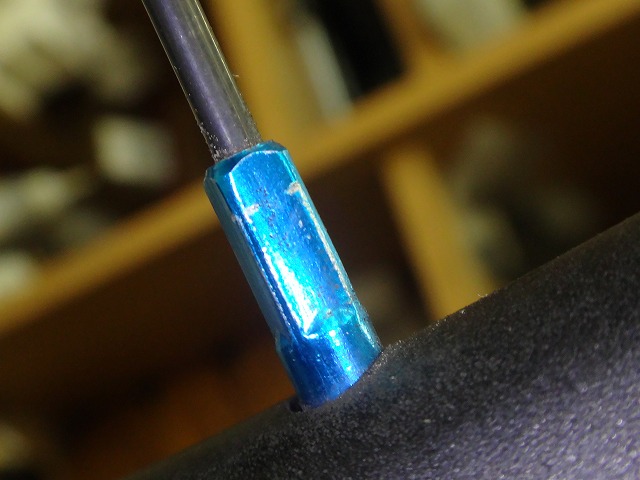
The turquoise (or maybe cyan) 14mm nipples
had a 3.2mm wrench flat,
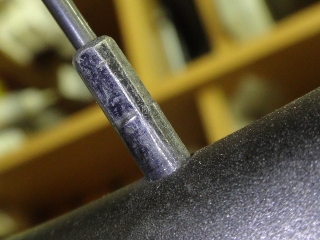
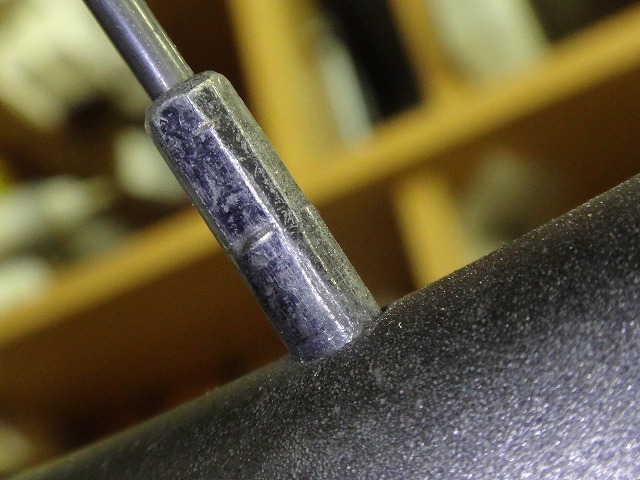
while the black 16mm nipples had 3.4mm.
I asked the customer if the shop that built it with the turquoise nipples and the one that repaired it with the black ones were different,
but apparently they're the same shop. Are you kidding me?
I promised not to write the shop name, so I can't share it,
but I already know them as the type who are good at assembling expensive parts poorly,
so I wasn't surprised to hear which one it was.
Maybe the manager built it and the apprentice did the repair,
but they're both terrible anyway, so what's the difference?
If those guys are reading this somewhere, from the rim and hub you'll figure out it's you,
but I'll say it as many times as I need to: you're both absolutely hopeless hacks,
including how you handled the aftermath.
Aside from the nipple breakage, the tension was weak.
When I pinch the non-drive-side crosses, the black-spoke characteristic creaking noise
sounds easily.
Just swapping in DT nipples alone (with the spokes still short)
would significantly reduce the likelihood of breakage, if I build it.
Even keeping the all-black Leader 4-6 lacing,
the higher tension would put the spoke ends right at or just past thread creep.
As an alternative proposal, since plain spokes can be cut to any length,
I suggested to the customer:
make the drive-side black Leaders as a 4-spoke proper length,
and the non-drive-side as 6 black CX-RAYs, then braze them together.
The customer went for that.
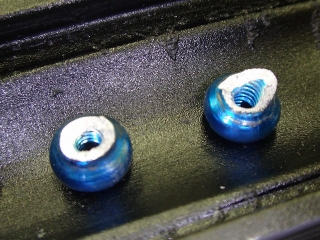
There were fragments of the broken nipple still inside the rim,
but at drop-off, only one was actually broken.
The diagonal break you see on the right in the image above is that one.
The other fragment was from a previous break that had been sitting inside the rim.
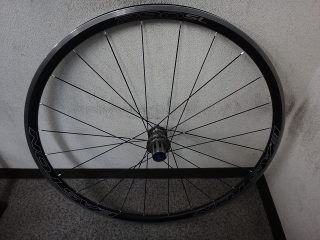
Built.
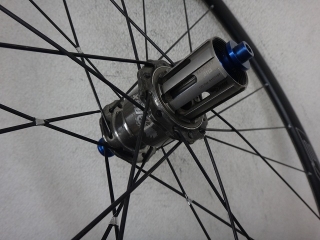
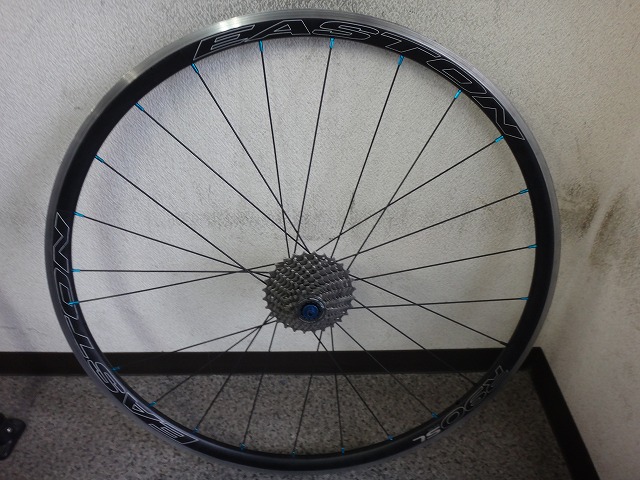
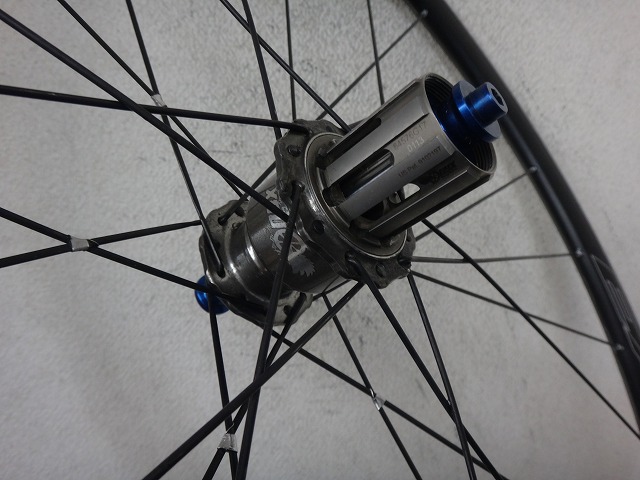
24-hole, half-black Leader 4-6 lacing, brazed.
As usual, the drive-side spokes that were originally inpoke remain inpoke,
and those that were originally outpoke remain outpoke,
but the characteristic deformation at the spoke neck was not prominent,
which I suspect is related to how low the previous tension was.
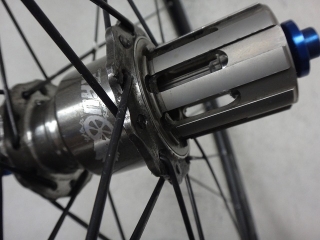
Some models don't have it, but the freebody lightening holes are one of ONYX's selling points.
The biggest feature is the infinitely-adjustable ratchet though.
ONYX does make some disc hubs with reverse-high-low flanges for rear hubs,
but this hub is high-low.
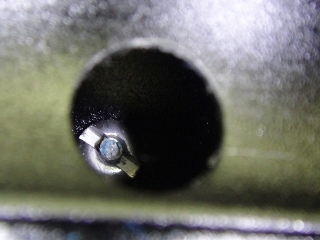
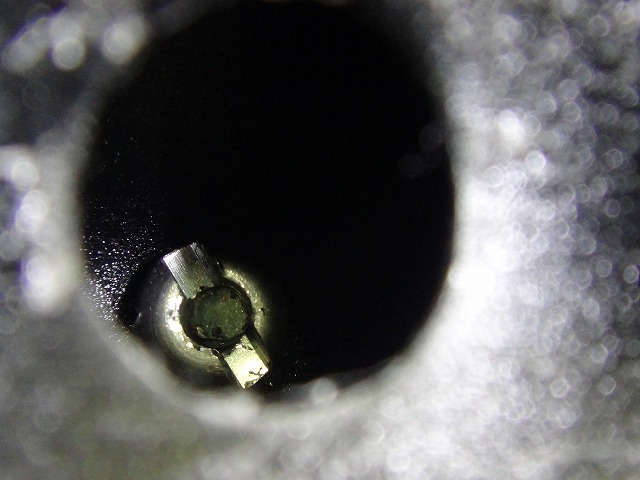
↑Drive side
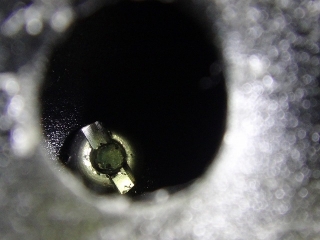
↑Non-drive side
The spokes are black, but the customer wanted silver nipples, so that's what I used.
A customer brought in a rear wheel built with a hub from ONYX Racing Products.
I've written about this before, but ONYX is definitely pronounced "onyx" in English,
however in Japan's bicycle wholesale system it's referred to as O-N-Y-X.
Apparently they do this because there's an overlapping trademark in the bicycle industry.

The rim is an Easton R90SL
(the reason for the different nipple colors will be explained later),
with Sapim black Leader 14mm spokes in plain 4-6 lacing.

According to the current ONYX manufacturer website,
the number of model variations for ONYX hubs beyond just hole count is:
113 types for MTB, 36 types for fat bikes, 35 types for BMX,
11 types for cyclocross, and 4 types for road.
Of those 4 road types, 2 are front hubs:
the Road Front Hub (that's the actual model name, not a generic term) with no lightening holes in the hub shell,
and the Road Helix Front Hub with spiral helix-pattern lightening on the hub shell.
The rear hub comes as only the Road DS Rear Hub model,
and the 2 variations refer only to whether the freebody is Shimano-compatible or Campagnolo-compatible.
So ONYX's road rear hub is
really just this one model.
The reason it was brought in was that nipples kept breaking repeatedly,
and the customer wanted something done about it.

The only nipple that was actually broken at the time of drop-off
was split diagonally.
As for why the breakages were so frequent—as I've written many times before—
you can't trust Sapim's 14mm aluminum nipples.
Each CX-RAY comes with a matching silver or black nipple depending on spoke color,
but I don't use them.
The only time I'm forced to use Sapim aluminum nipples is when I need orange,
which DT doesn't make, and then I only use the 12mm length.
But the main cause of this wheel's repeated nipple breakage
isn't really Sapim's 14mm nipples, but rather
↑Drive side

↑Non-drive side
it appears to be that the spokes are too short, below thread creep length.
The thinking is that the more threads bearing spoke tension load, the better.
So longer spokes are preferable to shorter ones, within reason of course.
The two rim holes adjacent to the valve hole being black nipples indicate
where a previous breakage was repaired,
but changing nipple length doesn't change the outer face dimension,
so the spokes are still short.
The turquoise (or maybe cyan) 14mm nipples
had a 3.2mm wrench flat,
while the black 16mm nipples had 3.4mm.
I asked the customer if the shop that built it with the turquoise nipples and the one that repaired it with the black ones were different,
but apparently they're the same shop. Are you kidding me?
I promised not to write the shop name, so I can't share it,
but I already know them as the type who are good at assembling expensive parts poorly,
so I wasn't surprised to hear which one it was.
Maybe the manager built it and the apprentice did the repair,
but they're both terrible anyway, so what's the difference?
If those guys are reading this somewhere, from the rim and hub you'll figure out it's you,
but I'll say it as many times as I need to: you're both absolutely hopeless hacks,
including how you handled the aftermath.
Aside from the nipple breakage, the tension was weak.
When I pinch the non-drive-side crosses, the black-spoke characteristic creaking noise
sounds easily.
Just swapping in DT nipples alone (with the spokes still short)
would significantly reduce the likelihood of breakage, if I build it.
Even keeping the all-black Leader 4-6 lacing,
the higher tension would put the spoke ends right at or just past thread creep.
As an alternative proposal, since plain spokes can be cut to any length,
I suggested to the customer:
make the drive-side black Leaders as a 4-spoke proper length,
and the non-drive-side as 6 black CX-RAYs, then braze them together.
The customer went for that.
There were fragments of the broken nipple still inside the rim,
but at drop-off, only one was actually broken.
The diagonal break you see on the right in the image above is that one.
The other fragment was from a previous break that had been sitting inside the rim.
Built.
24-hole, half-black Leader 4-6 lacing, brazed.
As usual, the drive-side spokes that were originally inpoke remain inpoke,
and those that were originally outpoke remain outpoke,
but the characteristic deformation at the spoke neck was not prominent,
which I suspect is related to how low the previous tension was.

Some models don't have it, but the freebody lightening holes are one of ONYX's selling points.
The biggest feature is the infinitely-adjustable ratchet though.
ONYX does make some disc hubs with reverse-high-low flanges for rear hubs,
but this hub is high-low.

↑Drive side
↑Non-drive side
The spokes are black, but the customer wanted silver nipples, so that's what I used.