So the other day, I had a customer's bike in for an overhaul
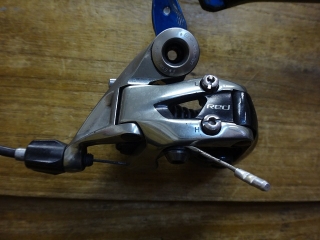
and the pulley cage on the SRAM RED derailleur had literally snapped off,
so I swapped it out with another RED rear derailleur the customer had brought in.
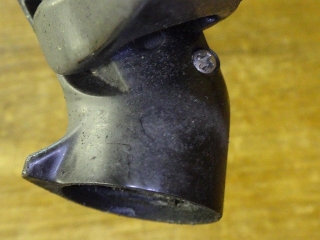
The limit pin is still there,
but there's no trace of the flange on the pulley cage shaft end.
If you're wondering what a limit pin is, (→here).
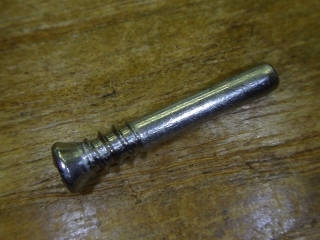
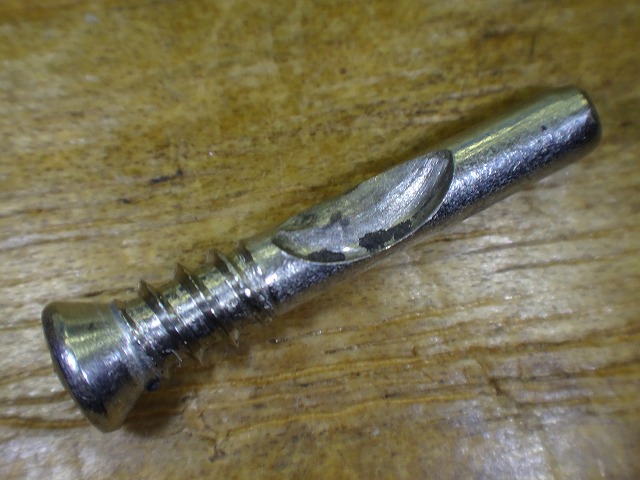
I removed the limit pin.
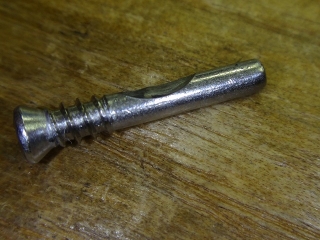
Sure enough,
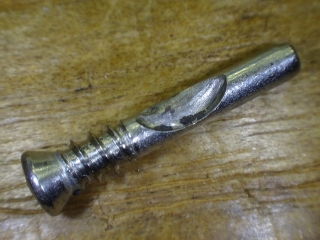
there's that telltale wear.

Separate from that, I had another one of the same customer's bikes
in for an overhaul.
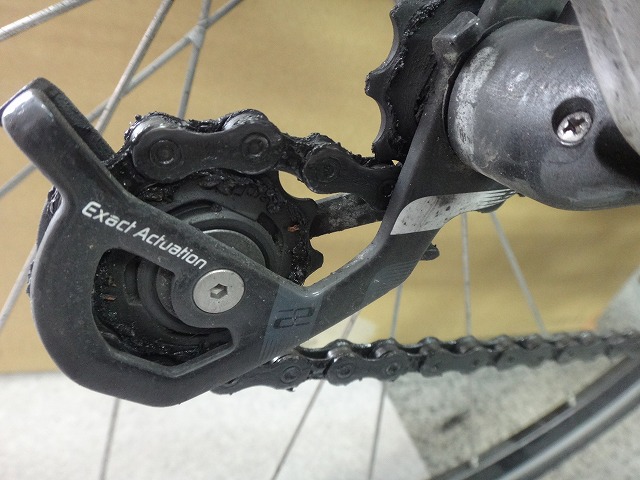
This rear derailleur is a Force.
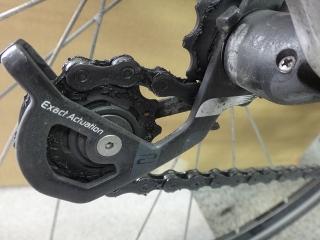
Without breaking the chain,
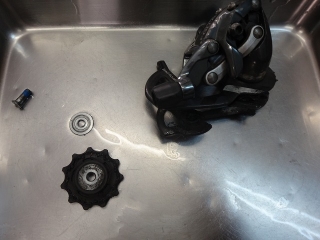
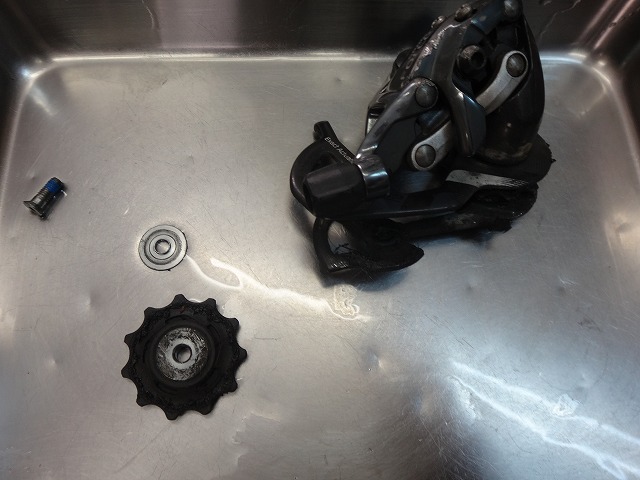
I removed the lower pulley and took out the rear derailleur.
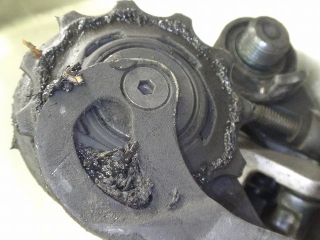
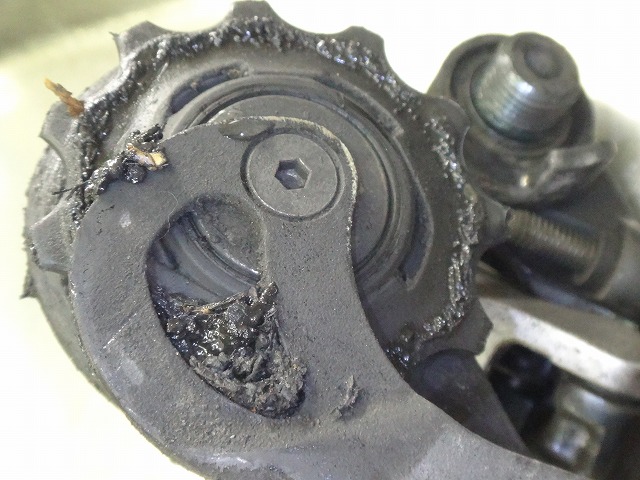
It was pretty dirty,
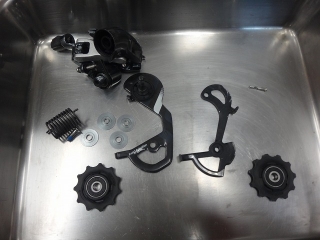
so I did a complete disassembly and cleaning.
I'll peel back the seals on the pulleys later and degrease the bearing internals.
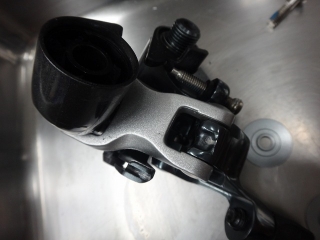
The parallelogram parts
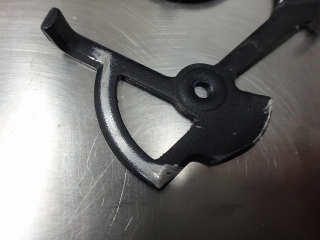
The inner plate of the pulley cage

This cover only contacts the inner race of the pulley bearing,
but because the pulley bolt diameter differs between upper and lower (the lower is thicker),
the cover's hole diameters are different too.
The bearing sizes are the same.
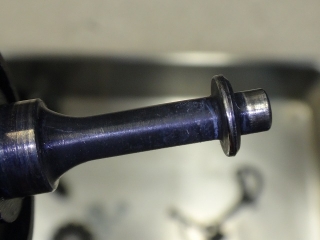
As for the flanged shaft in question, unlike RED, it's not titanium,
and I found no deformation from any angle.
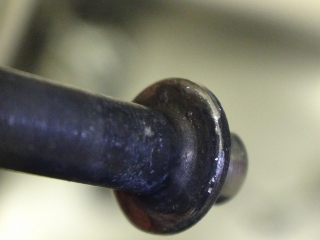
The parts that don't contact the limit shaft stay black,
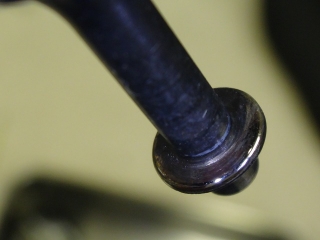
but the contact areas show wear marks.
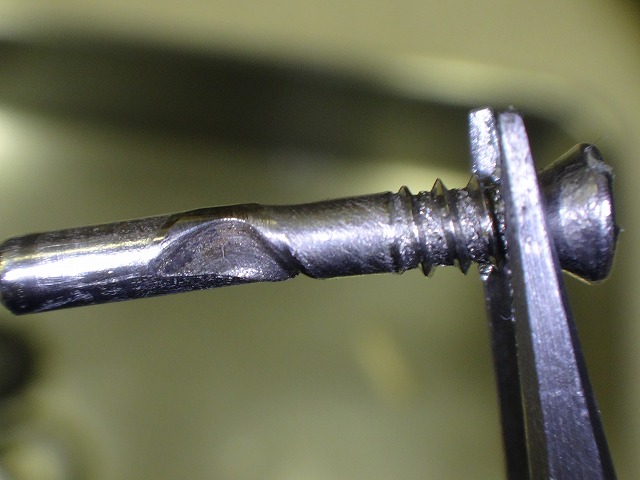
The real problem was the limit pin though,
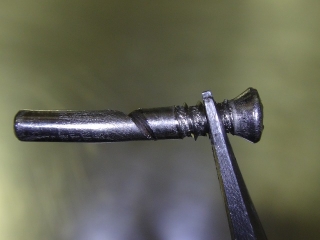
it felt heavy when I loosened the threads,
and when I took it out, it was bent.
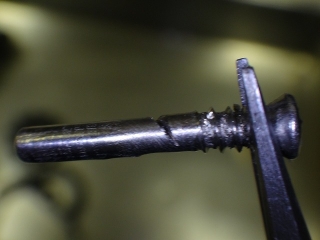
Starting to rotate from here...
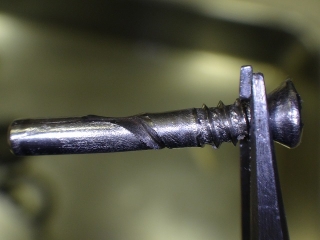
in a helical pattern

it's been gouged.
The RED rear derailleur from the beginning is also 11-speed like this one,
and since the RED has no damage around the parallelogram area
and the limit pin wear is less severe than this one,
and they're from the same customer anyway, I decided to do a parts swap.

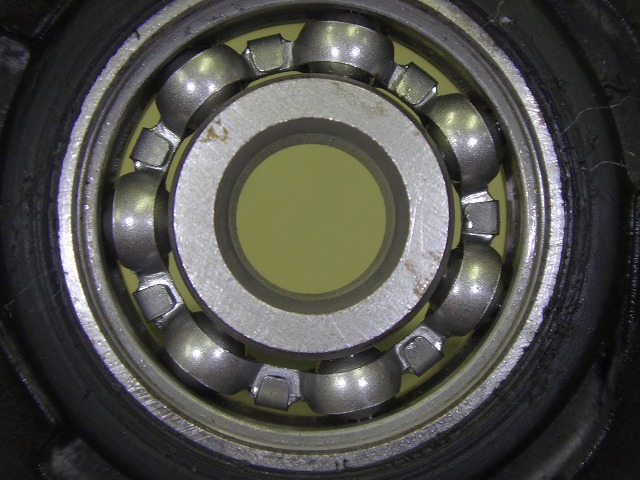
The bearing balls have quite a bit of clearance in the
retainer.


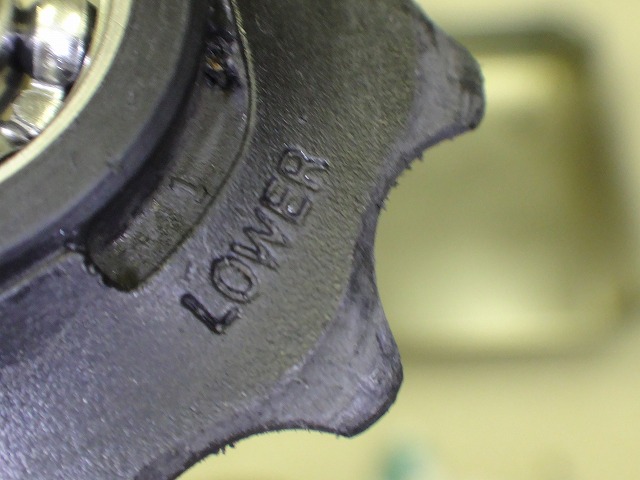
The Upper/Lower markings are
only on the inner (left) face when installed on the derailleur,
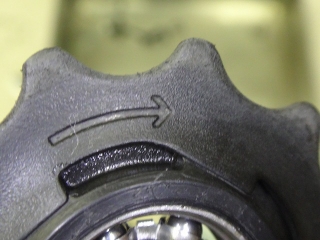
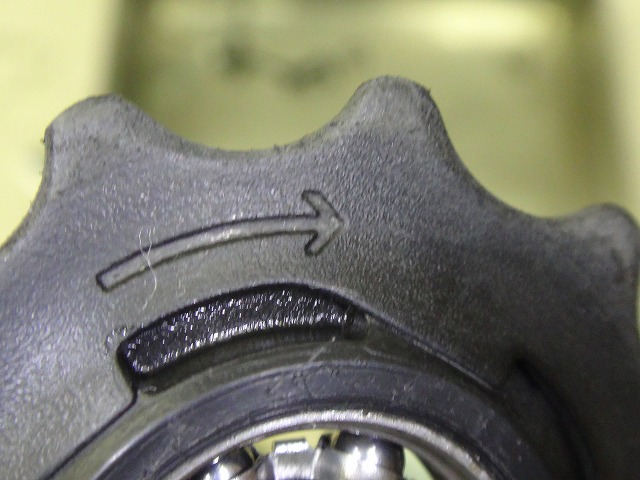
while the arrow indicating the lower pulley's rotation direction
is marked only on the outer (right) face.
Old Shimano derailleurs were like this too, so it would be convenient if this were "just how it's done,"
but recent Shimano rear derailleurs have changed—
from the RD-7900 series onward they have arrows on both sides, and after that
only on the inner (left) side—
so you've got to be careful not to mess it up.
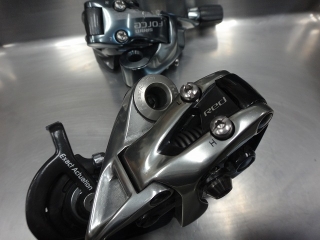
I ended up with a rear derailleur that has RED parallelogram
and Force pulley cage components.
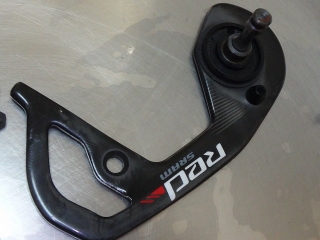
This is yet another separate job from a different customer—
a RED eTap 11-speed rear derailleur,
and when the customer said the pulley cage was stiff, I took it apart
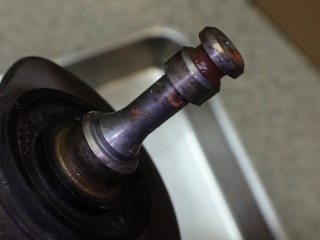
and found rust from water intrusion.
But more noteworthy, the material isn't titanium anymore,
and it's thicker and more robust in dimensions.
Clearly the manufacturer had some regrets
about how often the previous design was failing.
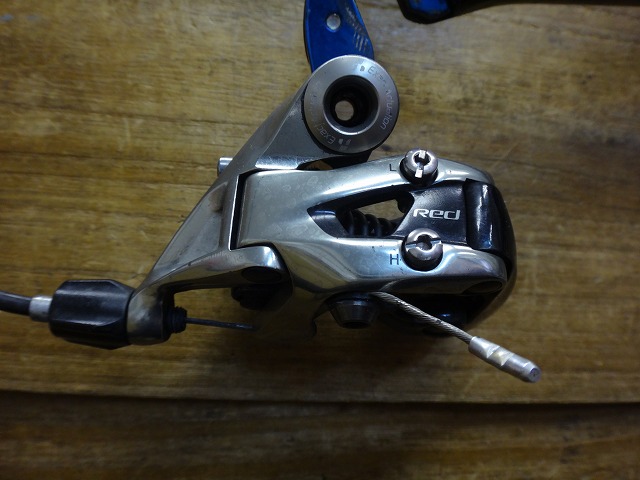
and the pulley cage on the SRAM RED derailleur had literally snapped off,
so I swapped it out with another RED rear derailleur the customer had brought in.

The limit pin is still there,
but there's no trace of the flange on the pulley cage shaft end.
If you're wondering what a limit pin is, (→here).
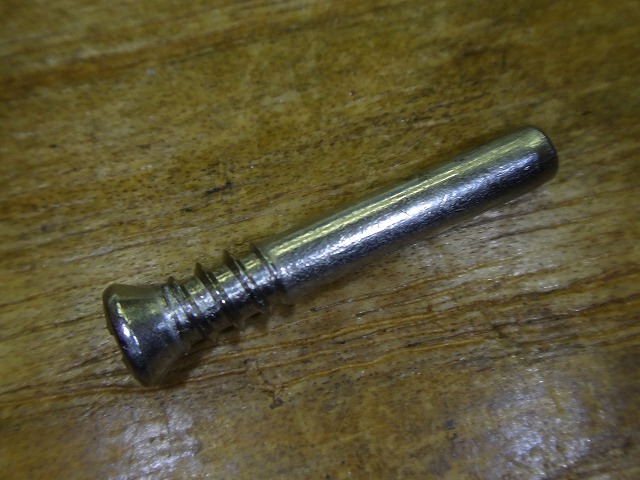
I removed the limit pin.
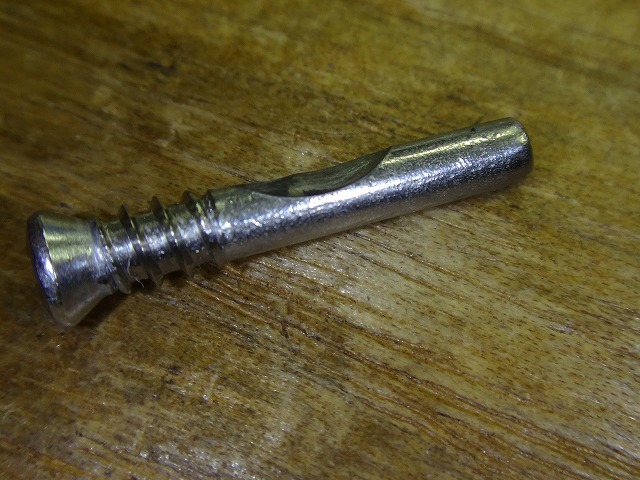
Sure enough,
there's that telltale wear.

Separate from that, I had another one of the same customer's bikes
in for an overhaul.
This rear derailleur is a Force.
Without breaking the chain,
I removed the lower pulley and took out the rear derailleur.
It was pretty dirty,
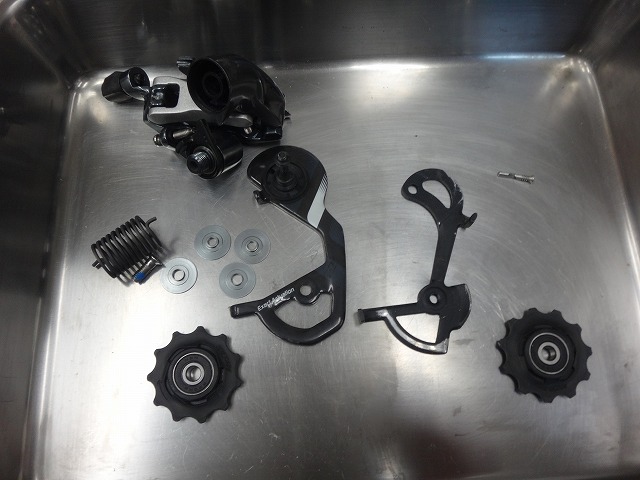
so I did a complete disassembly and cleaning.
I'll peel back the seals on the pulleys later and degrease the bearing internals.

The parallelogram parts
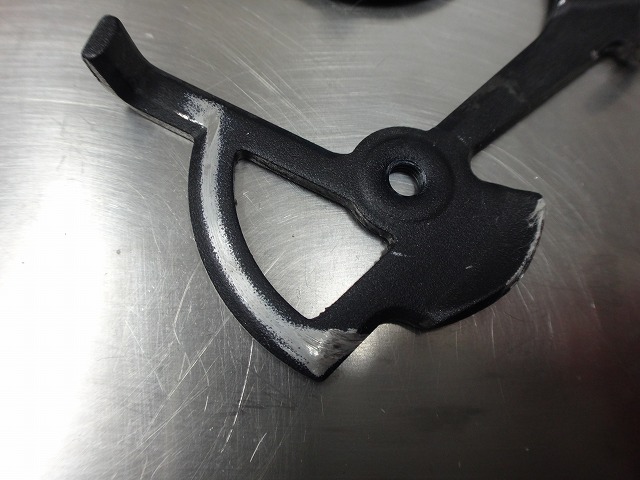
The inner plate of the pulley cage

This cover only contacts the inner race of the pulley bearing,
but because the pulley bolt diameter differs between upper and lower (the lower is thicker),
the cover's hole diameters are different too.
The bearing sizes are the same.
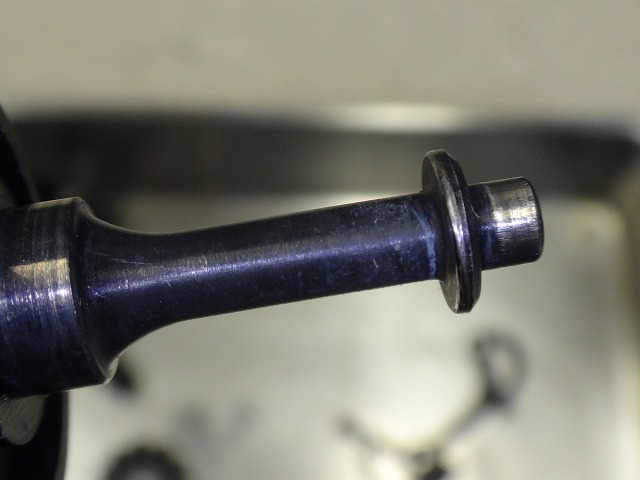
As for the flanged shaft in question, unlike RED, it's not titanium,
and I found no deformation from any angle.
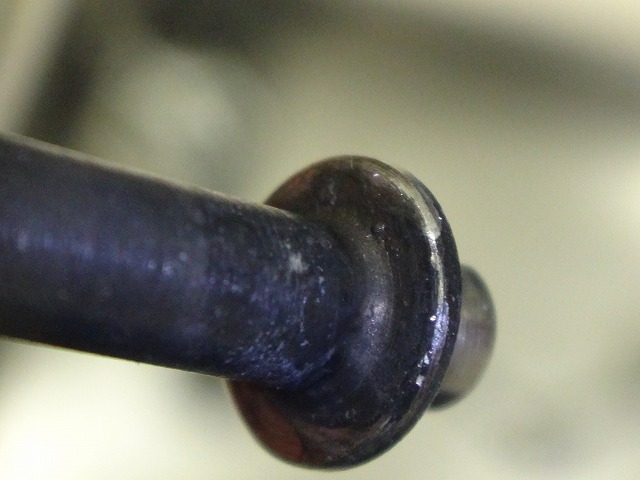
The parts that don't contact the limit shaft stay black,
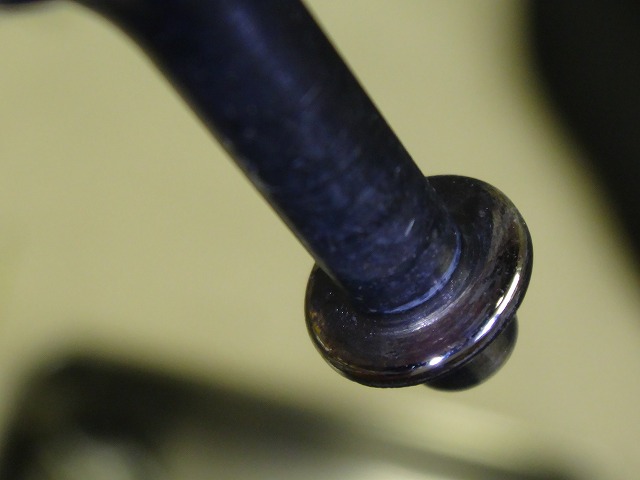
but the contact areas show wear marks.
The real problem was the limit pin though,
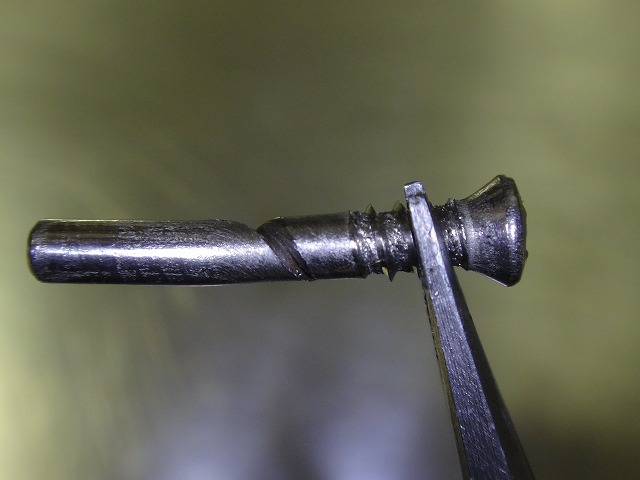
it felt heavy when I loosened the threads,
and when I took it out, it was bent.
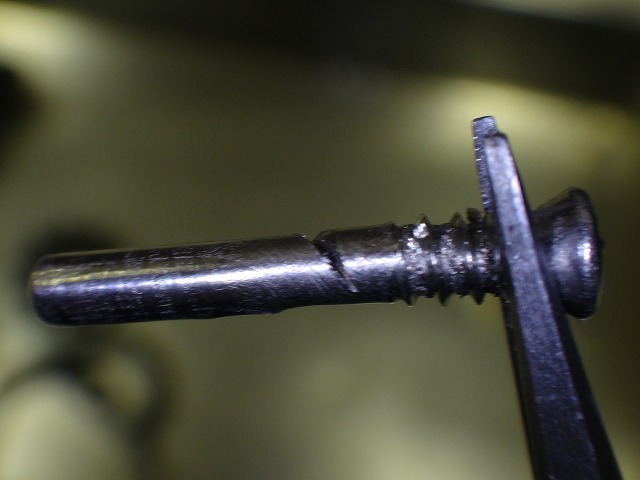
Starting to rotate from here...
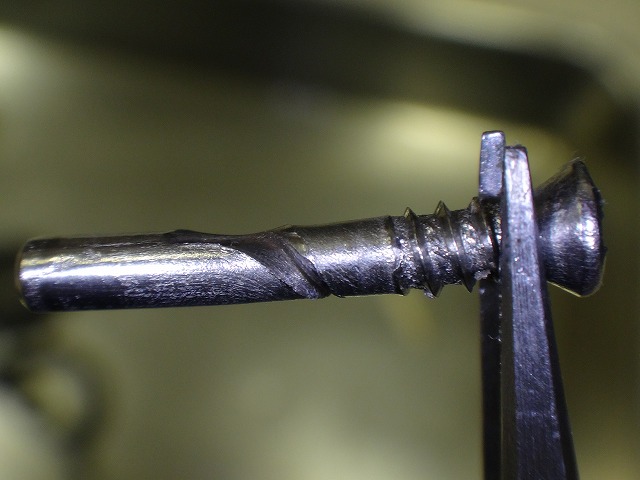
in a helical pattern
it's been gouged.
The RED rear derailleur from the beginning is also 11-speed like this one,
and since the RED has no damage around the parallelogram area
and the limit pin wear is less severe than this one,
and they're from the same customer anyway, I decided to do a parts swap.
The bearing balls have quite a bit of clearance in the
retainer.

The Upper/Lower markings are
only on the inner (left) face when installed on the derailleur,
while the arrow indicating the lower pulley's rotation direction
is marked only on the outer (right) face.
Old Shimano derailleurs were like this too, so it would be convenient if this were "just how it's done,"
but recent Shimano rear derailleurs have changed—
from the RD-7900 series onward they have arrows on both sides, and after that
only on the inner (left) side—
so you've got to be careful not to mess it up.

I ended up with a rear derailleur that has RED parallelogram
and Force pulley cage components.
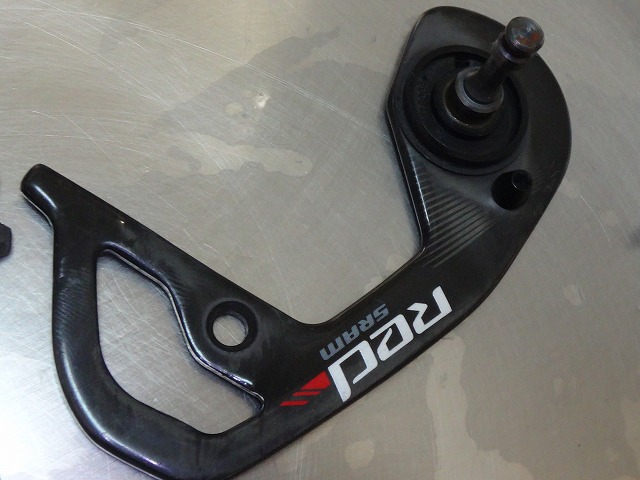
This is yet another separate job from a different customer—
a RED eTap 11-speed rear derailleur,
and when the customer said the pulley cage was stiff, I took it apart
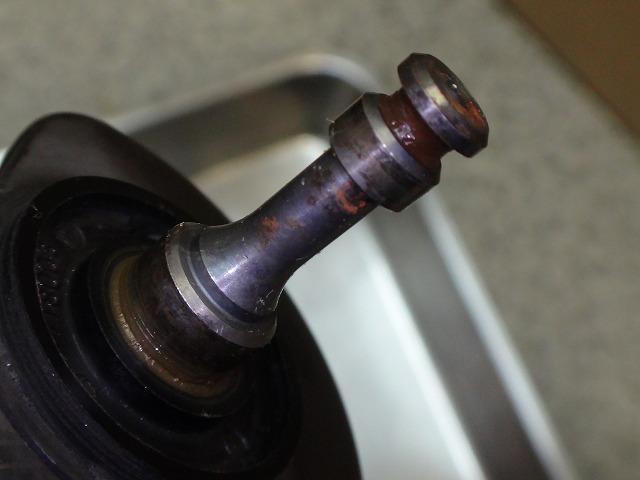
and found rust from water intrusion.
But more noteworthy, the material isn't titanium anymore,
and it's thicker and more robust in dimensions.
Clearly the manufacturer had some regrets
about how often the previous design was failing.