Another wheel day (and so on).
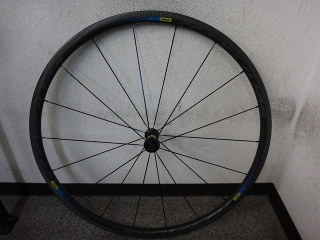
I received a Ksyrium Carbon SL Autoroute from a customer.
The base model was the Ksyrium Pro Carbon SL C, where
the C at the end stands for clincher
(the regular model without Autoroute also had
a tubular model with T at the end).
The Autoroute is a limited-quantity model with
a laser-printed serial number on the hub barrel.
The differences from the standard model are
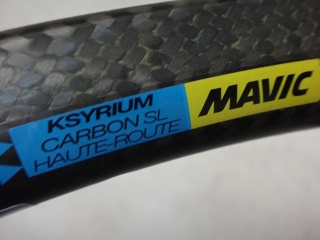
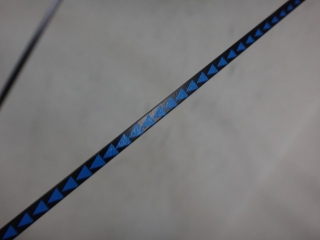
the rim-side sticker, cosmetic spokes,
and the wheel bag design.
Edit: I received a comment noting another difference with the Autoroute—
it uses CeramicSpeed ceramic bearings.
I didn't take a photo of the hub barrel because if I photographed the part that says ceramic bearing,
the serial number would inevitably show up, so I gave up on it
(I could have hidden it with some effort).
Also, Mavic's dust seal on this hub has
essentially zero dust and water protection, so the bearing seal becomes
the last line of defense immediately, but
CeramicSpeed bearings with contact-type seals don't exist,
and upon actual inspection, it uses a non-contact seal.
This might be the only example of Mavic officially using a non-contact seal.
Regardless of the bearing ball material,
if you put a non-contact seal bearing in a Mavic hub, it floods immediately,
so this wheel should avoid rain as much as possible.
The commenter also mentioned they switched the bearings to steel balls.
Thank you for the comment.
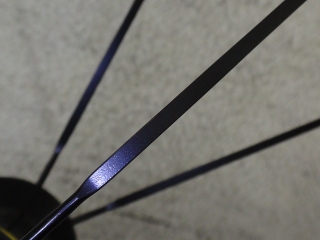
For this wheel I received, at the customer's request,
I'll rebuild it with the razor-thin, wide spokes used in
the next generation Ksyrium Pro Carbon UST.
They also asked me to check the rim weight and
the spoke gravity density before and after rebuilding.
Starting with the front wheel.
This wheel doesn't use left-right different-diameter spoking on the rear,
and the front and rear left-right spokes have
the same butted section dimensions.
The butted shape is a square aero spoke.
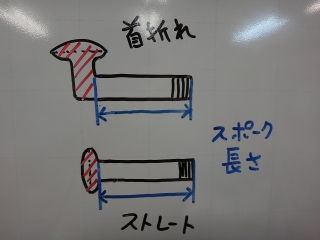
Spoke length refers to the blue section in the diagram above,
the length below the elbow
(some manufacturers measure from the center of the elbow,
but that's not the majority practice).
Elbowed spokes and straight spokes differ in
the volume of the part not related to spoke length
(red hatching in the diagram above), so
straight spokes will show a slightly lower calculated spoke gravity density...
but it's not a difference significant enough to worry about.
The spokes on this Ksyrium front wheel are nominally 285mm,
and the bag printing says 285.5mm for some reason,
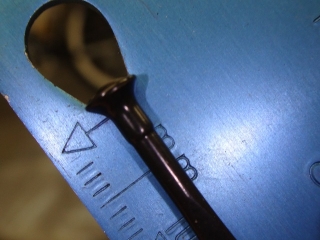
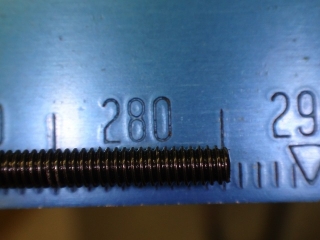
but actual measurement came to 285.2mm.
With individual variation, calling it exactly 285mm is fine.
For this spoke gravity density calculation, I'll use
the nominal values for all six spoke lengths
(front and rear, left and right) for both before and after rebuilding.
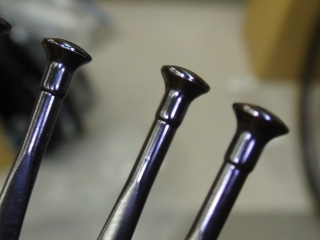
All the spokes before and after rebuilding are #13 below the elbow.
The spoke diameter for #13 varies in references—
some say 2.34mm and others say 2.35mm,
but on these spokes it's clearly 2.34mm.
The round spoke sections at both ends are #14 (2.0mm).
A butt like "2.0–1.8–2.0mm" is called double-butted, and
a butt like Sapim Strong where
"#13 below the elbow – from midway onwards to the end #14"
is called single-butted, so
interpreting the short #13 section at the elbow on this spoke as also butted,
it becomes "13–14–aero section–14,"
which you might call triple-butted.
This #13 elbow fits snugly into the hub flange with a satisfying click, so
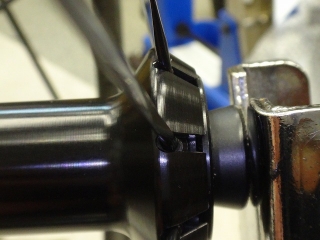
hubs in this Ksyrium/Cosmic family shouldn't be laced with anything other than dedicated spokes.
Even on stock hubs from the manufacturer,
the spoke heads don't always fit perfectly,
so I was especially careful (→ here and its linked source).
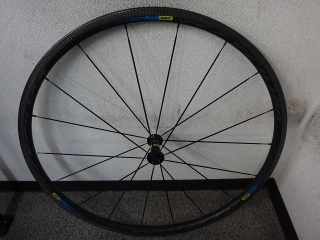
Built.

There's no anti-rotation crimping on the spoke head side,
so there's a possibility the spoke's flat orientation could rotate.
Since I built it pretty tight, that's unlikely but...
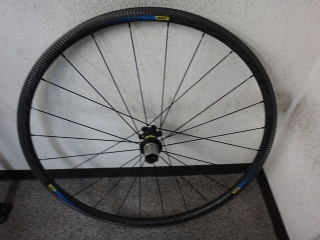
Now the rear wheel.
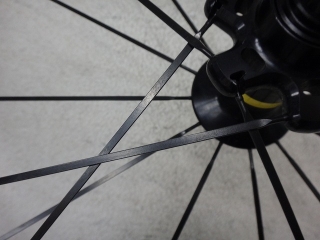
The freewheel side is radially laced, and the final crossing on the non-freewheel side is
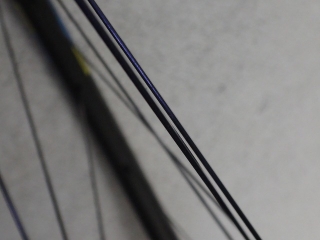
not woven.
I'll do the same for the rebuild.
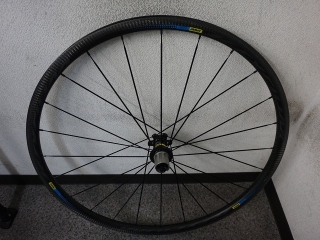
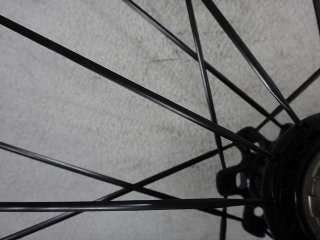
Built.
Now for the moment you've been waiting for—rim weight and spoke gravity density measurements.

↑Front rim
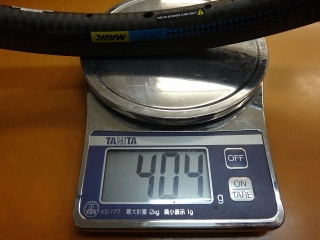
↑Rear rim
On both Ksyrium and Racing Zero, the aluminum rim
is heavier on the rear.
With Racing Zero, the rear rim clearly has greater rim height,
and with Ksyrium, the offset rim design
contributes to increased weight, but beyond that,
I sense an intentional effort to make the rear rim heavier and more durable.
On both Ksyrium and Racing Zero, the front rim weight
is nearly the same between aluminum and carbon,
but with a carbon rim, the rear rim weight becomes the same as the front,
which represents a fairly significant advantage in terms of
the lightweight construction of the drive wheel's outer diameter.
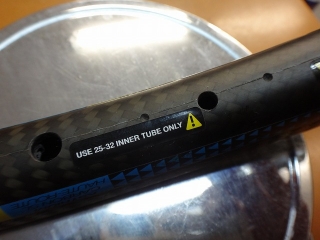
↑There are small punch-mark holes in front and behind the rim hole
next to the valve hole.
When there are two marks, this indicates a rear rim,
and the position relative to the valve hole specifies the left-right orientation.
This rear rim isn't an offset rim, and while
the hole positions vary left-right,
the rim holes don't show strong directionality,
so they might assemble left-right reversed, but
there's no reason to fight it, so I rebuilt it the same way as before.
On the Ksyrium rim for aluminum spokes with Zicral holes,
with radial lacing on the freewheel side and tangential lacing on the other,
there's quite strong directionality matching the spoke path,
making it virtually impossible to assemble it wrong.
Spokes before rebuilding (SL C version)
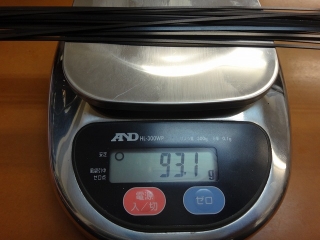
Front 285mm, 18 spokes, 93.1g,
spoke gravity density is 0.706153..., about 70.6%.
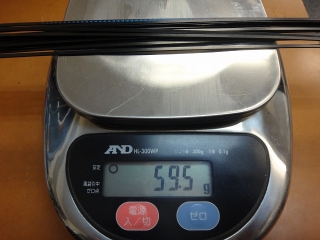
Rear right 273mm, 12 spokes, 59.5g,
spoke gravity density is 0.706707..., about 70.7%.
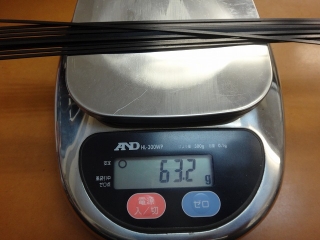
Rear left 291mm, 12 spokes, 63.2g,
spoke gravity density is 0.704222..., about 70.4%.
These spokes clearly protruded from the end face of the nipple, but
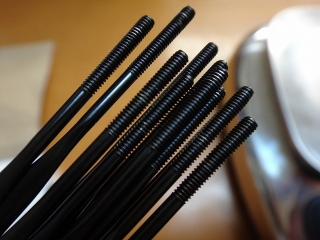
they have longer thread length than generic spokes and
deliberately engage the nylon lock on the nipple end,
designed to protrude further.
If calculated with the same effective length as generic spokes,
the spoke gravity density might fall below 70%.
In any case, for rough estimates, "about 70%" is reasonable.
Spokes after rebuilding (SL UST version)
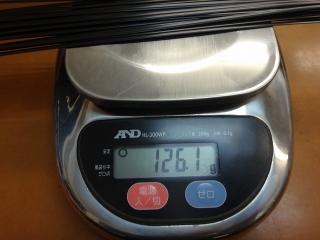
Front 285mm, 24 spokes, 126.1g,
spoke gravity density is 0.717341..., about 71.7%.
The reason for 24 spokes is that spare spokes are sold in units of 12,
with only 18 actually used.
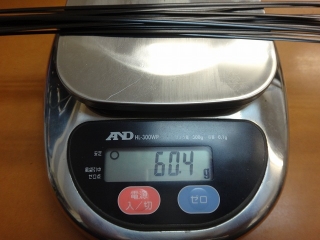
Rear right 273mm, 12 spokes, 60.4g,
spoke gravity density is 0.717397..., about 71.7%.
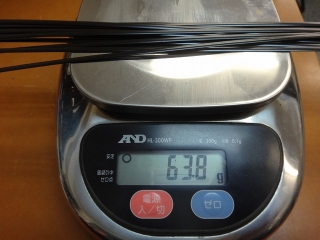
Rear left 291mm, 12 spokes, 63.8g,
spoke gravity density is 0.710907, about 71.1%.
On all these spokes, the longest rear left has
a larger proportion of the #14 plain lighter butted section relative to spoke length,
which might explain why its gravity density is lighter than the front and rear right,
but the SL UST rear left variation is
larger than that consideration would account for.
A 0.6% difference in spoke gravity density between 285mm and 291mm
isn't a commonly observed result.
With more samples, the difference would likely shrink.
However, it's certain that at any given length,
the SL UST has higher spoke gravity density than the SL C.
If this were my own wheel and I wanted to experiment without thinking ahead,
I might lace the rear drive side with SL UST
and tie and weave the non-drive side with SL C.
By the way, while I can rattle off actual rim weights for quite a few rims from memory,
when it comes to wheel front-to-rear weight,
I don't even remember the nom Lab Wheel No. 5
(← you should really remember that).
The information of just wheel front-rear weight
doesn't have much meaning.

This Ksyrium is a clincher rim not compatible with UST tubeless,
with stretch-band-type rim tape applied.
Since the hub and spokes match the current model (nipples were always the same)
and only the rim differs,
if I weigh this wheel,
I can figure out the rim weight of the current Ksyrium Pro Carbon SL UST
(acknowledging that the sample size of actual rim weight is small).
So I measured it. Just the rear wheel, though.
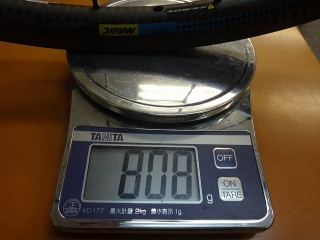
↑With rim tape
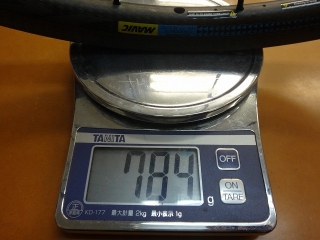
↑Without rim tape
The Ksyrium Pro Carbon SL UST has a nominal weight of 805g, but
whether that includes tubeless tape and tubeless valve is unclear.
Even with clincher tires, tubeless rim tape is required,
and generally, tubeless rim tape
is lighter than stretch-band-type rim tape.
If the nominal 805g is rim tape and valve excluded,
comparing to the measured 784g of the rebuilt rear wheel,
the UST would be 21g heavier, so
adding the measured rear rim weight of 405g
gives 425g... but the problem is the scope of the nominal 805g is unclear, and
even if that were known, with Mavic
the nominal value of 805g itself is suspect, so
unless I can actually confirm the measured weight
of the UST rear wheel with tubeless tape removed,
this information isn't useful.
Follow-up reports aren't necessary, but
I hope this helps someone.
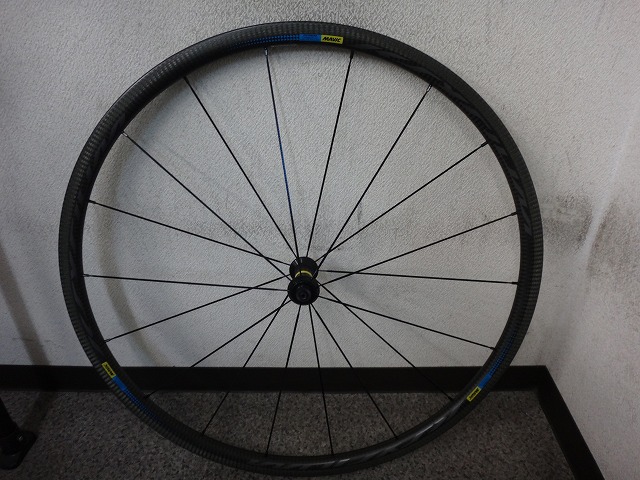
I received a Ksyrium Carbon SL Autoroute from a customer.
The base model was the Ksyrium Pro Carbon SL C, where
the C at the end stands for clincher
(the regular model without Autoroute also had
a tubular model with T at the end).
The Autoroute is a limited-quantity model with
a laser-printed serial number on the hub barrel.
The differences from the standard model are
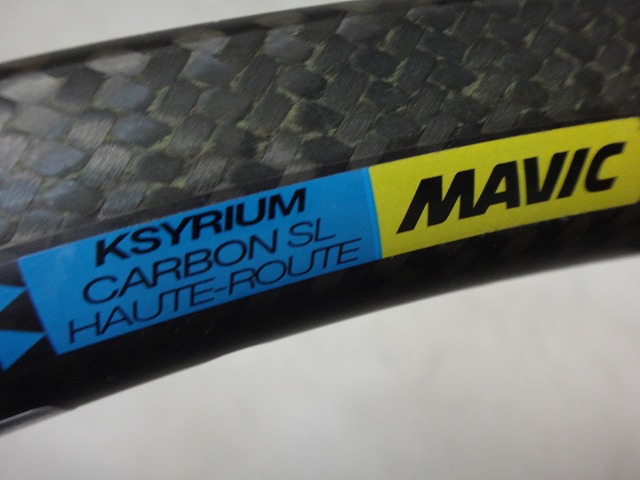
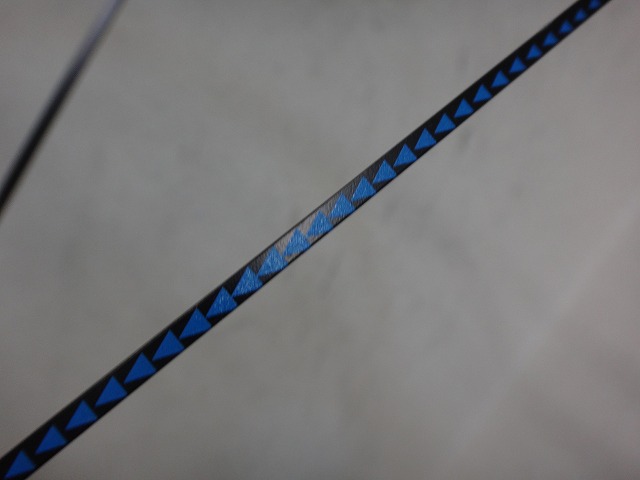
the rim-side sticker, cosmetic spokes,
and the wheel bag design.
Edit: I received a comment noting another difference with the Autoroute—
it uses CeramicSpeed ceramic bearings.
I didn't take a photo of the hub barrel because if I photographed the part that says ceramic bearing,
the serial number would inevitably show up, so I gave up on it
(I could have hidden it with some effort).
Also, Mavic's dust seal on this hub has
essentially zero dust and water protection, so the bearing seal becomes
the last line of defense immediately, but
CeramicSpeed bearings with contact-type seals don't exist,
and upon actual inspection, it uses a non-contact seal.
This might be the only example of Mavic officially using a non-contact seal.
Regardless of the bearing ball material,
if you put a non-contact seal bearing in a Mavic hub, it floods immediately,
so this wheel should avoid rain as much as possible.
The commenter also mentioned they switched the bearings to steel balls.
Thank you for the comment.
For this wheel I received, at the customer's request,
I'll rebuild it with the razor-thin, wide spokes used in
the next generation Ksyrium Pro Carbon UST.
They also asked me to check the rim weight and
the spoke gravity density before and after rebuilding.

Starting with the front wheel.
This wheel doesn't use left-right different-diameter spoking on the rear,
and the front and rear left-right spokes have
the same butted section dimensions.
The butted shape is a square aero spoke.
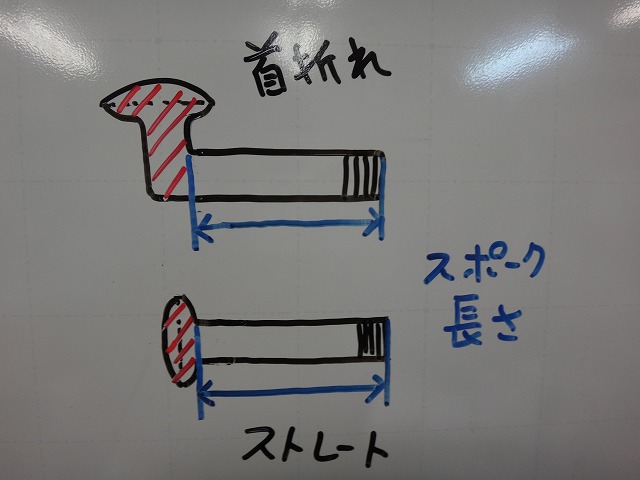
Spoke length refers to the blue section in the diagram above,
the length below the elbow
(some manufacturers measure from the center of the elbow,
but that's not the majority practice).
Elbowed spokes and straight spokes differ in
the volume of the part not related to spoke length
(red hatching in the diagram above), so
straight spokes will show a slightly lower calculated spoke gravity density...
but it's not a difference significant enough to worry about.
The spokes on this Ksyrium front wheel are nominally 285mm,
and the bag printing says 285.5mm for some reason,
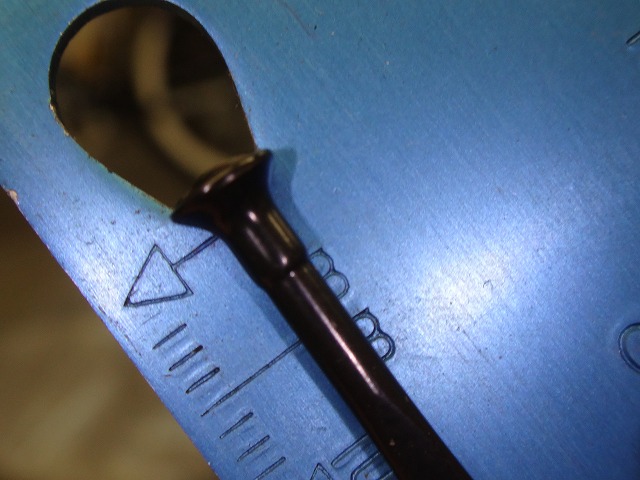
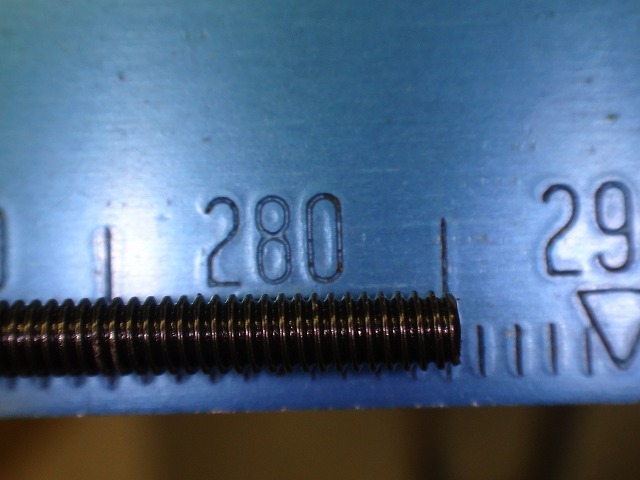
but actual measurement came to 285.2mm.
With individual variation, calling it exactly 285mm is fine.
For this spoke gravity density calculation, I'll use
the nominal values for all six spoke lengths
(front and rear, left and right) for both before and after rebuilding.
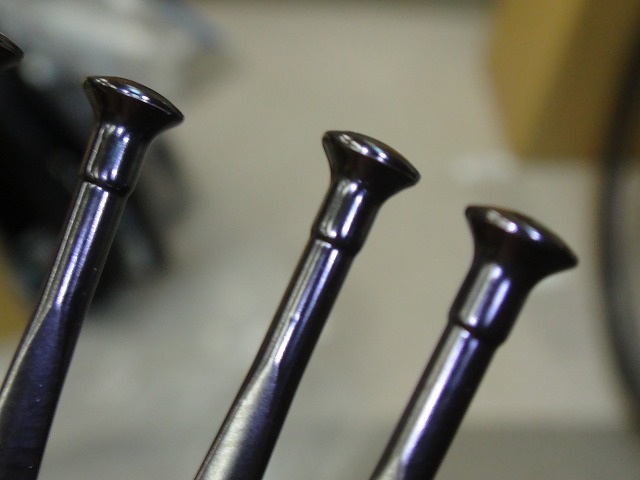
All the spokes before and after rebuilding are #13 below the elbow.
The spoke diameter for #13 varies in references—
some say 2.34mm and others say 2.35mm,
but on these spokes it's clearly 2.34mm.
The round spoke sections at both ends are #14 (2.0mm).
A butt like "2.0–1.8–2.0mm" is called double-butted, and
a butt like Sapim Strong where
"#13 below the elbow – from midway onwards to the end #14"
is called single-butted, so
interpreting the short #13 section at the elbow on this spoke as also butted,
it becomes "13–14–aero section–14,"
which you might call triple-butted.
This #13 elbow fits snugly into the hub flange with a satisfying click, so
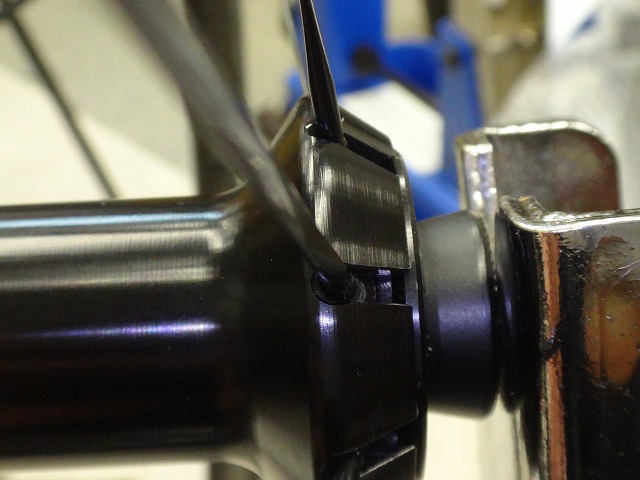
hubs in this Ksyrium/Cosmic family shouldn't be laced with anything other than dedicated spokes.
Even on stock hubs from the manufacturer,
the spoke heads don't always fit perfectly,
so I was especially careful (→ here and its linked source).
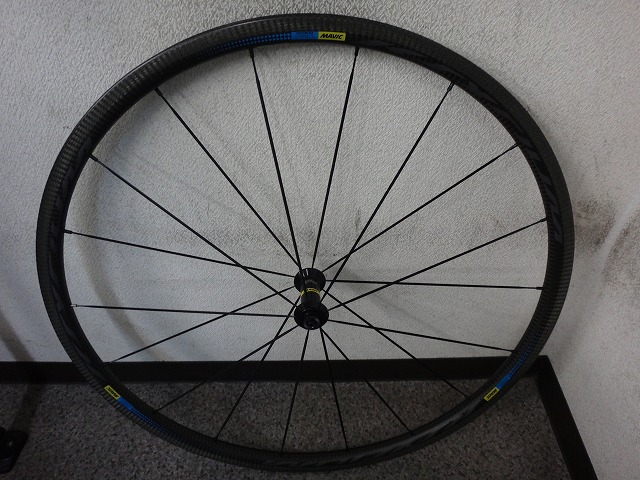
Built.

There's no anti-rotation crimping on the spoke head side,
so there's a possibility the spoke's flat orientation could rotate.
Since I built it pretty tight, that's unlikely but...

Now the rear wheel.
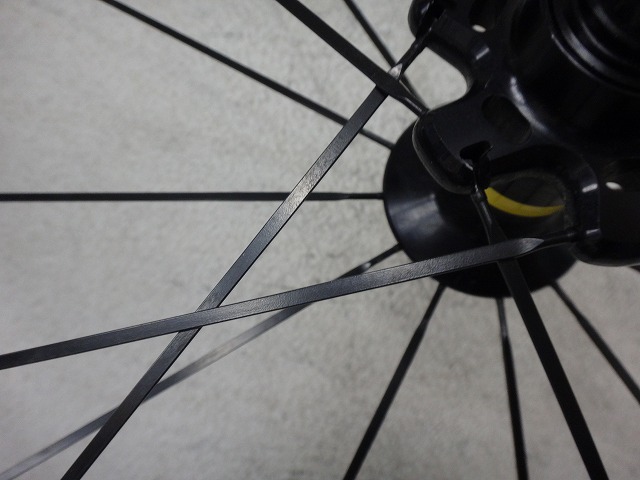
The freewheel side is radially laced, and the final crossing on the non-freewheel side is
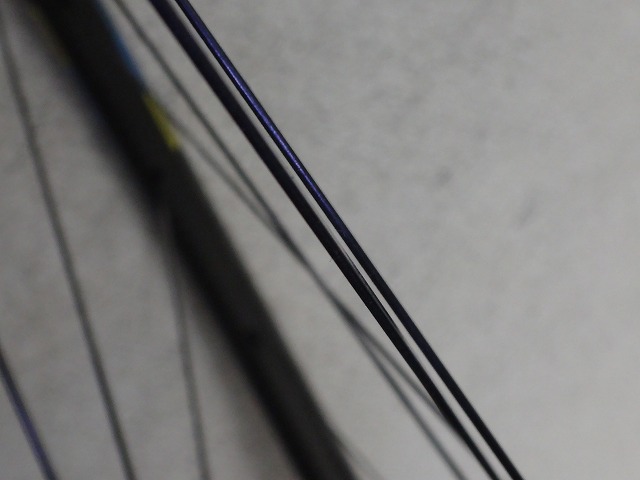
not woven.
I'll do the same for the rebuild.
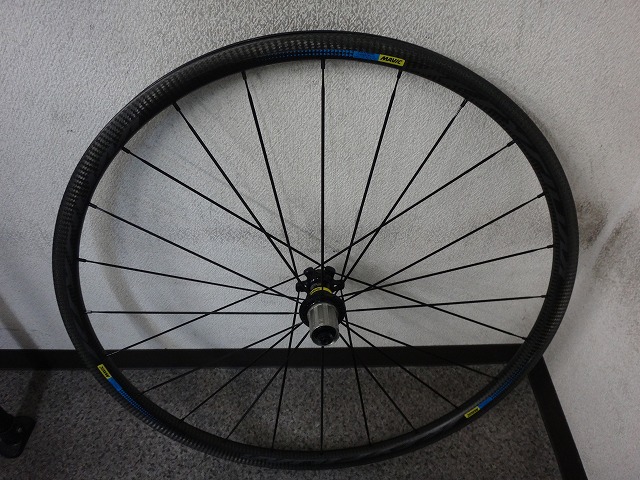

Built.
Now for the moment you've been waiting for—rim weight and spoke gravity density measurements.
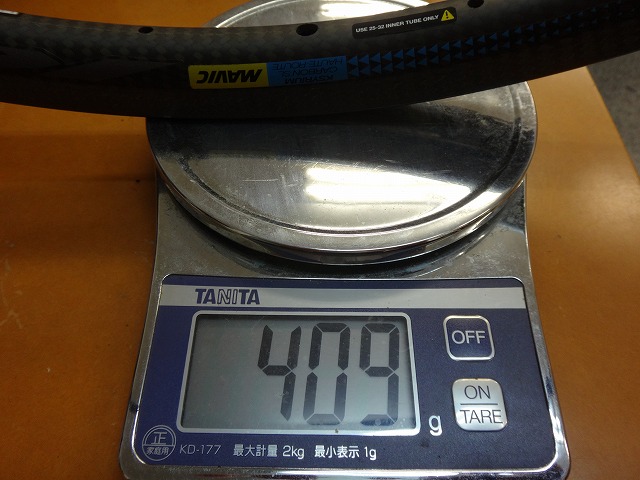
↑Front rim
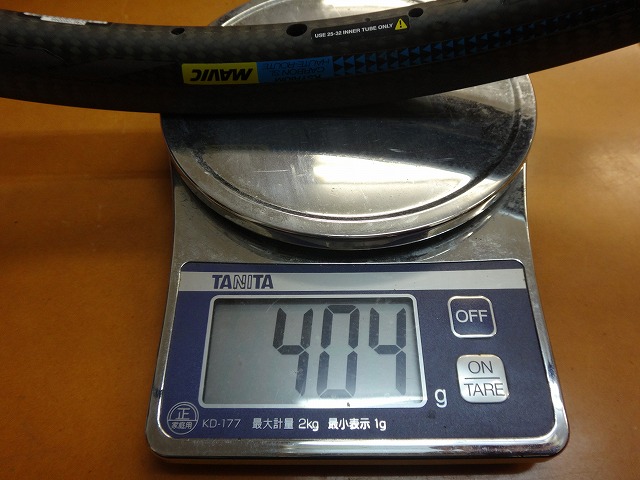
↑Rear rim
On both Ksyrium and Racing Zero, the aluminum rim
is heavier on the rear.
With Racing Zero, the rear rim clearly has greater rim height,
and with Ksyrium, the offset rim design
contributes to increased weight, but beyond that,
I sense an intentional effort to make the rear rim heavier and more durable.
On both Ksyrium and Racing Zero, the front rim weight
is nearly the same between aluminum and carbon,
but with a carbon rim, the rear rim weight becomes the same as the front,
which represents a fairly significant advantage in terms of
the lightweight construction of the drive wheel's outer diameter.
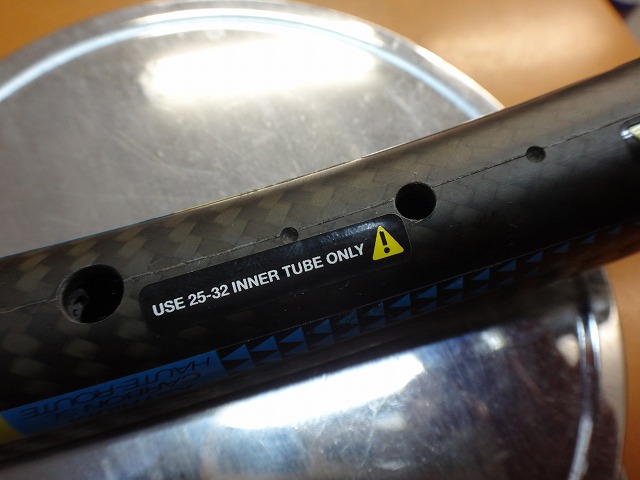
↑There are small punch-mark holes in front and behind the rim hole
next to the valve hole.
When there are two marks, this indicates a rear rim,
and the position relative to the valve hole specifies the left-right orientation.
This rear rim isn't an offset rim, and while
the hole positions vary left-right,
the rim holes don't show strong directionality,
so they might assemble left-right reversed, but
there's no reason to fight it, so I rebuilt it the same way as before.
On the Ksyrium rim for aluminum spokes with Zicral holes,
with radial lacing on the freewheel side and tangential lacing on the other,
there's quite strong directionality matching the spoke path,
making it virtually impossible to assemble it wrong.
Spokes before rebuilding (SL C version)
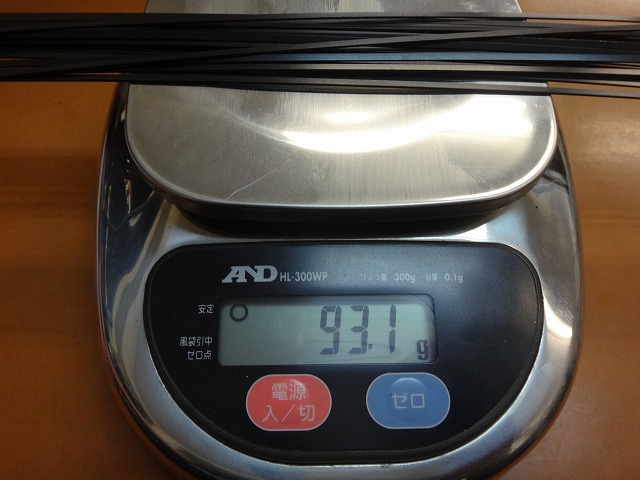
Front 285mm, 18 spokes, 93.1g,
spoke gravity density is 0.706153..., about 70.6%.
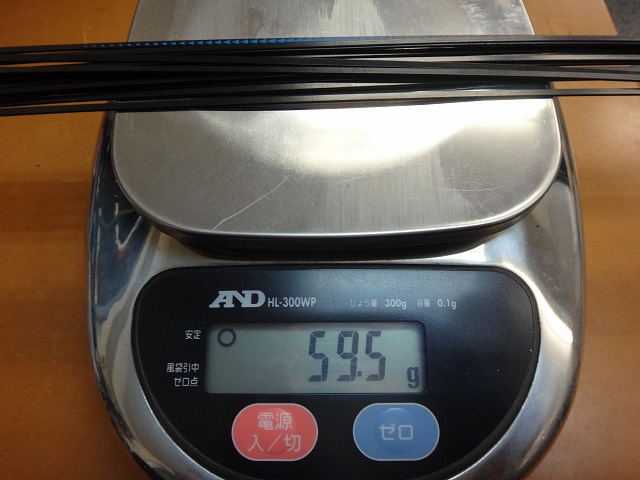
Rear right 273mm, 12 spokes, 59.5g,
spoke gravity density is 0.706707..., about 70.7%.
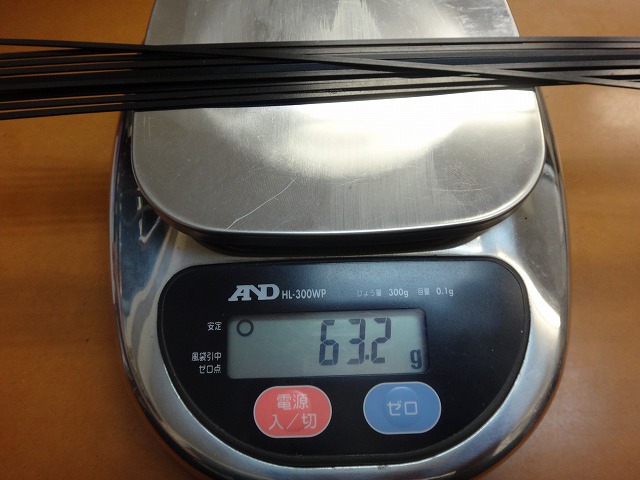
Rear left 291mm, 12 spokes, 63.2g,
spoke gravity density is 0.704222..., about 70.4%.
These spokes clearly protruded from the end face of the nipple, but
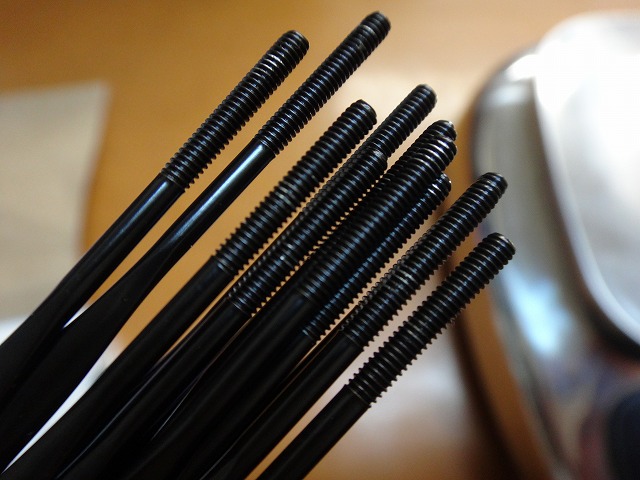
they have longer thread length than generic spokes and
deliberately engage the nylon lock on the nipple end,
designed to protrude further.
If calculated with the same effective length as generic spokes,
the spoke gravity density might fall below 70%.
In any case, for rough estimates, "about 70%" is reasonable.
Spokes after rebuilding (SL UST version)
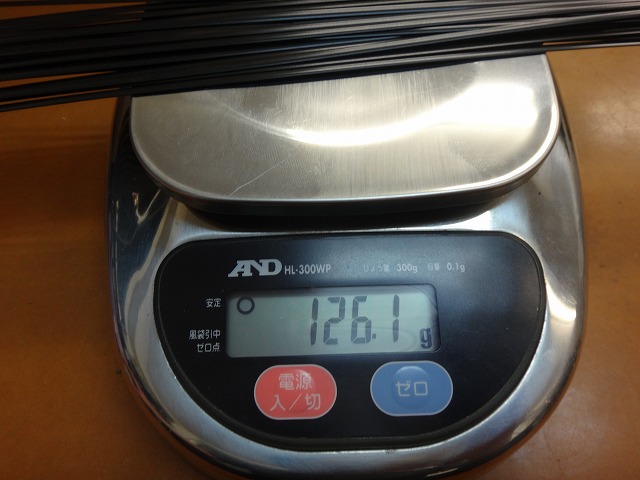
Front 285mm, 24 spokes, 126.1g,
spoke gravity density is 0.717341..., about 71.7%.
The reason for 24 spokes is that spare spokes are sold in units of 12,
with only 18 actually used.
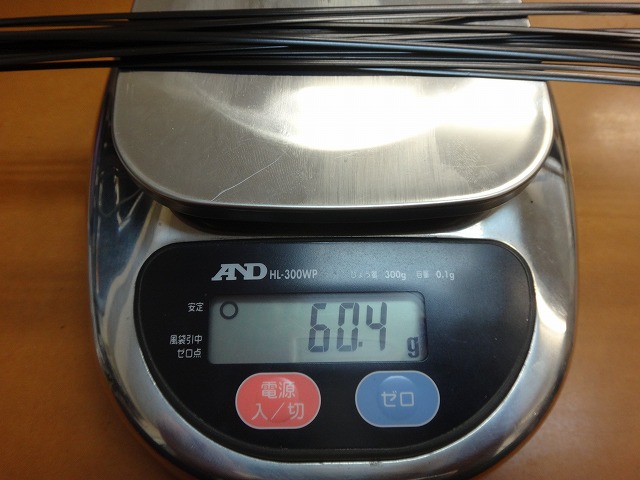
Rear right 273mm, 12 spokes, 60.4g,
spoke gravity density is 0.717397..., about 71.7%.

Rear left 291mm, 12 spokes, 63.8g,
spoke gravity density is 0.710907, about 71.1%.
On all these spokes, the longest rear left has
a larger proportion of the #14 plain lighter butted section relative to spoke length,
which might explain why its gravity density is lighter than the front and rear right,
but the SL UST rear left variation is
larger than that consideration would account for.
A 0.6% difference in spoke gravity density between 285mm and 291mm
isn't a commonly observed result.
With more samples, the difference would likely shrink.
However, it's certain that at any given length,
the SL UST has higher spoke gravity density than the SL C.
If this were my own wheel and I wanted to experiment without thinking ahead,
I might lace the rear drive side with SL UST
and tie and weave the non-drive side with SL C.
By the way, while I can rattle off actual rim weights for quite a few rims from memory,
when it comes to wheel front-to-rear weight,
I don't even remember the nom Lab Wheel No. 5
(← you should really remember that).
The information of just wheel front-rear weight
doesn't have much meaning.
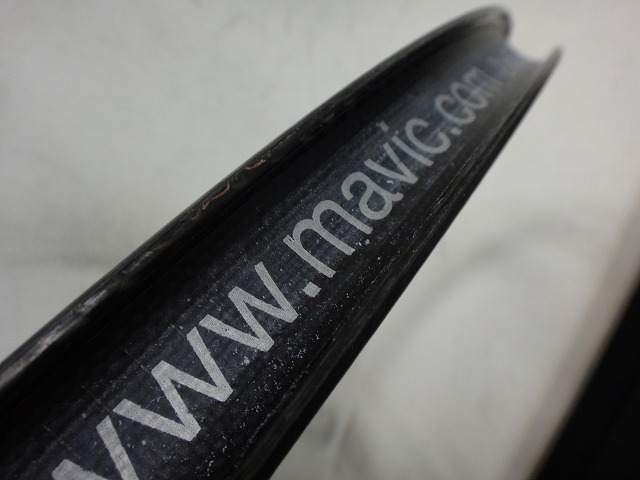
This Ksyrium is a clincher rim not compatible with UST tubeless,
with stretch-band-type rim tape applied.
Since the hub and spokes match the current model (nipples were always the same)
and only the rim differs,
if I weigh this wheel,
I can figure out the rim weight of the current Ksyrium Pro Carbon SL UST
(acknowledging that the sample size of actual rim weight is small).
So I measured it. Just the rear wheel, though.
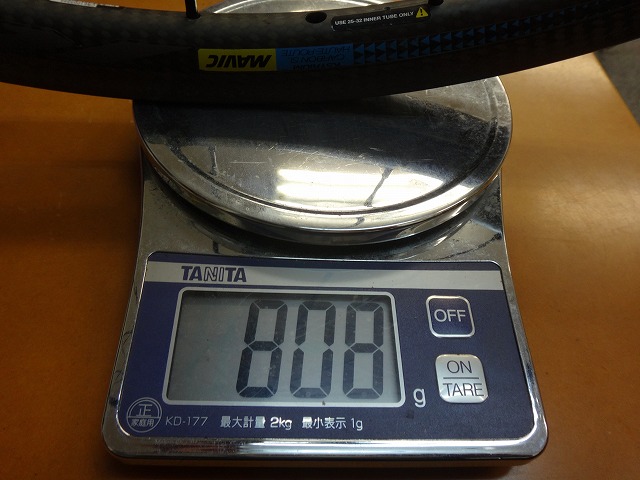
↑With rim tape
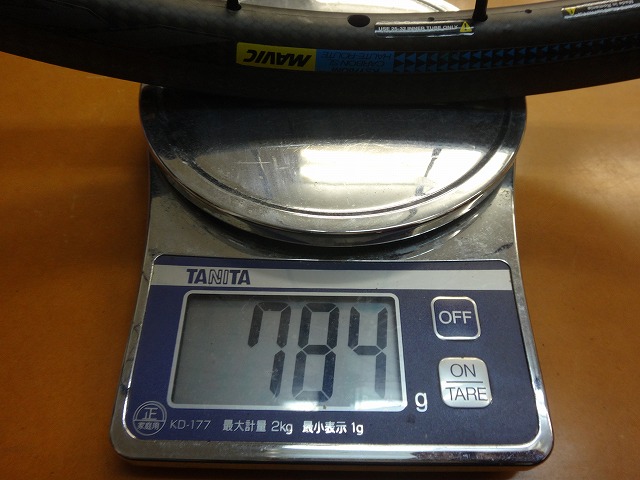
↑Without rim tape
The Ksyrium Pro Carbon SL UST has a nominal weight of 805g, but
whether that includes tubeless tape and tubeless valve is unclear.
Even with clincher tires, tubeless rim tape is required,
and generally, tubeless rim tape
is lighter than stretch-band-type rim tape.
If the nominal 805g is rim tape and valve excluded,
comparing to the measured 784g of the rebuilt rear wheel,
the UST would be 21g heavier, so
adding the measured rear rim weight of 405g
gives 425g... but the problem is the scope of the nominal 805g is unclear, and
even if that were known, with Mavic
the nominal value of 805g itself is suspect, so
unless I can actually confirm the measured weight
of the UST rear wheel with tubeless tape removed,
this information isn't useful.
Follow-up reports aren't necessary, but
I hope this helps someone.