Another wheel day (and so on...).

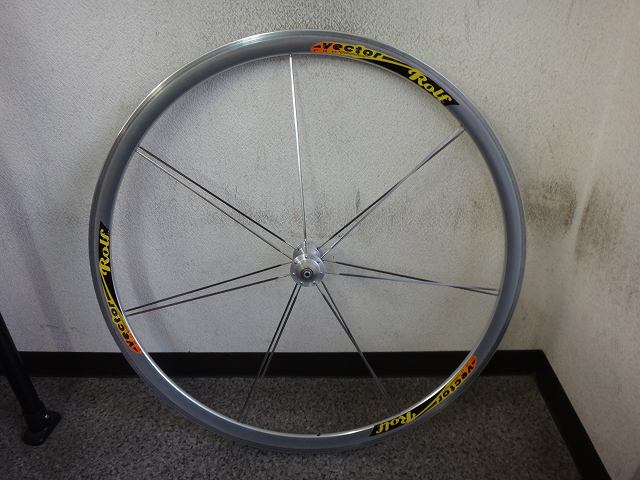
I received a front wheel from a Rolf Vector Pro from a customer.
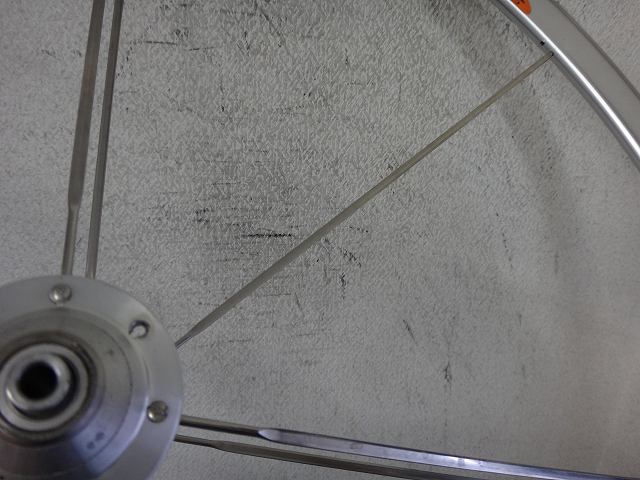
It's hard to tell because it uses paired spokes, but
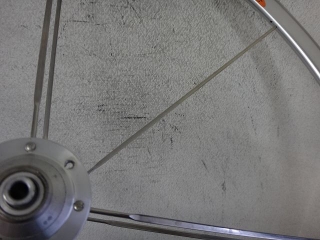
one spoke is missing.
Normally I'd just repair it, but...
Rolf Prima explicitly states: "For Rolf repairs, ask Trek. Rolf Prima takes no responsibility for Rolf repairs."
I don't know if Trek stocks spokes for this, but the customer wants us to handle it here at the shop. As I'll explain later, this Rolf appears to be an early model—possibly from before Rolf came under the Trek umbrella.
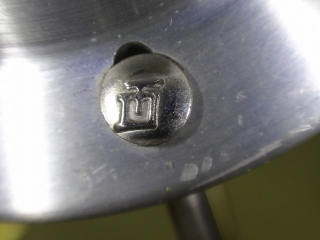
The spokes are made by DT, but they're not generic parts—they're incredibly rare.
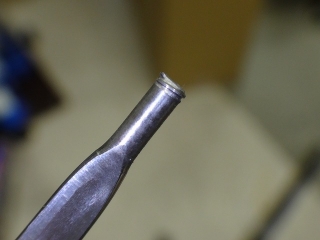
The spoke fractured not at the neck but near where the thread begins.
To be precise, it didn't break right at the thread start—I think that's because that point coincided with the end face of the internal nipple.
I calculated the spoke weight ratio accounting for the length of the broken threaded section, and it came out to roughly 120%. I initially suspected a calculation error, but there was none. Here's why this matters: when replacing just one spoke, you need that replacement spoke to have the same spoke weight ratio as the original spokes.
DT and Sapim have spoke pairs where the butted section dimensions are nearly identical, and therefore the spoke weight ratios are nearly equal—like Competition and Race, Aero Light and CX-RAY, New Aero and CX. When mixing these, you don't run into problems even if they're different brands. New Aero and CX both have roughly 100% spoke weight ratio, so if you don't mind the appearance, you can even repair with plain 14-gauge spokes (100% weight ratio).
If spokes with different weight ratios get mixed, the problem is that the spoke deformation amount varies at that location, which causes spoke breakage to reoccur. It's also theoretically bad for the wheel.
Taken to an extreme: if I tried to repair this one spoke with CX-RAY (about 65% spoke weight ratio), the moment I removed lateral runout, that spoke would be tensioned so tightly it would glisten (and honestly, I'm not sure you could get it that tight in the first place).
Conversely, if you add just one CX spoke to a wheel built entirely with CX-RAY spokes, the moment you remove lateral runout, that single CX would be so loose it would rattle. Then to tension it properly, you'd have to tighten both neighboring CX-RAY spokes to a glisten, which at that phase would create radial runout on the inner side and cause huge variations in spoke tension.
So if there were a spoke with roughly 120% spoke weight ratio, I could repair it. But no such spoke exists, so complete spoke replacement was the only option. This spoke is 283mm. Fortunately, Sapim CX comes in that length and the supplier had it in stock, so I ordered it.
Post note: I received a comment suggesting that if we used the 14-gauge threaded, 13-gauge everywhere-else spokes that appear on some mama-chari bikes, that might be around 120%. But my calculations show that would actually be around 136%.
For reference, using manufacturer's published weights to calculate spoke weight ratio: Sapim CX at 260mm/64 spokes/423g gives 0.989131... or roughly 99%. But from my actual measurements of various lengths, I get around 100.8%–101%. DT New Aero at 264mm/64 spokes/437g gives 1.006385... or roughly 101%. New Aero's measured values are unknown, but based on the butted section dimensions, it definitely comes out nearly identical to CX. And it's certain that these spokes don't have a 120% spoke weight ratio.
Since this wheel is in regular use by the customer, I proposed a temporary fix using Sapim Strong if he needed it urgently. But he decided to wait for the full CX replacement, so I didn't use Strong. Strong has a 13-gauge neck with 14-gauge thereafter in a single-butted design; manufacturer specs list 260mm/64 spokes/446g, which gives a 104.3% spoke weight ratio. That's nowhere near 120%, but I thought it would hold for temporary use.
I once did a temporary fix on a Bora WTO spoke by bending a replacement spoke, and used Bora spokes temporarily before proper WTO spokes arrived later for the real repair. That time too, I got slight radial runout from the spoke difference, though the customer said it was imperceptible while riding.
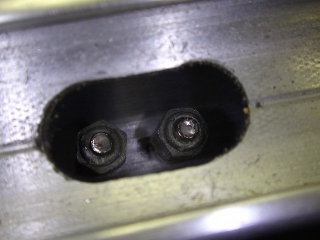
The rim's outer edge spoke holes are a bit roughly made—like two round holes drilled and then connected in a straight line.
The spokes protrude from the internal nipples, but that's probably intentional.
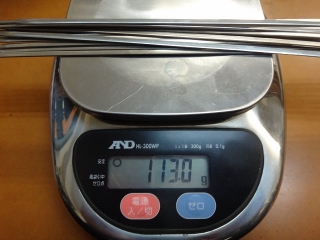
I disassembled the wheel.
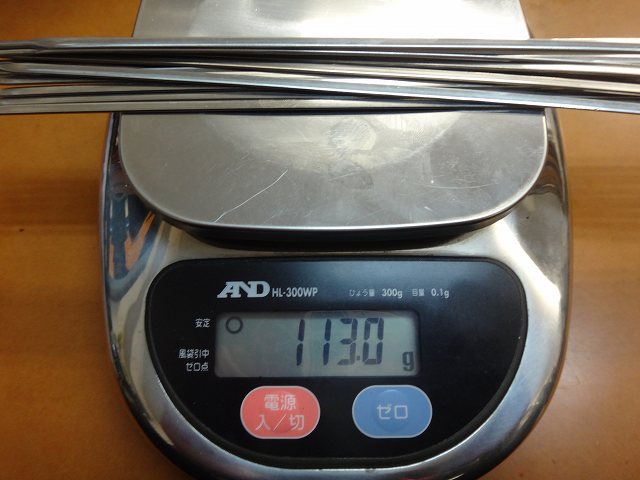
The unbroken original spokes: 283mm/13 spokes/113g, which gives a spoke weight ratio of 1.195131... or indeed 119–120%. What on earth is this?
The butted section width is ordinary, but the thickness is extraordinarily heavy.
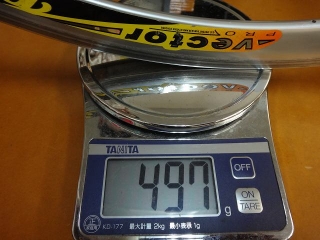
The rim's measured weight is here.
With only 14 spokes tensioned to considerable tension, a heavy rim is unavoidable.
Thinking about this: a pair-spoke design doesn't use paired spokes here. This is a ~390g low-profile rim laced with just 16 spokes (only two more than this) using light 65% weight-ratio spokes—a Shimano C24 front wheel trying to be an aero-and-lightweight greedy set (※). Now I really understand how crazy that spec is.
※Note: "rigidity" is not included in the greedy set, sorry to say.
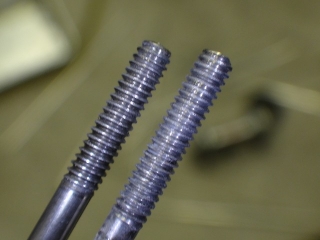
↑Left is CX, right is the original spoke.
The original spoke isn't extremely long, but the thread section is slightly longer.
I'll cut the CX and re-roll the thread, and the thread length created by the spoke cutter is slightly different from Sapim's off-the-shelf version. But compared to the Rolf spoke being long, the difference is negligible.
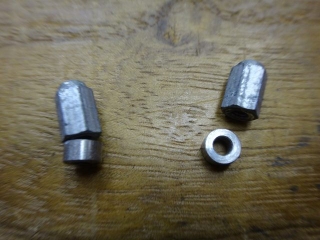
Between the internal nipple and rim was a sort of collar or tall washer.
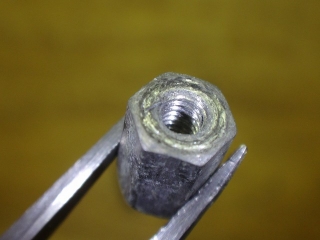
The nipple's contact surface toward the rim is
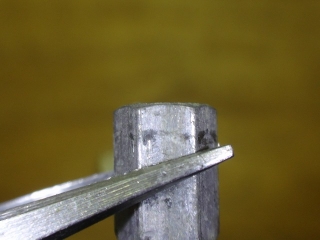
not rounded but flat, and the washer is flat on both sides. The round-bottomed nipple and one-side-concave washer would normally act like a ball joint, absorbing spoke angle bending. But there's no such function here—the washer's footprint is roughly the same size as the nipple's—so the only purpose of having this washer is probably to prevent nipple rotation from transferring to the rim.
I've confirmed that with the original spokes (which have slightly longer thread sections), the thread extends a bit past the nipple's inner edge. The fractured spoke makes this obvious.

↑The original state looks like this in diagram form.
Since the spoke protruded from the nipple, I was able to grab the broken section with a vise-grip and recover the broken piece.

If I cut the CX to the original 283mm, I risk using up all the thread. So I made them 282mm to match the original spokes' "distance to thread start."
This way, when finished, the threads won't be completely used up, and the spoke's end face should be flush with the nipple.
But as it turned out later, it came out slightly proud (though the threads definitely weren't used up). Since the wheel must be tensioned firmly to avoid spoke seating problems, and because the CX has a smaller spoke weight ratio, I was careful and consciously tensioned aggressively. But the customer—who watched me build this wheel—said the finished wheel feels stiffer than before, suggesting I wound more thread than the original. Given the smaller spoke weight ratio, my winding might indeed have been greater than original.
Also, in the diagram I drew the CX's plain section beyond the thread as longer than the original, which is factually true. But the original spoke was on the edge of clearance at the rim hole at the butted boundary, and the CX, while slightly better, was also pretty tight.
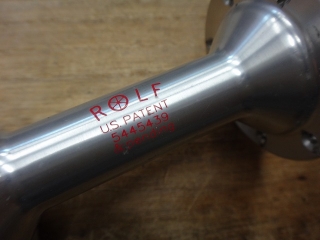
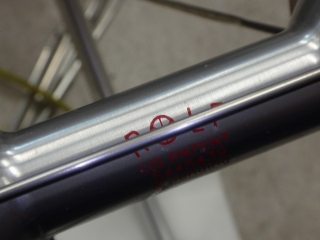
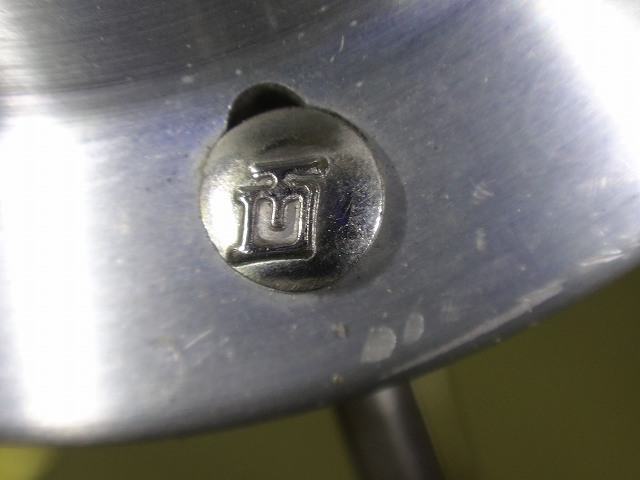
The hub body carries early Rolf branding.

(The Rolf you see commonly looks like this)
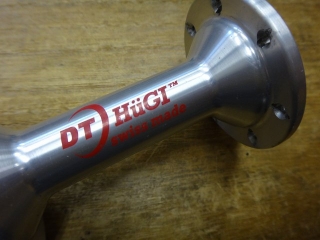
It's actually a DT "Fugi" brand hub.
The bearing diameter isn't wastefully small, and this wheel has seen considerable use over the years, yet it spins smoothly.
Why did I say "not wastefully small"? Because Rolf Prima wheels with White Industries wide small-flange front hubs often—or rather, constantly—have gritty bearing rotation. I saw one again today on another project. There's no way that Rolf Prima wheel, however old, is older than this one. No way.
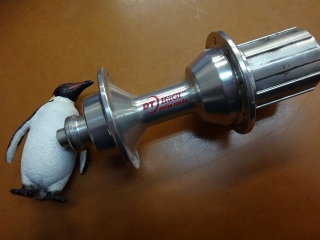
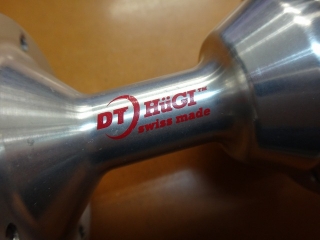
I've posted about this before, but I own a Fugi rear hub.
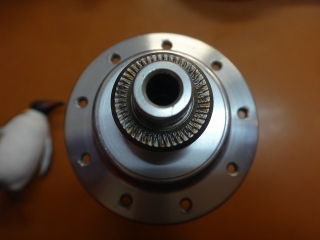
An 18-hole rear hub is extremely rare.
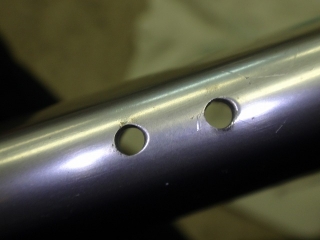
The rim holes show clear runout, arranged front-to-back. Some XEROLITE wheels with paired spokes have their pair holes arranged left-to-right instead.
I threaded plain spokes through the left and right hub flange holes. There's zero phase shift—the spokes run parallel to the hub body. But the rim holes are arranged front-to-back, so the 0-cross lacing of this front wheel has spoke paths that deviate from true radial lines. In strict terms, it's not pure radial lacing. Viewing the wheel from one side, the hub flanges appear twisted in opposite directions—the spoke paths are twisted. Put exaggeratedly: it's like taking a JIS-laced wheel and leaving only the outpokes.
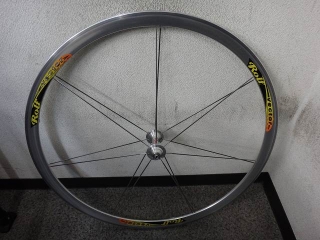
It's built. The opening image was shot from the left side; this one is from the right. As for where this rim has left/right attributes—
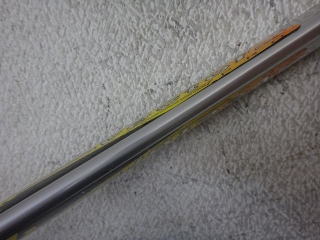
The decal is an elaborate design:
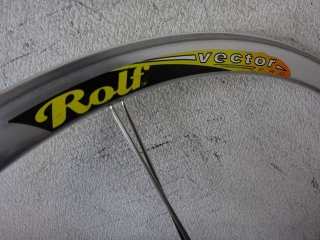
On the right side, it reads Rolf→Vector Pro,
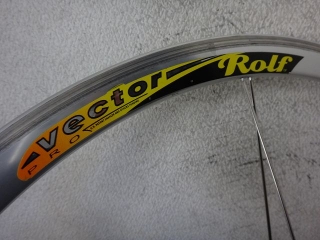
while the left reads Vector Pro→Rolf. Also, the CX's plain section protrusion is as shown in the image.
This wheel pursued nothing but the goal of fewer spokes—adopting 120% weight-ratio spokes and paired-spoke lacing. But Mavic's Cosmic Carbone, from the first generation (originally 16-hole front and rear, later 20-hole rear only) all the way to the Cosmic Carbone Ultimite's rear left spoke thread section, uses 13-gauge-based spokes. If this Rolf had also used 13-gauge base, the thread-section breakage might not have happened. But because it was 14-gauge, generic spoke repair was possible (though it became complete replacement), and now it can be repaired with CX going forward. For CX, I didn't just stock the minimum needed for this rebuild—I brought in a decent supply. And if spoke thread breakage happens again in the future and the broken piece can't be recovered from the nipple, I also have stock of nearly identical nipples (same 3/16" tool size), so it's definitely fixable.
I received a front wheel from a Rolf Vector Pro from a customer.
It's hard to tell because it uses paired spokes, but
one spoke is missing.
Normally I'd just repair it, but...
Rolf Prima explicitly states: "For Rolf repairs, ask Trek. Rolf Prima takes no responsibility for Rolf repairs."
I don't know if Trek stocks spokes for this, but the customer wants us to handle it here at the shop. As I'll explain later, this Rolf appears to be an early model—possibly from before Rolf came under the Trek umbrella.
The spokes are made by DT, but they're not generic parts—they're incredibly rare.
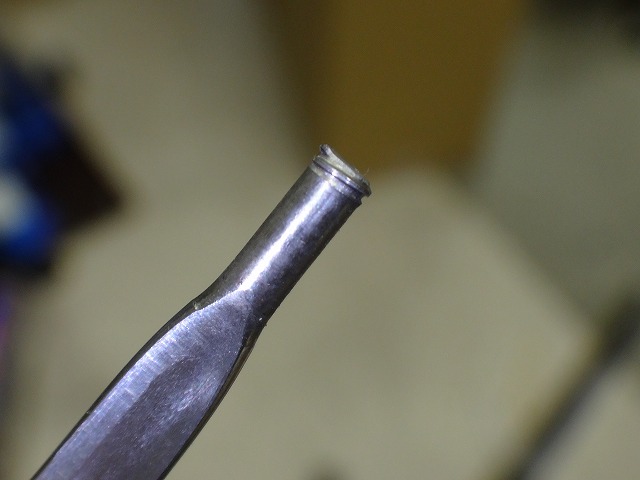
The spoke fractured not at the neck but near where the thread begins.
To be precise, it didn't break right at the thread start—I think that's because that point coincided with the end face of the internal nipple.
I calculated the spoke weight ratio accounting for the length of the broken threaded section, and it came out to roughly 120%. I initially suspected a calculation error, but there was none. Here's why this matters: when replacing just one spoke, you need that replacement spoke to have the same spoke weight ratio as the original spokes.
DT and Sapim have spoke pairs where the butted section dimensions are nearly identical, and therefore the spoke weight ratios are nearly equal—like Competition and Race, Aero Light and CX-RAY, New Aero and CX. When mixing these, you don't run into problems even if they're different brands. New Aero and CX both have roughly 100% spoke weight ratio, so if you don't mind the appearance, you can even repair with plain 14-gauge spokes (100% weight ratio).
If spokes with different weight ratios get mixed, the problem is that the spoke deformation amount varies at that location, which causes spoke breakage to reoccur. It's also theoretically bad for the wheel.
Taken to an extreme: if I tried to repair this one spoke with CX-RAY (about 65% spoke weight ratio), the moment I removed lateral runout, that spoke would be tensioned so tightly it would glisten (and honestly, I'm not sure you could get it that tight in the first place).
Conversely, if you add just one CX spoke to a wheel built entirely with CX-RAY spokes, the moment you remove lateral runout, that single CX would be so loose it would rattle. Then to tension it properly, you'd have to tighten both neighboring CX-RAY spokes to a glisten, which at that phase would create radial runout on the inner side and cause huge variations in spoke tension.
So if there were a spoke with roughly 120% spoke weight ratio, I could repair it. But no such spoke exists, so complete spoke replacement was the only option. This spoke is 283mm. Fortunately, Sapim CX comes in that length and the supplier had it in stock, so I ordered it.
Post note: I received a comment suggesting that if we used the 14-gauge threaded, 13-gauge everywhere-else spokes that appear on some mama-chari bikes, that might be around 120%. But my calculations show that would actually be around 136%.
For reference, using manufacturer's published weights to calculate spoke weight ratio: Sapim CX at 260mm/64 spokes/423g gives 0.989131... or roughly 99%. But from my actual measurements of various lengths, I get around 100.8%–101%. DT New Aero at 264mm/64 spokes/437g gives 1.006385... or roughly 101%. New Aero's measured values are unknown, but based on the butted section dimensions, it definitely comes out nearly identical to CX. And it's certain that these spokes don't have a 120% spoke weight ratio.
Since this wheel is in regular use by the customer, I proposed a temporary fix using Sapim Strong if he needed it urgently. But he decided to wait for the full CX replacement, so I didn't use Strong. Strong has a 13-gauge neck with 14-gauge thereafter in a single-butted design; manufacturer specs list 260mm/64 spokes/446g, which gives a 104.3% spoke weight ratio. That's nowhere near 120%, but I thought it would hold for temporary use.
I once did a temporary fix on a Bora WTO spoke by bending a replacement spoke, and used Bora spokes temporarily before proper WTO spokes arrived later for the real repair. That time too, I got slight radial runout from the spoke difference, though the customer said it was imperceptible while riding.
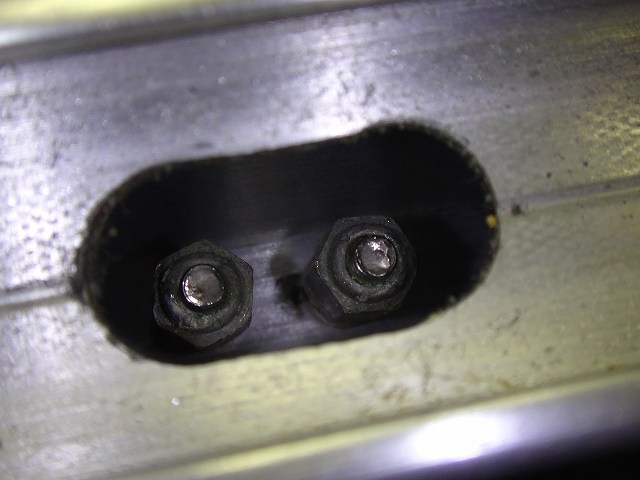
The rim's outer edge spoke holes are a bit roughly made—like two round holes drilled and then connected in a straight line.
The spokes protrude from the internal nipples, but that's probably intentional.
I disassembled the wheel.
The unbroken original spokes: 283mm/13 spokes/113g, which gives a spoke weight ratio of 1.195131... or indeed 119–120%. What on earth is this?
The butted section width is ordinary, but the thickness is extraordinarily heavy.

The rim's measured weight is here.
With only 14 spokes tensioned to considerable tension, a heavy rim is unavoidable.
Thinking about this: a pair-spoke design doesn't use paired spokes here. This is a ~390g low-profile rim laced with just 16 spokes (only two more than this) using light 65% weight-ratio spokes—a Shimano C24 front wheel trying to be an aero-and-lightweight greedy set (※). Now I really understand how crazy that spec is.
※Note: "rigidity" is not included in the greedy set, sorry to say.

↑Left is CX, right is the original spoke.
The original spoke isn't extremely long, but the thread section is slightly longer.
I'll cut the CX and re-roll the thread, and the thread length created by the spoke cutter is slightly different from Sapim's off-the-shelf version. But compared to the Rolf spoke being long, the difference is negligible.
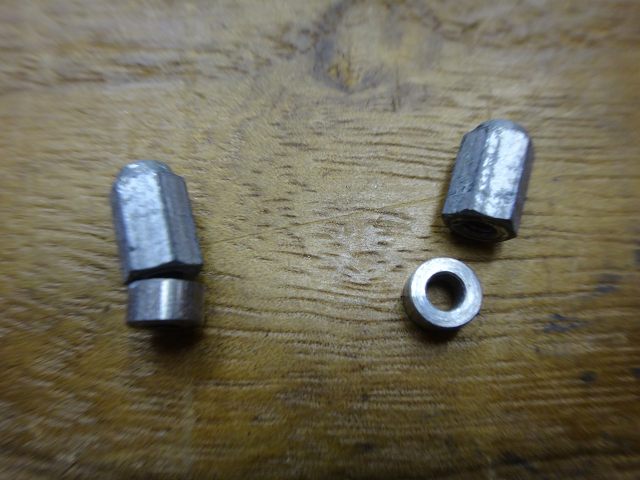
Between the internal nipple and rim was a sort of collar or tall washer.

The nipple's contact surface toward the rim is
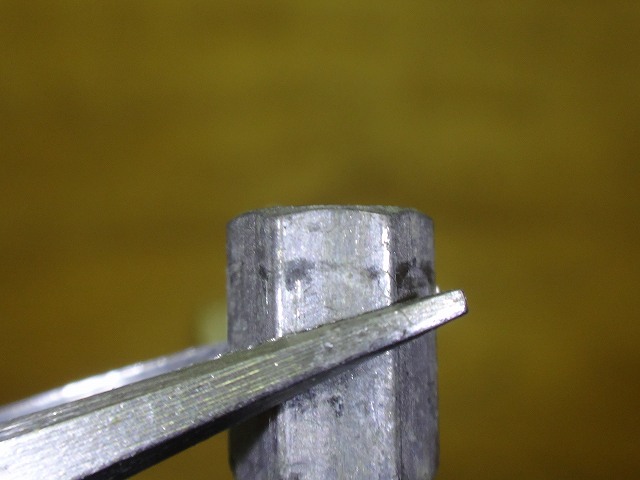
not rounded but flat, and the washer is flat on both sides. The round-bottomed nipple and one-side-concave washer would normally act like a ball joint, absorbing spoke angle bending. But there's no such function here—the washer's footprint is roughly the same size as the nipple's—so the only purpose of having this washer is probably to prevent nipple rotation from transferring to the rim.
I've confirmed that with the original spokes (which have slightly longer thread sections), the thread extends a bit past the nipple's inner edge. The fractured spoke makes this obvious.
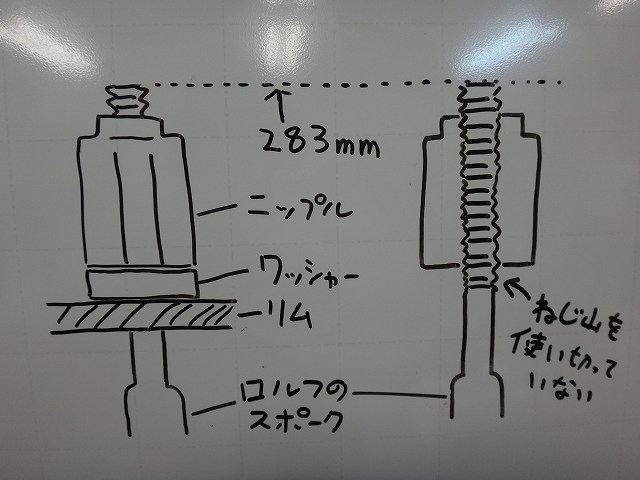
↑The original state looks like this in diagram form.
Since the spoke protruded from the nipple, I was able to grab the broken section with a vise-grip and recover the broken piece.
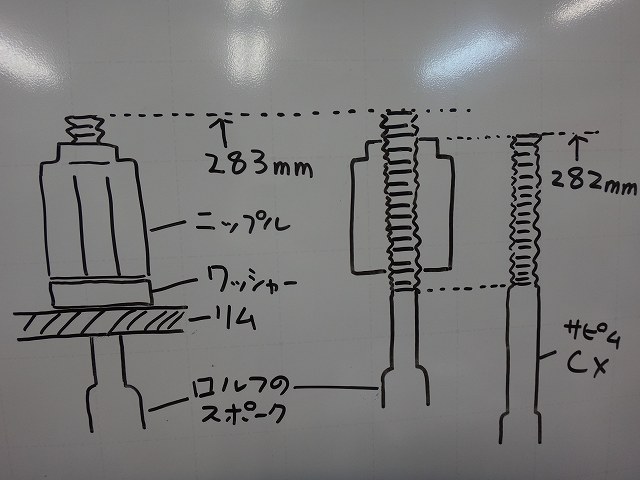
If I cut the CX to the original 283mm, I risk using up all the thread. So I made them 282mm to match the original spokes' "distance to thread start."
This way, when finished, the threads won't be completely used up, and the spoke's end face should be flush with the nipple.
But as it turned out later, it came out slightly proud (though the threads definitely weren't used up). Since the wheel must be tensioned firmly to avoid spoke seating problems, and because the CX has a smaller spoke weight ratio, I was careful and consciously tensioned aggressively. But the customer—who watched me build this wheel—said the finished wheel feels stiffer than before, suggesting I wound more thread than the original. Given the smaller spoke weight ratio, my winding might indeed have been greater than original.
Also, in the diagram I drew the CX's plain section beyond the thread as longer than the original, which is factually true. But the original spoke was on the edge of clearance at the rim hole at the butted boundary, and the CX, while slightly better, was also pretty tight.
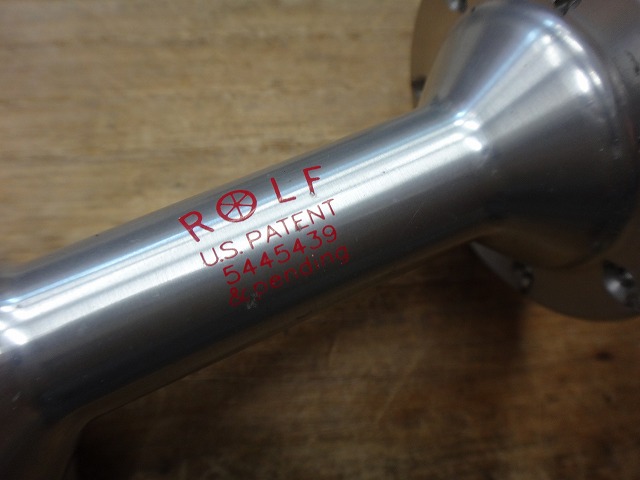
The hub body carries early Rolf branding.

(The Rolf you see commonly looks like this)
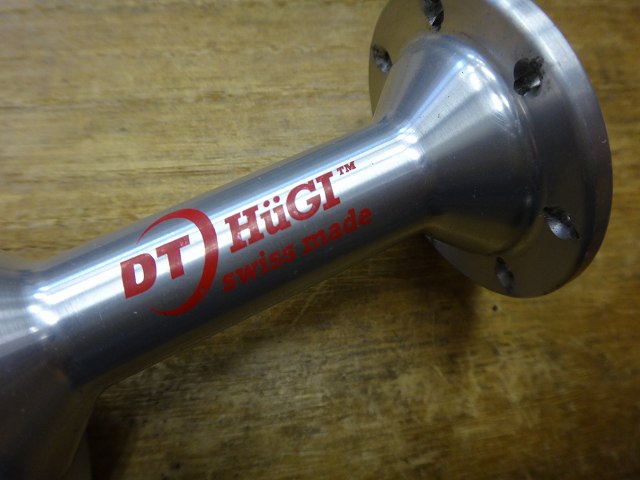
It's actually a DT "Fugi" brand hub.
The bearing diameter isn't wastefully small, and this wheel has seen considerable use over the years, yet it spins smoothly.
Why did I say "not wastefully small"? Because Rolf Prima wheels with White Industries wide small-flange front hubs often—or rather, constantly—have gritty bearing rotation. I saw one again today on another project. There's no way that Rolf Prima wheel, however old, is older than this one. No way.
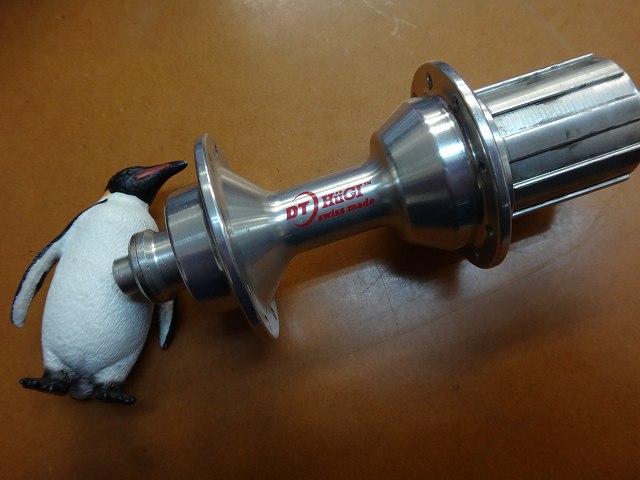
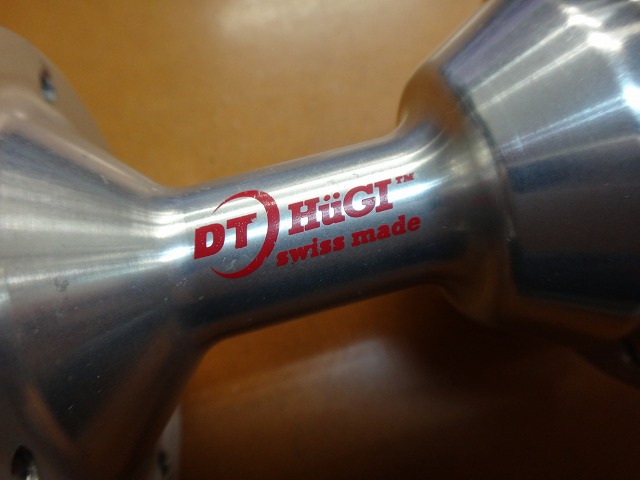
I've posted about this before, but I own a Fugi rear hub.
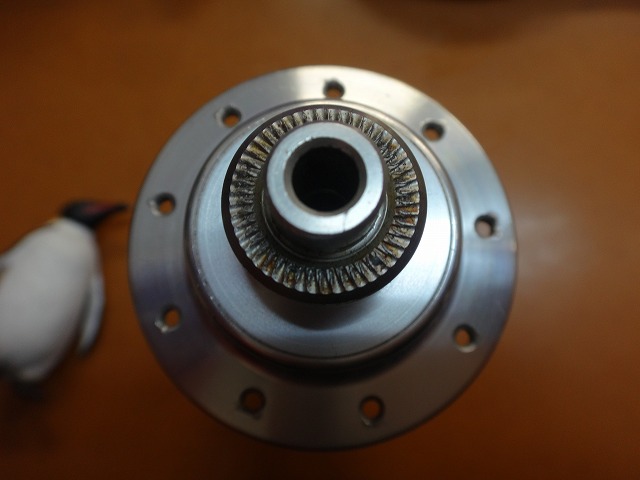
An 18-hole rear hub is extremely rare.

The rim holes show clear runout, arranged front-to-back. Some XEROLITE wheels with paired spokes have their pair holes arranged left-to-right instead.
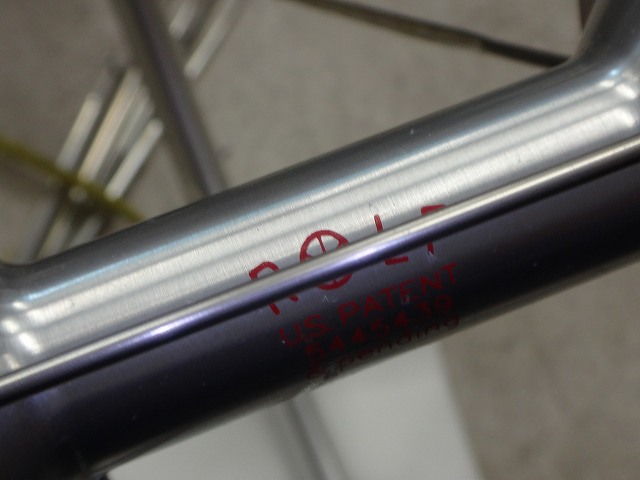
I threaded plain spokes through the left and right hub flange holes. There's zero phase shift—the spokes run parallel to the hub body. But the rim holes are arranged front-to-back, so the 0-cross lacing of this front wheel has spoke paths that deviate from true radial lines. In strict terms, it's not pure radial lacing. Viewing the wheel from one side, the hub flanges appear twisted in opposite directions—the spoke paths are twisted. Put exaggeratedly: it's like taking a JIS-laced wheel and leaving only the outpokes.

It's built. The opening image was shot from the left side; this one is from the right. As for where this rim has left/right attributes—
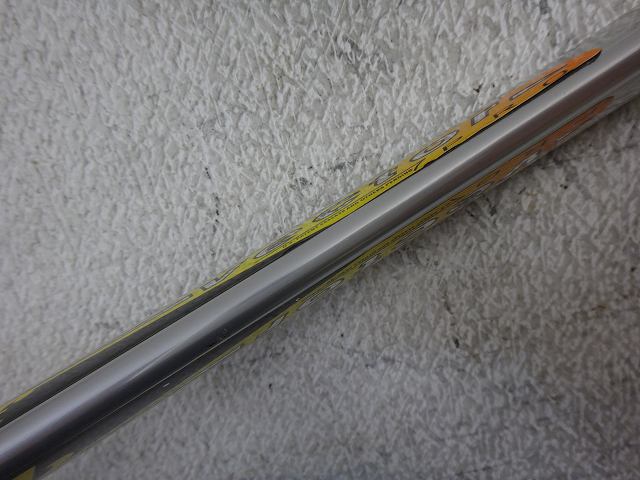
The decal is an elaborate design:
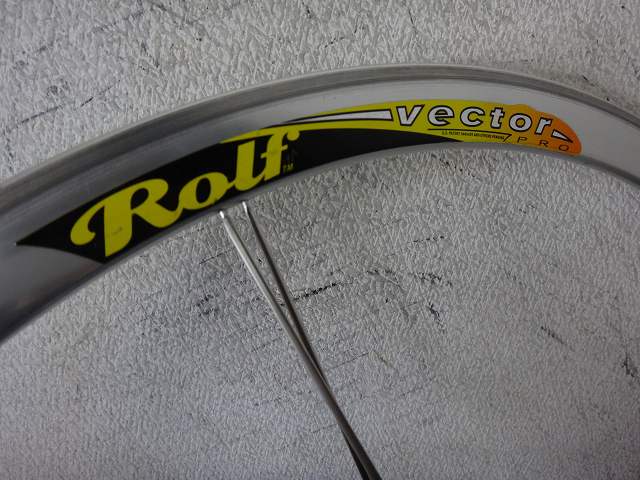
On the right side, it reads Rolf→Vector Pro,
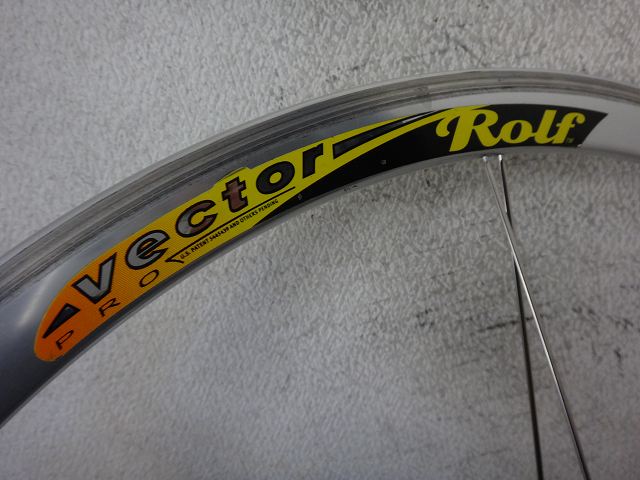
while the left reads Vector Pro→Rolf. Also, the CX's plain section protrusion is as shown in the image.
This wheel pursued nothing but the goal of fewer spokes—adopting 120% weight-ratio spokes and paired-spoke lacing. But Mavic's Cosmic Carbone, from the first generation (originally 16-hole front and rear, later 20-hole rear only) all the way to the Cosmic Carbone Ultimite's rear left spoke thread section, uses 13-gauge-based spokes. If this Rolf had also used 13-gauge base, the thread-section breakage might not have happened. But because it was 14-gauge, generic spoke repair was possible (though it became complete replacement), and now it can be repaired with CX going forward. For CX, I didn't just stock the minimum needed for this rebuild—I brought in a decent supply. And if spoke thread breakage happens again in the future and the broken piece can't be recovered from the nipple, I also have stock of nearly identical nipples (same 3/16" tool size), so it's definitely fixable.