Another wheel day (and so on).
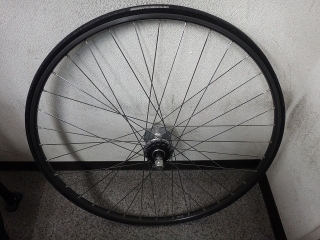
A customer brought in a rear wheel built with an Ambrosio Montreal rim.
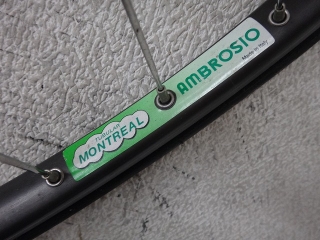
I've got the same rim myself—mine's the silver version though. This one's hard anodized color, but it's not particularly light, so the silver version is pretty stiff. It's a rim that can take decent tension.
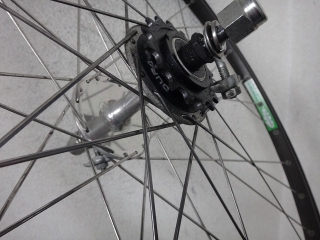
HB-7600R, 36H, NJS hub
Star aero spokes, Italian laced.
These spokes are decent Starbrite based on their magnetic properties—though at first I thought they were reproduction Starbrite.
The Italian lacing is used because, despite the hub having threads on both sides, they basically only use one side.
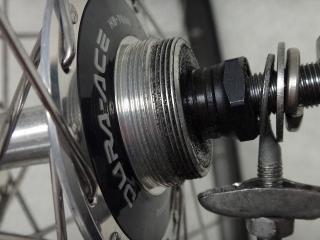
The fact that the threads on the other side are clean only in the gear-mount section suggests a single-speed freewheel body was mounted there at some point.
I suggested that if there's even a 1% chance they might use the other side's threads, we could switch to JIS lacing during the rebuild.
The original request was to change the rim and rebuild because the wheel felt sloppy somehow. But looking at it, the rim really isn't the problem, so I figured I'd just re-tension it as-is—
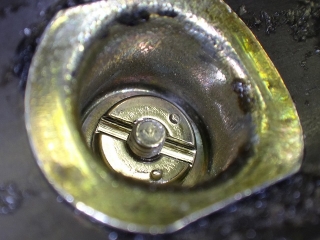
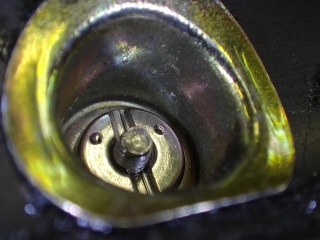
But the spokes were too long—re-tensioning would be difficult as-is. So I had to disassemble it completely, shorten the spokes a bit, and rebuild.
The spokes are long because these are NJS-certified aero Starbrite based on a #15 size. Reproduction Starbrite only comes in #14 base (aside from custom orders) and isn't NJS-certified.
The NJS-certified aero Starbrite only comes in 305mm length, which is exactly right for lacing 36H, 8-spoke to an HB-7600 hub with an Araya 16B Gold rim. The Montreal has a slightly higher rim height than the 16B Gold (smaller inner diameter), so using NJS spokes straight up makes them too long.
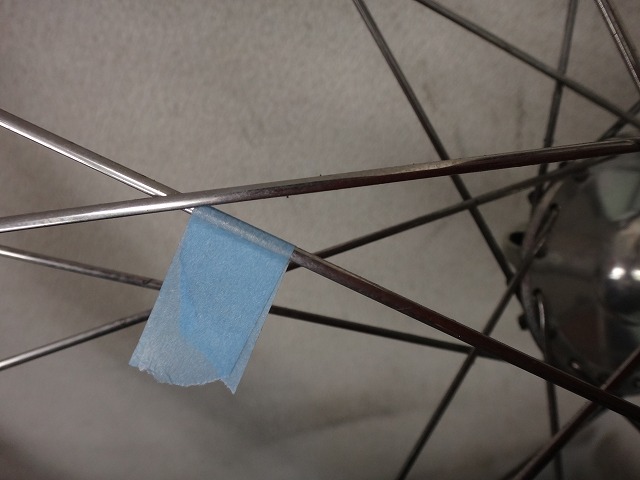
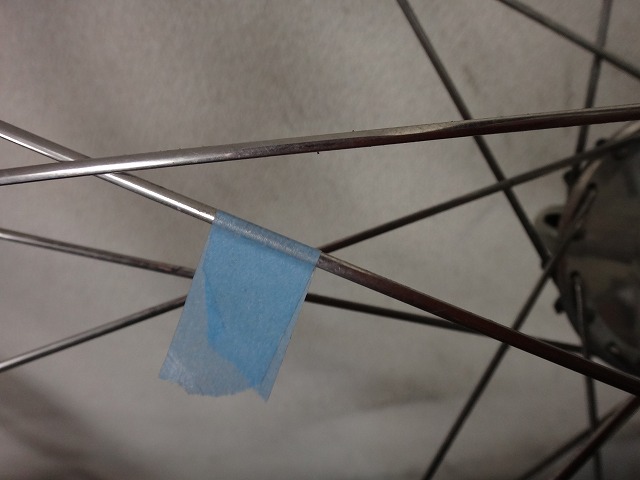
The rim's dished toward the gear side. If you can't center a wheel even when the hub measurements have no offset, the spokes are flat and graspable with a spoke wrench—well, then it's impossible to properly build wheels that are harder than this.

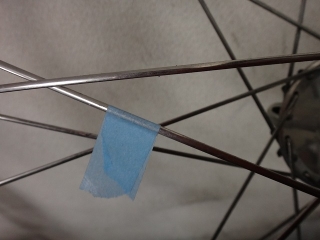
Should be tighter. Or maybe whoever built it doesn't usually work with rims other than the 16B Gold. That rim is incredibly delicate—frankly, it's weak.
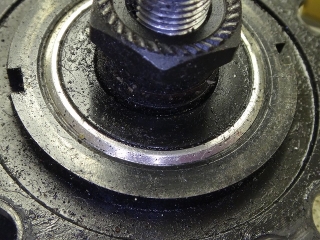
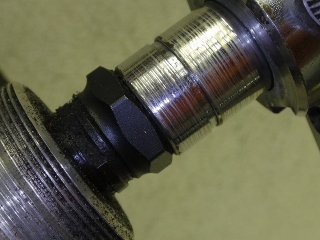
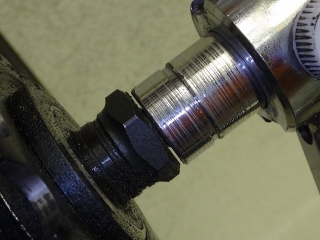
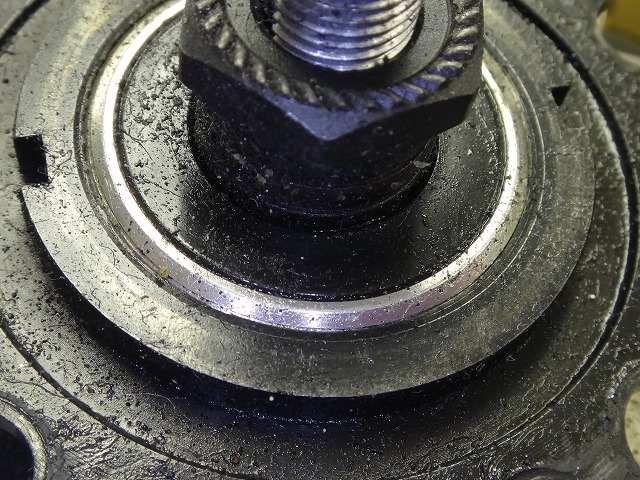
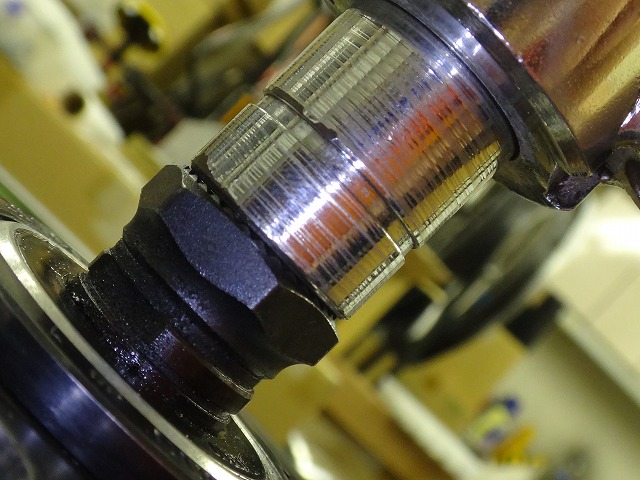
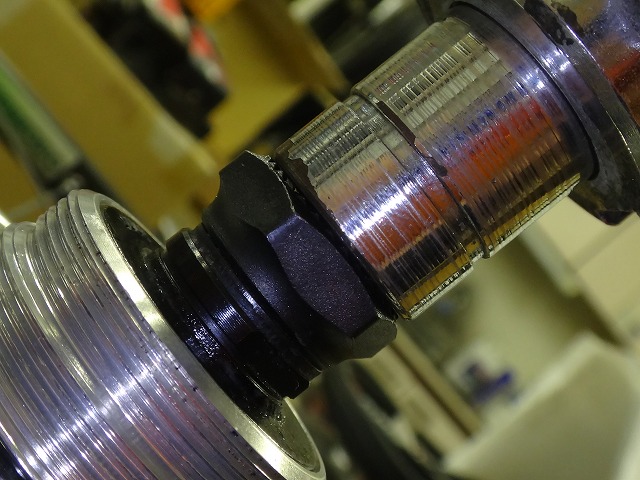
↑This lockring looks like it might be reversed...
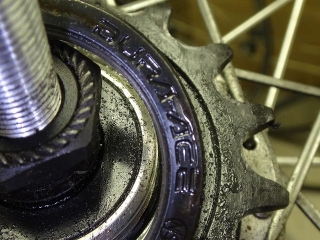
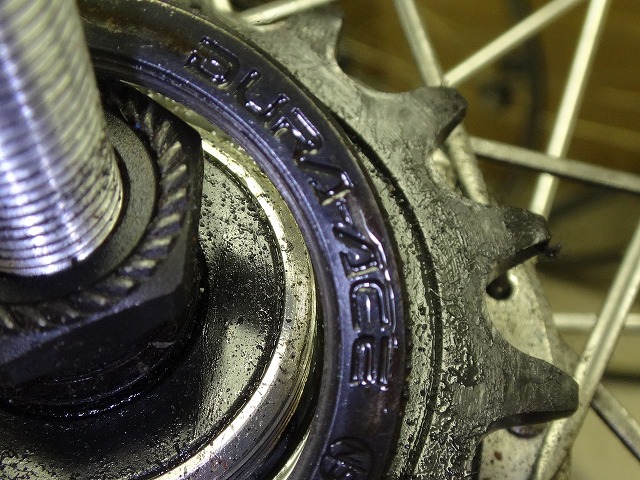
Took it off. The lettered side was facing inward, so it was indeed reversed. The lack of chamfering on the corners made it look backwards anyway.
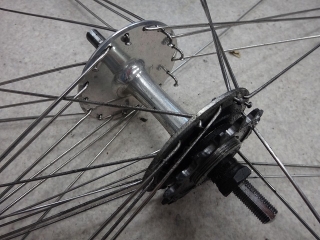
Disassembled the wheel. Based on the gear tooth count, I figured I could extract the spokes without removing the gear, so I took a shortcut. But if that hadn't worked, removing the gear from the hub alone would be impossible (unless you're okay with damaging the hub shell in a vise)—you'd need to do a temporary build first.
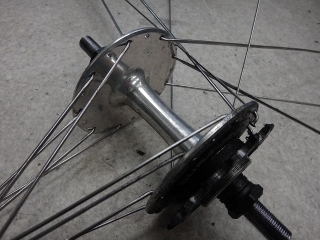
Extracted just the left and right inpokes—
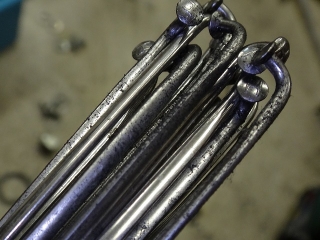
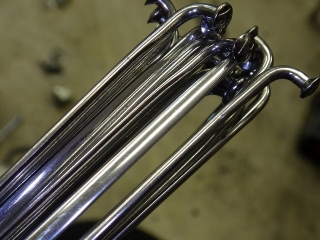
shortened the spoke length and then washed them. Did the same for the outpokes afterward. I separated the inpokes and outpokes because I didn't want to change their relationship during the rebuild. It's something I always do.

Built it.
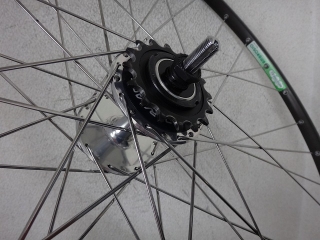
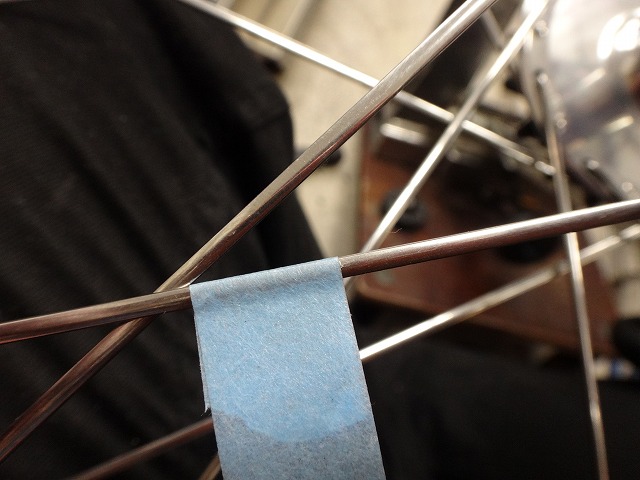
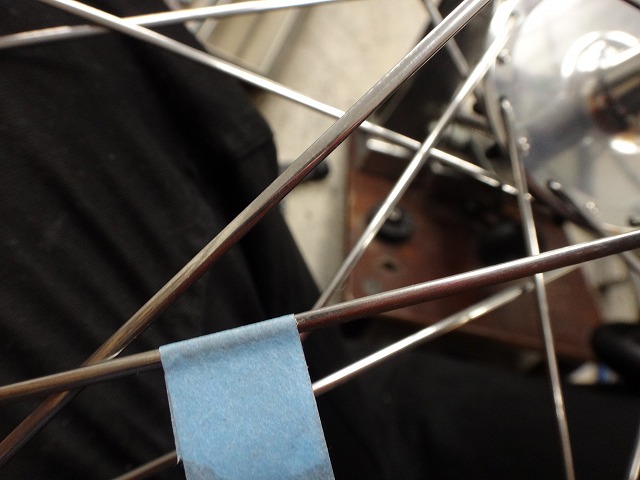
Changed it to 88-spoke JIS lacing. Will tie-and-tape the spokes later.
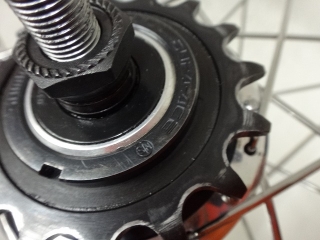
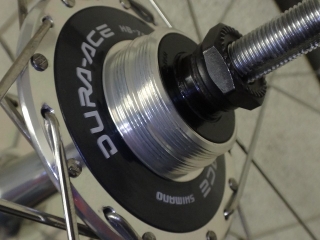
Cleaned the hub too.
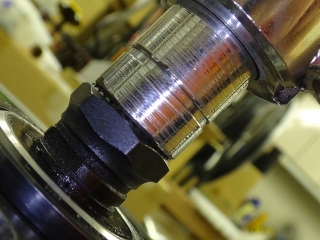
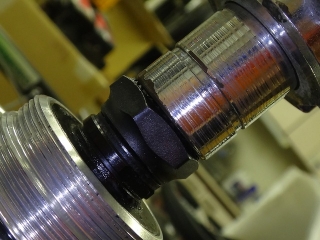
Centered.
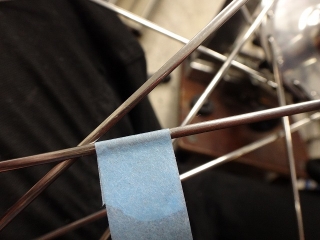
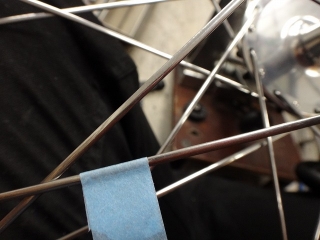
The final tension isn't dead-solid, but it's tighter than before the rebuild.
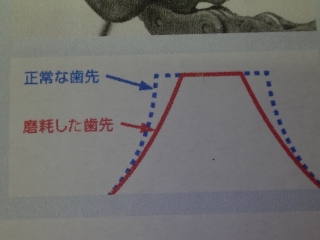
Off topic, but this is from some wholesaler's materials—a diagram showing "this is how chainrings and sprockets wear!"—that kind of thing. Given where the chain rollers make contact, I can't see how the front and back of the tooth tips would wear equally...

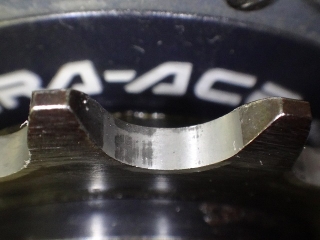
The small cog from this rear wheel, after cleaning, showed exactly that kind of wear pattern—perfect for illustrating the point.
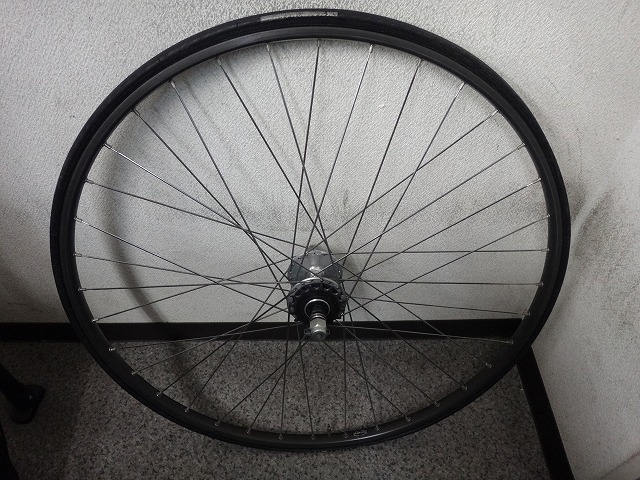
A customer brought in a rear wheel built with an Ambrosio Montreal rim.
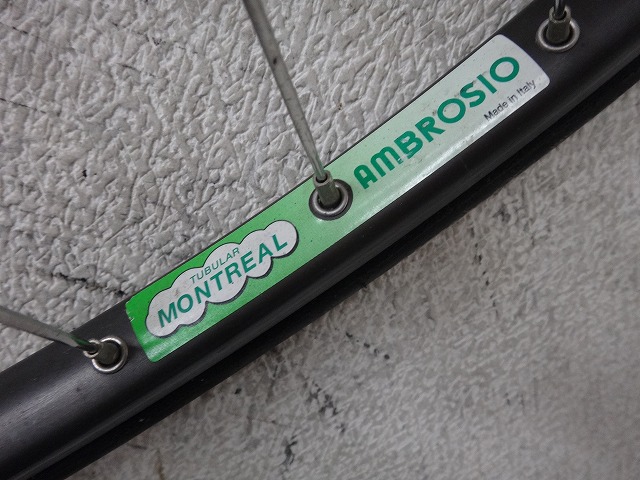
I've got the same rim myself—mine's the silver version though. This one's hard anodized color, but it's not particularly light, so the silver version is pretty stiff. It's a rim that can take decent tension.
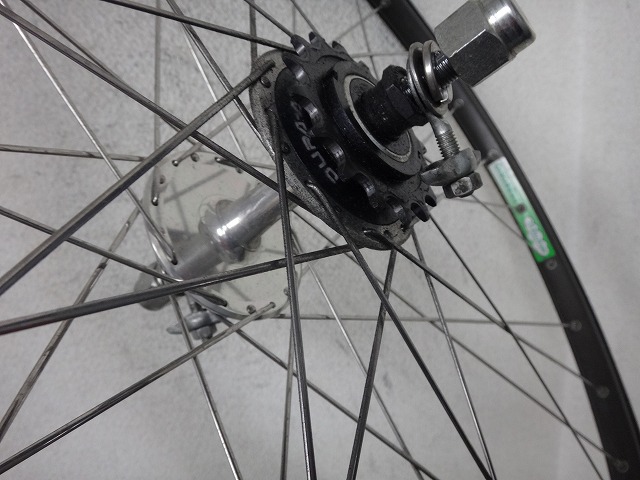
HB-7600R, 36H, NJS hub
Star aero spokes, Italian laced.
These spokes are decent Starbrite based on their magnetic properties—though at first I thought they were reproduction Starbrite.
The Italian lacing is used because, despite the hub having threads on both sides, they basically only use one side.
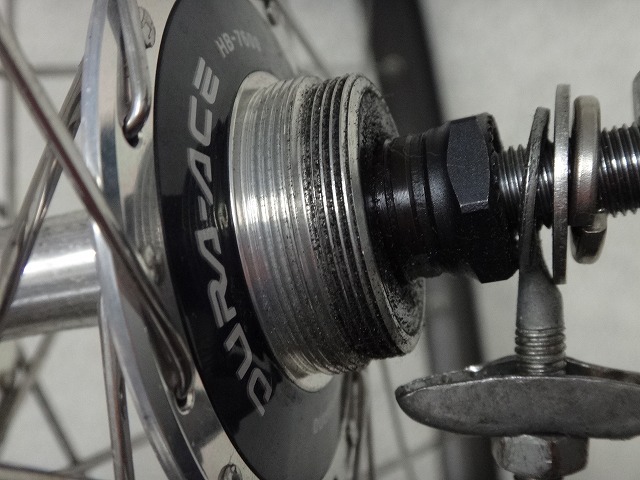
The fact that the threads on the other side are clean only in the gear-mount section suggests a single-speed freewheel body was mounted there at some point.
I suggested that if there's even a 1% chance they might use the other side's threads, we could switch to JIS lacing during the rebuild.
The original request was to change the rim and rebuild because the wheel felt sloppy somehow. But looking at it, the rim really isn't the problem, so I figured I'd just re-tension it as-is—
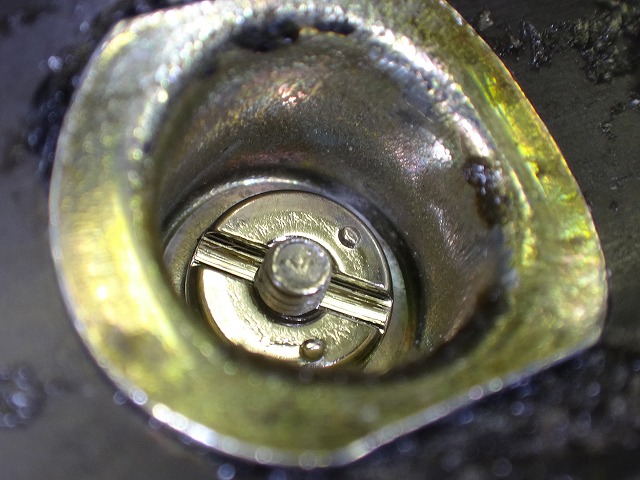
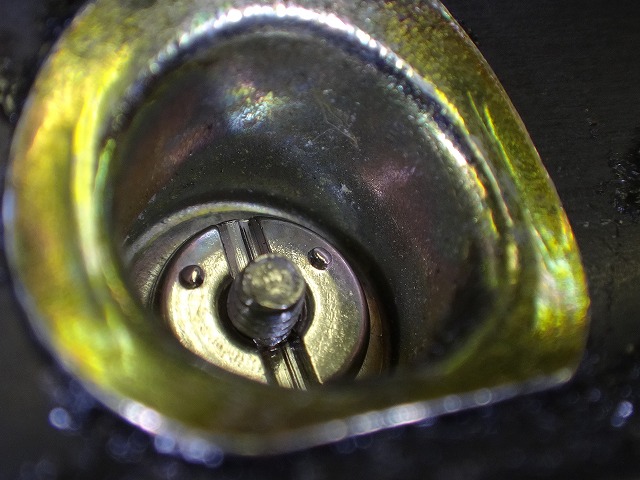
But the spokes were too long—re-tensioning would be difficult as-is. So I had to disassemble it completely, shorten the spokes a bit, and rebuild.
The spokes are long because these are NJS-certified aero Starbrite based on a #15 size. Reproduction Starbrite only comes in #14 base (aside from custom orders) and isn't NJS-certified.
The NJS-certified aero Starbrite only comes in 305mm length, which is exactly right for lacing 36H, 8-spoke to an HB-7600 hub with an Araya 16B Gold rim. The Montreal has a slightly higher rim height than the 16B Gold (smaller inner diameter), so using NJS spokes straight up makes them too long.
The rim's dished toward the gear side. If you can't center a wheel even when the hub measurements have no offset, the spokes are flat and graspable with a spoke wrench—well, then it's impossible to properly build wheels that are harder than this.
Should be tighter. Or maybe whoever built it doesn't usually work with rims other than the 16B Gold. That rim is incredibly delicate—frankly, it's weak.
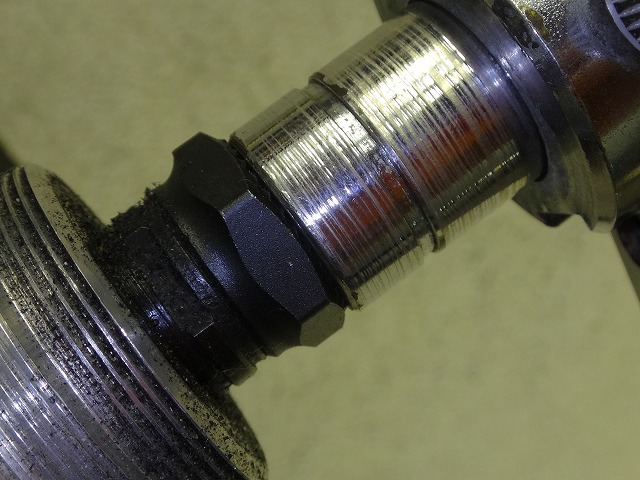
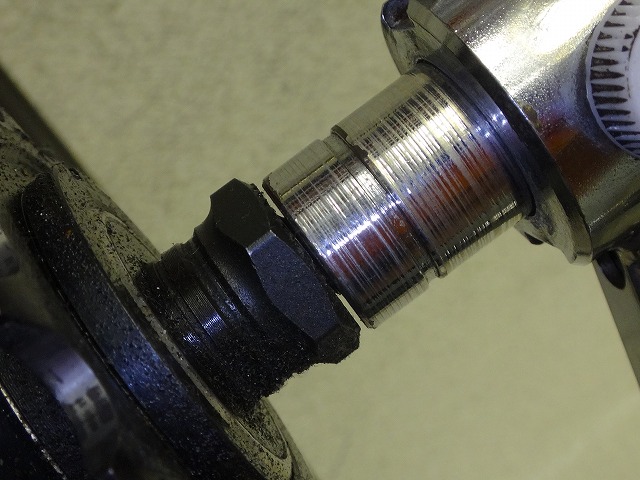
↑This lockring looks like it might be reversed...
Took it off. The lettered side was facing inward, so it was indeed reversed. The lack of chamfering on the corners made it look backwards anyway.
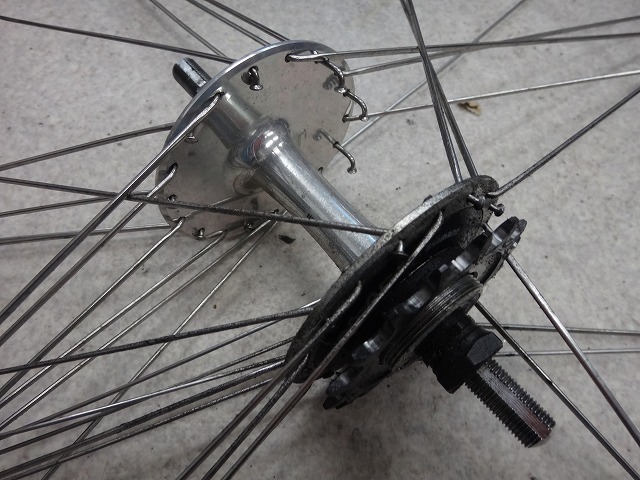
Disassembled the wheel. Based on the gear tooth count, I figured I could extract the spokes without removing the gear, so I took a shortcut. But if that hadn't worked, removing the gear from the hub alone would be impossible (unless you're okay with damaging the hub shell in a vise)—you'd need to do a temporary build first.
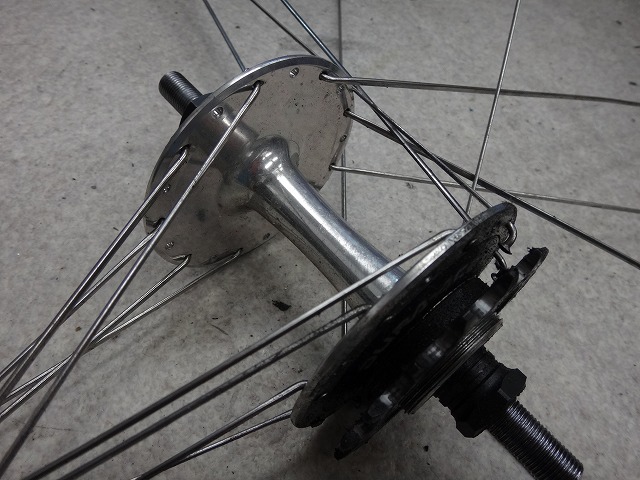
Extracted just the left and right inpokes—
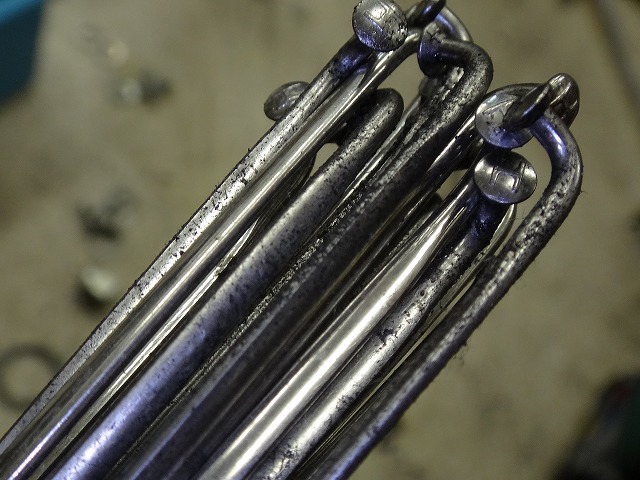
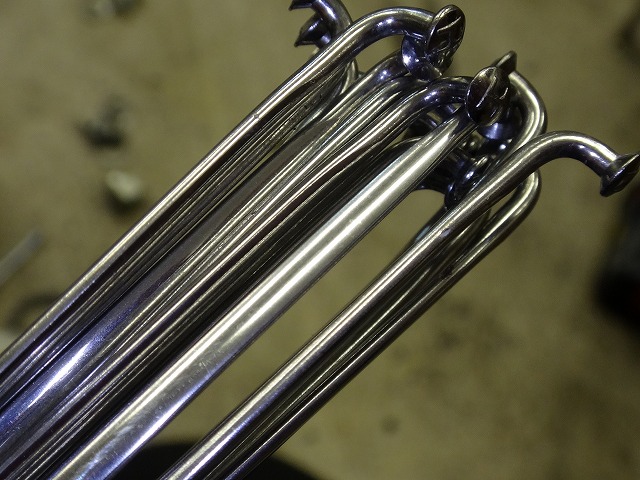
shortened the spoke length and then washed them. Did the same for the outpokes afterward. I separated the inpokes and outpokes because I didn't want to change their relationship during the rebuild. It's something I always do.
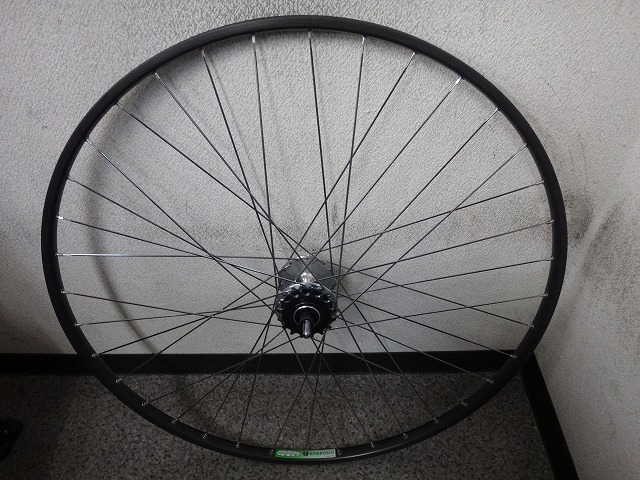
Built it.
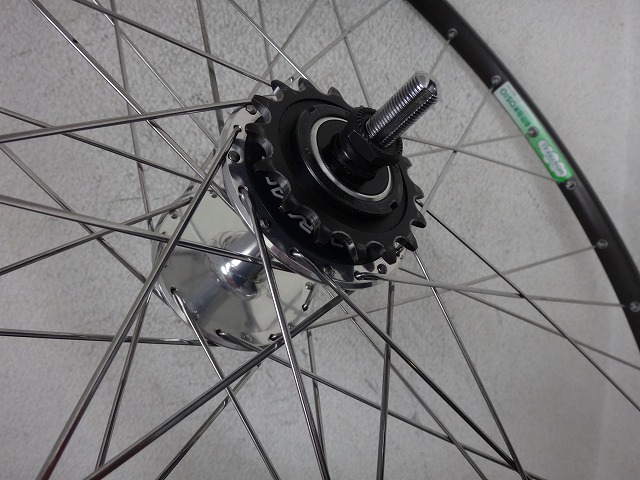
Changed it to 88-spoke JIS lacing. Will tie-and-tape the spokes later.
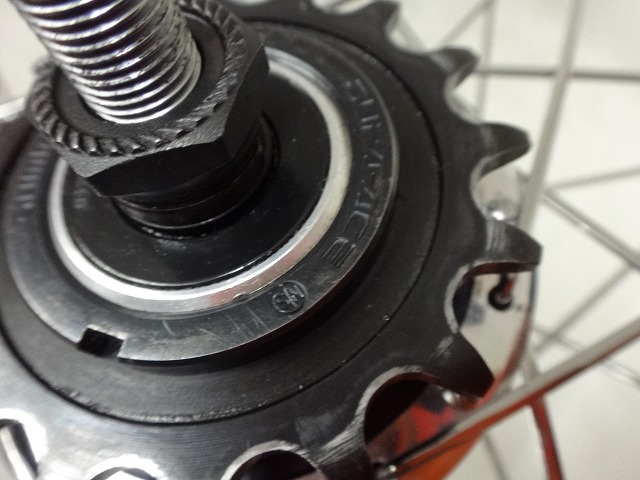
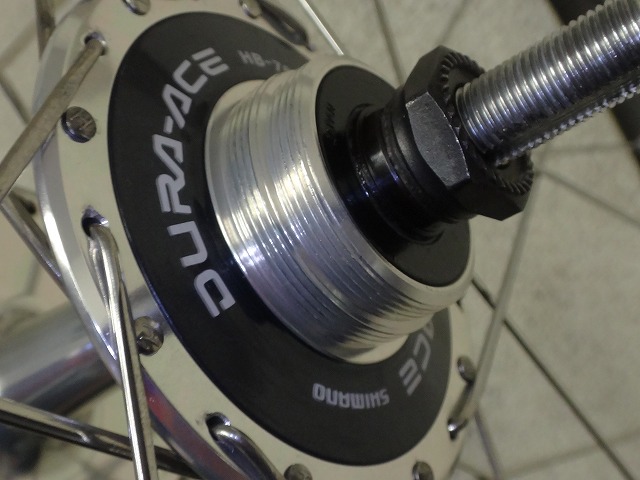
Cleaned the hub too.
Centered.
The final tension isn't dead-solid, but it's tighter than before the rebuild.
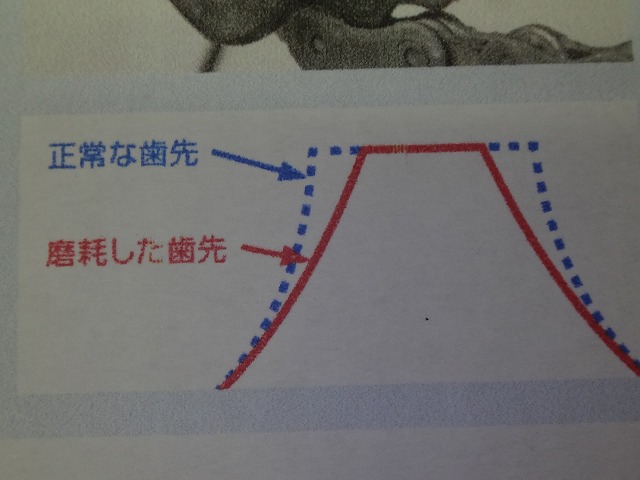
Off topic, but this is from some wholesaler's materials—a diagram showing "this is how chainrings and sprockets wear!"—that kind of thing. Given where the chain rollers make contact, I can't see how the front and back of the tooth tips would wear equally...

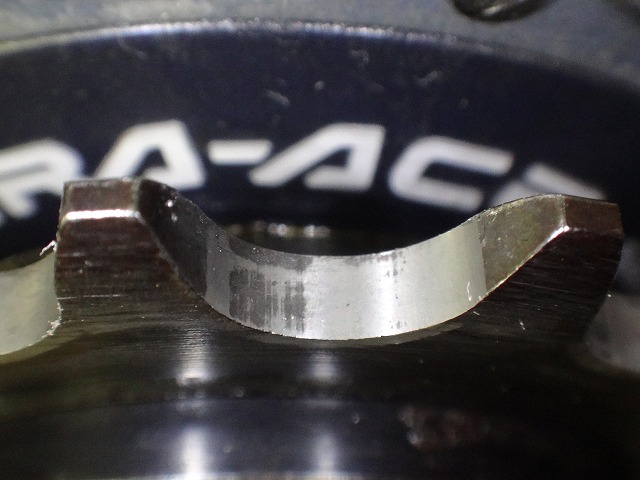
The small cog from this rear wheel, after cleaning, showed exactly that kind of wear pattern—perfect for illustrating the point.