Another day working on wheels (and so on).

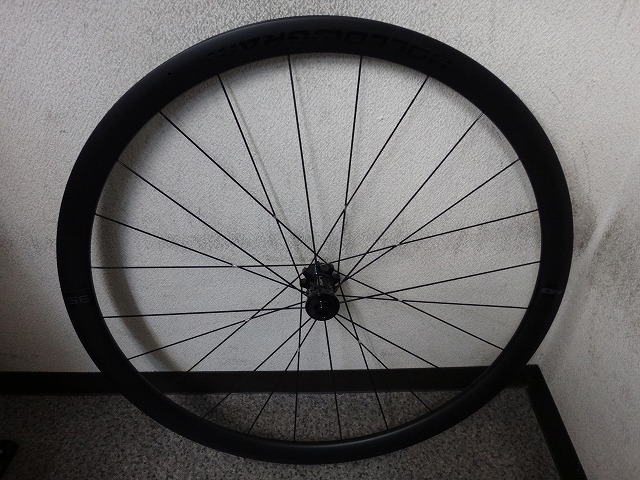
A customer brought me a Cannondale Hologram
disc brake wheel to rebuild.
I'll be rebuilding both front and rear, but today it's just the front.

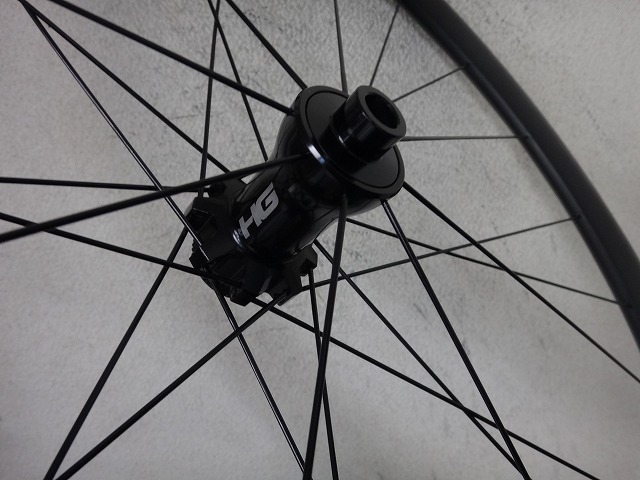
The rim is 35mm deep. There are probably complete wheels
built with the same rim available elsewhere,
but this is the exclusive spec that came with the complete bike—
it's built with round spokes rather than aero spokes.
Both sides use comp-grade black round butted spokes,
laced 8+16H in a 2:1 pattern for 24 total holes.
An asymmetric laced front wheel like this is incredibly difficult,
so I really thinkonly idiots shouldn't touch it carelessly...
According to the customer, both wheels are definitely loose,
but the bigger issue isn't the rear wheel's poor engagement—
it's that the front wheel twists or feels twisted when cornering.
The spoke tension isn't particularly high,
but it's clear this isn't something a simple retensioning will fix.
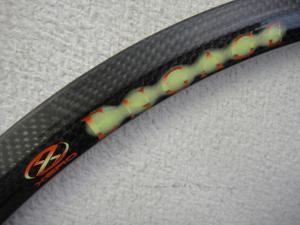
↑This is an Engage rim from the XERO (Zero) brand,
and today's Hologram wheel is also made by Zero.
You can see the Zero logo on the rim in the photo,

and they even took the trouble to have the logo engraved
on the spoke heads.

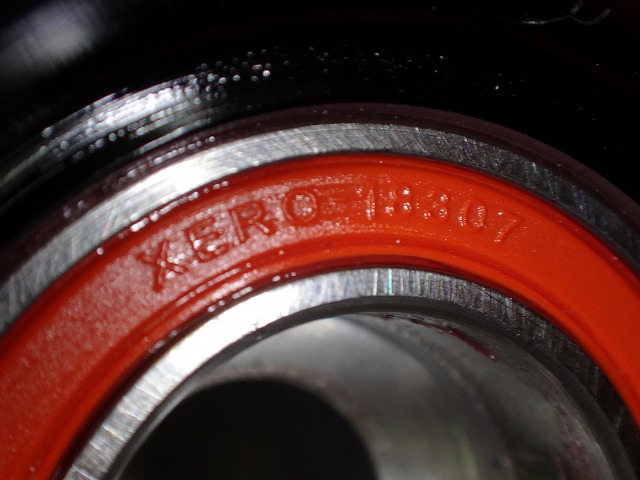
And the hub bearing seal also says XERO.
The "18307" designation that follows means
inner diameter 18mm, outer diameter 30mm, thickness 7mm.

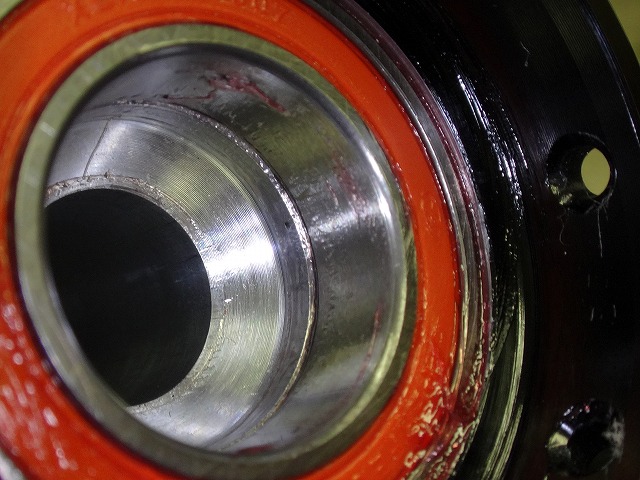
(Not important right now) but this bearing is press-fit
into the hub in a way that looks like it'd be difficult to remove when replacing.

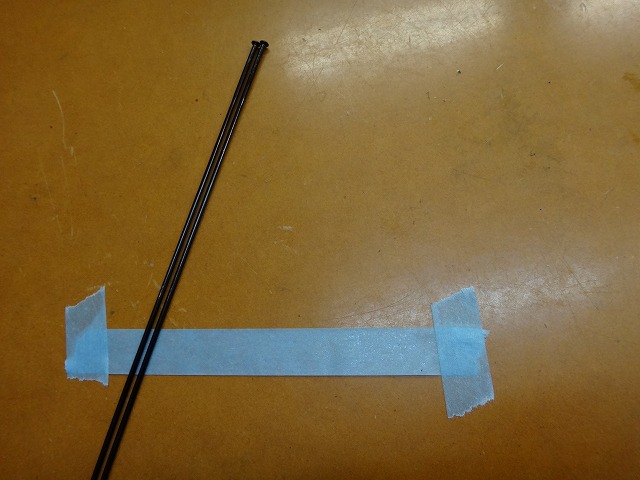
I'm going to lay out the 16 spokes for the left side,
paying attention to a certain detail.
In the image above, the tape in the middle has its sticky side facing up.

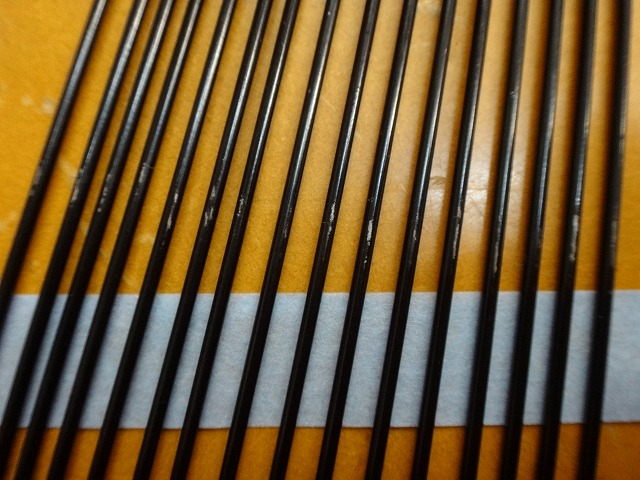
Laid out.

I know when the customer purchased the complete bike
that came with this wheel.
It can't have been ridden much, and yet
the final crossing wear marks are quite pronounced.

Built.

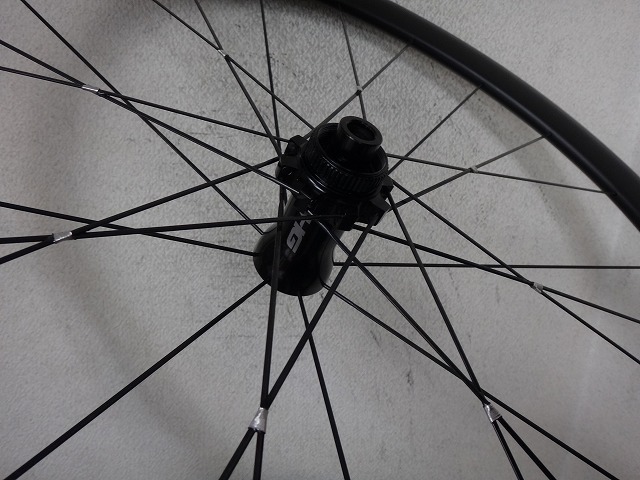
Black CX Sprint / Black CX-RAY reverse different-diameter asymmetric lacing with cross-lacing.
Before cross-lacing, I had the customer look at the wheel,
and they said, "This is totally different from before!"
But that's not the real value of this post.The original condition was so terrible that rebuilding it to something decent
is nothing to boast about.
First, this rim is not an offset rim.
However, the rim holes on the inner side do have hole positioning
for 2:1 lacing.
Rather than right-left-left, it's more like right-center-center,
but the hole positioning is definitely there.

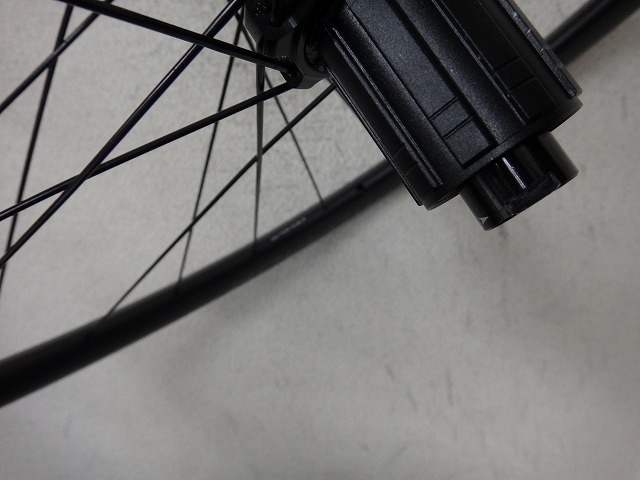
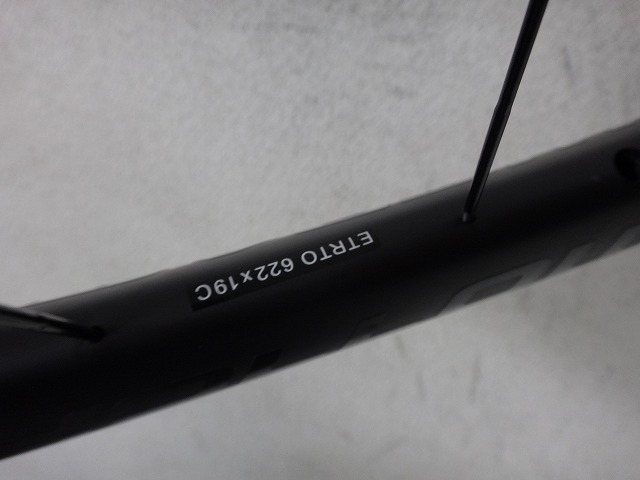
This is the rear wheel from the pair, and when viewed from the right side,
the ETRTO label sticker on the rim is

facing the wrong way.
The front wheel before rebuilding was the same.
Looking at the front wheel from the right side, from the valve hole,
the next spoke going counterclockwise is the low-spoke-count side of the 2:1 lacing
(i.e., coming from the right flange)—I confirmed this relationship before disassembly,
and I started the provisional assembly reproducing it that way,
but when I threaded in the third spoke, I noticed something and stopped.
The rim hole positioning didn't match the spoke path.
At first I suspected, "Could this be a rim with hole positioning on both sides
for left-right equal-count lacing?" but as I mentioned earlier,
the hole positioning is right-center-center.
Also, not directly related to this, but the 2:1 lacing pattern
is XI (cross-eye) lacing, not Ж (zhe) lacing.
If it were Ж lacing, I'd describe the hole positioning as center-right-center.
So I investigated what was going on, and I found the cause of the mismatch:
The original assembly had the rim left and right reversed.

I'm going to draw a development diagram of a half-wheel section
in a hub-to-rim-to-hub configuration.
The deformation process is shown above.

It looks like this.
This is when the rim orientation is correct.
For the rim hole from the left flange's spokes,
I've drawn it as left-leaning rather than centered for clarity.
The left flange's spokes go through left-leaning rim holes,
and the right flange's spokes go through right-leaning rim holes.
Now, if I reverse the rim orientation...

From the previous diagram,
I've drawn the direction of hole positioning from the valve hole to three holes on each side.
The valve hole is depicted as a sphere with a grape stem coming out of it.
To express "reversing the rim left and right" in a wheel development diagram,
the correct way is to rotate 180° along the blue arrow trajectory shown above.
Rotating the stem to reverse its direction like the red arrow trajectory is incorrect.

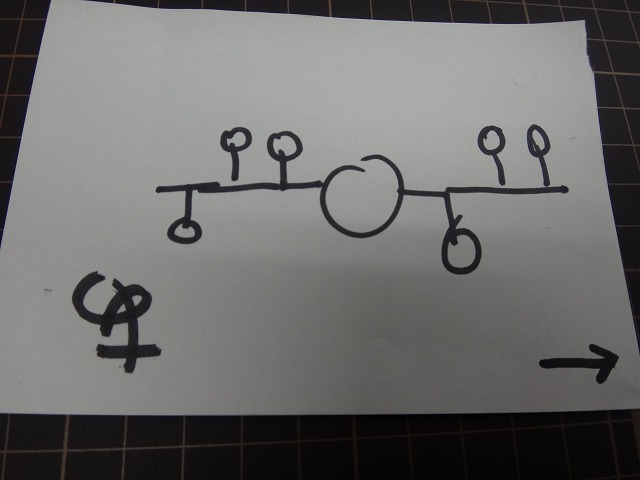
A card depicting the same orientation structure as the previous diagram.
Let's say this is the state where the rim left and right are not reversed,

Reversing the card's insertion direction is
the behavior of the blue arrow from earlier.
In this case of 2:1 lacing or left-right alternating hole positioning,
the hole positioning on both sides of the valve hole doesn't change, but

the behavior of the red arrow from earlier
corresponds to this in card terms,
so the hole positioning gets reversed.

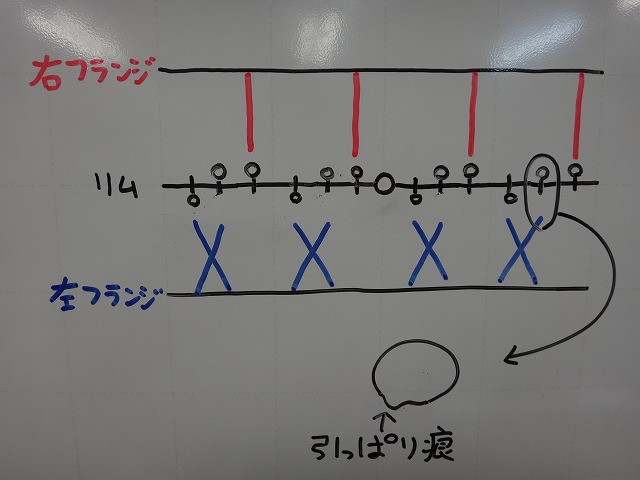
I've reversed the rim orientation (made it wrong).
You can see that for one side of the tangent lacing from the left flange,
one hole positioning no longer lines up.
This "misaligned rim hole" occurs every three holes,
and since it doesn't match the spoke path,
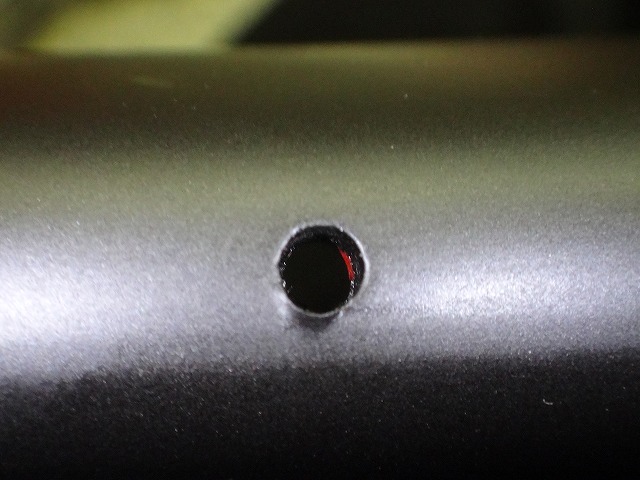
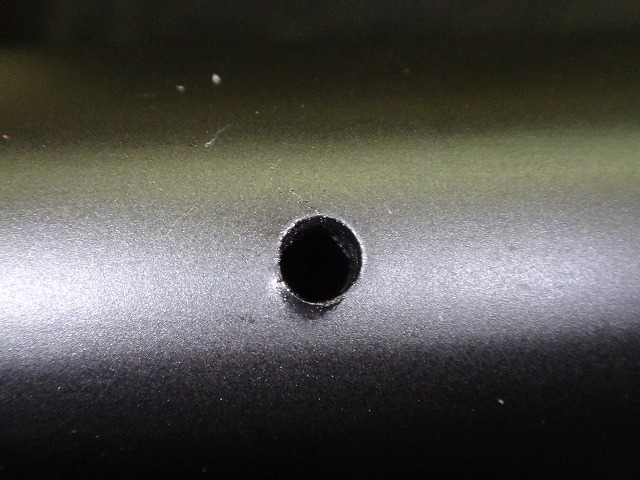
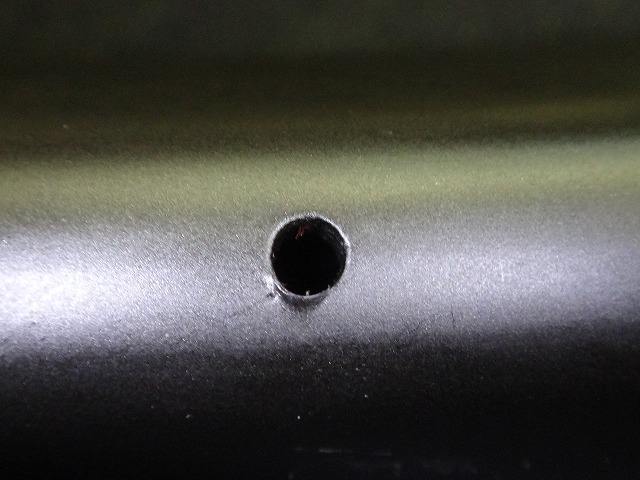
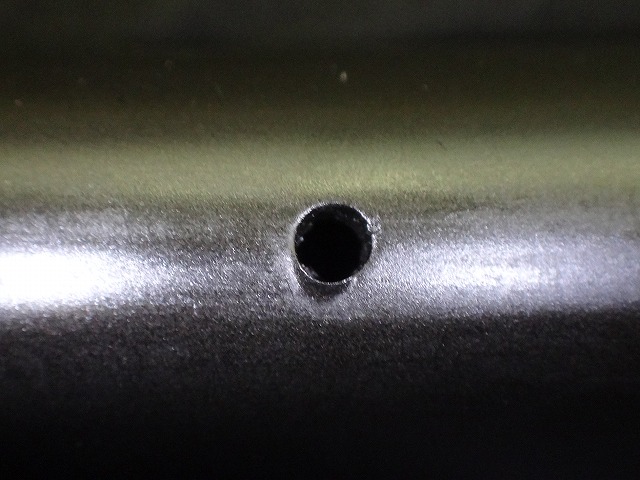
it leaves a distinctive pull mark on the rim hole edge.

↑This one
The adjacent rim holes and the one after that don't have this mark,
but three holes over—

↑the same mark appears.

↑and three more holes over

↑three more after that

↑and three more again—
for a total of eight locations.

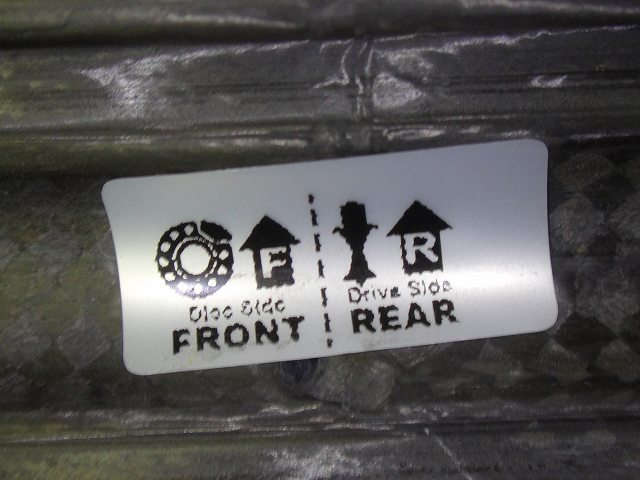
This is a sticker on the rim circumference from a HUNT rim.
Even though this rim is neither an offset rim
nor a left-right asymmetric lacing rim,
there's an instruction to orient it so that the side with steeper spoke angles
(rotor mounting side for front wheels, freewheel body side for rear wheels)
faces the direction of the arrow.
When something like this exists, no matter how symmetrical it looks,
you just follow the instruction—but
I couldn't find such a sticker on this XERO rim
(there was Stans tape from the original bike, but it might have peeled off
when I removed it).
The rear wheel's ETRTO sticker was facing the wrong way,
so there doesn't seem to be an instruction like
"assemble so the ETRTO sticker reads correctly from the right side."
That leaves me hoping that whoever assembled this at XERO
paid attention to the rim hole positioning,
but based on the mismatch I felt during provisional assembly,
it seems their quality is pretty lacking.
If assembly was completely random, you'd get it wrong 50% of the time, so
I suspect a lot of wheels in this series have reversed rim orientation.
If you own a wheel from this series, I'd recommend
taking a close look at your rim holes.
I only realized this after disassembling the wheel,
and since this is an OEM part on a complete bike, I'm wondering
whether a reversal like this would qualify for warranty replacement.
"Even if the orientation is reversed,
it's not serious enough to cause injury or death!"
That excuse would probably come up, and it's technically true
(I've actually rebuilt wheels on this same rim afterward),
but the distinctive pull marks are real evidence of the mistake.

A customer brought me a Cannondale Hologram
disc brake wheel to rebuild.
I'll be rebuilding both front and rear, but today it's just the front.
The rim is 35mm deep. There are probably complete wheels
built with the same rim available elsewhere,
but this is the exclusive spec that came with the complete bike—
it's built with round spokes rather than aero spokes.
Both sides use comp-grade black round butted spokes,
laced 8+16H in a 2:1 pattern for 24 total holes.
An asymmetric laced front wheel like this is incredibly difficult,
so I really think
According to the customer, both wheels are definitely loose,
but the bigger issue isn't the rear wheel's poor engagement—
it's that the front wheel twists or feels twisted when cornering.
The spoke tension isn't particularly high,
but it's clear this isn't something a simple retensioning will fix.
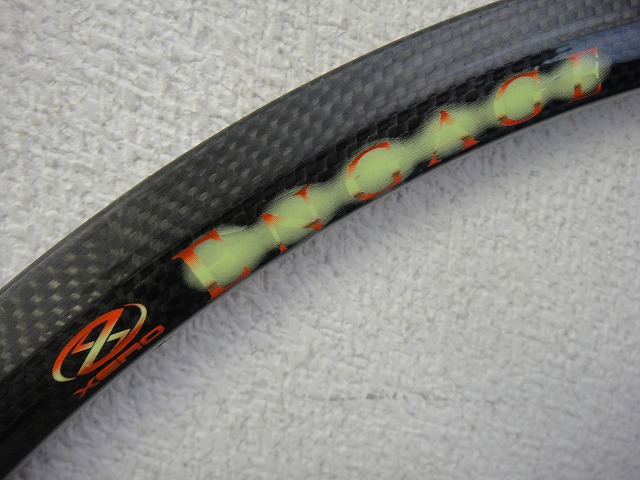
↑This is an Engage rim from the XERO (Zero) brand,
and today's Hologram wheel is also made by Zero.
You can see the Zero logo on the rim in the photo,
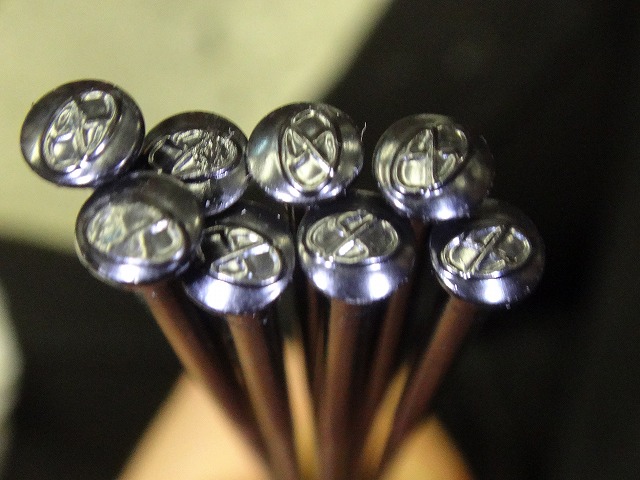
and they even took the trouble to have the logo engraved
on the spoke heads.
And the hub bearing seal also says XERO.
The "18307" designation that follows means
inner diameter 18mm, outer diameter 30mm, thickness 7mm.
(Not important right now) but this bearing is press-fit
into the hub in a way that looks like it'd be difficult to remove when replacing.
I'm going to lay out the 16 spokes for the left side,
paying attention to a certain detail.
In the image above, the tape in the middle has its sticky side facing up.

Laid out.
I know when the customer purchased the complete bike
that came with this wheel.
It can't have been ridden much, and yet
the final crossing wear marks are quite pronounced.
Built.
Black CX Sprint / Black CX-RAY reverse different-diameter asymmetric lacing with cross-lacing.
Before cross-lacing, I had the customer look at the wheel,
and they said, "This is totally different from before!"
But that's not the real value of this post.
is nothing to boast about.
First, this rim is not an offset rim.
However, the rim holes on the inner side do have hole positioning
for 2:1 lacing.
Rather than right-left-left, it's more like right-center-center,
but the hole positioning is definitely there.
This is the rear wheel from the pair, and when viewed from the right side,
the ETRTO label sticker on the rim is
facing the wrong way.
The front wheel before rebuilding was the same.
Looking at the front wheel from the right side, from the valve hole,
the next spoke going counterclockwise is the low-spoke-count side of the 2:1 lacing
(i.e., coming from the right flange)—I confirmed this relationship before disassembly,
and I started the provisional assembly reproducing it that way,
but when I threaded in the third spoke, I noticed something and stopped.
The rim hole positioning didn't match the spoke path.
At first I suspected, "Could this be a rim with hole positioning on both sides
for left-right equal-count lacing?" but as I mentioned earlier,
the hole positioning is right-center-center.
Also, not directly related to this, but the 2:1 lacing pattern
is XI (cross-eye) lacing, not Ж (zhe) lacing.
If it were Ж lacing, I'd describe the hole positioning as center-right-center.
So I investigated what was going on, and I found the cause of the mismatch:
The original assembly had the rim left and right reversed.
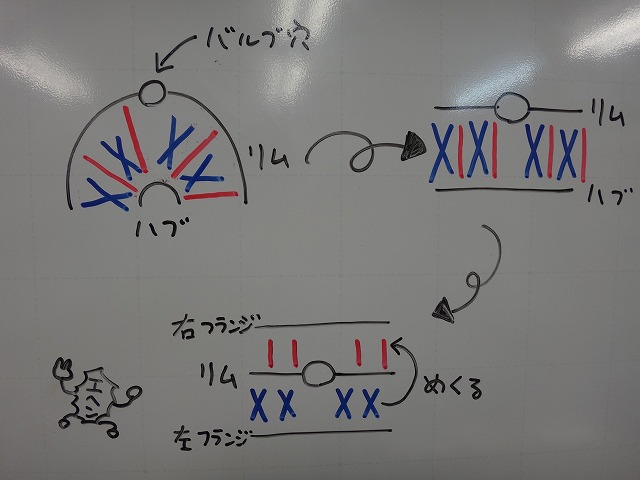
I'm going to draw a development diagram of a half-wheel section
in a hub-to-rim-to-hub configuration.
The deformation process is shown above.
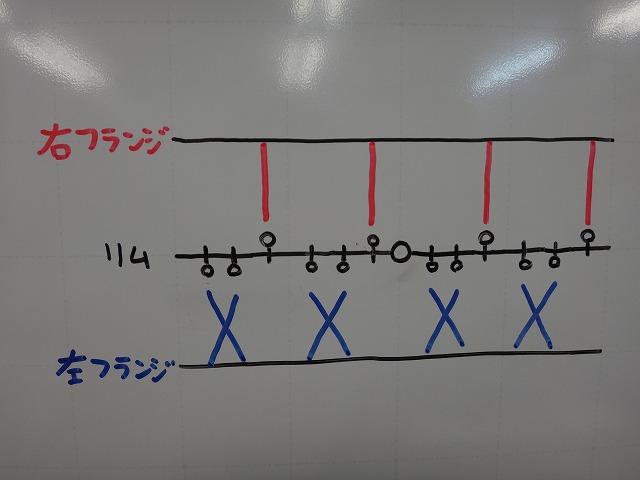
It looks like this.
This is when the rim orientation is correct.
For the rim hole from the left flange's spokes,
I've drawn it as left-leaning rather than centered for clarity.
The left flange's spokes go through left-leaning rim holes,
and the right flange's spokes go through right-leaning rim holes.
Now, if I reverse the rim orientation...
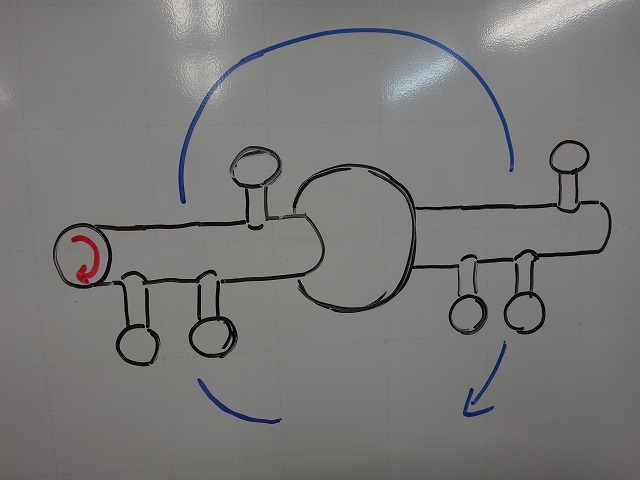
From the previous diagram,
I've drawn the direction of hole positioning from the valve hole to three holes on each side.
The valve hole is depicted as a sphere with a grape stem coming out of it.
To express "reversing the rim left and right" in a wheel development diagram,
the correct way is to rotate 180° along the blue arrow trajectory shown above.
Rotating the stem to reverse its direction like the red arrow trajectory is incorrect.
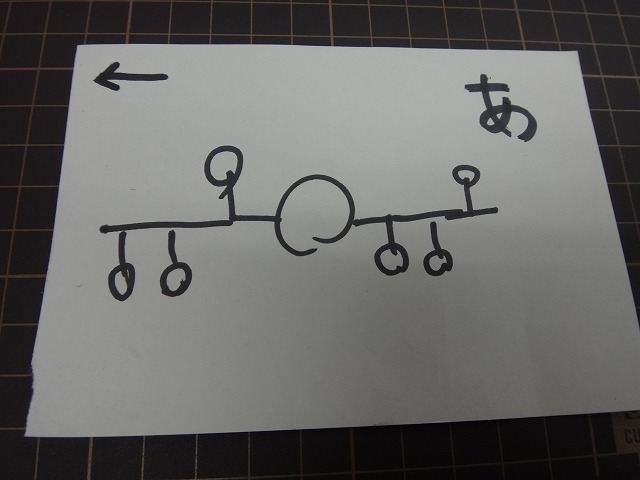
A card depicting the same orientation structure as the previous diagram.
Let's say this is the state where the rim left and right are not reversed,
Reversing the card's insertion direction is
the behavior of the blue arrow from earlier.
In this case of 2:1 lacing or left-right alternating hole positioning,
the hole positioning on both sides of the valve hole doesn't change, but

the behavior of the red arrow from earlier
corresponds to this in card terms,
so the hole positioning gets reversed.
I've reversed the rim orientation (made it wrong).
You can see that for one side of the tangent lacing from the left flange,
one hole positioning no longer lines up.
This "misaligned rim hole" occurs every three holes,
and since it doesn't match the spoke path,
it leaves a distinctive pull mark on the rim hole edge.

↑This one
The adjacent rim holes and the one after that don't have this mark,
but three holes over—
↑the same mark appears.
↑and three more holes over
↑three more after that
↑and three more again—
for a total of eight locations.
This is a sticker on the rim circumference from a HUNT rim.
Even though this rim is neither an offset rim
nor a left-right asymmetric lacing rim,
there's an instruction to orient it so that the side with steeper spoke angles
(rotor mounting side for front wheels, freewheel body side for rear wheels)
faces the direction of the arrow.
When something like this exists, no matter how symmetrical it looks,
you just follow the instruction—but
I couldn't find such a sticker on this XERO rim
(there was Stans tape from the original bike, but it might have peeled off
when I removed it).
The rear wheel's ETRTO sticker was facing the wrong way,
so there doesn't seem to be an instruction like
"assemble so the ETRTO sticker reads correctly from the right side."
That leaves me hoping that whoever assembled this at XERO
paid attention to the rim hole positioning,
but based on the mismatch I felt during provisional assembly,
it seems their quality is pretty lacking.
If assembly was completely random, you'd get it wrong 50% of the time, so
I suspect a lot of wheels in this series have reversed rim orientation.
If you own a wheel from this series, I'd recommend
taking a close look at your rim holes.
I only realized this after disassembling the wheel,
and since this is an OEM part on a complete bike, I'm wondering
whether a reversal like this would qualify for warranty replacement.
"Even if the orientation is reversed,
it's not serious enough to cause injury or death!"
That excuse would probably come up, and it's technically true
(I've actually rebuilt wheels on this same rim afterward),
but the distinctive pull marks are real evidence of the mistake.