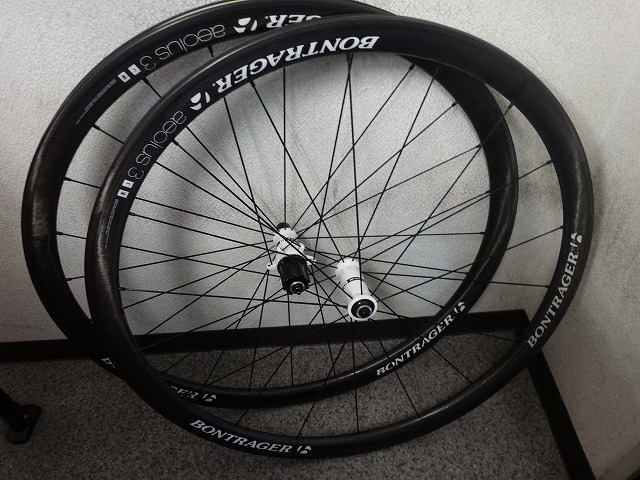
I received a Bontrager Aeolus 3 on consignment from a customer.

It's a complete carbon WO rim wheelset.

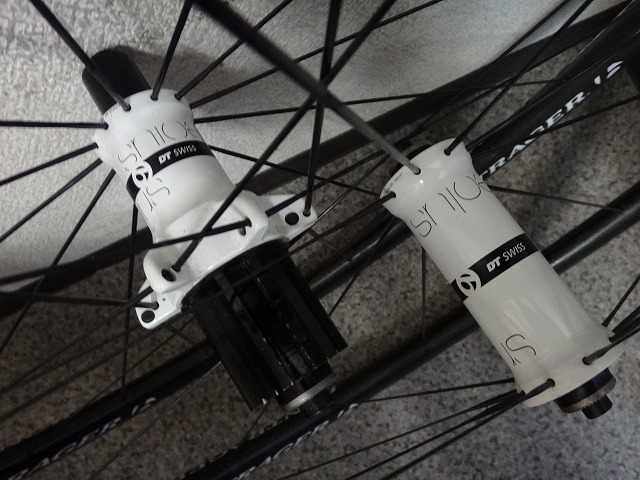
The hub is DT-made, and the freebody is for Campagnolo.
If I call this hub the "white hub,"

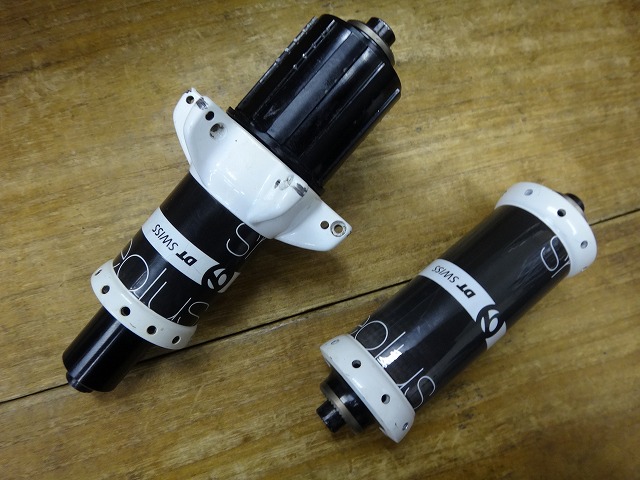
the customer also has a separate "black-and-white hub" in the same dimensions,
and wants both wheels swapped to it while
keeping the Campagnolo freebody specs since the black-and-white rear hub has a Shimano freebody.
That was the work request,
but it wasn't possible.

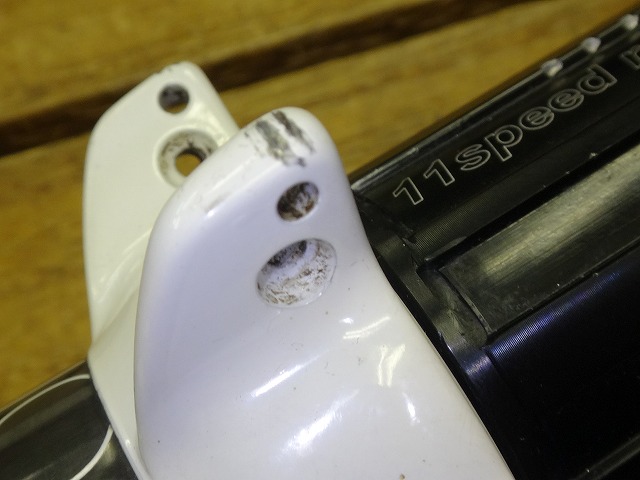
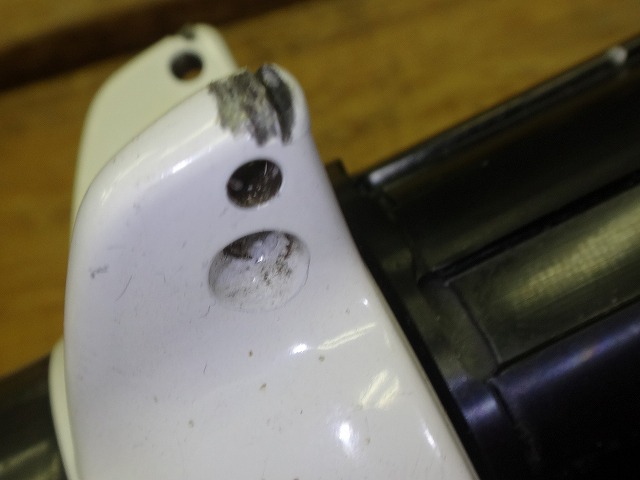
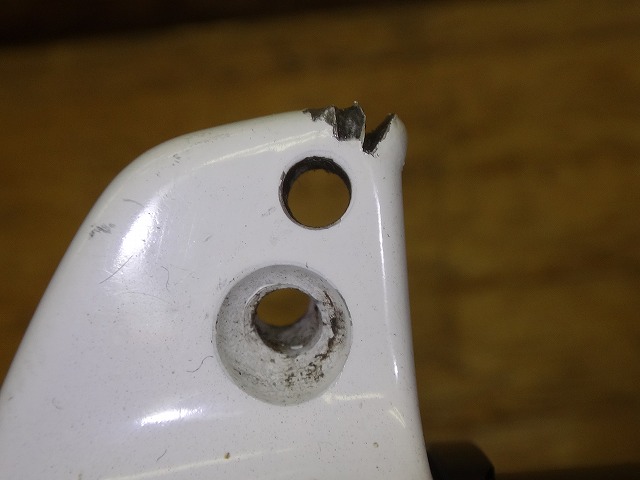
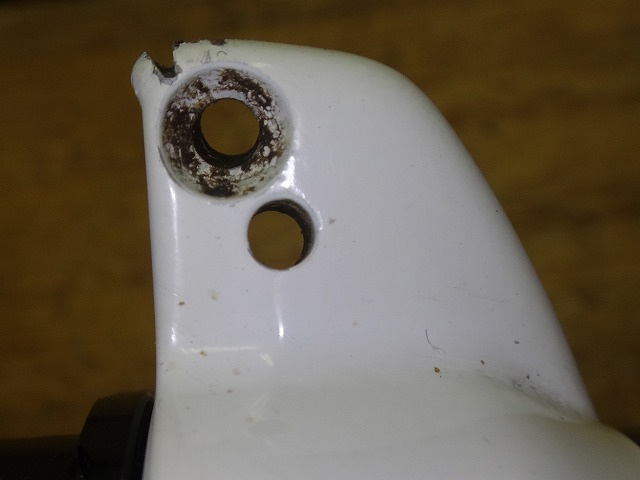
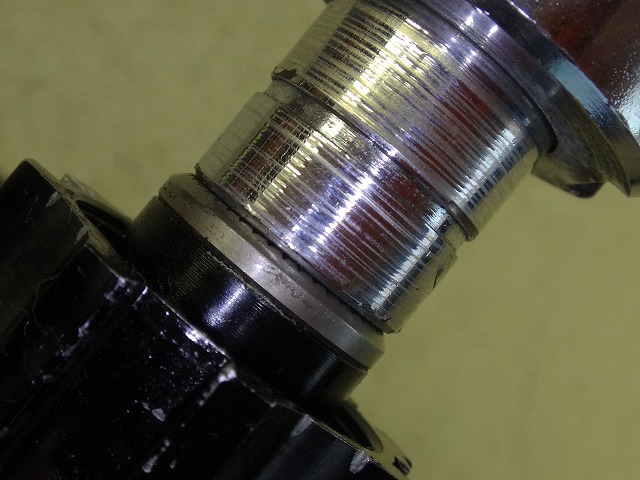
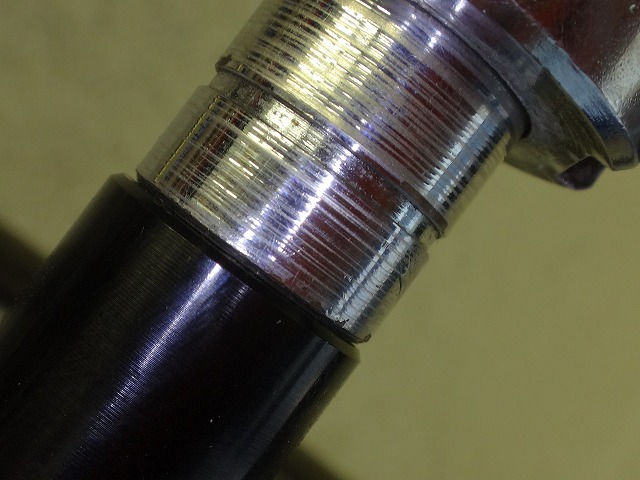
The black-and-white rear hub has

chain drop damage marks, and

this is the worst of the damage, and

from the front-rear view it looks like this,

and the opposite side looks like this,
so I was scared to build a wheel with it and gave up.

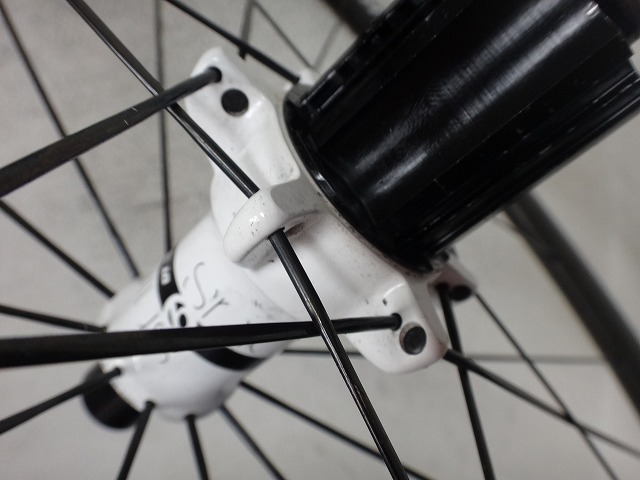
The white rear hub has no flange damage.
So the work changed to inspection of the white hub wheelset and
star ratchet greasing.

↑This is the rear wheel, and the rim is spinning.
Both wheels are nearly runout-free,
and the nipples I touched were just about 2 locations each.


The rear wheel was perfectly centered.
At DT, the freebody and right end assembly is called a
"rotor kit,"
and since the snap-fit right end dimensions differ depending on freebody specs,
you need to change the entire rotor kit.
If you change to a rotor kit with different right end dimensions,
naturally the wheel center will be thrown off.
It gets knocked off by several millimeters, but Trek has issued
an official statement saying
"you must not bother to correct that center offset,"
and honestly, I was appalled at their understanding of wheel mechanics,
but if this were my own bike I'd fix it, and if
a customer asked me to fix it, I would.
For a while Trek was leading the charge on
direct-mount brakes in the form mounted behind the BB,
but the adjustment range for their single-acting screw is so narrow
that it's questionable whether it can even compensate for
the center offset caused by rotor kit changes.
When changing a rotor kit from Shimano 10-speed to Shimano 11-speed,
the right end gets longer, so the rim shifts toward the anti-freeside,
but the right end that comes with the Campagnolo rotor kit is
made even longer than the Shimano 11-speed version
so that the unusually thick Campagnolo lockring
won't rub the inside of the frame.

Even with the freebody removed, the white rear hub's
axle rotation is still rough.
DT rear hubs have the larger right-side bearing, which resists wear,
so when there's a problem like this it's usually just the left bearing.
I initially thought both the white hub and black-and-white hub
were based on DT's "180" hub, so
if the bearings were ceramic I was planning to scavenge
parts from the black-and-white hub, but

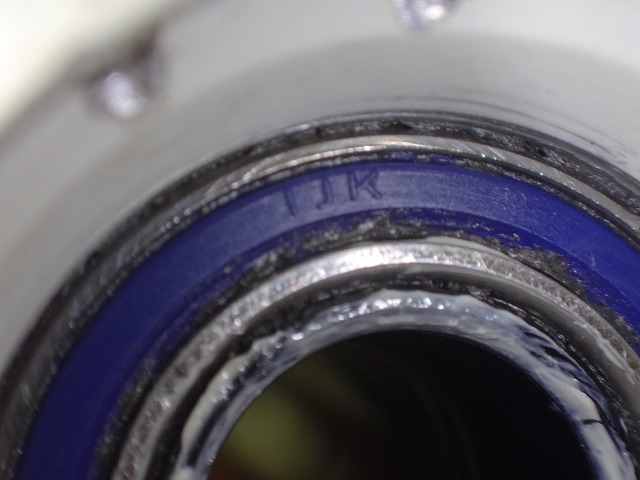
the bearings turned out to be IJK (Inoue Bearing Industries) steel-ball types.

The size is 6802, by the way.

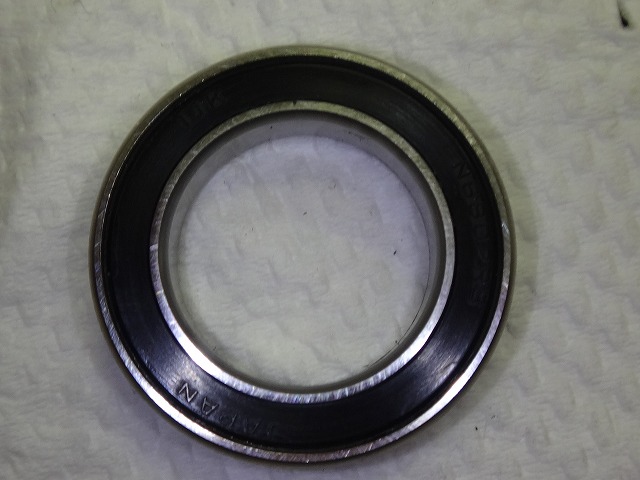
I removed the left bearing from the white hub.
The side facing toward the hub interior has a black seal.
Once I had just the right bearing, the hub axle rotation
became extremely smooth, so only the left one needed replacing.
The black-and-white hub had the same bearing, so
instead of scavenging I repaired it with a new steel-ball bearing of the same size.

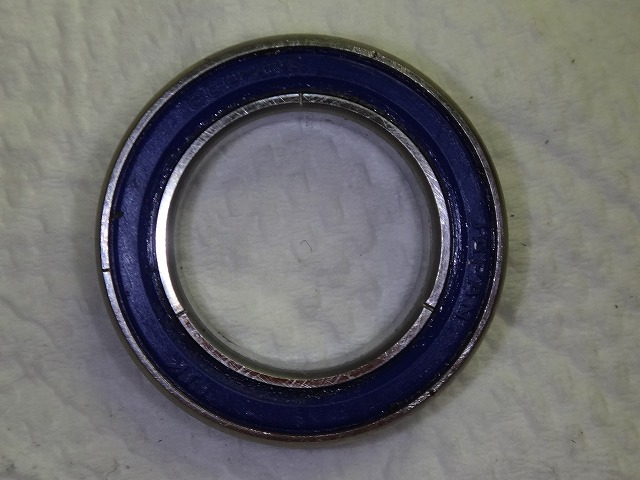
This bearing has small grooves running radially
on both the inner and outer races, and
for a moment I worried it had cracked, but
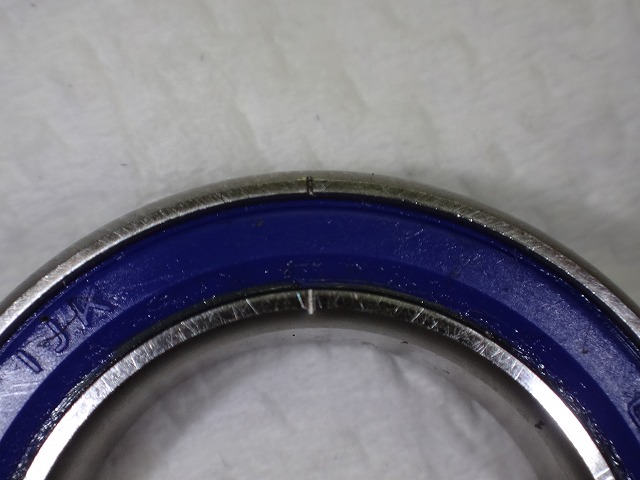
both have them at exactly 120° intervals at 3 locations, so
I thought there's no way that's coincidence.

↑I aligned the groove phases.
It's not a crack.

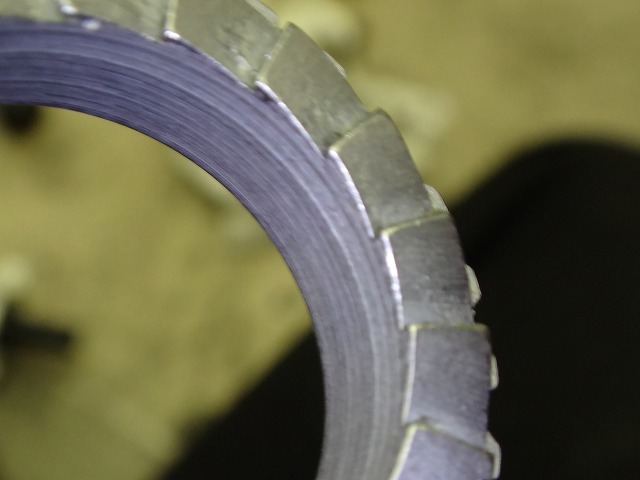
The black-and-white hub had standard star ratchet parts
with 18 teeth per revolution, but

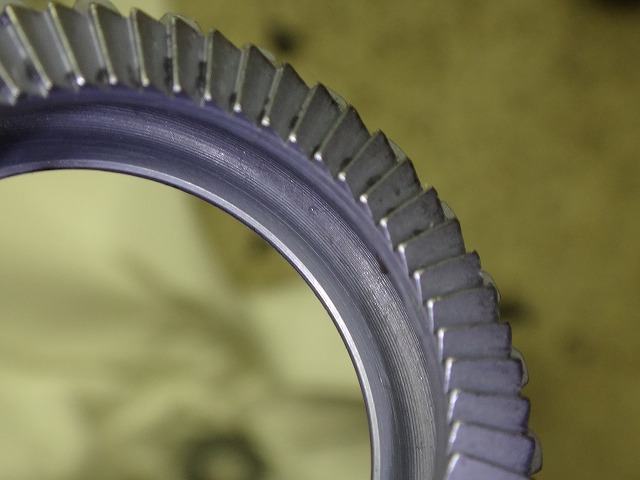
the white hub had been upgraded to a 54-tooth version.
The original plan was to transplant the Campagnolo rotor kit and this 54-tooth ratchet
into the black-and-white hub and rebuild the wheel.

The black-and-white hub's ratchet parts don't have
the U-section weight-relief geometry.
If it were 180-based, it should have lightened parts inside.
However, since the hub shell is carbon, it's similar to 180 in that respect.

The 54-tooth ratchet has U-shaped weight relief.

As for star ratchet-specific grease,
I recently got word from the DT distributor that "it's recommended to apply with a brush,
and you don't need that much," but
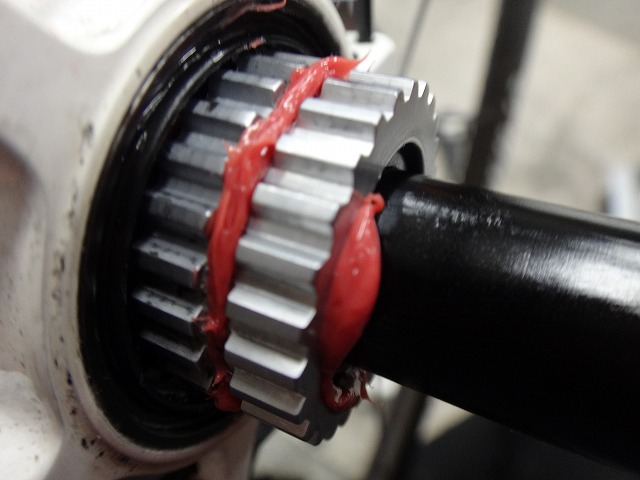
I use a small degreased flathead screwdriver instead of a brush,
which qualifies as the "over-application" the distributor warned about.

But the excess just gets pushed out after it distributes to the necessary spots,
so I tend to err on the side of a bit too much.
According to the distributor's notice,
"over-application risks forward-direction slip,"
but with genuine grease that doesn't happen.
Once I tried using regular hub bearing grease on one of my own hubs here,
and it slipped in the forward direction. Skimping on genuine grease doesn't work.


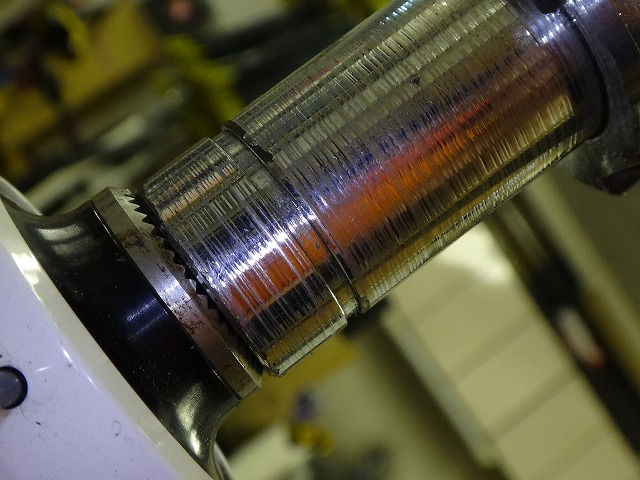
Earlier I said the rear wheel "was" perfectly centered,
but actually the front wheel "also" came perfectly centered from the start.

This wheelset's nipples are most likely the type you turn from the outer side,
but since it wasn't runout enough to warrant peeling off the tape-style rim tape,
I grabbed the inner side for adjustment.
As I mentioned before, I only touched about 2 spots,
and the adjustment amount was minimal.
It's a complete carbon WO rim wheelset.
The hub is DT-made, and the freebody is for Campagnolo.
If I call this hub the "white hub,"
the customer also has a separate "black-and-white hub" in the same dimensions,
and wants both wheels swapped to it while
keeping the Campagnolo freebody specs since the black-and-white rear hub has a Shimano freebody.
That was the work request,
but it wasn't possible.
The black-and-white rear hub has

chain drop damage marks, and
this is the worst of the damage, and
from the front-rear view it looks like this,
and the opposite side looks like this,
so I was scared to build a wheel with it and gave up.
The white rear hub has no flange damage.
So the work changed to inspection of the white hub wheelset and
star ratchet greasing.
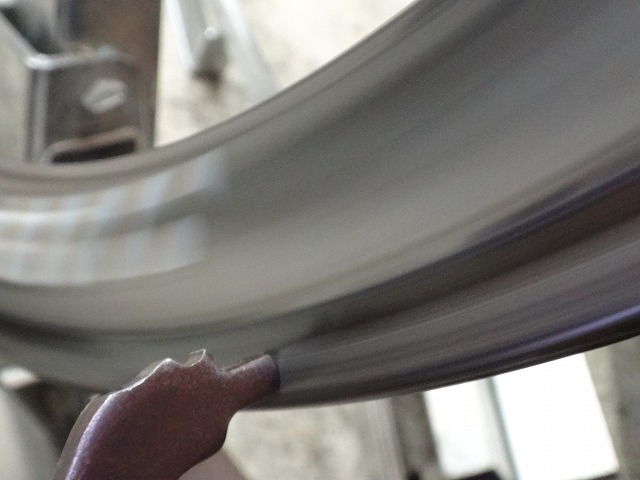
↑This is the rear wheel, and the rim is spinning.
Both wheels are nearly runout-free,
and the nipples I touched were just about 2 locations each.
The rear wheel was perfectly centered.
At DT, the freebody and right end assembly is called a
"rotor kit,"
and since the snap-fit right end dimensions differ depending on freebody specs,
you need to change the entire rotor kit.
If you change to a rotor kit with different right end dimensions,
naturally the wheel center will be thrown off.
It gets knocked off by several millimeters, but Trek has issued
an official statement saying
"you must not bother to correct that center offset,"
and honestly, I was appalled at their understanding of wheel mechanics,
but if this were my own bike I'd fix it, and if
a customer asked me to fix it, I would.
For a while Trek was leading the charge on
direct-mount brakes in the form mounted behind the BB,
but the adjustment range for their single-acting screw is so narrow
that it's questionable whether it can even compensate for
the center offset caused by rotor kit changes.
When changing a rotor kit from Shimano 10-speed to Shimano 11-speed,
the right end gets longer, so the rim shifts toward the anti-freeside,
but the right end that comes with the Campagnolo rotor kit is
made even longer than the Shimano 11-speed version
so that the unusually thick Campagnolo lockring
won't rub the inside of the frame.
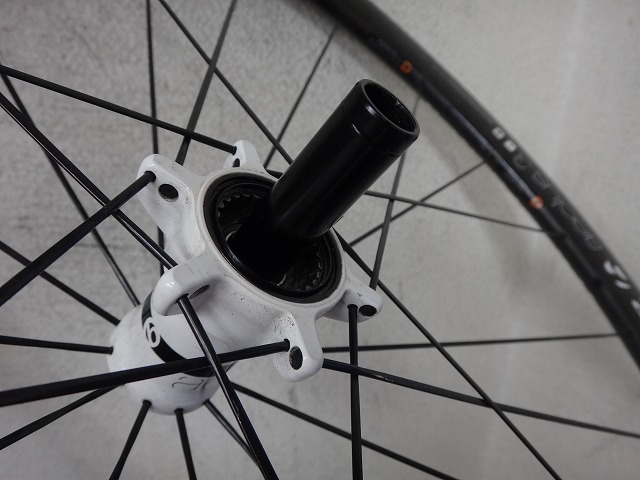
Even with the freebody removed, the white rear hub's
axle rotation is still rough.
DT rear hubs have the larger right-side bearing, which resists wear,
so when there's a problem like this it's usually just the left bearing.
I initially thought both the white hub and black-and-white hub
were based on DT's "180" hub, so
if the bearings were ceramic I was planning to scavenge
parts from the black-and-white hub, but
the bearings turned out to be IJK (Inoue Bearing Industries) steel-ball types.

The size is 6802, by the way.
I removed the left bearing from the white hub.
The side facing toward the hub interior has a black seal.
Once I had just the right bearing, the hub axle rotation
became extremely smooth, so only the left one needed replacing.
The black-and-white hub had the same bearing, so
instead of scavenging I repaired it with a new steel-ball bearing of the same size.
This bearing has small grooves running radially
on both the inner and outer races, and
for a moment I worried it had cracked, but
both have them at exactly 120° intervals at 3 locations, so
I thought there's no way that's coincidence.
↑I aligned the groove phases.
It's not a crack.

The black-and-white hub had standard star ratchet parts
with 18 teeth per revolution, but

the white hub had been upgraded to a 54-tooth version.
The original plan was to transplant the Campagnolo rotor kit and this 54-tooth ratchet
into the black-and-white hub and rebuild the wheel.
The black-and-white hub's ratchet parts don't have
the U-section weight-relief geometry.
If it were 180-based, it should have lightened parts inside.
However, since the hub shell is carbon, it's similar to 180 in that respect.
The 54-tooth ratchet has U-shaped weight relief.

As for star ratchet-specific grease,
I recently got word from the DT distributor that "it's recommended to apply with a brush,
and you don't need that much," but
I use a small degreased flathead screwdriver instead of a brush,
which qualifies as the "over-application" the distributor warned about.
But the excess just gets pushed out after it distributes to the necessary spots,
so I tend to err on the side of a bit too much.
According to the distributor's notice,
"over-application risks forward-direction slip,"
but with genuine grease that doesn't happen.
Once I tried using regular hub bearing grease on one of my own hubs here,
and it slipped in the forward direction. Skimping on genuine grease doesn't work.
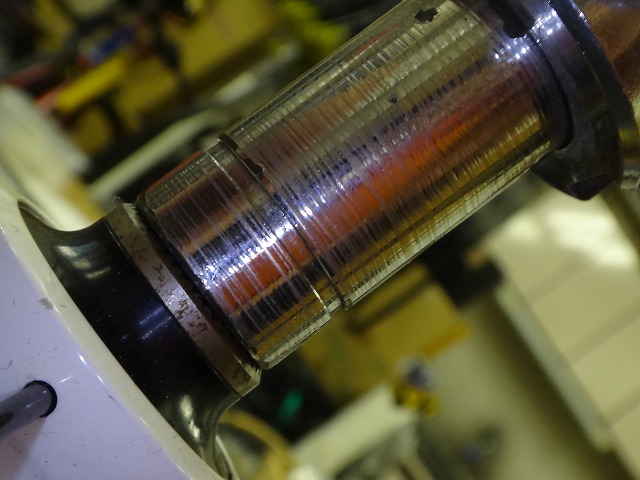
Earlier I said the rear wheel "was" perfectly centered,
but actually the front wheel "also" came perfectly centered from the start.
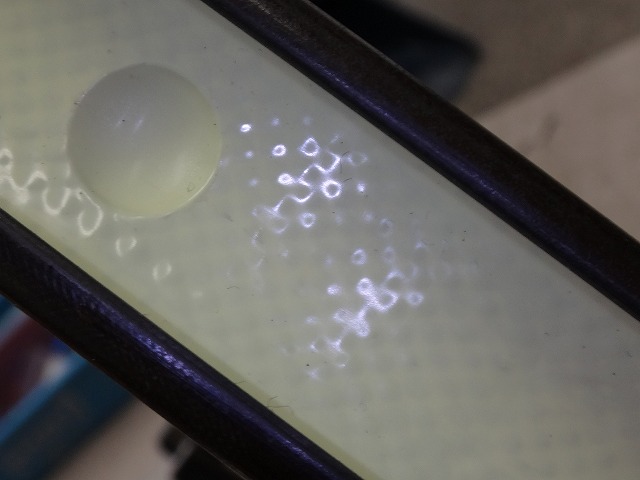
This wheelset's nipples are most likely the type you turn from the outer side,
but since it wasn't runout enough to warrant peeling off the tape-style rim tape,
I grabbed the inner side for adjustment.
As I mentioned before, I only touched about 2 spots,
and the adjustment amount was minimal.