Since I opened this shop, I've been given more opportunities to work with wheels than ever before (thank you for that),
but the biggest recent change has been orders for "semi-comp builds."
"Semi-comp" is my own term, but
essentially it refers to
the combination of left-right different-diameter spoke lacing,
particularly the CX-RAY/Competition pairing that I especially recommend.
Oh, "left-right different-diameter spoke lacing" is my term too.
The concept itself already existed (this is important),
but since there wasn't an appropriate word for it, that's what I call it.
I've been conceptualizing left-right different-diameter spoke lacing for a few years,
and (though apparently things are different now) I learned that Reynolds does the same
after I had already convinced myself of its effectiveness.
That said, I have no intention of claiming that I was the first in the world to think of left-right different-diameter spoke lacing.
Rather, I think it's one of those self-evident truths that anyone with a modicum of sense could come up with
if they spent their days just thinking about wheels.
For example, Shimano's WH-7850-C24 has rear wheel spokes of equal length on both sides,
yet the part numbers are different. Why? Because they differ in thickness on each side.
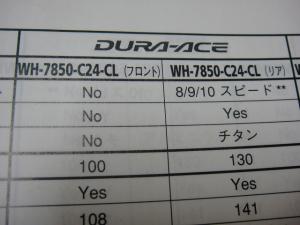

↑The diameter of the butted sections on the left and right rear wheel differ.
The 1.8 or 1.5 designation on aero spokes is technically incorrect notation,
but I believe it refers to the diameter of the round spoke before aero processing.
The freewheel side is equivalent to what DT calls Competition,
and the non-freewheel side is equivalent to Revolution thickness spokes
that have been flattened — you can interpret it that way.
Even if it's Revolution equivalent, work-hardening occurs during processing,
so "wobble" won't really happen.
The same goes for CX-RAY.
Or rather, I think this spoke
is actually the straight version of CX-RAY itself.
Campagnolo's Nucleus uses left-right different-diameter spokes too.
Reynolds does, and so does Bontrager, which I mentioned here before.
What I'm getting at is this: there are probably no longer any discoveries
about wheel mechanics at a level where an individual could claim originality.

My apologies for the intrusion!
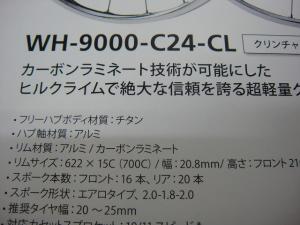
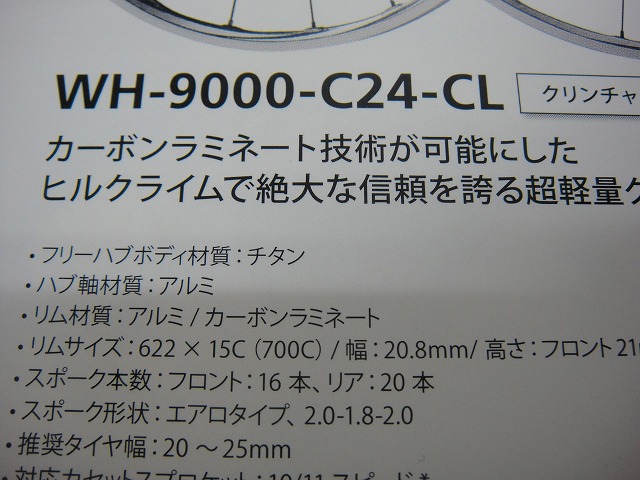
The WH-9000-C24-CL uses equal-diameter spokes left and right, but
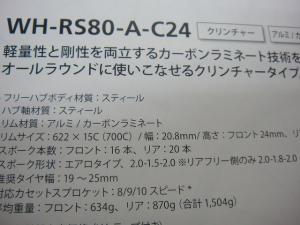
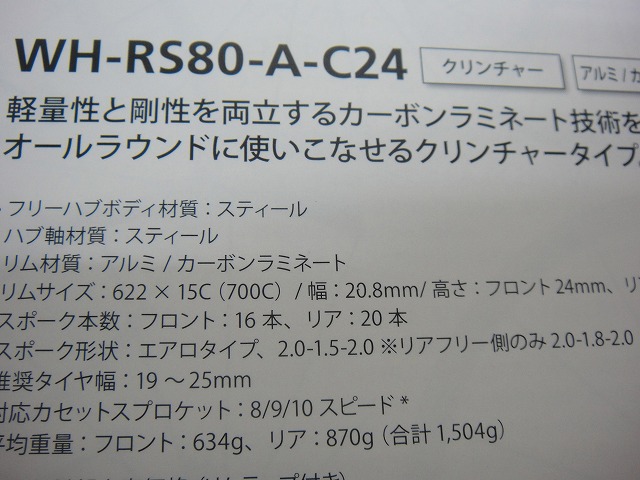
the lower-tier WH-RS80-A-C24
has left-right different-diameter spokes!
↑Stop! Don't write unnecessary stuff like that!
Well, since the Optivare uses a 2:1 spoke pattern, they probably didn't make the non-freewheel side thinner.
Wait, hold on. The C24's WO wasn't an Optivare.
Now to the main topic.
What exactly is the "first complete wheel"?
If the definition of a complete wheel is one that can't be built by hand,
then I'd say disc wheels.
But if we're talking about spoke wheels for road racing,
it might be the 1996 Mavic Helium.
However, this is the wheel that triggered the explosive spread of complete wheels and the elimination of hand-built ones (they haven't disappeared, but nearly),
not the origin of complete wheels itself.
Clipless pedals spread explosively after the 1985 LOOK PP-65
and essentially wiped out traditional toe-strap pedals, but
you could say the Cinelli M-71 from the early '70s was the original, more or less.
If I compare the Helium to the PP-65,
then what wheel corresponds to the M-71?
There's no evidence of what the oldest original actually is, but

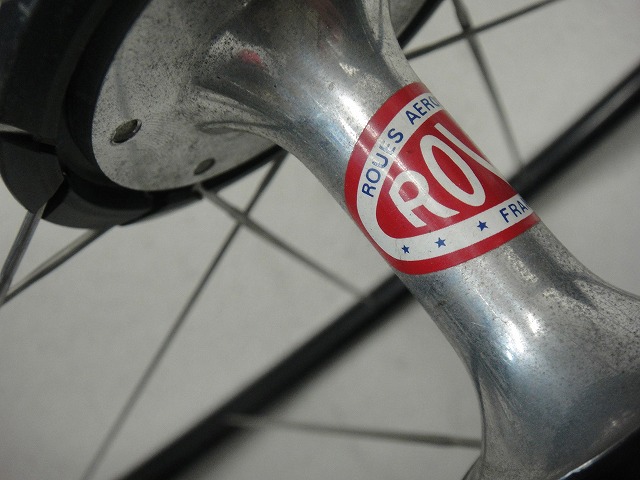
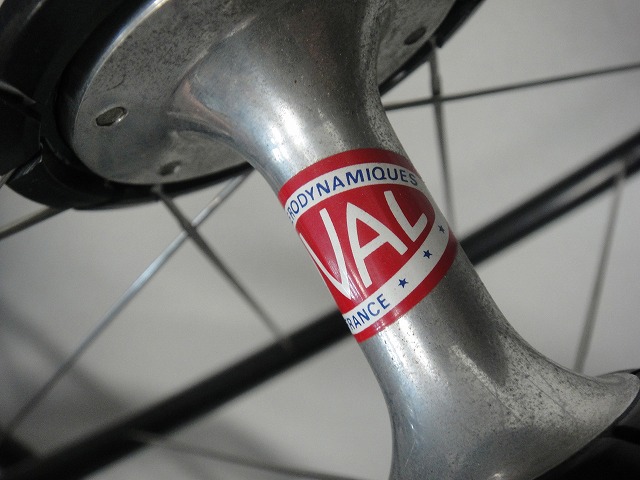
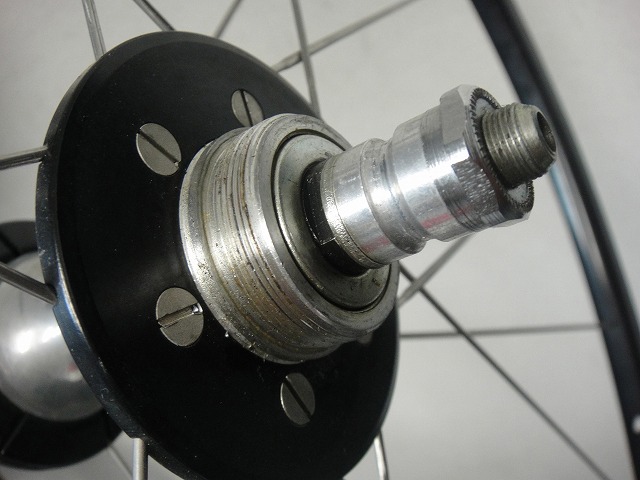
↑I think it might be this Roval.
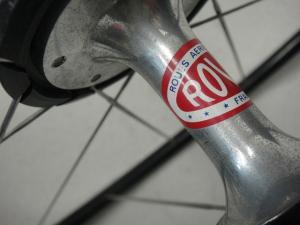
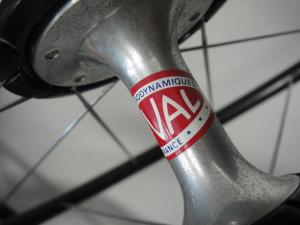
Roval has become something like an in-house brand for a major bike manufacturer now,
but it's a legitimate French wheel maker with a long pedigree.
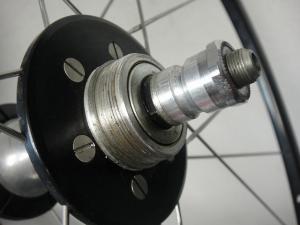
What's remarkable about this wheel is
that even though the over-locknut dimension is 126mm and it's from the freewheel hub era
(which means late 1980s)
it's designed with rigorous logic down to the last detail.
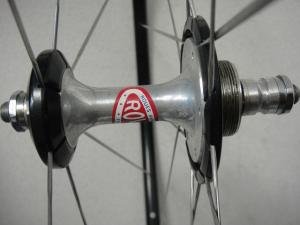
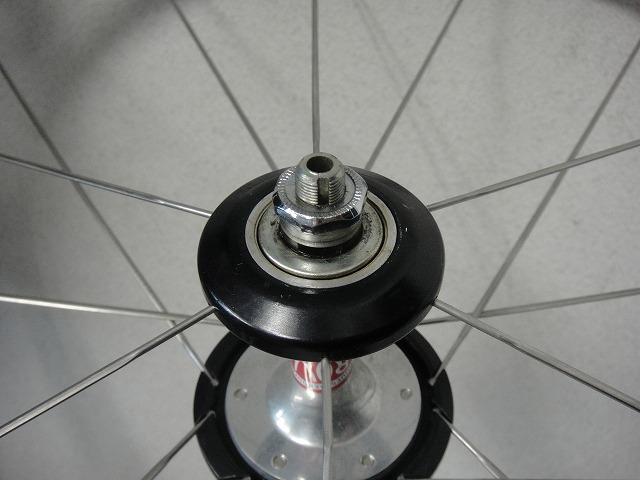
First, the adoption of high-low flanges.
This itself was already known from Campagnolo hubs and such,
so there's nothing surprising about it.
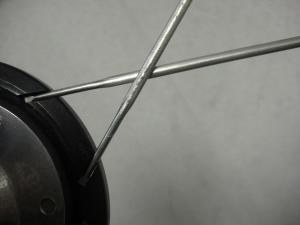
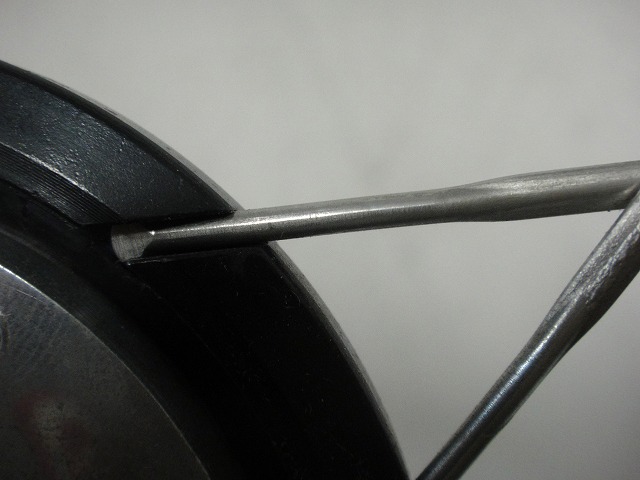
Next: straight-pull spokes.
Most straight-pull spokes are simply "spokes without a bent head," but
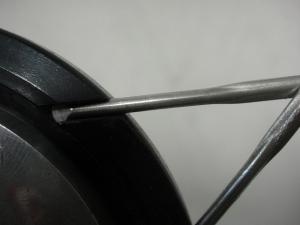
these spokes have a specially shaped spoke head.
It's hard to see because it's embedded in the hub, but
it's shaped like a sliced king oyster mushroom.
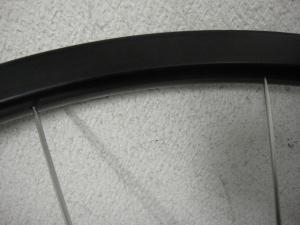
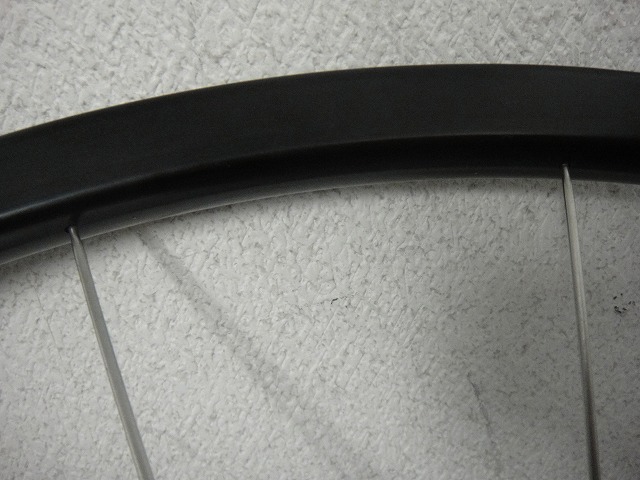
Next:
internal-nipple construction.
The rim is also an aero rim. The Araya Aero 1 rim is similar,
but back then this still qualified as an "aero rim."
When Campagnolo released wheels like the Shamal with aluminum rims around 40mm high,
they looked incredibly deep. It's normal now, of course.
But this is what "aero rims" were before that.
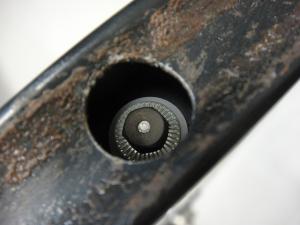
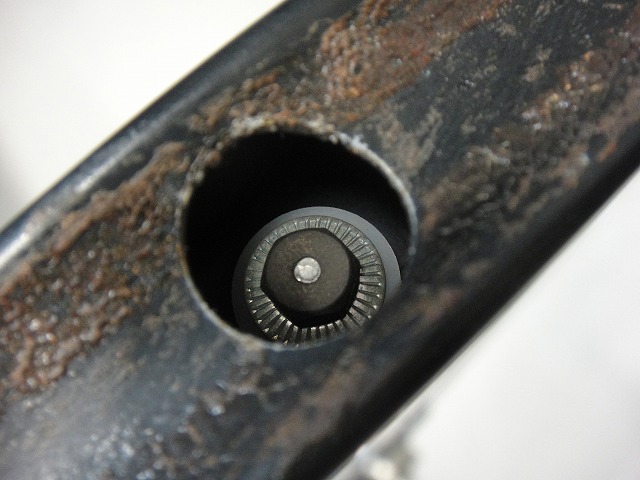
The nipples and washers are custom components too.
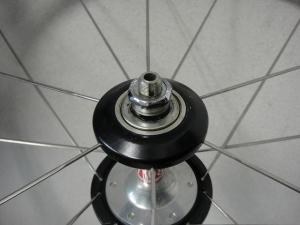
Finally,
the most cutting-edge feature of this wheel:
It uses a 2:1 spoke pattern. 18H in 12:6 configuration.
I wonder if this is the world's first rear wheel with this spoke count.
Current Roval wheels are often thought to be copies of Fulcrum, but it's the other way around.
To think up something this advanced in the freewheel hub era with no hints is remarkable.
This wheel originally belonged to me, but
since someone had the front wheel, I gave it to them.
I asked to borrow it for a while since I wanted to research something,
and they brought it to the shop.
Any wheel after this one with the same structure and ideas
is either imitation if they knew about Roval,
or rediscovery if they didn't.
I've built 2:1 spoke wheels before 2005's Fulcrum,
but of course I claim no originality.
I know about Roval, so I can't say anything that embarrassing.
In my view, 2:1 spoke wheels have serious problems on the non-freewheel side
when built with bent-head spokes—
they shouldn't be sold, or sold as products.
But Roval solved this over 25 years ago.
It really feels like a wheel designed by genuinely intelligent people.
The only shame is that it has few spokes and somewhat low stiffness.
I understand the low spoke count resulted from wanting to create an advanced wheel, but...
I think a 16:8 24H version would have been quite different.
As a side note and personal opinion, Shimano's WH-7700
would probably have handled the rear wheel structure reasonably well if it were 24H.
I'm sure the fact that it would be over 50g heavier and lack novelty are real considerations,
and those factors were weighed against making it 16H.
I still think they should release a wheel that's the legitimate evolution of the WH-7700 line.
Historically speaking, it's become a relic of the past, but
from the standpoint of originality, that's what I consider the true Shimano wheel.
Regarding the technical discussions I typically write about here,
I'm simply extracting points from what's already commonly known
that seem applicable to hand-built wheels.
Nothing is conceived from zero; everything is built on something that already exists.
W-freehub? Nobody does that because it's too ridiculous.
I wouldn't have thought of it without the concept of dual threads on track hubs.
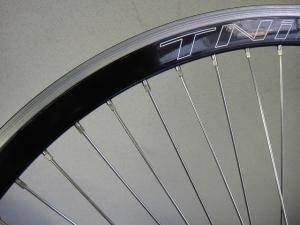
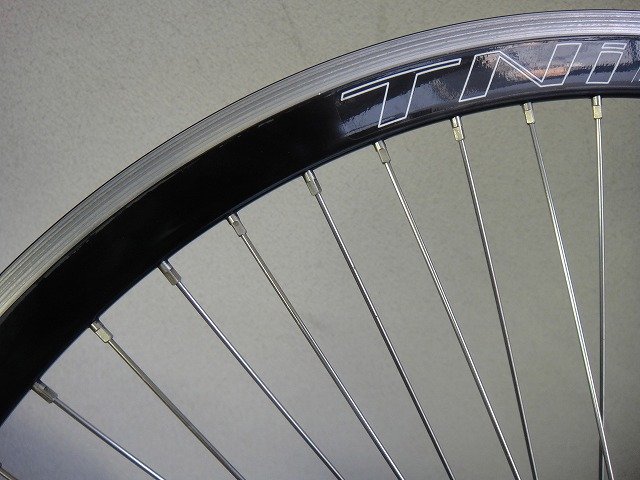
Version 1 Mark 3-3-7 with 63 spokes,
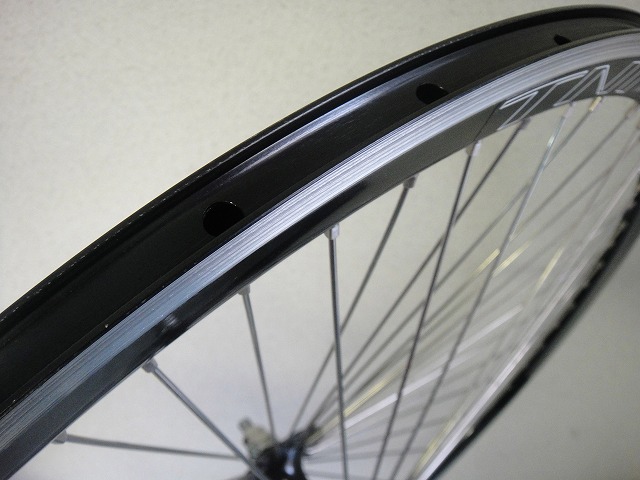
but the rim has 63 nipple holes on the inside.
The original 32H plus a new 32H minus 1H (for the valve hole phase) equals
63H, but
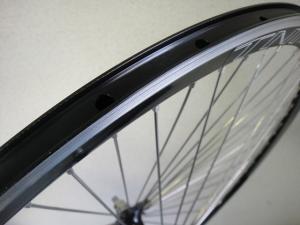
the rim's outside stays 32H. Drilling holes nearly double that diameter would be impossible.
So the 31 new nipples for the additional 31H
are threaded in one by one with a magnet.
This temporary assembly is incredibly tedious.
I borrowed this method from Fulcrum.
I'm sure I wouldn't have thought it up from scratch.
Being just a bicycle shop mechanic,
I'm well aware of how unlikely it is that I would make
any revolutionary new discovery about bicycle wheels.
I'm equally aware of how embarrassing it would be
to claim "originality."
but the biggest recent change has been orders for "semi-comp builds."
"Semi-comp" is my own term, but
essentially it refers to
the combination of left-right different-diameter spoke lacing,
particularly the CX-RAY/Competition pairing that I especially recommend.
Oh, "left-right different-diameter spoke lacing" is my term too.
The concept itself already existed (this is important),
but since there wasn't an appropriate word for it, that's what I call it.
I've been conceptualizing left-right different-diameter spoke lacing for a few years,
and (though apparently things are different now) I learned that Reynolds does the same
after I had already convinced myself of its effectiveness.
That said, I have no intention of claiming that I was the first in the world to think of left-right different-diameter spoke lacing.
Rather, I think it's one of those self-evident truths that anyone with a modicum of sense could come up with
if they spent their days just thinking about wheels.
For example, Shimano's WH-7850-C24 has rear wheel spokes of equal length on both sides,
yet the part numbers are different. Why? Because they differ in thickness on each side.
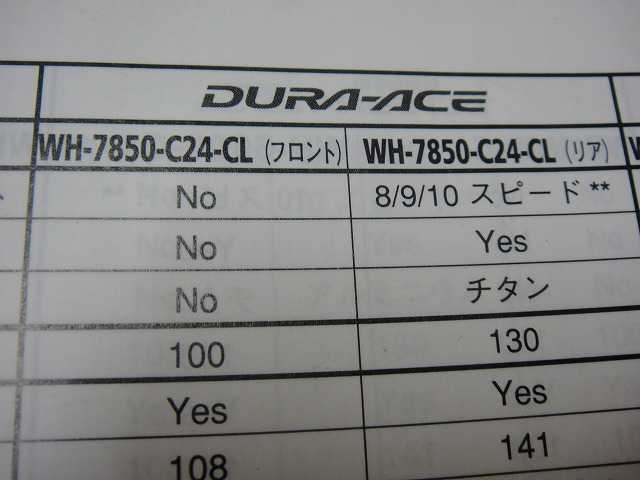

↑The diameter of the butted sections on the left and right rear wheel differ.
The 1.8 or 1.5 designation on aero spokes is technically incorrect notation,
but I believe it refers to the diameter of the round spoke before aero processing.
The freewheel side is equivalent to what DT calls Competition,
and the non-freewheel side is equivalent to Revolution thickness spokes
that have been flattened — you can interpret it that way.
Even if it's Revolution equivalent, work-hardening occurs during processing,
so "wobble" won't really happen.
The same goes for CX-RAY.
Or rather, I think this spoke
is actually the straight version of CX-RAY itself.
Campagnolo's Nucleus uses left-right different-diameter spokes too.
Reynolds does, and so does Bontrager, which I mentioned here before.
What I'm getting at is this: there are probably no longer any discoveries
about wheel mechanics at a level where an individual could claim originality.
My apologies for the intrusion!
The WH-9000-C24-CL uses equal-diameter spokes left and right, but
the lower-tier WH-RS80-A-C24
has left-right different-diameter spokes!
↑Stop! Don't write unnecessary stuff like that!
Well, since the Optivare uses a 2:1 spoke pattern, they probably didn't make the non-freewheel side thinner.
Wait, hold on. The C24's WO wasn't an Optivare.
Now to the main topic.
What exactly is the "first complete wheel"?
If the definition of a complete wheel is one that can't be built by hand,
then I'd say disc wheels.
But if we're talking about spoke wheels for road racing,
it might be the 1996 Mavic Helium.
However, this is the wheel that triggered the explosive spread of complete wheels and the elimination of hand-built ones (they haven't disappeared, but nearly),
not the origin of complete wheels itself.
Clipless pedals spread explosively after the 1985 LOOK PP-65
and essentially wiped out traditional toe-strap pedals, but
you could say the Cinelli M-71 from the early '70s was the original, more or less.
If I compare the Helium to the PP-65,
then what wheel corresponds to the M-71?
There's no evidence of what the oldest original actually is, but

↑I think it might be this Roval.
Roval has become something like an in-house brand for a major bike manufacturer now,
but it's a legitimate French wheel maker with a long pedigree.
What's remarkable about this wheel is
that even though the over-locknut dimension is 126mm and it's from the freewheel hub era
(which means late 1980s)
it's designed with rigorous logic down to the last detail.

First, the adoption of high-low flanges.
This itself was already known from Campagnolo hubs and such,
so there's nothing surprising about it.

Next: straight-pull spokes.
Most straight-pull spokes are simply "spokes without a bent head," but
these spokes have a specially shaped spoke head.
It's hard to see because it's embedded in the hub, but
it's shaped like a sliced king oyster mushroom.
Next:
internal-nipple construction.
The rim is also an aero rim. The Araya Aero 1 rim is similar,
but back then this still qualified as an "aero rim."
When Campagnolo released wheels like the Shamal with aluminum rims around 40mm high,
they looked incredibly deep. It's normal now, of course.
But this is what "aero rims" were before that.
The nipples and washers are custom components too.
Finally,
the most cutting-edge feature of this wheel:
It uses a 2:1 spoke pattern. 18H in 12:6 configuration.
I wonder if this is the world's first rear wheel with this spoke count.
Current Roval wheels are often thought to be copies of Fulcrum, but it's the other way around.
To think up something this advanced in the freewheel hub era with no hints is remarkable.
This wheel originally belonged to me, but
since someone had the front wheel, I gave it to them.
I asked to borrow it for a while since I wanted to research something,
and they brought it to the shop.
Any wheel after this one with the same structure and ideas
is either imitation if they knew about Roval,
or rediscovery if they didn't.
I've built 2:1 spoke wheels before 2005's Fulcrum,
but of course I claim no originality.
I know about Roval, so I can't say anything that embarrassing.
In my view, 2:1 spoke wheels have serious problems on the non-freewheel side
when built with bent-head spokes—
they shouldn't be sold, or sold as products.
But Roval solved this over 25 years ago.
It really feels like a wheel designed by genuinely intelligent people.
The only shame is that it has few spokes and somewhat low stiffness.
I understand the low spoke count resulted from wanting to create an advanced wheel, but...
I think a 16:8 24H version would have been quite different.
As a side note and personal opinion, Shimano's WH-7700
would probably have handled the rear wheel structure reasonably well if it were 24H.
I'm sure the fact that it would be over 50g heavier and lack novelty are real considerations,
and those factors were weighed against making it 16H.
I still think they should release a wheel that's the legitimate evolution of the WH-7700 line.
Historically speaking, it's become a relic of the past, but
from the standpoint of originality, that's what I consider the true Shimano wheel.
Regarding the technical discussions I typically write about here,
I'm simply extracting points from what's already commonly known
that seem applicable to hand-built wheels.
Nothing is conceived from zero; everything is built on something that already exists.
W-freehub? Nobody does that because it's too ridiculous.
I wouldn't have thought of it without the concept of dual threads on track hubs.
Version 1 Mark 3-3-7 with 63 spokes,
but the rim has 63 nipple holes on the inside.
The original 32H plus a new 32H minus 1H (for the valve hole phase) equals
63H, but
the rim's outside stays 32H. Drilling holes nearly double that diameter would be impossible.
So the 31 new nipples for the additional 31H
are threaded in one by one with a magnet.
This temporary assembly is incredibly tedious.
I borrowed this method from Fulcrum.
I'm sure I wouldn't have thought it up from scratch.
Being just a bicycle shop mechanic,
I'm well aware of how unlikely it is that I would make
any revolutionary new discovery about bicycle wheels.
I'm equally aware of how embarrassing it would be
to claim "originality."