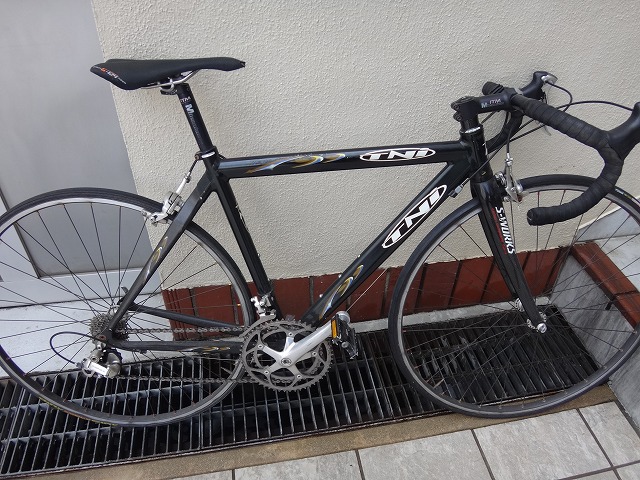
A friend brought their road bike in for me to work on.
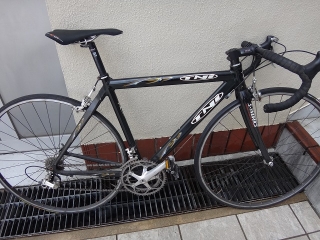
This frame used to be mine.
Currently it doesn't have a bottle cage on it, but
I often drill a third hole into the down tube on my personal frames
and use a single bottle cage to lower the bottle position.
The fork is from the original Tarmac.
It's a hybrid bike with the upper half in carbon and the lower half in E5 aluminum—
you can find it by searching "specialized tarmac 2004".
The Tarmac SL that came later was the beginning of the move toward a fully carbon frame
for that Tarmac.
Back thenit was probably a transition period for planned obsolescence,
but hybrid frames mixing aluminum and carbon—things you couldn't simply call carbon bikes—
were actually in fashion.
Cannondale's SIX13 (Six Thirteen) had
the top tube and down tube in carbon,
with everything else in aluminum.
The name came from carbon (atomic number 6, element symbol C) and
aluminum (atomic number 13, element symbol Al).
So for a fully carbon Super Six frame, the name means
super excellent carbon or super light carbon.
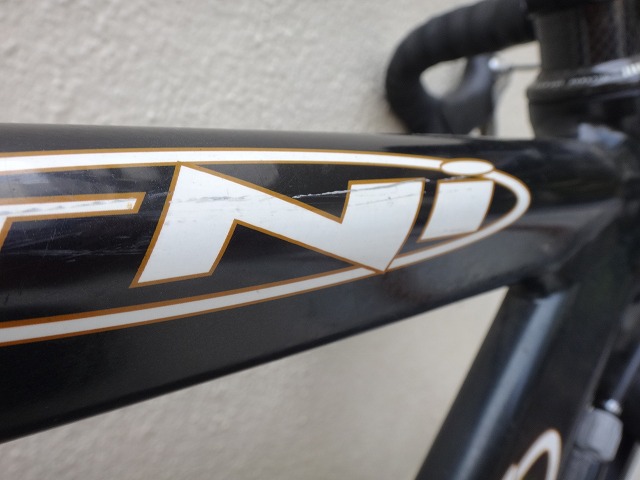
The frame in the photo above is a Tni Dedacciai SC61.10A tube
(hereafter SC61) carbon-back.
The nice thing about aluminum frames is that, as long as you know where the tubes came from,
you can be pretty confident about weight and stiffness without major surprises.
This is a carbon-back frame (carbon seat stays), but
if it were a full aluminum SC61, for instance,
aside from things like the front triangle size changing with the sloping geometry,
honestly, almost any brand's frame with the same tubes
would end up feeling nearly identical in stiffness.
There are plenty of SC61 frames made by various manufacturers if you look around—
De Rosa's Merak, for example
(different from the carbon frame with the same name that came later).
The welds are finished cleanly, and while it has nothing to do with performance,
the paint is nice too.
Gios's Aero Lite (different from the carbon frame with the same name that came later)
is also an SC61 carbon-back.
At list price it was around 100,000 yen, so as an off-the-rack SC61
it's actually pretty cheap.
But the welds between the aluminum tubes are rough,
so there's no visual appeal.
The Tni in the photo above doesn't handle its welds beautifully either, but
it's better than the Aero Lite, I'd say.
The frame I use for my serious rides is also SC61 full aluminum from Akamatu—
an ordered build with a horizontal top tube.
The welds are finished smooth, but
even more than that, the fact that I never have to worry about alignment issues
is an extremely important factor for me.
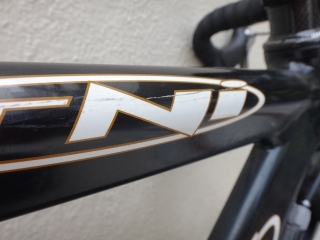
Man, lots of scuff marks. Gotta take better care of it.
The SC61 top tube has an oval cross-section shape, and
the manufacturer's spec calls for the pointed side to face up
when building the frame.
That's how Merak, Aero Lite, and Akamatu all did it.
But on this frame, for reasons unknown,
the top tube was deliberately flipped upside down.
I honestly can't tell how this affects frame stiffness or anything like that,
but one thing's for sure: when you're dismounting the saddle at a traffic light,
the feeling of the frame digging into your crotch is definitely milder.
My friend said they'd been lending this to their younger brother, but
even though neither of them smokes,
the frame surface was covered with something like tar buildup
and felt sticky to the touch. When I asked why,
it turned out they'd always parked it
under a duct from the Chinese restaurant next door.
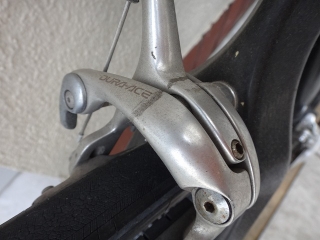
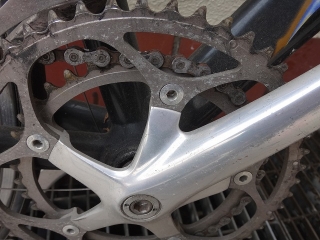

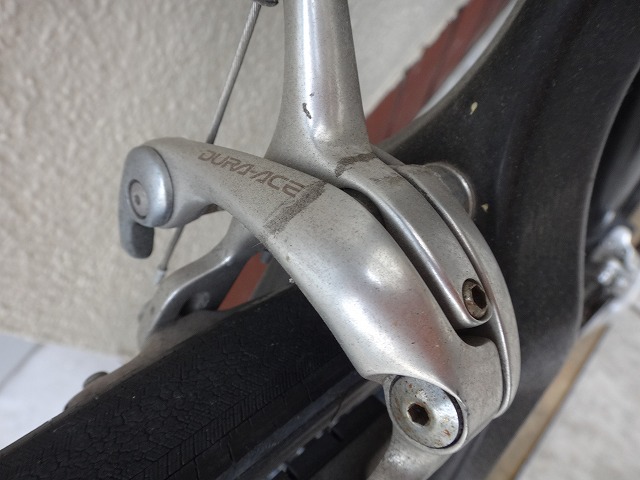
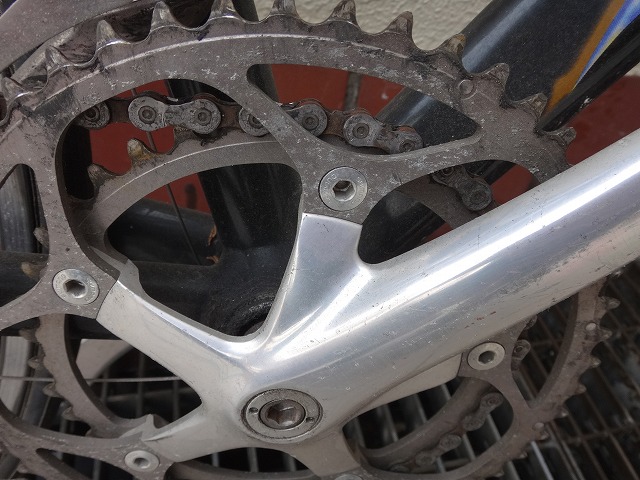
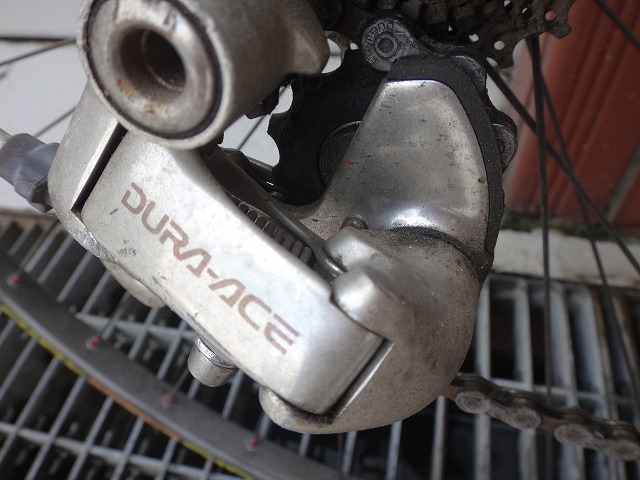
The groupset is mostly Dura-Ace 7700 series.
It shows the kind of rust and damage that comes from long-term storage.I'm gonna beat someone up.
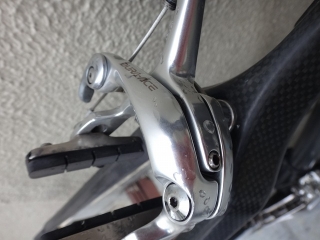

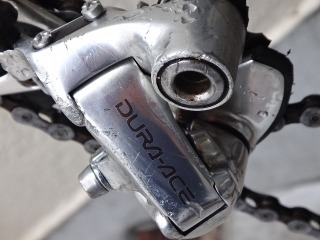
Even after cleaning as thoroughly as I could, the scuff marks won't disappear.
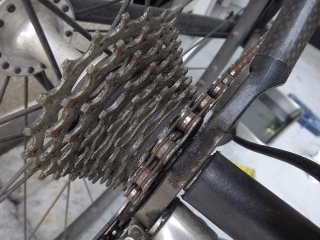
The sprocket isn't Dura-Ace, but the chain was.
Don't let a road bike chain rust on you.
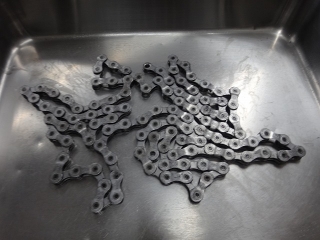
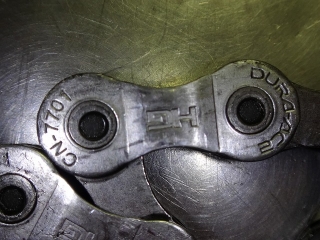
I have a CN-7701 that hasn't seen more than a few hundred kilometers,
so I installed that instead of the 7700.
Since it's used, I didn't technically charge for the part itself.
I suppose I'm charging labor in that sense.
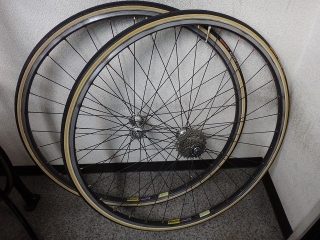
I cleaned the wheels and glued on budget tubular tires with rim cement.
I went with rim cement because that's what it originally had.
When these wheels were built, tubular tape hadn't come onto the market yet.
Both front and rear hubs are 7700 32H,
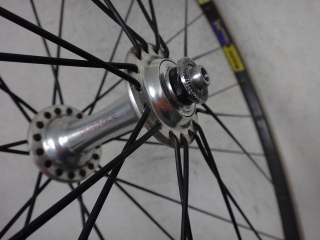
the front wheel has black Campagnolo all-inpoke 1X lacing,

and the rear wheel uses 4-cross lacing with the drive-side as inpoke radial.
Neither of these lacing patterns is something we use on Nomulabo wheels now.
Whether this was my original setup or I used my friend as a test subject,
I honestly don't remember anymore.
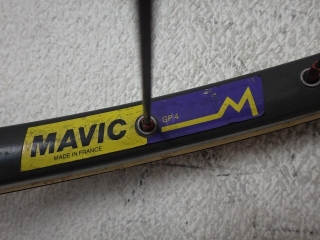
Something related to the previous post:
the labeling on GP4 rim electroplating.
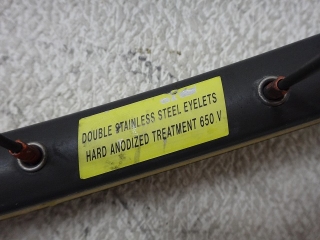
↑It says 650V. I don't know which is older, the 650V or 650W marking,
and they seem about equally common.

↑It says 650HV. I've never seen that on any other rim.
What the heck is this?
On this Tni road bike, the stem, handlebar, and seatpost were all unified as ITM Millennium.
I'm a fan of 3T and ITM from back when handlebars had 25.8mm clamps,
and I've got enough spare stems and handlebars for a lifetime's worth of my own use.
The Millennium stem on this bike was 90mm,
which isn't a size I'd use, so that's fine.
The handlebar was an Anatomica (anatomic shape) with 420mm outside-to-outside width,
that's not my width either.
The seatpost was 27.2mm diameter, but
I had the box but not the actual post,
so I was wondering where I'd lost it.
I think what probably happened is that when I handed the bike over to my friend,
I didn't custom-fit anything—I just forgot to recover the post that was already in the frame
and ended up passing it along with the bike.
So that being the case,

I swapped it out with a cheap current Dedacciai model
and stole it back.
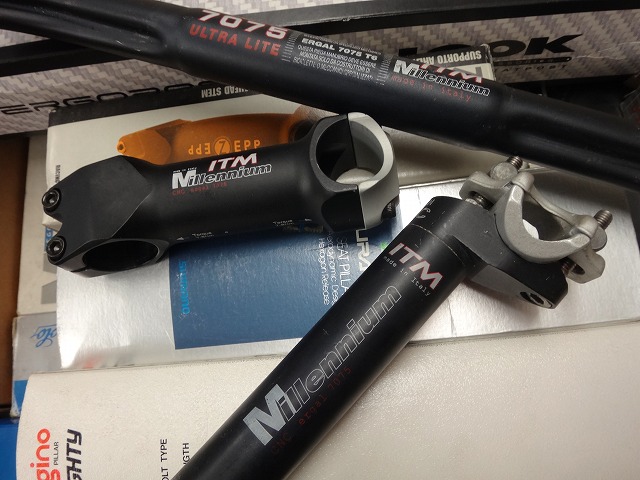
The Millennium stem in the photo is 100mm,
and the Millennium bar is a Strada (classic round road shape)
with 400mm outside-to-outside width.
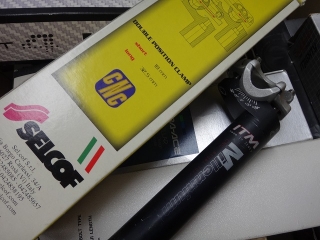
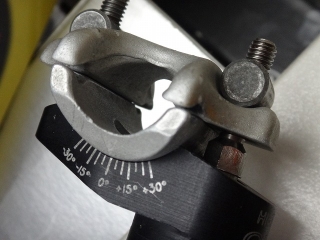
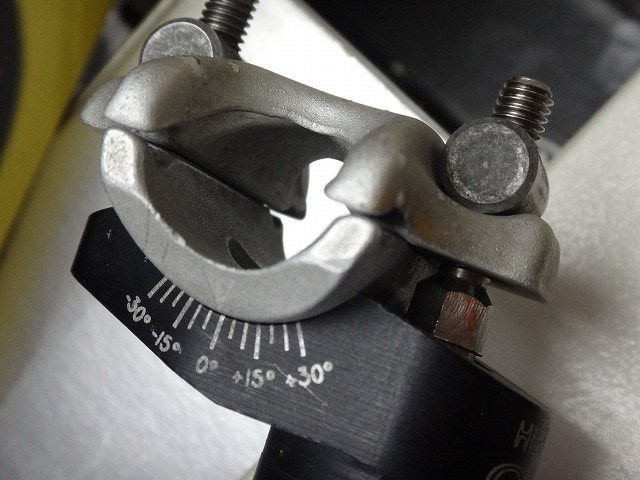
Back then, ITM's seatposts were made by Serrcof from Italy.
Meanwhile, Serrcof stems and handlebars were made by ITM.
The Serrcof box in the photo has two saddle clamps side-by-side,
and when you set the saddle on the rear clamp, you get a large backward adjustment range—
it's for the 68X or 68XN model.
The Millennium seatpost is probably closest to what Serrcof called the 66XN.
66X was the model name, and N is the color code for Nero (Italian for black).
This frame used to be mine.
Currently it doesn't have a bottle cage on it, but
I often drill a third hole into the down tube on my personal frames
and use a single bottle cage to lower the bottle position.
The fork is from the original Tarmac.
It's a hybrid bike with the upper half in carbon and the lower half in E5 aluminum—
you can find it by searching "specialized tarmac 2004".
The Tarmac SL that came later was the beginning of the move toward a fully carbon frame
for that Tarmac.
Back then
but hybrid frames mixing aluminum and carbon—things you couldn't simply call carbon bikes—
were actually in fashion.
Cannondale's SIX13 (Six Thirteen) had
the top tube and down tube in carbon,
with everything else in aluminum.
The name came from carbon (atomic number 6, element symbol C) and
aluminum (atomic number 13, element symbol Al).
So for a fully carbon Super Six frame, the name means
super excellent carbon or super light carbon.
The frame in the photo above is a Tni Dedacciai SC61.10A tube
(hereafter SC61) carbon-back.
The nice thing about aluminum frames is that, as long as you know where the tubes came from,
you can be pretty confident about weight and stiffness without major surprises.
This is a carbon-back frame (carbon seat stays), but
if it were a full aluminum SC61, for instance,
aside from things like the front triangle size changing with the sloping geometry,
honestly, almost any brand's frame with the same tubes
would end up feeling nearly identical in stiffness.
There are plenty of SC61 frames made by various manufacturers if you look around—
De Rosa's Merak, for example
(different from the carbon frame with the same name that came later).
The welds are finished cleanly, and while it has nothing to do with performance,
the paint is nice too.
Gios's Aero Lite (different from the carbon frame with the same name that came later)
is also an SC61 carbon-back.
At list price it was around 100,000 yen, so as an off-the-rack SC61
it's actually pretty cheap.
But the welds between the aluminum tubes are rough,
so there's no visual appeal.
The Tni in the photo above doesn't handle its welds beautifully either, but
it's better than the Aero Lite, I'd say.
The frame I use for my serious rides is also SC61 full aluminum from Akamatu—
an ordered build with a horizontal top tube.
The welds are finished smooth, but
even more than that, the fact that I never have to worry about alignment issues
is an extremely important factor for me.
Man, lots of scuff marks. Gotta take better care of it.
The SC61 top tube has an oval cross-section shape, and
the manufacturer's spec calls for the pointed side to face up
when building the frame.
That's how Merak, Aero Lite, and Akamatu all did it.
But on this frame, for reasons unknown,
the top tube was deliberately flipped upside down.
I honestly can't tell how this affects frame stiffness or anything like that,
but one thing's for sure: when you're dismounting the saddle at a traffic light,
the feeling of the frame digging into your crotch is definitely milder.
My friend said they'd been lending this to their younger brother, but
even though neither of them smokes,
the frame surface was covered with something like tar buildup
and felt sticky to the touch. When I asked why,
it turned out they'd always parked it
under a duct from the Chinese restaurant next door.
The groupset is mostly Dura-Ace 7700 series.
It shows the kind of rust and damage that comes from long-term storage.
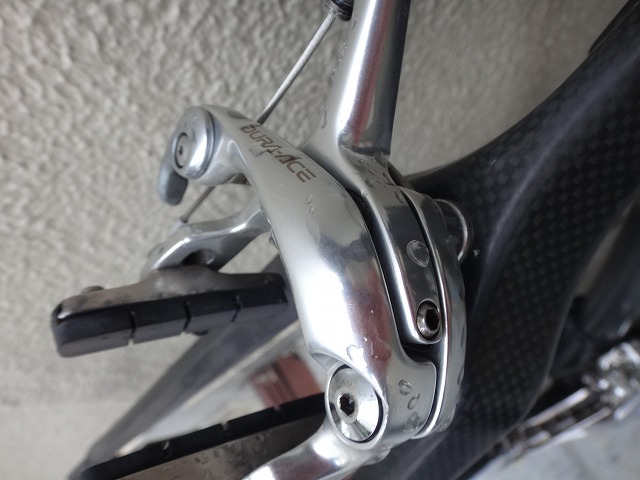
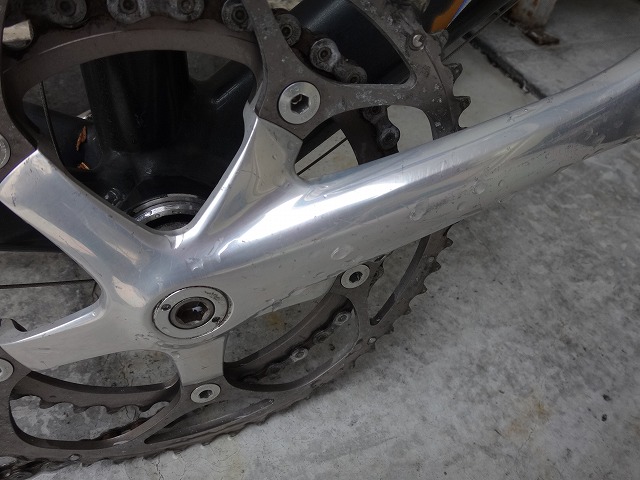
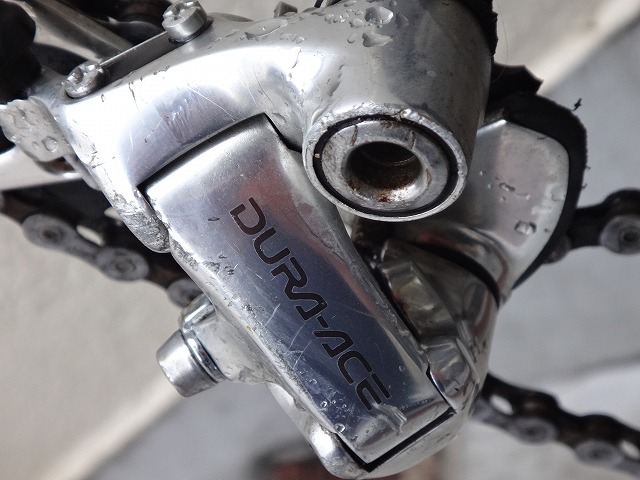
Even after cleaning as thoroughly as I could, the scuff marks won't disappear.
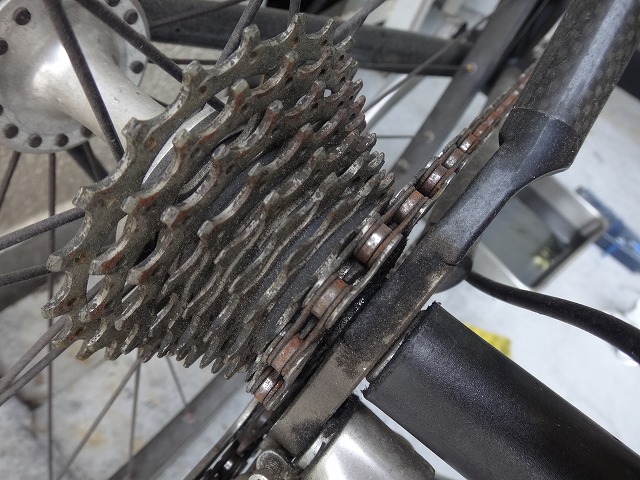
The sprocket isn't Dura-Ace, but the chain was.
Don't let a road bike chain rust on you.
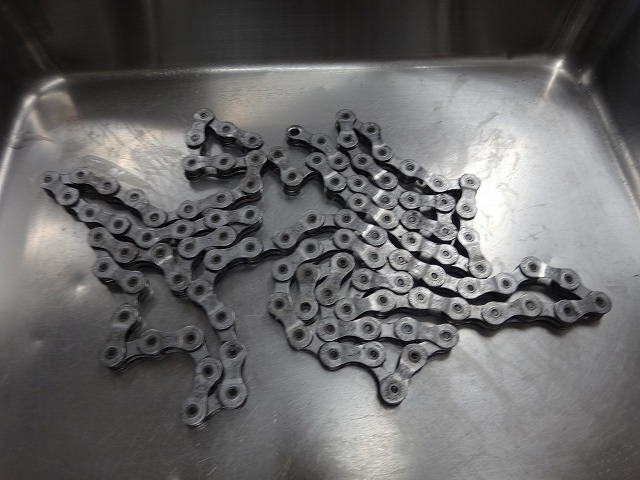
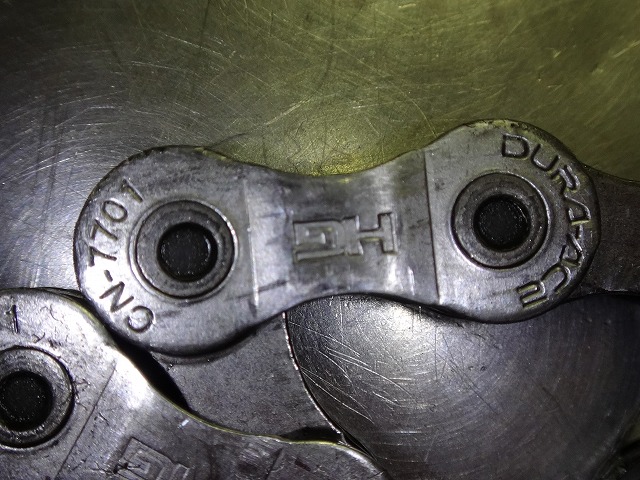
I have a CN-7701 that hasn't seen more than a few hundred kilometers,
so I installed that instead of the 7700.
Since it's used, I didn't technically charge for the part itself.
I suppose I'm charging labor in that sense.
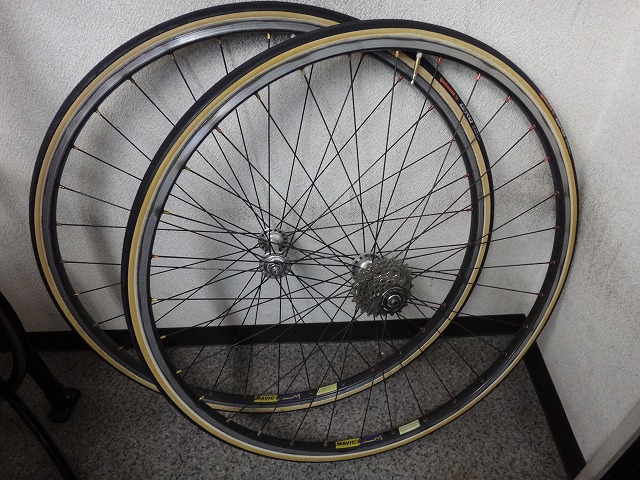
I cleaned the wheels and glued on budget tubular tires with rim cement.
I went with rim cement because that's what it originally had.
When these wheels were built, tubular tape hadn't come onto the market yet.
Both front and rear hubs are 7700 32H,
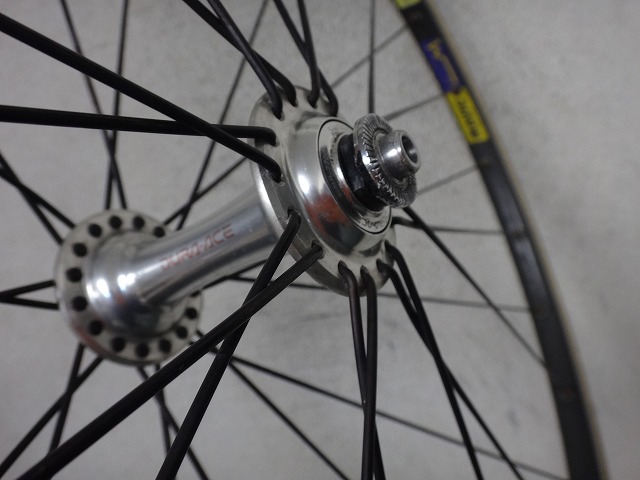
the front wheel has black Campagnolo all-inpoke 1X lacing,
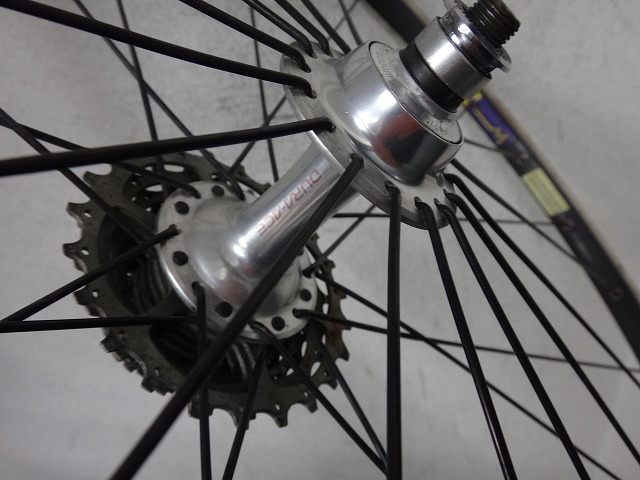
and the rear wheel uses 4-cross lacing with the drive-side as inpoke radial.
Neither of these lacing patterns is something we use on Nomulabo wheels now.
Whether this was my original setup or I used my friend as a test subject,
I honestly don't remember anymore.
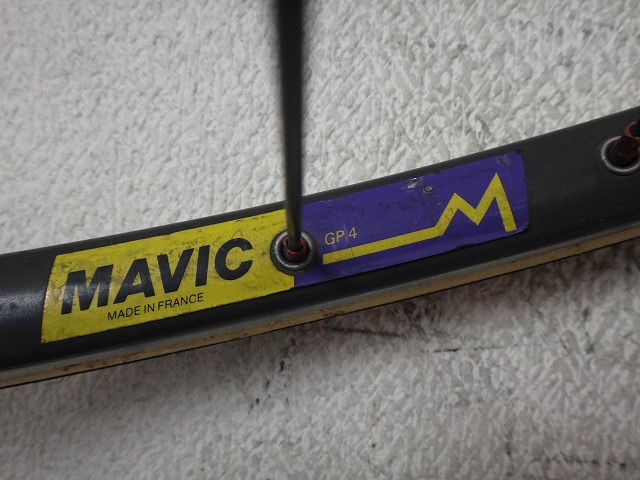
Something related to the previous post:
the labeling on GP4 rim electroplating.

↑It says 650V. I don't know which is older, the 650V or 650W marking,
and they seem about equally common.
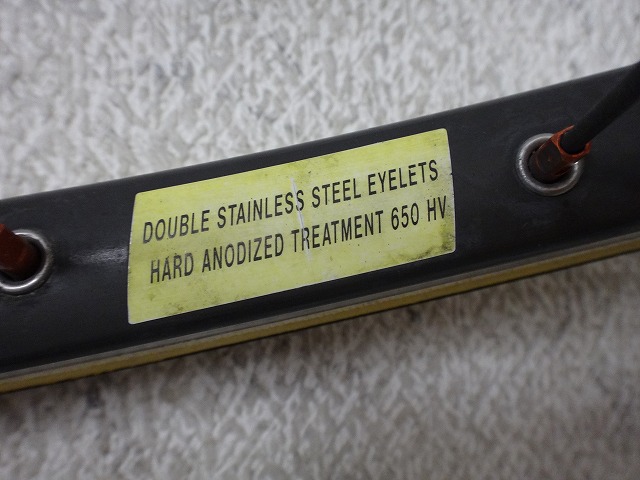
↑It says 650HV. I've never seen that on any other rim.
What the heck is this?
On this Tni road bike, the stem, handlebar, and seatpost were all unified as ITM Millennium.
I'm a fan of 3T and ITM from back when handlebars had 25.8mm clamps,
and I've got enough spare stems and handlebars for a lifetime's worth of my own use.
The Millennium stem on this bike was 90mm,
which isn't a size I'd use, so that's fine.
The handlebar was an Anatomica (anatomic shape) with 420mm outside-to-outside width,
that's not my width either.
The seatpost was 27.2mm diameter, but
I had the box but not the actual post,
so I was wondering where I'd lost it.
I think what probably happened is that when I handed the bike over to my friend,
I didn't custom-fit anything—I just forgot to recover the post that was already in the frame
and ended up passing it along with the bike.
So that being the case,
I swapped it out with a cheap current Dedacciai model
and stole it back.
The Millennium stem in the photo is 100mm,
and the Millennium bar is a Strada (classic round road shape)
with 400mm outside-to-outside width.

Back then, ITM's seatposts were made by Serrcof from Italy.
Meanwhile, Serrcof stems and handlebars were made by ITM.
The Serrcof box in the photo has two saddle clamps side-by-side,
and when you set the saddle on the rear clamp, you get a large backward adjustment range—
it's for the 68X or 68XN model.
The Millennium seatpost is probably closest to what Serrcof called the 66XN.
66X was the model name, and N is the color code for Nero (Italian for black).