Another day, another wheel (and so on).
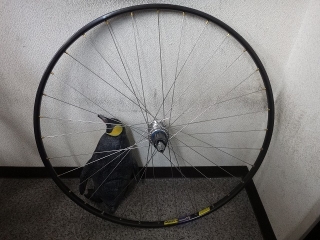
Continuing from yesterday.
I'm rebuilding the rear wheel from a GP4 rim to a CX22 rim.
The front wheel had a shop nameplate sticker,
but the rear wheel didn't have one, so decal work isn't needed here.
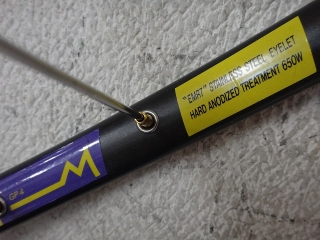
↑That thing in question was 650W.
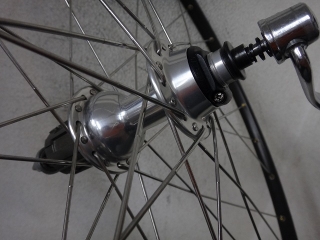
The hub is a Campagnolo Daytona or Centaur.
If it's a 2001 model it would be Daytona,
and 2002 and later models would be Centaur,
but unlike the levers, rear derailleur, and brakes,
this hub has no grade marking, so I can't identify it for certain.
The customer said it was a Daytona, so it probably is.
This hub has 32 holes, and the Chorus and Daytona (Centaur) hubs
come in 32H and 36H versions only.
Only the Record had a 28H option too.
The Record hub has a grease port in the center of the hub body
with a band that covers it.
From Chorus onwards, there's no grease port.
The Daytona has even more different parts around the ends.

The hub bearing cone locknut is fixed with a Phillips head screw,
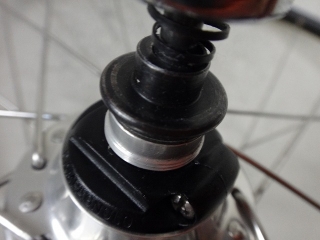
and while the right end nut has ridges on the frame contact surface,
the left end hollow bolt doesn't have any ridges.
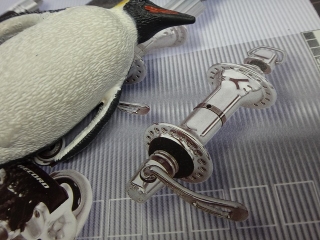
↑Below is a 2001 Campagnolo catalog,
and this is the Record front hub.
The rear hub also has the grease port cover band
mounted on the hub body.
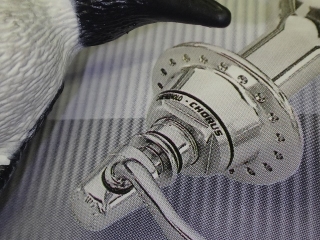
With Chorus, there's no band on the hub body,
but the bearing cone adjustment part is silver and marked "Chorus."
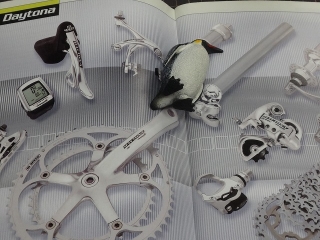
But on the Daytona,
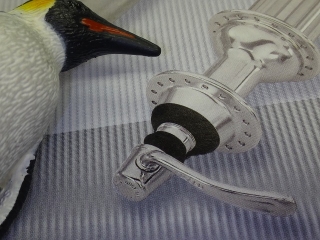
the bearing cone locknut is a black part,
and while Campagnolo is marked on it,
the grade name is nowhere to be found.
By the way, in the previous image, there's a Daytona seatpost.
Campagnolo seatposts of this generation had
Record in carbon, Chorus in titanium,
and Daytona in steel—no kidding.
From this point forward, Record became carbon tube with carbon binder, Chorus became the old Record with carbon tube and aluminum binder, and lower grades didn't offer seatposts at all.
A steel seatpost is extremely rare,
but when inserted into chromoly or other steel-based frames,
it won't develop the galvanic corrosion that happens with aluminum seatposts,
so it's handy for those frames.
...Though if you're worried about that, a titanium seatpost is the usual choice.
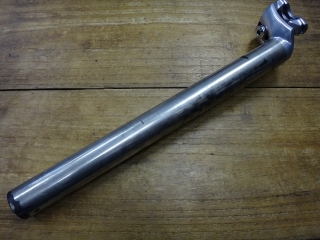
↑This is what's left of a Shimano SP-M900.
The original color was a dark gray to match the XTRA of the time,
but the paint has either chipped off or been deliberately removed.
The Daytona seatpost is listed in the catalog as
"steel tube," but the SP-M900
is listed as "chromoly steel."
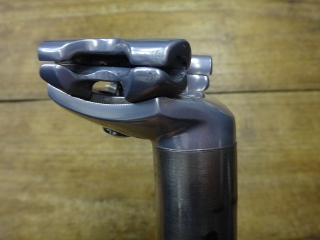
↑The same binder as the XTRA aluminum silver seatpost SP-910
and the Dura-Ace aluminum silver seatpost SP-7410.
By the way, the tube portion of those two seatposts is made by Easton.
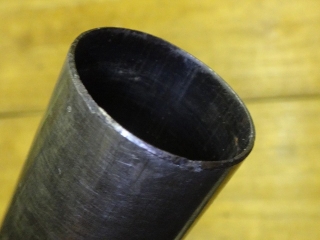
The tube section is extremely thin.
Back to the wheel.
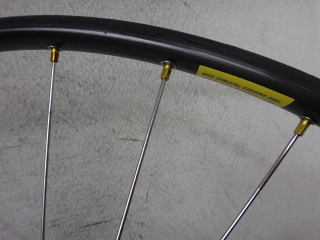
The front wheel was laced with brass nipples,
but the rear wheel had gold aluminum nipples,
so I wondered if they were built at different times,
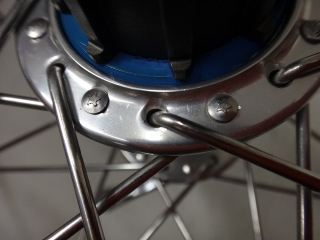
but like the front wheel, it's laced with old "stainless" Sapim Race spokes,
so regardless of timing, I believe it was built by the same shop.
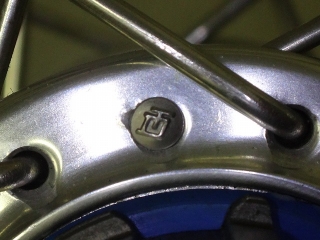
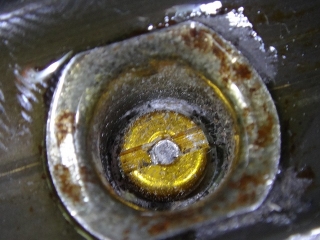
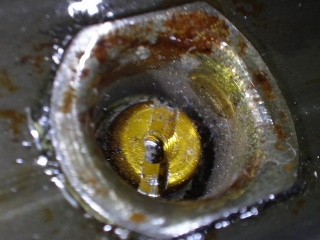
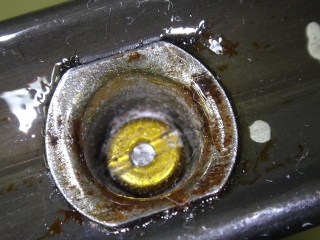
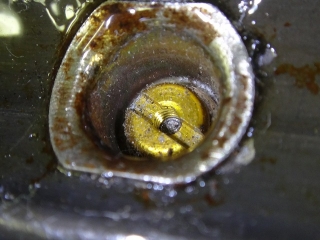
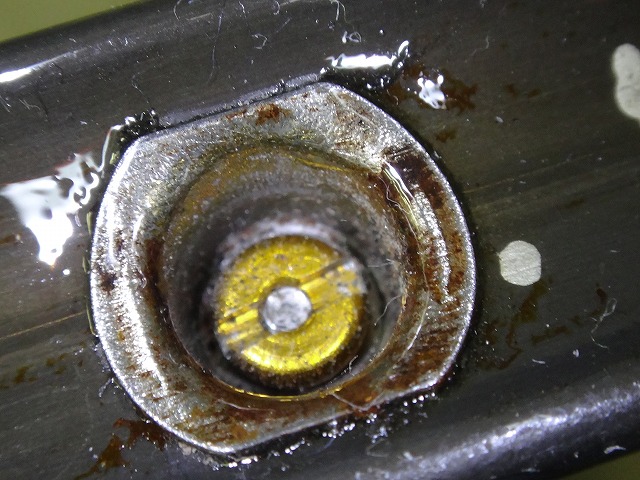
One spoke had broken and was repaired with a DT Comp.
This outpoke hole shows marks from an inpoke being pulled through,
so the wheel laced to this hub when we took it in
was not its first time.
And it was probably its second.
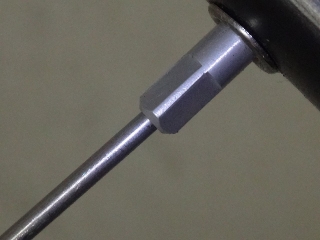
The DT Comp repair was done with a silver aluminum nipple.
The new spokes after rebuilding are also silver Comps,
but I didn't try to recycle just this one outpoke—
I swapped out all of them.
↑Freewheel side
↑Non-freewheel side
↑Freewheel side
↑Non-freewheel side
The non-freewheel side spokes are shorter—or rather,
the previous builder cut corners by using
equal-length spokes on both sides for the rear wheel.
In my case, I don't do that kind of corner-cutting in the first place,
and before that, I almost always build rear wheels with unequal spoke lengths on each side,
so it's simply impossible for me to build with equal-length spokes.
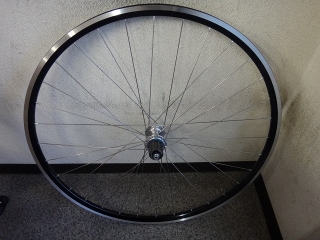
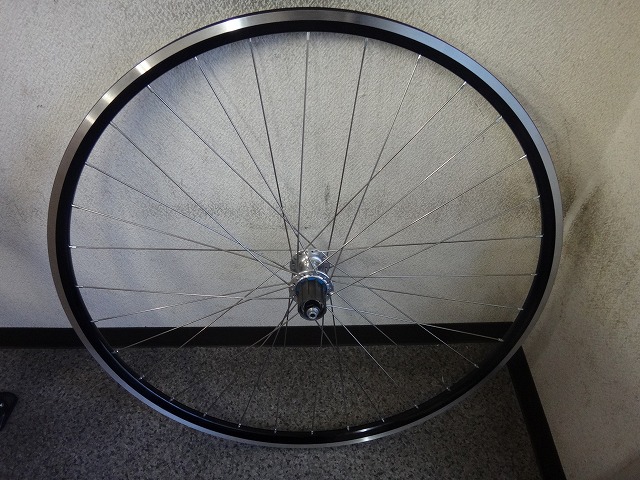
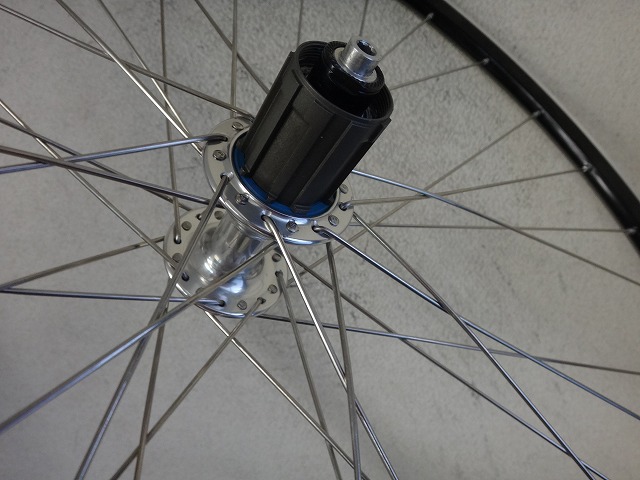
Built.
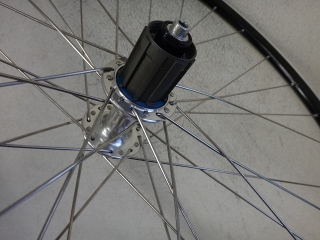
Daytona hub, 32H, full Comp 4-cross lacing.
Truing will come later.
This isn't a builder error but a characteristic from the hub dimensions:
the rear wheel before rebuilding had the non-freewheel side quite loose compared to the freewheel side.
This is because while this hub isn't narrow in total flange width left-to-right,
the right flange width alone is narrow, meaning the drive-side is steep,
so the freewheel side tensions up quickly and tight.
This time I only changed from 3-cross to 4-cross lacing,
and used equal-diameter spokes on both sides, same gauge as before,
so the non-freewheel side didn't transform as much as I'd hoped.
True-ups are essential here.
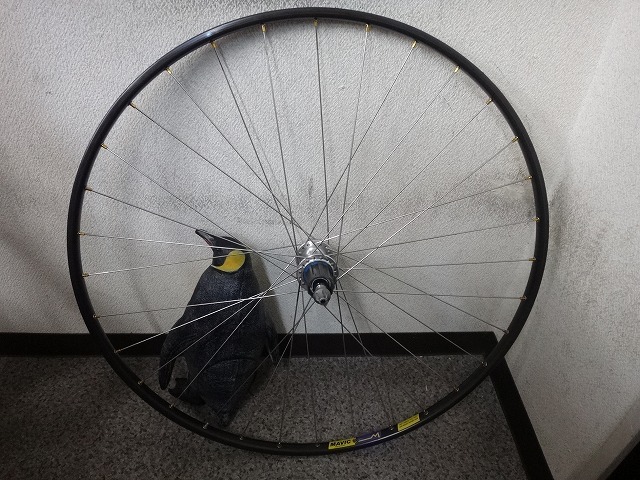
Continuing from yesterday.
I'm rebuilding the rear wheel from a GP4 rim to a CX22 rim.
The front wheel had a shop nameplate sticker,
but the rear wheel didn't have one, so decal work isn't needed here.

↑That thing in question was 650W.
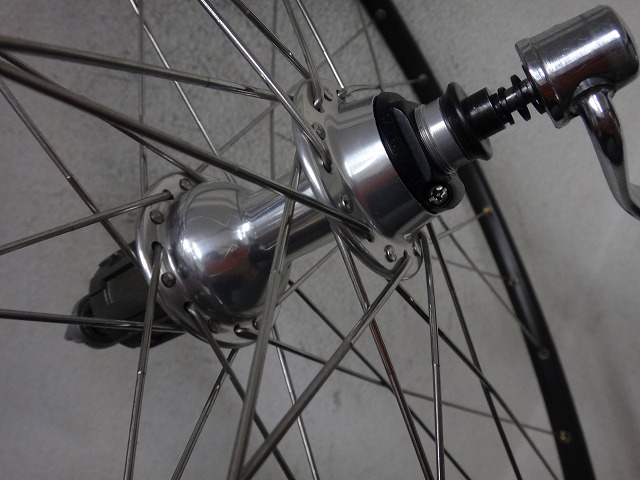
The hub is a Campagnolo Daytona or Centaur.
If it's a 2001 model it would be Daytona,
and 2002 and later models would be Centaur,
but unlike the levers, rear derailleur, and brakes,
this hub has no grade marking, so I can't identify it for certain.
The customer said it was a Daytona, so it probably is.
This hub has 32 holes, and the Chorus and Daytona (Centaur) hubs
come in 32H and 36H versions only.
Only the Record had a 28H option too.
The Record hub has a grease port in the center of the hub body
with a band that covers it.
From Chorus onwards, there's no grease port.
The Daytona has even more different parts around the ends.

The hub bearing cone locknut is fixed with a Phillips head screw,
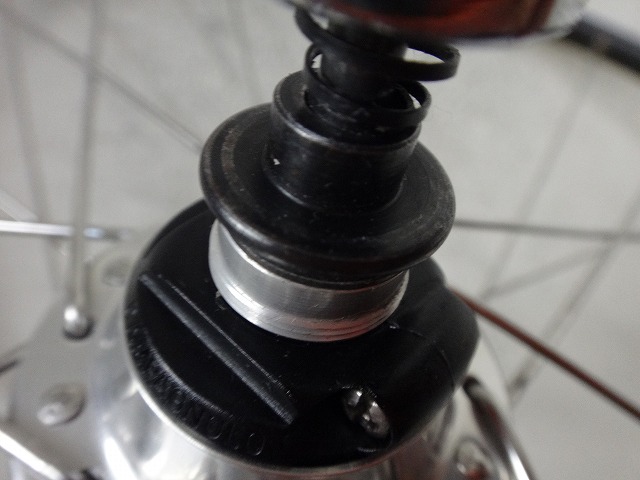
and while the right end nut has ridges on the frame contact surface,
the left end hollow bolt doesn't have any ridges.
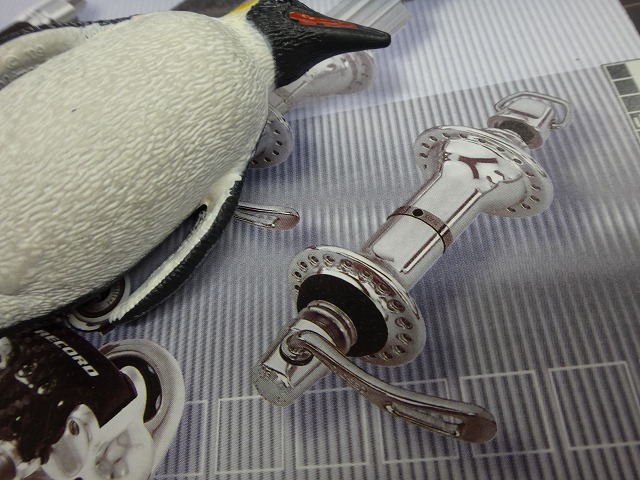
↑Below is a 2001 Campagnolo catalog,
and this is the Record front hub.
The rear hub also has the grease port cover band
mounted on the hub body.
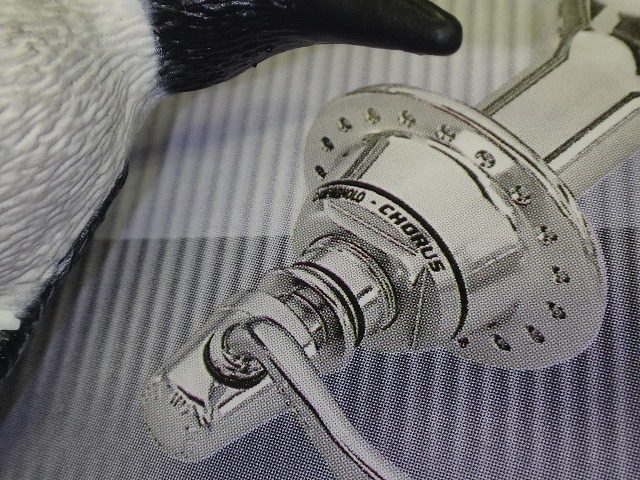
With Chorus, there's no band on the hub body,
but the bearing cone adjustment part is silver and marked "Chorus."

But on the Daytona,

the bearing cone locknut is a black part,
and while Campagnolo is marked on it,
the grade name is nowhere to be found.
By the way, in the previous image, there's a Daytona seatpost.
Campagnolo seatposts of this generation had
Record in carbon, Chorus in titanium,
and Daytona in steel—no kidding.
From this point forward, Record became carbon tube with carbon binder, Chorus became the old Record with carbon tube and aluminum binder, and lower grades didn't offer seatposts at all.
A steel seatpost is extremely rare,
but when inserted into chromoly or other steel-based frames,
it won't develop the galvanic corrosion that happens with aluminum seatposts,
so it's handy for those frames.
...Though if you're worried about that, a titanium seatpost is the usual choice.
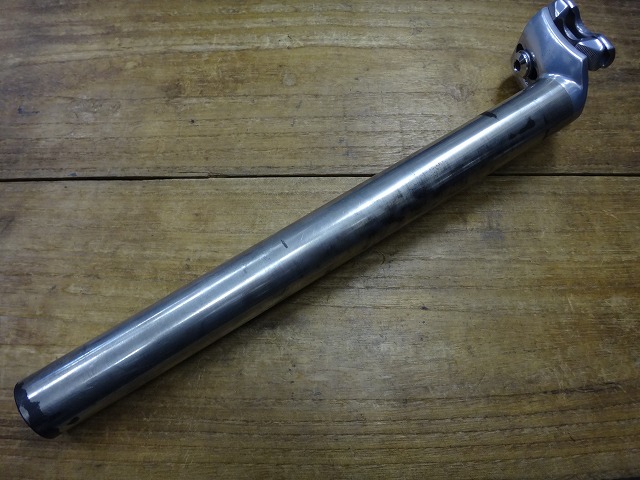
↑This is what's left of a Shimano SP-M900.
The original color was a dark gray to match the XTRA of the time,
but the paint has either chipped off or been deliberately removed.
The Daytona seatpost is listed in the catalog as
"steel tube," but the SP-M900
is listed as "chromoly steel."
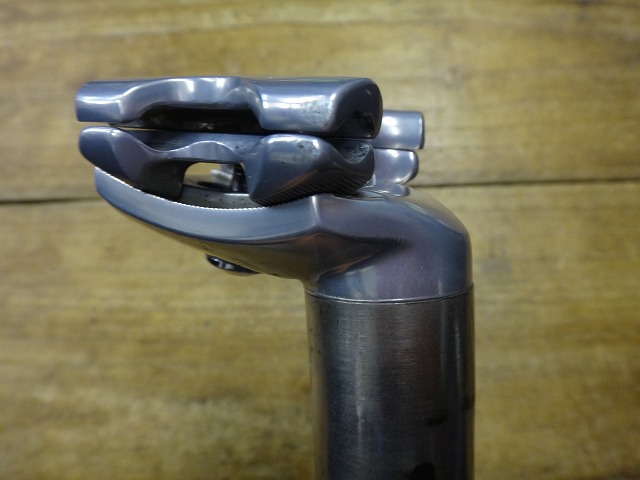
↑The same binder as the XTRA aluminum silver seatpost SP-910
and the Dura-Ace aluminum silver seatpost SP-7410.
By the way, the tube portion of those two seatposts is made by Easton.
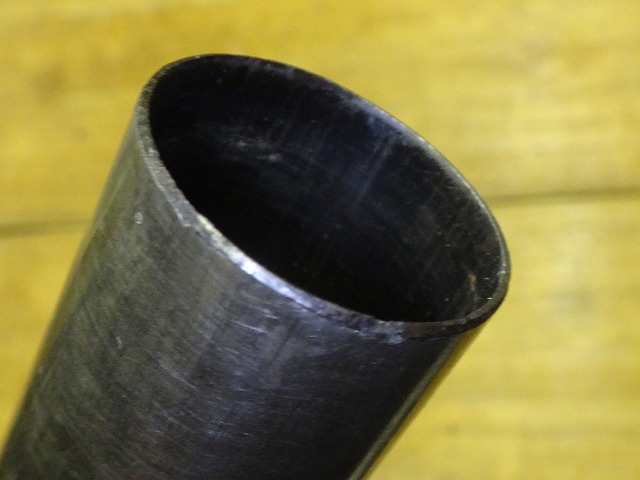
The tube section is extremely thin.

Back to the wheel.
The front wheel was laced with brass nipples,
but the rear wheel had gold aluminum nipples,
so I wondered if they were built at different times,

but like the front wheel, it's laced with old "stainless" Sapim Race spokes,
so regardless of timing, I believe it was built by the same shop.
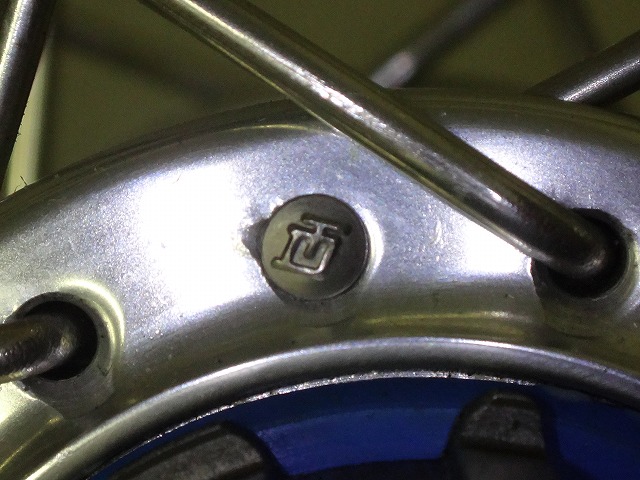
One spoke had broken and was repaired with a DT Comp.
This outpoke hole shows marks from an inpoke being pulled through,
so the wheel laced to this hub when we took it in
was not its first time.
And it was probably its second.

The DT Comp repair was done with a silver aluminum nipple.
The new spokes after rebuilding are also silver Comps,
but I didn't try to recycle just this one outpoke—
I swapped out all of them.
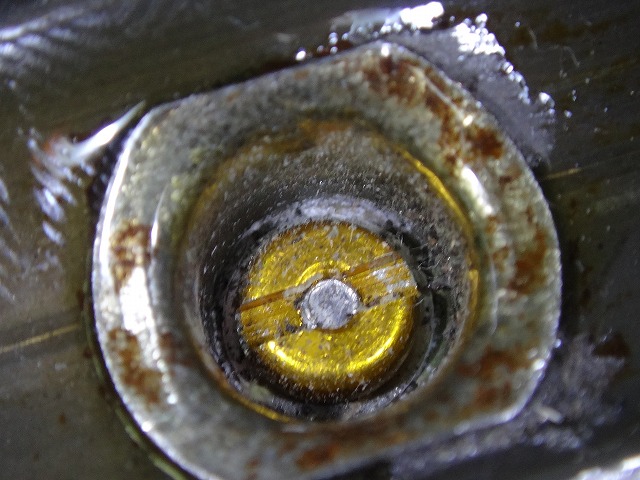
↑Freewheel side
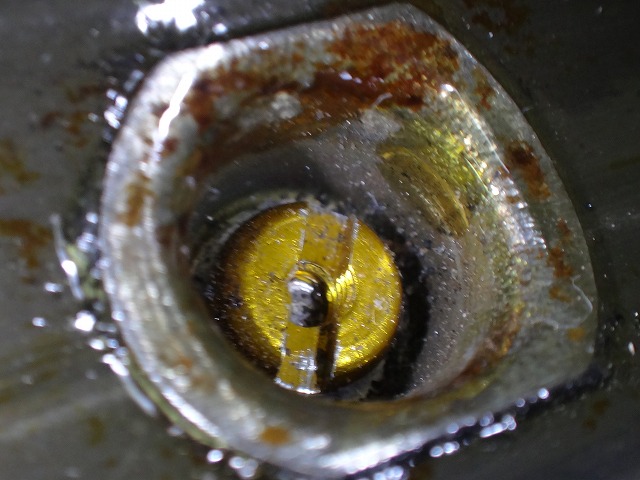
↑Non-freewheel side
↑Freewheel side

↑Non-freewheel side
The non-freewheel side spokes are shorter—or rather,
the previous builder cut corners by using
equal-length spokes on both sides for the rear wheel.
In my case, I don't do that kind of corner-cutting in the first place,
and before that, I almost always build rear wheels with unequal spoke lengths on each side,
so it's simply impossible for me to build with equal-length spokes.
Built.
Daytona hub, 32H, full Comp 4-cross lacing.
Truing will come later.
This isn't a builder error but a characteristic from the hub dimensions:
the rear wheel before rebuilding had the non-freewheel side quite loose compared to the freewheel side.
This is because while this hub isn't narrow in total flange width left-to-right,
the right flange width alone is narrow, meaning the drive-side is steep,
so the freewheel side tensions up quickly and tight.
This time I only changed from 3-cross to 4-cross lacing,
and used equal-diameter spokes on both sides, same gauge as before,
so the non-freewheel side didn't transform as much as I'd hoped.
True-ups are essential here.