I received a front wheel from a Zonda from a customer.
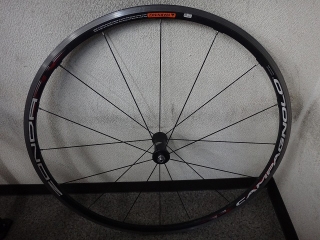
One spoke is broken.
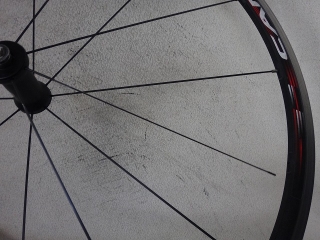
↑This one
Aside from spoke replacement, the hub rotation was grinding roughly.
On high-tension wheels, especially front wheels with hooded spokes and small-flange hubs,
when one spoke or several spokes in a cluster break,
the pull tension on the hub flanges becomes uneven,
which can cause a scraping noise in the hub rotation.
Since this isn't caused by pitting,
it clears up on its own once the spokes are replaced and retensioned.
On this Zonda hub, that seems unlikely to be the issue,
so I suspect the hub internals are damaged independently of the spoke failure.
The customer originally wanted a hub overhaul,
but said I can use my judgment to replace parts
as long as costs don't become outrageous (they'd let me know in advance if so).
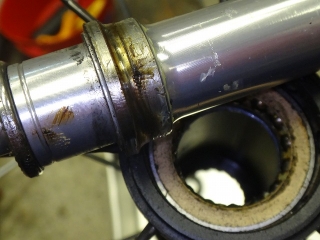
The cone on the side with the bearing cone locknut
and the cone on the opposite side (henceforth the right side).
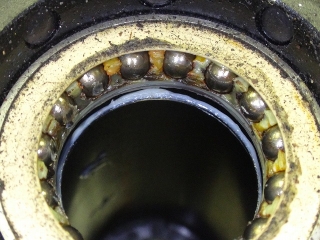
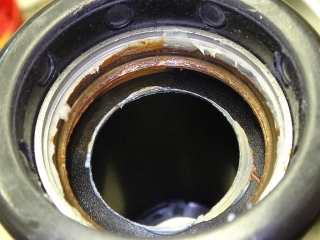
The right-side retainer bearing.
The grease has dried out and rust has formed on the ball race.
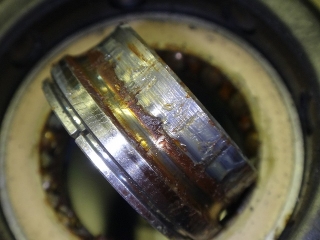
The left-side cone.
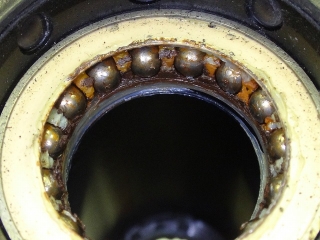
The left-side retainer bearing.
The balls are more discolored than on the right side.
It's unusual for bearing damage to progress equally on both sides—
usually one side is more worn than the other,
but this time the left side looked worse.
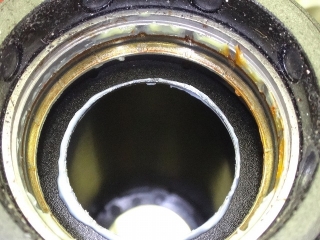
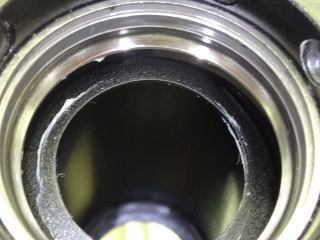
I wiped off the right cone.
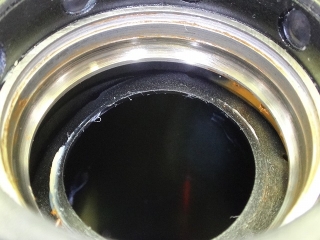
I wiped off the left cone.
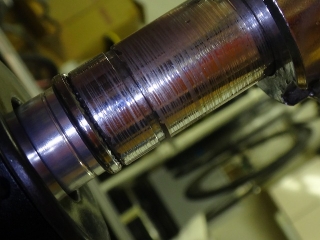
Contrary to expectations, there were no signs of pitting severe enough
to require replacement (in my judgment).
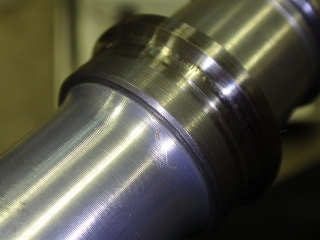
I'll replace the retainer bearings on both sides,
but the right cone—the one with relatively better-colored balls—
showed signs of pitting.
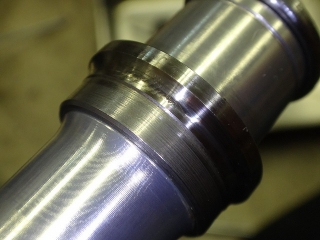
↑Different angle
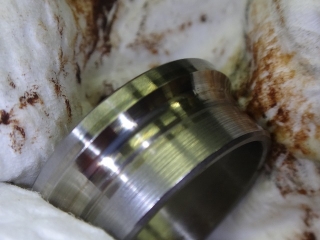
The left cone was in condition that didn't require replacement
unless the customer specifically requested it.
As a result, I replaced the left and right retainer bearings
and the right cone.
Cones are sold by manufacturers in sets of four,
but our shop also sells them individually for just one side.
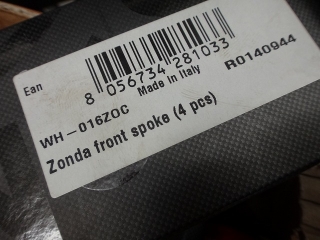
The spoke part number is WH-016ZOC.
Wheel 016 Zonda Clincher,
where 016 designates the front spoke.
018 would be rear right, 019 would be rear left.
017 is skipped, but it's used for disc brake front wheels
when the left and right spoke lengths differ—
016 becomes front right and 017 becomes front left.
With C17 wide rims, the hundreds digit becomes 1,
so for example a front spoke becomes WH-116ZOC.
These naming conventions were the same for Bora and others,
but recently there have been more exceptions.
The image above shows "4 per box," but
I keep them grouped by spoke type per box,
so I actually have much larger inventory than that.
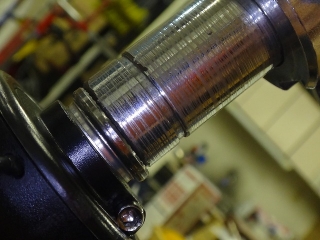
With one spoke broken, there's a huge lateral runout
so I can't see the provisional center.
I assembled the hub, replaced the spoke,
and with just nipple adjustments on the replacement spoke,
it came out with almost no runout. From that point,
I chased down the fine runout in a few spots,
and when I finally applied the centering gauge after work had started,
it was dead-on perfect.
Just a second before the spoke broke,
it was essentially perfectly centered with no runout.
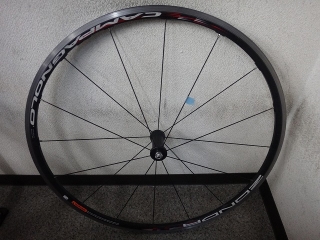

Fixed.
Next, from the same customer, I received a front wheel
from an American Classic Sprint 350 wheelset.
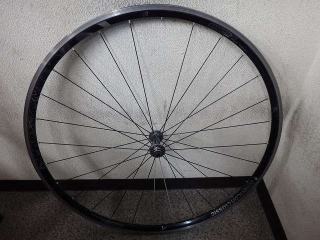
One spoke is broken.
Since it's a hooded spoke and easy to recover,
the original spoke is already gone.
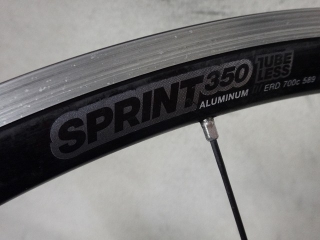
This is a different rim from the CR350 I swapped onto
the Nommunlab Wheel #5 recently.
That one was just a light narrow rim,
but this Sprint 350 rim is a tubeless-ready wide rim.
I'm surprised that American Classic as a brand
lasted long enough to produce wheels with such modern specs.
The CR350 rim had a brake zone vertical width
narrower than the brake shoe itself,
so if it was a black rim, I'd always have to scrape away
the black anodizing on the inner edge,
but the Sprint 350 rim doesn't have such an extremely narrow brake zone.
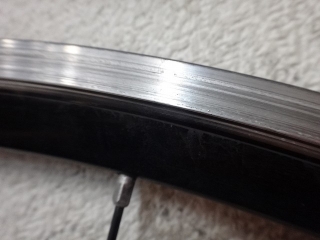
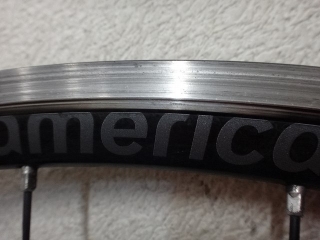
...On this wheel though, the brake shoes were set toward the inner edge
and it still ended up getting scraped.
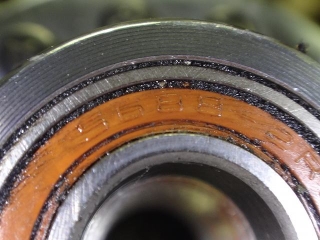
This hub also has a rough grinding rotation, and the customer wants it replaced,
but since the bearing size is 688 and I don't have it in stock,
I'll need to special order it.
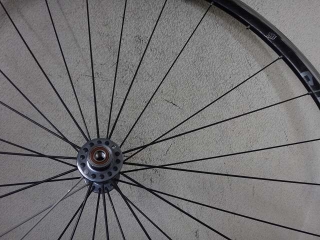
For now, with the bearings still grinding,
I replaced the spoke and decided to just do the trueing first.
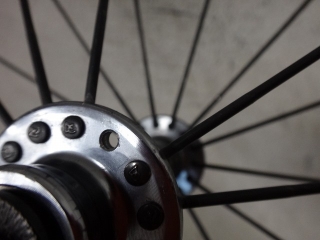
As I mentioned, I don't have the original spoke.
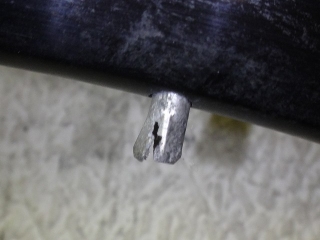
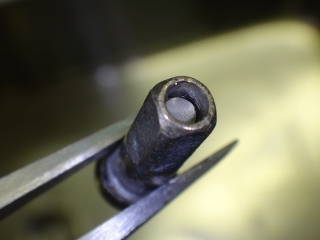
The nipple broke as if it was torn off.
From the shortness of the grip area,
this nipple appears designed to be turned from the outer edge.
I thought someone had grabbed the inner edge and stripped it,
but that alone doesn't explain why the spoke broke.
When I asked the customer, they remembered catching a shopping bag,
which bent the spoke at the time, and then months later
it suddenly snapped.
Ah, that makes sense.

I want to adjust it by turning the outer edge,
but tubeless tape was applied.
If this wheel originally had essentially no runout
and was centered, like the Zonda,
just adjusting the replacement spoke's nipple should fix it almost completely.
This time there's only one nipple, but up to 3 or 4,
using the fulcrum method to call the nipple with a magnet
isn't that much work and I can avoid removing the rim tape.
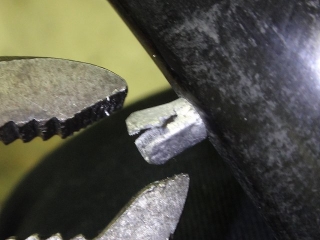
The nipple split and splayed
without falling into the rim, so
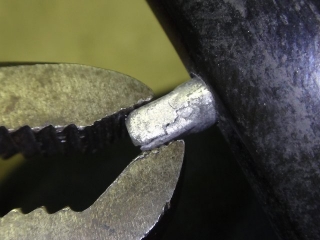
I bent it so it would fall.
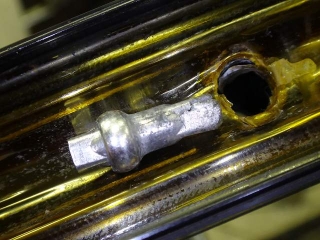
I recovered the original nipple through the valve hole.
As expected, it's the type meant to be turned from the outer edge.

The spokes on the wheel are
2.0-1.8-2.0mm butted round spokes.
They have "AC" stamped on them, but this isn't the spoke manufacturer—
it's a custom spec from American Classic.
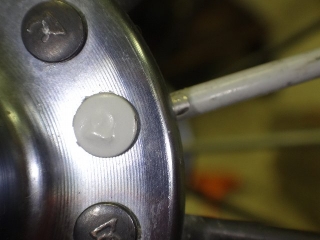
Only the spokes on either side of the valve hole
are white or light gray.
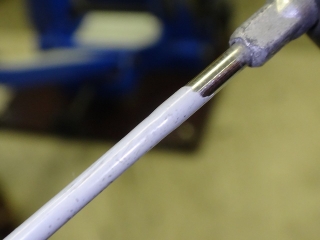
The paint is chipping in a way similar to DT's white or red spokes,
but I'm almost certain these aren't DT spokes.
I used DT Comp for the replacement spoke anyway.
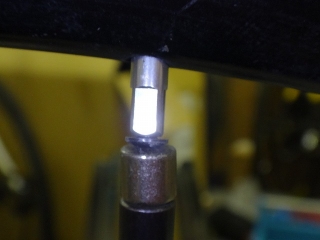
I used a magnet to call the DT nipple without removing the rim tape.
If this nipple and a few other runout spots are it,
I won't remove the tape.
If there's runout severe enough to need major nipple turns,
or if center correction requires turning all the nipples on one side,
I'll remove the tape and grip the outer edge.
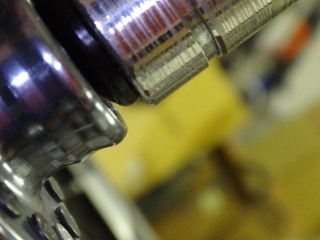
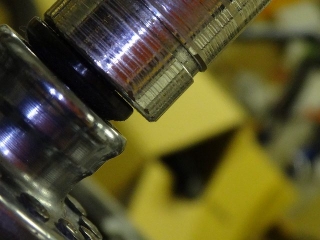
I finished trueing.
Since there was no original runout, except for the replacement nipple adjustment,
I barely touched just 3 spots.
At that point there was a paper-thin amount of center offset.
I'm betting it will clear up when the bearings are replaced,
so I'm leaving it as-is for now.
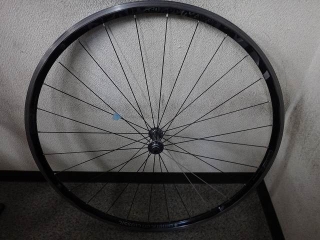
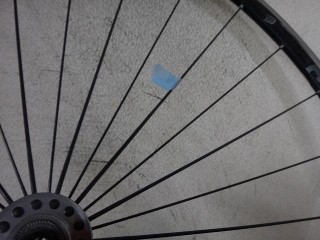
More or less fixed.
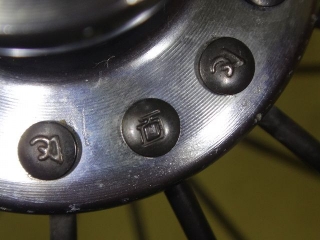
The reason I think the spoke isn't DT at minimum is that
while DT stampings are indented impressions,
the original spoke's AC marking is embossed, raised up.
From the paint finish, the OEM source probably isn't a Pillar,
but rather likely a CN spoke.
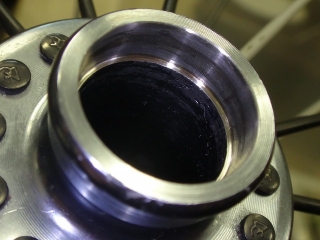
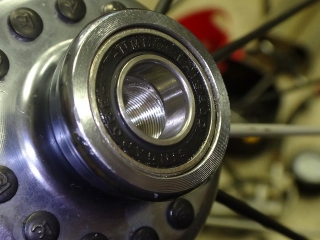
The bearings arrived so I replaced them.
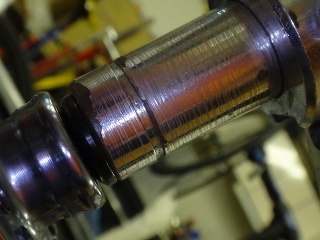
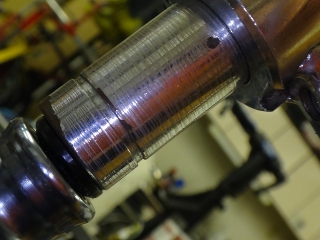
The center offset trend didn't change,
so I turned one entire side very slightly to correct the center.
I considered removing the rim tape,
but I pushed through without replacing it.
Like Squolx nipples, cheap tools will instantly strip
the grip area if you grab the inner edge and turn.
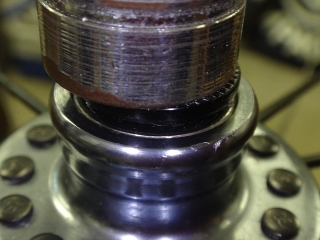
It's a black seal so just to be clear—this is the replacement.
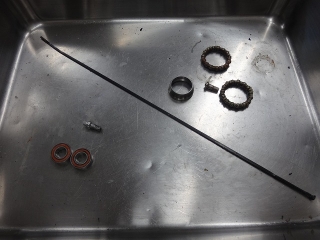
↑Replaced parts
The Zonda parts are upper right, next to the Zonda spoke,
and the Sprint 350 parts are lower left.
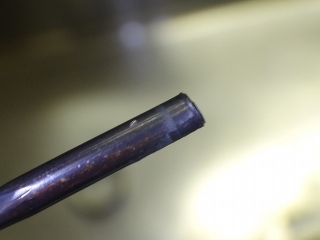
The Zonda spoke broke at the thread start.
I have seen spoke head-side breaks before,
but thread-start breaks are overwhelmingly more common.
Even before that though, crashes, shopping bags catching,
riding off with the lock still on, and metal vise damage
are far more common causes overall.
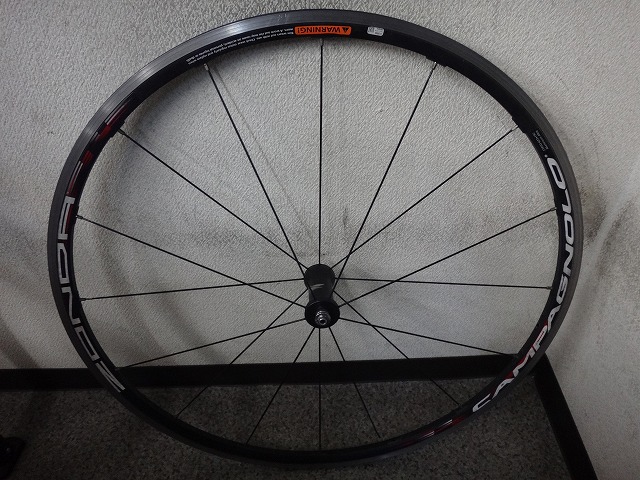
One spoke is broken.
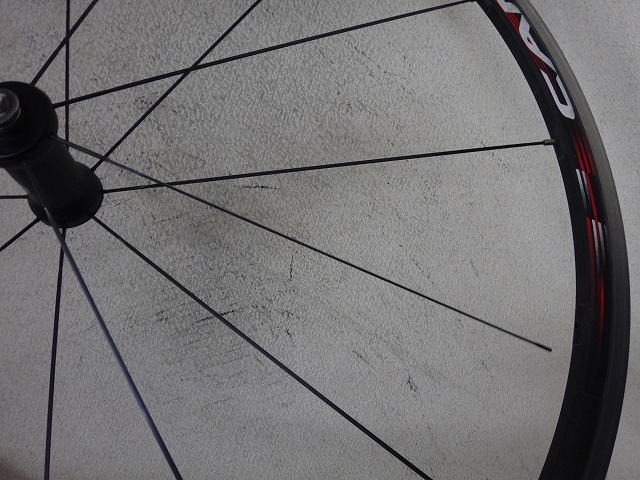
↑This one
Aside from spoke replacement, the hub rotation was grinding roughly.
On high-tension wheels, especially front wheels with hooded spokes and small-flange hubs,
when one spoke or several spokes in a cluster break,
the pull tension on the hub flanges becomes uneven,
which can cause a scraping noise in the hub rotation.
Since this isn't caused by pitting,
it clears up on its own once the spokes are replaced and retensioned.
On this Zonda hub, that seems unlikely to be the issue,
so I suspect the hub internals are damaged independently of the spoke failure.
The customer originally wanted a hub overhaul,
but said I can use my judgment to replace parts
as long as costs don't become outrageous (they'd let me know in advance if so).
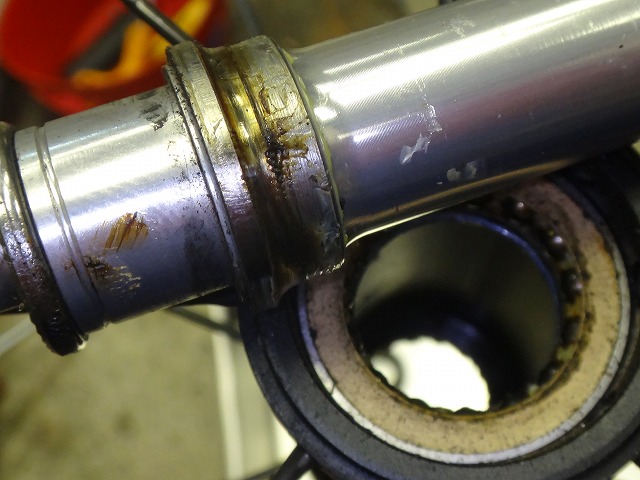
The cone on the side with the bearing cone locknut
and the cone on the opposite side (henceforth the right side).
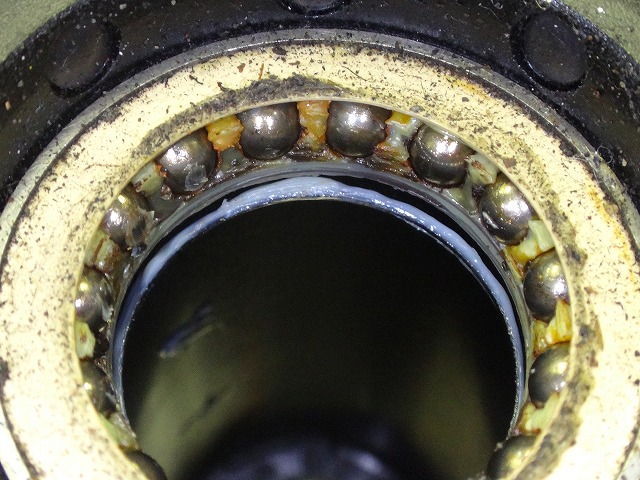
The right-side retainer bearing.
The grease has dried out and rust has formed on the ball race.
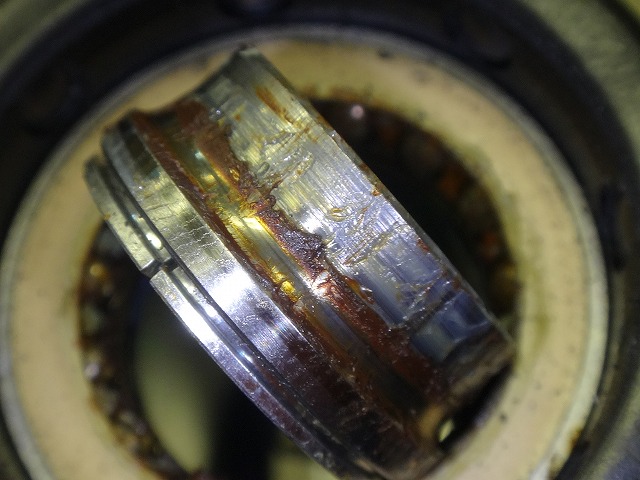
The left-side cone.
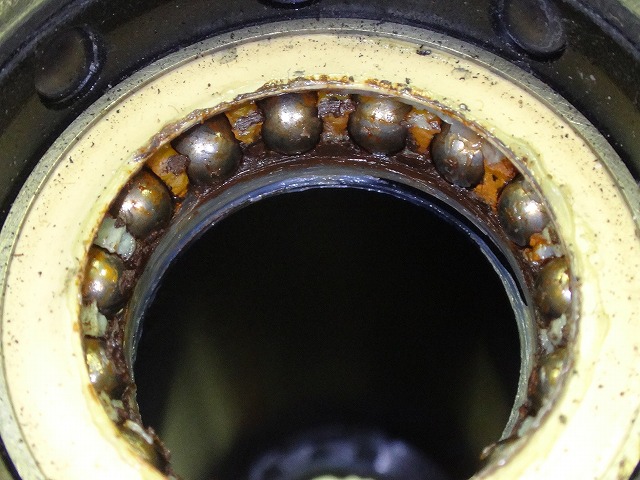
The left-side retainer bearing.
The balls are more discolored than on the right side.
It's unusual for bearing damage to progress equally on both sides—
usually one side is more worn than the other,
but this time the left side looked worse.
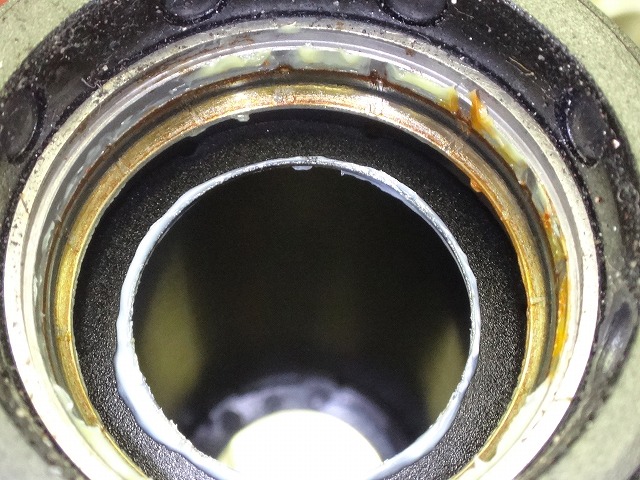
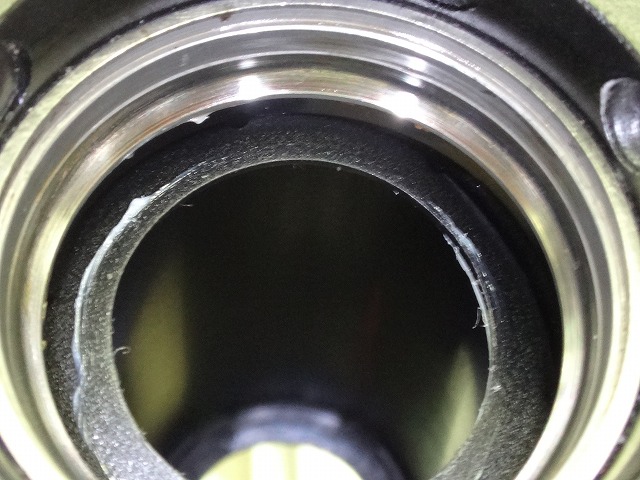
I wiped off the right cone.
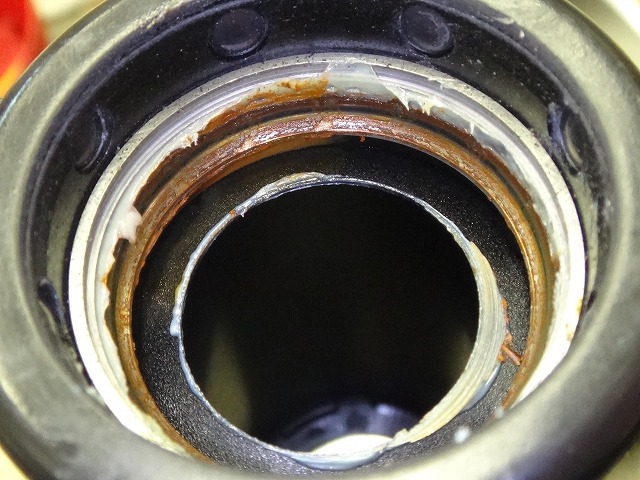
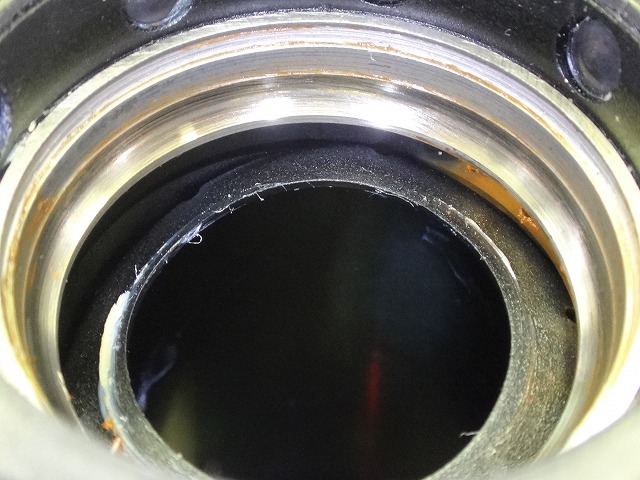
I wiped off the left cone.
Contrary to expectations, there were no signs of pitting severe enough
to require replacement (in my judgment).

I'll replace the retainer bearings on both sides,
but the right cone—the one with relatively better-colored balls—
showed signs of pitting.
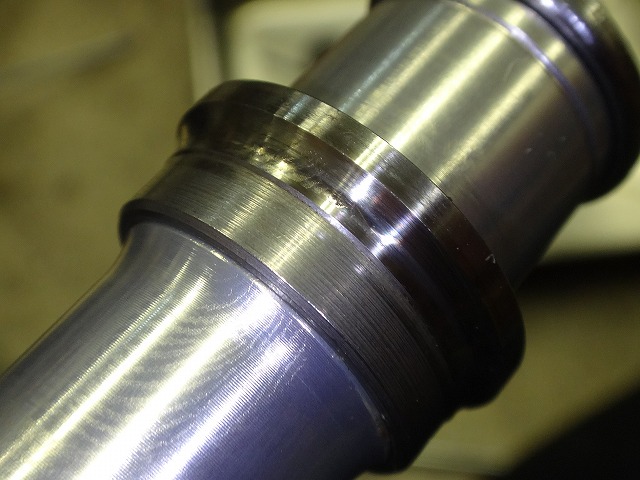
↑Different angle
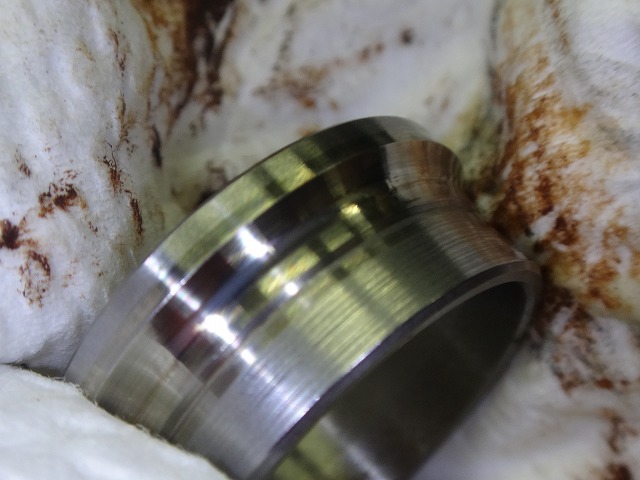
The left cone was in condition that didn't require replacement
unless the customer specifically requested it.
As a result, I replaced the left and right retainer bearings
and the right cone.
Cones are sold by manufacturers in sets of four,
but our shop also sells them individually for just one side.

The spoke part number is WH-016ZOC.
Wheel 016 Zonda Clincher,
where 016 designates the front spoke.
018 would be rear right, 019 would be rear left.
017 is skipped, but it's used for disc brake front wheels
when the left and right spoke lengths differ—
016 becomes front right and 017 becomes front left.
With C17 wide rims, the hundreds digit becomes 1,
so for example a front spoke becomes WH-116ZOC.
These naming conventions were the same for Bora and others,
but recently there have been more exceptions.
The image above shows "4 per box," but
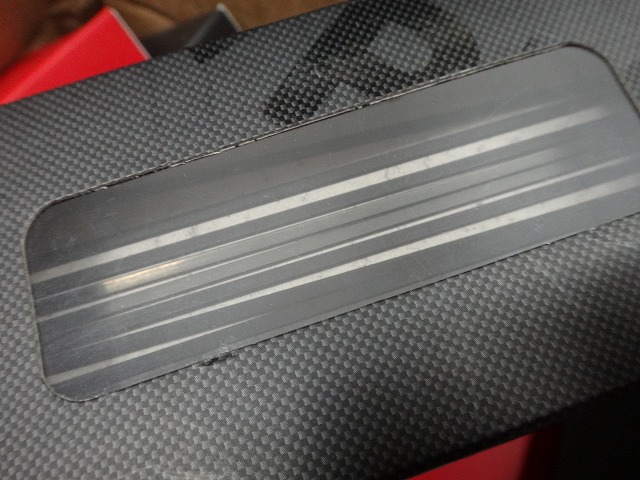
I keep them grouped by spoke type per box,
so I actually have much larger inventory than that.


With one spoke broken, there's a huge lateral runout
so I can't see the provisional center.
I assembled the hub, replaced the spoke,
and with just nipple adjustments on the replacement spoke,
it came out with almost no runout. From that point,
I chased down the fine runout in a few spots,
and when I finally applied the centering gauge after work had started,
it was dead-on perfect.
Just a second before the spoke broke,
it was essentially perfectly centered with no runout.

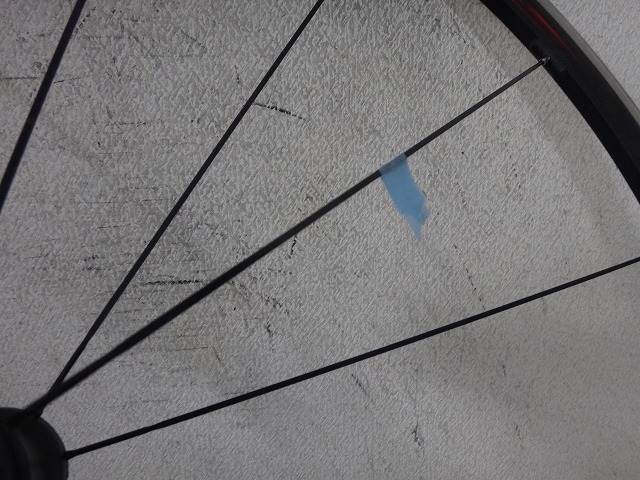
Fixed.
Next, from the same customer, I received a front wheel
from an American Classic Sprint 350 wheelset.
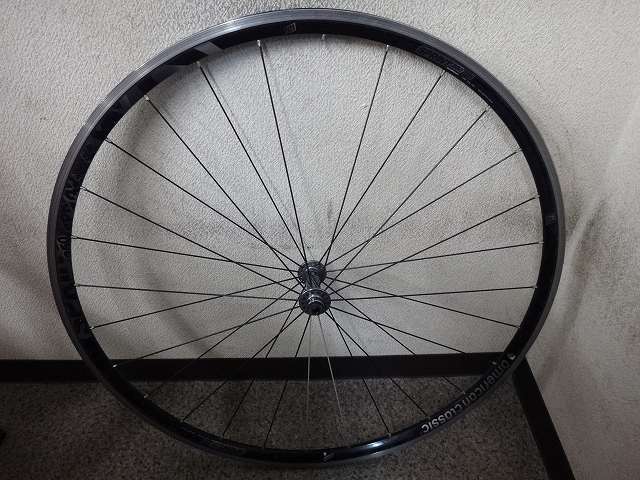
One spoke is broken.
Since it's a hooded spoke and easy to recover,
the original spoke is already gone.
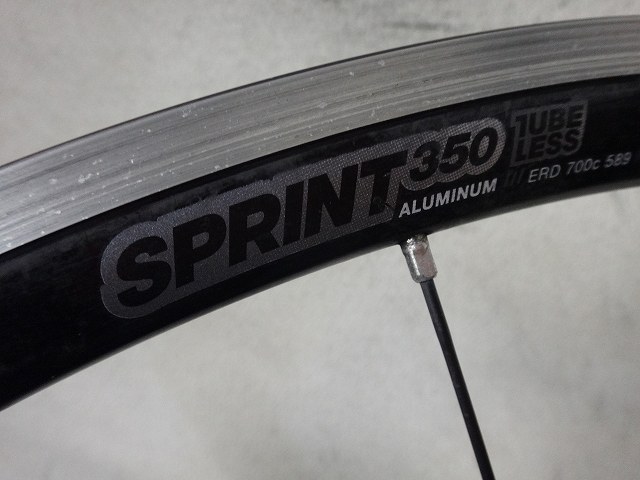
This is a different rim from the CR350 I swapped onto
the Nommunlab Wheel #5 recently.
That one was just a light narrow rim,
but this Sprint 350 rim is a tubeless-ready wide rim.
I'm surprised that American Classic as a brand
lasted long enough to produce wheels with such modern specs.
The CR350 rim had a brake zone vertical width
narrower than the brake shoe itself,
so if it was a black rim, I'd always have to scrape away
the black anodizing on the inner edge,
but the Sprint 350 rim doesn't have such an extremely narrow brake zone.
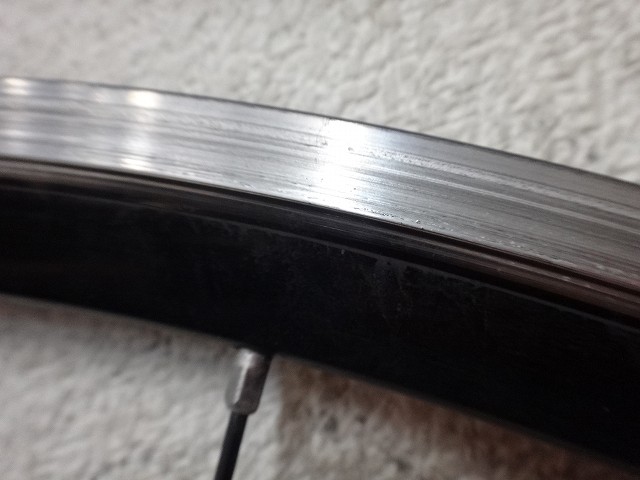
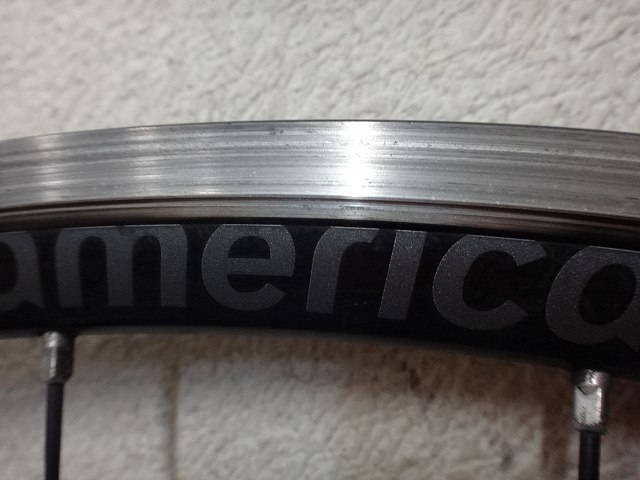
...On this wheel though, the brake shoes were set toward the inner edge
and it still ended up getting scraped.

This hub also has a rough grinding rotation, and the customer wants it replaced,
but since the bearing size is 688 and I don't have it in stock,
I'll need to special order it.
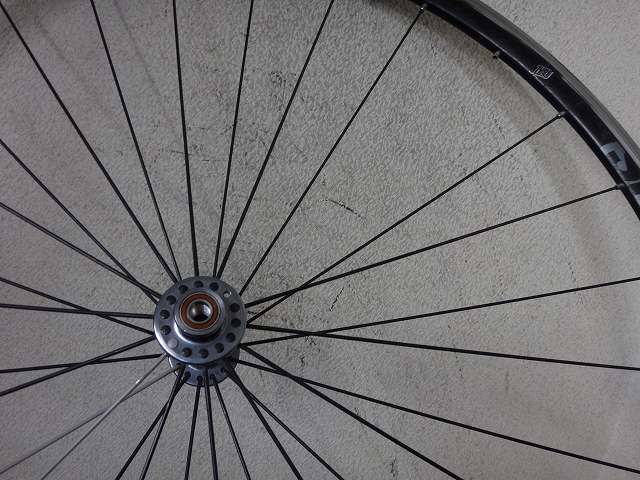
For now, with the bearings still grinding,
I replaced the spoke and decided to just do the trueing first.
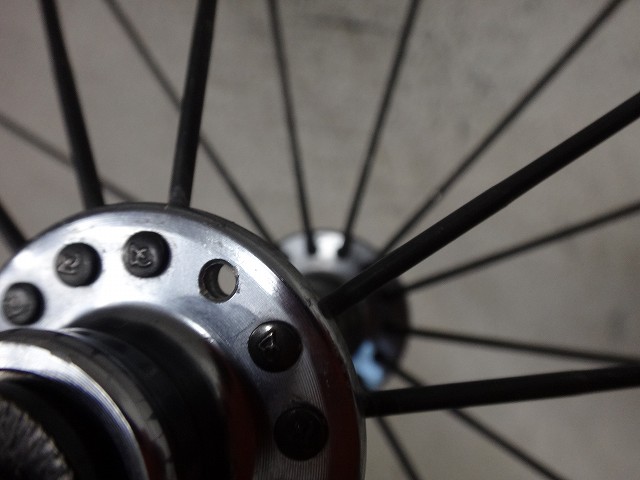
As I mentioned, I don't have the original spoke.
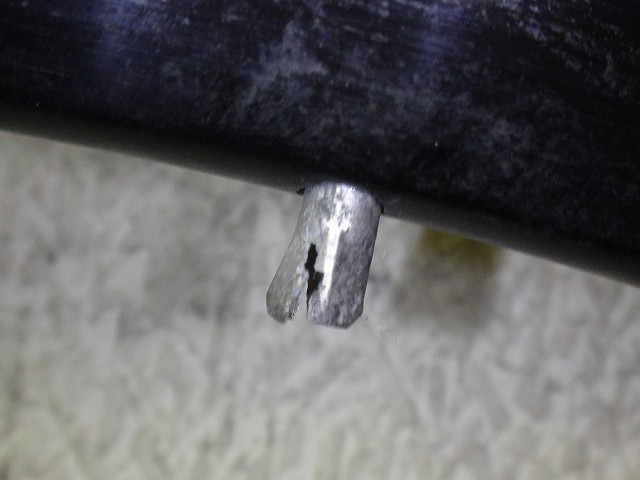
The nipple broke as if it was torn off.
From the shortness of the grip area,
this nipple appears designed to be turned from the outer edge.
I thought someone had grabbed the inner edge and stripped it,
but that alone doesn't explain why the spoke broke.
When I asked the customer, they remembered catching a shopping bag,
which bent the spoke at the time, and then months later
it suddenly snapped.
Ah, that makes sense.

I want to adjust it by turning the outer edge,
but tubeless tape was applied.
If this wheel originally had essentially no runout
and was centered, like the Zonda,
just adjusting the replacement spoke's nipple should fix it almost completely.
This time there's only one nipple, but up to 3 or 4,
using the fulcrum method to call the nipple with a magnet
isn't that much work and I can avoid removing the rim tape.
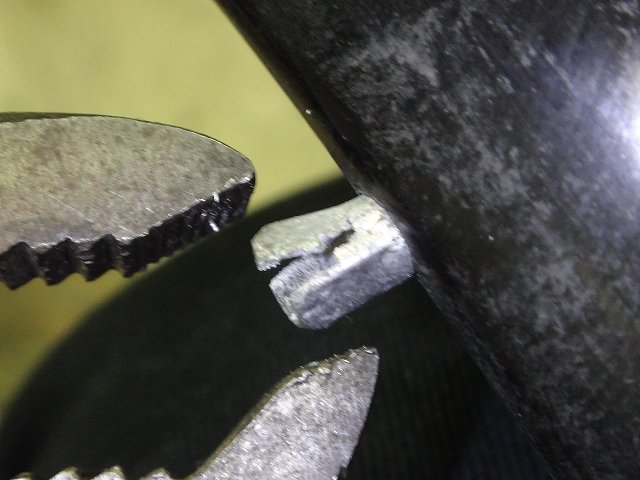
The nipple split and splayed
without falling into the rim, so
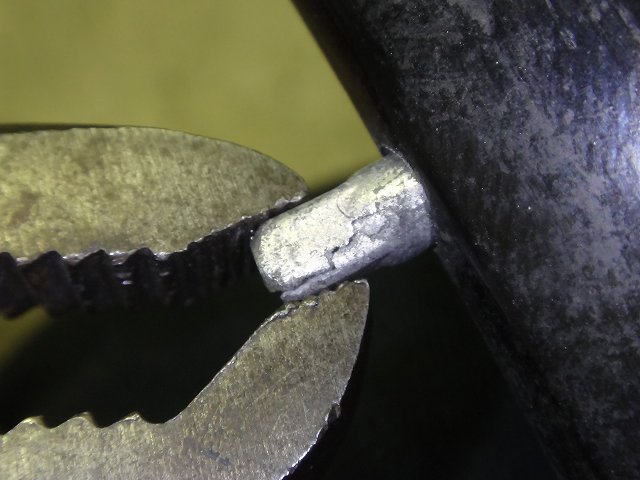
I bent it so it would fall.
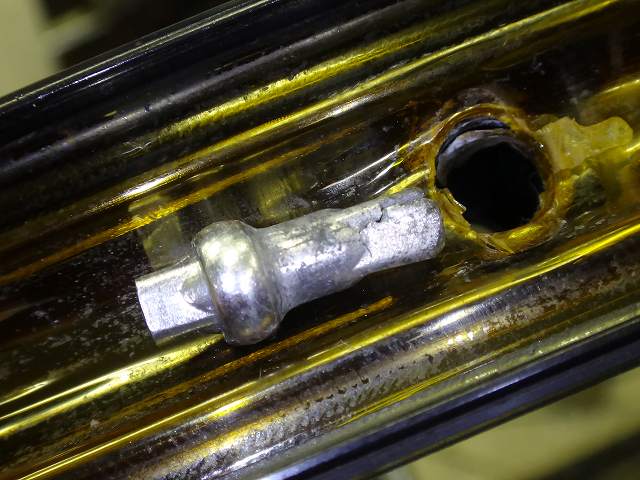
I recovered the original nipple through the valve hole.
As expected, it's the type meant to be turned from the outer edge.
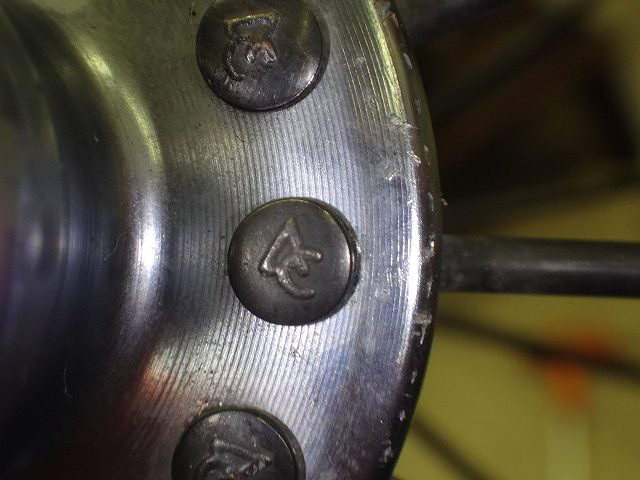
The spokes on the wheel are
2.0-1.8-2.0mm butted round spokes.
They have "AC" stamped on them, but this isn't the spoke manufacturer—
it's a custom spec from American Classic.
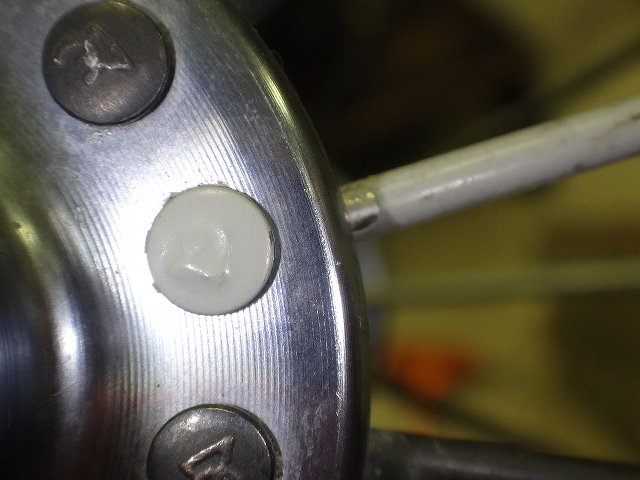
Only the spokes on either side of the valve hole
are white or light gray.
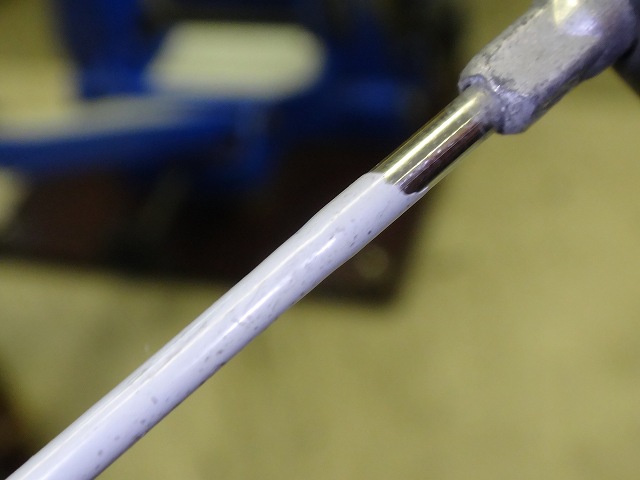
The paint is chipping in a way similar to DT's white or red spokes,
but I'm almost certain these aren't DT spokes.
I used DT Comp for the replacement spoke anyway.

I used a magnet to call the DT nipple without removing the rim tape.
If this nipple and a few other runout spots are it,
I won't remove the tape.
If there's runout severe enough to need major nipple turns,
or if center correction requires turning all the nipples on one side,
I'll remove the tape and grip the outer edge.
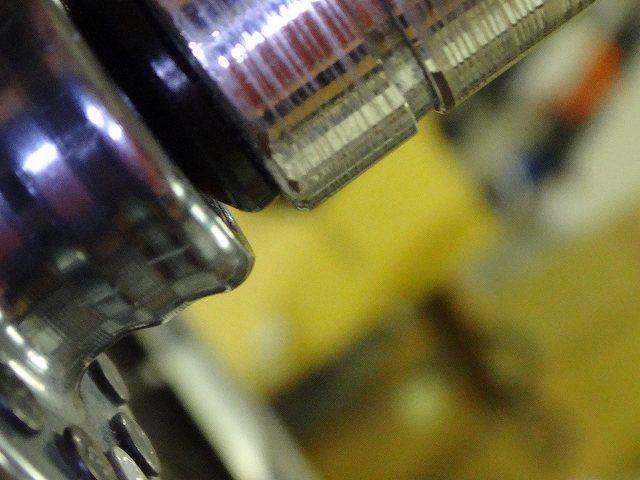
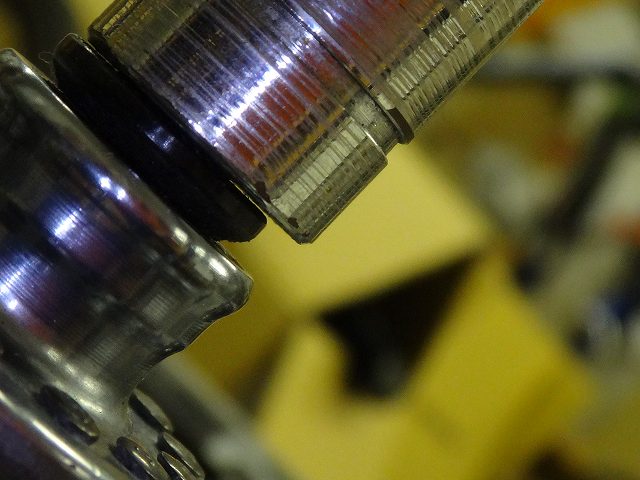
I finished trueing.
Since there was no original runout, except for the replacement nipple adjustment,
I barely touched just 3 spots.
At that point there was a paper-thin amount of center offset.
I'm betting it will clear up when the bearings are replaced,
so I'm leaving it as-is for now.

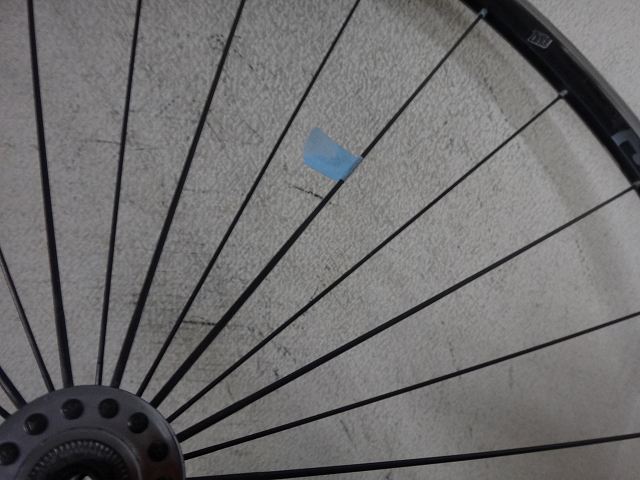
More or less fixed.
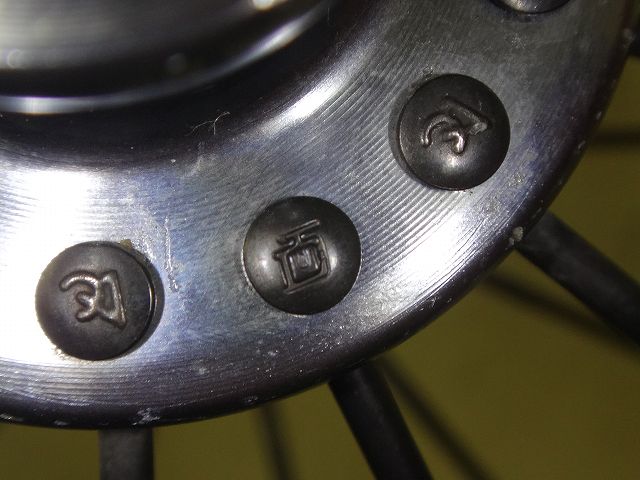
The reason I think the spoke isn't DT at minimum is that
while DT stampings are indented impressions,
the original spoke's AC marking is embossed, raised up.
From the paint finish, the OEM source probably isn't a Pillar,
but rather likely a CN spoke.
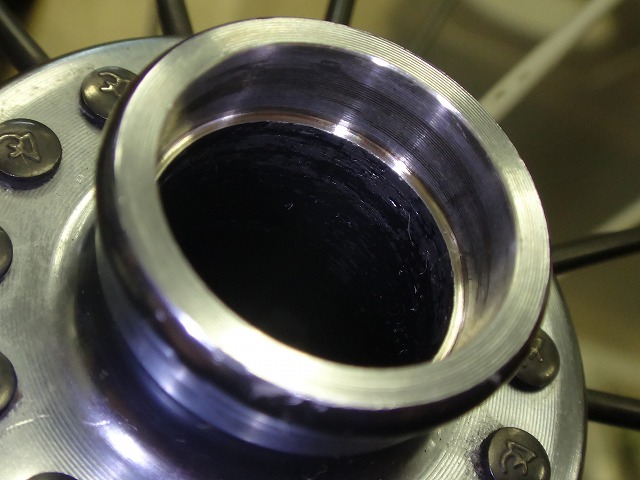
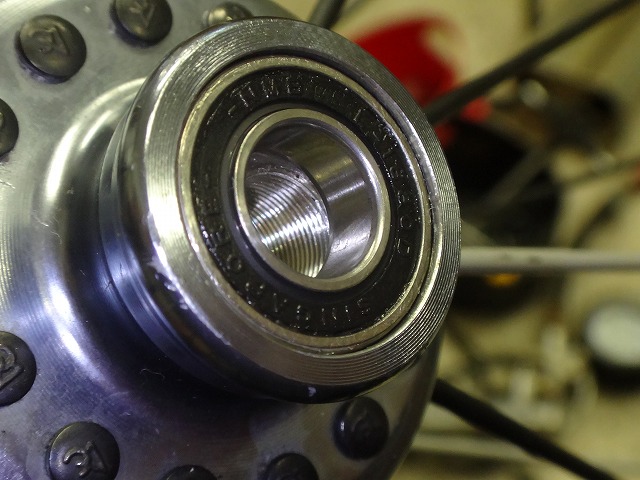
The bearings arrived so I replaced them.
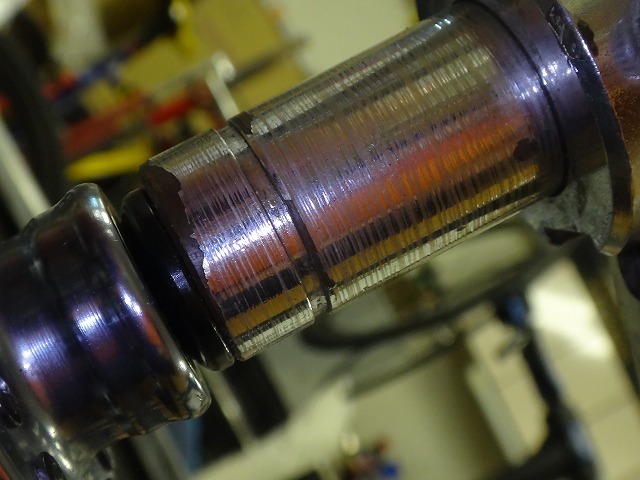

The center offset trend didn't change,
so I turned one entire side very slightly to correct the center.
I considered removing the rim tape,
but I pushed through without replacing it.
Like Squolx nipples, cheap tools will instantly strip
the grip area if you grab the inner edge and turn.
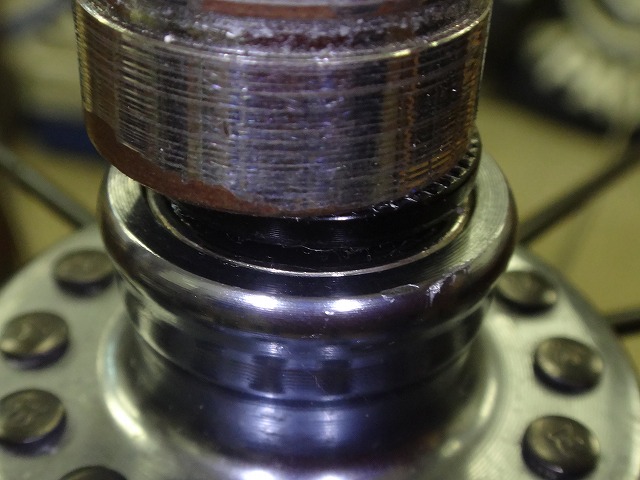
It's a black seal so just to be clear—this is the replacement.
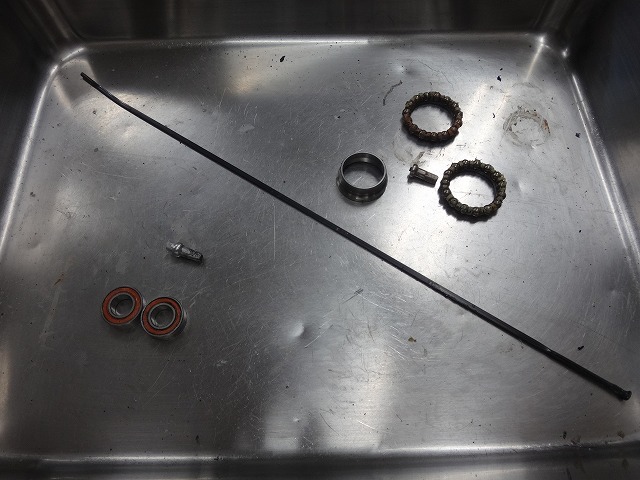
↑Replaced parts
The Zonda parts are upper right, next to the Zonda spoke,
and the Sprint 350 parts are lower left.
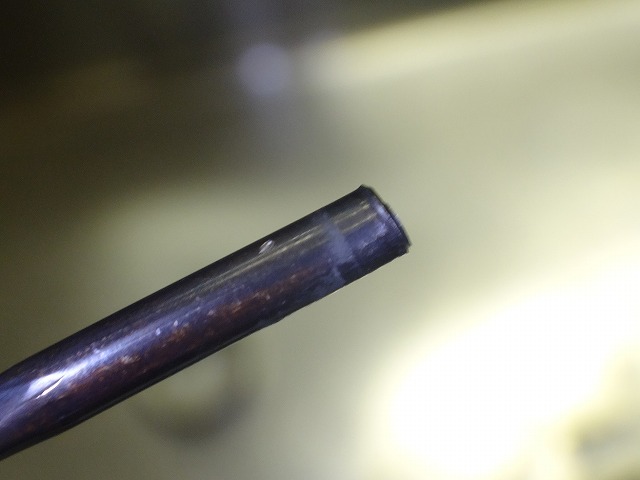
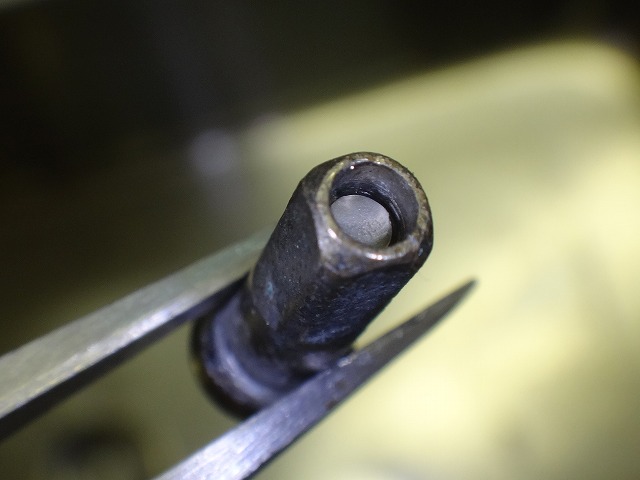
The Zonda spoke broke at the thread start.
I have seen spoke head-side breaks before,
but thread-start breaks are overwhelmingly more common.
Even before that though, crashes, shopping bags catching,
riding off with the lock still on, and metal vise damage
are far more common causes overall.