Another day with wheels (and so on).
The "ultra-lightweight" in the title applies not just to the rim
but also to the carbon spokes.
As for the rim, I checked the spoke length the other day (→here).
The two rims weigh 430g total, but the reason I didn't weigh them individually is
not because I wanted to obscure the weight,
but because these are so-called Chinese carbon rims, so I didn't think there was much point in archiving individual measurements,
and also because rim cement bed is sitting on them,
so I can't measure the exact weight of just the rim itself.
As for the carbon spokes,
I told the customer a spoke length I was confident about
and had them purchase spokes of that length.
We also already had some carbon spokes on hand separately,
and while the front length matched my verification,
the rear length was different enough on both sides that the wheel couldn't be built,
and the newly purchased spokes also seemed to be lighter in weight,
which was another reason we went ahead and bought different ones.

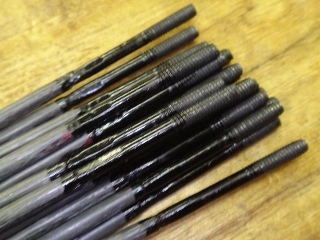
↑These are the spokes we had on hand earlier.
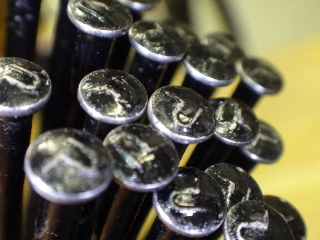
The metal parts on both ends are reused from Pillar brand spokes,
and they have anti-rotation stamping on the threaded end
and have also been painted black afterward.
The original material state might have actually been silver spokes.
Since the paint job is sloppy, the color is chipped in places.

When I bring a strong magnet close to this area,
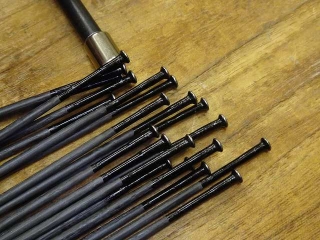
CLANG! It sticks.
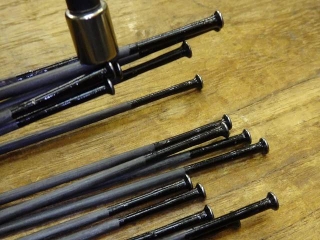
I can even pick it up with the magnet.
I won't write down the spoke length,
but when I calculated bundle weight ÷ number of spokes ÷ length ÷ 0.0257,
I got 0.40174718867...,
so the spoke density ratio is about 40%.
0.0257 is the weight per millimeter of a spoke
with 100% spoke density ratio.
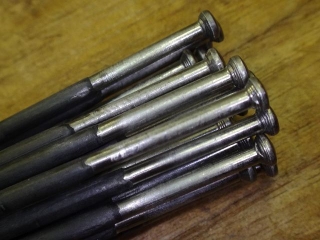
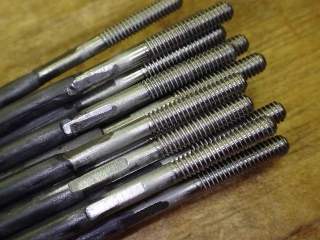
Next, here are the newly received spokes.
The metal parts on both ends are silver colored, and

the spoke head has no markings,
and the thickness of the head section is substantial.
These metal parts show absolutely no response to a magnet.
And compared to the 20 front-use Pillar-reused spokes of the same length from before,
these 22 spokes were over 7g lighter.
That's despite having 10% more spokes.
When I calculate the spoke density ratio,
the front set comes to 0.32404805...
the rear right set to 0.32457147...
and the rear left set to 0.32099206...,
so the spoke density ratio is around 32%.
Since CX-RAY is 64.5%, this is almost exactly half.
Attentive readers probably already noticed,
but the metal parts of these spokes are titanium.
If the material were steel-based,
there's no way the spoke density ratio could differ by 8%
when the metal part length is nearly identical
to the Pillar-reused spokes.
When I asked the customer, "These spoke metal parts are titanium, right?"
it turns out they didn't actually know.
They just bought them based on the lightness alone.
The manufacturer apparently didn't make a special point of advertising "It's titanium!"
In chronological order, this came later,
but there was one defective spoke each in the front set and rear right set
with threading defects, so with the customer's permission
I ground down the defective front spoke on a grinder.
Titanium sparks, unlike steel,
are white and burst with a bright sparkle.
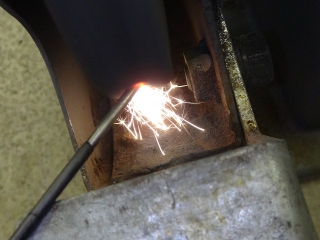
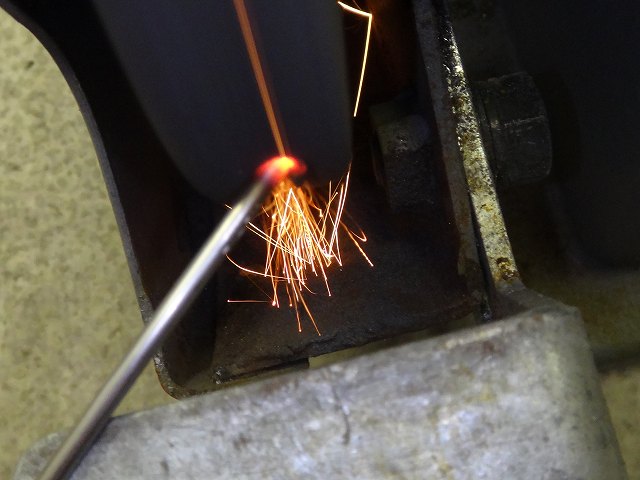
It's hard to tell in the image, but titanium confirmed.
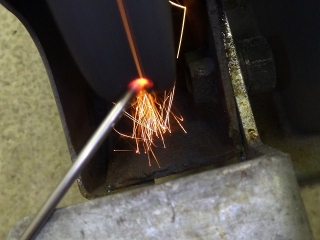
By the way, this is a DT Champion spoke.
The sparks are reddish, and the scatter pattern is different,
though it's hard to describe in writing.
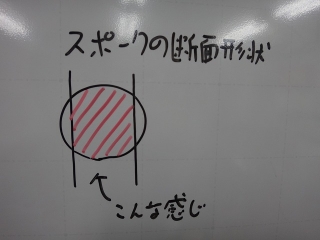
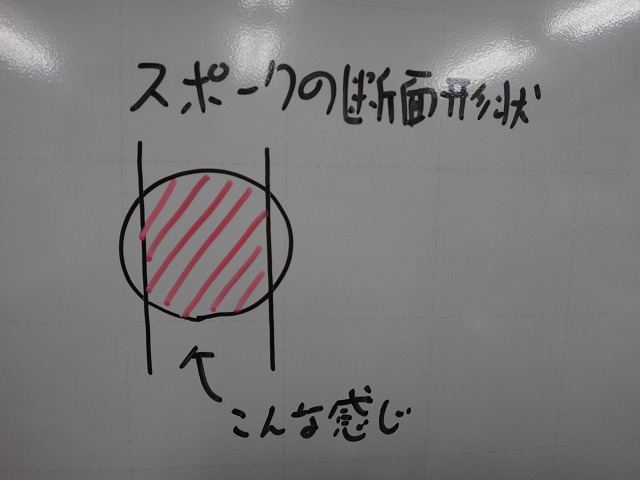
The carbon section of the spoke has a cross-sectional shape
like a circle with both sides slightly flattened,
more round spoke than aero.
I'm making a point to orient the flat side in the left-right direction
as much as possible, but what requires attention is that
the first stage tension reading changes depending on whether
the spoke tension meter probe is placed on the circular arc portions
or on the flat surfaces.
Within the range where I'm squeezing the spoke,
I don't feel much variation in deformation,
but in terms of the tension meter
there is (measured to be) significant variation.
This spoke apparently also comes in a butted spoke version,
and with butted spokes I wouldn't have to worry about spoke rotation,
but titanium butted spokes have an extremely high risk of spoke breakage at the neck,
so it would be preferable if the neck end were steel and the threaded end were titanium.
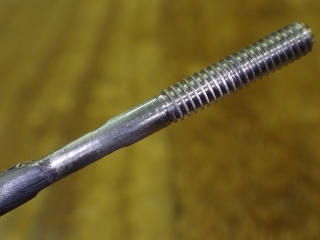
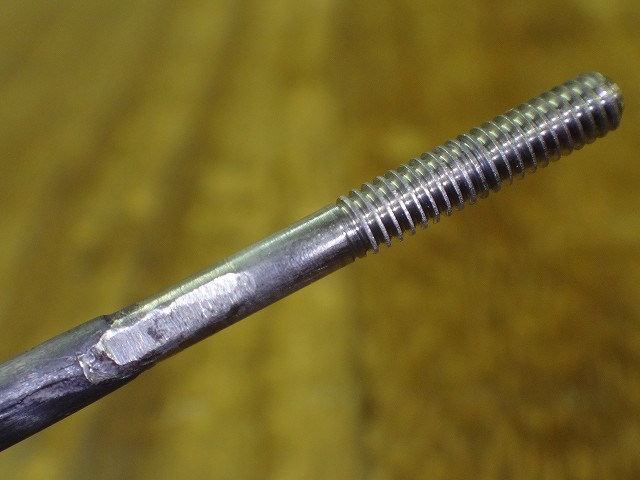
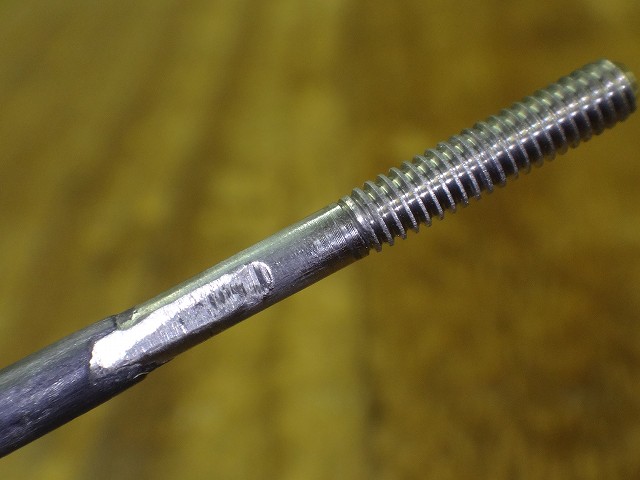
The anti-rotation stamping where you apply the tool
is not synchronized in phase with the flat surface of the spoke's carbon section.
So when you orient the spoke's flat side straight across,
the direction to apply the tool here isn't fixed, making the work awkward.
Also, not only does the stamping vary between being carbon-side
and thread-side,
but as shown in the image above,
it often differs on both ends of a single spoke.
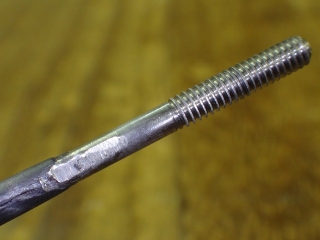
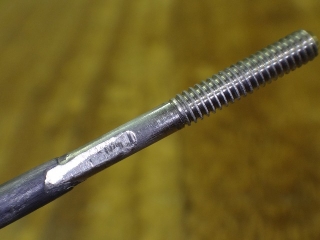
↑Like this
When the stamping leans toward the thread side,
with a 12mm-length nipple set to a spoke length where the spoke and nipple ends align,
the stamping will slightly protrude into the nipple entrance.
So building with 14mm or 16mm length nipples
would probably be difficult.
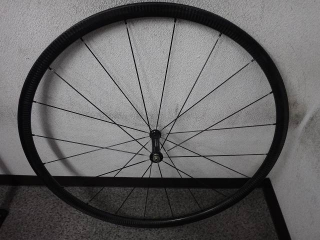
It built.
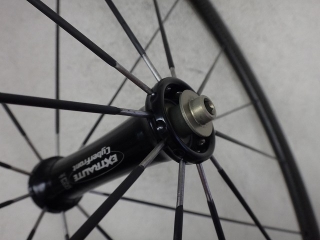
ExtraLight Cyber Front front hub, 20H
Forced radial lacing.
The hub name is just "Cyber Front" as the model designation.
Saying USB bearing would be like saying
Ultra Smooth Bearing bearing.
Strictly speaking, this straight spoke version hub is
model "Cyber Front SP",
and the butted spoke version with similar specs has SP at the end,
while butted spoke versions with a thicker hub body than SP or SL
have HD at the end.
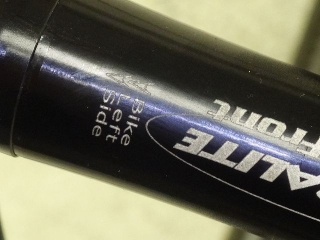
The Cyber Rear rear hub's hub body lettering is upright,
but the Cyber Front front hub's hub body
says "this is the left side," and following that instruction
makes the lettering upside down.
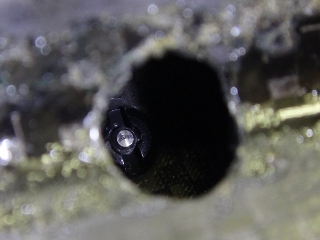
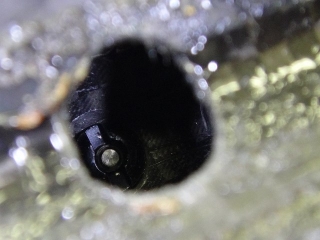
The spoke length turned out to align with the nipple end.
Worth the worry and advance verification!
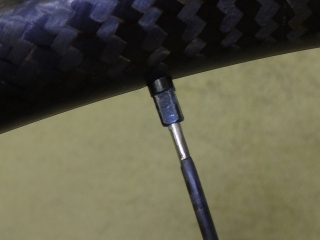
As I wrote earlier, the relationship between the stamping
and the inner end face of the nipple
roughly looks like this.
In the area shown in the image above,
the stamping is closer to the carbon end though.
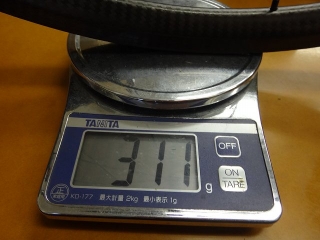
Weight.
Wheel weight, not rim weight, just to be clear.
Since there are rims lighter than this one by over 12g,
considering there might be some variation in spoke length,
a 200-gram-class front wheel is actually possible.
The "ultra-lightweight" in the title applies not just to the rim
but also to the carbon spokes.
As for the rim, I checked the spoke length the other day (→here).
The two rims weigh 430g total, but the reason I didn't weigh them individually is
not because I wanted to obscure the weight,
but because these are so-called Chinese carbon rims, so I didn't think there was much point in archiving individual measurements,
and also because rim cement bed is sitting on them,
so I can't measure the exact weight of just the rim itself.
As for the carbon spokes,
I told the customer a spoke length I was confident about
and had them purchase spokes of that length.
We also already had some carbon spokes on hand separately,
and while the front length matched my verification,
the rear length was different enough on both sides that the wheel couldn't be built,
and the newly purchased spokes also seemed to be lighter in weight,
which was another reason we went ahead and bought different ones.
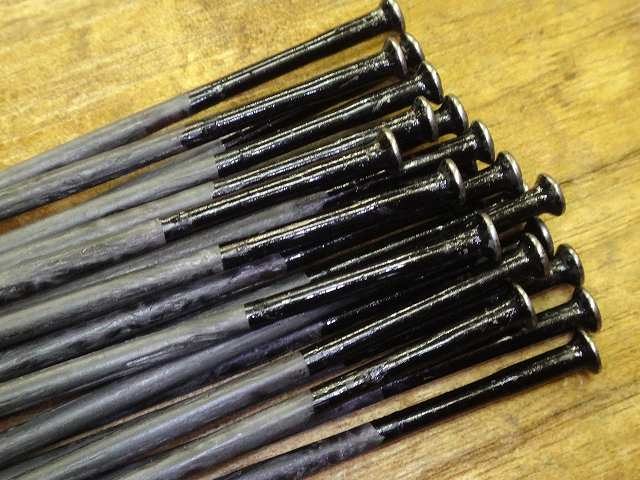
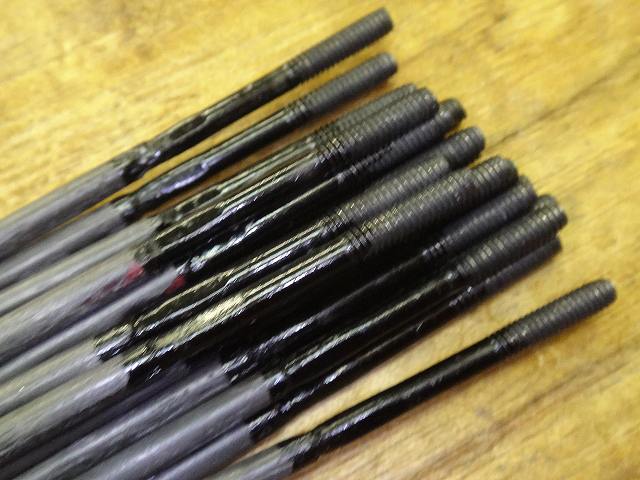
↑These are the spokes we had on hand earlier.
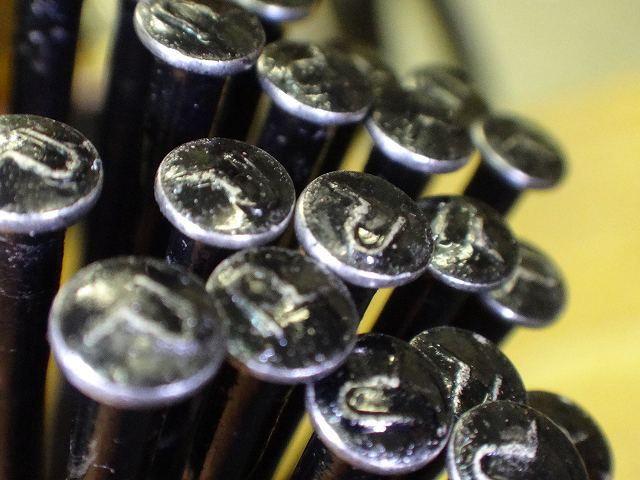
The metal parts on both ends are reused from Pillar brand spokes,
and they have anti-rotation stamping on the threaded end
and have also been painted black afterward.
The original material state might have actually been silver spokes.
Since the paint job is sloppy, the color is chipped in places.
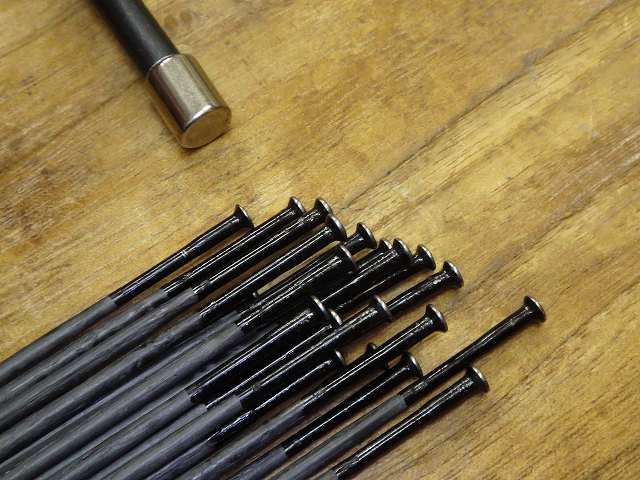
When I bring a strong magnet close to this area,
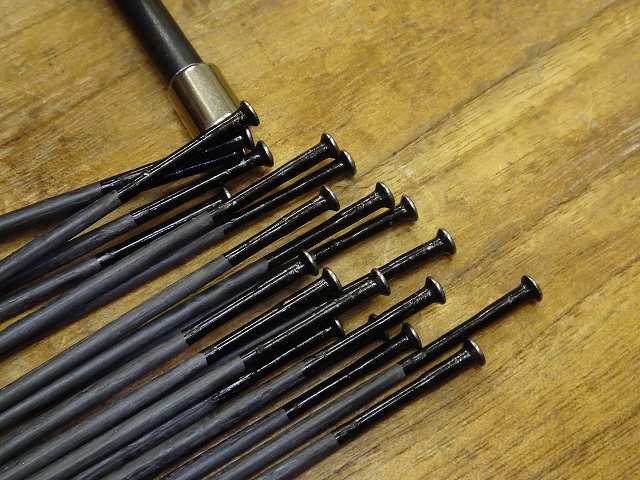
CLANG! It sticks.
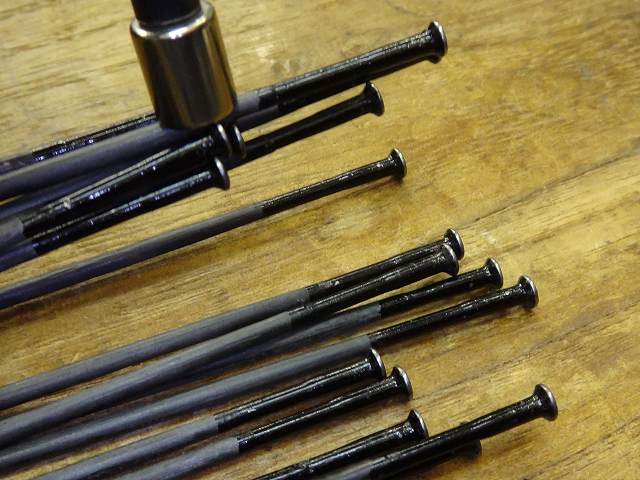
I can even pick it up with the magnet.
I won't write down the spoke length,
but when I calculated bundle weight ÷ number of spokes ÷ length ÷ 0.0257,
I got 0.40174718867...,
so the spoke density ratio is about 40%.
0.0257 is the weight per millimeter of a spoke
with 100% spoke density ratio.
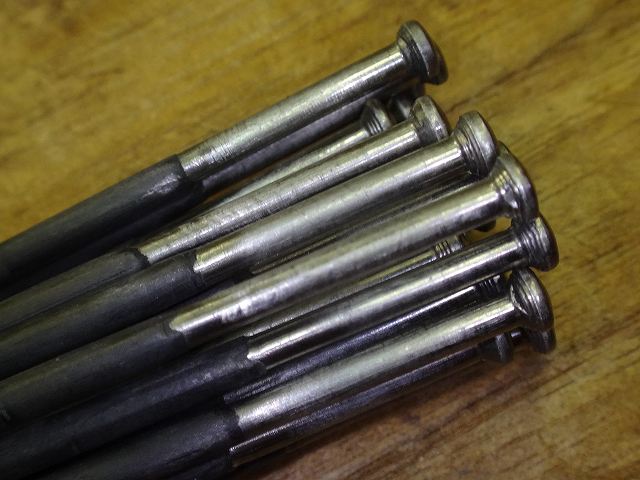
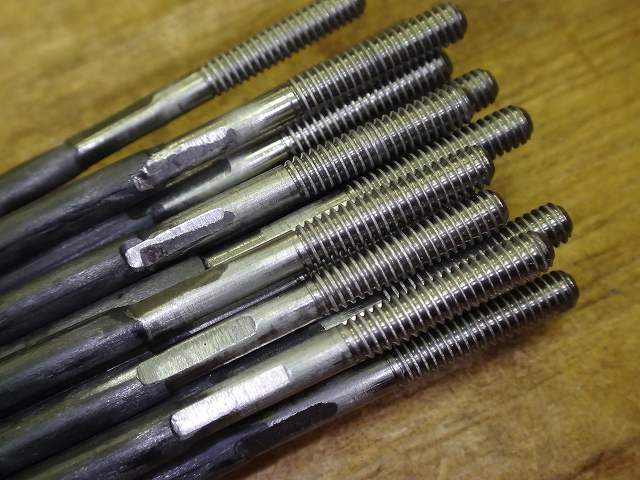
Next, here are the newly received spokes.
The metal parts on both ends are silver colored, and

the spoke head has no markings,
and the thickness of the head section is substantial.
These metal parts show absolutely no response to a magnet.
And compared to the 20 front-use Pillar-reused spokes of the same length from before,
these 22 spokes were over 7g lighter.
That's despite having 10% more spokes.
When I calculate the spoke density ratio,
the front set comes to 0.32404805...
the rear right set to 0.32457147...
and the rear left set to 0.32099206...,
so the spoke density ratio is around 32%.
Since CX-RAY is 64.5%, this is almost exactly half.
Attentive readers probably already noticed,
but the metal parts of these spokes are titanium.
If the material were steel-based,
there's no way the spoke density ratio could differ by 8%
when the metal part length is nearly identical
to the Pillar-reused spokes.
When I asked the customer, "These spoke metal parts are titanium, right?"
it turns out they didn't actually know.
They just bought them based on the lightness alone.
The manufacturer apparently didn't make a special point of advertising "It's titanium!"
In chronological order, this came later,
but there was one defective spoke each in the front set and rear right set
with threading defects, so with the customer's permission
I ground down the defective front spoke on a grinder.
Titanium sparks, unlike steel,
are white and burst with a bright sparkle.
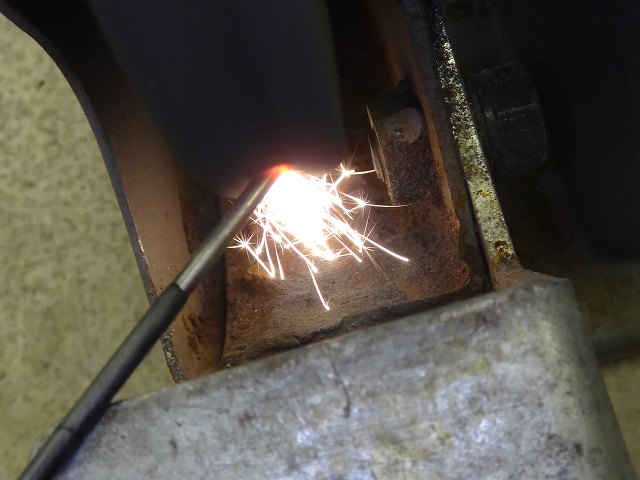
It's hard to tell in the image, but titanium confirmed.
By the way, this is a DT Champion spoke.
The sparks are reddish, and the scatter pattern is different,
though it's hard to describe in writing.
The carbon section of the spoke has a cross-sectional shape
like a circle with both sides slightly flattened,
more round spoke than aero.
I'm making a point to orient the flat side in the left-right direction
as much as possible, but what requires attention is that
the first stage tension reading changes depending on whether
the spoke tension meter probe is placed on the circular arc portions
or on the flat surfaces.
Within the range where I'm squeezing the spoke,
I don't feel much variation in deformation,
but in terms of the tension meter
there is (measured to be) significant variation.
This spoke apparently also comes in a butted spoke version,
and with butted spokes I wouldn't have to worry about spoke rotation,
but titanium butted spokes have an extremely high risk of spoke breakage at the neck,
so it would be preferable if the neck end were steel and the threaded end were titanium.

The anti-rotation stamping where you apply the tool
is not synchronized in phase with the flat surface of the spoke's carbon section.
So when you orient the spoke's flat side straight across,
the direction to apply the tool here isn't fixed, making the work awkward.
Also, not only does the stamping vary between being carbon-side
and thread-side,
but as shown in the image above,
it often differs on both ends of a single spoke.
↑Like this
When the stamping leans toward the thread side,
with a 12mm-length nipple set to a spoke length where the spoke and nipple ends align,
the stamping will slightly protrude into the nipple entrance.
So building with 14mm or 16mm length nipples
would probably be difficult.
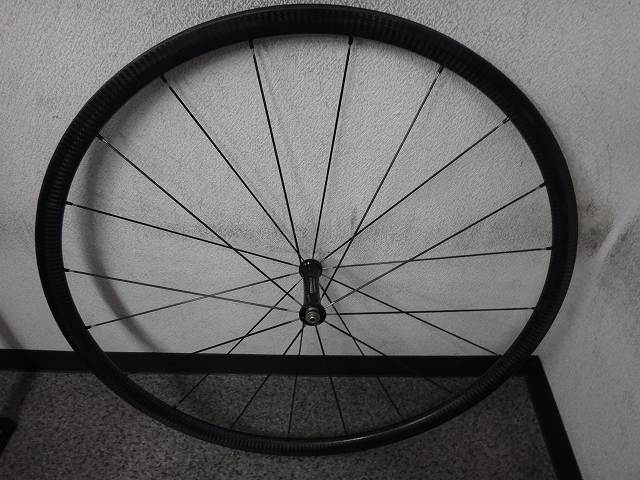
It built.
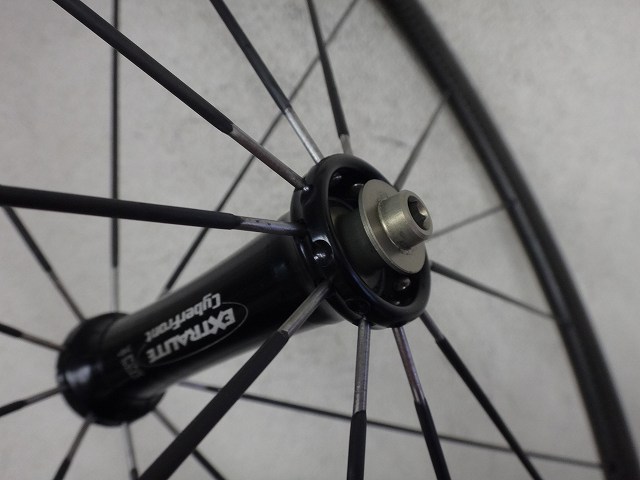
ExtraLight Cyber Front front hub, 20H
Forced radial lacing.
The hub name is just "Cyber Front" as the model designation.
Saying USB bearing would be like saying
Ultra Smooth Bearing bearing.
Strictly speaking, this straight spoke version hub is
model "Cyber Front SP",
and the butted spoke version with similar specs has SP at the end,
while butted spoke versions with a thicker hub body than SP or SL
have HD at the end.

The Cyber Rear rear hub's hub body lettering is upright,
but the Cyber Front front hub's hub body
says "this is the left side," and following that instruction
makes the lettering upside down.
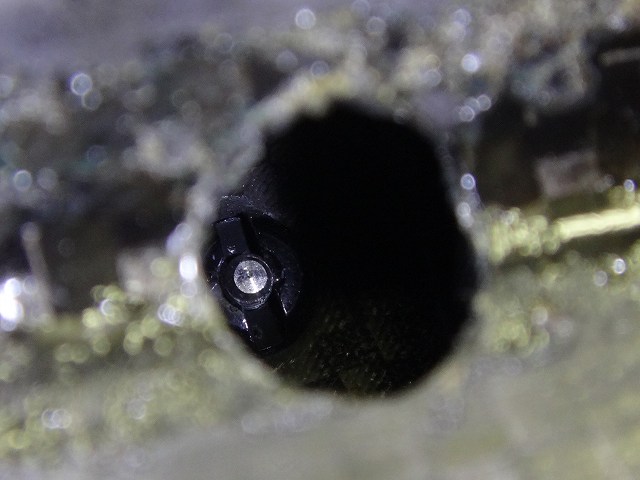

The spoke length turned out to align with the nipple end.
Worth the worry and advance verification!
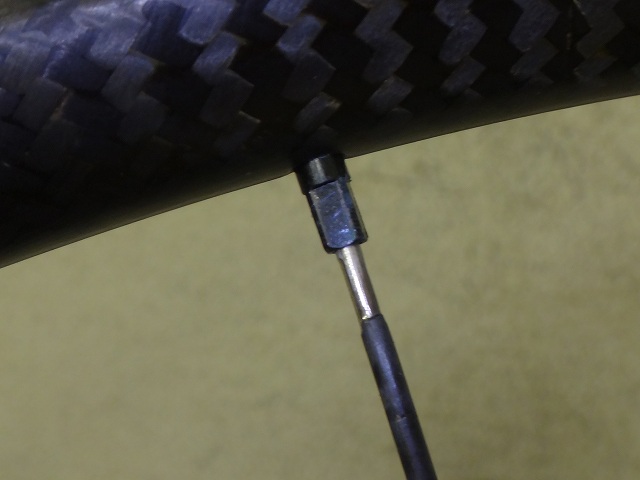
As I wrote earlier, the relationship between the stamping
and the inner end face of the nipple
roughly looks like this.
In the area shown in the image above,
the stamping is closer to the carbon end though.

Weight.
Wheel weight, not rim weight, just to be clear.
Since there are rims lighter than this one by over 12g,
considering there might be some variation in spoke length,
a 200-gram-class front wheel is actually possible.