It was fortunate that yesterday happened to be our regular closing day.
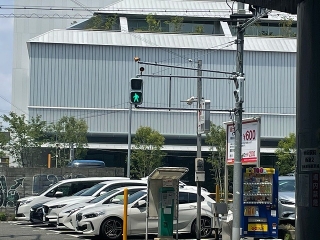
I had some business to attend to, so Imade the trip to the Shimano Bicycle Museum, which relocated from Daisen Park.
The reason for the relocation was apparently that the old museum was getting cramped.
In fact, the materials state that the new one is roughly 3.5 times larger.
What interests me about this location is that before the museum was built, the Hotel Daiichi Tokyo Sakai stood here.
But going back further still, this site was once the headquarters of Maeda Kogyo (SunTour's parent company).
The sense of building your own museum on the former site of a defunct competitor is truly impressive.
It's something I'd like to emulate myself.
But let's not call the new Shimano Bicycle Museum the "SunTour mausoleum" or anything like that...
That's our agreement!
Note: The filename of the landscape image in this article happens to be "mausoleum," but you shouldn't look up what that means.
The business I had was attending a presentation (by reservation) on the history of Japanese rear derailleurs.
The presenter was an independent researcher, not a Shimano employee.
I can't go into the details of the presentation here, but it was extremely valuable.
One thing I'll mention is that it was great how the presentation repeatedly emphasized that SunTour's patented slant-parallelogram mechanism was a tremendous breakthrough when viewed in the context of rear derailleur history overall
(which I think is a fair assessment).
The Dura-Ace EX used stepless manual shifting via W-lever and had a 7-speed sprocket, but with the subsequent 7400-series Dura-Ace, while an indexing mechanism was added, for reliability reasons the sprocket count was actually downtuned to 6-speed.
Every time a component gets a full model change and gains more cogs, there's always someone saying "do we really need more sprocket teeth than this?" But the response to that is typically "cog count has only ever increased, never decreased."
This 7-speed to 6-speed shift was one of the rare exceptions to that rule.
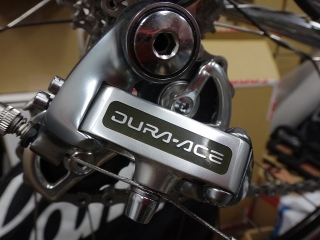
↑This isn't an RD-7400, but rather the RD-7402, which adopted the slant-parallelogram mechanism after SunTour's patent expired.
The cable fixing nut is positioned outside the parallelogram, though it might be moved to the inside later.
Regarding the pulleys being from the 7900 10-speed and the cable attachment point being incorrect
(→here).
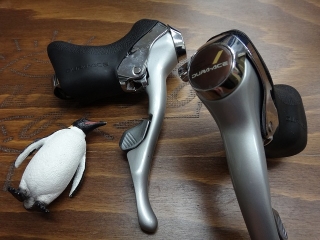
↑This is the world's first STI lever, the ST-7400.
It's 8-speed, but for this to be released as a proper product, it was judged essential to pair it with a rear derailleur using the slant-parallelogram mechanism.
I had thought the RD-7402 was Shimano's first slant-parallelogram rear derailleur, but I learned at today's presentation for the first time that while it was the first for Dura-Ace, it wasn't Shimano's first overall.
I won't go into that detail since it touches on the presentation content.
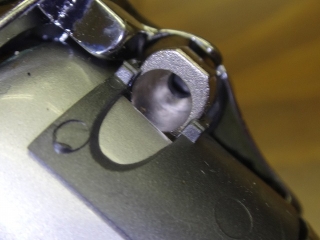
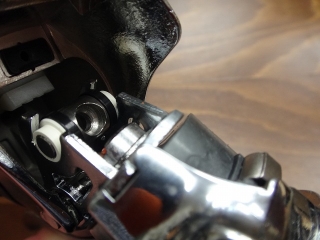
There are no traces of cable routing. This is an unused example.

This is a photo I took myself.
The new Shimano Bicycle Museum is visible on the left.
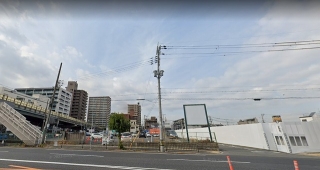
From here on, these are excerpts from Google Maps showing the period when the museum construction site was a vacant lot.
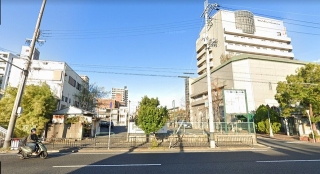
Going back further, the hotel was still standing, but what I want to highlight is the adjacent parking lot.
This was the hotel's parking lot at the time (I'm not sure if it's the museum's parking lot now), and notice the tile-roofed shed behind the concrete blocks near where the pedestrian bridge steps down—
this was used as the attendant's booth for the hotel parking lot, but
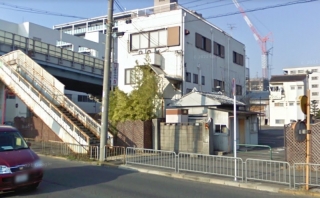
↑This was originally the guard house for Maeda Kogyo.
As the last remaining structure attesting to its former glory, I thought it might have been relocated inside the museum, but that wasn't the case.

I had some business to attend to, so I
The reason for the relocation was apparently that the old museum was getting cramped.
In fact, the materials state that the new one is roughly 3.5 times larger.
What interests me about this location is that before the museum was built, the Hotel Daiichi Tokyo Sakai stood here.
But going back further still, this site was once the headquarters of Maeda Kogyo (SunTour's parent company).
The sense of building your own museum on the former site of a defunct competitor is truly impressive.
It's something I'd like to emulate myself.
But let's not call the new Shimano Bicycle Museum the "SunTour mausoleum" or anything like that...
That's our agreement!
Note: The filename of the landscape image in this article happens to be "mausoleum," but you shouldn't look up what that means.
The business I had was attending a presentation (by reservation) on the history of Japanese rear derailleurs.
The presenter was an independent researcher, not a Shimano employee.
I can't go into the details of the presentation here, but it was extremely valuable.
One thing I'll mention is that it was great how the presentation repeatedly emphasized that SunTour's patented slant-parallelogram mechanism was a tremendous breakthrough when viewed in the context of rear derailleur history overall
(which I think is a fair assessment).
The Dura-Ace EX used stepless manual shifting via W-lever and had a 7-speed sprocket, but with the subsequent 7400-series Dura-Ace, while an indexing mechanism was added, for reliability reasons the sprocket count was actually downtuned to 6-speed.
Every time a component gets a full model change and gains more cogs, there's always someone saying "do we really need more sprocket teeth than this?" But the response to that is typically "cog count has only ever increased, never decreased."
This 7-speed to 6-speed shift was one of the rare exceptions to that rule.
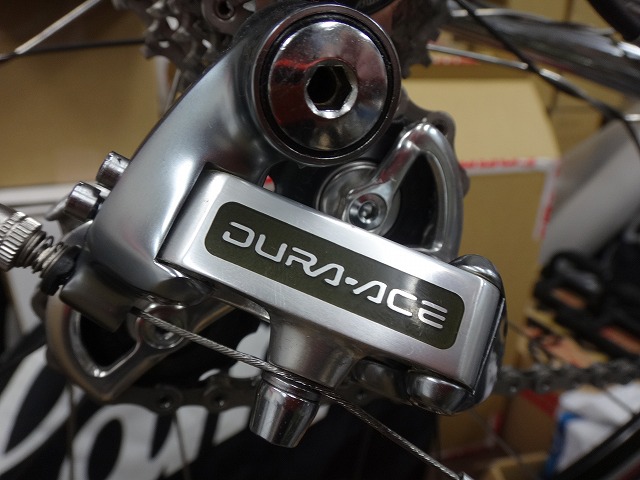
↑This isn't an RD-7400, but rather the RD-7402, which adopted the slant-parallelogram mechanism after SunTour's patent expired.
The cable fixing nut is positioned outside the parallelogram, though it might be moved to the inside later.
Regarding the pulleys being from the 7900 10-speed and the cable attachment point being incorrect
(→here).
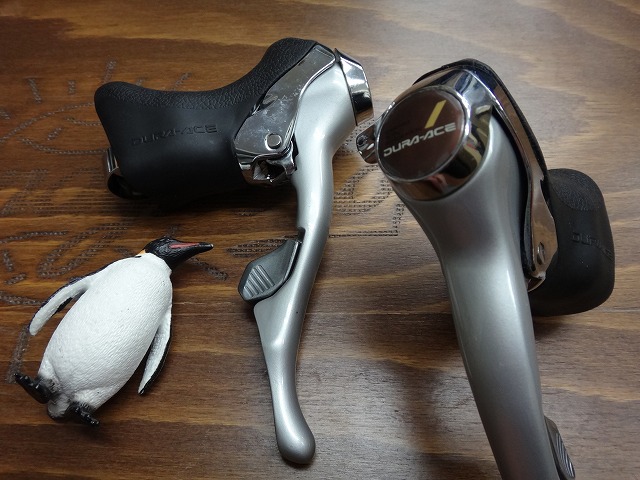
↑This is the world's first STI lever, the ST-7400.
It's 8-speed, but for this to be released as a proper product, it was judged essential to pair it with a rear derailleur using the slant-parallelogram mechanism.
I had thought the RD-7402 was Shimano's first slant-parallelogram rear derailleur, but I learned at today's presentation for the first time that while it was the first for Dura-Ace, it wasn't Shimano's first overall.
I won't go into that detail since it touches on the presentation content.
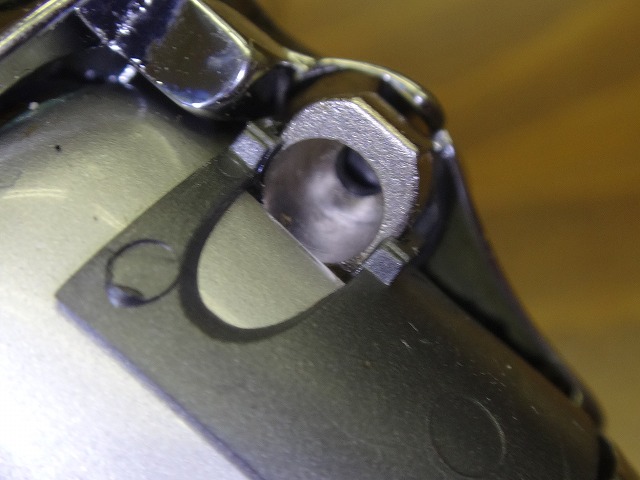
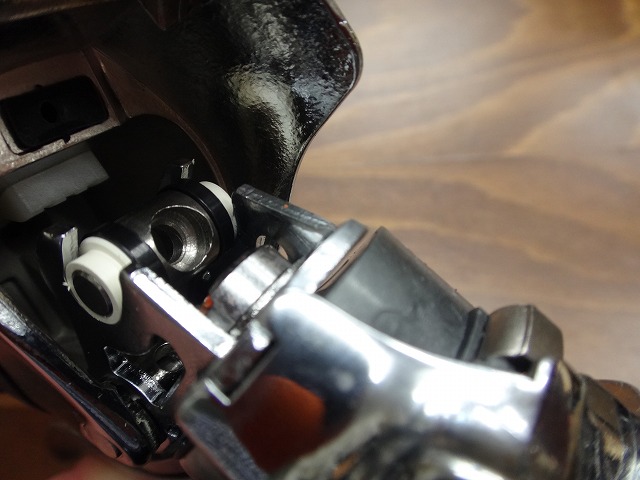
There are no traces of cable routing. This is an unused example.
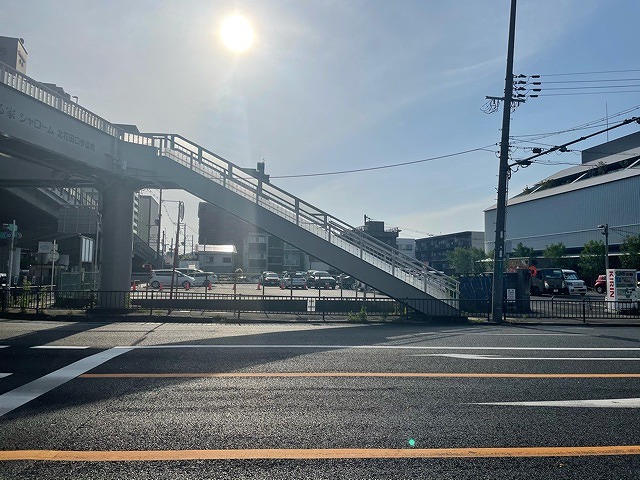
This is a photo I took myself.
The new Shimano Bicycle Museum is visible on the left.
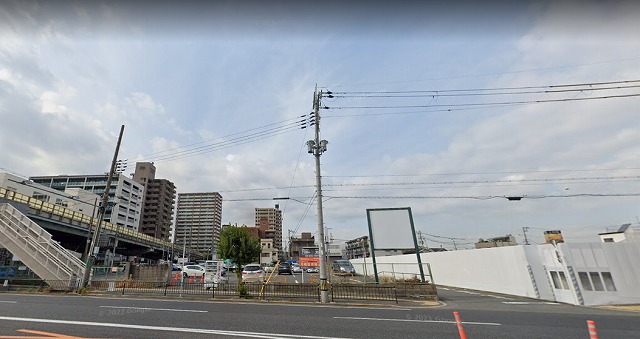
From here on, these are excerpts from Google Maps showing the period when the museum construction site was a vacant lot.
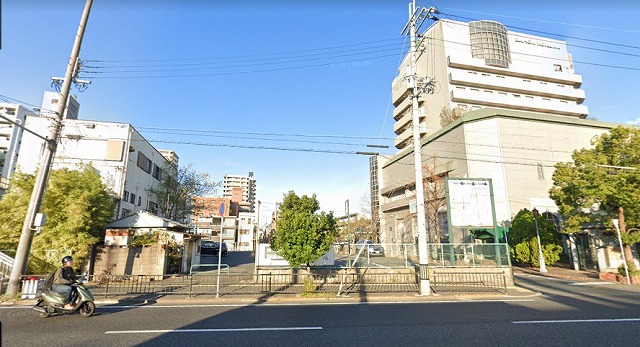
Going back further, the hotel was still standing, but what I want to highlight is the adjacent parking lot.
This was the hotel's parking lot at the time (I'm not sure if it's the museum's parking lot now), and notice the tile-roofed shed behind the concrete blocks near where the pedestrian bridge steps down—
this was used as the attendant's booth for the hotel parking lot, but

↑This was originally the guard house for Maeda Kogyo.
As the last remaining structure attesting to its former glory, I thought it might have been relocated inside the museum, but that wasn't the case.