Regarding yesterday's GIANT SLR1 wheel,
I wrote that DBL—Dynamic Balanced Racing spec—was "not" present,
but there was some error in that statement.
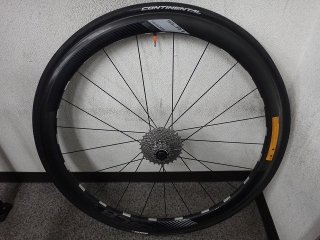
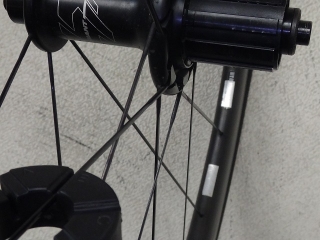
↑This is a GIANT SLR1 I'm currently working on separately.
The rim is the same as yesterday's SLR1, and the era and cosmetics match.
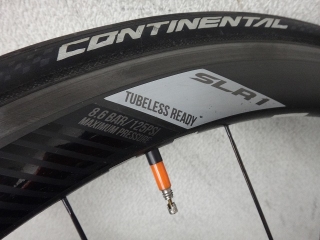
The tube is a Tubolito, and
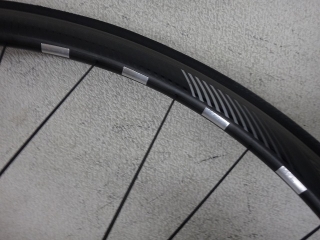
thin weights are carefully applied, which differs from yesterday's wheel.
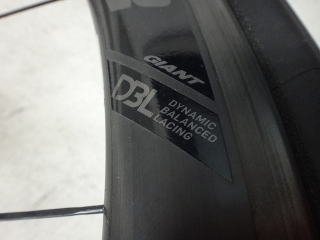
Now, there's a DBL marking on the rim,
and the same was true for yesterday's wheel's rim.
As I wrote yesterday, DBL refers to
using two spokes in the final crossover on the freehub side
with different spoke gauges—an asymmetric build with different flange diameters on one side.
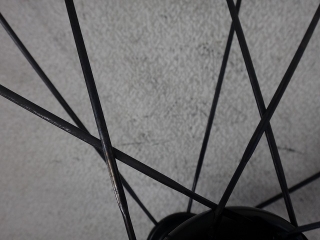
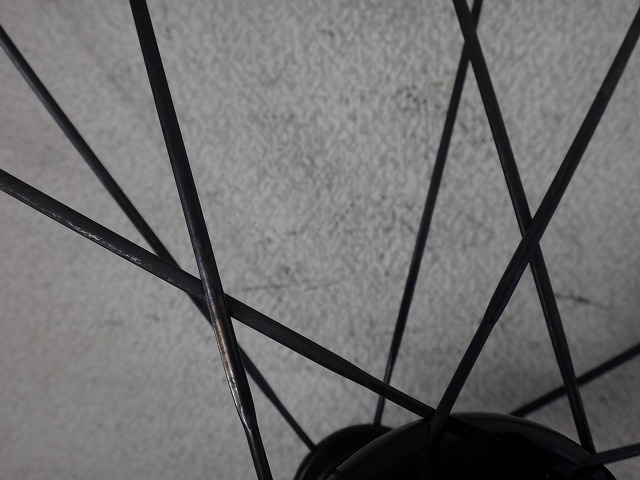
↑This is the SLR1 from yesterday's article,
and the two spokes in the final crossover were the same diameter.
So it's not DBL.
Since I was questioning whether it was DBL in the first place,
I wouldn't overlook that.
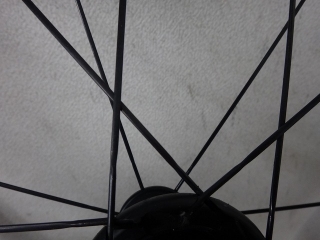
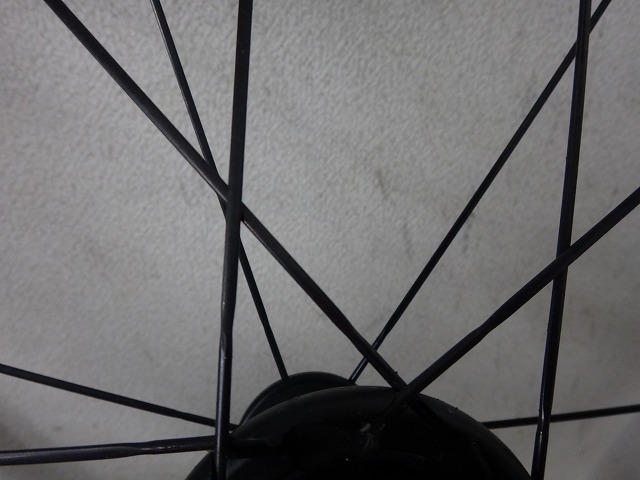
↑This is today's SLR1, photographed as similarly as possible.
The two spokes in the final crossover are different diameters,
but the difference is in spoke thickness, so there's no width difference when viewed from the side.
However, compared to yesterday's SLR1,
yesterday's spoke width is noticeably wider.

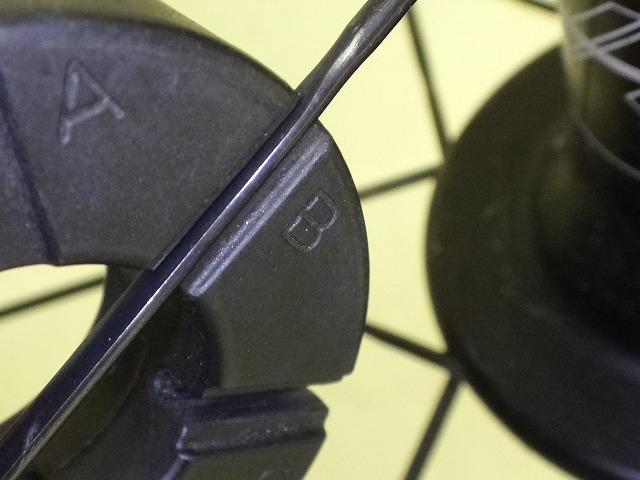
I applied the B groove from a Campagnolo/Fulcrum spoke holder tool
to the non-drive side radial spokes of the 2:1 build.

The spoke doesn't go deep enough into the B groove.
This B groove fits perfectly with Sapim CX-RAY spokes
and DT Aerolite spokes.
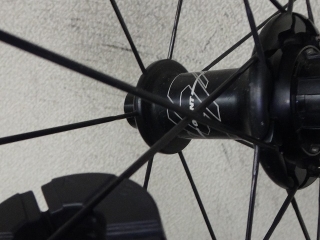
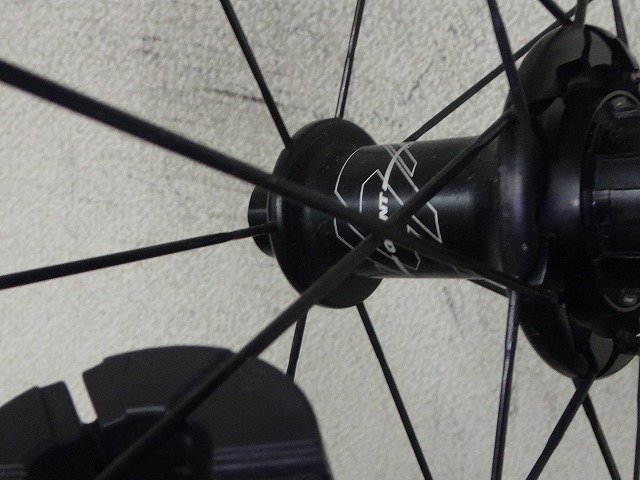
Next, with the spokes on the freehub-side porcupine direction,
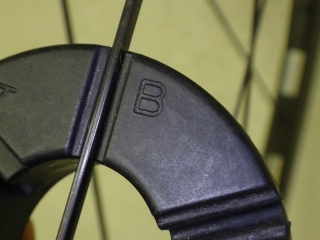
they were the same dimensions as the non-drive side spokes,
so the result was identical.
Finally, with the spokes on the freehub-side anti-porcupine direction,
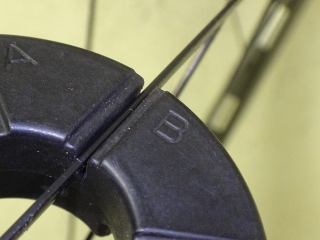
they go in deep.
What I wrote in yesterday's article—
"In the case of aero spokes, two types of spokes are used in three locations"—
refers to this.
So regarding yesterday's SLR1, if "all three locations have same-diameter spokes yet
the rim has a DBL marking, isn't that wrong?", well,
that's actually not wrong either.
DBL comes in two types: "spoke DBL" and "hub DBL,"
and yesterday's SLR1 did incorporate hub DBL at least.
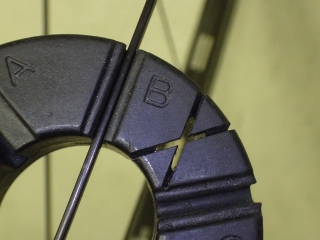
Before that, one more thing.
This is a tool I made myself, with the B groove matched to the width of Sapim CX-Sprint
or DT Aerolite Comp spokes.
The spoke I'm holding is from today's SLR1,
on the freehub-side porcupine direction.
The X-notch is a mark for identification.
Yesterday's SLR1 had spokes with thickness matching this tool
but with slightly wider width, and all three locations were the same.
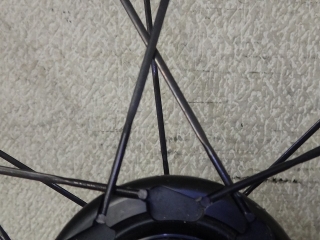
Hub-side DBL means that the spoke length
differs between porcupine-direction spokes and anti-porcupine-direction spokes. Unnecessary complications...
This is because "the flange holes for the two spokes in the final crossover
have high-low flanges on one side,"
but the amount is small, so in terms of impact on wheel characteristics,
it doesn't have as much effect as changing spoke gauge distribution.
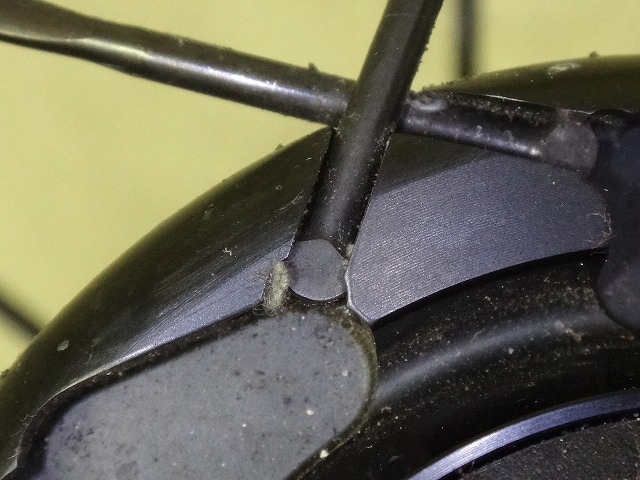
I positioned my camera with its body against the hub's right end
to get the spoke head roughly in the center of the image...
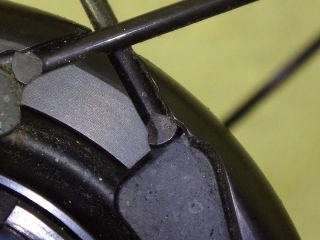
↑This is a porcupine-direction spoke head.
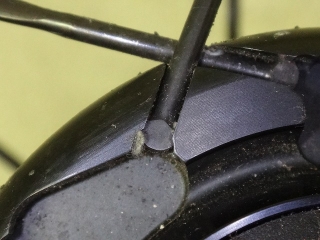
↑Next, the anti-porcupine direction.
You can see the positional relationship between the spoke head and flange is different.
Today's SLR1 was brought to me by a customer who said,
"It doesn't quite rub on the tire, but something feels off about how it rides.
I'd like you to fix it—whatever method you think best."
Since it also has spoke DBL,
when you squeeze the freehub-side crossover,
the anti-porcupine-direction spokes show more deformation—
a difference anyone can easily observe.
I suspect this is what's creating the noticeably poor feel when riding.
Just like truing, if a difference is clearly felt by hand when squeezing,
there's no way it won't come through indirectly in the pedal stroke feel.
As I wrote in yesterday's article, I've also experimented with
spoke arrangements equivalent to spoke DBL in hand-built wheels.
If they're considered marketable, I incorporate them into Nomunolab wheels.
What's nasty about GIANT is that the rim (cosmetically) and hub are completely identical,
but they quietly change just the spokes.
From now on, whenever I see an SLR1 with this cosmetic rim, I'll need to
verify whether spoke DBL is present
(well, I suspect all GIANT wheels of DBL anyway).
Speaking of which, GIANT also released a version nearly identical to DT's screw-in skewer
(with a different shape in the can section opposite the lever
relative to frame and fork cutouts),
but since their complete-wheel hubs have bearing sizes as small as Roval's,
the bearings fail immediately with just a bit of tightening force,
so they quietly discontinued the 100/130mm road versions.
They kept only the 135mm rear because it was for the transitional period MTB
or cyclocross with 100×15mm through-axle fronts and 135mm quick-release rears.
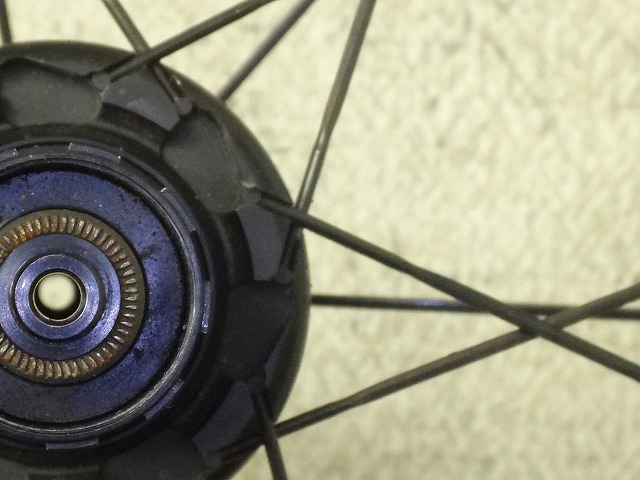
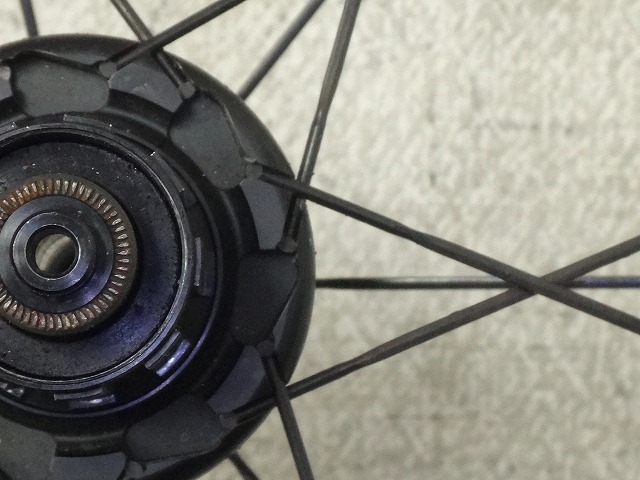
The SLR1's rear wheel uses a 2:1 Ж (zhe-shaped) build, so normally when viewed from directly to the side,
the non-drive-side radial spoke passes through the intersection point of the final freehub-side crossover.
With DBL, the intersection point itself is twisted, so it doesn't pass through.
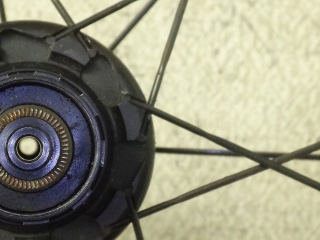
You can see this both with the naked eye (one eye) and through a camera lens,
but from an angle where you can see straight through the hub shaft's hollow,
you can't see a clean Ж build.
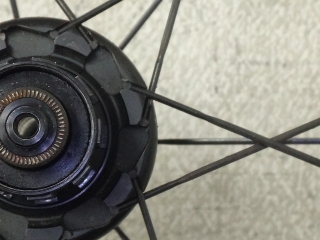
If you angle it to see a clean Ж build,
you can't see through the hub shaft's hollow.
For today's SLR1, since hub DBL can't be helped, I'll probably do
the usual fix for 2:1 builds: make the freehub side
left-right same diameter and opposite-diameter asymmetric
with smaller spoke gauge than the non-drive side, then true.
The hub DBL's impact isn't that large, so on
yesterday's SLR1, probably due to the larger spoke gauge distribution,
I didn't feel a difference when squeezing the final crossover.
I'll correct parts of yesterday's article and add a cross-link to this post.
Regarding yesterday's SLR1 (→here)
I wrote that DBL—Dynamic Balanced Racing spec—was "not" present,
but there was some error in that statement.
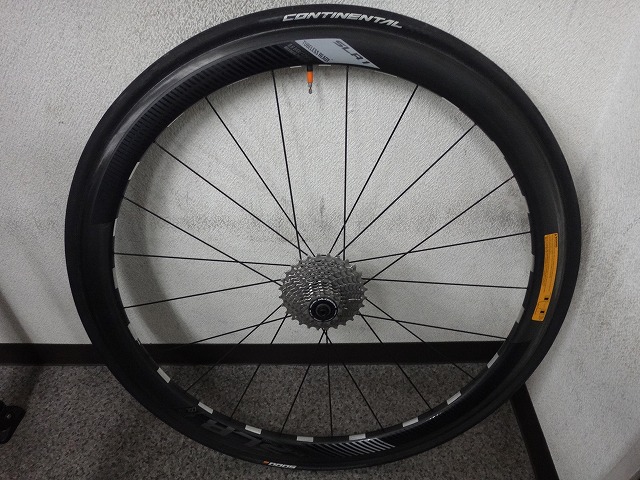
↑This is a GIANT SLR1 I'm currently working on separately.
The rim is the same as yesterday's SLR1, and the era and cosmetics match.
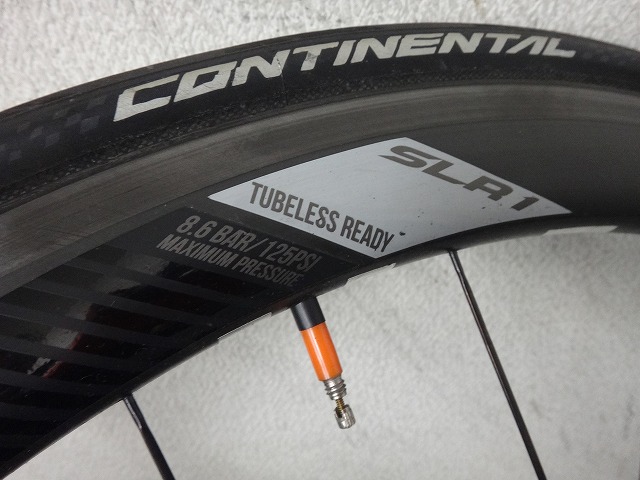
The tube is a Tubolito, and
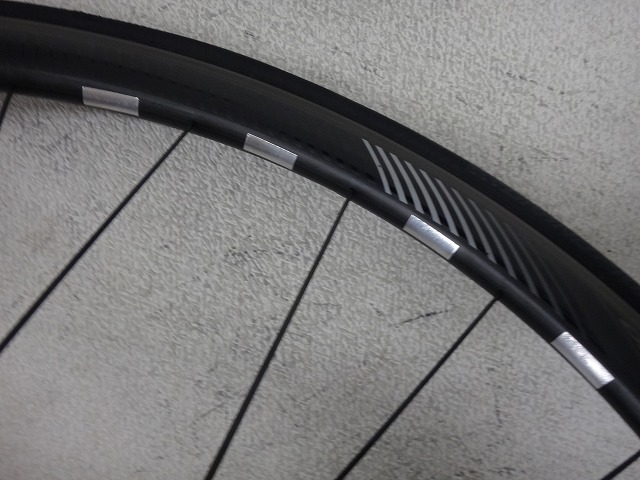
thin weights are carefully applied, which differs from yesterday's wheel.
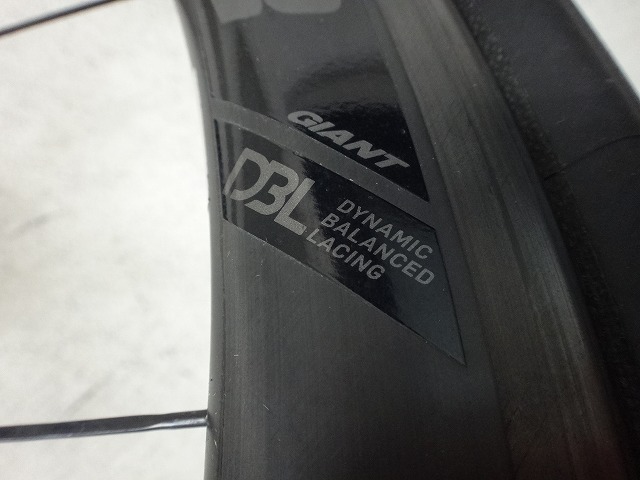
Now, there's a DBL marking on the rim,
and the same was true for yesterday's wheel's rim.
As I wrote yesterday, DBL refers to
using two spokes in the final crossover on the freehub side
with different spoke gauges—an asymmetric build with different flange diameters on one side.
↑This is the SLR1 from yesterday's article,
and the two spokes in the final crossover were the same diameter.
So it's not DBL.
Since I was questioning whether it was DBL in the first place,
I wouldn't overlook that.
↑This is today's SLR1, photographed as similarly as possible.
The two spokes in the final crossover are different diameters,
but the difference is in spoke thickness, so there's no width difference when viewed from the side.
However, compared to yesterday's SLR1,
yesterday's spoke width is noticeably wider.

I applied the B groove from a Campagnolo/Fulcrum spoke holder tool
to the non-drive side radial spokes of the 2:1 build.
The spoke doesn't go deep enough into the B groove.
This B groove fits perfectly with Sapim CX-RAY spokes
and DT Aerolite spokes.
Next, with the spokes on the freehub-side porcupine direction,
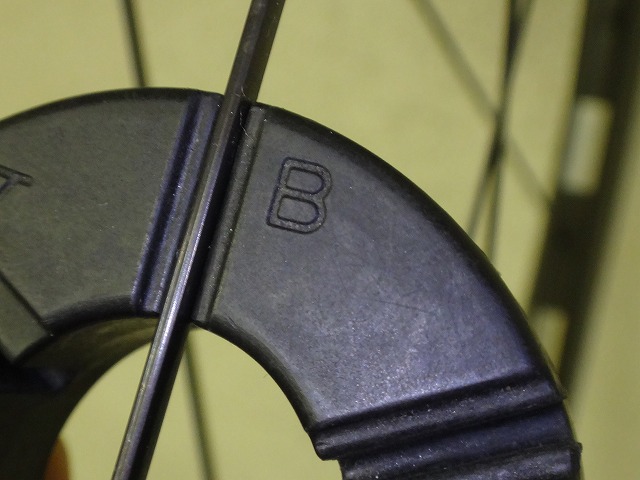
they were the same dimensions as the non-drive side spokes,
so the result was identical.
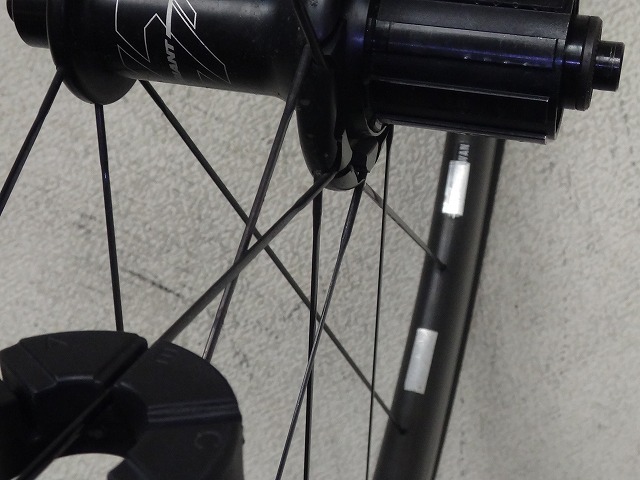
Finally, with the spokes on the freehub-side anti-porcupine direction,

they go in deep.
What I wrote in yesterday's article—
"In the case of aero spokes, two types of spokes are used in three locations"—
refers to this.
So regarding yesterday's SLR1, if "all three locations have same-diameter spokes yet
the rim has a DBL marking, isn't that wrong?", well,
that's actually not wrong either.
DBL comes in two types: "spoke DBL" and "hub DBL,"
and yesterday's SLR1 did incorporate hub DBL at least.
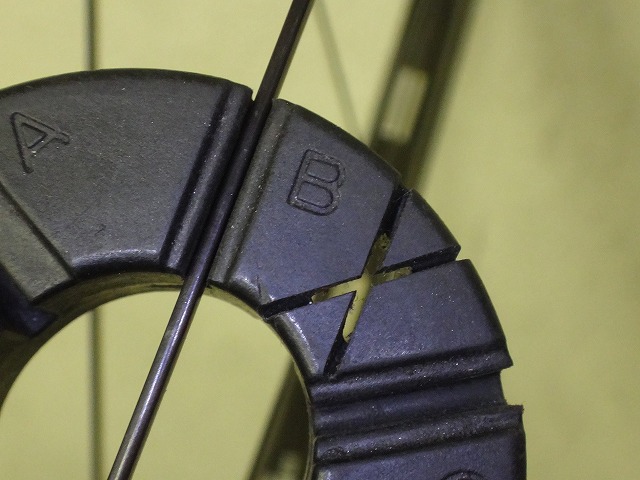
Before that, one more thing.
This is a tool I made myself, with the B groove matched to the width of Sapim CX-Sprint
or DT Aerolite Comp spokes.
The spoke I'm holding is from today's SLR1,
on the freehub-side porcupine direction.
The X-notch is a mark for identification.
Yesterday's SLR1 had spokes with thickness matching this tool
but with slightly wider width, and all three locations were the same.
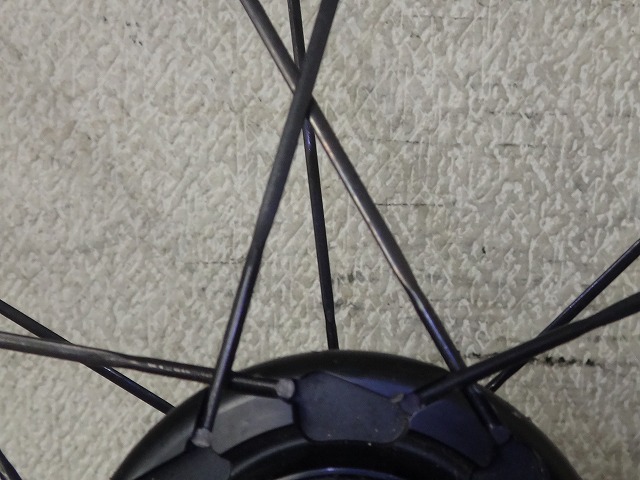
Hub-side DBL means that the spoke length
differs between porcupine-direction spokes and anti-porcupine-direction spokes. Unnecessary complications...
This is because "the flange holes for the two spokes in the final crossover
have high-low flanges on one side,"
but the amount is small, so in terms of impact on wheel characteristics,
it doesn't have as much effect as changing spoke gauge distribution.
I positioned my camera with its body against the hub's right end
to get the spoke head roughly in the center of the image...

↑This is a porcupine-direction spoke head.
↑Next, the anti-porcupine direction.
You can see the positional relationship between the spoke head and flange is different.
Today's SLR1 was brought to me by a customer who said,
"It doesn't quite rub on the tire, but something feels off about how it rides.
I'd like you to fix it—whatever method you think best."
Since it also has spoke DBL,
when you squeeze the freehub-side crossover,
the anti-porcupine-direction spokes show more deformation—
a difference anyone can easily observe.
I suspect this is what's creating the noticeably poor feel when riding.
Just like truing, if a difference is clearly felt by hand when squeezing,
there's no way it won't come through indirectly in the pedal stroke feel.
As I wrote in yesterday's article, I've also experimented with
spoke arrangements equivalent to spoke DBL in hand-built wheels.
If they're considered marketable, I incorporate them into Nomunolab wheels.
What's nasty about GIANT is that the rim (cosmetically) and hub are completely identical,
but they quietly change just the spokes.
From now on, whenever I see an SLR1 with this cosmetic rim, I'll need to
verify whether spoke DBL is present
(well, I suspect all GIANT wheels of DBL anyway).
Speaking of which, GIANT also released a version nearly identical to DT's screw-in skewer
(with a different shape in the can section opposite the lever
relative to frame and fork cutouts),
but since their complete-wheel hubs have bearing sizes as small as Roval's,
the bearings fail immediately with just a bit of tightening force,
so they quietly discontinued the 100/130mm road versions.
They kept only the 135mm rear because it was for the transitional period MTB
or cyclocross with 100×15mm through-axle fronts and 135mm quick-release rears.
The SLR1's rear wheel uses a 2:1 Ж (zhe-shaped) build, so normally when viewed from directly to the side,
the non-drive-side radial spoke passes through the intersection point of the final freehub-side crossover.
With DBL, the intersection point itself is twisted, so it doesn't pass through.
You can see this both with the naked eye (one eye) and through a camera lens,
but from an angle where you can see straight through the hub shaft's hollow,
you can't see a clean Ж build.
If you angle it to see a clean Ж build,
you can't see through the hub shaft's hollow.
For today's SLR1, since hub DBL can't be helped, I'll probably do
the usual fix for 2:1 builds: make the freehub side
left-right same diameter and opposite-diameter asymmetric
with smaller spoke gauge than the non-drive side, then true.
The hub DBL's impact isn't that large, so on
yesterday's SLR1, probably due to the larger spoke gauge distribution,
I didn't feel a difference when squeezing the final crossover.
I'll correct parts of yesterday's article and add a cross-link to this post.
Regarding yesterday's SLR1 (→here)