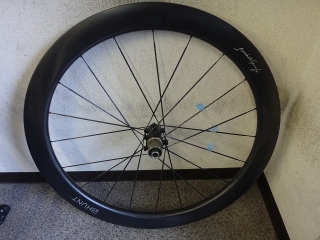
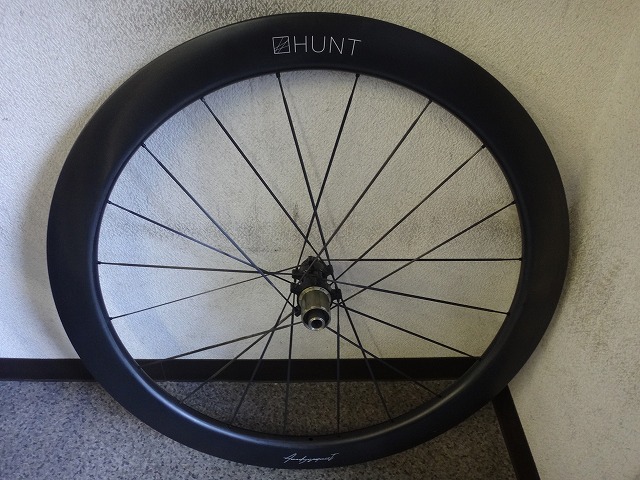
A customer brought in a HUNT wheel with carbon spokes for repair.
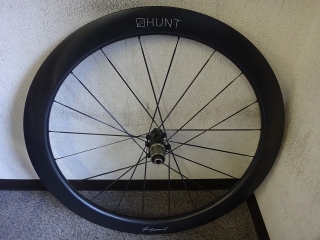
Starting with the rear wheel.
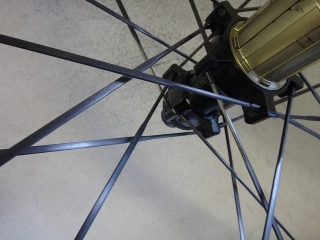
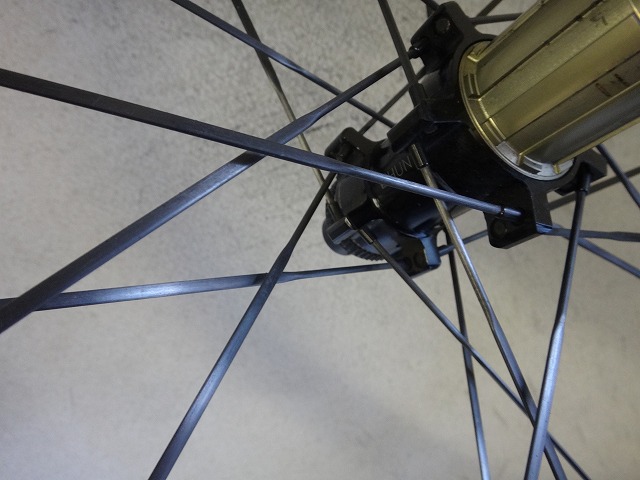
This is the carbon spoke model.
About three months ago, I remember when this customer called about repairs for their HUNT wheel,
before they even mentioned it, I asked,
"Is this a carbon spoke wheel?"
At that time they asked if it could be repaired with steel spokes,
but I declined.
Before this wheel, I had inspected a HUNT carbon spoke wheel,
and I knew the rim side uses generic parts, so
if we could work something out with the spoke head side, it wouldn't be impossible
to partially substitute steel spokes and make the wheel look presentable,
but mixing spokes with different specific gravities on one side of a wheel
creates serious problems, so I don't do that.
I only replied that if they sourced the carbon spokes themselves,
the work itself could be done.
I really dislike "unrepairable wheels," aside from disc wheels, deep-section wheels, and lightweight designs
where there are no adjustment elements for truing.
This isn't just about whether the structure can be repaired—
it's also important whether parts are supplied quickly and for a long period.
Well, since we didn't sell this wheel and spare spokes aren't readily available,
there's not much else to say about it—or so I thought,
but the other day they got hold of spokes and brought the wheel in along with them.
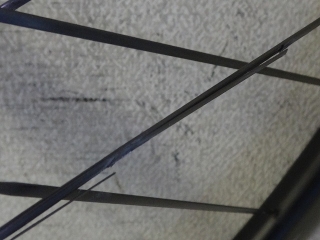
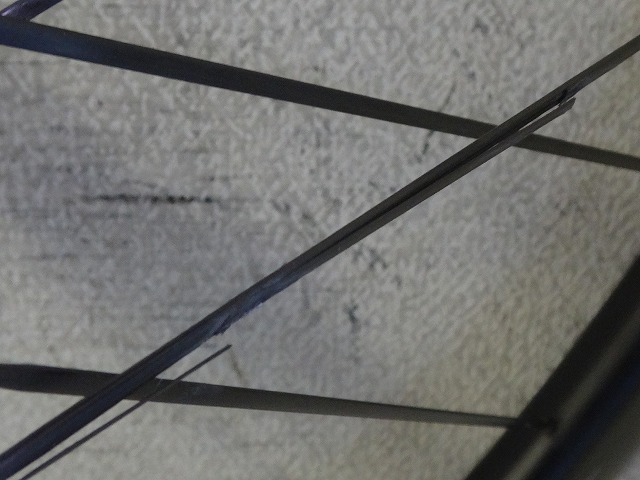
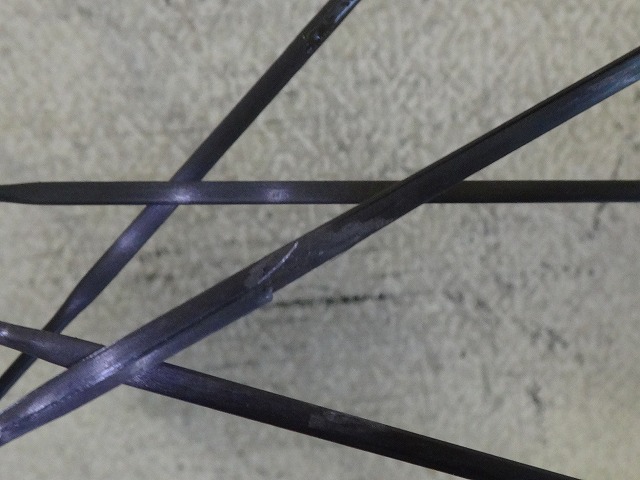
There's one spoke that's clearly splintered.
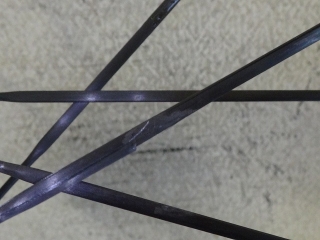
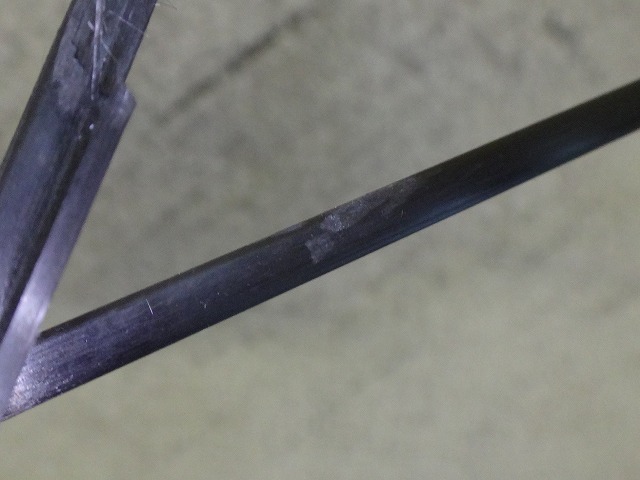
There's a spoke that crosses over with that splintered spoke, and it has
a sharp bit of damage on it,
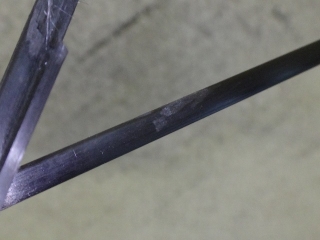
↑this one also needs replacing.
These two are on the non-freewheel side,
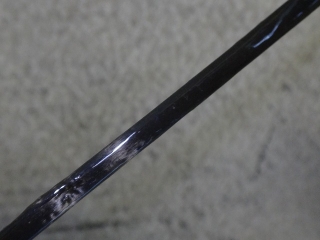
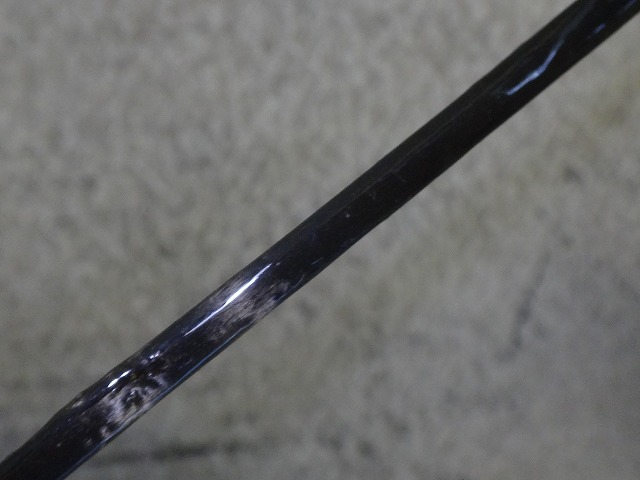
and on the freewheel side, the customer had filled a splintered spoke with adhesive—
this one also needs replacing.
The manufacturer site mentions UD (unidirectional) carbon spokes,
which means carbon fibers only running lengthwise. When it comes to
unidirectional carbon spokes, Mavic's original R-SYS had problems in early batches,
and the front wheels—which had carbon spokes on both sides—were recalled.
They become all shattered like bamboo or vinyl rope,
with splintering or cracking occurring.
For more on the horror of UD carbon spokes,
(→check here)for the bonus section at the end.
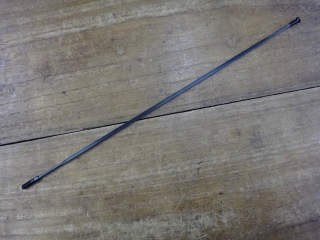
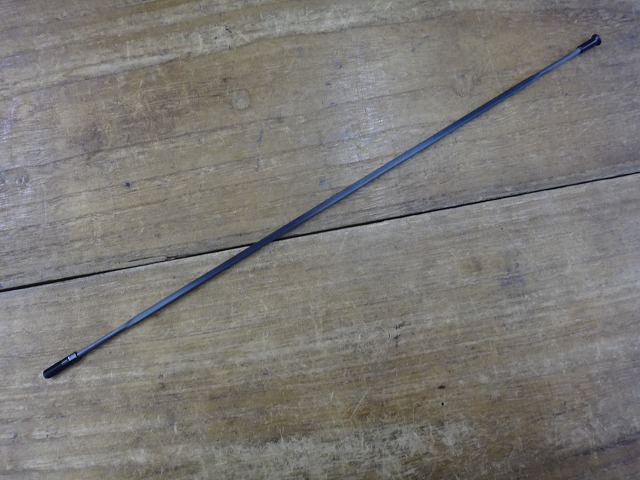
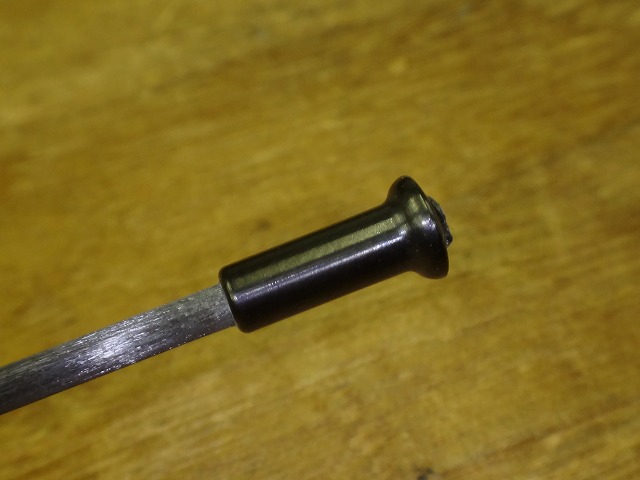
This is a HUNT carbon spoke.
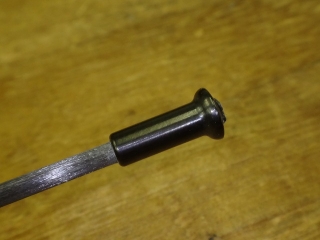
It's constructed with aluminum glued to both sides,
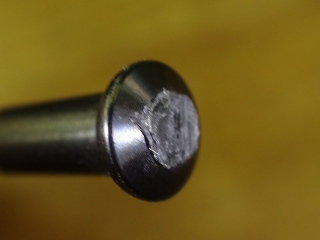
and on the spoke head side, the aluminum piece
goes all the way through rather than butting against it.
This might be to make it visually easy to tell if the adhesive bond hasn't come loose.
Since all of them were like this, I think it's intentional, but
the end of the carbon is crushed and flares out like a driven stake,
which appears to serve as insurance in case the bond fails.
Not HUNT, but I've previously inspected a Chinese-made carbon spoke wheel
that had spokes with extremely low spoke tension mixed in,
and the loss of tension wasn't from loose threads—
it was from the adhesive bond coming loose.
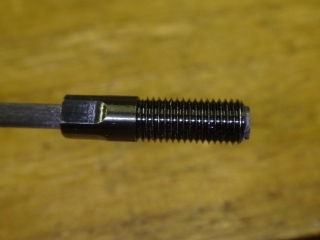
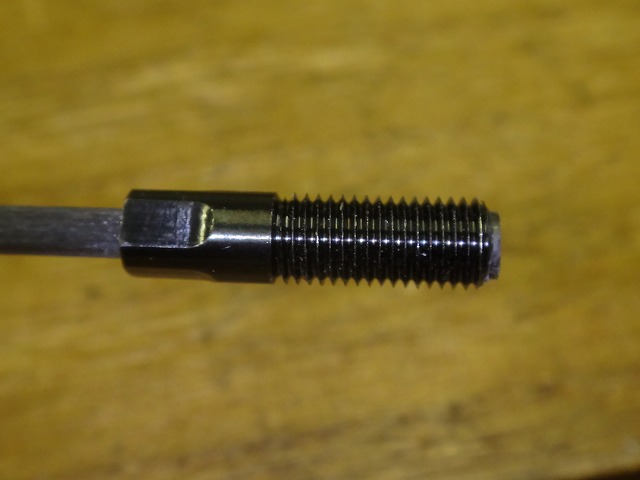
On the rim side, it has a gripping area with the same shape as a 3.4mm hex nipple,
and right up to the threads, the dimensions match generic nipples,
so this spoke works with generic rims.
The spoke head is special, so the hub needs to be a proprietary model.
The aluminum piece is adhesively bonded to the carbon piece to form a single unit,
so tightening the threads is done with a nut on the outer side,
and the nipple-like part is just something you grip with a tool
to prevent it from turning.
It can't be turned, and shouldn't be.

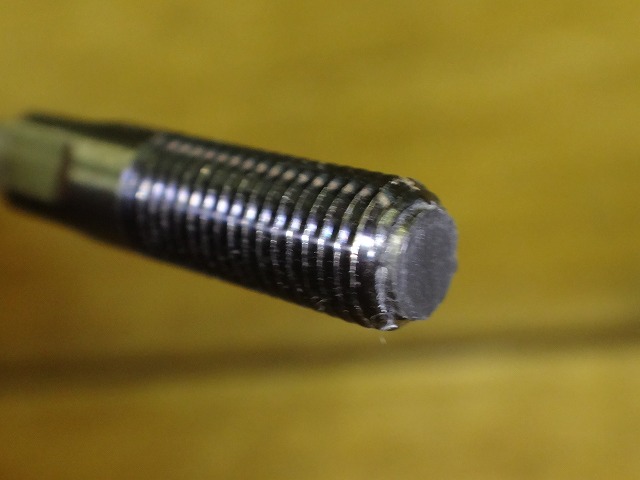
The aluminum piece on the thread end also goes all the way through.
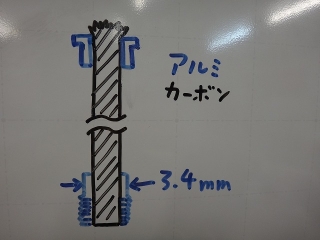
↑The spoke structure looks like this.
I don't know if this spoke was made
specifically for HUNT, but
HUNT rims aren't particularly light in terms of height/weight ratio,
and whether this is related to the thick rim holes on the inner side
or because they estimate spoke length on the shorter side,
the 3.4mm hex gripping area
only extends about half its normal length,
so I had to be careful not to strip it.
The fact that what looks like a nipple at first glance isn't actually a nipple but part of the spoke,
shouldn't be turned, and thread tightening/loosening is done with a nut on the outer side—
this structure is the same as Spinergy's Zylon spoke wheels,
the ZeroLite(→here).
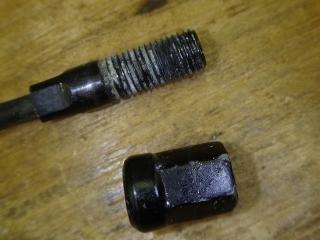
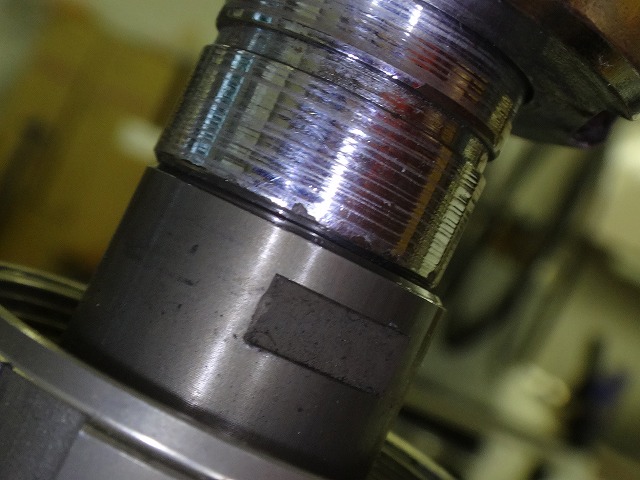
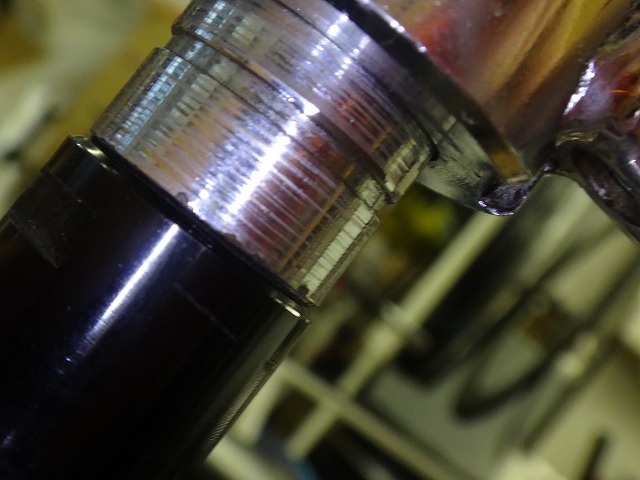
The internal nipple equivalent nut looks like this.
Some things like Pillar's hex-shaped internal nipples
have the hex continuing all the way through,
and some of those have a front and back distinction, but
if you tried to use this nut backwards, the tool won't engage,
so even a complete idiot can't get the orientation wrong.
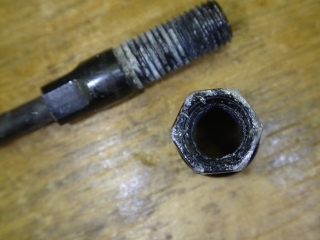
The gripping area is 6mm hex,
which is a standard size with tools available from various brands.
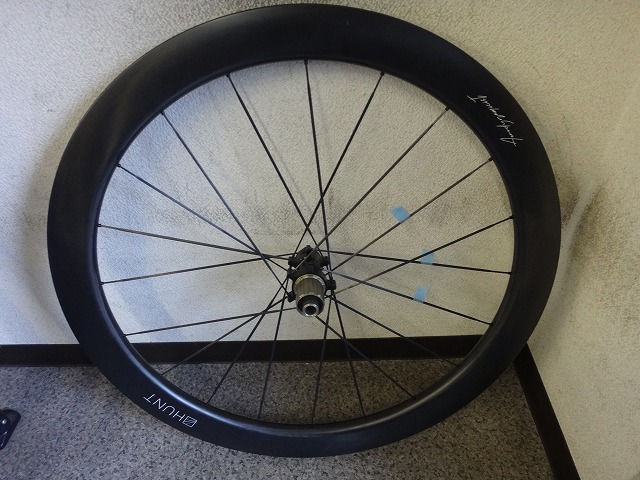
Fixed.
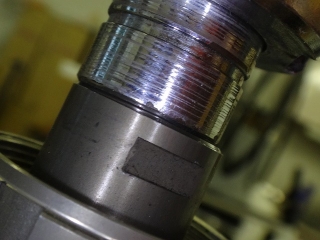
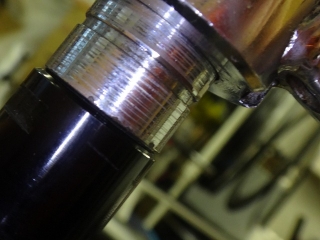
↑I think there was probably some runout from the start,
but in the end it's spot-on.
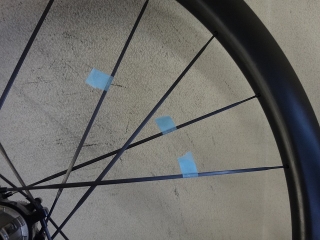
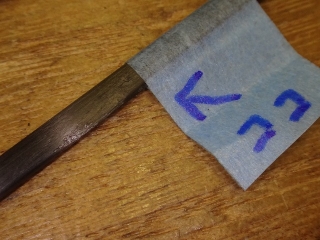
I replaced the three spokes I marked with tape,
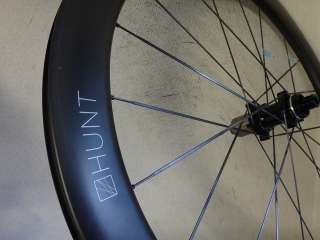
but when I roughly took out the runout around those areas,
there was even more runout
in the phase where the HUNT logo is located.
In other words, the wheel had runout even without spoke problems.
Since I've evaluated all spokes as needing replacement anyway,
the pre-existing runout is unrelated to spoke deterioration.
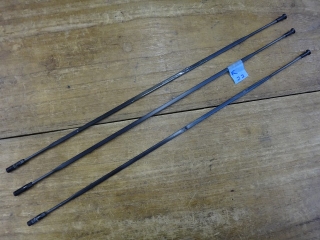
↑Replaced spokes
From top to bottom in the image
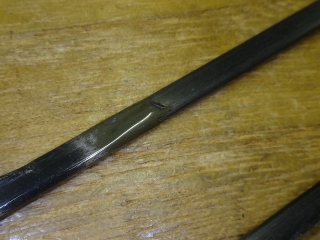
↑Freewheel side filled with adhesive

↑Non-freewheel side with sharp damage

↑Splintered non-freewheel side (viewed from front to back)
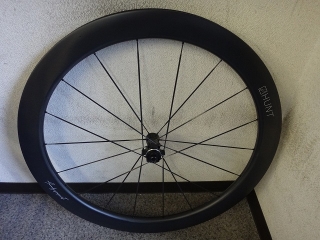
Next, the front wheel.
This one was just for inspection,
but the customer reported enough runout to notice it.

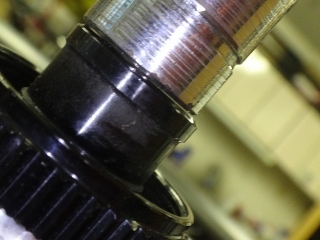
At one spot I happened to check, there's about a paper thickness of runout,
but if you search, there are probably phases with more runout,
and some phases that are perfectly centered.
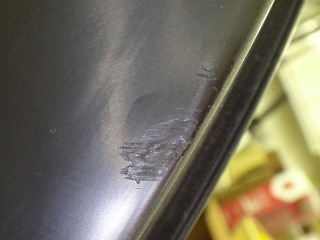
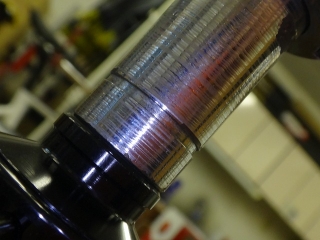
There was damage that made me think "at least it's disc brakes," which was fortunate.
These are recent wide-rim wheels, and even when using tires
within the specified size range, sometimes the rim width is wider than the tire width,
making for an awkward appearance, and
when running over grating drain covers in that state,
sometimes the rim takes direct damage as it passes over
even if the tire doesn't quite drop into the groove.
I don't know if that's what caused this damage.

I trued the runout and centered everything.
In terms of truing time alone, the front wheel took longer.
Starting with the rear wheel.
This is the carbon spoke model.
About three months ago, I remember when this customer called about repairs for their HUNT wheel,
before they even mentioned it, I asked,
"Is this a carbon spoke wheel?"
At that time they asked if it could be repaired with steel spokes,
but I declined.
Before this wheel, I had inspected a HUNT carbon spoke wheel,
and I knew the rim side uses generic parts, so
if we could work something out with the spoke head side, it wouldn't be impossible
to partially substitute steel spokes and make the wheel look presentable,
but mixing spokes with different specific gravities on one side of a wheel
creates serious problems, so I don't do that.
I only replied that if they sourced the carbon spokes themselves,
the work itself could be done.
I really dislike "unrepairable wheels," aside from disc wheels, deep-section wheels, and lightweight designs
where there are no adjustment elements for truing.
This isn't just about whether the structure can be repaired—
it's also important whether parts are supplied quickly and for a long period.
Well, since we didn't sell this wheel and spare spokes aren't readily available,
there's not much else to say about it—or so I thought,
but the other day they got hold of spokes and brought the wheel in along with them.
There's one spoke that's clearly splintered.
There's a spoke that crosses over with that splintered spoke, and it has
a sharp bit of damage on it,
↑this one also needs replacing.
These two are on the non-freewheel side,
and on the freewheel side, the customer had filled a splintered spoke with adhesive—
this one also needs replacing.
The manufacturer site mentions UD (unidirectional) carbon spokes,
which means carbon fibers only running lengthwise. When it comes to
unidirectional carbon spokes, Mavic's original R-SYS had problems in early batches,
and the front wheels—which had carbon spokes on both sides—were recalled.
They become all shattered like bamboo or vinyl rope,
with splintering or cracking occurring.
For more on the horror of UD carbon spokes,
(→check here)for the bonus section at the end.
This is a HUNT carbon spoke.
It's constructed with aluminum glued to both sides,

and on the spoke head side, the aluminum piece
goes all the way through rather than butting against it.
This might be to make it visually easy to tell if the adhesive bond hasn't come loose.
Since all of them were like this, I think it's intentional, but
the end of the carbon is crushed and flares out like a driven stake,
which appears to serve as insurance in case the bond fails.
Not HUNT, but I've previously inspected a Chinese-made carbon spoke wheel
that had spokes with extremely low spoke tension mixed in,
and the loss of tension wasn't from loose threads—
it was from the adhesive bond coming loose.
On the rim side, it has a gripping area with the same shape as a 3.4mm hex nipple,
and right up to the threads, the dimensions match generic nipples,
so this spoke works with generic rims.
The spoke head is special, so the hub needs to be a proprietary model.
The aluminum piece is adhesively bonded to the carbon piece to form a single unit,
so tightening the threads is done with a nut on the outer side,
and the nipple-like part is just something you grip with a tool
to prevent it from turning.
It can't be turned, and shouldn't be.
The aluminum piece on the thread end also goes all the way through.

↑The spoke structure looks like this.
I don't know if this spoke was made
specifically for HUNT, but
HUNT rims aren't particularly light in terms of height/weight ratio,
and whether this is related to the thick rim holes on the inner side
or because they estimate spoke length on the shorter side,
the 3.4mm hex gripping area
only extends about half its normal length,
so I had to be careful not to strip it.
The fact that what looks like a nipple at first glance isn't actually a nipple but part of the spoke,
shouldn't be turned, and thread tightening/loosening is done with a nut on the outer side—
this structure is the same as Spinergy's Zylon spoke wheels,
the ZeroLite(→here).

The internal nipple equivalent nut looks like this.
Some things like Pillar's hex-shaped internal nipples
have the hex continuing all the way through,
and some of those have a front and back distinction, but
if you tried to use this nut backwards, the tool won't engage,
so even a complete idiot can't get the orientation wrong.

The gripping area is 6mm hex,
which is a standard size with tools available from various brands.
Fixed.
↑I think there was probably some runout from the start,
but in the end it's spot-on.
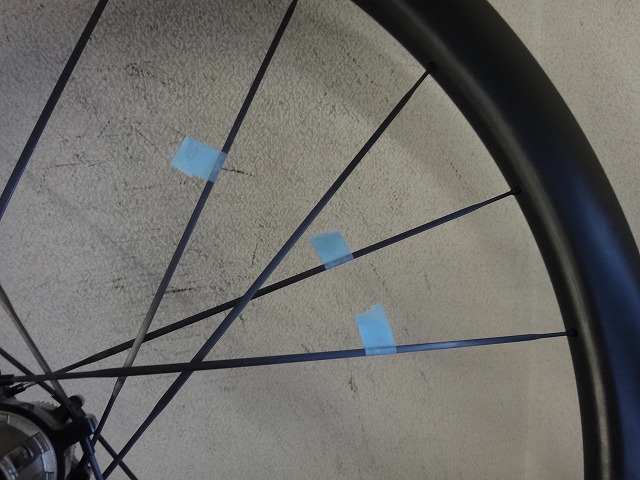
I replaced the three spokes I marked with tape,
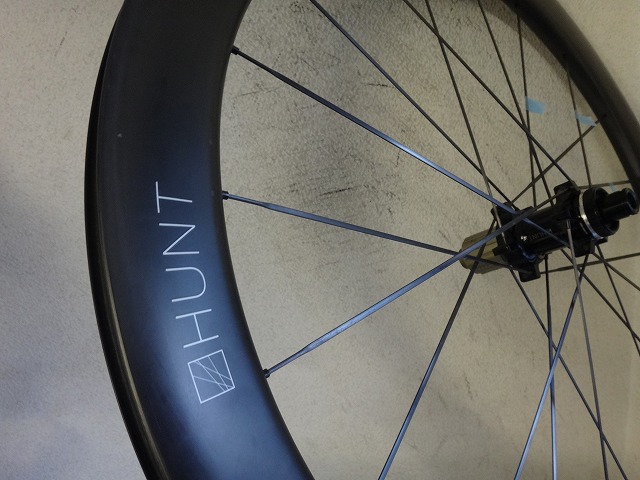
but when I roughly took out the runout around those areas,
there was even more runout
in the phase where the HUNT logo is located.
In other words, the wheel had runout even without spoke problems.
Since I've evaluated all spokes as needing replacement anyway,
the pre-existing runout is unrelated to spoke deterioration.
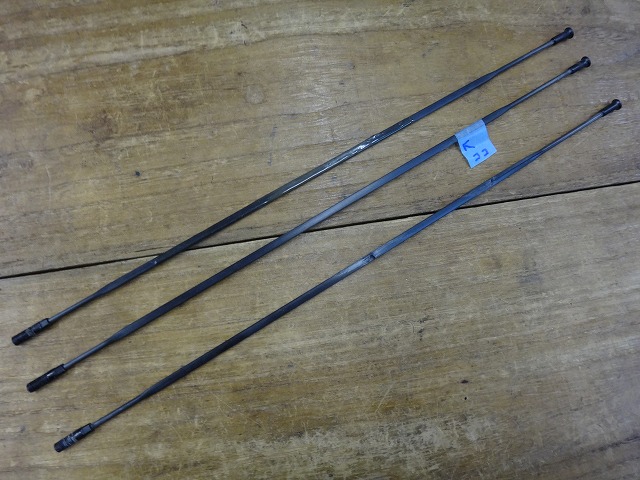
↑Replaced spokes
From top to bottom in the image
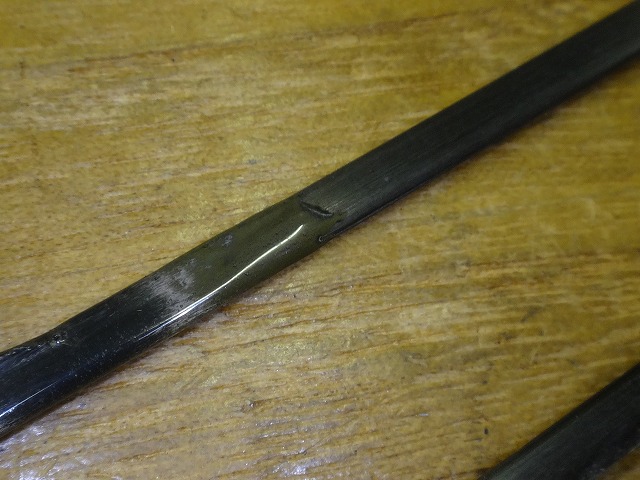
↑Freewheel side filled with adhesive
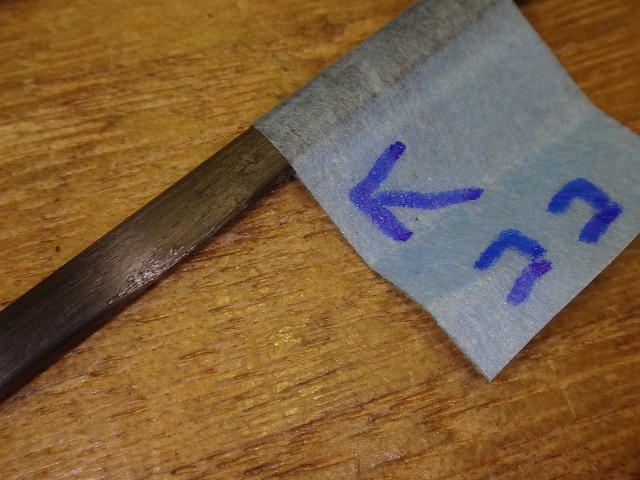
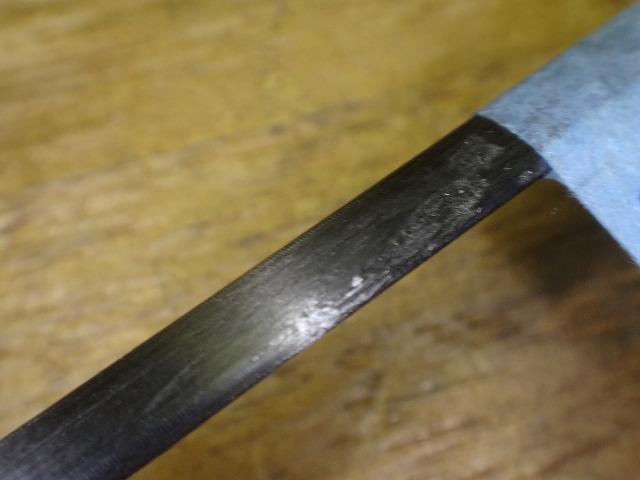
↑Non-freewheel side with sharp damage
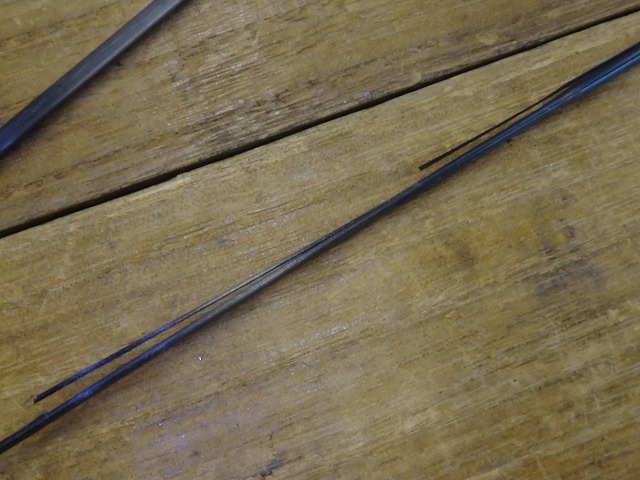
↑Splintered non-freewheel side (viewed from front to back)

Next, the front wheel.
This one was just for inspection,
but the customer reported enough runout to notice it.
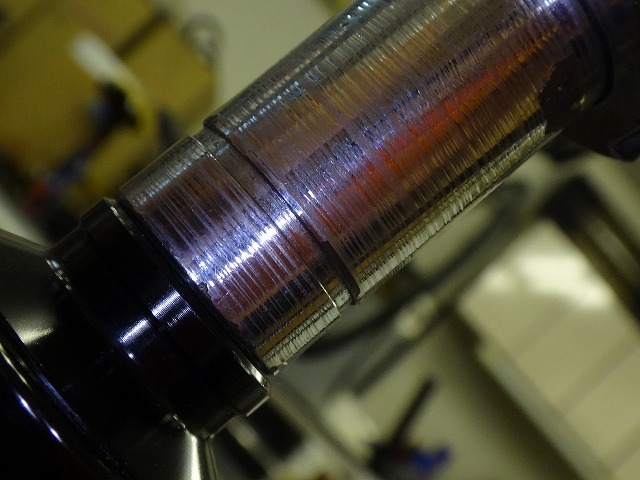
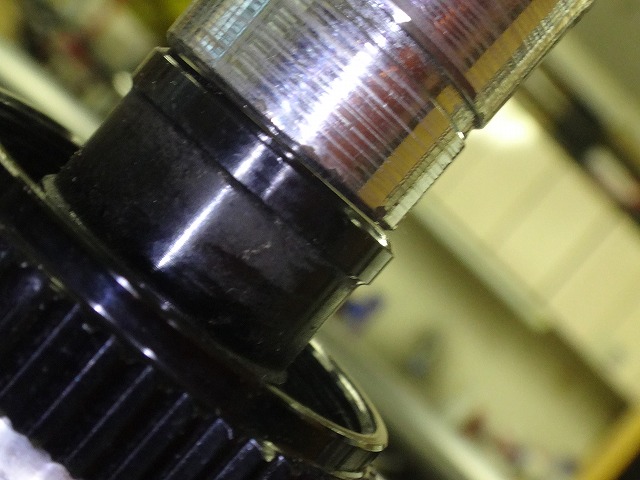
At one spot I happened to check, there's about a paper thickness of runout,
but if you search, there are probably phases with more runout,
and some phases that are perfectly centered.
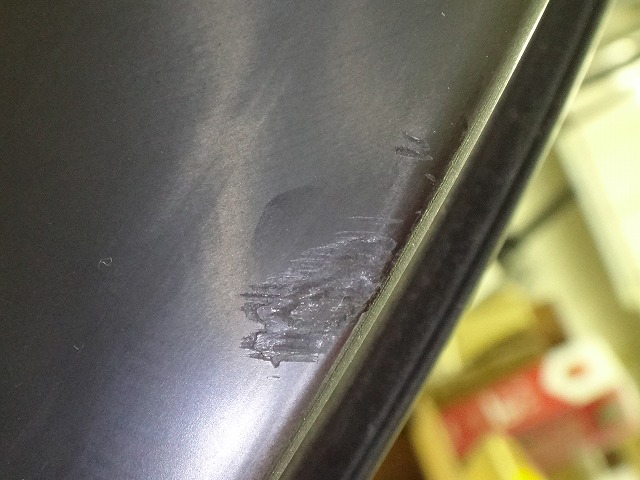
There was damage that made me think "at least it's disc brakes," which was fortunate.
These are recent wide-rim wheels, and even when using tires
within the specified size range, sometimes the rim width is wider than the tire width,
making for an awkward appearance, and
when running over grating drain covers in that state,
sometimes the rim takes direct damage as it passes over
even if the tire doesn't quite drop into the groove.
I don't know if that's what caused this damage.
I trued the runout and centered everything.
In terms of truing time alone, the front wheel took longer.