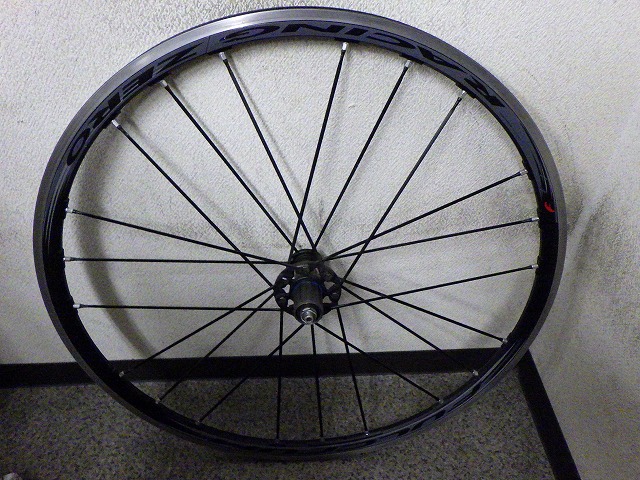
A customer brought in a Racing Zero rear wheel for service.
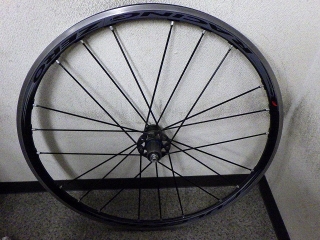
The front wheel only needed inspection, so I didn't photograph it.
They'd picked up both wheels as a used set,
and they mentioned some spokes on the rear wheel were bent,
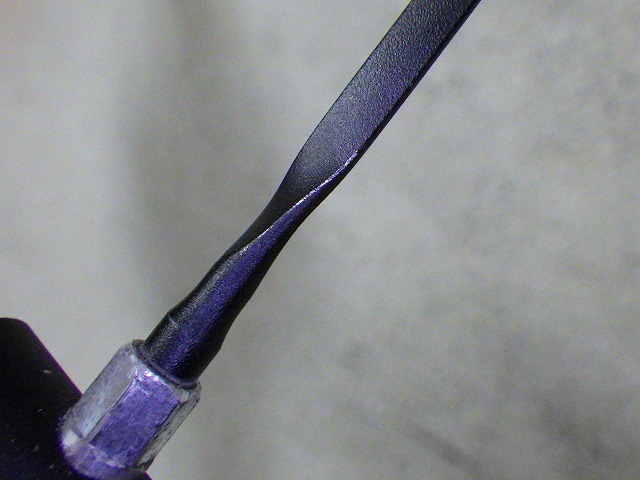
but in reality they weren't bent—they were twisted from someone meddling with them.
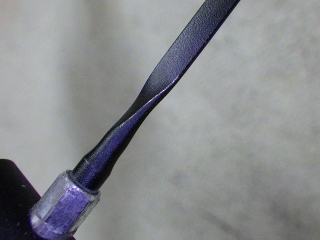
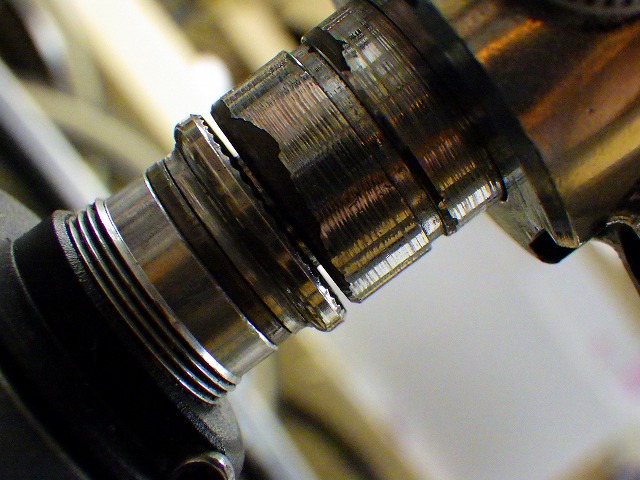
↑This is the most severely twisted spoke.
I'll call this spoke #1 in this post.
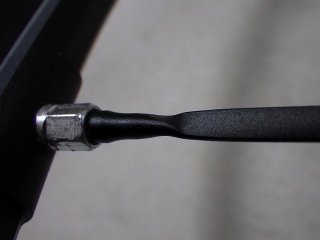
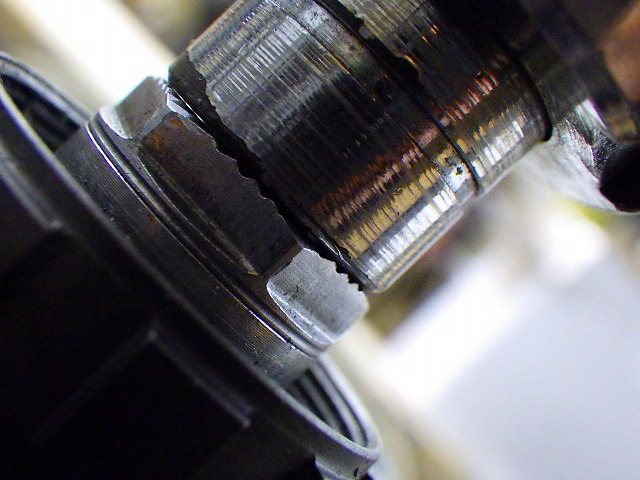
↑This is the next spoke I determined needed replacement.
I'll call this one spoke #2.
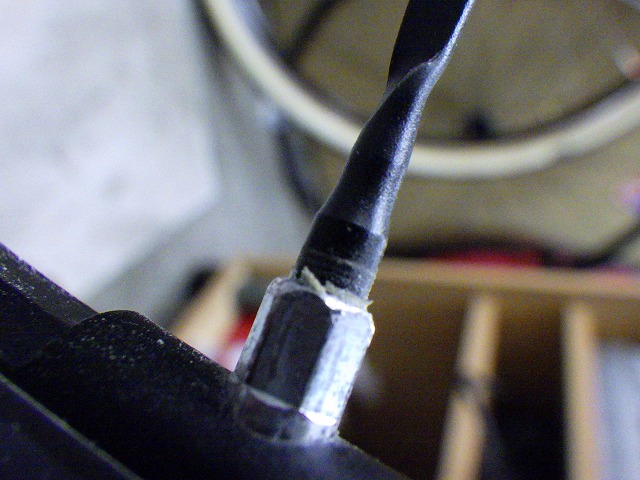
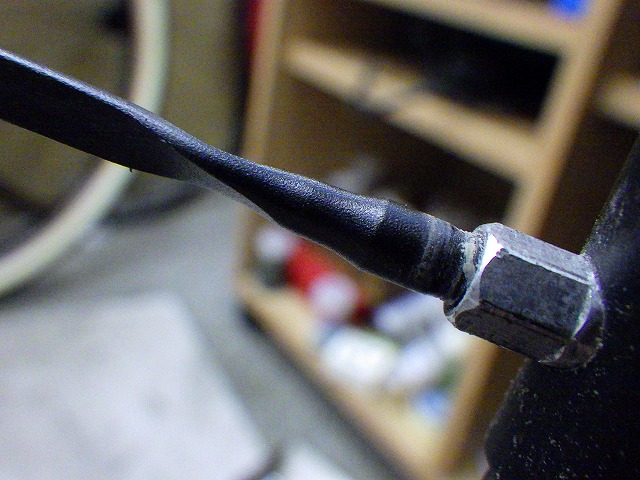
These spokes didn't get twisted because the nipples were seized and someone forced them to turn.
Let me prove that first.
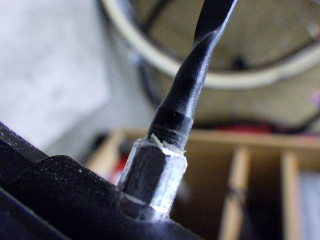
↑Spoke #1
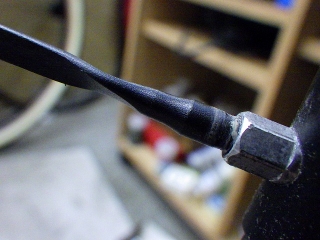
↑Spoke #2
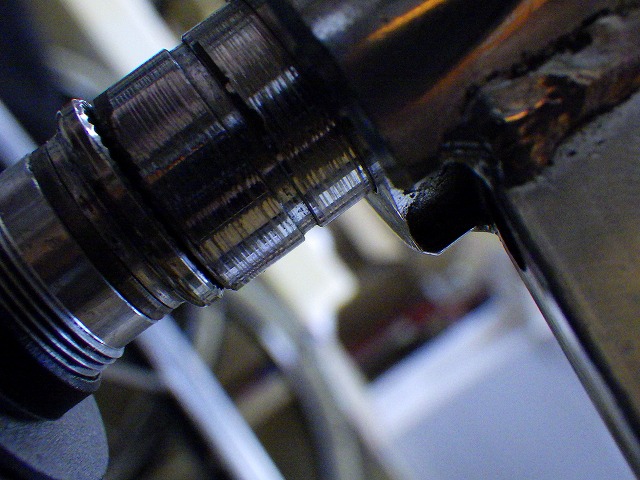
The nipples loosened normally even while the twist remained—see?
Actually, this wheel did have some nipples on the verge of seizing, but
these two spokes were among the ones that weren't seized.
If they were seized, they wouldn't turn. Rather, because they turned freely enough,
someone used an improper method to turn them and twisted the spokes.
You must never try to forcefully straighten a twisted spoke.
There's a risk of the spoke breaking.
There were two more twisted spokes besides these,
and I initially didn't plan to replace them, but
after replacing #1 and #2, the remaining twists became noticeable,
so they needed replacement too.
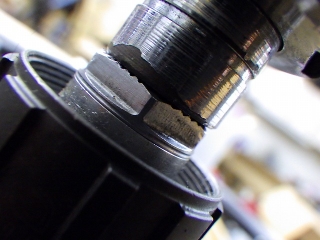

After replacing four spokes and doing a rough lateral true,
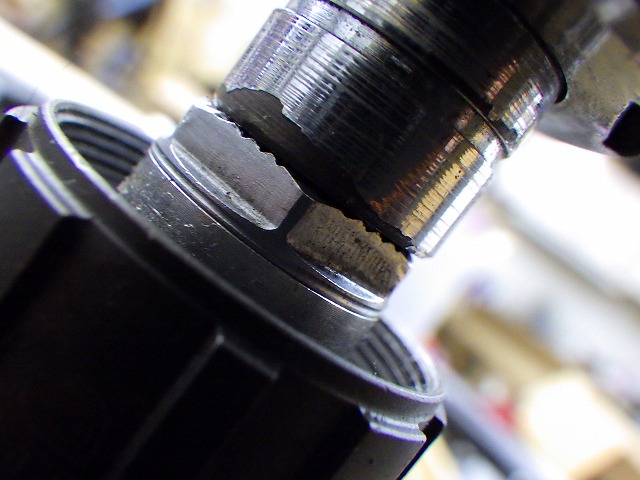
here's the center offset.
This much offset toward the freewheel side can only come from
accumulated history of amateur wheel truing attempts.
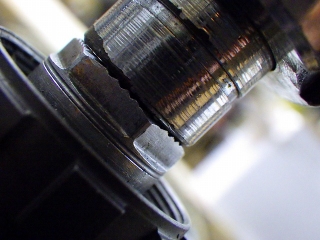

Got the center sorted.
To get here, there was radial runout separate from the unavoidable runout
caused by the rest phase, and that took time to correct.
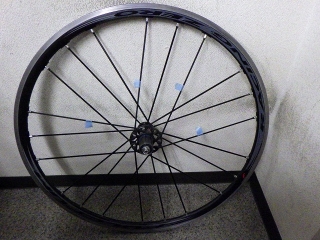
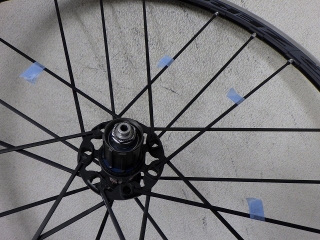
Fixed.
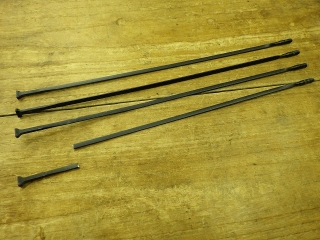
↑The replaced spokes
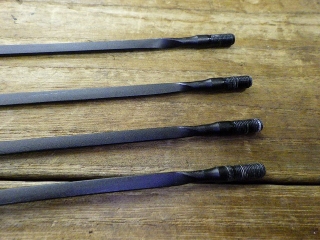
Looking at them individually from top to bottom as #1–#4,
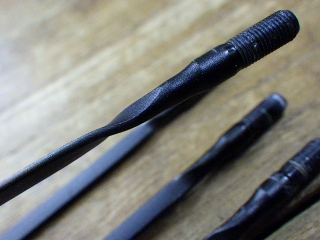
Spoke #1

Spoke #2
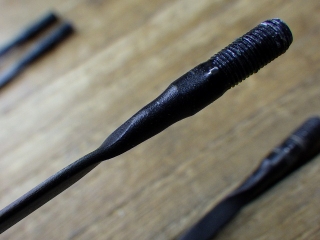
Spoke #3
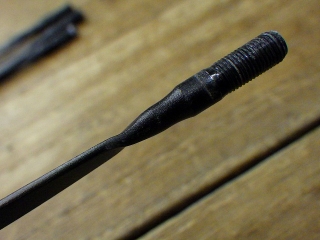
Spoke #4.
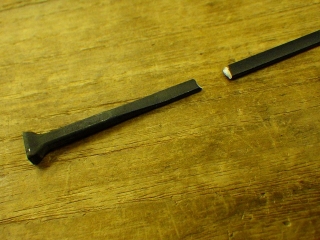
Spoke #4 was nearly seized, but since we were replacing it anyway,
rather than snap it at the nipple, I deliberately cut the spoke near the hub,
relieved the spoke tension,
and removed the aluminum corrosion resistance around the rim hole and nipple—
and then I was able to loosen the nipple.
So it wasn't completely seized after all.
It's an extremely time-consuming and impractical method, but
if you completely loosen all the nipples in the wheel,
there's a possibility you could loosen the #4 spoke's nipple without cutting it.
Also, since it's harder to loosen a nipple on a twisted spoke than one that isn't,
if spoke #4 hadn't been twisted,
there's a good chance the nipple could have been loosened.
The front wheel only needed inspection, so I didn't photograph it.
They'd picked up both wheels as a used set,
and they mentioned some spokes on the rear wheel were bent,
but in reality they weren't bent—they were twisted from someone meddling with them.
↑This is the most severely twisted spoke.
I'll call this spoke #1 in this post.

↑This is the next spoke I determined needed replacement.
I'll call this one spoke #2.
These spokes didn't get twisted because the nipples were seized and someone forced them to turn.
Let me prove that first.
↑Spoke #1
↑Spoke #2
The nipples loosened normally even while the twist remained—see?
Actually, this wheel did have some nipples on the verge of seizing, but
these two spokes were among the ones that weren't seized.
If they were seized, they wouldn't turn. Rather, because they turned freely enough,
someone used an improper method to turn them and twisted the spokes.
You must never try to forcefully straighten a twisted spoke.
There's a risk of the spoke breaking.
There were two more twisted spokes besides these,
and I initially didn't plan to replace them, but
after replacing #1 and #2, the remaining twists became noticeable,
so they needed replacement too.
After replacing four spokes and doing a rough lateral true,
here's the center offset.
This much offset toward the freewheel side can only come from
accumulated history of amateur wheel truing attempts.
Got the center sorted.
To get here, there was radial runout separate from the unavoidable runout
caused by the rest phase, and that took time to correct.
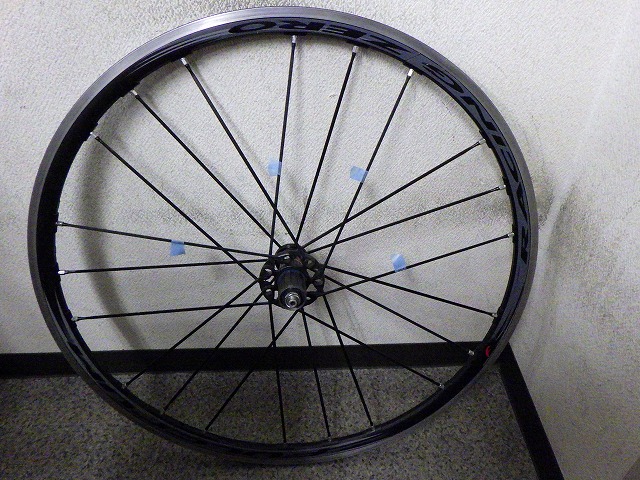
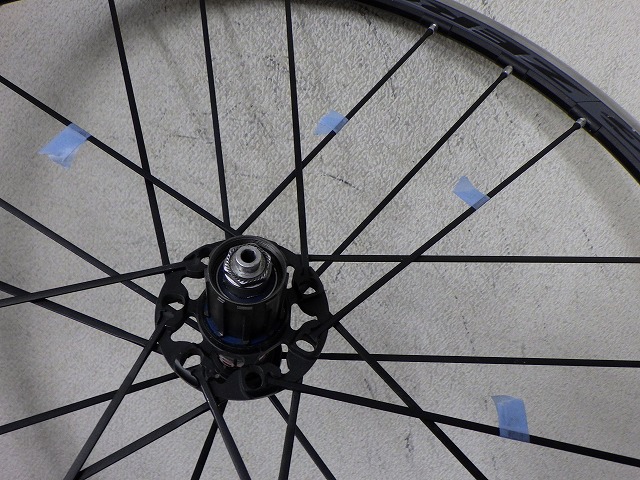
Fixed.
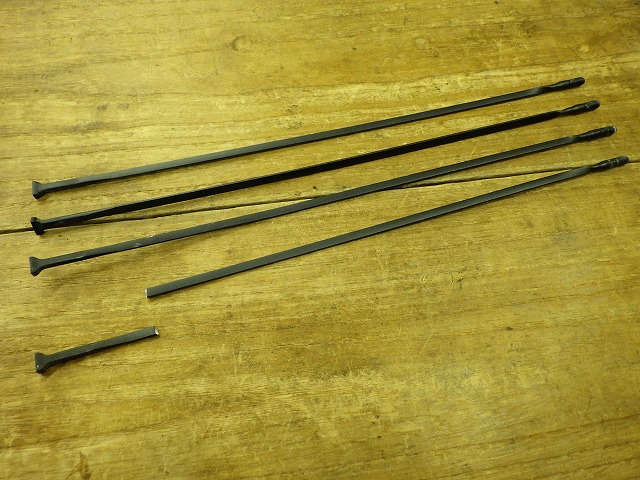
↑The replaced spokes
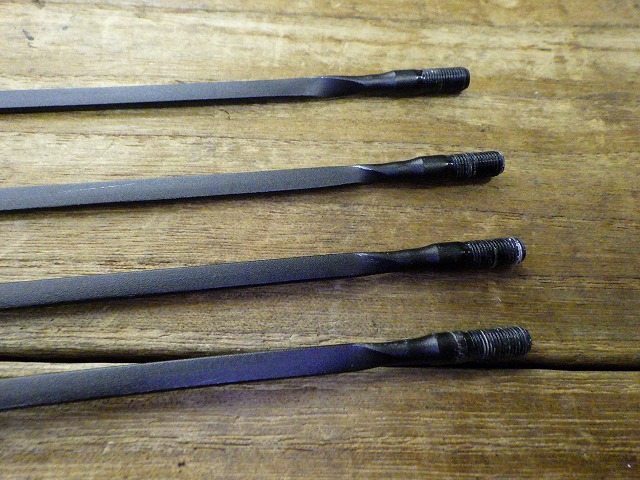
Looking at them individually from top to bottom as #1–#4,
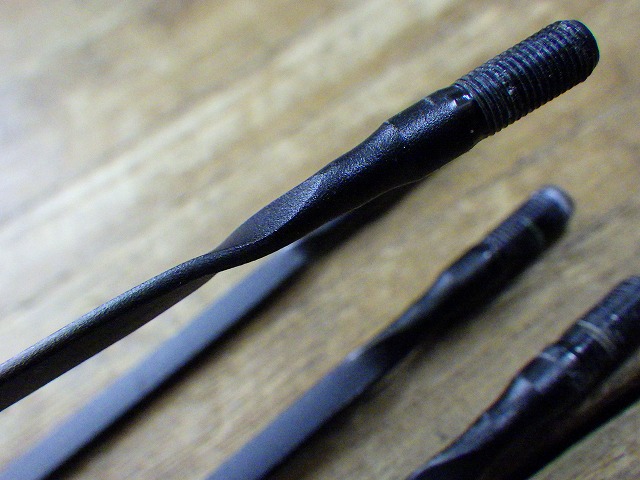
Spoke #1
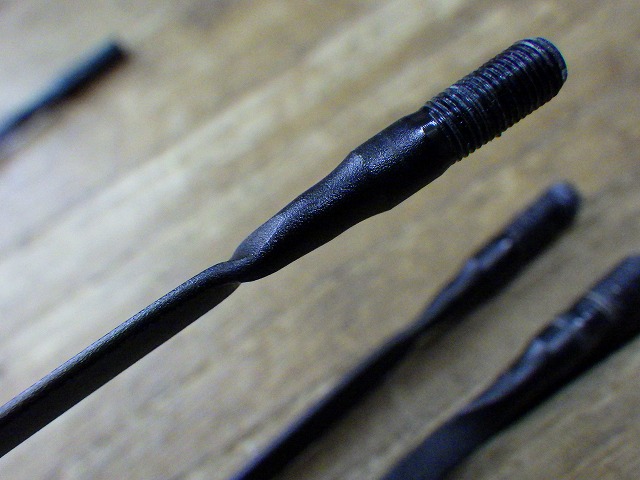
Spoke #2
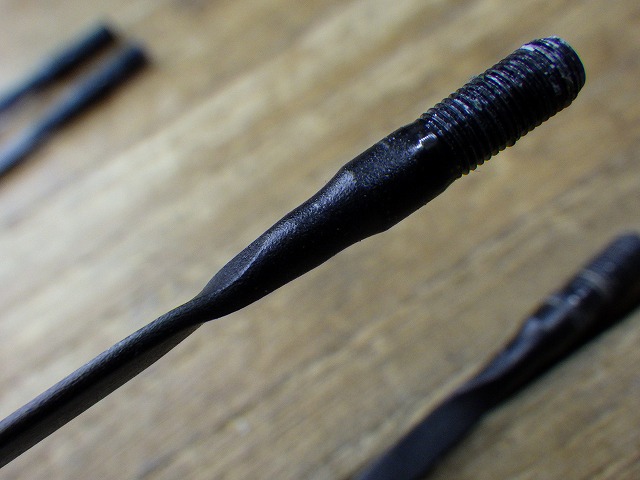
Spoke #3

Spoke #4.
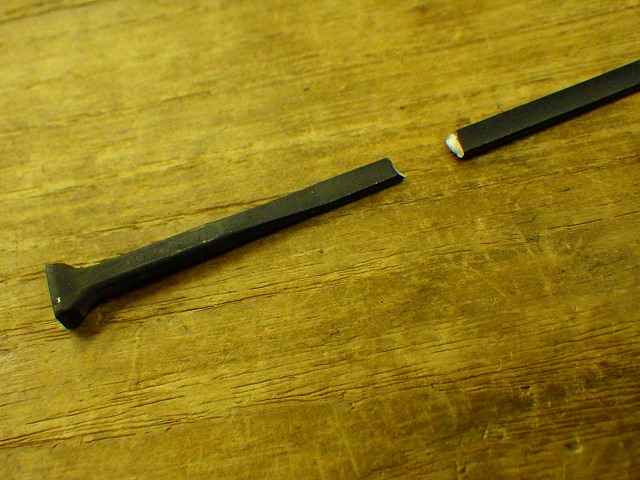
Spoke #4 was nearly seized, but since we were replacing it anyway,
rather than snap it at the nipple, I deliberately cut the spoke near the hub,
relieved the spoke tension,
and removed the aluminum corrosion resistance around the rim hole and nipple—
and then I was able to loosen the nipple.
So it wasn't completely seized after all.
It's an extremely time-consuming and impractical method, but
if you completely loosen all the nipples in the wheel,
there's a possibility you could loosen the #4 spoke's nipple without cutting it.
Also, since it's harder to loosen a nipple on a twisted spoke than one that isn't,
if spoke #4 hadn't been twisted,
there's a good chance the nipple could have been loosened.