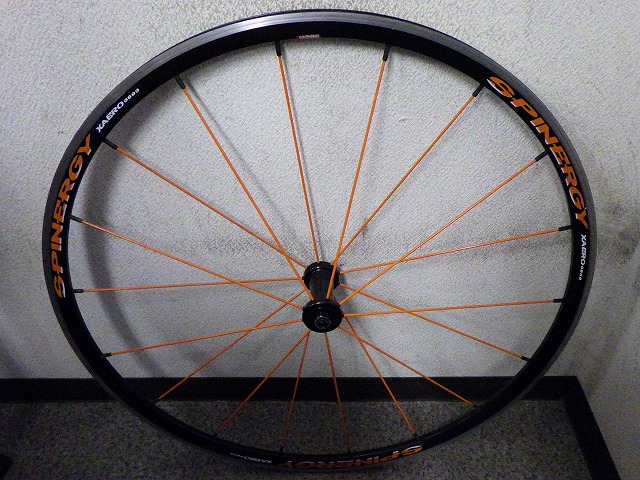
A customer left me with a set of Spinergy Zero Light wheels for service.
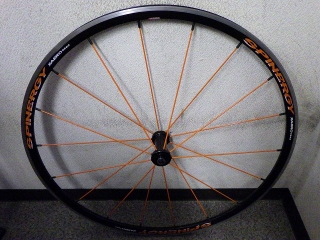
They have Zyron spokes in a color that looks like Tubolito (polyurethane tube).
The front wheel has minor runout with some centering issues,
and the rear wheel's rim appears to have been bent in an accident—it's warped like a potato chip.
When I touch the spokes, they move back and forth loosely,
and according to truing logic, they'd need to be loosened further,
making the rear wheel beyond repair through truing alone.
Eventually the rear wheel will need a new rim and complete rebuild, but since this customer also commissioned me to build a different wheel,
taking both at once would crowd the shop too much,
so I had them take the rear wheel back home for now.
I've written about this many times before, but
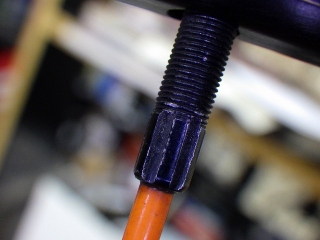
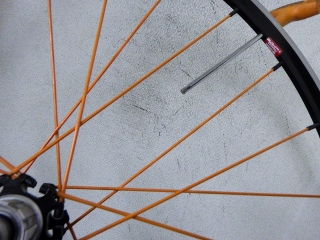
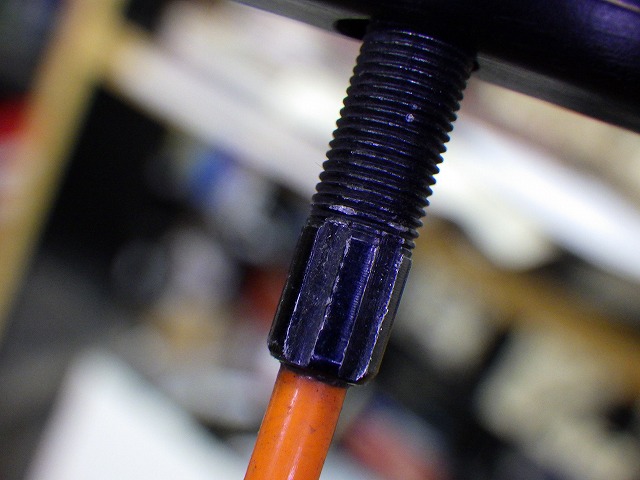
what looks like a nipple here is structurally part of the spoke itself,
so you only grip it with a special tool as an anti-rotation feature—
you must never turn it.
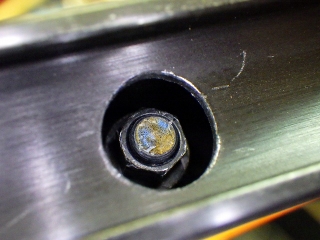
On the outer side is a hexagonal nut with a 6.5mm flat-to-flat dimension.
You grip the anti-rotation feature on the inner side
and turn this nut with a specialized tool (6.5mm is unique to this system).
Compared to this, HUNT's carbon spokes use the same structure,
though the tool size is the same as generic wrenches.
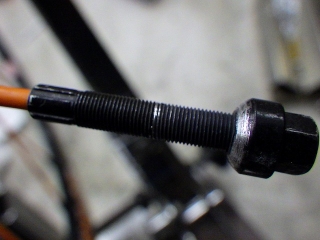
This is a photo from when I temporarily removed the wheel to assess the rear wheel damage.
The spoke-side thread length is exceptionally long,
giving the rim side tremendous dimensional redundancy.
Looking back at those rim images from both sides—
neither side has hole drilling offset, and the inner side holes are
oversized relative to the nipple-like section diameter, which is clearly unnecessary.
The rear wheel uses tangent lacing on both sides, but
viewing the wheel, the final crossing on the near side
is offset clockwise relative to the final crossing on the far side
(even if you flip left and right, this relationship doesn't change),
so the hub is designed for a standard rim, and
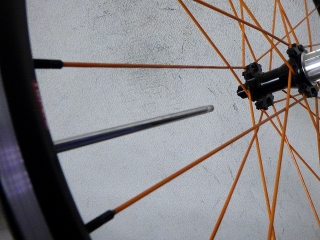
the wheel is actually built treating it as a standard rim, but

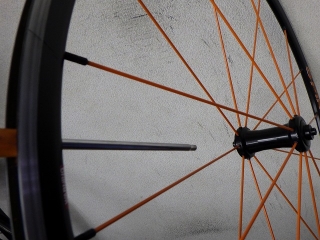
the radial laced front wheel is built as a reverse rim.
The rim holes on both sides have no drilling offset, and
only the radial laced front wheel is built as reverse rim—
this is the approach Reynolds uses for their complete wheels.
Campagnolo and Fulcrum's
radial laced front wheels for rim brakes
are also built as reverse rim,
but those have clearly defined reverse hole drilling,
and especially on models like Racing Zero with aluminum spokes,
the rim hole drilling is so directional that
it's actually impossible to build the wheel incorrectly as a standard rim.
Old Colima rims had reverse drilling patterns,
and especially for rear wheels with anti-freewheel-side radial lacing,
you had to watch which rim holes the freewheel-side tangent spokes pass through,
and if both sides were tangent laced,
you'd need to reverse the initial right-drop/left-drop sequence
when threading spokes through generic hubs.
While almost unthinkable, if you're building with reverse-drilled Colima rims
using a hub designed for standard rim with straight spokes and left-right tangent lacing,
the foam polyurethane filling inside the rim has such strong directional bias
that building with incorrect drilling is essentially impossible—
which means the valve hole position will inevitably end up
within the four spokes of one left-right spoke pair at the final crossing.
They have Zyron spokes in a color that looks like Tubolito (polyurethane tube).
The front wheel has minor runout with some centering issues,
and the rear wheel's rim appears to have been bent in an accident—it's warped like a potato chip.
When I touch the spokes, they move back and forth loosely,
and according to truing logic, they'd need to be loosened further,
making the rear wheel beyond repair through truing alone.
Eventually the rear wheel will need a new rim and complete rebuild, but since this customer also commissioned me to build a different wheel,
taking both at once would crowd the shop too much,
so I had them take the rear wheel back home for now.
I've written about this many times before, but
what looks like a nipple here is structurally part of the spoke itself,
so you only grip it with a special tool as an anti-rotation feature—
you must never turn it.
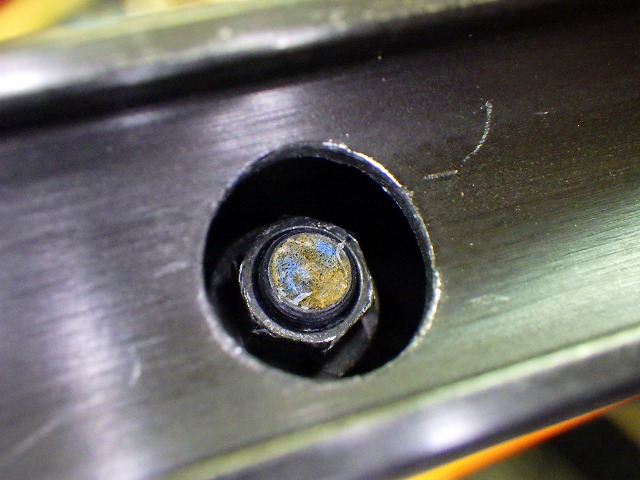
On the outer side is a hexagonal nut with a 6.5mm flat-to-flat dimension.
You grip the anti-rotation feature on the inner side
and turn this nut with a specialized tool (6.5mm is unique to this system).
Compared to this, HUNT's carbon spokes use the same structure,
though the tool size is the same as generic wrenches.
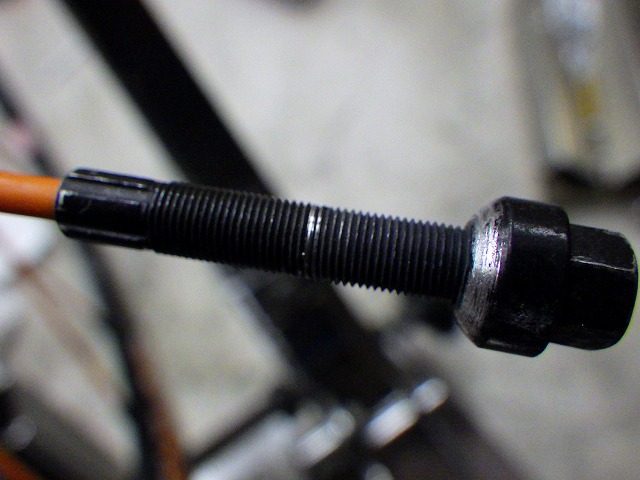
This is a photo from when I temporarily removed the wheel to assess the rear wheel damage.
The spoke-side thread length is exceptionally long,
giving the rim side tremendous dimensional redundancy.
Looking back at those rim images from both sides—
neither side has hole drilling offset, and the inner side holes are
oversized relative to the nipple-like section diameter, which is clearly unnecessary.
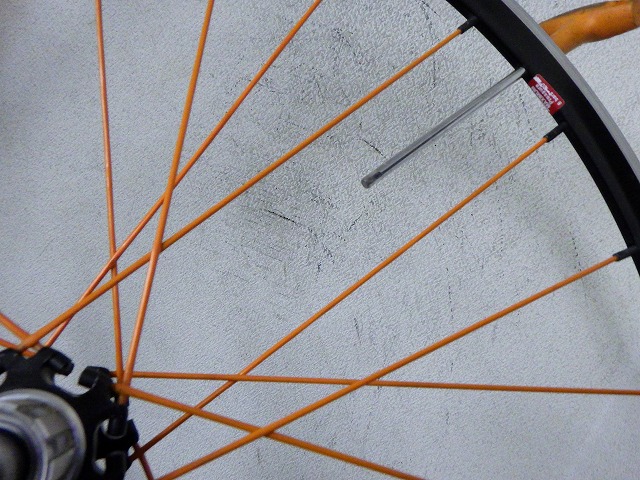
The rear wheel uses tangent lacing on both sides, but
viewing the wheel, the final crossing on the near side
is offset clockwise relative to the final crossing on the far side
(even if you flip left and right, this relationship doesn't change),
so the hub is designed for a standard rim, and
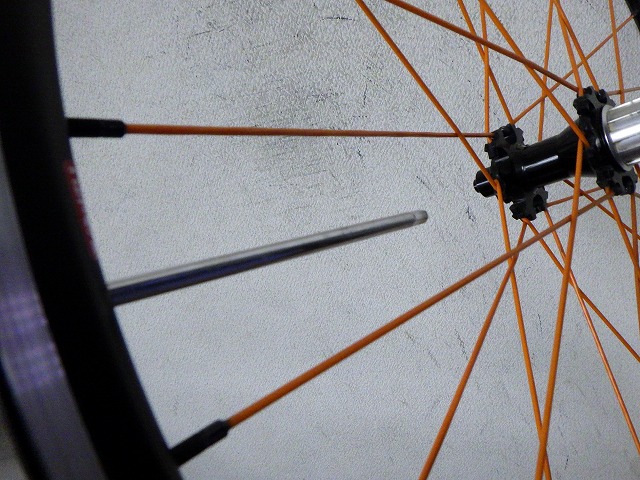
the wheel is actually built treating it as a standard rim, but
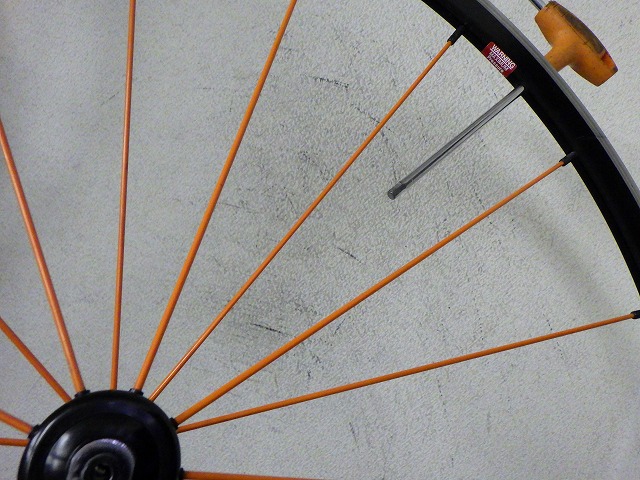
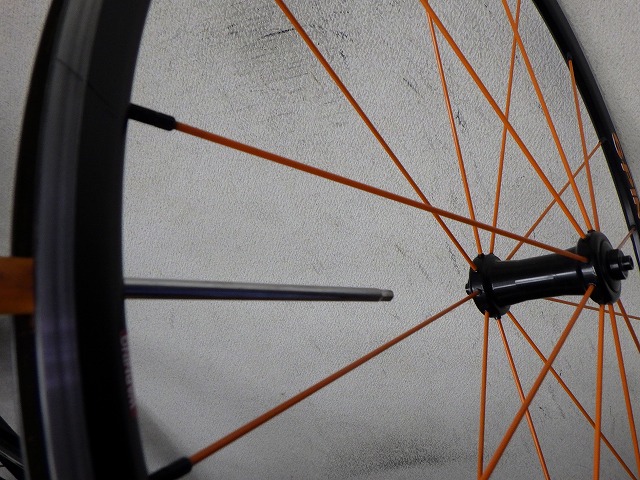
the radial laced front wheel is built as a reverse rim.
The rim holes on both sides have no drilling offset, and
only the radial laced front wheel is built as reverse rim—
this is the approach Reynolds uses for their complete wheels.
Campagnolo and Fulcrum's
radial laced front wheels for rim brakes
are also built as reverse rim,
but those have clearly defined reverse hole drilling,
and especially on models like Racing Zero with aluminum spokes,
the rim hole drilling is so directional that
it's actually impossible to build the wheel incorrectly as a standard rim.
Old Colima rims had reverse drilling patterns,
and especially for rear wheels with anti-freewheel-side radial lacing,
you had to watch which rim holes the freewheel-side tangent spokes pass through,
and if both sides were tangent laced,
you'd need to reverse the initial right-drop/left-drop sequence
when threading spokes through generic hubs.
While almost unthinkable, if you're building with reverse-drilled Colima rims
using a hub designed for standard rim with straight spokes and left-right tangent lacing,
the foam polyurethane filling inside the rim has such strong directional bias
that building with incorrect drilling is essentially impossible—
which means the valve hole position will inevitably end up
within the four spokes of one left-right spoke pair at the final crossing.