Another wheel day (and so on).
Continuing from yesterday.
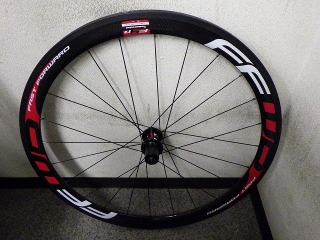
Rebuilding the rear wheel on the late-model F4R from FF Yamaguchi.
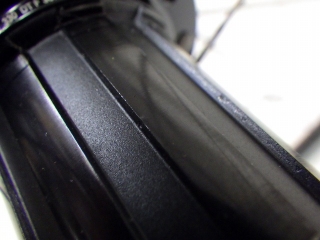
Looking at the rim's brake zone and tire mounting surface,
this wheel looks brand new with virtually no signs of use,
but there were faint sprocket mounting marks
on the side of the spline teeth of the freebody.
The lacing pattern is all-black aero light four-cross,
but even under these conditions, it was built looser than it could have been.
The builders might not be the same, but
the front wheel was properly tensioned,
while the rear was a bit loose.
If the all-black aero light four-cross had been built to full tension,
this wheel might never have come to our shop.
It was loose, sure, but not unbearably so,
so it probably stayed in use as-is.
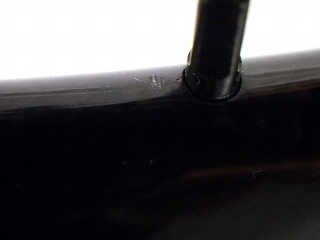
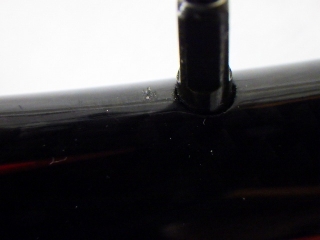
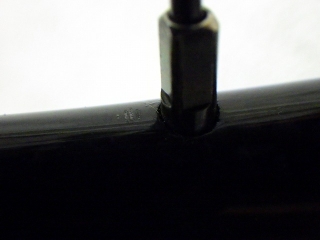
This is the state before work, and I could see scratch marks
next to the rim holes from tool contact—
not sure what kind of tools were being used.
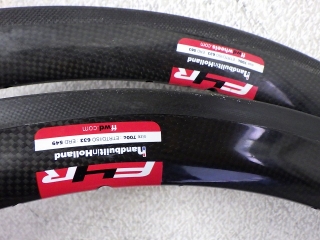
This is a comparison of an early-model F4R rim from our rim scrap pile
with the late-model F4R rim from this job.
Both are tubular rims, by the way.
The early model has a 38mm-high rim, while
the late model is a 45mm-high rim,
and like the F6R rim, the rim sides have
a subtle curved concave shape
(you can see it in the image above from how the light hits the rim sides).

There are rim inner diameter markings, but you can't trust either of them.
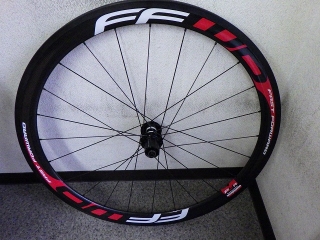
Built.
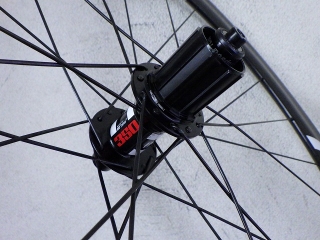
It's a custom order from FF Yamaguchi, but just a color variation—
there's no FF Yamaguchi marking on the hub shell
(it does say MADE BY DT SWISS), 350 hub, 24H,
black semi-competition four-six lacing.
I'll do the lacing nipple wrapping later.
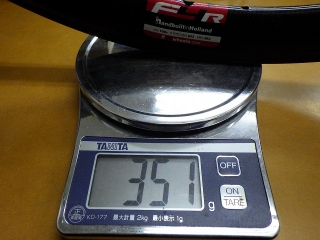
This is the measured weight of an early-model rim we have.
The late-model rim clearly has thinner rim sidewalls,
and when you press it with your finger it flexes easily,
so I'd predicted it would have a better height-to-weight ratio than the early model.
On the flip side, the free-side rim holes on both the previously tensioned front wheel
and the rear wheel (though on the looser side) were slightly bulged
from spoke tension, and when rebuilding it wasn't a rim
you could tension without hesitation or vibration.
Plus there was significant weight variance between individuals—
the rear rim was lighter.
The difference was so much that I even lifted the rim off the scale
to confirm the zero was set properly.
With only two rims to compare, I can't say whether the 20H front rim
is a heavy example or the 24H rear is a light example.
Personally, I think it's the latter
(even after weighing ten more late-model F4R rims afterward,
none were lighter than this rear rim,
or maybe one at most).
What? You want to know the actual weight?
No way I'm telling you that so easily.
↑man this guy's attitude is terrible

Sorry for the wait! Please take a look at this image!
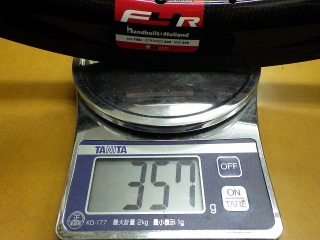
It's the front rim!
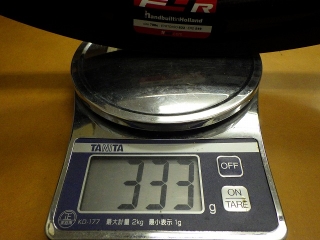
It's the rear rim!
↑Stop right there!

Continuing from yesterday.
Rebuilding the rear wheel on the late-model F4R from FF Yamaguchi.

Looking at the rim's brake zone and tire mounting surface,
this wheel looks brand new with virtually no signs of use,
but there were faint sprocket mounting marks
on the side of the spline teeth of the freebody.
The lacing pattern is all-black aero light four-cross,
but even under these conditions, it was built looser than it could have been.
The builders might not be the same, but
the front wheel was properly tensioned,
while the rear was a bit loose.
If the all-black aero light four-cross had been built to full tension,
this wheel might never have come to our shop.
It was loose, sure, but not unbearably so,
so it probably stayed in use as-is.


This is the state before work, and I could see scratch marks
next to the rim holes from tool contact—
not sure what kind of tools were being used.

This is a comparison of an early-model F4R rim from our rim scrap pile
with the late-model F4R rim from this job.
Both are tubular rims, by the way.
The early model has a 38mm-high rim, while
the late model is a 45mm-high rim,
and like the F6R rim, the rim sides have
a subtle curved concave shape
(you can see it in the image above from how the light hits the rim sides).

There are rim inner diameter markings, but you can't trust either of them.

Built.

It's a custom order from FF Yamaguchi, but just a color variation—
there's no FF Yamaguchi marking on the hub shell
(it does say MADE BY DT SWISS), 350 hub, 24H,
black semi-competition four-six lacing.
I'll do the lacing nipple wrapping later.

This is the measured weight of an early-model rim we have.
The late-model rim clearly has thinner rim sidewalls,
and when you press it with your finger it flexes easily,
so I'd predicted it would have a better height-to-weight ratio than the early model.
On the flip side, the free-side rim holes on both the previously tensioned front wheel
and the rear wheel (though on the looser side) were slightly bulged
from spoke tension, and when rebuilding it wasn't a rim
you could tension without hesitation or vibration.
Plus there was significant weight variance between individuals—
the rear rim was lighter.
The difference was so much that I even lifted the rim off the scale
to confirm the zero was set properly.
With only two rims to compare, I can't say whether the 20H front rim
is a heavy example or the 24H rear is a light example.
Personally, I think it's the latter
(even after weighing ten more late-model F4R rims afterward,
none were lighter than this rear rim,
or maybe one at most).
What? You want to know the actual weight?
No way I'm telling you that so easily.
↑man this guy's attitude is terrible

Sorry for the wait! Please take a look at this image!

It's the front rim!

It's the rear rim!
↑Stop right there!