A customer brought in the front wheel of a Bora Ultra Two for me to work on.

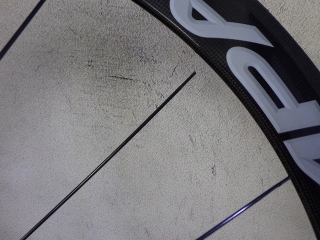
One spoke was broken.
These days I often don't bother taking photos for an article for damage like this,
but there are a couple of things worth documenting here, so I decided to write this up.
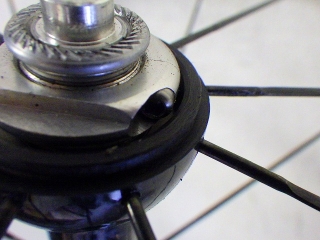
First point: after removing the dust cap,
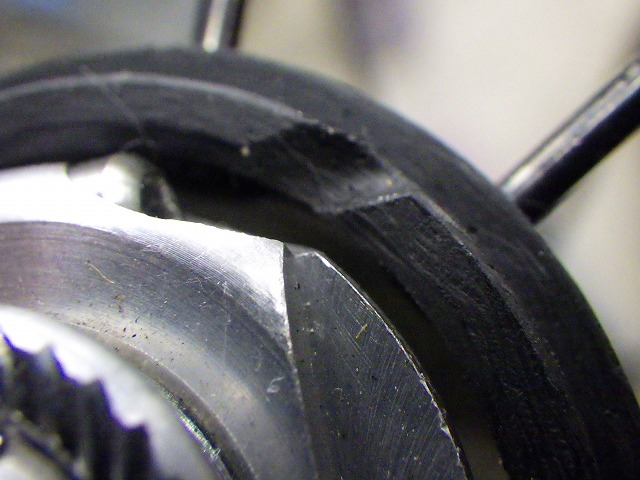
the adjustment bolt for the cone on the left side of the hub body—
where there should be a notch to grip with a tool—
somehow didn't have one.
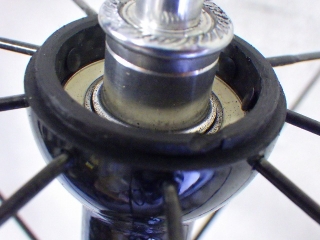
It was on the right side instead.

↑This.
This is a screw-up by whichever shop overhauled this wheel previously.
I asked the customer which shop it was, but I can't write that here.
But honestly, with a CULT front wheel—if the bearing adjustment is tight with no play,
there's no reason to re-grease the bearings either,
so what's really to overhaul?
It's rare, but the only time you'd need to do anything is if the ball races get pitted,
in which case you'd replace the bearing parts.
That's about it, I figured.
So after I replaced the spoke, I put a truing stand on it
and found it was pretty far out of true.
That drift definitely happened before the spoke broke.
If you took it in for an overhaul, you should have fixed that kind of thing.
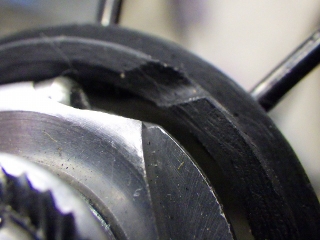
Replacing the spoke required pulling the hub axle
(which is actually how I noticed the drift issue)
so when I reassembled it, I swapped the left and right sides of the axle.
I only swapped the axle itself, strictly speaking.
Usually when you pull the axle, the right-side cone comes out with it,
but I was careful not to put it into the left bearing—
in other words, to preserve the original left-right positional relationship of each component.
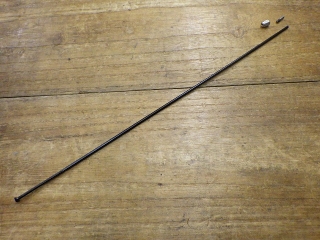
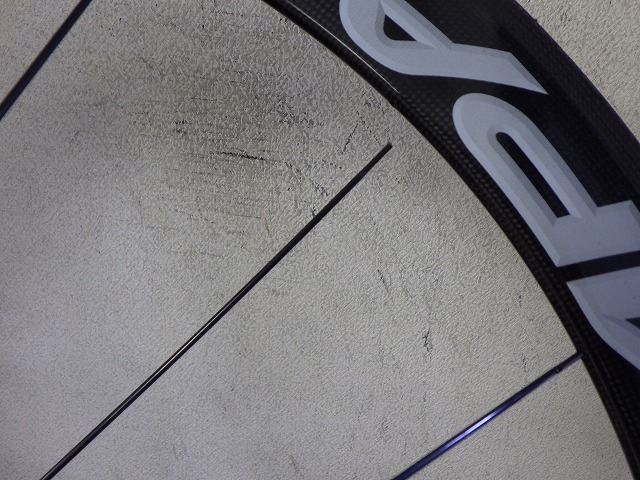
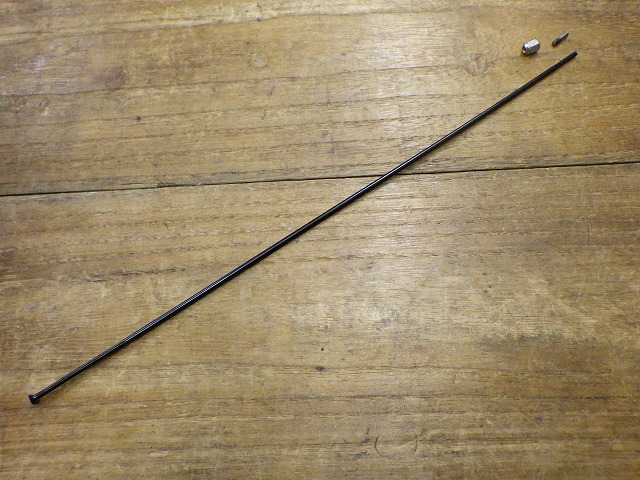
Second point: the above image shows the replacement spoke.
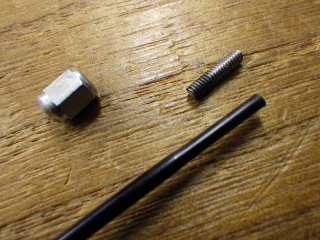
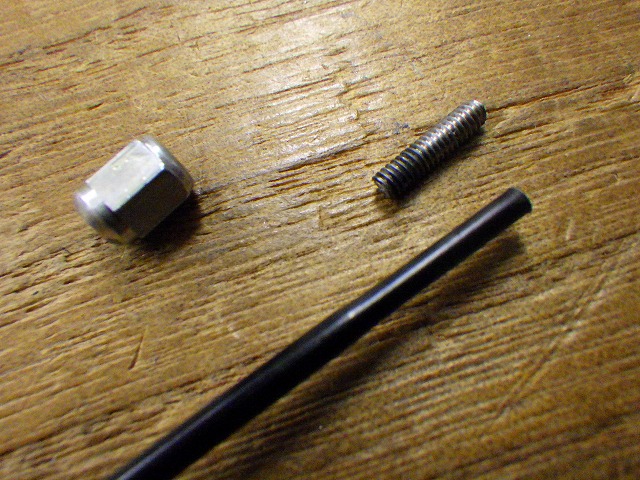
It fractured right at the start of the threads,
and there was enough thread sticking out of the nipple that I could grab it with pliers,
so I was able to recover the threaded portion of the spoke.
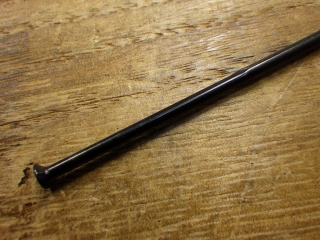
But anyway, this spoke—
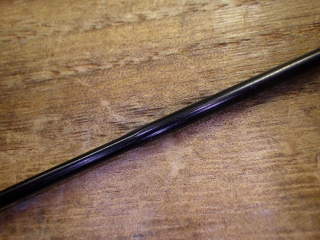
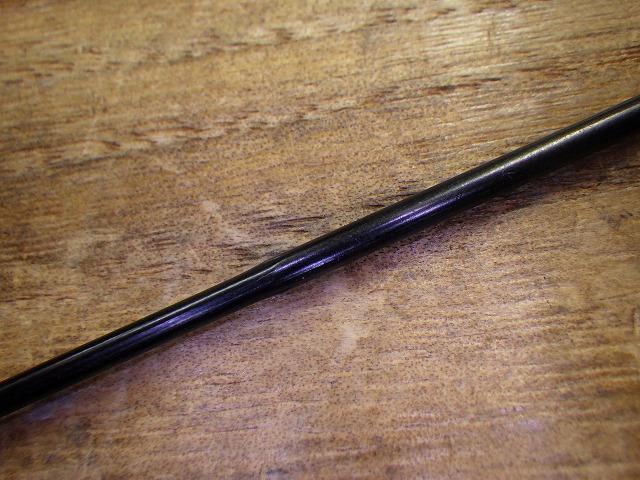
it's a 14-13-14 gauge (2.0-2.3-2.0mm) butted spoke—
an out-butted spoke that's actually reverse-lightweighted to over 100% spoke weight ratio.
There was a period when Campagnolo complete wheelsets featured these on certain wheels:
on the front wheel with radial spoking, the two spokes on either side opposite the valve hole,
and on the rear wheel with G3 spoking, the two spokes in parallel phase on the freewheel side opposite the valve hole.
This particular Bora Ultra Two dates from before the concepts of clincher rims or wide rims even existed,
and uses internal-nipple construction,
but even on later Bora Ultra Two models with the same internal-nipple design,
these out-butted spokes don't appear—
they all became aero spokes.
This out-butted spoke was probably done for balance purposes,
but like GIANT's DBL(→here),when you mix spokes with vastly different weight ratios on one side of a wheel,
the heavier spokes become slack,
the lighter spokes become super tense,
and trying to achieve both lateral and radial true becomes practically impossible within normal parameters.
With these out-butted spokes, sometimes as a way of advertising the feature,
while other spokes are black, only the out-butted spokes are silver,
and I've been asked several times: "I bought this Bola at auction and it has round spokes or silver spokes mixed in from some shoddy repair history—can you fix it?"
In those cases I say: "That's actually the spec for that era's model, but if it bothers you, we can replace all the spokes to match."
I made that suggestion to this customer too,
but this time they wanted the repair done with round spokes.
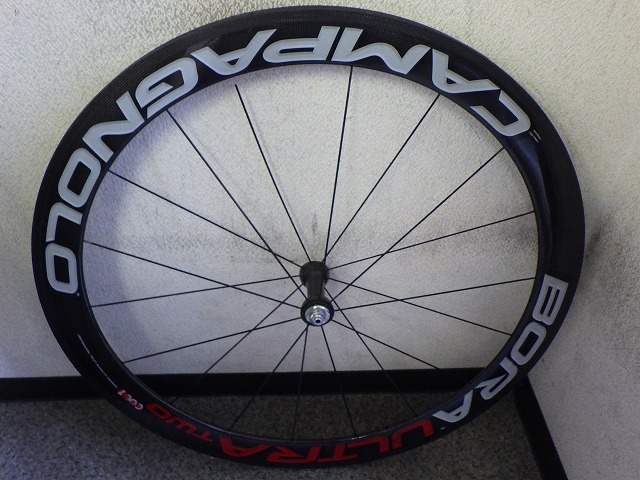
One spoke was broken.
These days I often don't bother taking photos for an article for damage like this,
but there are a couple of things worth documenting here, so I decided to write this up.
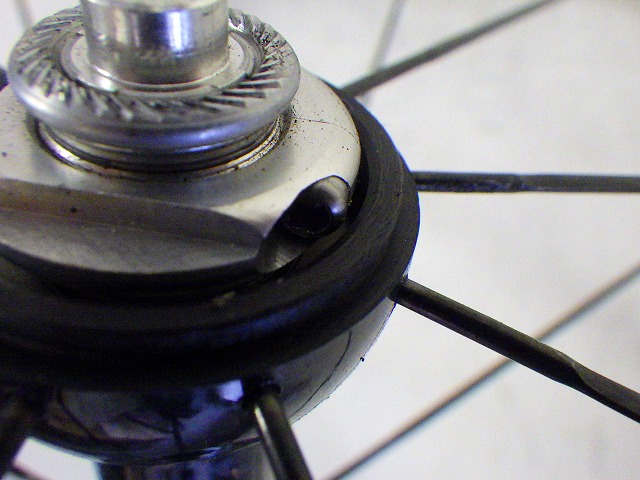
First point: after removing the dust cap,
the adjustment bolt for the cone on the left side of the hub body—
where there should be a notch to grip with a tool—
somehow didn't have one.
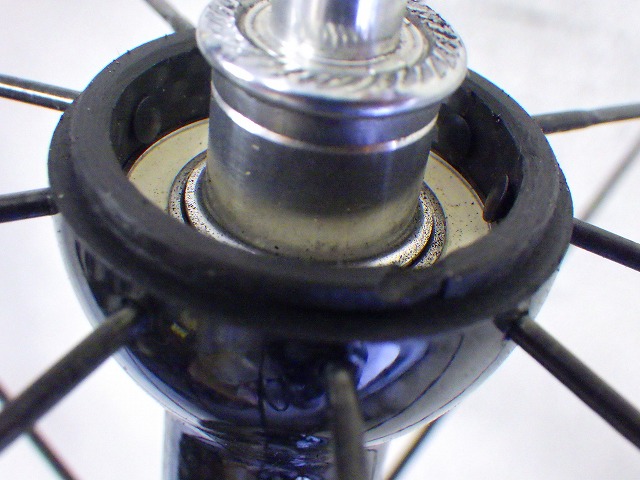
It was on the right side instead.

↑This.
This is a screw-up by whichever shop overhauled this wheel previously.
I asked the customer which shop it was, but I can't write that here.
But honestly, with a CULT front wheel—if the bearing adjustment is tight with no play,
there's no reason to re-grease the bearings either,
so what's really to overhaul?
It's rare, but the only time you'd need to do anything is if the ball races get pitted,
in which case you'd replace the bearing parts.
That's about it, I figured.
So after I replaced the spoke, I put a truing stand on it
and found it was pretty far out of true.
That drift definitely happened before the spoke broke.
If you took it in for an overhaul, you should have fixed that kind of thing.
Replacing the spoke required pulling the hub axle
(which is actually how I noticed the drift issue)
so when I reassembled it, I swapped the left and right sides of the axle.
I only swapped the axle itself, strictly speaking.
Usually when you pull the axle, the right-side cone comes out with it,
but I was careful not to put it into the left bearing—
in other words, to preserve the original left-right positional relationship of each component.
Second point: the above image shows the replacement spoke.
It fractured right at the start of the threads,
and there was enough thread sticking out of the nipple that I could grab it with pliers,
so I was able to recover the threaded portion of the spoke.

But anyway, this spoke—
it's a 14-13-14 gauge (2.0-2.3-2.0mm) butted spoke—
an out-butted spoke that's actually reverse-lightweighted to over 100% spoke weight ratio.
There was a period when Campagnolo complete wheelsets featured these on certain wheels:
on the front wheel with radial spoking, the two spokes on either side opposite the valve hole,
and on the rear wheel with G3 spoking, the two spokes in parallel phase on the freewheel side opposite the valve hole.
This particular Bora Ultra Two dates from before the concepts of clincher rims or wide rims even existed,
and uses internal-nipple construction,
but even on later Bora Ultra Two models with the same internal-nipple design,
these out-butted spokes don't appear—
they all became aero spokes.
This out-butted spoke was probably done for balance purposes,
but like GIANT's DBL(→here),when you mix spokes with vastly different weight ratios on one side of a wheel,
the heavier spokes become slack,
the lighter spokes become super tense,
and trying to achieve both lateral and radial true becomes practically impossible within normal parameters.
With these out-butted spokes, sometimes as a way of advertising the feature,
while other spokes are black, only the out-butted spokes are silver,
and I've been asked several times: "I bought this Bola at auction and it has round spokes or silver spokes mixed in from some shoddy repair history—can you fix it?"
In those cases I say: "That's actually the spec for that era's model, but if it bothers you, we can replace all the spokes to match."
I made that suggestion to this customer too,
but this time they wanted the repair done with round spokes.