Another day, another wheel (and so on).

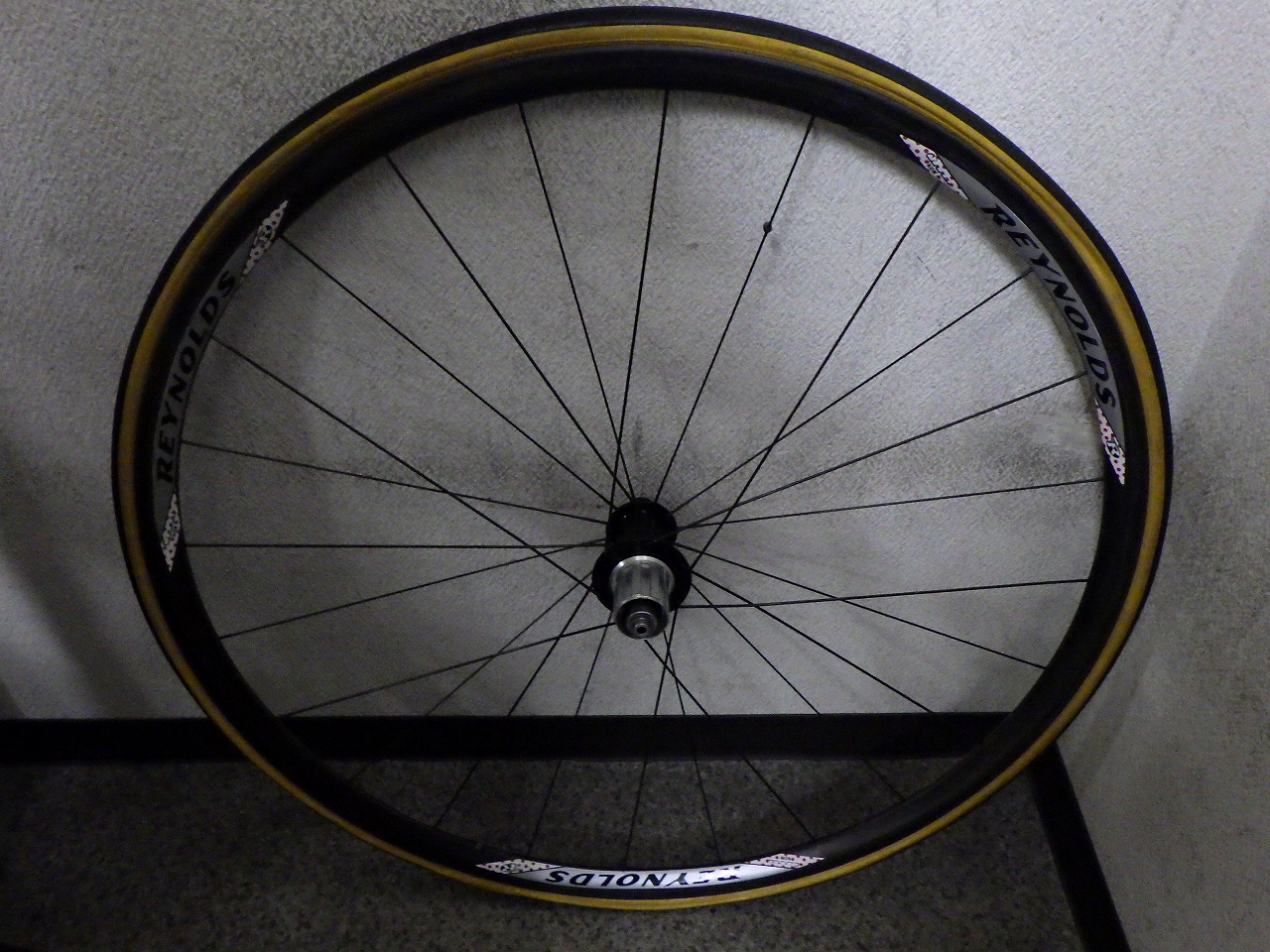
A customer left me with the rear wheel from a Reynolds
Siello SV KOM.
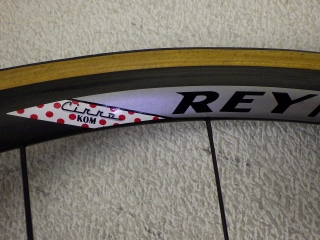
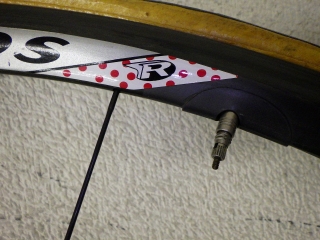
This KOM (King of Mountain) is a lightweight complete wheel built with
a Siello SV low-profile rim.
The stickers even feature the design of the Tour de France mountain classification jersey.
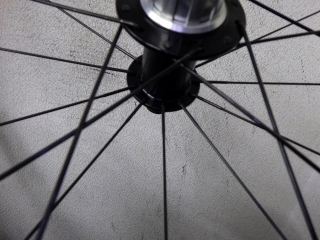
It's built with Reynolds' original hub, 24 holes,
with round spokes in a 40-spoke pattern,
But since they're round spokes, they don't act as anti-rotation locks.
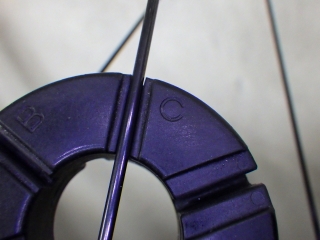
To check the diameter of the butted section of the spokes,
I held them up against a Campagnolo tool,
and the free-side spokes didn't fit into the C-groove,
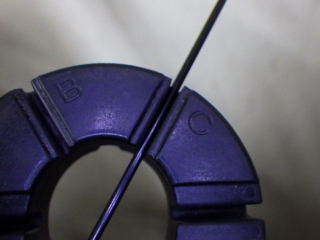
but the non-drive-side spokes fit all the way in.
In other words, this wheel has different-diameter spokes on left and right.
Specifically, the free-side is Race and the non-drive-side is Laser.
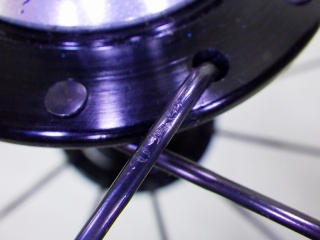
There's no stampmark on the spoke heads,
and the maker's name is stamped at the neck where you can tell right away (a show of confidence)
with "SAP" stamped on them, so these are Sapim spokes.
Reynolds later went through a period where they adopted DT hubs,
and then later switched back to non-DT original hubs again.
But only during the period when they used DT hubs
did they use DT spokes as well.
After breaking up with DT hubs, if Reynolds thought DT spokes were better than Sapim,
they would use DT spokes, but instead they switched to Sapim.
ZIPP complete wheels all have in-house hubs,
but they've consistently used Sapim spokes from way back.
When using DT custom hubs and also DT spokes,
there are examples like Roval, Bontrager, and GIANT.
ENVE also uses DT generic hubs when they don't use their own brand hubs,
so they use DT spokes.
For generic DT hub complete wheels,
there are also ones like FF Yamaguchi,
but these are naturally also built with DT spokes.
When you adopt DT hubs, you end up having to use DT spokes,
but when you don't have that constraint, Sapim seems to be the choice.
I think that among flat spokes with a 65% spoke density—
that is, between Aerolite and CX-RAY—
CX-RAY is superior,
but with round butted spokes, I don't really care which.
In fact, I normally use DT Competition on my half-race,
and I almost never use Sapim Race with the same butted dimensions.
This is because Competition has a larger range of usable cut lengths.
DT Aerolite is more expensive than Sapim CX-RAY,
which might also be a reason why complete wheels
that don't use DT hubs avoid it.
The other day I mentioned that my computer died suddenly and some data couldn't be recovered,
and among that data were images I was going to use for an article
about ONE AERO (one-air) wheels.
I might write about them someday if I get the chance,
but in a word they're "really good."
It's just a normal all CX-RAY 44-spoke build,
tensioned as much as possible,
but it's fortunate that stupid 2:1 builds
haven't turned it into an inferior wheel.
I don't need to give specific examples,
but that applies to
Shimano's rear wheels and Roval's front and rear wheels.
I've never been told by anyone that my rebuilds of these were better.
So ONE AERO—despite adopting DT hubs (240),
they build wheels with Sapim CX-RAY spokes.
That's another point where I think "now that's pretty clever."
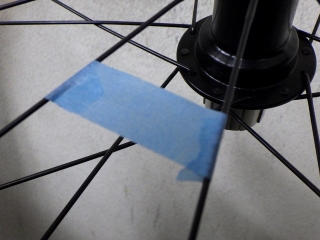
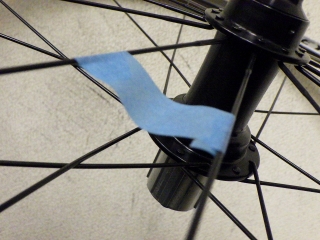
Even with different-diameter left and right, if the non-drive-side is a radial build with the same spoke count on both sides,
it was definitely wobbly.
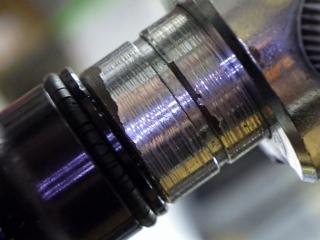
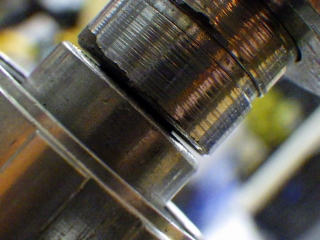
It's probably from years of use,
but the rim had shifted toward the free-side.
Even if I center it by tightening the non-drive-side more,
it doesn't really change much.

The main motivation was converting it to 11-speed, so I rebuilt it.
The original hub only supported up to Shimano 10-speed,
so if it had supported 11-speed,
I might not have rebuilt it.

It's a 660 hub, 24 holes, black half CX Sprint, 46-spoke build.
I'll do the truing later.
The original Reynolds hub had outer-to-outer flange width of
about 59mm, which is extremely wide,
but the 660 hub is even wider.
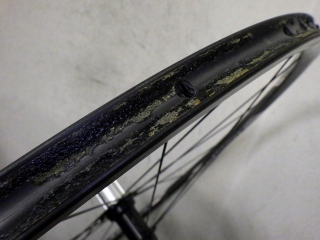
Looking at the condition of the original rim,
quite a bit of the Miyata tubular tape remained on the rim side.
This is because the tire is Veloflex.
If it were Continental, almost all of it would stay on the tire side.
Though it's practically impossible to peel the tape off that black cotton strip.
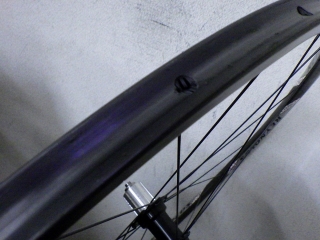
I cleaned it off nicely.
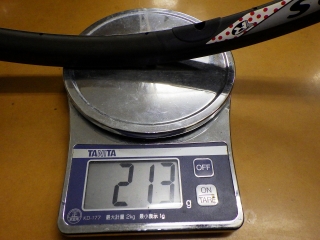
I wanted to measure the rim weight as accurately as possible.
If you include this task time in the wheel-building time,
it comes to more than a third.
The reason I wanted to know the weight is
because it's extremely valuable information to me,
not because I intend to share it with readers here.
↑ Man, this guy's got a bad attitude

Thank you for waiting!
The reason my arms look skinny this time is because of "lightweight district"!
Not "lightweighting" (ケイリョウカ)
but "lightweight district" (カルサトキタ)
(→Click here) please!
Anyway, please look at this image!
↑ Stooooop it!
A customer left me with the rear wheel from a Reynolds
Siello SV KOM.


This KOM (King of Mountain) is a lightweight complete wheel built with
a Siello SV low-profile rim.
The stickers even feature the design of the Tour de France mountain classification jersey.

It's built with Reynolds' original hub, 24 holes,
with round spokes in a 40-spoke pattern,

But since they're round spokes, they don't act as anti-rotation locks.
To check the diameter of the butted section of the spokes,
I held them up against a Campagnolo tool,
and the free-side spokes didn't fit into the C-groove,

but the non-drive-side spokes fit all the way in.
In other words, this wheel has different-diameter spokes on left and right.
Specifically, the free-side is Race and the non-drive-side is Laser.

There's no stampmark on the spoke heads,
and the maker's name is stamped at the neck where you can tell right away (a show of confidence)
with "SAP" stamped on them, so these are Sapim spokes.
Reynolds later went through a period where they adopted DT hubs,
and then later switched back to non-DT original hubs again.
But only during the period when they used DT hubs
did they use DT spokes as well.
After breaking up with DT hubs, if Reynolds thought DT spokes were better than Sapim,
they would use DT spokes, but instead they switched to Sapim.
ZIPP complete wheels all have in-house hubs,
but they've consistently used Sapim spokes from way back.
When using DT custom hubs and also DT spokes,
there are examples like Roval, Bontrager, and GIANT.
ENVE also uses DT generic hubs when they don't use their own brand hubs,
so they use DT spokes.
For generic DT hub complete wheels,
there are also ones like FF Yamaguchi,
but these are naturally also built with DT spokes.
When you adopt DT hubs, you end up having to use DT spokes,
but when you don't have that constraint, Sapim seems to be the choice.
I think that among flat spokes with a 65% spoke density—
that is, between Aerolite and CX-RAY—
CX-RAY is superior,
but with round butted spokes, I don't really care which.
In fact, I normally use DT Competition on my half-race,
and I almost never use Sapim Race with the same butted dimensions.
This is because Competition has a larger range of usable cut lengths.
DT Aerolite is more expensive than Sapim CX-RAY,
which might also be a reason why complete wheels
that don't use DT hubs avoid it.
The other day I mentioned that my computer died suddenly and some data couldn't be recovered,
and among that data were images I was going to use for an article
about ONE AERO (one-air) wheels.
I might write about them someday if I get the chance,
but in a word they're "really good."
It's just a normal all CX-RAY 44-spoke build,
tensioned as much as possible,
but it's fortunate that stupid 2:1 builds
haven't turned it into an inferior wheel.
I don't need to give specific examples,
but that applies to
Shimano's rear wheels and Roval's front and rear wheels.
I've never been told by anyone that my rebuilds of these were better.
So ONE AERO—despite adopting DT hubs (240),
they build wheels with Sapim CX-RAY spokes.
That's another point where I think "now that's pretty clever."


Even with different-diameter left and right, if the non-drive-side is a radial build with the same spoke count on both sides,
it was definitely wobbly.


It's probably from years of use,
but the rim had shifted toward the free-side.
Even if I center it by tightening the non-drive-side more,
it doesn't really change much.

The main motivation was converting it to 11-speed, so I rebuilt it.
The original hub only supported up to Shimano 10-speed,
so if it had supported 11-speed,
I might not have rebuilt it.

It's a 660 hub, 24 holes, black half CX Sprint, 46-spoke build.
I'll do the truing later.
The original Reynolds hub had outer-to-outer flange width of
about 59mm, which is extremely wide,
but the 660 hub is even wider.

Looking at the condition of the original rim,
quite a bit of the Miyata tubular tape remained on the rim side.
This is because the tire is Veloflex.
If it were Continental, almost all of it would stay on the tire side.
Though it's practically impossible to peel the tape off that black cotton strip.

I cleaned it off nicely.
I wanted to measure the rim weight as accurately as possible.
If you include this task time in the wheel-building time,
it comes to more than a third.
The reason I wanted to know the weight is
because it's extremely valuable information to me,
not because I intend to share it with readers here.
↑ Man, this guy's got a bad attitude

Thank you for waiting!
The reason my arms look skinny this time is because of "lightweight district"!
Not "lightweighting" (ケイリョウカ)
but "lightweight district" (カルサトキタ)
(→Click here) please!

Anyway, please look at this image!
↑ Stooooop it!