Today is a double feature! About eyelets and nipples.
Both of these are things I need to explain before
writing my impressions of the Tni AL300.
So let me cover them both at once.
First, let's start with eyelets.
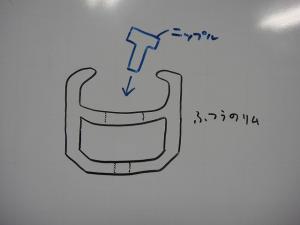
When building a wheel with a standard rim,
you first insert the nipple from the outside of the rim inward.
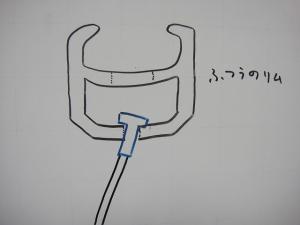
So you build it this way,
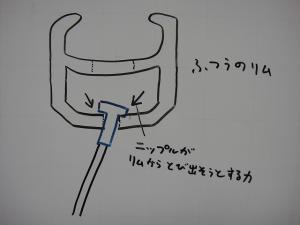
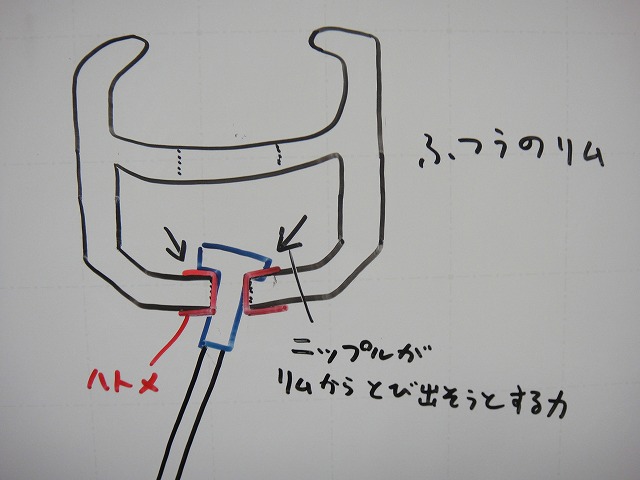
but as spoke tension increases, a force develops that tries to make the nipple
break through and push out of the rim.
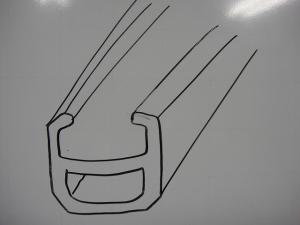
Right after being extruded from the molding machine, a rim looks straight
like a curtain rail,
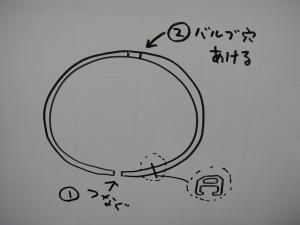
but then it's bent into a circle like a bentwood container and welded,
with the valve hole drilled on the opposite side (with exceptions) to complete it.
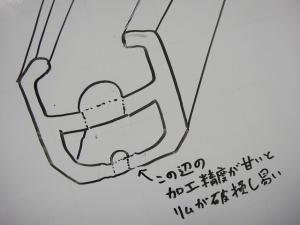
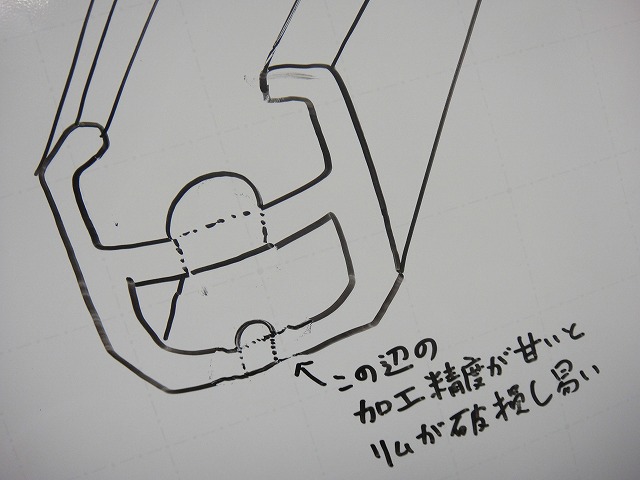
I've drawn it deliberately bumpy here, but if the precision of extrusion molding is poor,
the thickness around the nipple hole becomes uneven, and the rim tends to
break more easily at the thinner sections.
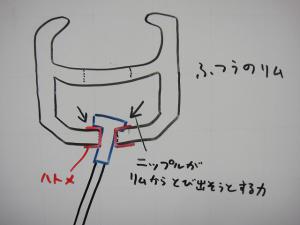
↑As reinforcement for that, riveted-like pieces are staked on—
these are called "eyelets" (Japanese: hatome). They're made of brass.
While they do add weight, they reduce the risk of rim damage.
This type is called "single eyelet," with reinforcement only on the rim's inner side.
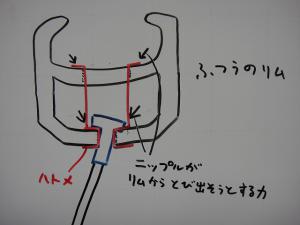
There's also a "double eyelet" type that runs through both the top and bottom of the rim.
With this design, spoke tension is also supported on the rim's outer side,
further reducing the risk of rim damage.
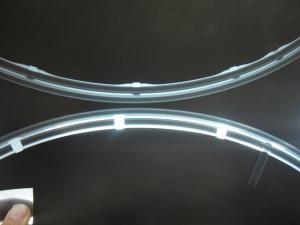
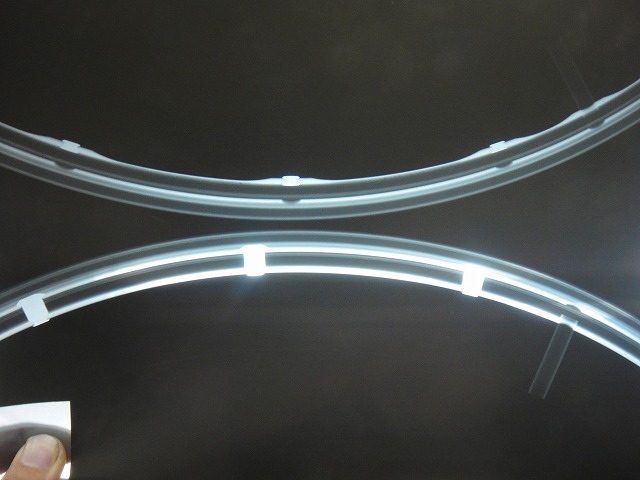
This is a diagram I showed before comparing old and new Cosmic Carbon rims.
The upper Cosmic Carbon SL has single eyelets,
while the lower older Cosmic Carbon has double eyelets.
This is one reason for the difference in rim weight.
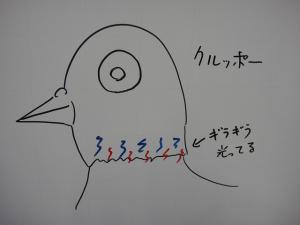
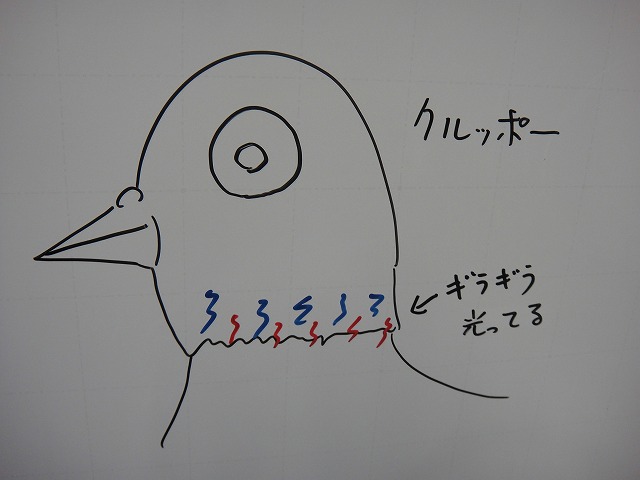
The Japanese term "hatome" (eyelets) comes from "hato no me" (pigeon's eye), because they resemble a pigeon's eye.
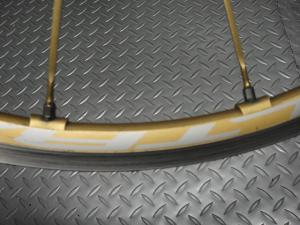
↑Nowadays, as rim molding technology has improved, such complex
shapes are possible. Not just on the outside, but also on the inside
you can increase wall thickness only around the spoke holes,
so eyelets are no longer strictly necessary.
Writing it this way might give the impression that eyelets are used to hide poor molding technology,
but a rim with eyelets is not necessarily a bad rim.
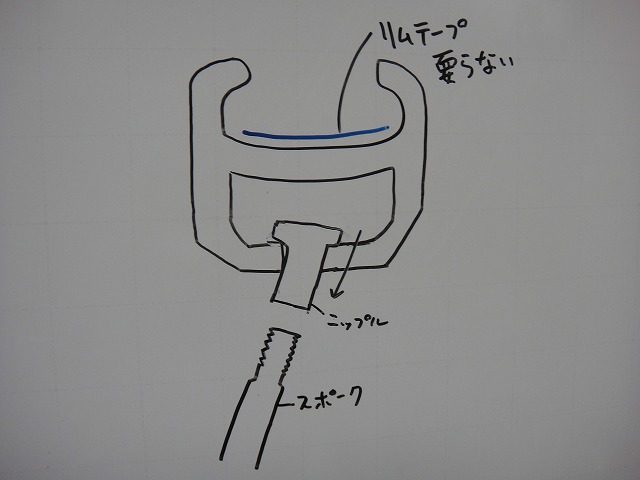
Next, let's talk about nipples on complete aluminum (and carbon) spoke wheels.

To reduce the risk of rim damage from spoke tension—among other reasons—
Ksyrium rims have spoke holes only on the inside of the rim.
This is a Mavic-proprietary technology where a hot bit is rotated while pressed against the rim
to create threaded holes.
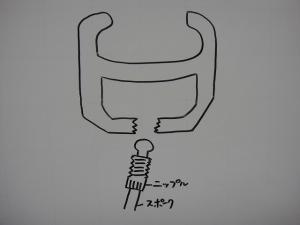
These are tensioned with dedicated aluminum spokes, and this combination of
proprietary rim, proprietary spokes, and proprietary nipples can achieve
a rigidity that's hard to match with handbuilt wheels.
The Helium, which debuted in 1996, does use straight spokes,
but its spokes and nipples follow the same standard as handbuilt wheels,
so there was potential to build handbuilt wheels of equal or superior quality.
From Ksyrium's debut in 1999 onward, proprietary complete wheels with custom designs
made it possible to build wheels with vertical stiffness that handbuilt wheels simply couldn't achieve,
so even if weight is similar to handbuilt wheels, when you ride them they feel completely different—
the complete wheels are stiffer, which means better performance.
The Tni AL300 wheel takes the position that it clearly admits it can't beat
those proprietary-design complete wheels in rigidity (the most important factor in a wheel)
but will perform on par with the next tier down—steel-spoke complete wheels—
and offers good cost-performance value when price is factored in.
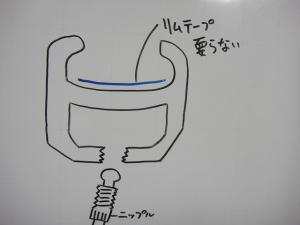
Another advantage of this design is that you don't need rim tape.
Since there are no holes on the rim's outer side except the valve hole, as-is it's impossible,
but it does make conversion to tubeless easier.
Tubeless tires were first pioneered by Mavic and Hutchinson in MTB,
so I thought Mavic would be first with road tubeless,
but they've been surprisingly passive about road tubeless compared to later entrants Campagnolo and Shimano.
In 2006, Fulcrum debuted with the Racing 1, 3, and 5 lineup,
and the flagship Racing 1 was presented as
"a complete wheel with spoke holes only on the inside of the rim."
At that time, Campagnolo's top-tier mid-height rim wheel model,
the Eurus, used steel spokes.
Actually, the Racing 1 design was in a patent dispute with Mavic.
I suspect that since Fulcrum is nominally separate from Campagnolo, if they lost the lawsuit they could just fold the company—
that's probably why they specifically established Fulcrum as a separate company.
Whether they reached a settlement with Mavic or what happened, I'm not sure,
but the Racing 1 structure apparently became unproblematic to release,
and Campagnolo wheels later became Fulcrum-ified anyway.
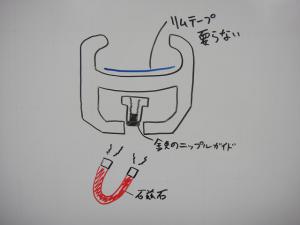
I think it's to avoid that patent issue, but Racing 1-type rims have
nipples that are individually attracted with magnets.
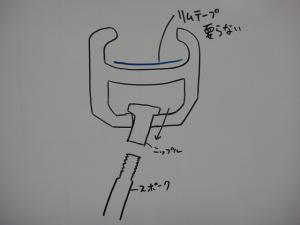
The original Racing 1 uses brass nipples, while Racing ZERO uses aluminum nipples.
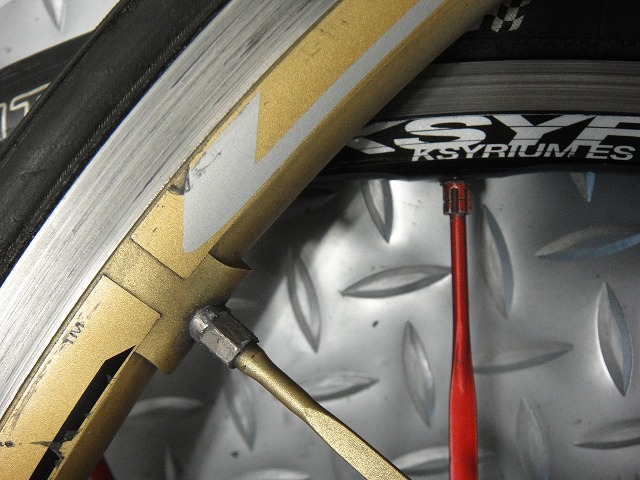
Whether it's Ksyrium or Racing 1, aluminum spokes need sufficient cross-sectional area
to maintain rigidity. Steel spokes max out at 2.0mm in true circular section,
but aluminum can't be made that thin, so to match thicker spokes,
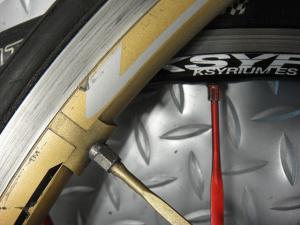
naturally the nipples become bulkier too.

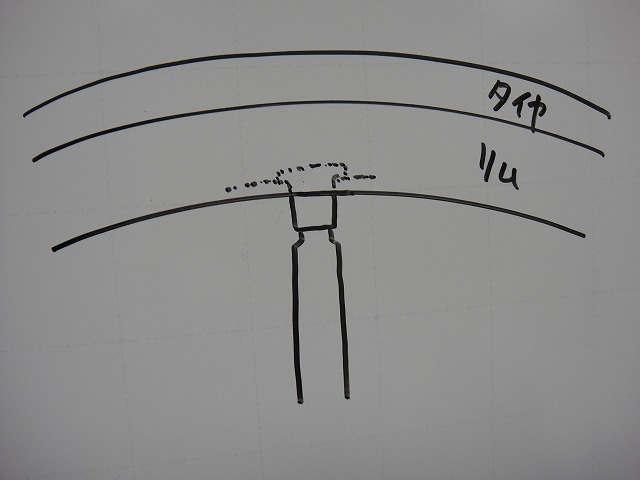
Standard nipples look like this.
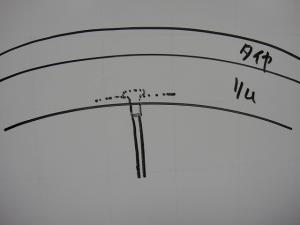
↑With steel spokes
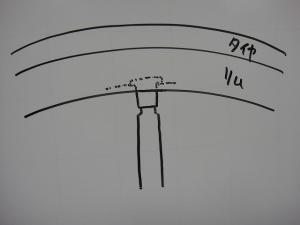
↑With aluminum spokes
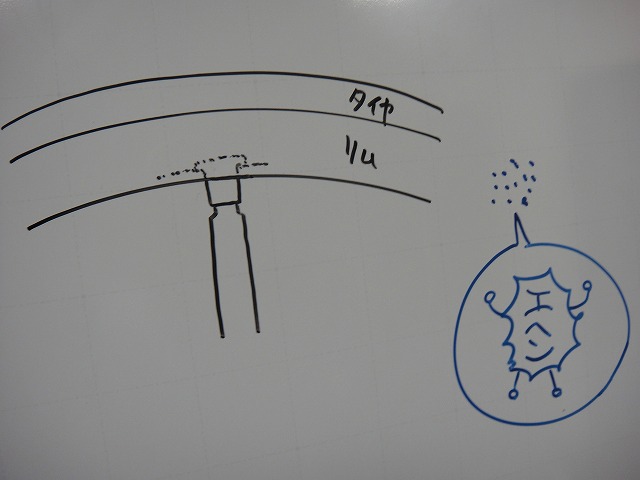
With such bulky, angular protrusions on the outer edge,
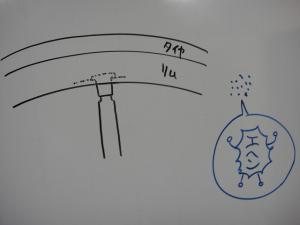
aerodynamic efficiency (what this blog also calls "wind-buffeting deflection characteristics")
is clearly compromised.
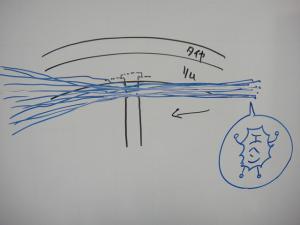
As I wrote when discussing cycloid curves, the wheel's apex moves forward
at twice the bike's speed. When I calculated it,
the nipple section of Ksyrium or Racing 1 moves forward at about 1.85 times the bike's speed
when passing directly above the hub.
At 40 km/h bike speed, the nipple area is moving at about 74 km/h.
But thanks to this structure, rigidity increases dramatically,
so the overall wheel performance is definitely improved.
If it weren't, Racing 3 (steel spokes with rim-side-only spoke holes) would be the strongest.
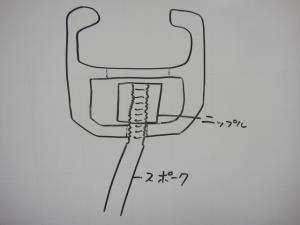
You might think, "Why not just hide the nipples inside the rim?"
But if you did that, you'd need holes on the rim's outer side too.
This creates problems like the weight increase from rim tape and the inability to go tubeless,
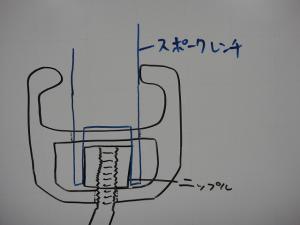
but more critically, thick spokes, surrounded by their nipples, surrounded by a hole large enough for a spoke wrench to pass through—
that would require quite large hole diameters.
In this respect, I don't think internal nipples are really practical for aluminum spokes.
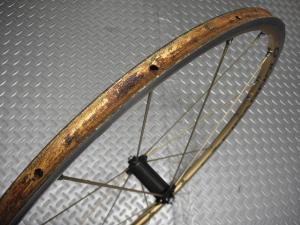
With tubular rims there's no rim tape, so putting nipple holes on the rim's outer side
doesn't add weight.
Plus, there's no need to attract the nipples with magnets.
So with my Shamal Ultra tubular rim,
I've drilled holes precisely at the spoke positions,
at my own risk of course.
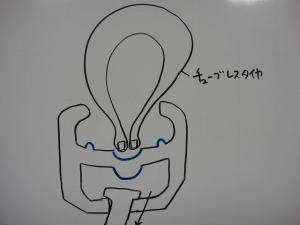
Not directly related to today's topic, but about tubeless tire rims.
Tubeless rims first need a depression in the rim center where the bead can drop down.
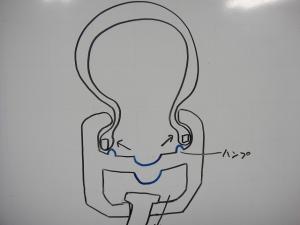
Additionally, you need a hump section that holds the bead once the tire is pressurized.
I've drawn these two features with blue lines in the diagram above,
but it's a bit hard to see. The rim gets heavier by this much—
probably around 15g.
If you put a tubeless valve on a Ksyrium (or a non-tubeless Racing 1-type wheel) and mount a tubeless tire and inflate it,
it will appear to work as a tubeless setup, but
if you get a flat there's a risk the tire will burst off instantly, which is extremely dangerous.
There are kits that seal the nipple holes to convert normal rims to tubeless,
but fitting a tubeless tire to a rim without a hump just feels scary.
Both of these are things I need to explain before
writing my impressions of the Tni AL300.
So let me cover them both at once.
First, let's start with eyelets.

When building a wheel with a standard rim,
you first insert the nipple from the outside of the rim inward.
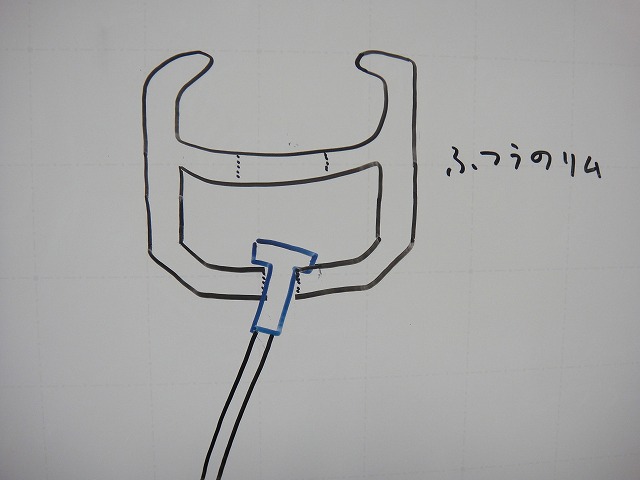
So you build it this way,
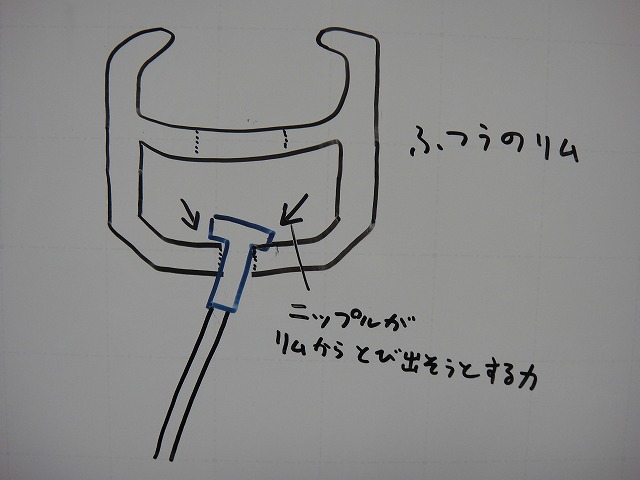
but as spoke tension increases, a force develops that tries to make the nipple
break through and push out of the rim.

Right after being extruded from the molding machine, a rim looks straight
like a curtain rail,
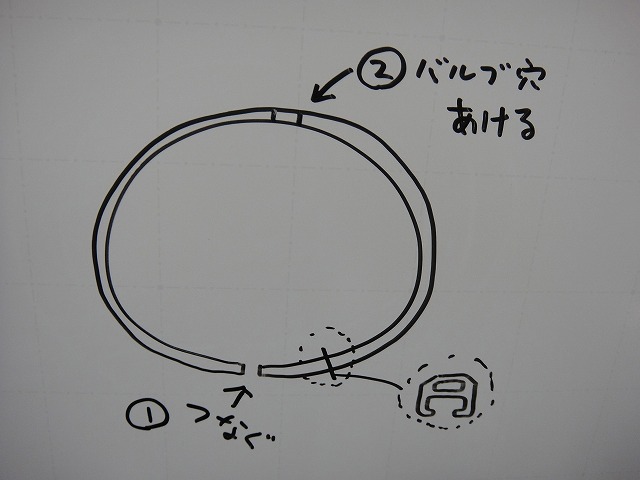
but then it's bent into a circle like a bentwood container and welded,
with the valve hole drilled on the opposite side (with exceptions) to complete it.
I've drawn it deliberately bumpy here, but if the precision of extrusion molding is poor,
the thickness around the nipple hole becomes uneven, and the rim tends to
break more easily at the thinner sections.
↑As reinforcement for that, riveted-like pieces are staked on—
these are called "eyelets" (Japanese: hatome). They're made of brass.
While they do add weight, they reduce the risk of rim damage.
This type is called "single eyelet," with reinforcement only on the rim's inner side.

There's also a "double eyelet" type that runs through both the top and bottom of the rim.
With this design, spoke tension is also supported on the rim's outer side,
further reducing the risk of rim damage.
This is a diagram I showed before comparing old and new Cosmic Carbon rims.
The upper Cosmic Carbon SL has single eyelets,
while the lower older Cosmic Carbon has double eyelets.
This is one reason for the difference in rim weight.
The Japanese term "hatome" (eyelets) comes from "hato no me" (pigeon's eye), because they resemble a pigeon's eye.
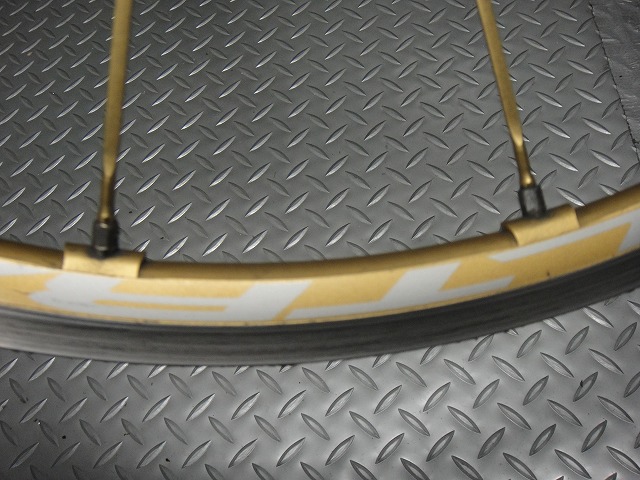
↑Nowadays, as rim molding technology has improved, such complex
shapes are possible. Not just on the outside, but also on the inside
you can increase wall thickness only around the spoke holes,
so eyelets are no longer strictly necessary.
Writing it this way might give the impression that eyelets are used to hide poor molding technology,
but a rim with eyelets is not necessarily a bad rim.
Next, let's talk about nipples on complete aluminum (and carbon) spoke wheels.

To reduce the risk of rim damage from spoke tension—among other reasons—
Ksyrium rims have spoke holes only on the inside of the rim.
This is a Mavic-proprietary technology where a hot bit is rotated while pressed against the rim
to create threaded holes.
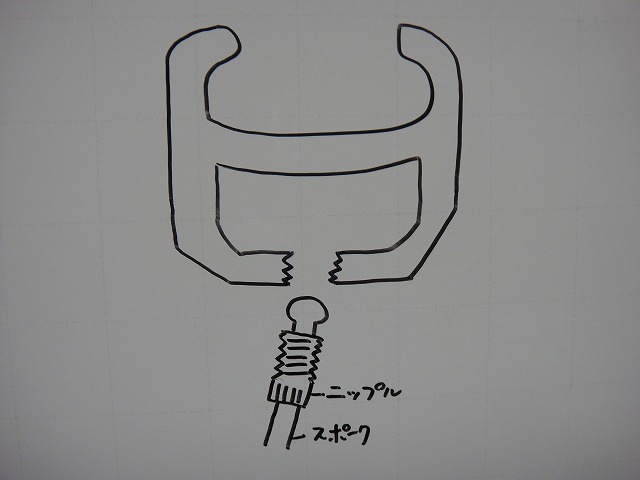
These are tensioned with dedicated aluminum spokes, and this combination of
proprietary rim, proprietary spokes, and proprietary nipples can achieve
a rigidity that's hard to match with handbuilt wheels.
The Helium, which debuted in 1996, does use straight spokes,
but its spokes and nipples follow the same standard as handbuilt wheels,
so there was potential to build handbuilt wheels of equal or superior quality.
From Ksyrium's debut in 1999 onward, proprietary complete wheels with custom designs
made it possible to build wheels with vertical stiffness that handbuilt wheels simply couldn't achieve,
so even if weight is similar to handbuilt wheels, when you ride them they feel completely different—
the complete wheels are stiffer, which means better performance.
The Tni AL300 wheel takes the position that it clearly admits it can't beat
those proprietary-design complete wheels in rigidity (the most important factor in a wheel)
but will perform on par with the next tier down—steel-spoke complete wheels—
and offers good cost-performance value when price is factored in.
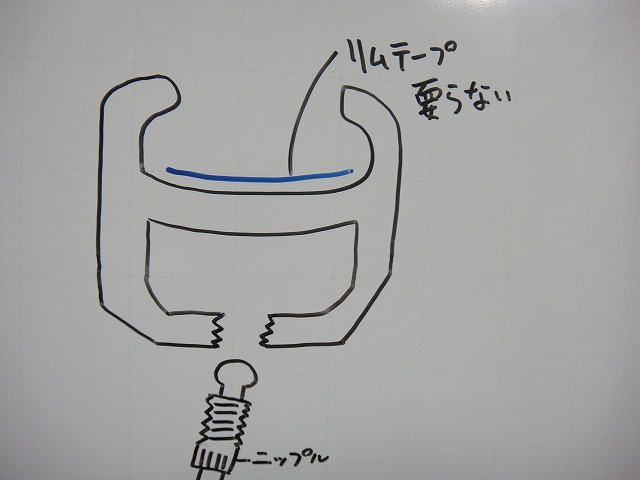
Another advantage of this design is that you don't need rim tape.
Since there are no holes on the rim's outer side except the valve hole, as-is it's impossible,
but it does make conversion to tubeless easier.
Tubeless tires were first pioneered by Mavic and Hutchinson in MTB,
so I thought Mavic would be first with road tubeless,
but they've been surprisingly passive about road tubeless compared to later entrants Campagnolo and Shimano.
In 2006, Fulcrum debuted with the Racing 1, 3, and 5 lineup,
and the flagship Racing 1 was presented as
"a complete wheel with spoke holes only on the inside of the rim."
At that time, Campagnolo's top-tier mid-height rim wheel model,
the Eurus, used steel spokes.
Actually, the Racing 1 design was in a patent dispute with Mavic.
I suspect that since Fulcrum is nominally separate from Campagnolo, if they lost the lawsuit they could just fold the company—
that's probably why they specifically established Fulcrum as a separate company.
Whether they reached a settlement with Mavic or what happened, I'm not sure,
but the Racing 1 structure apparently became unproblematic to release,
and Campagnolo wheels later became Fulcrum-ified anyway.
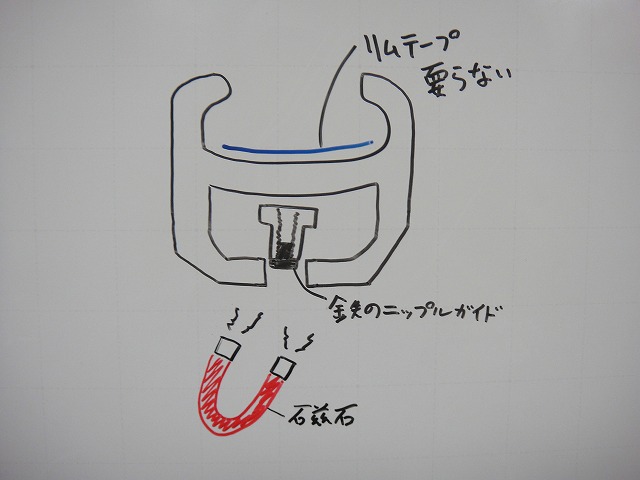
I think it's to avoid that patent issue, but Racing 1-type rims have
nipples that are individually attracted with magnets.
The original Racing 1 uses brass nipples, while Racing ZERO uses aluminum nipples.
Whether it's Ksyrium or Racing 1, aluminum spokes need sufficient cross-sectional area
to maintain rigidity. Steel spokes max out at 2.0mm in true circular section,
but aluminum can't be made that thin, so to match thicker spokes,
naturally the nipples become bulkier too.

Standard nipples look like this.

↑With steel spokes
↑With aluminum spokes
With such bulky, angular protrusions on the outer edge,
aerodynamic efficiency (what this blog also calls "wind-buffeting deflection characteristics")
is clearly compromised.
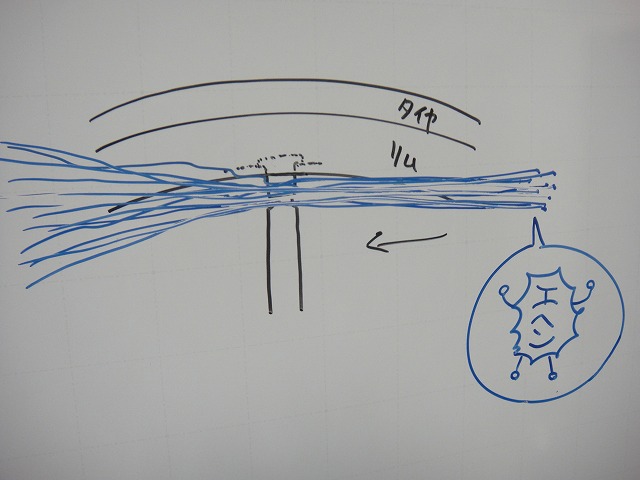
As I wrote when discussing cycloid curves, the wheel's apex moves forward
at twice the bike's speed. When I calculated it,
the nipple section of Ksyrium or Racing 1 moves forward at about 1.85 times the bike's speed
when passing directly above the hub.
At 40 km/h bike speed, the nipple area is moving at about 74 km/h.
But thanks to this structure, rigidity increases dramatically,
so the overall wheel performance is definitely improved.
If it weren't, Racing 3 (steel spokes with rim-side-only spoke holes) would be the strongest.
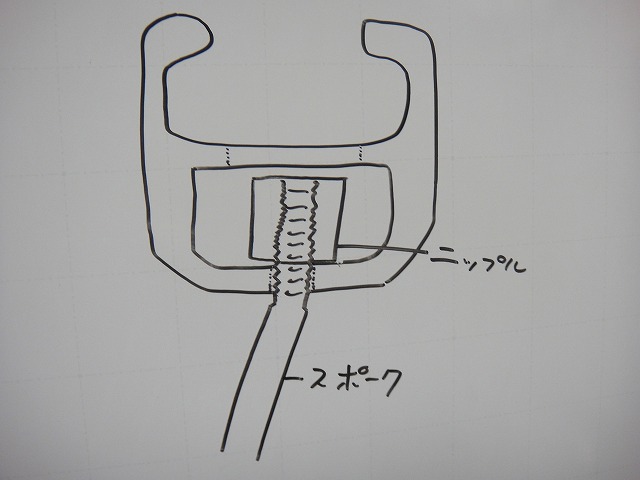
You might think, "Why not just hide the nipples inside the rim?"
But if you did that, you'd need holes on the rim's outer side too.
This creates problems like the weight increase from rim tape and the inability to go tubeless,

but more critically, thick spokes, surrounded by their nipples, surrounded by a hole large enough for a spoke wrench to pass through—
that would require quite large hole diameters.
In this respect, I don't think internal nipples are really practical for aluminum spokes.
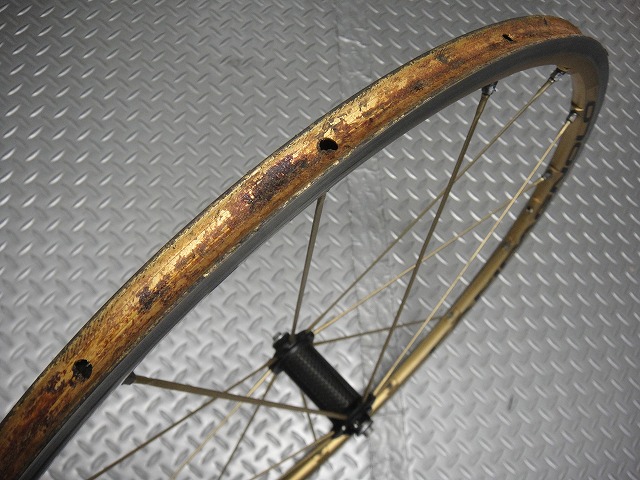
With tubular rims there's no rim tape, so putting nipple holes on the rim's outer side
doesn't add weight.
Plus, there's no need to attract the nipples with magnets.
So with my Shamal Ultra tubular rim,
I've drilled holes precisely at the spoke positions,
at my own risk of course.
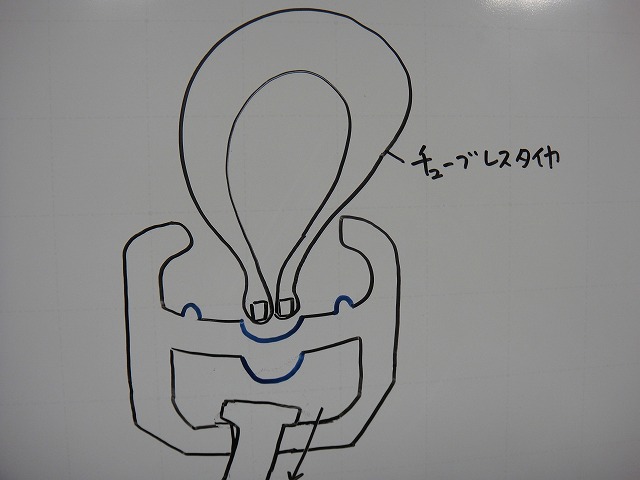
Not directly related to today's topic, but about tubeless tire rims.
Tubeless rims first need a depression in the rim center where the bead can drop down.

Additionally, you need a hump section that holds the bead once the tire is pressurized.
I've drawn these two features with blue lines in the diagram above,
but it's a bit hard to see. The rim gets heavier by this much—
probably around 15g.
If you put a tubeless valve on a Ksyrium (or a non-tubeless Racing 1-type wheel) and mount a tubeless tire and inflate it,
it will appear to work as a tubeless setup, but
if you get a flat there's a risk the tire will burst off instantly, which is extremely dangerous.
There are kits that seal the nipple holes to convert normal rims to tubeless,
but fitting a tubeless tire to a rim without a hump just feels scary.