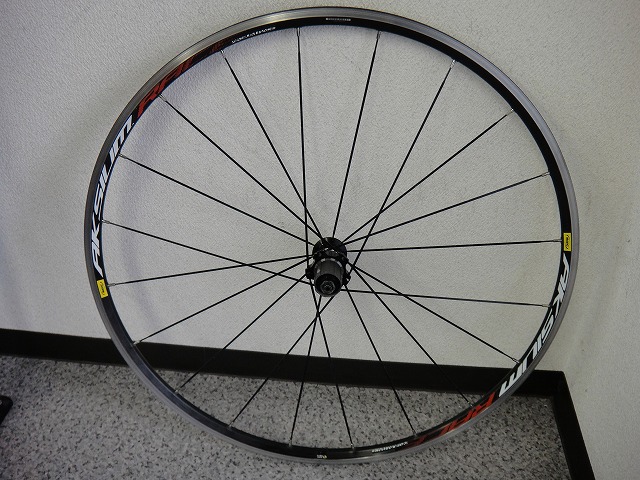
A customer brought in an Aksium wheel for service.
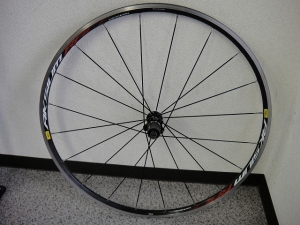
Since the person who brought it in wasn't the original owner,
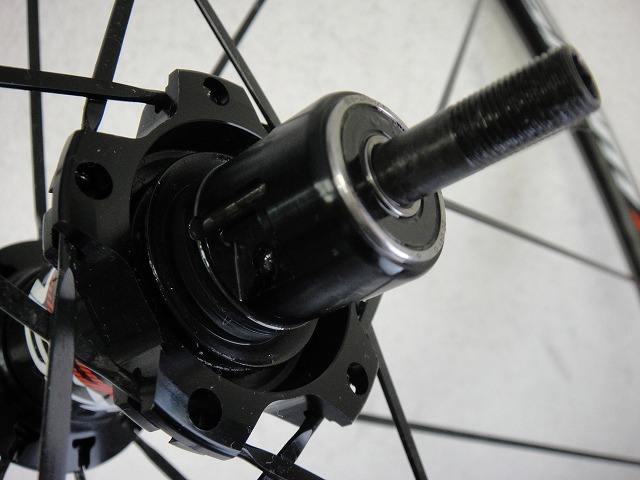
they requested inspection of trueness, centering, and bearings.
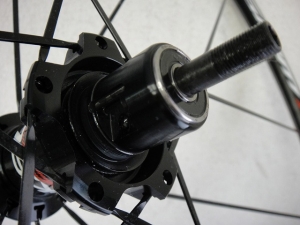
After checking everything, aside from minor radial runout, there were no particular issues.
All's well that ends well.
Below, I'm going to write something that's not directly related to this wheel.
I heard a voice from heaven telling me to write about it.
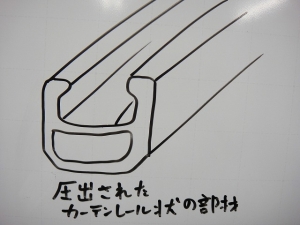
Aluminum rims are made by taking a straight extrusion from a die,
bending it into a circle, and connecting the ends using some method (sleeves or welding).
Mavic rims have their sides (brake zones) machined to surface plate level with great precision,
so they have exceptionally high accuracy and can achieve very tight radial runout when brand new.
Open Pro rims in particular have such high precision that they're ideal for wheel building practice.
(There's no element of having to cover poor materials with skill and experience)
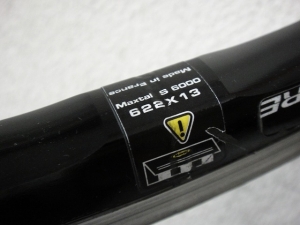
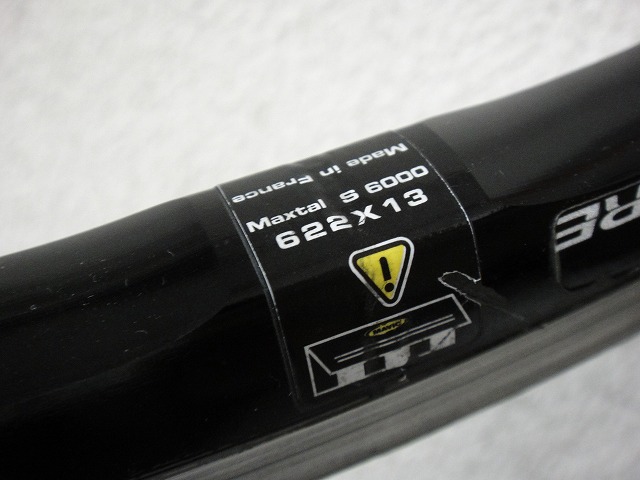
↑This is a Ksyrium ES,
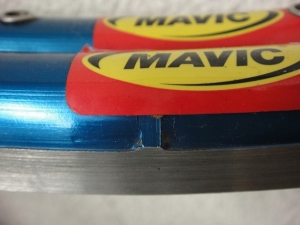
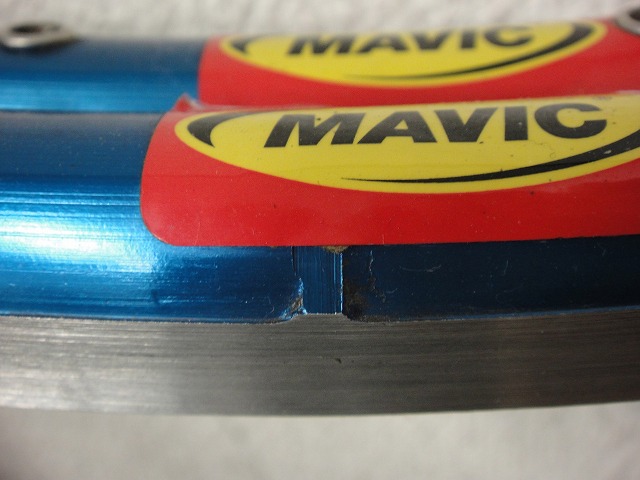
↑And this is an Open Pro from two generations ago,
but the inner side of the rim is finished in a special shape, and those marks are hidden with a sticker.
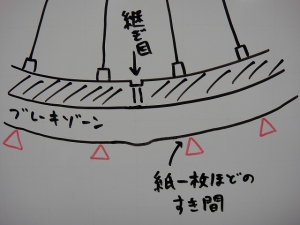
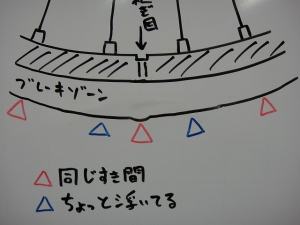
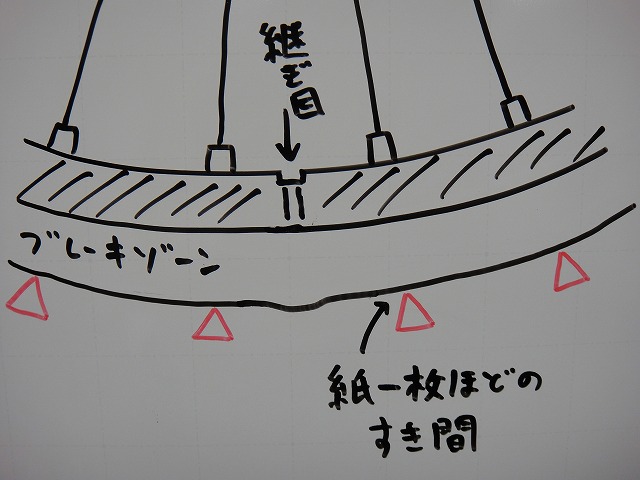
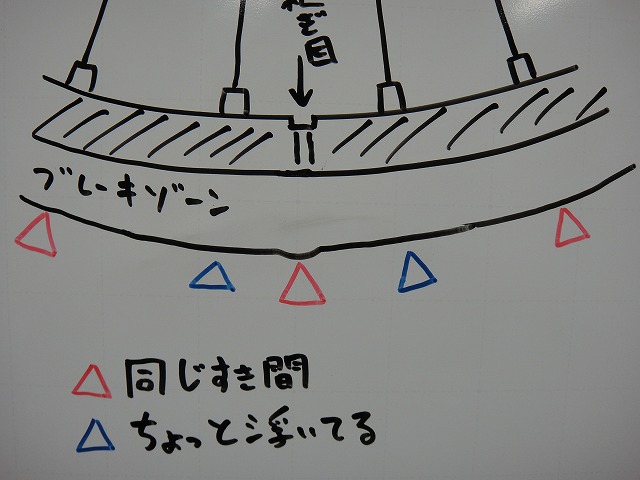
Say we've trued an Open Pro to the limit for radial runout.
The red triangle in the diagram above is the gauge on the truing stand.
If we've trued the radial runout to the point where the gap between the rim and gauge at the nipple location
is paper-thin all the way around,
some rims won't allow this, but at least with a brand new Open Pro you can
achieve really tight radial trueing.
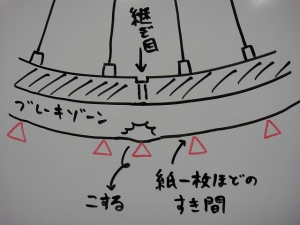
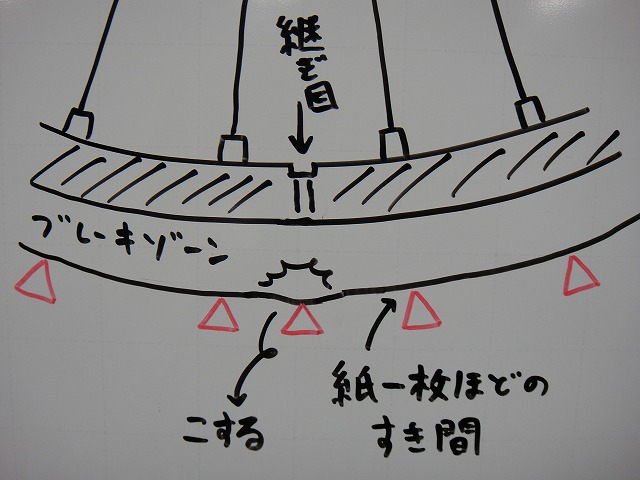
When we put the gauge against the rim seam in that state, the gauge and rim will rub.
Mavic rims (and others made the same way) have
a slight bulge on the outer side of the seam.
Though dimensionally it's barely noticeable (really less than paper-thin),
it's actually a good indicator that "the radial runout everywhere else on the rim is well-trued all the way around, so it's OK".
This bulge at the seam, when you mount a tire over it and
ride it on the road or a three-roller trainer, you basically won't notice it.
However, on a fixed roller trainer it can sometimes show up in how the bike feels.
Clincher tires grip at the bead, not at the bottom of the rim's external surface,
so the radial dimension starts at that engagement point. This bulge at the seam could
affect the tire's external circumference, which is a plausible scenario.
Tubular tires sit on the bottom of the rim
but are dimensionally much looser regarding radial runout than clinchers,
so they're even less suited for fixed rollers.
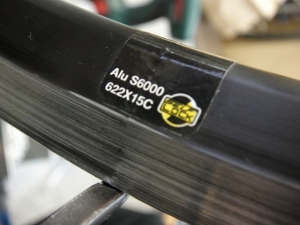
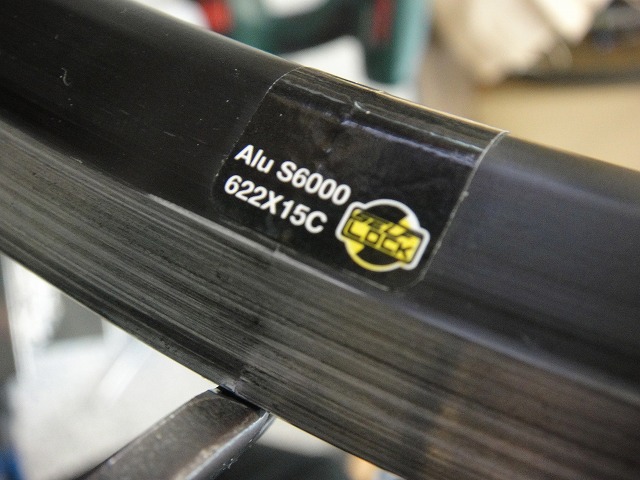
The Aksium I took in today, I trued its radial runout to the limit.
While its precision is inferior to an Open Pro, the gauge is in contact only at this seam area,
doesn't touch the rim at all elsewhere, and the gap between gauge and rim is
nearly uniform all the way around.
But it's possible that this seam bulge might show up in the feel on a fixed roller trainer.
(If that does happen, I think the tire itself is also a factor)
So if someone's concerned about that, it might be worth trueing the seam to average with the rest of the rim.
In that case, the area near the nipple phase next to the seam would actually be slightly dished.
Today's Aksium wasn't brought in as that kind of job,
so I adjusted it to match the radial runout at the nipple location phase.
Though even this dishing is just a subtle dimensional issue.
For example, Campagnolo's G3 wheels
give up on being strict about radial runout, thinking "as long as it's less than the tire deformation during riding, it's fine".
It's impossible to perfectly match the phase directly under the spoke with the phase between spokes on a G3 set.
With a G3 pattern of 7 pairs for a 21-spoke rear wheel,
you could say the rim's shape is a true circle subtly distorted toward a heptagon.
This is a tradeoff for the benefits you get from G3 spoke lacing,
so it's unavoidable.
Since the person who brought it in wasn't the original owner,
they requested inspection of trueness, centering, and bearings.
After checking everything, aside from minor radial runout, there were no particular issues.
All's well that ends well.
Below, I'm going to write something that's not directly related to this wheel.
I heard a voice from heaven telling me to write about it.

Aluminum rims are made by taking a straight extrusion from a die,
bending it into a circle, and connecting the ends using some method (sleeves or welding).
Mavic rims have their sides (brake zones) machined to surface plate level with great precision,
so they have exceptionally high accuracy and can achieve very tight radial runout when brand new.
Open Pro rims in particular have such high precision that they're ideal for wheel building practice.
(There's no element of having to cover poor materials with skill and experience)
↑This is a Ksyrium ES,
↑And this is an Open Pro from two generations ago,
but the inner side of the rim is finished in a special shape, and those marks are hidden with a sticker.
Say we've trued an Open Pro to the limit for radial runout.
The red triangle in the diagram above is the gauge on the truing stand.
If we've trued the radial runout to the point where the gap between the rim and gauge at the nipple location
is paper-thin all the way around,
some rims won't allow this, but at least with a brand new Open Pro you can
achieve really tight radial trueing.
When we put the gauge against the rim seam in that state, the gauge and rim will rub.
Mavic rims (and others made the same way) have
a slight bulge on the outer side of the seam.
Though dimensionally it's barely noticeable (really less than paper-thin),
it's actually a good indicator that "the radial runout everywhere else on the rim is well-trued all the way around, so it's OK".
This bulge at the seam, when you mount a tire over it and
ride it on the road or a three-roller trainer, you basically won't notice it.
However, on a fixed roller trainer it can sometimes show up in how the bike feels.
Clincher tires grip at the bead, not at the bottom of the rim's external surface,
so the radial dimension starts at that engagement point. This bulge at the seam could
affect the tire's external circumference, which is a plausible scenario.
Tubular tires sit on the bottom of the rim
but are dimensionally much looser regarding radial runout than clinchers,
so they're even less suited for fixed rollers.
The Aksium I took in today, I trued its radial runout to the limit.
While its precision is inferior to an Open Pro, the gauge is in contact only at this seam area,
doesn't touch the rim at all elsewhere, and the gap between gauge and rim is
nearly uniform all the way around.
But it's possible that this seam bulge might show up in the feel on a fixed roller trainer.
(If that does happen, I think the tire itself is also a factor)
So if someone's concerned about that, it might be worth trueing the seam to average with the rest of the rim.
In that case, the area near the nipple phase next to the seam would actually be slightly dished.
Today's Aksium wasn't brought in as that kind of job,
so I adjusted it to match the radial runout at the nipple location phase.
Though even this dishing is just a subtle dimensional issue.
For example, Campagnolo's G3 wheels
give up on being strict about radial runout, thinking "as long as it's less than the tire deformation during riding, it's fine".
It's impossible to perfectly match the phase directly under the spoke with the phase between spokes on a G3 set.
With a G3 pattern of 7 pairs for a 21-spoke rear wheel,
you could say the rim's shape is a true circle subtly distorted toward a heptagon.
This is a tradeoff for the benefits you get from G3 spoke lacing,
so it's unavoidable.