I received some ZIPP wheels from a customer.
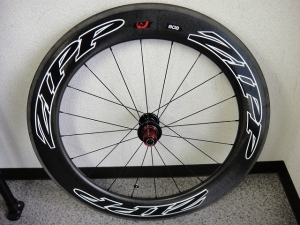
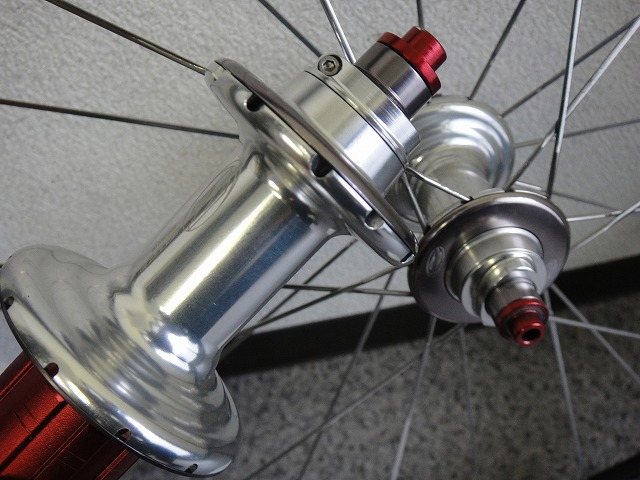
The rear wheel is an 808 and the front wheel is a 404.
The issue with the rear wheel is that the crank co-rotates when in freewheel mode.
This happens when the internal resistance of the ratchet in the freewheel body is greater than the resistance from the chain, rear derailleur, or bottom bracket.
With hubs like Mavic, the freewheel body and rear hub body are in constant contact through a waterproof rubber seal, creating a semi-engaged state, so this problem occurs quite readily with those.
During actual riding while pedaling, this isn't an issue at all, and even when coasting with your feet on the pedals, the resistance from your legs is greater, so co-rotation won't happen.
However, it does occur when the bike is on a stand for maintenance, and many people find this bothersome.
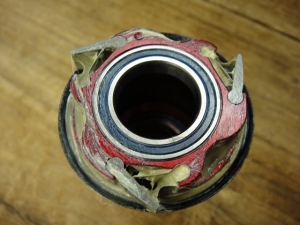
↑In original condition, you can see the grease in the freewheel is quite sticky and stringy.
After cleaning and adjusting the viscosity of the grease and reassembling, the freewheel ratchet sound changed, resistance decreased, and the co-rotation issue was resolved.

Wait, did a hub like this ever come in Shimano 11-speed compatible?
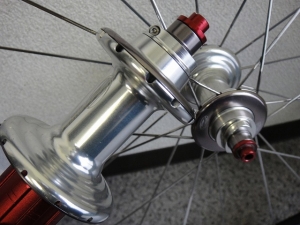
I've been asked multiple times to swap freewheels with the reason being "this hub doesn't have a Shimano 11-speed freewheel available"...
The rear 808 had virtually no runout with perfect centering, and the front 404 had no runout but the center was slightly off, so I trued both wheels.
Since they had WO tires, I removed the tires and tubes to work on them. The front wheel had a valve with a threaded base for a valve nut, so I replaced it with rattle-prevention tape (→see here).

There's a subtle difference between using a valve nut and wrapping the valve with tape.
Both stop the clicking sound from rim contact, but the valve nut can leave marks on the rim.
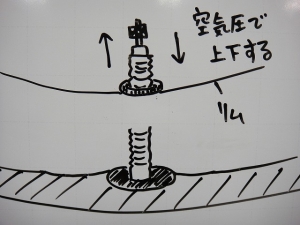
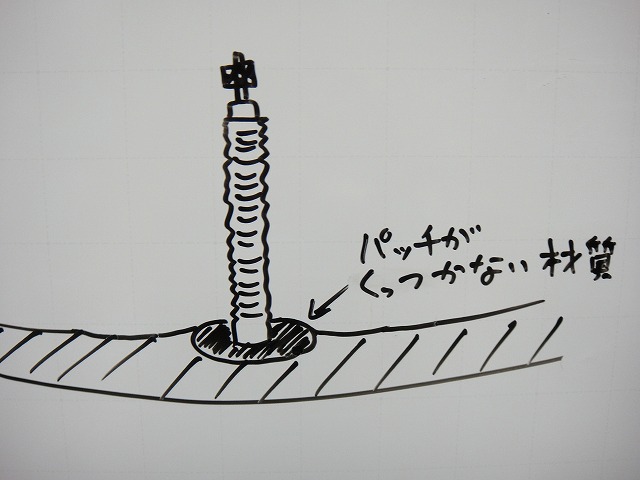
On a related note, the diagram above shows a tube.
The base of the valve is made of a different material than regular rubber, so repair patches won't stick to it.
To be precise, rubber cement won't react with it, so patches won't adhere.
Back to the main topic.
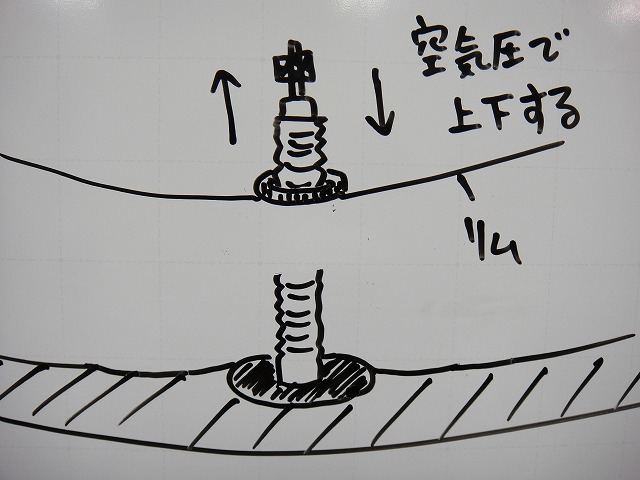
The valve extension actually changes depending on air pressure.
As air pressure increases, the valve protrudes further into the wheel, but when you let all the air out of the tube or go a long time without inflating it and pressure drops, the valve retracts into the rim.
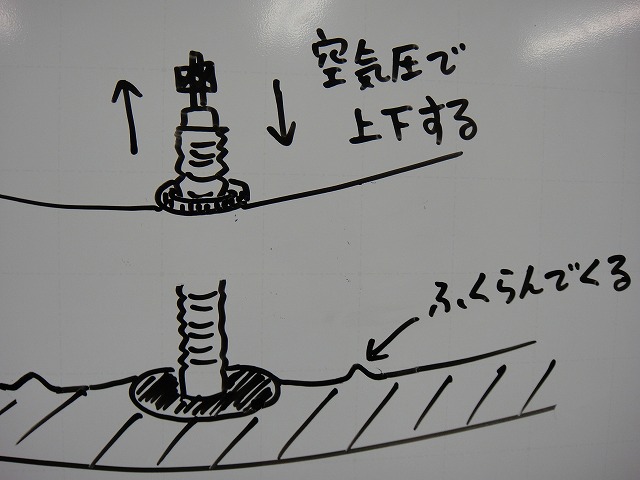
If you inflate fully and tighten the valve nut firmly, when air pressure drops later, a situation occurs where "the valve wants to retract but the valve nut prevents it."
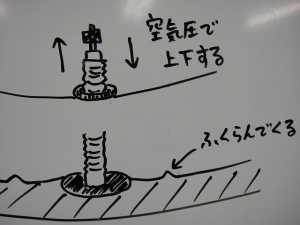
If this repeats over a long period, two spots several centimeters away from the valve on the inside of the tube bulge out, the tube wall thins, and in the worst case you get a puncture.
Because of this, I don't use valve nuts.
With tape, it doesn't restrict the valve's up-and-down movement, so it's fine.
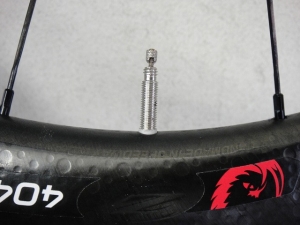
↑Tube just placed in the tire
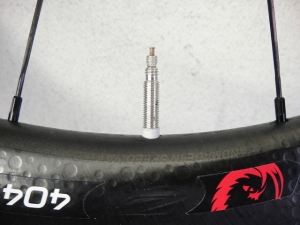
↑At 7 bar air pressure
You can see the difference in how much the valve protrudes.

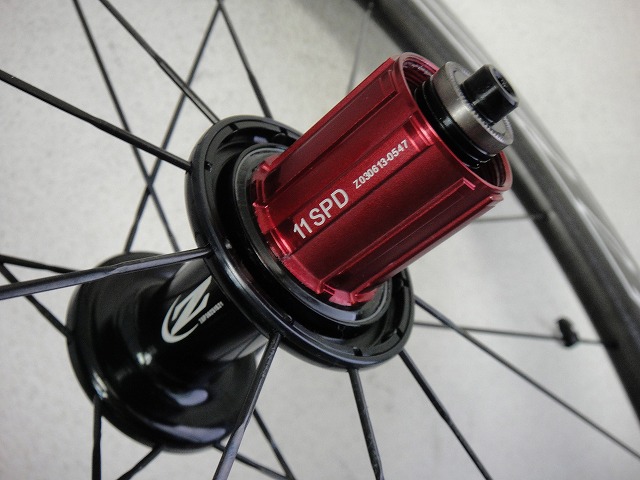
The rear wheel is an 808 and the front wheel is a 404.
The issue with the rear wheel is that the crank co-rotates when in freewheel mode.
This happens when the internal resistance of the ratchet in the freewheel body is greater than the resistance from the chain, rear derailleur, or bottom bracket.
With hubs like Mavic, the freewheel body and rear hub body are in constant contact through a waterproof rubber seal, creating a semi-engaged state, so this problem occurs quite readily with those.
During actual riding while pedaling, this isn't an issue at all, and even when coasting with your feet on the pedals, the resistance from your legs is greater, so co-rotation won't happen.
However, it does occur when the bike is on a stand for maintenance, and many people find this bothersome.

↑In original condition, you can see the grease in the freewheel is quite sticky and stringy.
After cleaning and adjusting the viscosity of the grease and reassembling, the freewheel ratchet sound changed, resistance decreased, and the co-rotation issue was resolved.
Wait, did a hub like this ever come in Shimano 11-speed compatible?
I've been asked multiple times to swap freewheels with the reason being "this hub doesn't have a Shimano 11-speed freewheel available"...
The rear 808 had virtually no runout with perfect centering, and the front 404 had no runout but the center was slightly off, so I trued both wheels.
Since they had WO tires, I removed the tires and tubes to work on them. The front wheel had a valve with a threaded base for a valve nut, so I replaced it with rattle-prevention tape (→see here).
There's a subtle difference between using a valve nut and wrapping the valve with tape.
Both stop the clicking sound from rim contact, but the valve nut can leave marks on the rim.
On a related note, the diagram above shows a tube.
The base of the valve is made of a different material than regular rubber, so repair patches won't stick to it.
To be precise, rubber cement won't react with it, so patches won't adhere.
Back to the main topic.
The valve extension actually changes depending on air pressure.
As air pressure increases, the valve protrudes further into the wheel, but when you let all the air out of the tube or go a long time without inflating it and pressure drops, the valve retracts into the rim.
If you inflate fully and tighten the valve nut firmly, when air pressure drops later, a situation occurs where "the valve wants to retract but the valve nut prevents it."
If this repeats over a long period, two spots several centimeters away from the valve on the inside of the tube bulge out, the tube wall thins, and in the worst case you get a puncture.
Because of this, I don't use valve nuts.
With tape, it doesn't restrict the valve's up-and-down movement, so it's fine.
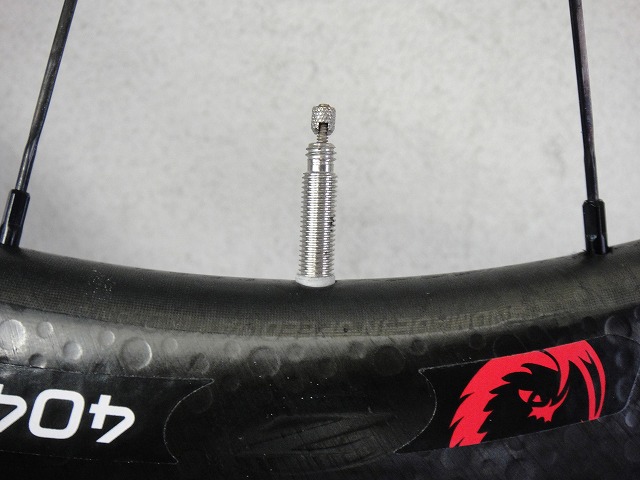
↑Tube just placed in the tire

↑At 7 bar air pressure
You can see the difference in how much the valve protrudes.