I'm doing a complete overhaul on a customer's bike, and
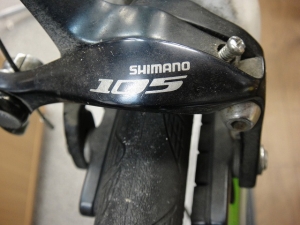
there's this screw on the shoulder of the dual-pivot brake,
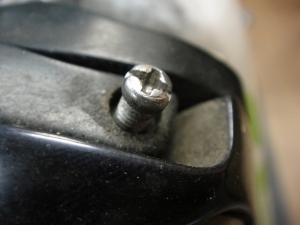
↑this one. It's pretty loose,
but basically you shouldn't touch this screw.
The manual only describes it as a centering screw,
but if you mess with it, beyond just the left-right spacing between the shoe and rim,
the shoe height on the C-arm side changes dramatically.
To be technical about it, the stroke amount changes a little too, but you can ignore that.
It's better to re-center the brake by hand pushing,
or by loosening the mounting nut and re-centering.
On my own bikes, I've never adjusted this screw.
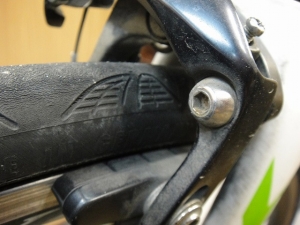
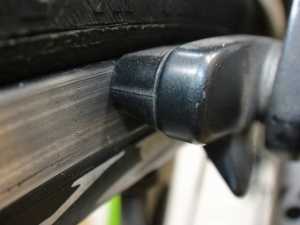
↑Initial condition.
The shoe position is pressing into the tire.
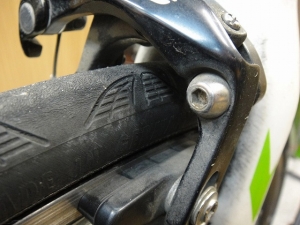
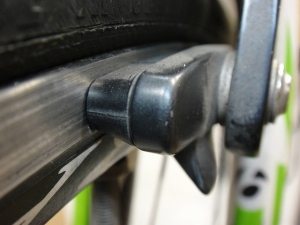
↑From there, I tightened the centering adjustment screw and manually re-centered
the brake arch that had shifted sideways.
I didn't touch the brake shoe holder height at all.
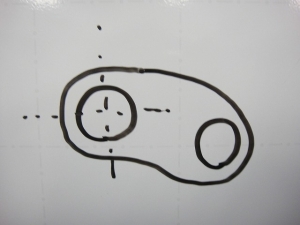
With dual-pivot brakes, looking at the parts attached to the shaft from the frame/fork side,
there's first a connecting arm linking the Y-arm and C-arm.
Because of this part, there are two pivot points,
which is why it's called a "dual-pivot" brake.

Above that is the Y-arm.
I keep writing Y-arm and C-arm because
the Y-arm is shaped like a "Y".
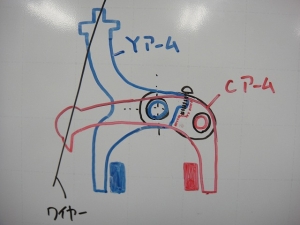
Above that, attached to the connecting arm without interfering with the Y-arm,
is the C-arm.
It's also shaped like a "C", so it's called the "C-arm".
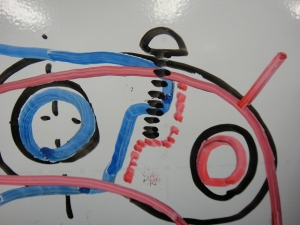
↑This screw on the Y-arm is designed to push the C-arm,
which adjusts the spacing between the shoe and rim.

When you loosen or tighten this screw,
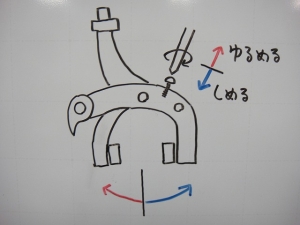
↑the brake arch moves and swings in the direction shown by the arrow.
Shimano's manual says the same thing.
The reason they don't say "right" or "left"
is because the left-right orientation of the Y-arm and C-arm reverses between the front and rear brakes.

This isn't widely known, but when you adjust this screw,
the shoe on the C-arm side moves up and down as shown in the earlier image.
This isn't mentioned in Shimano's manual.
If your setting has the top of the brake shoe aligned with the top of the rim's brake zone,
and you loosen this screw, the shoe will press into the tire.
If it's just a little, that's fine, but
the vertical movement range is quite large, so that's what I wanted to point out today.
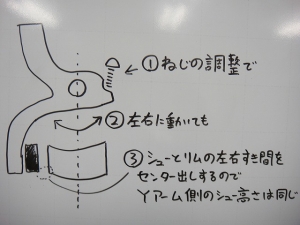
The shoe height on the Y-arm side doesn't change.
When the brake arch tilts left-right due to screw adjustment,
it appears to move vertically at that moment, but
when you center the shoe-to-rim spacing equally on both sides,
the absolute position of the Y-arm doesn't change.
The C-arm's position becomes relative to the Y-arm through screw adjustment.
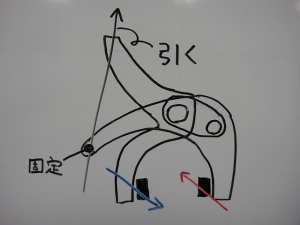
By the way, a related point:
With dual-pivot brakes,
after the Y-arm side shoe makes contact, it pulls the rim downward at an angle,
while after the C-arm side shoe makes contact, it scoops the rim upward at an angle.
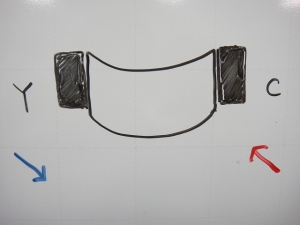
So if you set both shoes to align with the top of the rim,
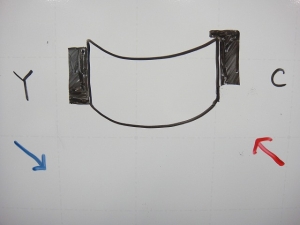
eventually the shoes wear like this.
C-arm side shoes pressing into the tire and wearing with a step is
something you see pretty often.
Rather than fiddling with the centering adjustment screw,
I'd recommend checking occasionally that the shoe height is appropriate.
Postscript:
I received comments from two different people saying,
"This screw on the 105 (brake) loosens on its own over time."
I see, that's possible.
Even on bikes where presumably no one would mess with this screw,
I do see examples where it's loose even though it was never intentionally loosened.
Depending on the shape of the screw tip,
it's quite possible that the screw gradually loosens in that direction as the brake operates.
So even though it's a fine screw, low-strength threadlocker might not hold.
But using a stronger one is almost like gluing, so you can't turn it anymore.
This time I'll ask the customer if they remember loosening it, and if not,
I'll apply medium to high-strength threadlocker.
Man, you learn something new every day. I learned more from writing this article than I expected!
Thanks for the comments.

there's this screw on the shoulder of the dual-pivot brake,
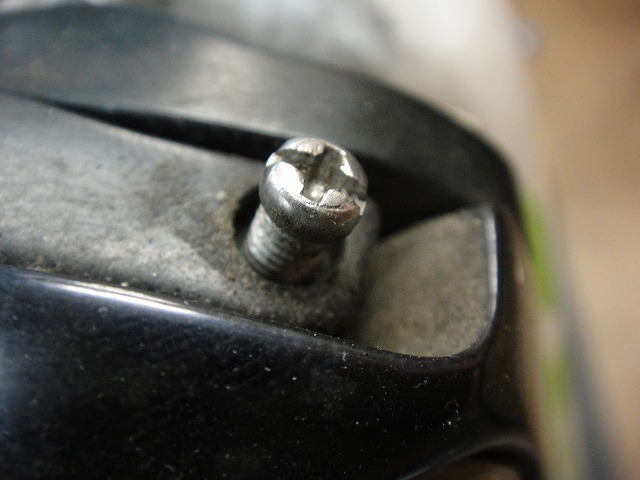
↑this one. It's pretty loose,
but basically you shouldn't touch this screw.
The manual only describes it as a centering screw,
but if you mess with it, beyond just the left-right spacing between the shoe and rim,
the shoe height on the C-arm side changes dramatically.
To be technical about it, the stroke amount changes a little too, but you can ignore that.
It's better to re-center the brake by hand pushing,
or by loosening the mounting nut and re-centering.
On my own bikes, I've never adjusted this screw.
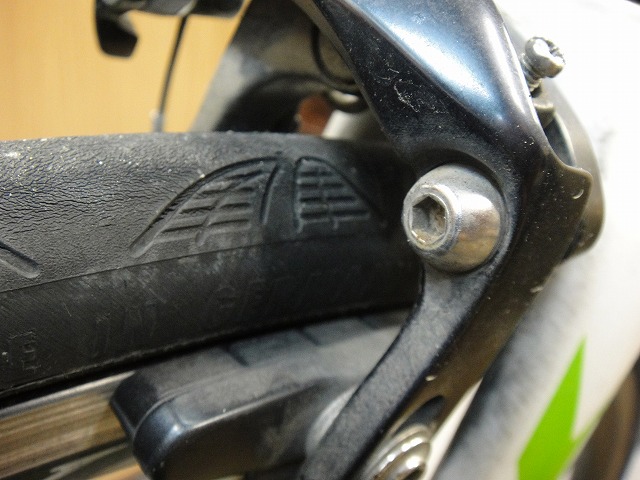
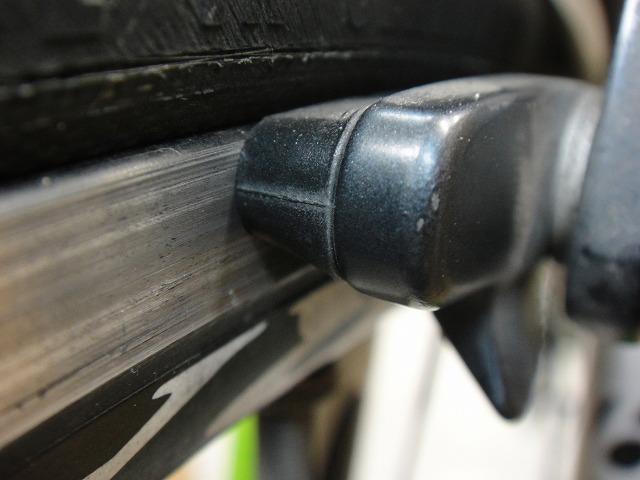
↑Initial condition.
The shoe position is pressing into the tire.

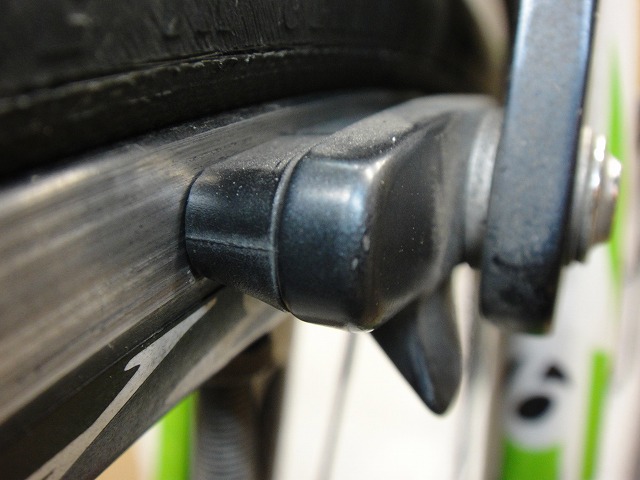
↑From there, I tightened the centering adjustment screw and manually re-centered
the brake arch that had shifted sideways.
I didn't touch the brake shoe holder height at all.

With dual-pivot brakes, looking at the parts attached to the shaft from the frame/fork side,
there's first a connecting arm linking the Y-arm and C-arm.
Because of this part, there are two pivot points,
which is why it's called a "dual-pivot" brake.
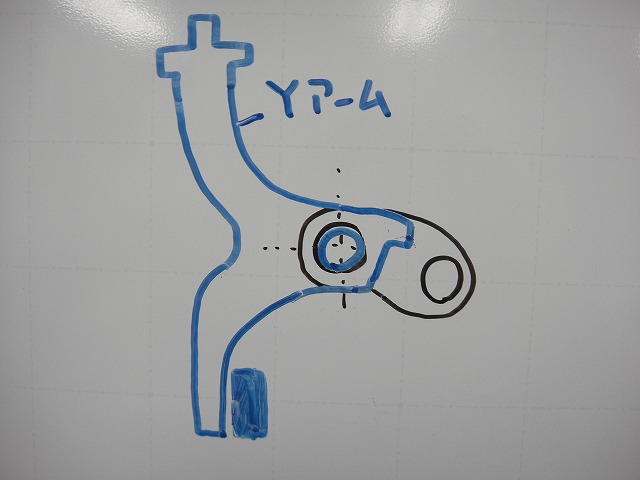
Above that is the Y-arm.
I keep writing Y-arm and C-arm because
the Y-arm is shaped like a "Y".
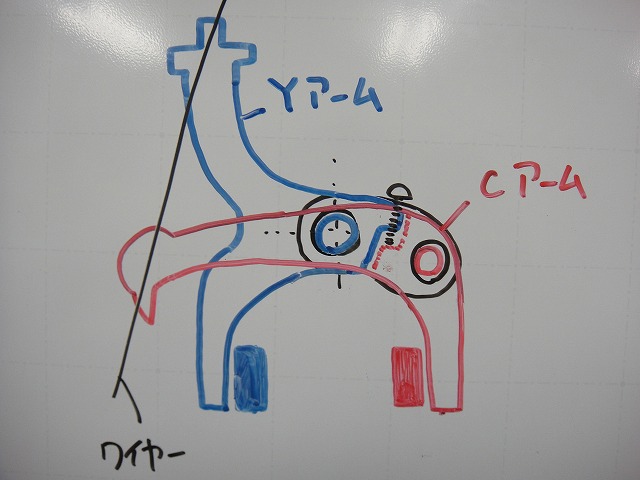
Above that, attached to the connecting arm without interfering with the Y-arm,
is the C-arm.
It's also shaped like a "C", so it's called the "C-arm".
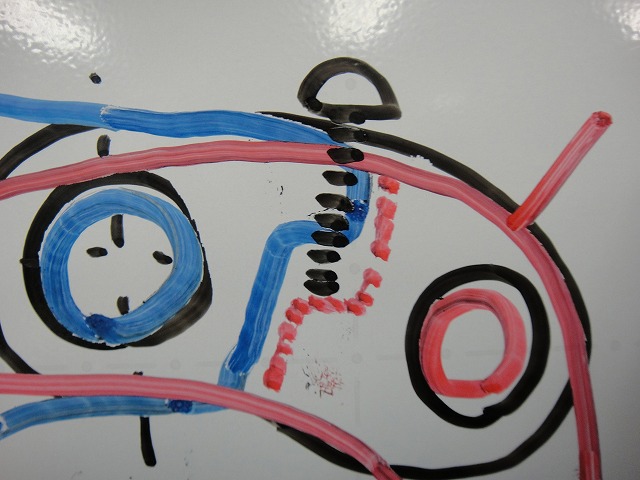
↑This screw on the Y-arm is designed to push the C-arm,
which adjusts the spacing between the shoe and rim.
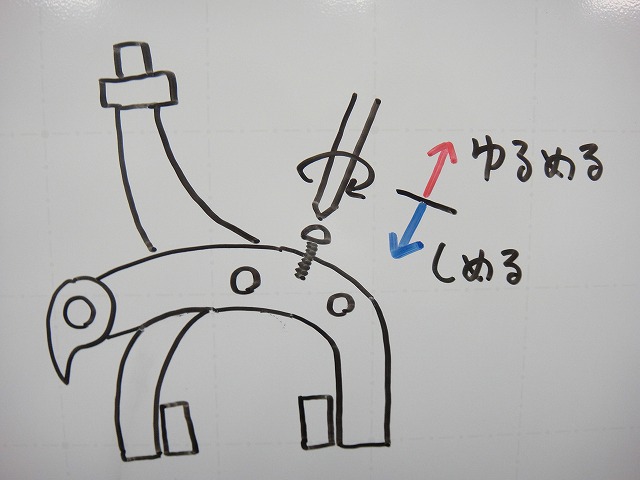
When you loosen or tighten this screw,

↑the brake arch moves and swings in the direction shown by the arrow.
Shimano's manual says the same thing.
The reason they don't say "right" or "left"
is because the left-right orientation of the Y-arm and C-arm reverses between the front and rear brakes.
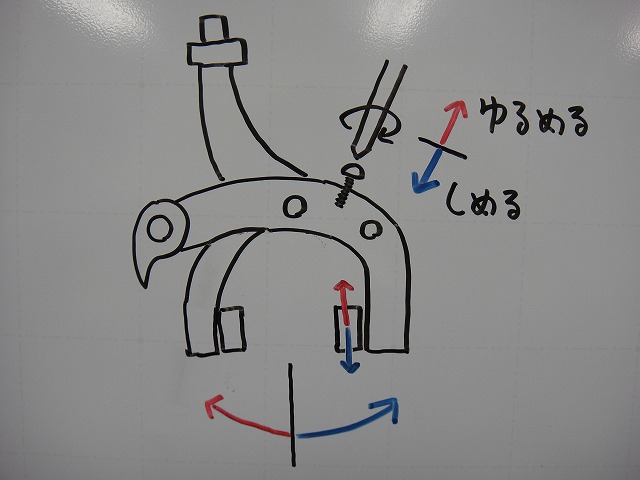
This isn't widely known, but when you adjust this screw,
the shoe on the C-arm side moves up and down as shown in the earlier image.
This isn't mentioned in Shimano's manual.
If your setting has the top of the brake shoe aligned with the top of the rim's brake zone,
and you loosen this screw, the shoe will press into the tire.
If it's just a little, that's fine, but
the vertical movement range is quite large, so that's what I wanted to point out today.
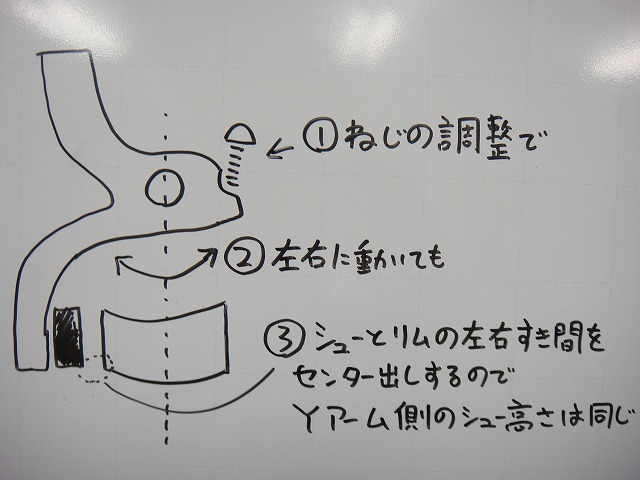
The shoe height on the Y-arm side doesn't change.
When the brake arch tilts left-right due to screw adjustment,
it appears to move vertically at that moment, but
when you center the shoe-to-rim spacing equally on both sides,
the absolute position of the Y-arm doesn't change.
The C-arm's position becomes relative to the Y-arm through screw adjustment.

By the way, a related point:
With dual-pivot brakes,
after the Y-arm side shoe makes contact, it pulls the rim downward at an angle,
while after the C-arm side shoe makes contact, it scoops the rim upward at an angle.
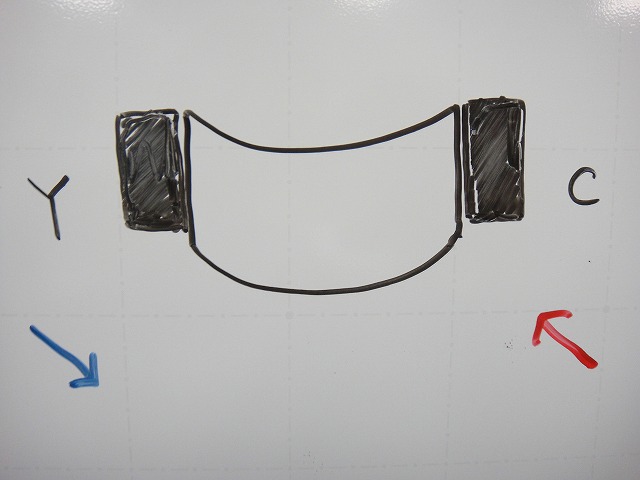
So if you set both shoes to align with the top of the rim,
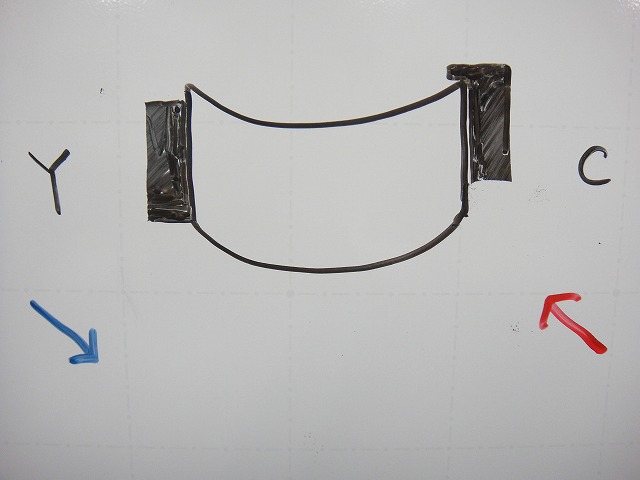
eventually the shoes wear like this.
C-arm side shoes pressing into the tire and wearing with a step is
something you see pretty often.
Rather than fiddling with the centering adjustment screw,
I'd recommend checking occasionally that the shoe height is appropriate.
Postscript:
I received comments from two different people saying,
"This screw on the 105 (brake) loosens on its own over time."
I see, that's possible.
Even on bikes where presumably no one would mess with this screw,
I do see examples where it's loose even though it was never intentionally loosened.
Depending on the shape of the screw tip,
it's quite possible that the screw gradually loosens in that direction as the brake operates.
So even though it's a fine screw, low-strength threadlocker might not hold.
But using a stronger one is almost like gluing, so you can't turn it anymore.
This time I'll ask the customer if they remember loosening it, and if not,
I'll apply medium to high-strength threadlocker.
Man, you learn something new every day. I learned more from writing this article than I expected!
Thanks for the comments.