I received a comment about the dual-pivot brake topic from the other day.
"The C-arm (and Y-arm) only undergo circular motion around their pivot points,
so the contact point on the rim shouldn't change just by turning the adjustment screw.
If you tighten the adjustment screw and then loosen the fixing bolt to center it,
the pivot position on the C-arm side drops, and naturally the shoe also drops relative to the rim.
The Y-arm pivot is coaxial with the fixing bolt, so the same thing doesn't happen."
I'll write about this in detail.
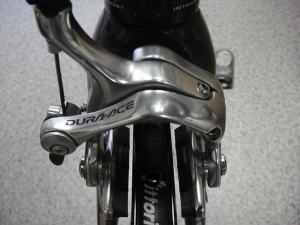
↑This is the front brake on my bike.
It's centered.
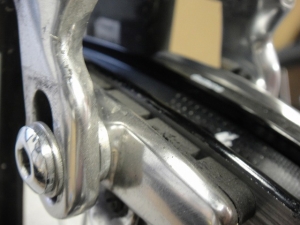
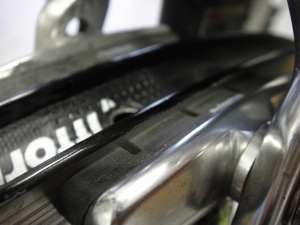
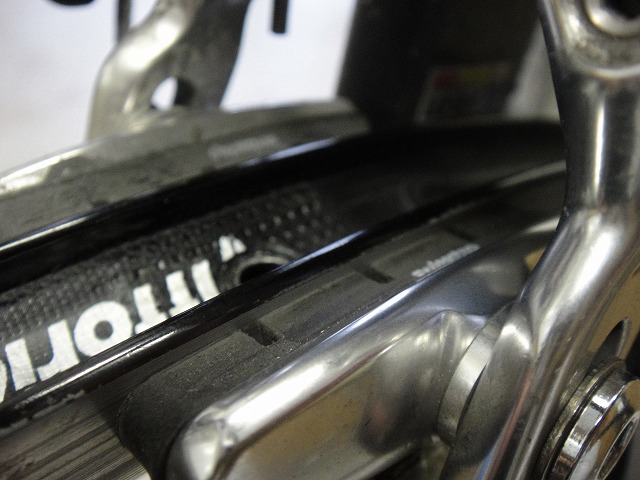
From there I squeezed the brake lever.
The shoe contact positions are about the same on both sides,
with the top of the shoe sitting slightly below the top edge of the rim's brake zone.
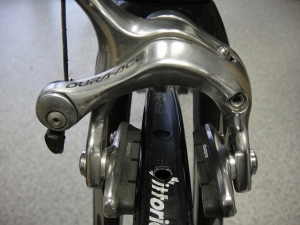
From there I loosened the brake fixing nut.
Doing this from a cable-routed state means the brake cable pushes the outer cable stop on the Y-arm,
causing the Y-arm side to make contact with the shoe first.
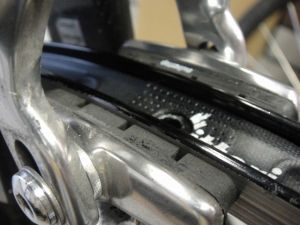
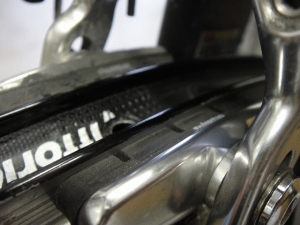
From there I squeezed the brake lever again.
These aren't the same photos recycled, I'll have you know.
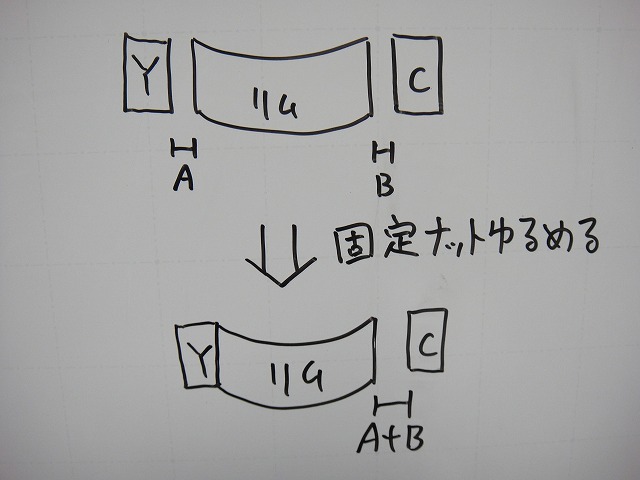
What I'm trying to say is whether you center the brake or not,
the final spatial relationship between the shoes and rim when they contact remains unchanged.
In a previous article I described it in a way that suggested adjusting the screw then centering changes shoe height,
but centering is just something you do as a matter of routine maintenance.
The change in shoe height isn't related to centering—
it happens the moment you adjust the screw.
Adjusting the screw then centering changes shoe height
↓ Occam's Razor
Adjusting the screw changes shoe height
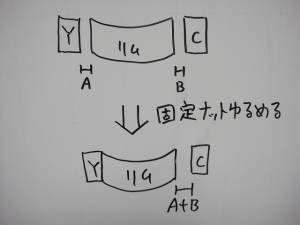
↑The rim at the top and the rim at the bottom—the spatial relationship between
the shoes and rim when the brake lever is squeezed is the same in both cases.
While I'm nitpicking my own work,
the shoe motion is actually an arc, so strictly speaking the gap between the lower rim and the C-arm-side shoe
won't equal A+B.
A+B is only true when the shoe moves parallel to the rim's brake surface.
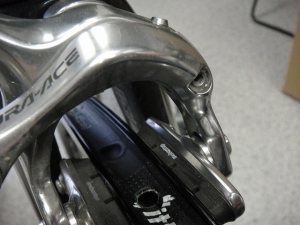
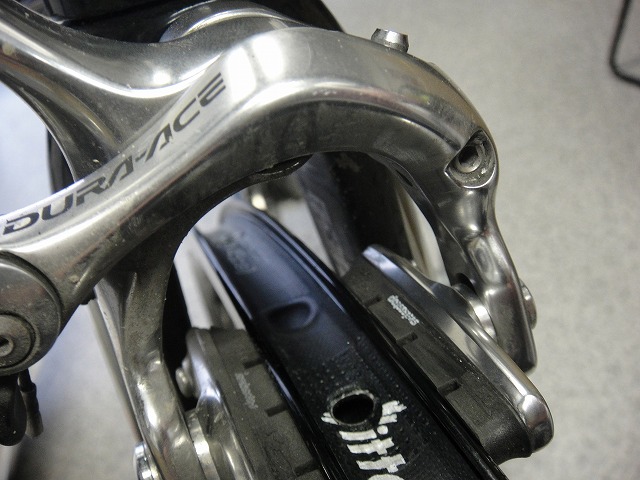
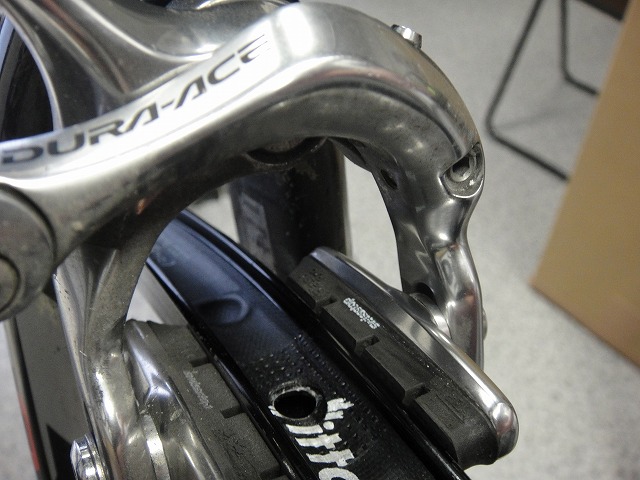
With the fixing nut loosened, I'll try loosening the adjustment screw while holding the brake lever squeezed.
I'm not tightening because the tightening range is small,
and it's easier to observe when the C-arm brake shoe moves upward.
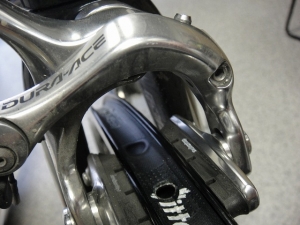
↑Slightly loosened
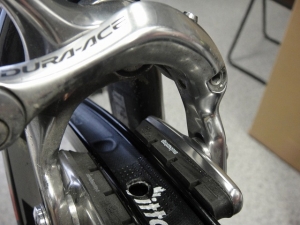
↑Quite loosened
I stepped back a bit to get the adjustment screw in the frame.

A close-up looks like this.
Of course I didn't touch the shoe holder's fixing screw or anything.
Just turning the adjustment screw changes how it contacts the rim.
As I wrote earlier, whether or not you center the brake is actually
unrelated to this contact position.
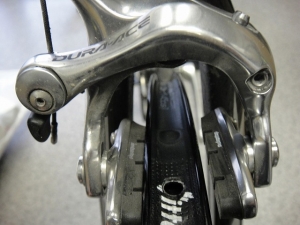
I released the brake lever.

Then I centered it, and
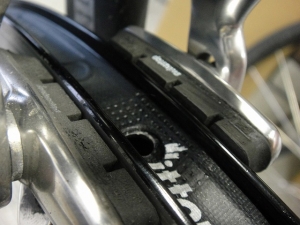
squeezed again. Same position.
The comment says "The Y-arm pivot is coaxial with the fixing bolt, so the same thing doesn't happen,"
and in the previous article I also wrote something like "The Y-arm side maintains an absolute position relative to the brake shaft, so it's the same,"
but strictly speaking, the difference in C-arm-side shoe contact position does cause a tiny change in
the Y-arm side's final contact point.
However, compared to the C-arm's range of motion, it's so minimal that calling it effectively stationary is appropriate,
which is why I called it an absolute position.
Actually, looking at the photos, the Y-arm side shoe position remains nearly the same as at the beginning.
But what I wanted to illustrate was
that this screw, which the manual only describes as left-right shoe spacing adjustment,
actually causes the C-arm-side shoe to move up and down when adjusted.
Since the tightening range is limited, most people loosen it.
Loosening raises the shoe.
And since the C-arm follows a scooping trajectory,
as the shoe wears, the top of the C-arm shoe tends to exceed the top of the rim.
These two factors combine to make uneven one-sided wear on the C-arm shoe
in an inverted-L stepped pattern extremely common.
Regarding the 105 brake arch—after I wrote that there had been "reports" of the adjustment screw loosening on its own,
I received comments like "mine did too" and "it settled down after I flattened the screw tip."
That's something I learned from others. Thank you.
I actually looked at the screw tip on that brake, and
the contact point for the Y-arm screw isn't aluminum but rather
has a steel ferrule embedded in it, like a ferrule of a pencil,
and it showed signs of wear against it.
However, since the customer remembered actually touching it themselves,
in that case it probably didn't loosen on its own.
I applied some threadlocker on the snug side.
Postscript:
I found several instances where "adjustment screw" was written as "adjustment nut," so I corrected them.
Thank you for pointing that out.
Whether turned with an Allen key or Phillips screwdriver,
it's a male thread, so it's not a "nut."
If not calling it a screw, it would be a "bolt."
Adjustment screw → the C-arm pushes screw attached to the Y-arm
Fixing nut → the nut on the brake shaft that holds the brake in place
In this explanation, I only adjusted these two.
"The C-arm (and Y-arm) only undergo circular motion around their pivot points,
so the contact point on the rim shouldn't change just by turning the adjustment screw.
If you tighten the adjustment screw and then loosen the fixing bolt to center it,
the pivot position on the C-arm side drops, and naturally the shoe also drops relative to the rim.
The Y-arm pivot is coaxial with the fixing bolt, so the same thing doesn't happen."
I'll write about this in detail.
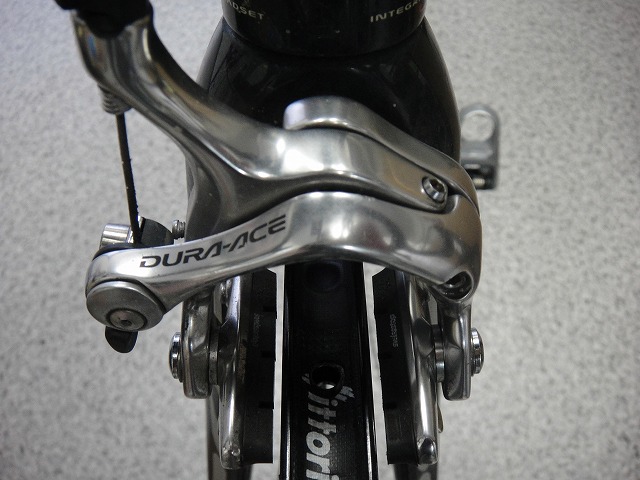
↑This is the front brake on my bike.
It's centered.
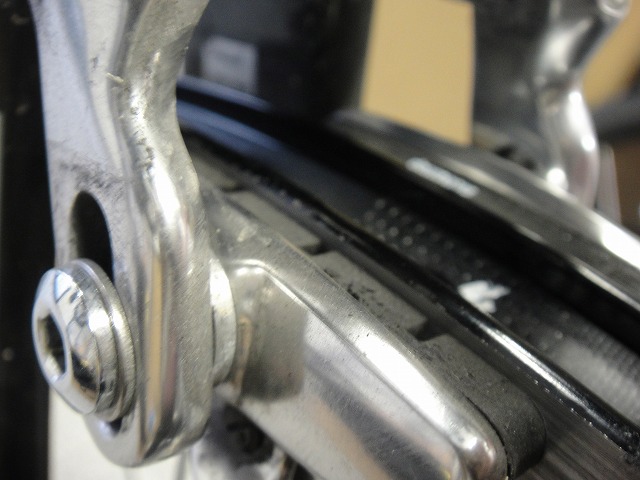
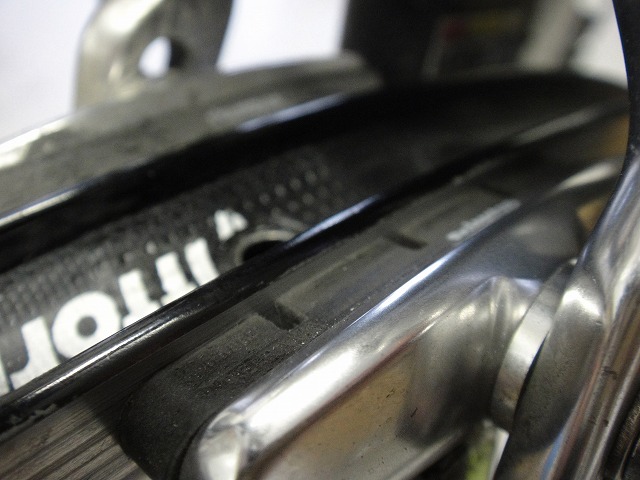
From there I squeezed the brake lever.
The shoe contact positions are about the same on both sides,
with the top of the shoe sitting slightly below the top edge of the rim's brake zone.

From there I loosened the brake fixing nut.
Doing this from a cable-routed state means the brake cable pushes the outer cable stop on the Y-arm,
causing the Y-arm side to make contact with the shoe first.
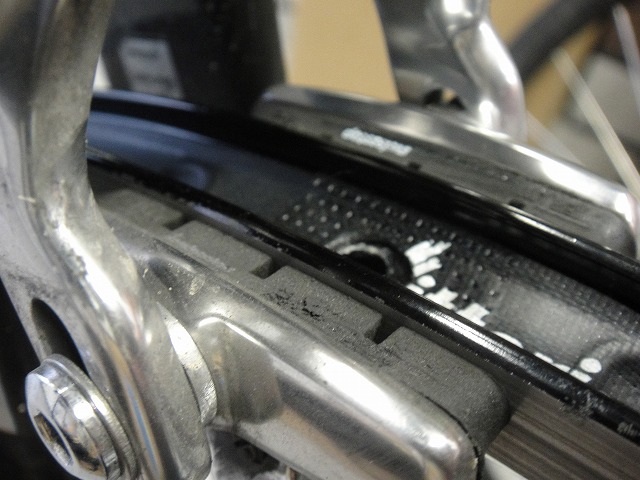
From there I squeezed the brake lever again.
These aren't the same photos recycled, I'll have you know.
What I'm trying to say is whether you center the brake or not,
the final spatial relationship between the shoes and rim when they contact remains unchanged.
In a previous article I described it in a way that suggested adjusting the screw then centering changes shoe height,
but centering is just something you do as a matter of routine maintenance.
The change in shoe height isn't related to centering—
it happens the moment you adjust the screw.
Adjusting the screw then centering changes shoe height
↓ Occam's Razor
Adjusting the screw changes shoe height
↑The rim at the top and the rim at the bottom—the spatial relationship between
the shoes and rim when the brake lever is squeezed is the same in both cases.
While I'm nitpicking my own work,
the shoe motion is actually an arc, so strictly speaking the gap between the lower rim and the C-arm-side shoe
won't equal A+B.
A+B is only true when the shoe moves parallel to the rim's brake surface.

With the fixing nut loosened, I'll try loosening the adjustment screw while holding the brake lever squeezed.
I'm not tightening because the tightening range is small,
and it's easier to observe when the C-arm brake shoe moves upward.
↑Slightly loosened
↑Quite loosened
I stepped back a bit to get the adjustment screw in the frame.
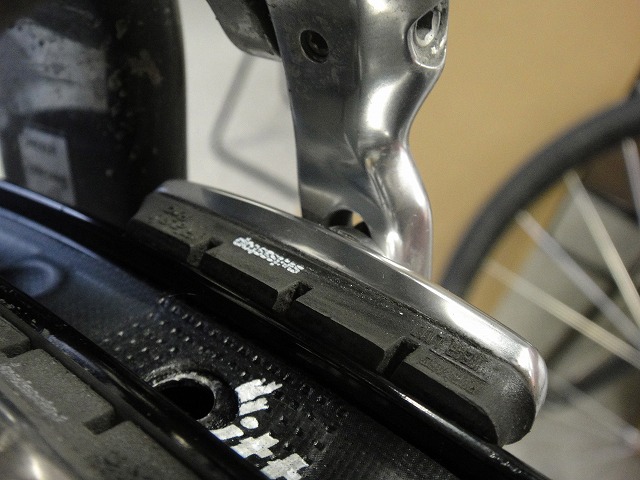
A close-up looks like this.
Of course I didn't touch the shoe holder's fixing screw or anything.
Just turning the adjustment screw changes how it contacts the rim.
As I wrote earlier, whether or not you center the brake is actually
unrelated to this contact position.
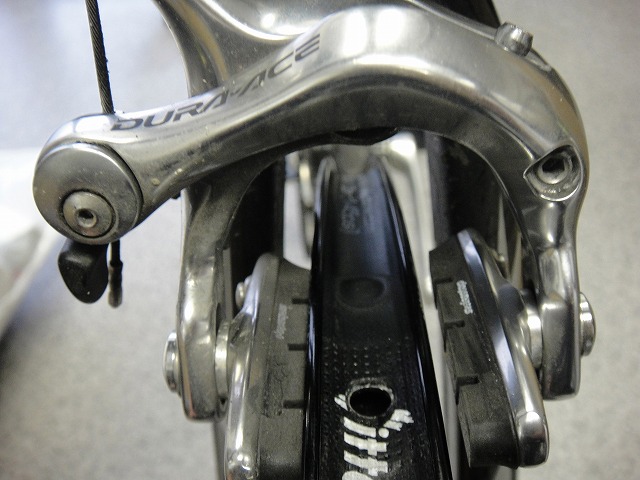
I released the brake lever.
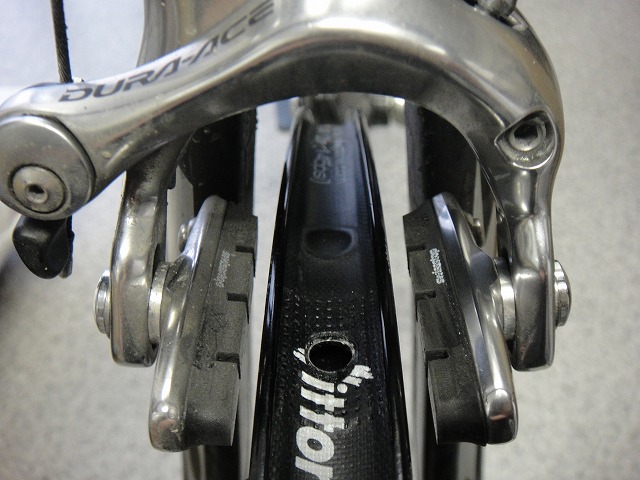
Then I centered it, and

squeezed again. Same position.
The comment says "The Y-arm pivot is coaxial with the fixing bolt, so the same thing doesn't happen,"
and in the previous article I also wrote something like "The Y-arm side maintains an absolute position relative to the brake shaft, so it's the same,"
but strictly speaking, the difference in C-arm-side shoe contact position does cause a tiny change in
the Y-arm side's final contact point.
However, compared to the C-arm's range of motion, it's so minimal that calling it effectively stationary is appropriate,
which is why I called it an absolute position.
Actually, looking at the photos, the Y-arm side shoe position remains nearly the same as at the beginning.
But what I wanted to illustrate was
that this screw, which the manual only describes as left-right shoe spacing adjustment,
actually causes the C-arm-side shoe to move up and down when adjusted.
Since the tightening range is limited, most people loosen it.
Loosening raises the shoe.
And since the C-arm follows a scooping trajectory,
as the shoe wears, the top of the C-arm shoe tends to exceed the top of the rim.
These two factors combine to make uneven one-sided wear on the C-arm shoe
in an inverted-L stepped pattern extremely common.
Regarding the 105 brake arch—after I wrote that there had been "reports" of the adjustment screw loosening on its own,
I received comments like "mine did too" and "it settled down after I flattened the screw tip."
That's something I learned from others. Thank you.
I actually looked at the screw tip on that brake, and
the contact point for the Y-arm screw isn't aluminum but rather
has a steel ferrule embedded in it, like a ferrule of a pencil,
and it showed signs of wear against it.
However, since the customer remembered actually touching it themselves,
in that case it probably didn't loosen on its own.
I applied some threadlocker on the snug side.
Postscript:
I found several instances where "adjustment screw" was written as "adjustment nut," so I corrected them.
Thank you for pointing that out.
Whether turned with an Allen key or Phillips screwdriver,
it's a male thread, so it's not a "nut."
If not calling it a screw, it would be a "bolt."
Adjustment screw → the C-arm pushes screw attached to the Y-arm
Fixing nut → the nut on the brake shaft that holds the brake in place
In this explanation, I only adjusted these two.