So that's the title, though it's only tangentially related to Hongfu.
Part 1
The mystery carbon WO rim I built the other day had
"Do not set brake shoes any further out toward the rim's outer edge"
written on a sticker in the brake zone,
and I received a comment asking "Should all carbon WO rims be set up this way?"
Since I don't understand the manufacturer's intention behind this specification,
I can't say whether it applies to other brands' products,
but I'll share my own thoughts on it.

We have a bike in the shop right now with freshly replaced brake shoes,
and when the shoes are touching, they sit right at the upper edge of the rim's brake zone
with even, slight gaps all around.
I didn't set this up myself—
since it's the rear brake, I could replace the shoes without removing the wheel,
so I just swapped out the brake pads.
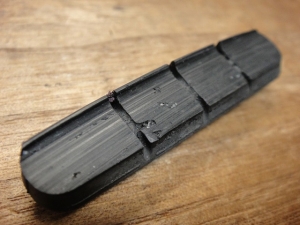
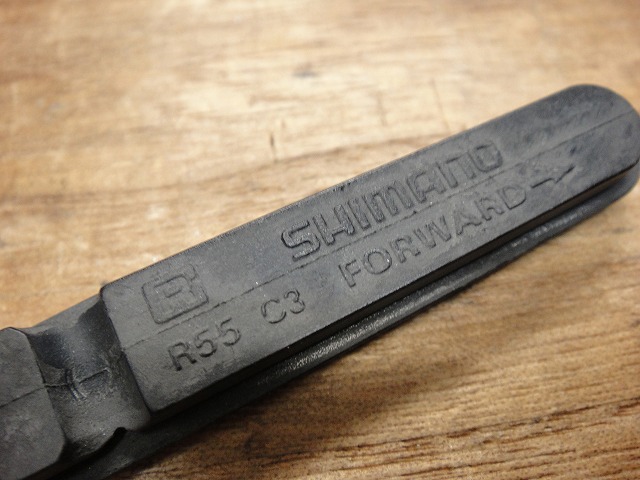
Now, looking at the removed shoes:
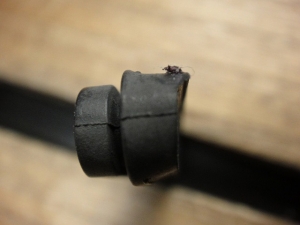
They're worn with a step pattern.
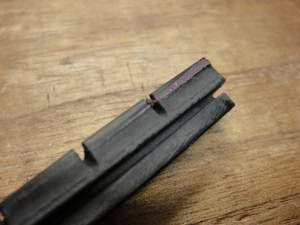
There's pink-colored rubber from the tire sidewall sitting on top of the shoe,
which clearly shows the shoe was biting into the rim beyond its upper edge.
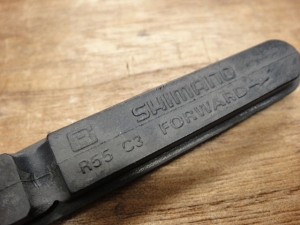
This is the rear right side, so
in the case of a dual-pivot brake,
this would be the C-arm side, but
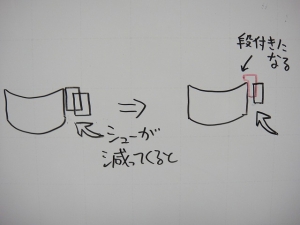
the C-arm moves with a scooping motion,
so as the shoe wears down, the contact point shifts upward.
For more details, see (→here)
This is what causes the step wear pattern. To prevent this,
you need to understand that as the shoe wears, the contact position changes,
and adjust the position accordingly as it wears down.
But it's more reliable to just instruct "set the shoe below this sticker line"
rather than explaining all that—it definitively prevents the shoe from biting into the rim's upper edge.
Shoes biting into the rim's upper edge happens regardless of rim material (aluminum or carbon),
and I don't think the rim gets damaged just by the shoe rubbing the tire sidewall.
The fact that manufacturers specify this anyway suggests they're
trying to prevent the rim's edge from overheating.
Take ENVE rims for example (especially the light rims from the EDGE era)—
I know of plenty of cases where they've buckled from bulging.
But when I ask for details about what caused it, in nearly every case
the rim was warm from brake heat when it buckled.
So it's more accurate to say that ENVE rims aren't weak to buckling per se,
but rather weak when the "heat + buckling" conditions coincide.
I understand Colima's carbon WO rims were extensively tested in the Sahara Desert,
and that was apparently also about heat concerns.
WO rim bead hooks (the part that catches the tire) have a shape that's inherently weak to buckling,
but given their thickness, they probably hold heat easily too,
so when manufacturers specify shoe contact more toward the inner diameter,
I suspect that's the thinking behind it.
Part 2
Regarding Hongfu rims—
I've been asked vague questions like "What about Chinese carbon?"
but carbon rims vary by manufacturer in terms of
what assembly details require attention.
For example, precision of the rim's inner diameter (thickness)—
to my knowledge, ENVE is the most accurate.
Ekinox comes second (Nomu Lab Wheel #2 also uses this).
With these rims, in a temporary build with just a set number of spoke nipples turned,
there's almost no radial runout.
Now, about Hongfu—
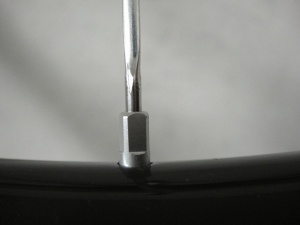
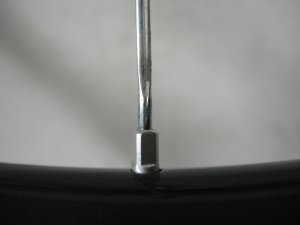
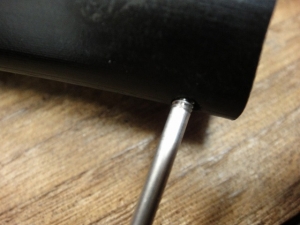
↑As you can see, the nipple thread protrusion varies by location.
I can't defend Hongfu on this point.
They also show larger radial runout in the temporary build than other manufacturers' rims.
But is this a trend seen across Chinese carbon rims in general?
Not really.
It's just Hongfu.
That said, they employ a safety margin approach where "even the thinnest part is very thick,"
so there's no need to worry about hitting the rim's limits, which is reassuring.
And given that they're clearly heavy for their rim depth,
when you consider the high max spoke tension and buckling resistance, that's not necessarily a drawback either.
Variation in nipple protrusion by hole location can happen with aluminum rims too, due to manufacturing—
some Kinlin rims actually do this.
But with Hongfu, the variation is completely random,
so while they get away with it thanks to large thickness margins,
you can't call the precision good.
Hongfu is a manufacturer, so
"Hongfu rims" do share certain characteristics,
but Mechanico and LWC are carbon rim distributors with
various manufacturers as the source, so "Mechanico rims" don't all share
a common tendency.
Similarly, there's no universal tendency across "Chinese carbon rims" in general.
Some rims require nervous, careful assembly—like treading on thin ice, worried they'll crack—
but Hongfu rims don't fall into that category.
Part 3
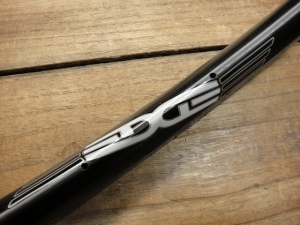
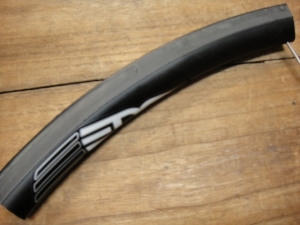
A cut sample of an EDGE 1-25 early model rim, rated at 195g (measured 208g).
This is a piece of the rim that broke from the "heat + buckling" I mentioned earlier.
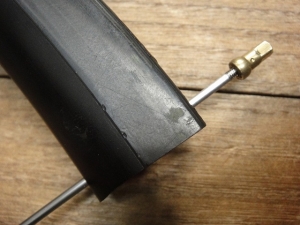
Anyway, moving on...
I fitted a 4th-generation nipple onto the end of a spoke.
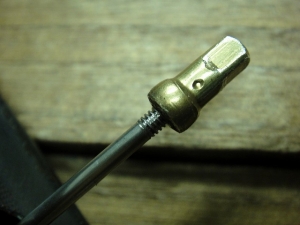
Accounting for future tightening, this still has plenty of threads engaged,
enough to reliably avoid running the threads all the way out to the end.
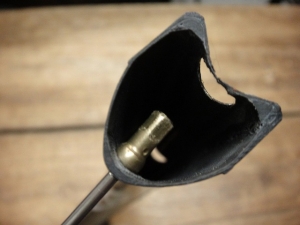
EDGE and ENVE rims have very thin material around the inner diameter holes, so
depending on conditions like how nipple length varies by generation,
the spoke threads can actually be visible from inside the rim when the wheel is fully built.
Also, since the thread pitches I've cut on spokes from my cutter sometimes have more threads
than the manufacturer's original (never fewer),
my EDGE and ENVE builds sometimes look like the spokes are shorter,
but I bias toward being cautious and make them slightly longer anyway, so there's no problem.
Part 1
The mystery carbon WO rim I built the other day had
"Do not set brake shoes any further out toward the rim's outer edge"
written on a sticker in the brake zone,
and I received a comment asking "Should all carbon WO rims be set up this way?"
Since I don't understand the manufacturer's intention behind this specification,
I can't say whether it applies to other brands' products,
but I'll share my own thoughts on it.

We have a bike in the shop right now with freshly replaced brake shoes,
and when the shoes are touching, they sit right at the upper edge of the rim's brake zone
with even, slight gaps all around.
I didn't set this up myself—
since it's the rear brake, I could replace the shoes without removing the wheel,
so I just swapped out the brake pads.
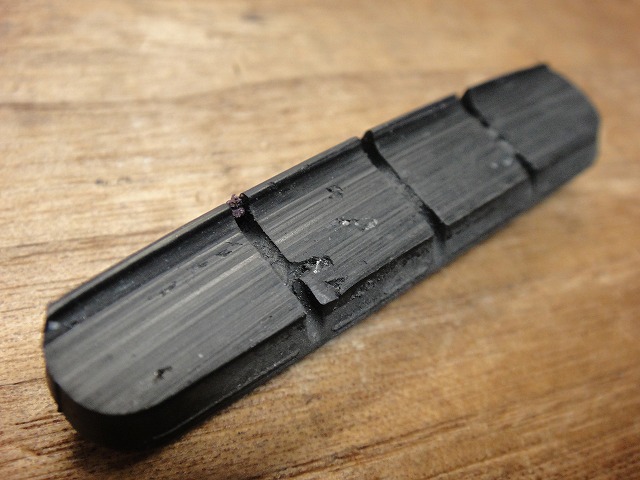
Now, looking at the removed shoes:
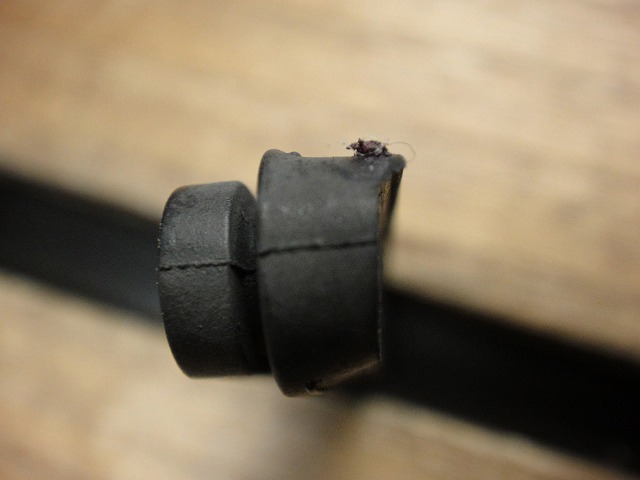
They're worn with a step pattern.
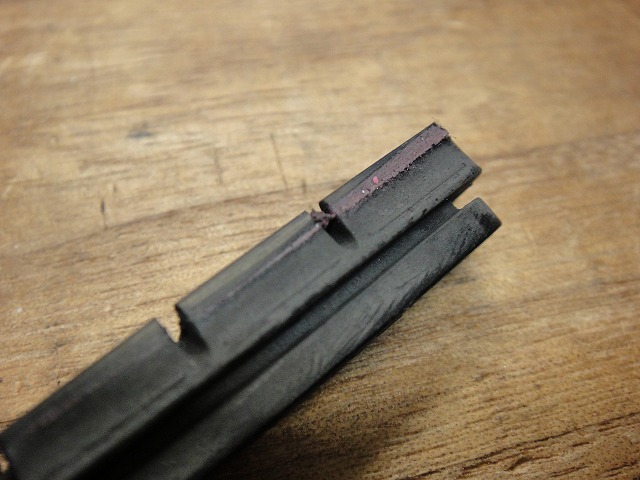
There's pink-colored rubber from the tire sidewall sitting on top of the shoe,
which clearly shows the shoe was biting into the rim beyond its upper edge.
This is the rear right side, so
in the case of a dual-pivot brake,
this would be the C-arm side, but
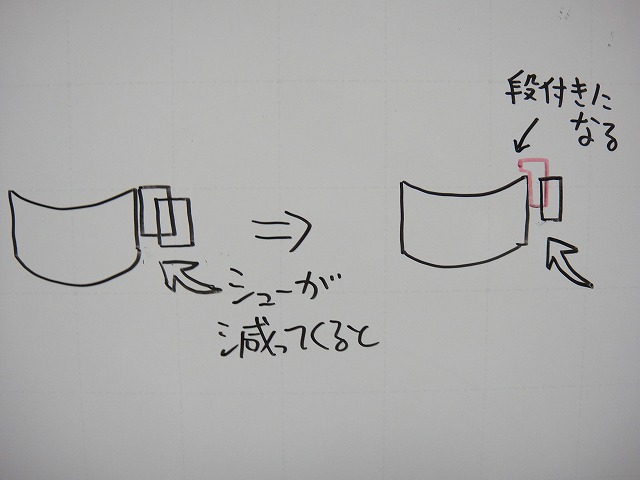
the C-arm moves with a scooping motion,
so as the shoe wears down, the contact point shifts upward.
For more details, see (→here)
This is what causes the step wear pattern. To prevent this,
you need to understand that as the shoe wears, the contact position changes,
and adjust the position accordingly as it wears down.
But it's more reliable to just instruct "set the shoe below this sticker line"
rather than explaining all that—it definitively prevents the shoe from biting into the rim's upper edge.
Shoes biting into the rim's upper edge happens regardless of rim material (aluminum or carbon),
and I don't think the rim gets damaged just by the shoe rubbing the tire sidewall.
The fact that manufacturers specify this anyway suggests they're
trying to prevent the rim's edge from overheating.
Take ENVE rims for example (especially the light rims from the EDGE era)—
I know of plenty of cases where they've buckled from bulging.
But when I ask for details about what caused it, in nearly every case
the rim was warm from brake heat when it buckled.
So it's more accurate to say that ENVE rims aren't weak to buckling per se,
but rather weak when the "heat + buckling" conditions coincide.
I understand Colima's carbon WO rims were extensively tested in the Sahara Desert,
and that was apparently also about heat concerns.
WO rim bead hooks (the part that catches the tire) have a shape that's inherently weak to buckling,
but given their thickness, they probably hold heat easily too,
so when manufacturers specify shoe contact more toward the inner diameter,
I suspect that's the thinking behind it.
Part 2
Regarding Hongfu rims—
I've been asked vague questions like "What about Chinese carbon?"
but carbon rims vary by manufacturer in terms of
what assembly details require attention.
For example, precision of the rim's inner diameter (thickness)—
to my knowledge, ENVE is the most accurate.
Ekinox comes second (Nomu Lab Wheel #2 also uses this).
With these rims, in a temporary build with just a set number of spoke nipples turned,
there's almost no radial runout.
Now, about Hongfu—
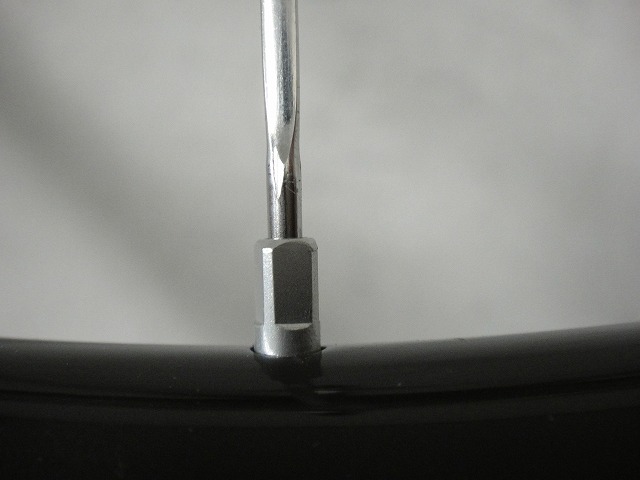

↑As you can see, the nipple thread protrusion varies by location.
I can't defend Hongfu on this point.
They also show larger radial runout in the temporary build than other manufacturers' rims.
But is this a trend seen across Chinese carbon rims in general?
Not really.
It's just Hongfu.
That said, they employ a safety margin approach where "even the thinnest part is very thick,"
so there's no need to worry about hitting the rim's limits, which is reassuring.
And given that they're clearly heavy for their rim depth,
when you consider the high max spoke tension and buckling resistance, that's not necessarily a drawback either.
Variation in nipple protrusion by hole location can happen with aluminum rims too, due to manufacturing—
some Kinlin rims actually do this.
But with Hongfu, the variation is completely random,
so while they get away with it thanks to large thickness margins,
you can't call the precision good.
Hongfu is a manufacturer, so
"Hongfu rims" do share certain characteristics,
but Mechanico and LWC are carbon rim distributors with
various manufacturers as the source, so "Mechanico rims" don't all share
a common tendency.
Similarly, there's no universal tendency across "Chinese carbon rims" in general.
Some rims require nervous, careful assembly—like treading on thin ice, worried they'll crack—
but Hongfu rims don't fall into that category.
Part 3
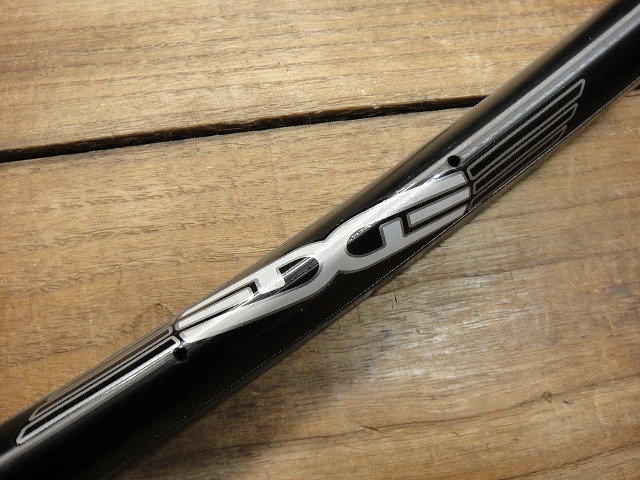
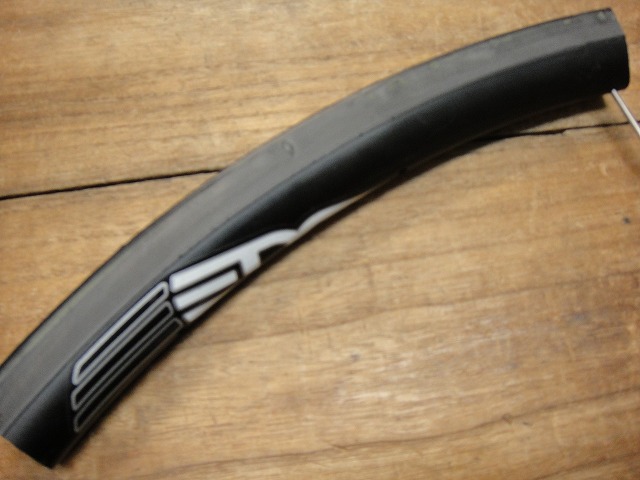
A cut sample of an EDGE 1-25 early model rim, rated at 195g (measured 208g).
This is a piece of the rim that broke from the "heat + buckling" I mentioned earlier.
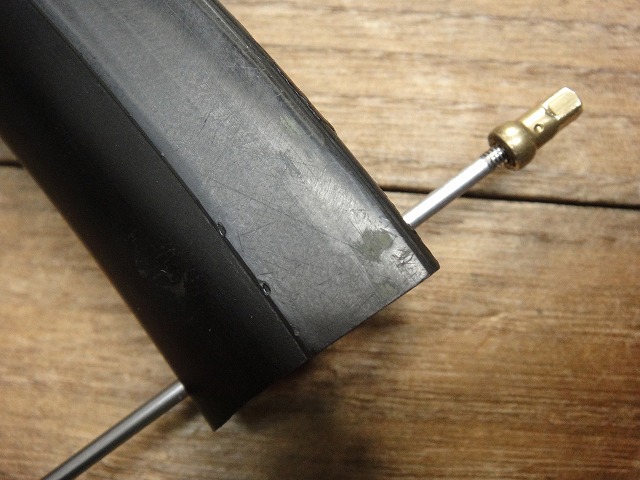
Anyway, moving on...
I fitted a 4th-generation nipple onto the end of a spoke.
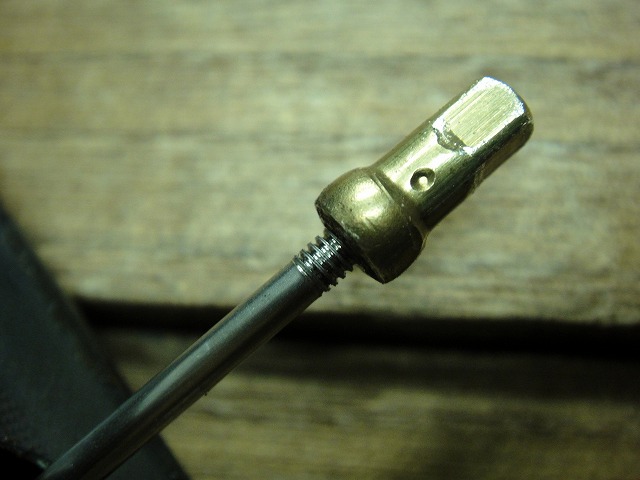
Accounting for future tightening, this still has plenty of threads engaged,
enough to reliably avoid running the threads all the way out to the end.
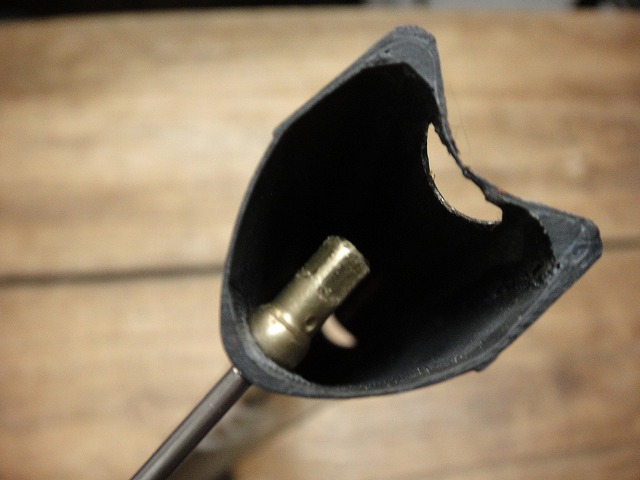
EDGE and ENVE rims have very thin material around the inner diameter holes, so

depending on conditions like how nipple length varies by generation,
the spoke threads can actually be visible from inside the rim when the wheel is fully built.
Also, since the thread pitches I've cut on spokes from my cutter sometimes have more threads
than the manufacturer's original (never fewer),
my EDGE and ENVE builds sometimes look like the spokes are shorter,
but I bias toward being cautious and make them slightly longer anyway, so there's no problem.