The drill whines!
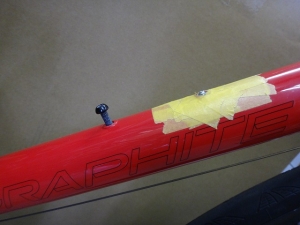
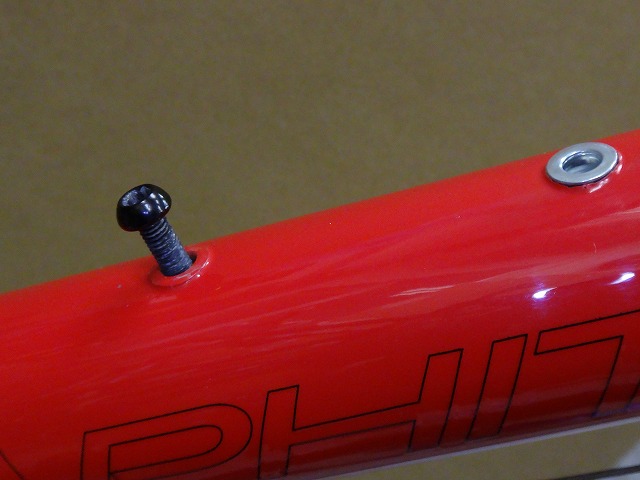
A customer brought in a Meteor by Graphite Design (GDR).
The bottle cage screw had snapped off while stuck in the threaded hole
and they wanted me to do something about it.
There's masking tape on it because
the customer was thinking of trying to handle it themselves using a rotary tool or something,
but they decided it would be better to leave it as-is and have us work on it instead
so they brought it in without doing anything.
That really helps.
On the flip side, the worst scenario is when
a rivet nut's crimp loosens and spins freely, and someone just dabs instant adhesive on it as a temporary fix.
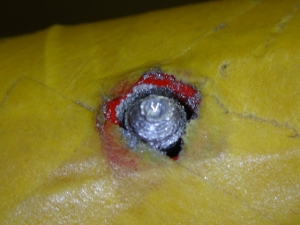
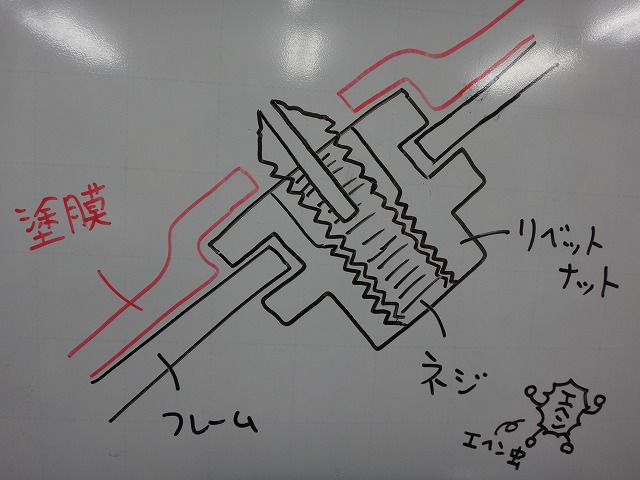
The cross-section of the screw is pointed.
Ugh, this is tricky.

↑If I draw it in a diagram, it looks like this.
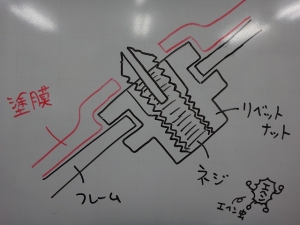
First, I drill a guide hole at the center of the screw.
Since it was an aluminum screw this time, it was relatively easy.
I bought some thin carbide drills that can drill through
stainless steel screws when I made the
S☆B wagon (→here)
so I'll use those.
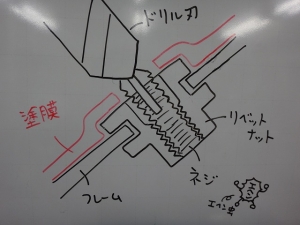
Then I just pass the drill bit through the guide hole,
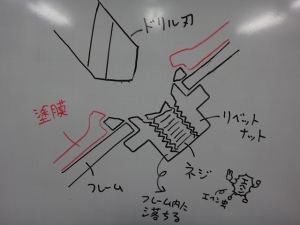
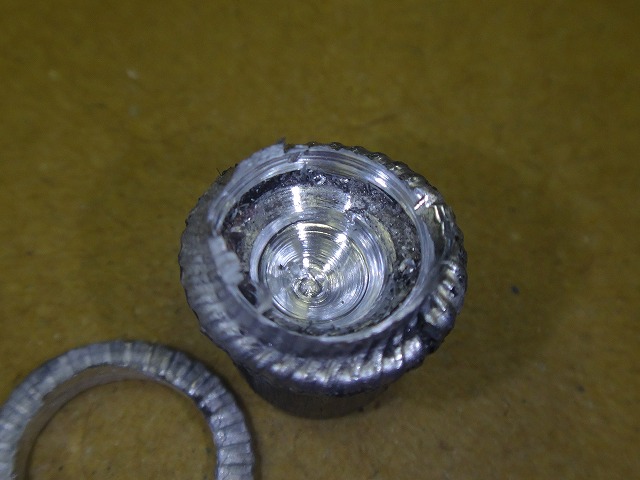
and the moment I cut through the outer flange of the rivet nut, I stop. Done.
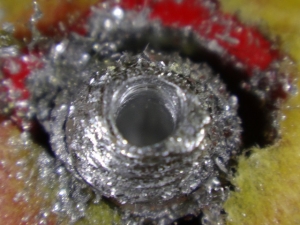
I drilled a guide hole at the center of the screw (by sight).
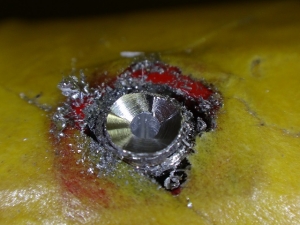
Whirrrrr
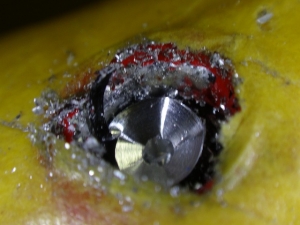
Whirrrrr
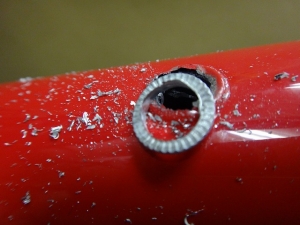
Cut cleanly.
The serrated side of the flange in the image is
the side that was in contact with the frame.
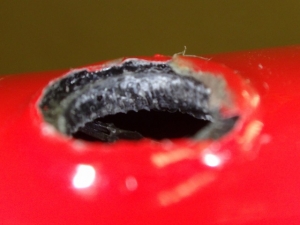
The paint on the frame has
formed a hollow in the shape of the rivet nut's flange.
I don't want the paint cracks to spread like a boiled egg shell cracking, so

I'll scrape it off.
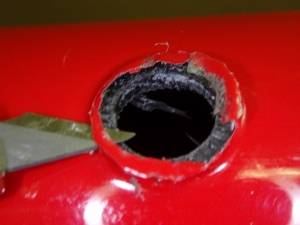
I'm using a utility knife with replaceable blades, and with a fresh blade it cuts smoothly.
It's the type where you can replace just the blade like on a fountain pen nib,
but I only ever use brand new blades.
Once I finish a job, I discard the blade.
This isn't really a matter of principle on my part—
I lost the cap that goes on the tip.

I scraped away the paint.
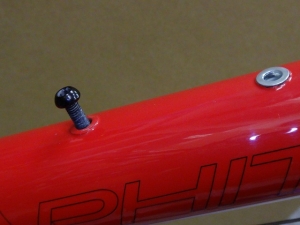
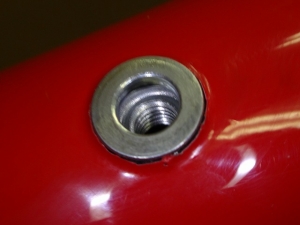
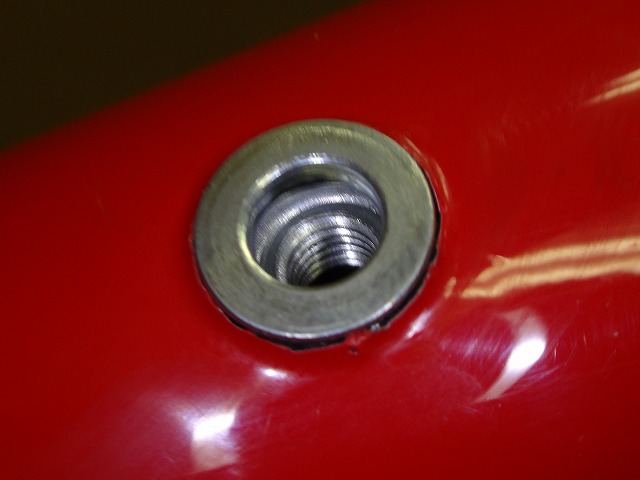
I installed a new rivet nut.

I recovered the old rivet nut.
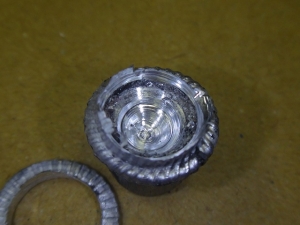
The drill went through almost exactly where I planned.
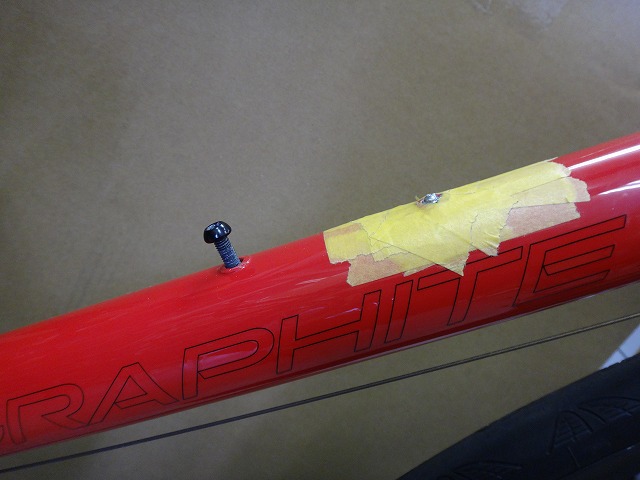
A customer brought in a Meteor by Graphite Design (GDR).
The bottle cage screw had snapped off while stuck in the threaded hole
and they wanted me to do something about it.
There's masking tape on it because
the customer was thinking of trying to handle it themselves using a rotary tool or something,
but they decided it would be better to leave it as-is and have us work on it instead
so they brought it in without doing anything.
That really helps.
On the flip side, the worst scenario is when
a rivet nut's crimp loosens and spins freely, and someone just dabs instant adhesive on it as a temporary fix.

The cross-section of the screw is pointed.
Ugh, this is tricky.
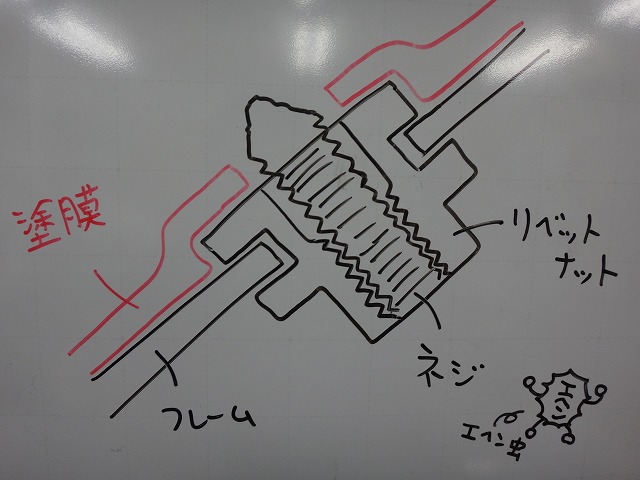
↑If I draw it in a diagram, it looks like this.
First, I drill a guide hole at the center of the screw.
Since it was an aluminum screw this time, it was relatively easy.
I bought some thin carbide drills that can drill through
stainless steel screws when I made the
S☆B wagon (→here)
so I'll use those.

Then I just pass the drill bit through the guide hole,

and the moment I cut through the outer flange of the rivet nut, I stop. Done.
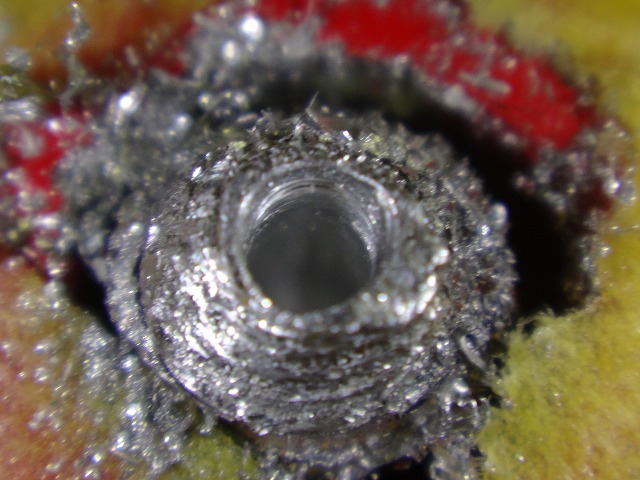
I drilled a guide hole at the center of the screw (by sight).
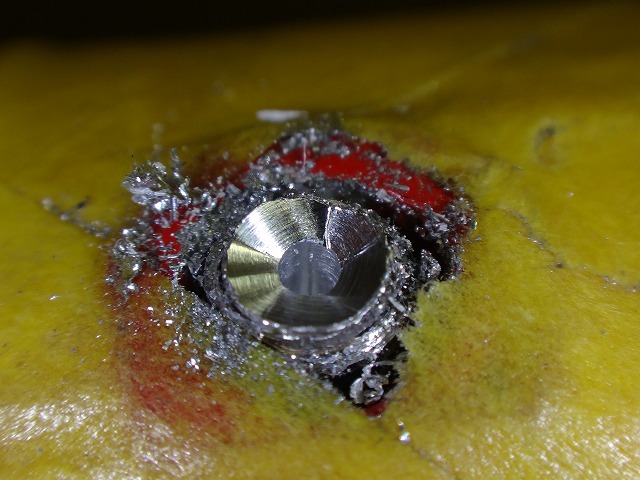
Whirrrrr
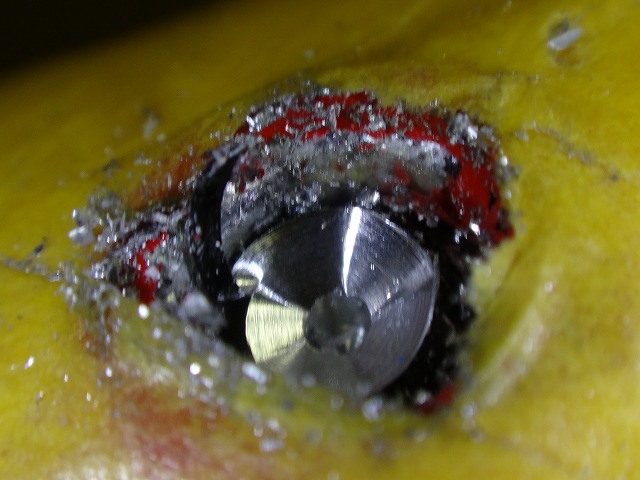
Whirrrrr
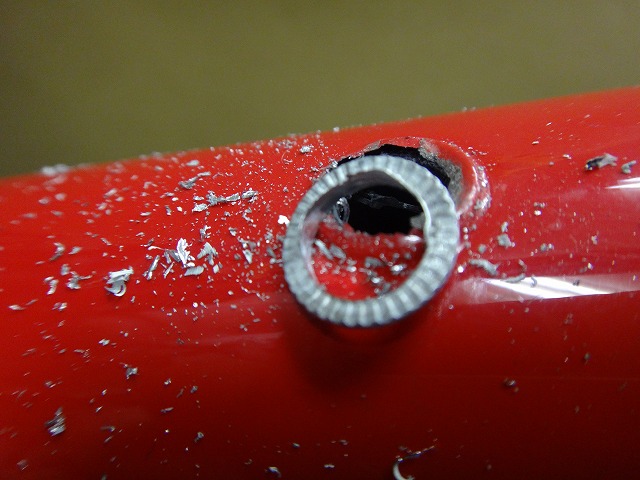
Cut cleanly.
The serrated side of the flange in the image is
the side that was in contact with the frame.

The paint on the frame has
formed a hollow in the shape of the rivet nut's flange.
I don't want the paint cracks to spread like a boiled egg shell cracking, so
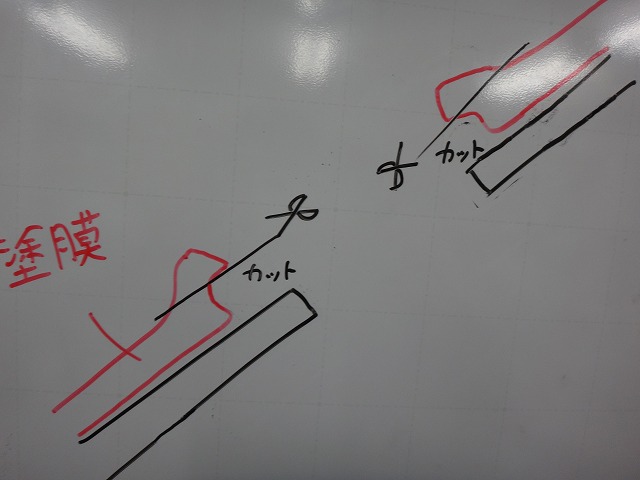
I'll scrape it off.
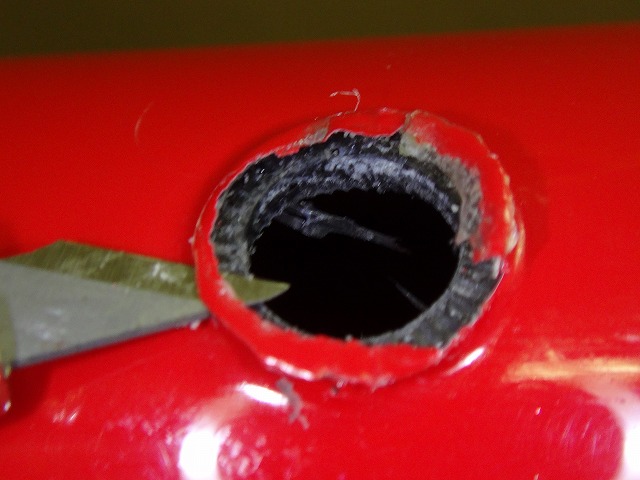
I'm using a utility knife with replaceable blades, and with a fresh blade it cuts smoothly.
It's the type where you can replace just the blade like on a fountain pen nib,
but I only ever use brand new blades.
Once I finish a job, I discard the blade.
This isn't really a matter of principle on my part—
I lost the cap that goes on the tip.
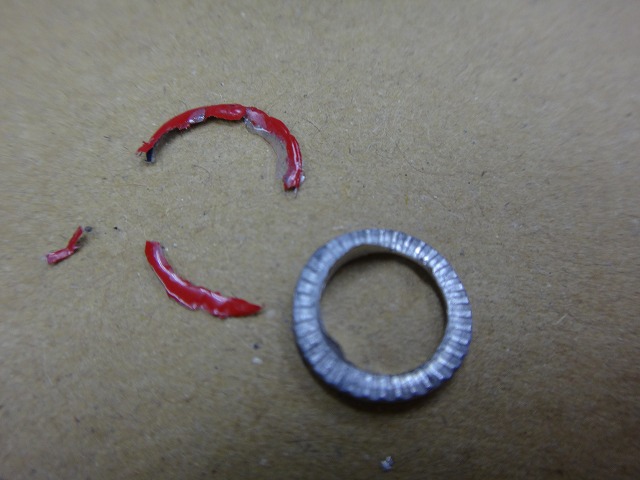
I scraped away the paint.
I installed a new rivet nut.

I recovered the old rivet nut.
The drill went through almost exactly where I planned.