To use with the lever from the S company (the major component maker that doesn't make direct mount brakes)
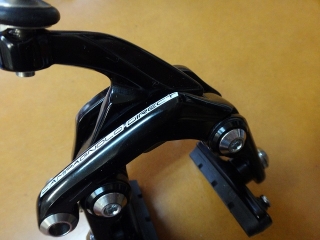
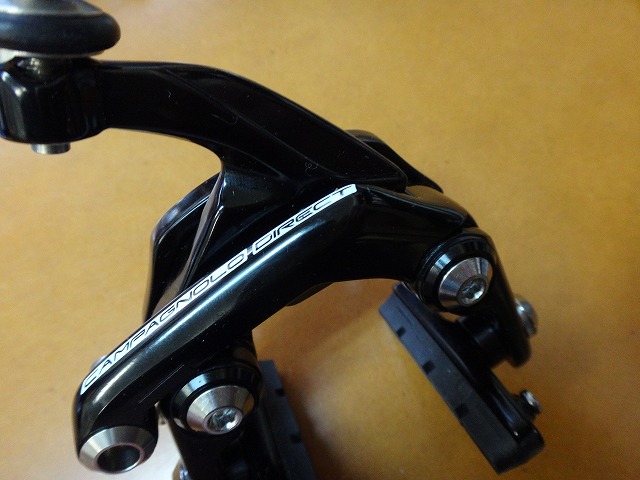
I've procured a Campagnolo direct mount brake.
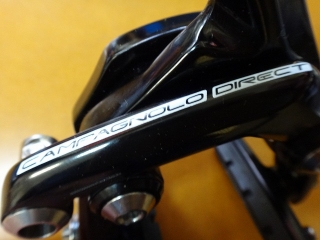
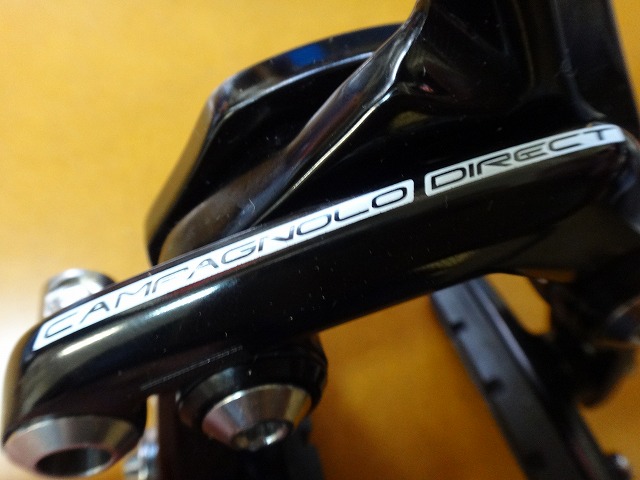
Campagnolo's direct mount brakes come in two grades.
Super Record and Record use the "Record" grade brake,
while Chorus and below are compatible with the "Below-Record grade" brake.
This one is the latter.
By "compatible," the manufacturer just means they're matched grade-wise—
it doesn't mean they're incompatible.
For example, pulling a Below-Record grade brake with a Record lever works fine
because the mechanical advantage matches.
Road caliper brakes traditionally had the same mechanical advantage as cantilever brakes,
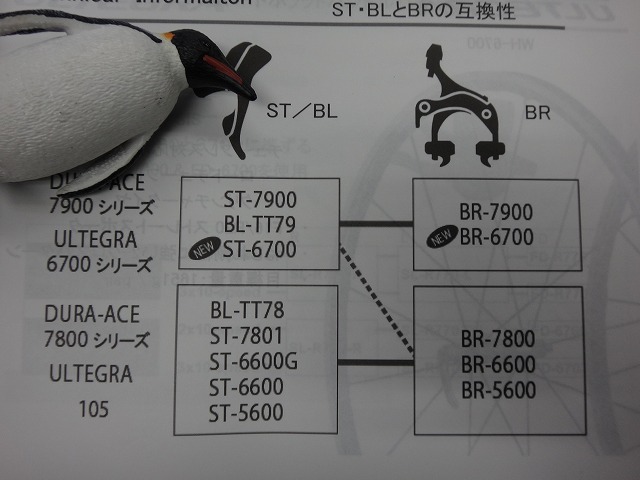
but Shimano's road brakes from the 7900 series onward
are more like V-brakes in MTB terms
and aren't basically compatible with brakes from 7800 and earlier.
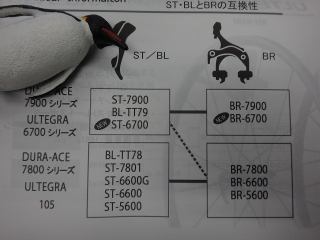
"Basically" means
new lever with old brake has "compatibility △"—not recommended but technically usable—
while old lever with new brake has "compatibility ×"—dangerous, don't use.
The dashed line in the diagram above shows compatibility △.
However, with a new lever and old brake, after the Shutdown Touch, the lever feel
doesn't translate into clamping the rim
(exactly like pulling a cantilever brake with a V-brake lever,
just in a milder form),
and the braking is really weak.
My cyclocross has a TRP (Taiwanese component brand) Euro X cantilever brake on it,
and with a 6770 lever it really doesn't stop well—I had some scary moments.
Now I'm using one with the internals swapped from an original SRAM Rival lever.
The reason I'm using a BL-TT78 on the left front brake lever of my personal Trinity bike
that I posted about earlier is the same.
By this logic, in the box above labeled BR-7800
would go Campagnolo and SRAM caliper brakes,
and traditional (not new Shimano) cantilever brakes.
When SRAM seriously entered the road component market (※),
they aligned various specs with Shimano (7800 series at the time),
and except for rear derailleur cable pull being different, mixed component setups were possible,
so back then it was trendy to use first-gen 10-speed Red with
"only the dual-tap lever and rear derailleur in Red,
everything else Dura-Ace."
If you wanted maximum braking power, Shimano was better;
if you prioritized speed control and feel, SRAM was better—there were pros and cons to each.
※SRAM's predecessor SACHS (Zax) actually had
Campagnolo make their levers for them back in the day.
Search for "sachs ergopower" and you'll find it.
Back then, SRAM suffered from frequent chain breakage in pro racing,
and the Red front derailleur had issues with its titanium arms,
so many pro teams used the lower Force grade instead,
making mixed Shimano/SRAM setups a viable strategy.
Annoyed by this, Shimano made bold changes with 7900 Dura-Ace:
they altered both the front derailleur cable pull and the brake mechanical advantage.
As a result, the only specs SRAM can match now are
brake pads, freehub body, and chain.
If I were to do something like that, I'd personally
add ribs on the back of 9000 or R9100 crankset arms
"for reinforcement," specifically to prevent Pioneer pedaling monitors from fitting.
Getting back on track now,
with a SRAM lever and Shimano direct mount brake combination,
after Shutdown Touch the lever would keep compressing indefinitely,
getting that "pressing into bar tape" feel, throwing the mechanical advantage way off,
so it just doesn't work.
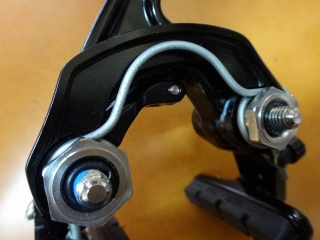
Now here's what I really wanted to write about:
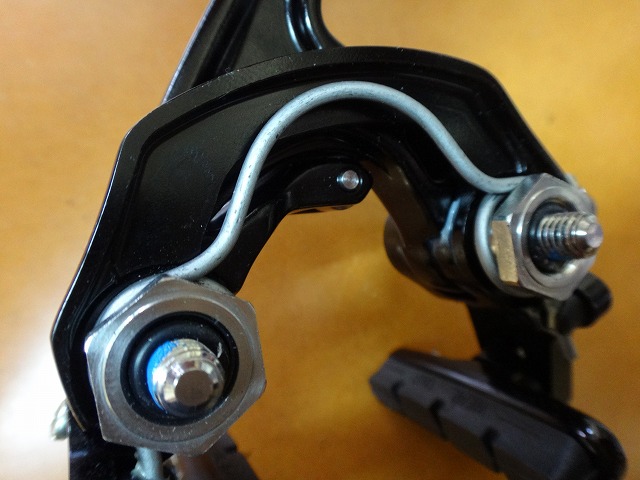
Campagnolo's direct mount brakes have
a booster-like part that connects the left and right mounting bolts.
Anyone who remembers MTB's transition from cantilever to V-brakes won't need explanation,
but V-brakes are so strong that rim brakes flex—
after Shutdown Touch, especially on rear brakes, the frame's seat stays flex a lot.
On frames not designed for V-brakes,
the distance between brake mounting bosses widens as you squeeze the lever.
To prevent that, people used to bolt a "brake booster"—
a horseshoe-shaped part—
between the bosses,
but Shimano's direct mount brakes don't have one.
Without a booster, the brake arms naturally want to collapse inward from spring tension,
making installation difficult, so Shimano uses plastic guides
inserted into the brake just for installation, and the mounting bolts are held with wire clips.
These parts get removed after installation,
so there's no booster equivalent.
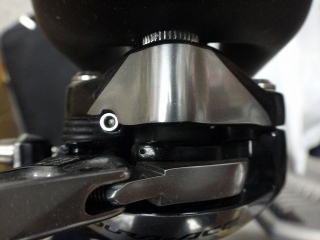
9000-series and later caliper brakes have
an adapter (that doubles as booster) that converts
the two mounting holes of direct mount to the traditional single hole
on fork or frame.
When braking and squeezing hard after Shutdown Touch,
the distance between the two mounting holes on the adapter doesn't widen,
but with booster-less direct mount brakes
(especially rear brakes on the seat stays like V-brakes),
the clamping force after Shutdown Touch gets diverted
not just into braking but also into deforming the seat stays.
Also, Campagnolo did internal testing measuring the left-right rim temperature
when using direct mount brakes,
and the competing S company's brakes
(not SRAM) showed large left-right temperature differences.
I saw this on a no-photos slide, so I can't provide a source here,
but basically Shimano's (←oops, I wrote it anyway) direct mount brakes
don't have one side doing much of the braking work after Shutdown Touch
(it's not heating the rim).
Temperatures in those tests reached around 100°C on the hotter side,
but Shimano's left-right difference was far more than just a little.
Some De Rosa frames from certain periods—like the KING XS fork and BH TT frame—
have 3 holes to accept both traditional caliper and direct mount brakes,
but I wonder if Shimano's rear brake might actually
have better stopping power with the caliper option.
"Seat stays flexing during lever squeeze in a static braking test"
is different from real-world riding where the brake gets pulled into the wheel rotation,
so direct mount is indeed stronger against those kinds of deformations—that's fair.
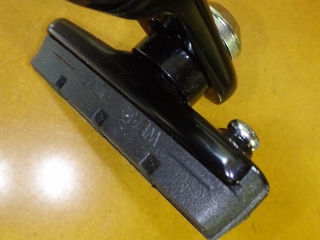
Campagnolo's current brake pads
snap into a spring in the back of the pad holder
as a safety against falling out,
but on the lower-grade direct mount brakes,
they've switched to Shimano-compatible pad holders.
So they use a small screw on the front of the holder to prevent pad loss.
They're calling this "Universal," but calling a competitor's standard "universal"
is honestly questionable.
What's with all the kowtowing?
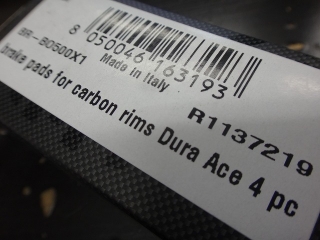
Previously, Campagnolo called Shimano-compatible brake pads
"Dura-Ace compatible."
With the Universal pad holder,
the budget-tier Centaur brakes coming back next year
also use it.
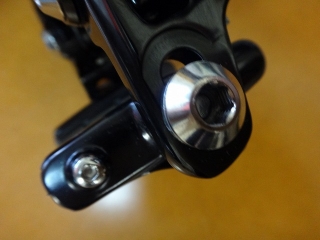
The pad holder grooves are Shimano-compatible,
but the pad holder itself is still Campagnolo's design.
Shimano uses a pad holder fixing "bolt,"
while Campagnolo uses a pad holder fixing "nut,"
so the arm-end slit is wider than Shimano's.
So it's not like lower direct mount or new Centaur gets a Shimano pad holder—
it's still Campagnolo.
But it still helps. For example, Swissstop brake pads come in
"Flash" for Shimano and "Race" for Campagnolo,
and comparing the same spec—Yellow King to Yellow King, Black Prince to Black Prince—
Race is actually more expensive than Flash.
Maybe they're passing on tooling costs directly in the product price?
Also, this time I could reuse the Exalith brake pads
that were on my SRAM brakes,
so that was helpful too.
I didn't have to buy new Campagnolo Exalith pads.
I've procured a Campagnolo direct mount brake.
Campagnolo's direct mount brakes come in two grades.
Super Record and Record use the "Record" grade brake,
while Chorus and below are compatible with the "Below-Record grade" brake.
This one is the latter.
By "compatible," the manufacturer just means they're matched grade-wise—
it doesn't mean they're incompatible.
For example, pulling a Below-Record grade brake with a Record lever works fine
because the mechanical advantage matches.
Road caliper brakes traditionally had the same mechanical advantage as cantilever brakes,
but Shimano's road brakes from the 7900 series onward
are more like V-brakes in MTB terms
and aren't basically compatible with brakes from 7800 and earlier.
"Basically" means
new lever with old brake has "compatibility △"—not recommended but technically usable—
while old lever with new brake has "compatibility ×"—dangerous, don't use.
The dashed line in the diagram above shows compatibility △.
However, with a new lever and old brake, after the Shutdown Touch, the lever feel
doesn't translate into clamping the rim
(exactly like pulling a cantilever brake with a V-brake lever,
just in a milder form),
and the braking is really weak.
My cyclocross has a TRP (Taiwanese component brand) Euro X cantilever brake on it,
and with a 6770 lever it really doesn't stop well—I had some scary moments.
Now I'm using one with the internals swapped from an original SRAM Rival lever.
The reason I'm using a BL-TT78 on the left front brake lever of my personal Trinity bike
that I posted about earlier is the same.
By this logic, in the box above labeled BR-7800
would go Campagnolo and SRAM caliper brakes,
and traditional (not new Shimano) cantilever brakes.
When SRAM seriously entered the road component market (※),
they aligned various specs with Shimano (7800 series at the time),
and except for rear derailleur cable pull being different, mixed component setups were possible,
so back then it was trendy to use first-gen 10-speed Red with
"only the dual-tap lever and rear derailleur in Red,
everything else Dura-Ace."
If you wanted maximum braking power, Shimano was better;
if you prioritized speed control and feel, SRAM was better—there were pros and cons to each.
※SRAM's predecessor SACHS (Zax) actually had
Campagnolo make their levers for them back in the day.
Search for "sachs ergopower" and you'll find it.
Back then, SRAM suffered from frequent chain breakage in pro racing,
and the Red front derailleur had issues with its titanium arms,
so many pro teams used the lower Force grade instead,
making mixed Shimano/SRAM setups a viable strategy.
Annoyed by this, Shimano made bold changes with 7900 Dura-Ace:
they altered both the front derailleur cable pull and the brake mechanical advantage.
As a result, the only specs SRAM can match now are
brake pads, freehub body, and chain.
If I were to do something like that, I'd personally
add ribs on the back of 9000 or R9100 crankset arms
"for reinforcement," specifically to prevent Pioneer pedaling monitors from fitting.
Getting back on track now,
with a SRAM lever and Shimano direct mount brake combination,
after Shutdown Touch the lever would keep compressing indefinitely,
getting that "pressing into bar tape" feel, throwing the mechanical advantage way off,
so it just doesn't work.
Now here's what I really wanted to write about:
Campagnolo's direct mount brakes have
a booster-like part that connects the left and right mounting bolts.
Anyone who remembers MTB's transition from cantilever to V-brakes won't need explanation,
but V-brakes are so strong that rim brakes flex—
after Shutdown Touch, especially on rear brakes, the frame's seat stays flex a lot.
On frames not designed for V-brakes,
the distance between brake mounting bosses widens as you squeeze the lever.
To prevent that, people used to bolt a "brake booster"—
a horseshoe-shaped part—
between the bosses,
but Shimano's direct mount brakes don't have one.
Without a booster, the brake arms naturally want to collapse inward from spring tension,
making installation difficult, so Shimano uses plastic guides
inserted into the brake just for installation, and the mounting bolts are held with wire clips.
These parts get removed after installation,
so there's no booster equivalent.
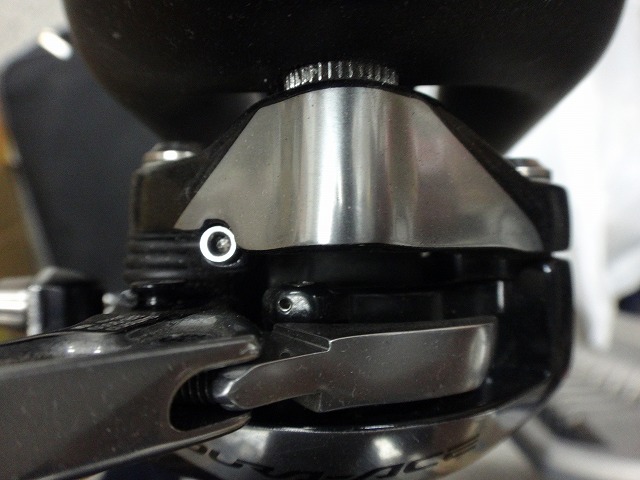
9000-series and later caliper brakes have
an adapter (that doubles as booster) that converts
the two mounting holes of direct mount to the traditional single hole
on fork or frame.
When braking and squeezing hard after Shutdown Touch,
the distance between the two mounting holes on the adapter doesn't widen,
but with booster-less direct mount brakes
(especially rear brakes on the seat stays like V-brakes),
the clamping force after Shutdown Touch gets diverted
not just into braking but also into deforming the seat stays.
Also, Campagnolo did internal testing measuring the left-right rim temperature
when using direct mount brakes,
and the competing S company's brakes
(not SRAM) showed large left-right temperature differences.
I saw this on a no-photos slide, so I can't provide a source here,
but basically Shimano's (←oops, I wrote it anyway) direct mount brakes
don't have one side doing much of the braking work after Shutdown Touch
(it's not heating the rim).
Temperatures in those tests reached around 100°C on the hotter side,
but Shimano's left-right difference was far more than just a little.
Some De Rosa frames from certain periods—like the KING XS fork and BH TT frame—
have 3 holes to accept both traditional caliper and direct mount brakes,
but I wonder if Shimano's rear brake might actually
have better stopping power with the caliper option.
"Seat stays flexing during lever squeeze in a static braking test"
is different from real-world riding where the brake gets pulled into the wheel rotation,
so direct mount is indeed stronger against those kinds of deformations—that's fair.

Campagnolo's current brake pads
snap into a spring in the back of the pad holder
as a safety against falling out,
but on the lower-grade direct mount brakes,
they've switched to Shimano-compatible pad holders.
So they use a small screw on the front of the holder to prevent pad loss.
They're calling this "Universal," but calling a competitor's standard "universal"
is honestly questionable.
What's with all the kowtowing?

Previously, Campagnolo called Shimano-compatible brake pads
"Dura-Ace compatible."
With the Universal pad holder,
the budget-tier Centaur brakes coming back next year
also use it.
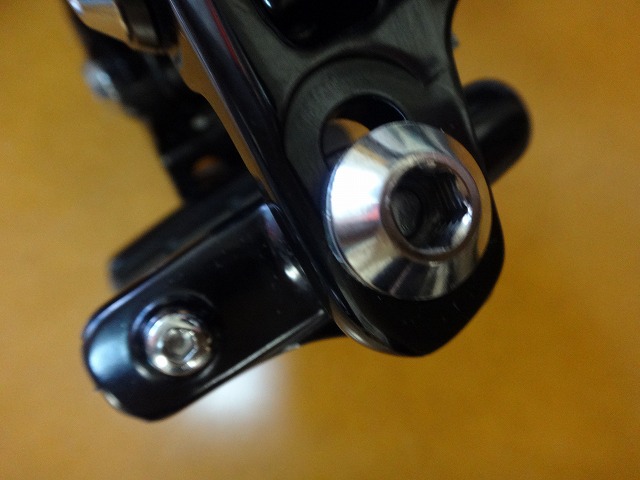
The pad holder grooves are Shimano-compatible,
but the pad holder itself is still Campagnolo's design.
Shimano uses a pad holder fixing "bolt,"
while Campagnolo uses a pad holder fixing "nut,"
so the arm-end slit is wider than Shimano's.
So it's not like lower direct mount or new Centaur gets a Shimano pad holder—
it's still Campagnolo.
But it still helps. For example, Swissstop brake pads come in
"Flash" for Shimano and "Race" for Campagnolo,
and comparing the same spec—Yellow King to Yellow King, Black Prince to Black Prince—
Race is actually more expensive than Flash.
Maybe they're passing on tooling costs directly in the product price?
Also, this time I could reuse the Exalith brake pads
that were on my SRAM brakes,
so that was helpful too.
I didn't have to buy new Campagnolo Exalith pads.