Another day of wheel building (and so on).
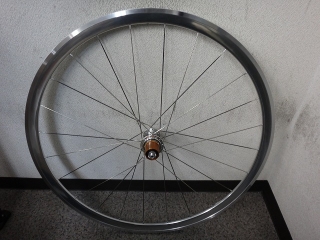
Continuing from the other day.
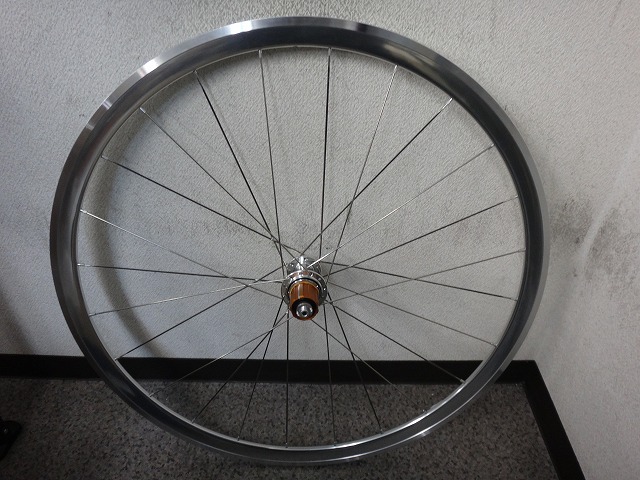
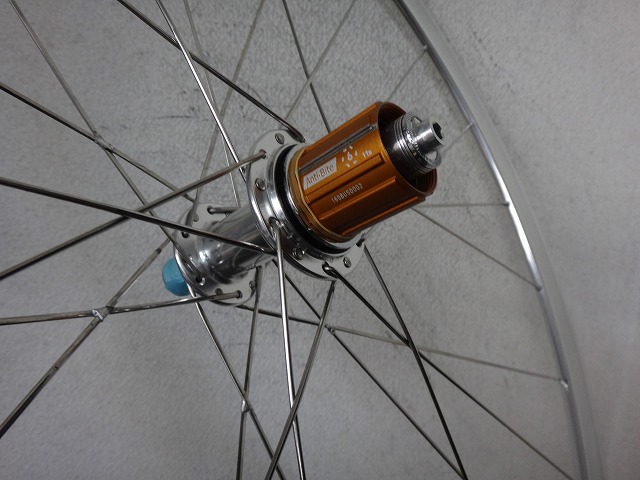
I built a rear wheel with the XR300 silver rim.
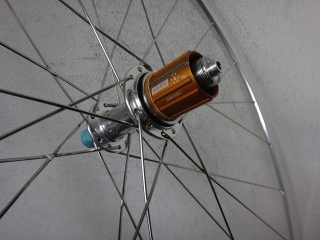
A rear hub that looks like a Leaf hub, 24 spokes
Half-competition 46-spoke cross lacing with spoke tying.
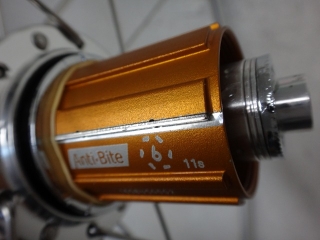
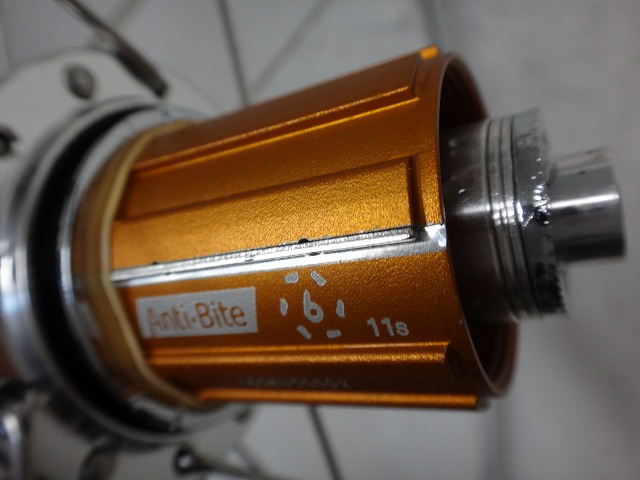
This is a freebody equipped with an anti-bite guard
that prevents the sprocket from biting into the spline.
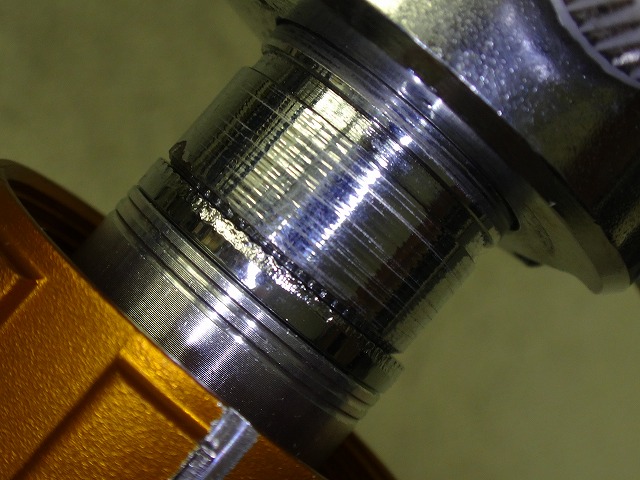
The iron plate is thinner than Novatec's,
but with three guards spaced 120° apart,
I think the effect is sufficient.
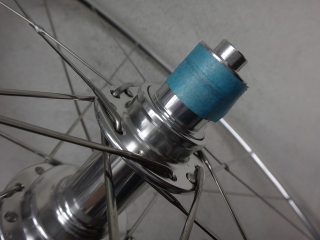
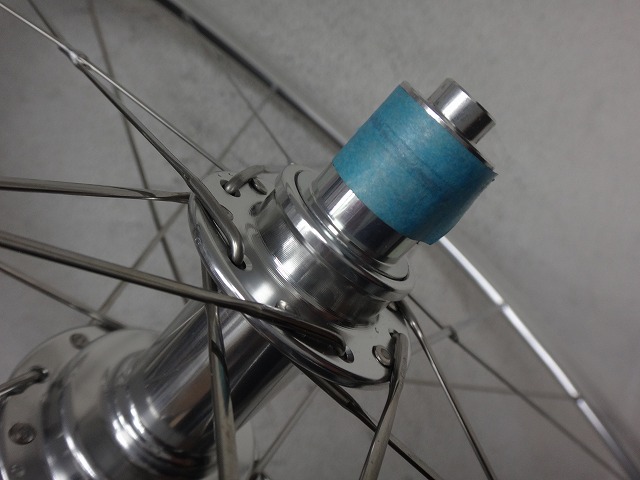
What I'm holding with tape on the non-drive side
is an adapter that increases the over-locknut dimension
from 130mm to 135mm.
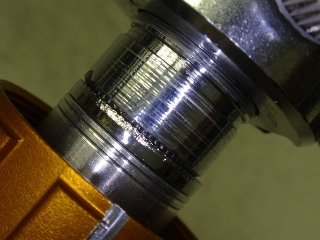
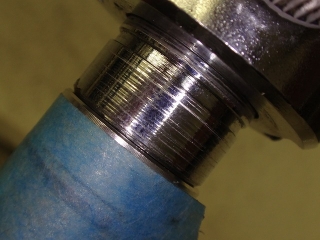
And that's how I center it.
This works amazingly well—the spoke tying on the non-drive side
seems almost unnecessary, as the wheel came out so well balanced.
I did it because that's what the customer wanted, though.
Regarding spoke tying, I learned some additional things from track cycling sources, but before that:
The Araya 16B GOLD rim used in track cycling
is made using old-fashioned methods, so it's extremely soft.
If you try to build it with the same technique as modern rims
that have been forged, cut, and otherwise treated,
the spoke tension will cause the rim nipples to lift up,
and in the worst case the nipple will break right through the rim.
With this kind of rim, when used as a disposable decision-day wheel
and tensioned so much that the nipples lift,
the effect of spoke tying becomes barely noticeable.
The reason I don't tie spokes on the drive side is probably the same thing.
If you can't feel a difference, it's just decoration.
When applied to the non-drive side, there's a noticeable difference
in drivetrain stiffness, so I do tie there.
In track cycling rear wheels, dual-sided hubs have no dishing,
and single-sided hubs (like Dura-Ace, for example) have minor dishing,
but not much.
With road bikes where 10 or 11 sprockets are pushed in from the right,
requiring significant dishing, even after doing everything possible,
the non-drive side will still be looser.
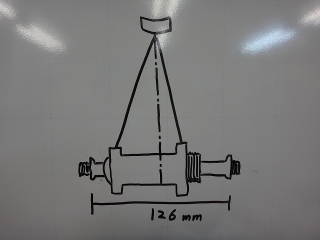
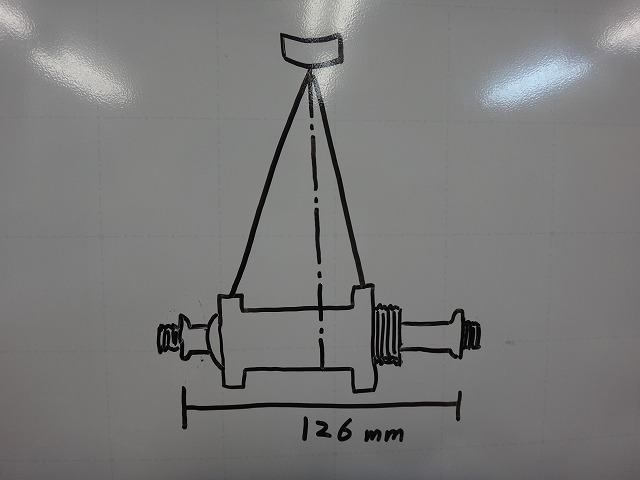
My Cinelli Supercorsa has a rear spacing of 126mm,
but there was a period when I shared the rear wheel
(Campagnolo freewheel-type hub) with a Pinarello Stelvio
(a frame named after a mountain pass).
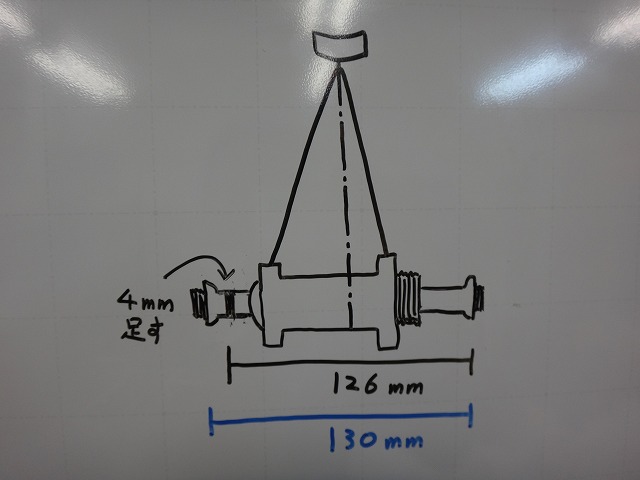
Since the Stelvio's rear spacing is 130mm wide,
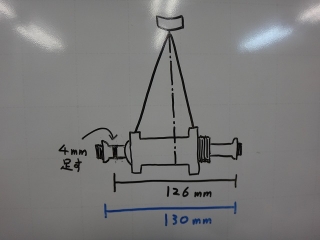
I used to add a 4mm spacer on the left side of the hub axle
to convert to a 130mm rear wheel
(though I didn't swap it back and forth that frequently).
I'd have to loosen the right side end's axle nut as well,
and shift the hub axle itself to the left.
So the threaded portion of the hub axle that sits in the end becomes slightly shallower.
Of course, this alone leaves the rim offset from the new wheel center
relative to the new over-locknut dimension.
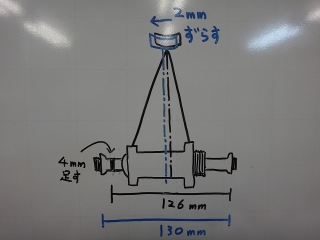
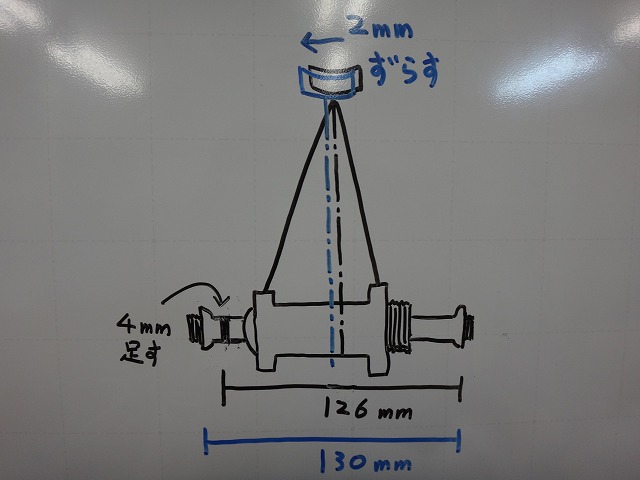
So I need to shift the rim position toward the side where
I added the dimension—exactly half of the added amount.
For the 4mm increase, you can't do 2mm on each side or 4mm on one side only.
There's the issue of the shifter (sprocket) position changing,
but with 4mm on the right only, it's mechanically bad for the wheel.
Shifting the rim toward the non-drive side means
"being able to tighten only the non-drive side unilaterally,"
and that 2mm—or rather, those 2mm—creates
an incredibly significant correction.
As a rider you might notice a difference while riding,
but as someone building wheels, you absolutely feel the difference in how it handles.
So this wheel too,
starting from the completed state at 130mm
of Mulab wheel #1 built with a Leaf hub,
has reached the same state as being unilaterally tightened
until the rim shifted 2.5mm toward the non-drive side.
That's why the spoke tension difference between the two sides is extremely small.
The fact that an offset rim achieves the same effect
is probably obvious to most people by this point,
and this one also reduces dishing without losing flange width.
I was planning to write about this eventually,
but Cannondale has a standard for their MTB and cyclocross models
with 142mm through-axle spacing
offset by extending the drive side by 6mm.
Can you build a wheel for that? I received that comment quite a while back,
and since the rear hub can be a standard 142mm unit, of course you can build it.
Spoke length calculation isn't that troublesome either,
and even with an existing 142mm rear wheel,
if the spoke lengths end at the nipple end face,
you could achieve 6mm offset by tightening the non-drive side
and loosening the drive side—without replacing spokes.
The reason extending the right side is no good is based on the preconceived notion
that left and right are the same dimension, but apparently
if they're different dimensions, it's fine.
The reason Cannondale does this seems to be
to position the center of the hub flange spacing directly under the rim—
in other words, to eliminate dishing—
but if flange width doesn't change, lateral stiffness won't increase dramatically.
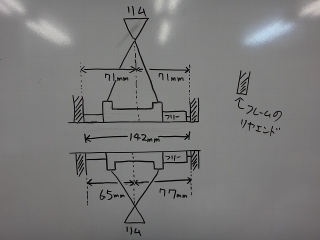
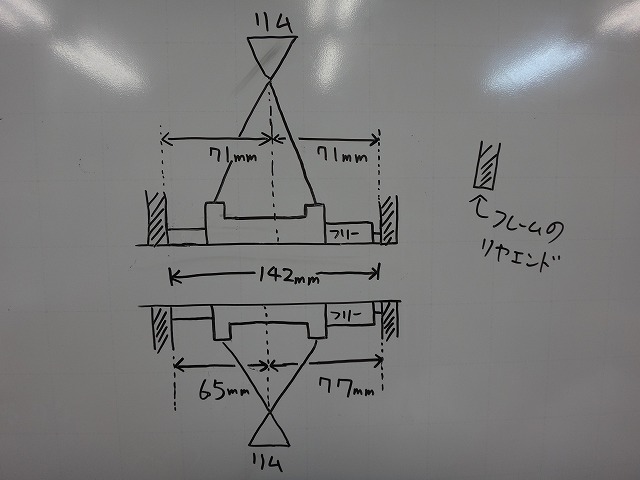
The frame's 142mm end is designed not for 71/71mm
but for 65/77mm.
The diagram above shows normal 142mm at the top, 6mm offset at the bottom.
Drawing it with the hub as reference gives this,

but in reality it's a 6mm "offset," so the relationship between
the center of the frame's seat tube and the wheel center (dashed line in the diagram above) doesn't change.
The sprocket extends outward, which alleviates chain line issues and such.
Rear hub flange width averages around 56mm (with many exceptions),
typically broken down as 21mm drive-side and 35mm non-drive-side,
so with 6mm offset you'd get 27mm drive-side and 29mm non-drive-side.
Flange width remains the same but dishing reduces.
With dedicated design you could make a rear hub with equal left-right width and no dishing.
In that case what helps many wheel builders is that with equal diameter and number on both sides,
you get equal tension, equal spoke angle, and equal spoke length.
By "many wheel builders" I mean people who, when handed a 32H Open Pro rim,
spend their whole life building it with left-right equal diameter spokes
in either 6x6 or 8x8 lacing without ever questioning it.
Products designed to accommodate those people are troublesome.
I'd rather they increased flange width even if dishing got worse—
that would be helpful to me.
There are various ways to correct spoke-side imbalance,
but there's no method to recover lost flange width.
And besides... with a rear wheel that has no dishing, if you're doing spoke tying
you'd have to do both sides, so it's a pain! (←that's the real reason)
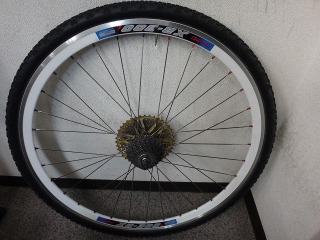
One of my own, as an example.

130mm width, no-dish dual freewheel hub.

So if you're doing spoke tying, it's all four sides.
Continuing from the other day.
I built a rear wheel with the XR300 silver rim.
A rear hub that looks like a Leaf hub, 24 spokes
Half-competition 46-spoke cross lacing with spoke tying.
This is a freebody equipped with an anti-bite guard
that prevents the sprocket from biting into the spline.
The iron plate is thinner than Novatec's,
but with three guards spaced 120° apart,
I think the effect is sufficient.
What I'm holding with tape on the non-drive side
is an adapter that increases the over-locknut dimension
from 130mm to 135mm.

And that's how I center it.
This works amazingly well—the spoke tying on the non-drive side
seems almost unnecessary, as the wheel came out so well balanced.
I did it because that's what the customer wanted, though.
Regarding spoke tying, I learned some additional things from track cycling sources, but before that:
The Araya 16B GOLD rim used in track cycling
is made using old-fashioned methods, so it's extremely soft.
If you try to build it with the same technique as modern rims
that have been forged, cut, and otherwise treated,
the spoke tension will cause the rim nipples to lift up,
and in the worst case the nipple will break right through the rim.
With this kind of rim, when used as a disposable decision-day wheel
and tensioned so much that the nipples lift,
the effect of spoke tying becomes barely noticeable.
The reason I don't tie spokes on the drive side is probably the same thing.
If you can't feel a difference, it's just decoration.
When applied to the non-drive side, there's a noticeable difference
in drivetrain stiffness, so I do tie there.
In track cycling rear wheels, dual-sided hubs have no dishing,
and single-sided hubs (like Dura-Ace, for example) have minor dishing,
but not much.
With road bikes where 10 or 11 sprockets are pushed in from the right,
requiring significant dishing, even after doing everything possible,
the non-drive side will still be looser.
My Cinelli Supercorsa has a rear spacing of 126mm,
but there was a period when I shared the rear wheel
(Campagnolo freewheel-type hub) with a Pinarello Stelvio
(a frame named after a mountain pass).
Since the Stelvio's rear spacing is 130mm wide,
I used to add a 4mm spacer on the left side of the hub axle
to convert to a 130mm rear wheel
(though I didn't swap it back and forth that frequently).
I'd have to loosen the right side end's axle nut as well,
and shift the hub axle itself to the left.
So the threaded portion of the hub axle that sits in the end becomes slightly shallower.
Of course, this alone leaves the rim offset from the new wheel center
relative to the new over-locknut dimension.
So I need to shift the rim position toward the side where
I added the dimension—exactly half of the added amount.
For the 4mm increase, you can't do 2mm on each side or 4mm on one side only.
There's the issue of the shifter (sprocket) position changing,
but with 4mm on the right only, it's mechanically bad for the wheel.
Shifting the rim toward the non-drive side means
"being able to tighten only the non-drive side unilaterally,"
and that 2mm—or rather, those 2mm—creates
an incredibly significant correction.
As a rider you might notice a difference while riding,
but as someone building wheels, you absolutely feel the difference in how it handles.
So this wheel too,
starting from the completed state at 130mm
of Mulab wheel #1 built with a Leaf hub,
has reached the same state as being unilaterally tightened
until the rim shifted 2.5mm toward the non-drive side.
That's why the spoke tension difference between the two sides is extremely small.
The fact that an offset rim achieves the same effect
is probably obvious to most people by this point,
and this one also reduces dishing without losing flange width.
I was planning to write about this eventually,
but Cannondale has a standard for their MTB and cyclocross models
with 142mm through-axle spacing
offset by extending the drive side by 6mm.
Can you build a wheel for that? I received that comment quite a while back,
and since the rear hub can be a standard 142mm unit, of course you can build it.
Spoke length calculation isn't that troublesome either,
and even with an existing 142mm rear wheel,
if the spoke lengths end at the nipple end face,
you could achieve 6mm offset by tightening the non-drive side
and loosening the drive side—without replacing spokes.
The reason extending the right side is no good is based on the preconceived notion
that left and right are the same dimension, but apparently
if they're different dimensions, it's fine.
The reason Cannondale does this seems to be
to position the center of the hub flange spacing directly under the rim—
in other words, to eliminate dishing—
but if flange width doesn't change, lateral stiffness won't increase dramatically.
The frame's 142mm end is designed not for 71/71mm
but for 65/77mm.
The diagram above shows normal 142mm at the top, 6mm offset at the bottom.
Drawing it with the hub as reference gives this,
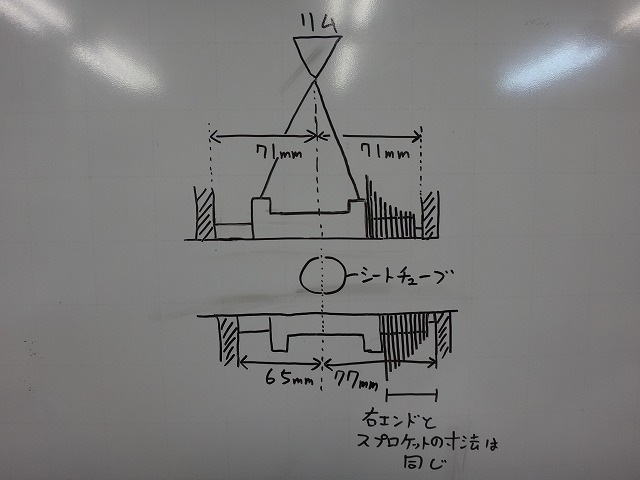
but in reality it's a 6mm "offset," so the relationship between
the center of the frame's seat tube and the wheel center (dashed line in the diagram above) doesn't change.
The sprocket extends outward, which alleviates chain line issues and such.
Rear hub flange width averages around 56mm (with many exceptions),
typically broken down as 21mm drive-side and 35mm non-drive-side,
so with 6mm offset you'd get 27mm drive-side and 29mm non-drive-side.
Flange width remains the same but dishing reduces.
With dedicated design you could make a rear hub with equal left-right width and no dishing.
In that case what helps many wheel builders is that with equal diameter and number on both sides,
you get equal tension, equal spoke angle, and equal spoke length.
By "many wheel builders" I mean people who, when handed a 32H Open Pro rim,
spend their whole life building it with left-right equal diameter spokes
in either 6x6 or 8x8 lacing without ever questioning it.
Products designed to accommodate those people are troublesome.
I'd rather they increased flange width even if dishing got worse—
that would be helpful to me.
There are various ways to correct spoke-side imbalance,
but there's no method to recover lost flange width.
And besides... with a rear wheel that has no dishing, if you're doing spoke tying
you'd have to do both sides, so it's a pain! (←that's the real reason)
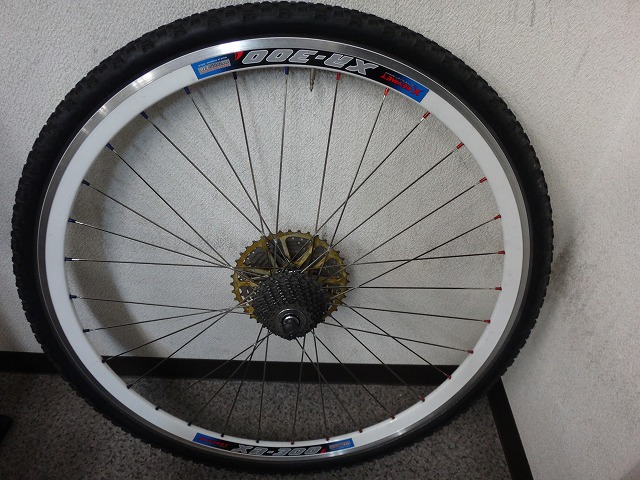
One of my own, as an example.

130mm width, no-dish dual freewheel hub.
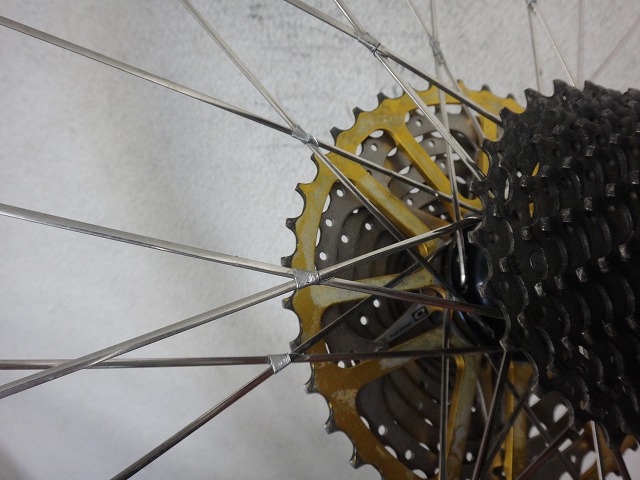
So if you're doing spoke tying, it's all four sides.