I stocked the sprocket-type disc rotor fixed adapter for centerlock 12mm through-axle hubs that I mentioned before.
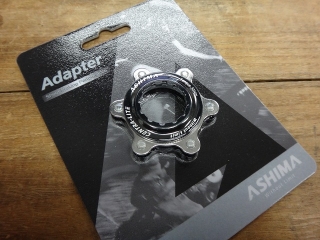
It's the ASHIMA "Centra Light" part, which produces various small disc brake-related components.

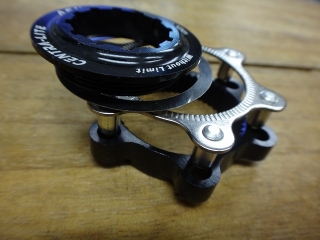
This is how it's structured.
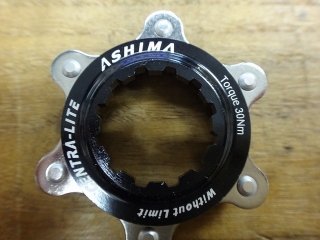
It uses a sprocket-type fixing method, but
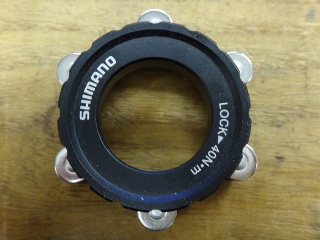
the company also makes the Centra XL, which is a BB-type lockring. In the image above, I've layered a Shimano OEM BB-type lockring on top, but
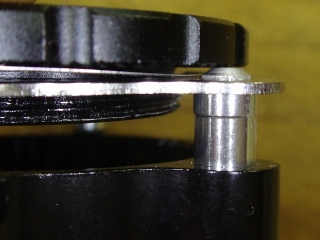
↑the pin rivet head and the BB-type lockring interfere with each other.
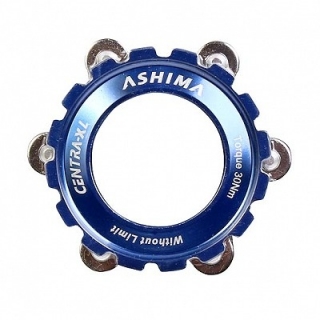
↑This is the Centra XL from the distributor's photo. Other than the lockring, the parts look identical to the Centra Light, and from this angle it appears the rivet interferes too, but in reality it must be cleverly designed to avoid contact.
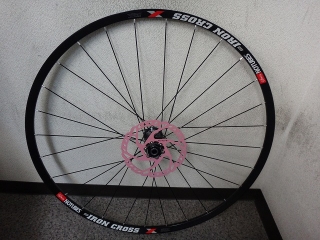
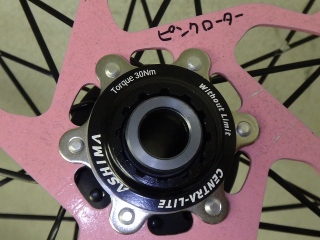
I tested whether it could be mounted on the RS770 front hub I mentioned before using my own rotor.
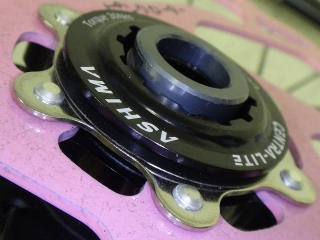
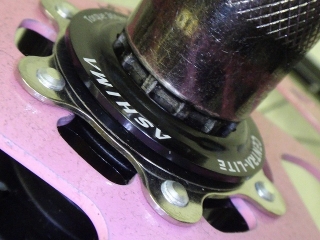
I confirmed that the cassette sprocket tool works on it.
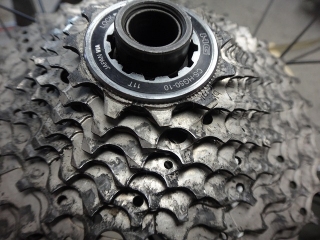
This is a completely different topic, but I did a spoke trueing job on a Trek MTB complete bike's wheels, so I took some photos for an article. It was Boost standard, so the rear hub is 148mm width/12mm axle. I suspect the 12mm axle is because the hub shaft can't be made any thicker due to the cassette sprocket lockring dimensions.
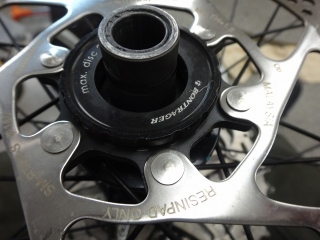
However, the lockring was BB-type. Since Boost standard front hubs are 110mm width/15mm axle, the rotor fixed ring on front hubs must always be BB-type. To get by with just one type of lockring, they probably adopted the BB-type on rear hubs too, even though sprocket-type can be used there.
SRAM's MTB 12-speed rear component for MTB has something called the "XD Driver"—a freebody design that eliminates the dimensional constraints of sprocket lockrings. It has a structure like a freewheel, which is in a sense a return to the past. Not that it matters, but I really wish they wouldn't bring Boost standard into cyclocross. I don't know how it'll shake out, but when standards proliferate like this, it's the users who suffer.
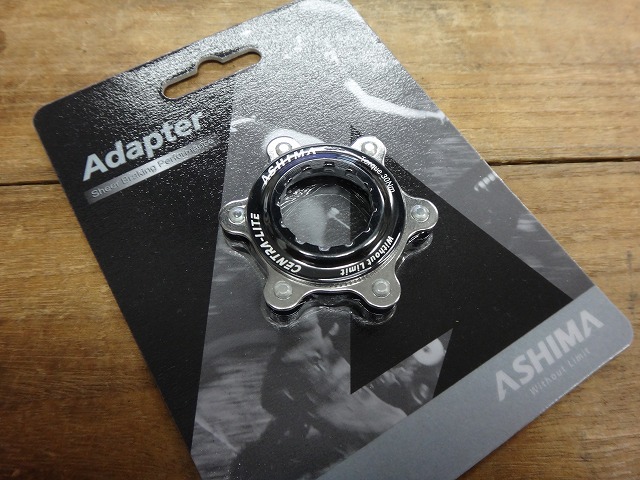
It's the ASHIMA "Centra Light" part, which produces various small disc brake-related components.
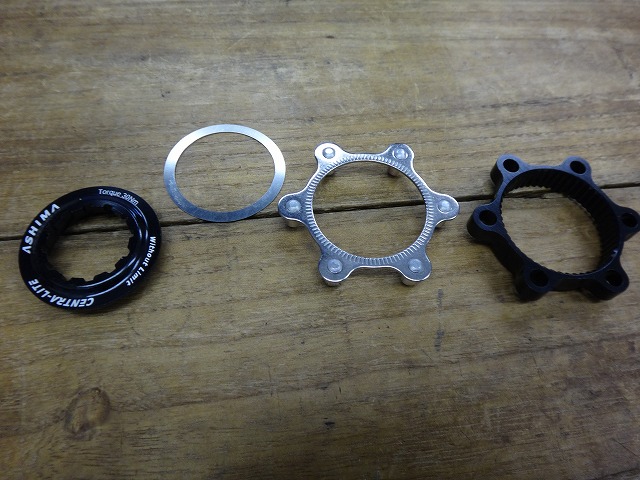

This is how it's structured.

It uses a sprocket-type fixing method, but
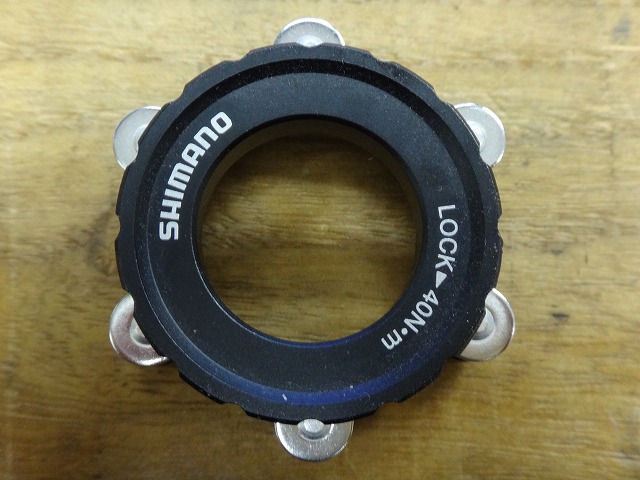
the company also makes the Centra XL, which is a BB-type lockring. In the image above, I've layered a Shimano OEM BB-type lockring on top, but
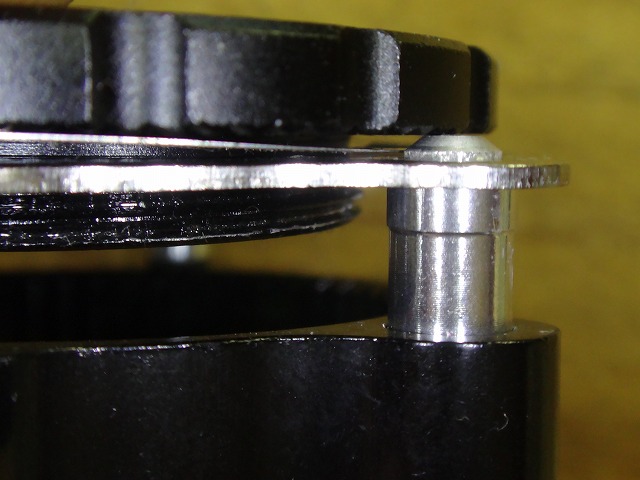
↑the pin rivet head and the BB-type lockring interfere with each other.

↑This is the Centra XL from the distributor's photo. Other than the lockring, the parts look identical to the Centra Light, and from this angle it appears the rivet interferes too, but in reality it must be cleverly designed to avoid contact.
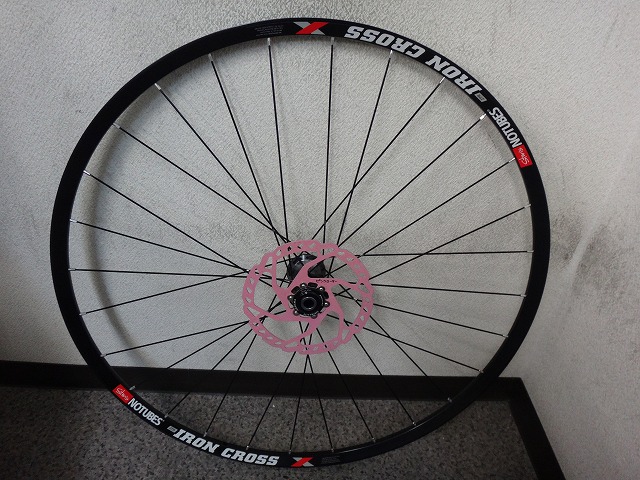

I tested whether it could be mounted on the RS770 front hub I mentioned before using my own rotor.

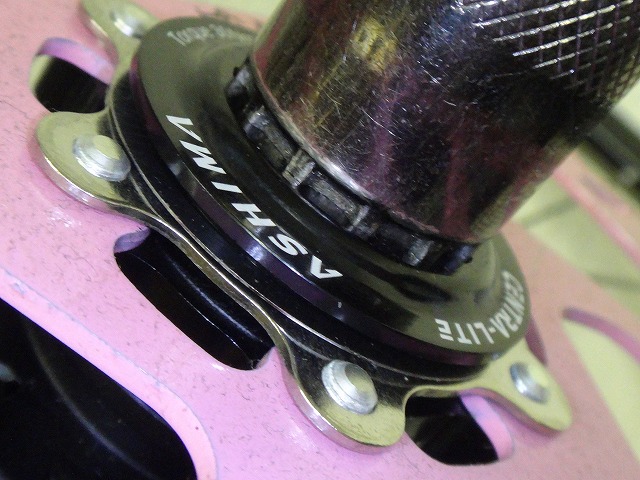
I confirmed that the cassette sprocket tool works on it.
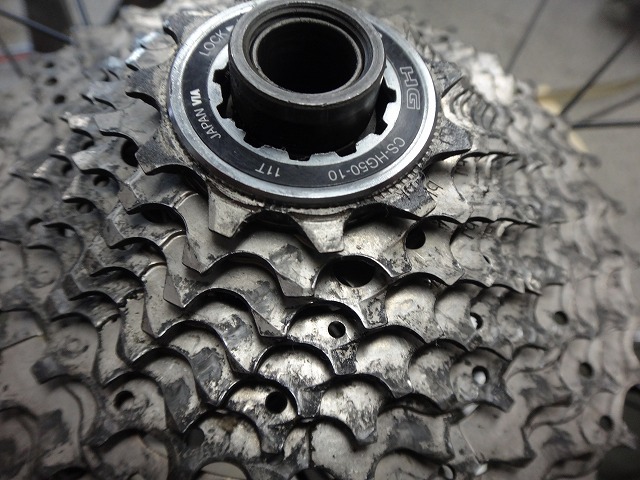
This is a completely different topic, but I did a spoke trueing job on a Trek MTB complete bike's wheels, so I took some photos for an article. It was Boost standard, so the rear hub is 148mm width/12mm axle. I suspect the 12mm axle is because the hub shaft can't be made any thicker due to the cassette sprocket lockring dimensions.
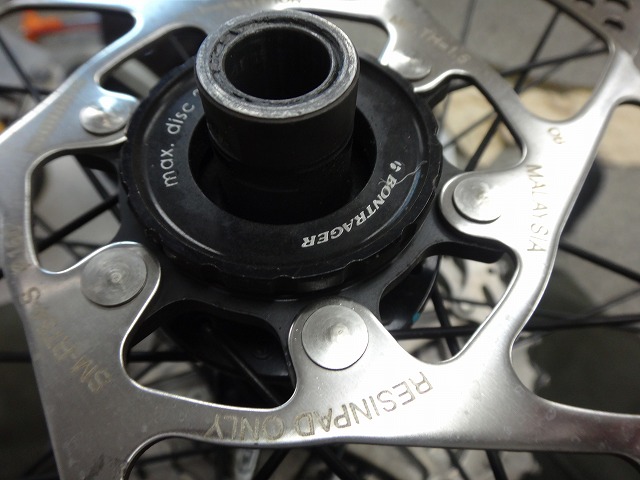
However, the lockring was BB-type. Since Boost standard front hubs are 110mm width/15mm axle, the rotor fixed ring on front hubs must always be BB-type. To get by with just one type of lockring, they probably adopted the BB-type on rear hubs too, even though sprocket-type can be used there.
SRAM's MTB 12-speed rear component for MTB has something called the "XD Driver"—a freebody design that eliminates the dimensional constraints of sprocket lockrings. It has a structure like a freewheel, which is in a sense a return to the past. Not that it matters, but I really wish they wouldn't bring Boost standard into cyclocross. I don't know how it'll shake out, but when standards proliferate like this, it's the users who suffer.